Iowa Interrogatories to Defendant for Motor Vehicle Accident
Overview of this form
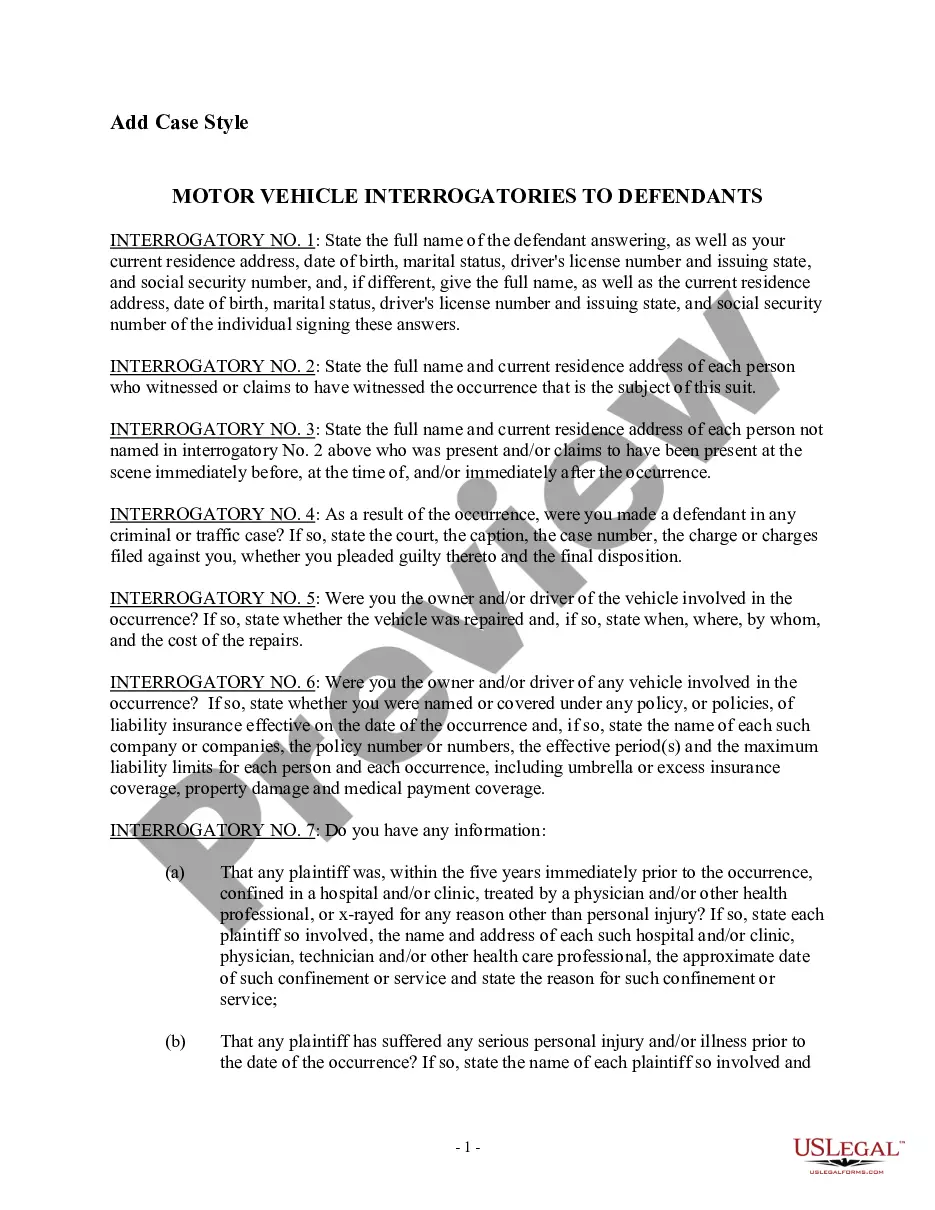
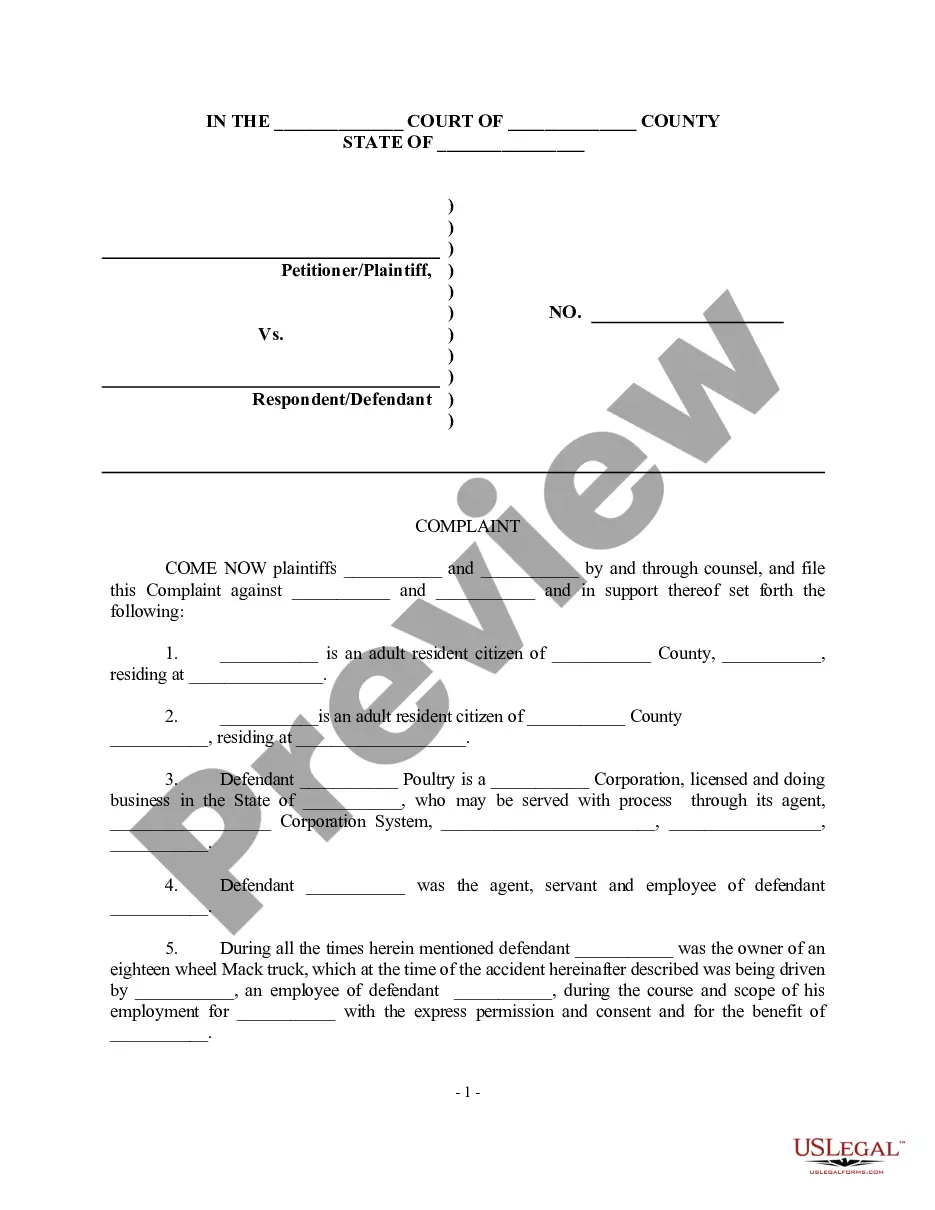
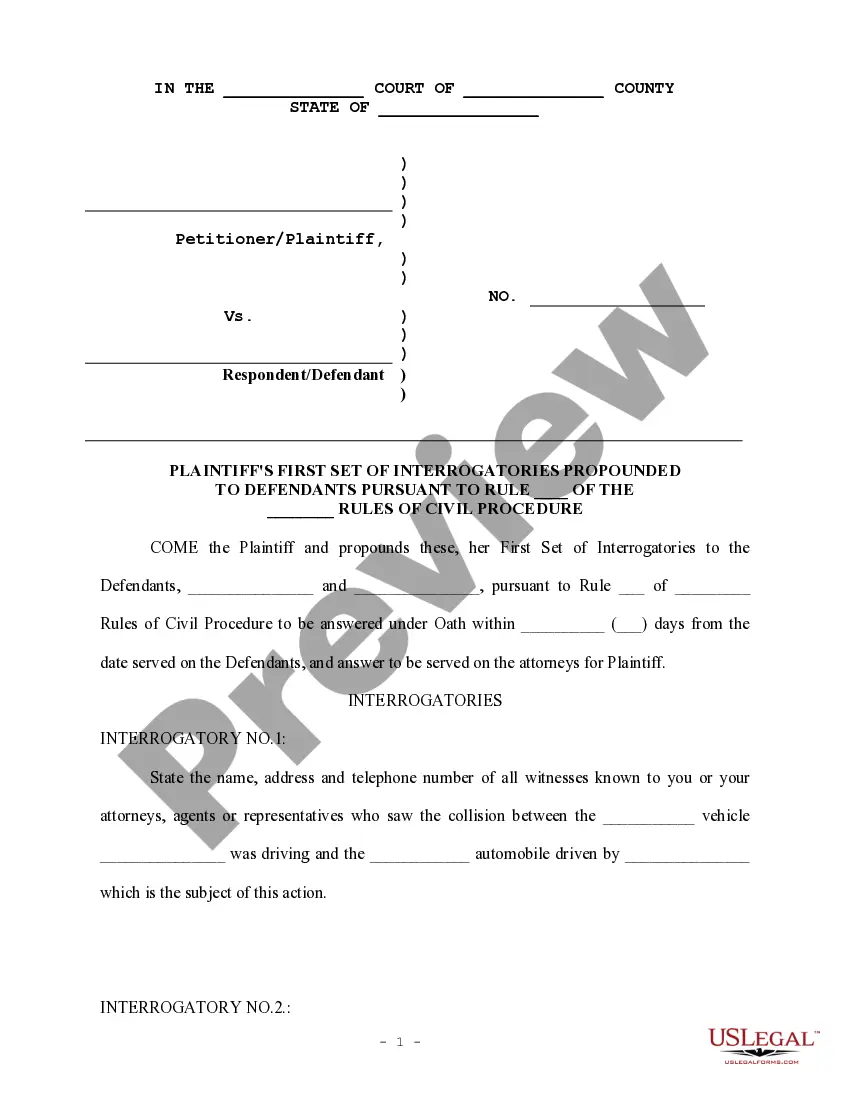
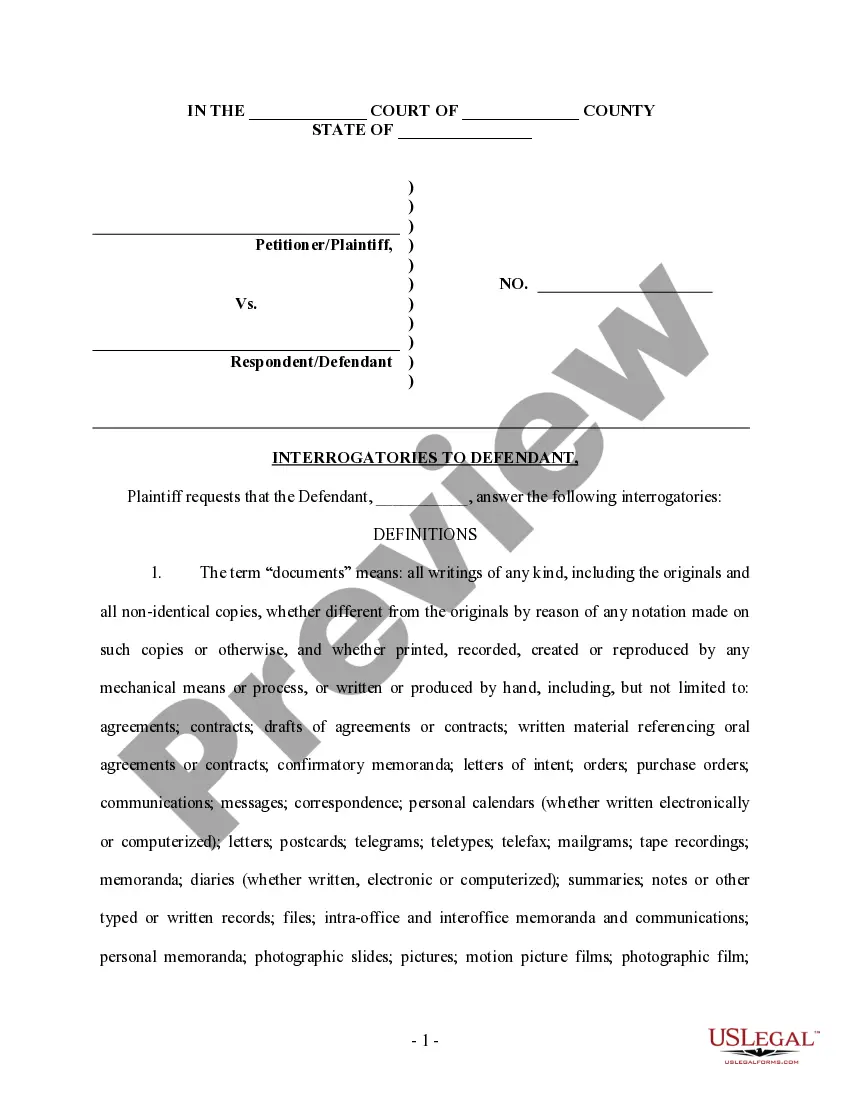
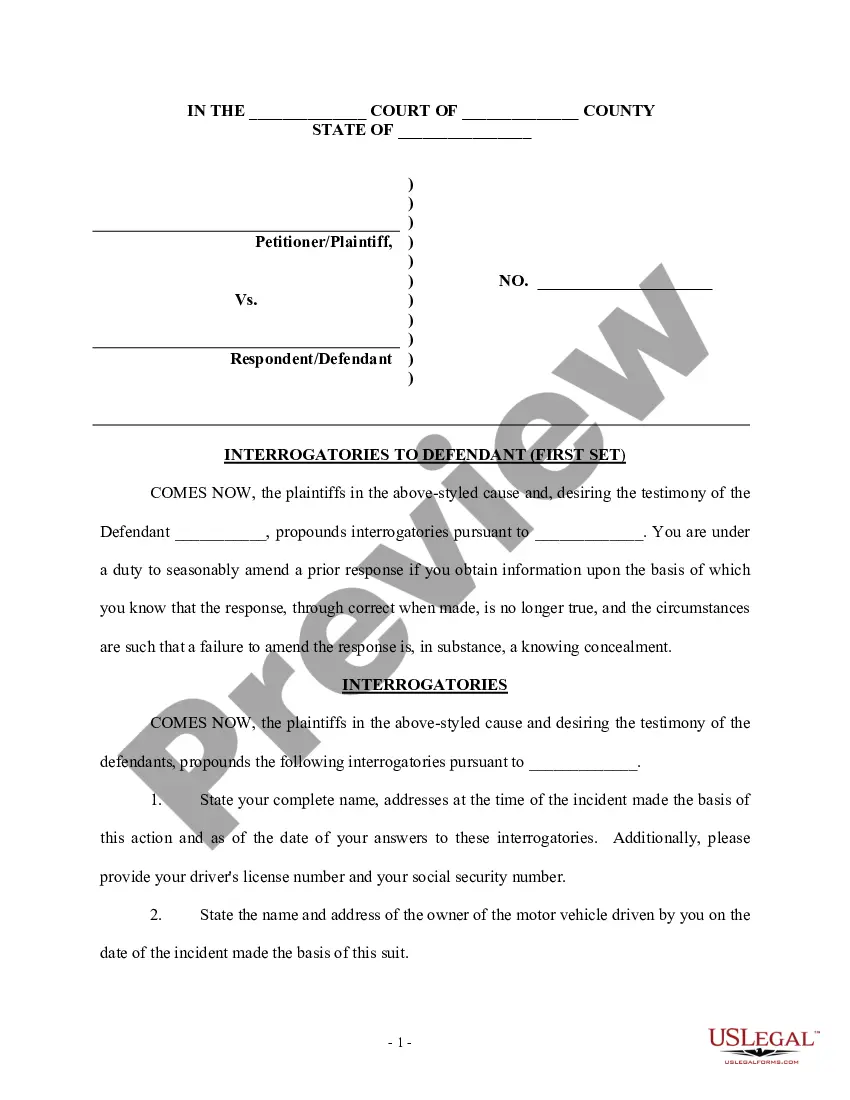
The Interrogatories to Defendant for Motor Vehicle Accident is a legal document consisting of a set of questions that the Plaintiff poses to the Defendant following a vehicle incident. This form is crucial in gathering important facts and details related to the accident, allowing both parties to prepare their cases effectively. Unlike other forms, this document specifically targets information necessary to establish the circumstances and outcomes of a motor vehicle accident, making it an essential tool in personal injury litigation.
Key components of this form
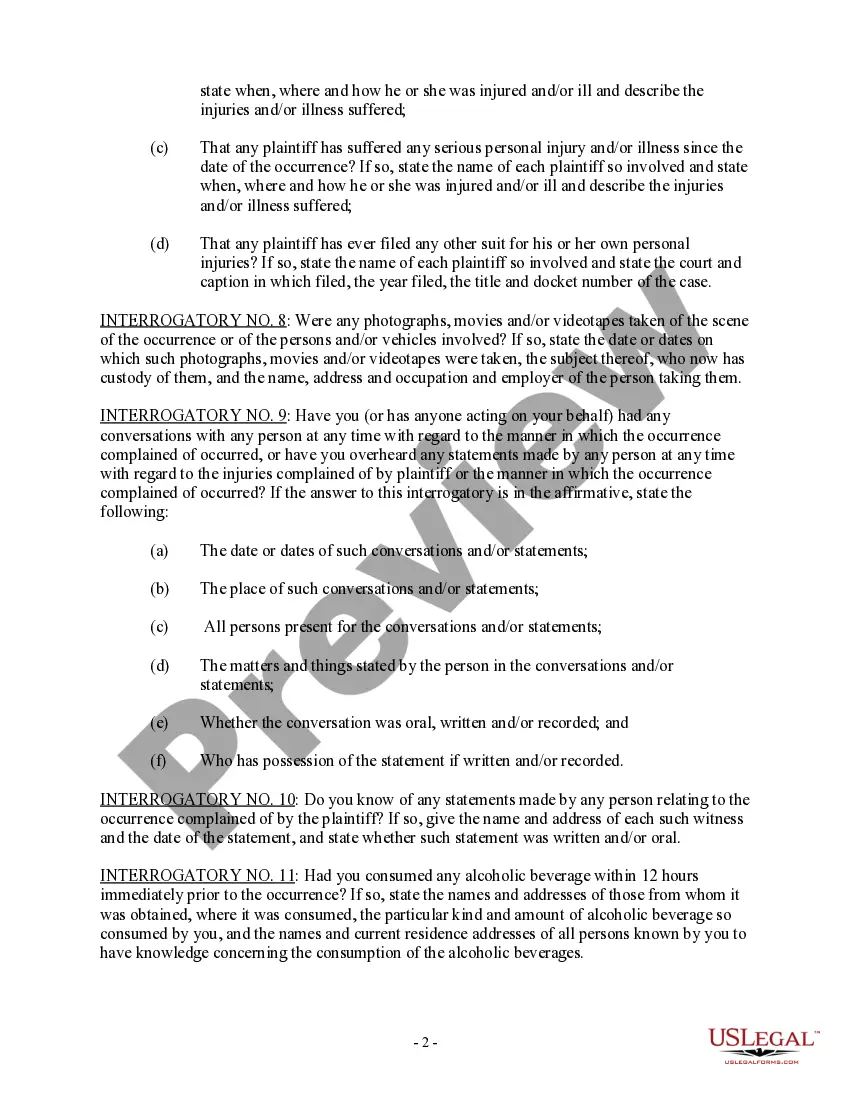
- Identification of the defendant and their personal information, including address and birth date.
- Details regarding witnesses to the accident and their contact information.
- Information about the defendant's vehicle, including ownership and insurance coverage.
- Questions about any prior medical conditions or legal matters related to driving.
- Documentation of any evidence gathered at the scene, such as photographs or recorded statements.
- Request for details about any previous personal injury claims made by the plaintiff.


When this form is needed
This form is used in the context of legal proceedings following a motor vehicle accident. It is ideal for Plaintiffs who need to gather comprehensive information from the Defendant to support their claims regarding liability, damages, and any background relevant to the case. The interrogatories aim to clarify key facts that may impact the outcome of the trial, making it a critical resource during litigation.
Intended users of this form
Eligibility for using this form includes:
- Individuals who have been involved in a motor vehicle accident as a Plaintiff seeking to establish liability.
- Legal representatives or attorneys representing the Plaintiff in a personal injury case.
- Any party preparing for litigation in connection with a motor vehicle accident.
Instructions for completing this form
To complete the Interrogatories to Defendant for Motor Vehicle Accident, follow these steps:
- Identify and state the full name, address, and details of the defendant answering the interrogatories.
- Gather the names and addresses of witnesses who observed the accident.
- Specify the ownership details and insurance information of the vehicle involved.
- Respond to questions regarding any prior legal issues, including traffic violations or criminal charges.
- Document any evidence or witness statements related to the occurrence of the accident.
Notarization guidance
This form does not typically require notarization unless specified by local law. However, always check your jurisdiction's requirements to ensure compliance with legal standards.
Get your form ready online
Our built-in tools help you complete, sign, share, and store your documents in one place.
Make edits, fill in missing information, and update formatting in US Legal Forms—just like you would in MS Word.
Download a copy, print it, send it by email, or mail it via USPS—whatever works best for your next step.
Sign and collect signatures with our SignNow integration. Send to multiple recipients, set reminders, and more. Go Premium to unlock E-Sign.
If this form requires notarization, complete it online through a secure video call—no need to meet a notary in person or wait for an appointment.
We protect your documents and personal data by following strict security and privacy standards.

Make edits, fill in missing information, and update formatting in US Legal Forms—just like you would in MS Word.

Download a copy, print it, send it by email, or mail it via USPS—whatever works best for your next step.

Sign and collect signatures with our SignNow integration. Send to multiple recipients, set reminders, and more. Go Premium to unlock E-Sign.

If this form requires notarization, complete it online through a secure video call—no need to meet a notary in person or wait for an appointment.

We protect your documents and personal data by following strict security and privacy standards.
Typical mistakes to avoid
- Failing to answer all interrogatories completely, which can lead to consequences in court.
- Not providing accurate or truthful information, risking legal penalties for perjury.
- Overlooking the importance of listing all relevant witnesses and evidence.
Benefits of using this form online
- Convenience of downloading and completing the form at your own pace.
- Editable structure allows for customization based on individual case needs.
- Access to professionally drafted content ensures legal reliability and accuracy.
Legal use & context
- This form assists in the discovery process, which is critical in civil litigation.
- Answers provided are typically used as part of the record during trial proceedings.
- It helps establish facts and clarify the parties' positions regarding liability.
Quick recap
- The Interrogatories to Defendant for Motor Vehicle Accident is essential for gathering evidence in personal injury cases.
- Proper completion is crucial, as incomplete or inaccurate responses can adversely affect legal proceedings.
- Understanding state-specific rules regarding interrogatories is important for full compliance.
Looking for another form?
Form popularity
FAQ
An improper interrogatory typically includes questions that are irrelevant, confusing, or seek information that is protected by privilege. When we refer to Iowa Interrogatories to Defendant for Motor Vehicle Accident, it’s vital that all interrogatories comply with legal standards and focus on pertinent details. This keeps the process fair and efficient for all parties involved.
Interrogatories can be used as evidence, but they must meet specific criteria. In the context of Iowa Interrogatories to Defendant for Motor Vehicle Accident, only answers that are signed and verified may be admissible in court. It’s crucial to ensure that the responses are complete and truthful to bolster your position during legal proceedings.
Yes, you can ask for documents in an interrogatory, but it needs to be phrased correctly. In Iowa Interrogatories to Defendant for Motor Vehicle Accident, explicitly requesting documents strengthens your inquiry. Keep in mind, however, that requests related to specific documents should clearly outline what is needed for clarity and ease of response.
Valid objections to interrogatories include claims of irrelevance, overbroad questions, and privilege. When dealing with Iowa Interrogatories to Defendant for Motor Vehicle Accident, it is essential that objections are clearly outlined and justified to prevent arbitrary denial of information. Moreover, these objections must be filed with the court to properly inform all parties involved.
If someone doesn’t answer interrogatories, it may lead to complications in the legal process. In Iowa, this can result in court sanctions or the opposing party being allowed to assume the unanswered questions are detrimental to the non-responding party’s case. Therefore, responding to Iowa Interrogatories to Defendant for Motor Vehicle Accident is crucial for maintaining a strong position in your case.
An insufficient answer to interrogatories occurs when the response fails to provide clear, complete, and relevant information. In the context of Iowa Interrogatories to Defendant for Motor Vehicle Accident, you might find an answer that is vague or misleading. It's important that each interrogatory is answered honestly and thoroughly to help support your case.
The primary purpose of an interrogatory is to facilitate the exchange of information between parties involved in a legal dispute. In the context of Iowa interrogatories to defendant for motor vehicle accidents, they help clarify the facts and gather evidence crucial for your case. This process not only strengthens your position but also promotes a fair and efficient resolution.
Rule 1.943 in Iowa pertains to the procedural guidelines for serving and responding to interrogatories. This rule establishes the requirement for timely and comprehensive answers to interrogatories, facilitating the discovery process in personal injury cases, including motor vehicle accidents. Understanding this rule ensures that you adhere to legal standards while using Iowa interrogatories effectively in your case.
When creating Iowa interrogatories to defendant for motor vehicle accident cases, focus on questions that seek clear, factual responses. Ask about the defendant's account of the accident, their driving history, and any relevant insurance details. It is essential to be specific and direct, as precise questions yield more useful answers.
Iowa interrogatories to defendant for motor vehicle accident cases are particularly effective for acquiring detailed accounts of the events leading up to the accident. You can gather information related to the defendant's actions, conditions, and perceptions at the time of the incident. This information can be instrumental in establishing liability and understanding the context of the accident.