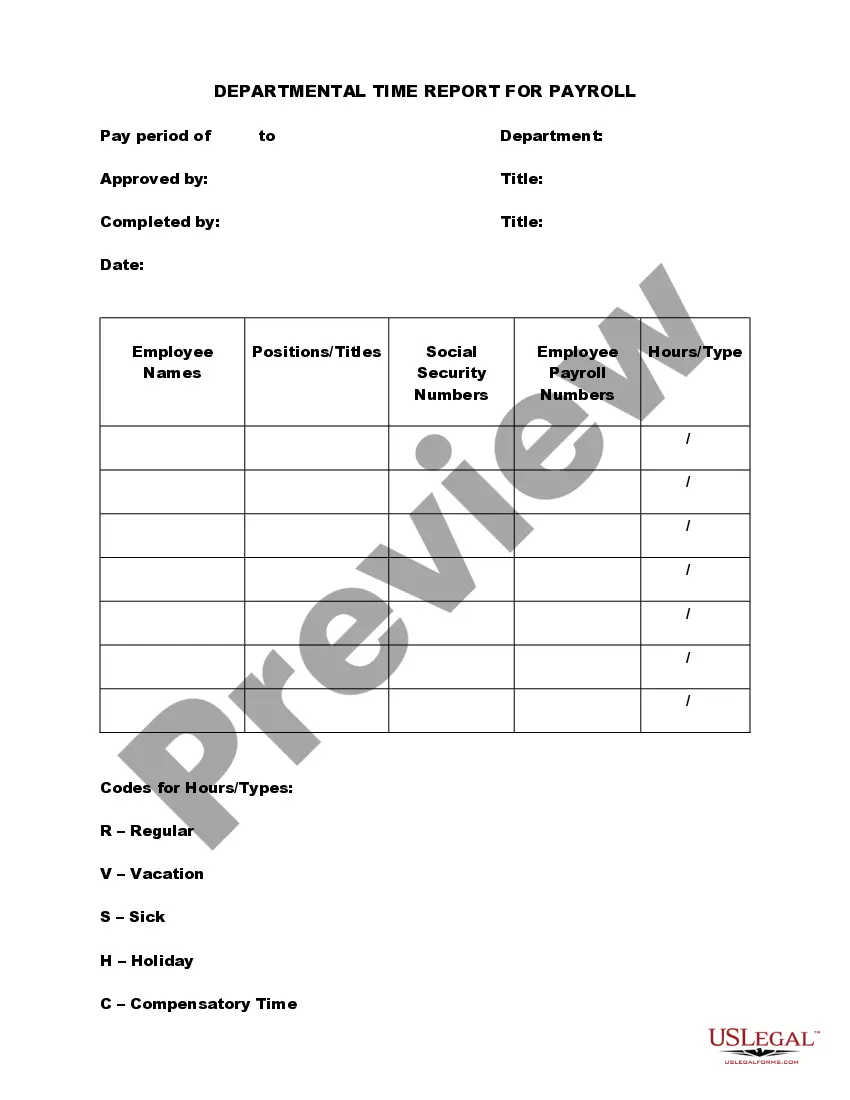
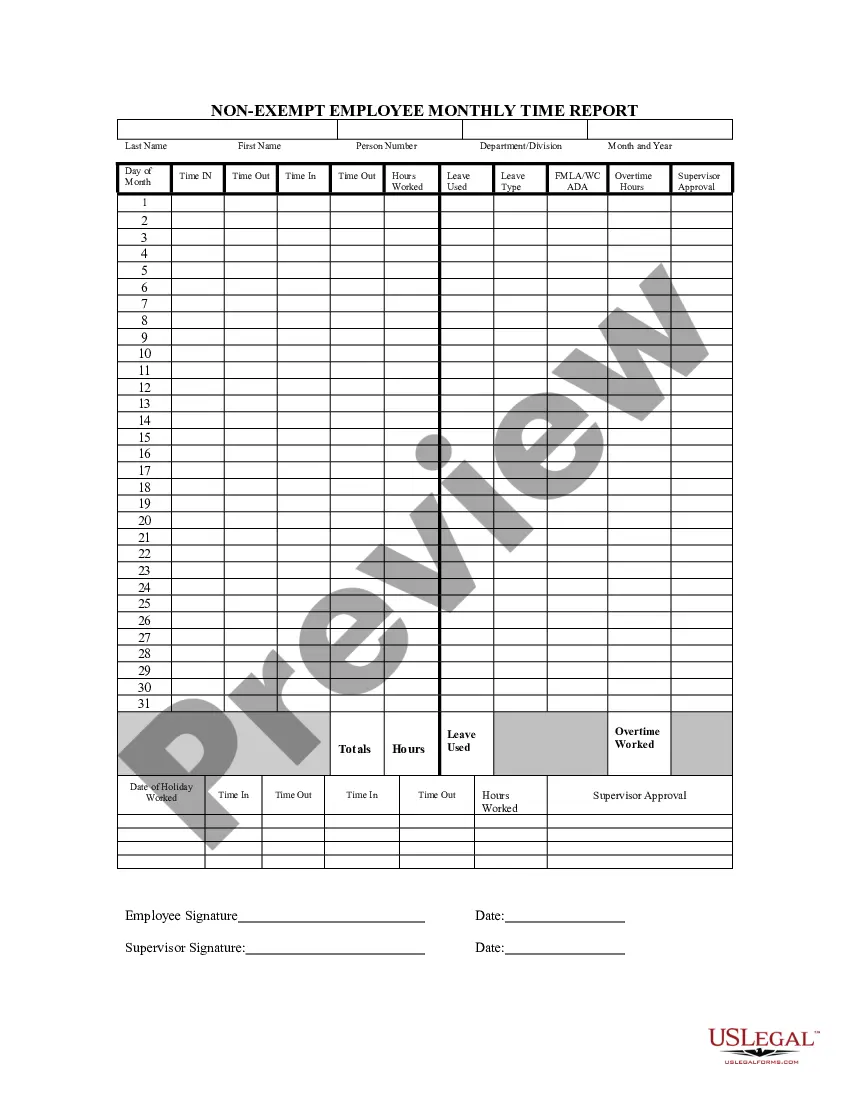
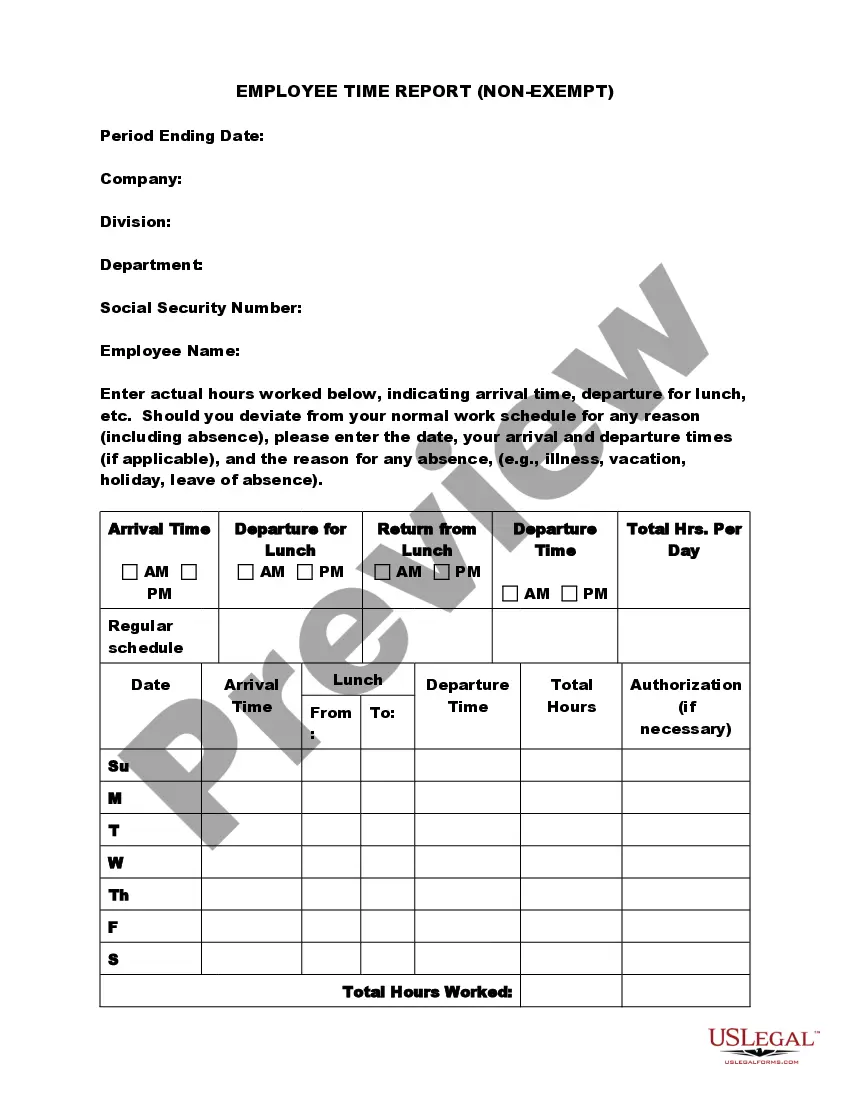
Hawaii Department Time Report for Payroll
Description
Get your form ready online
Our built-in tools help you complete, sign, share, and store your documents in one place.
Make edits, fill in missing information, and update formatting in US Legal Forms—just like you would in MS Word.
Download a copy, print it, send it by email, or mail it via USPS—whatever works best for your next step.
Sign and collect signatures with our SignNow integration. Send to multiple recipients, set reminders, and more. Go Premium to unlock E-Sign.
If this form requires notarization, complete it online through a secure video call—no need to meet a notary in person or wait for an appointment.
We protect your documents and personal data by following strict security and privacy standards.

Make edits, fill in missing information, and update formatting in US Legal Forms—just like you would in MS Word.

Download a copy, print it, send it by email, or mail it via USPS—whatever works best for your next step.

Sign and collect signatures with our SignNow integration. Send to multiple recipients, set reminders, and more. Go Premium to unlock E-Sign.

If this form requires notarization, complete it online through a secure video call—no need to meet a notary in person or wait for an appointment.

We protect your documents and personal data by following strict security and privacy standards.
Looking for another form?


How to fill out Department Time Report For Payroll?
It is feasible to invest multiple hours online searching for the authentic document format that conforms to the state and federal requirements you desire.
US Legal Forms offers a vast array of valid forms that have been scrutinized by specialists.
You can easily download or print the Hawaii Department Time Report for Payroll from my services.
Check the form description to confirm you have selected the right form. If available, utilize the Preview button to view the document format concurrently.
- If you possess a US Legal Forms account, you can Log In and click the Download button.
- After that, you can complete, modify, print, or sign the Hawaii Department Time Report for Payroll.
- Every legitimate document format you purchase is yours indefinitely.
- To obtain another copy of a purchased form, navigate to the My documents tab and click the corresponding button.
- If you are using the US Legal Forms site for the first time, follow the simple instructions listed below.
- Firstly, ensure that you have chosen the correct document format for the county/city of your choice.
Form popularity
FAQ
A timesheet is a document that records the hours worked by employees, while payroll is the process of compensating employees based on those recorded hours. Timesheets provide the data necessary for the payroll process. With the Hawaii Department Time Report for Payroll, you can seamlessly integrate both systems for greater efficiency.
Hawaii labor laws require employers to pay employees overtime at a rate of 1½ time their regular rate of pay when they work over 40 hours in a workweek. HI Wage and Hour Laws. Federal overtime laws may also apply. For federally-defined exemption and other federal overtime laws see FLSA: Overtime.
Generally, overtime is required after 40 hours worked in a workweek. See Section 387-3, Hawaii Revised Statutes (HRS). Exceptions to this rule are explained in the White Collar Exemptions chart.
Final paychecks in HawaiiEmployees who are terminated or laid off must be paid final wages at the time of discharge, according to Hawaii wage and hour laws. Employees who quit or separate from employment due to a labor dispute must be paid final wages no later than the next regularly scheduled payday.
Under Section 388-2(a), HRS, every employer is required to pay wages to all employees at least twice during each calendar month, on regular paydays designated in advance by the employer.
In Hawaii, an employee can file a private lawsuit to recover unpaid wages, civil penalties, and attorney's costs and fees. In the event that the employer willfully violated the law, liquidated damages may also be recovered.
Hawaii Overtime: What you need to know Under Hawaii's overtime law, an employer must pay each employee overtime in the amount of 11/2 times the employee's regular rate for hours worked in excess of 40 in a workweek (HI Rev. Stat. Sec. 387-3).
Hawaii labor laws require employers to pay employees overtime at a rate of 1½ time their regular rate of pay when they work over 40 hours in a workweek. HI Wage and Hour Laws. Federal overtime laws may also apply.
Full-time in Hawaii? Hawaii currently does not have a state law that says how many hours a person must work to be considered part-time or full-time. Most companies consider 40 hours per week as full-time and less than that as part-time.
Hawaii currently does not have a state law that says how many hours a person must work to be considered part-time or full-time. Most companies consider 40 hours per week as full-time and less than that as part-time.