Hawaii Demolition Contract for Contractor
About this form
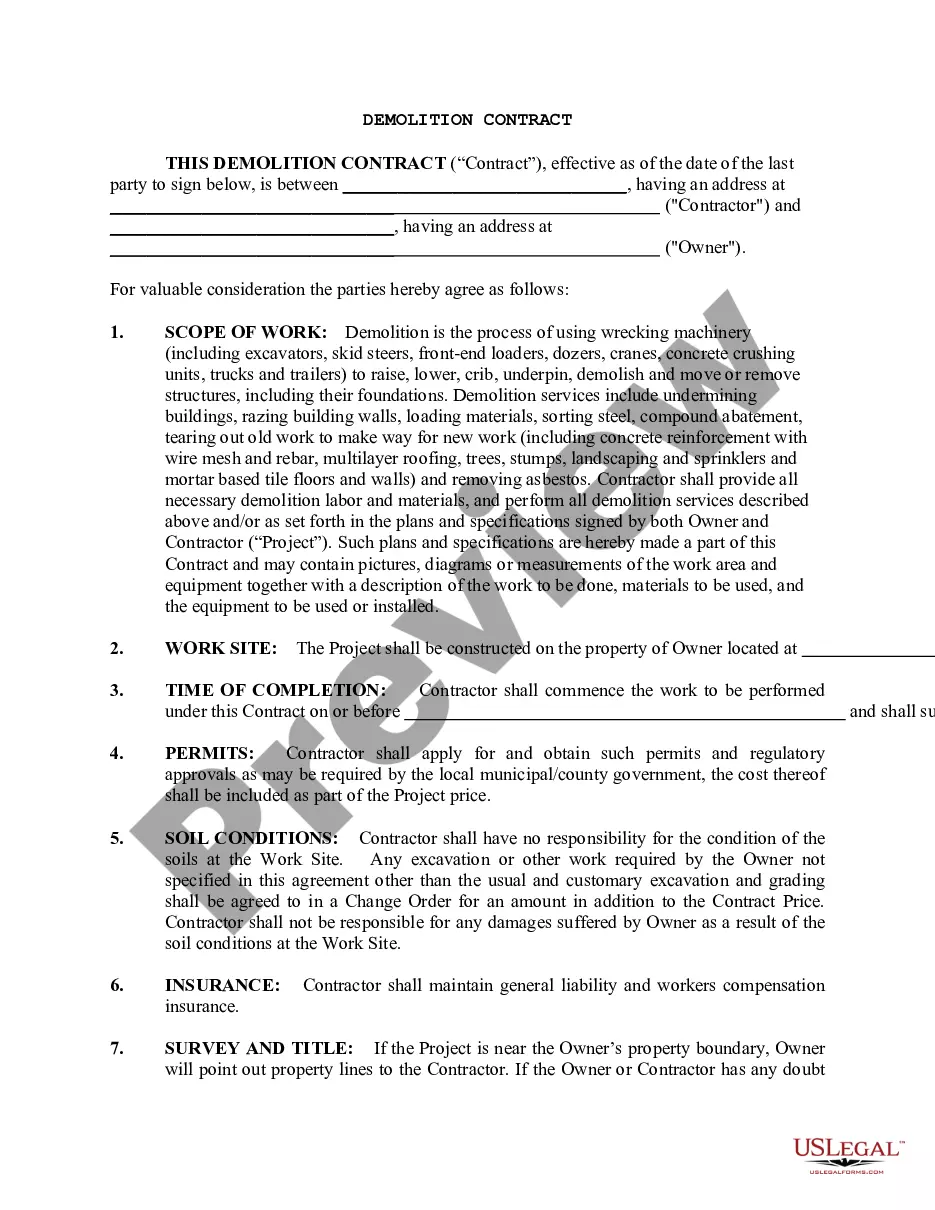
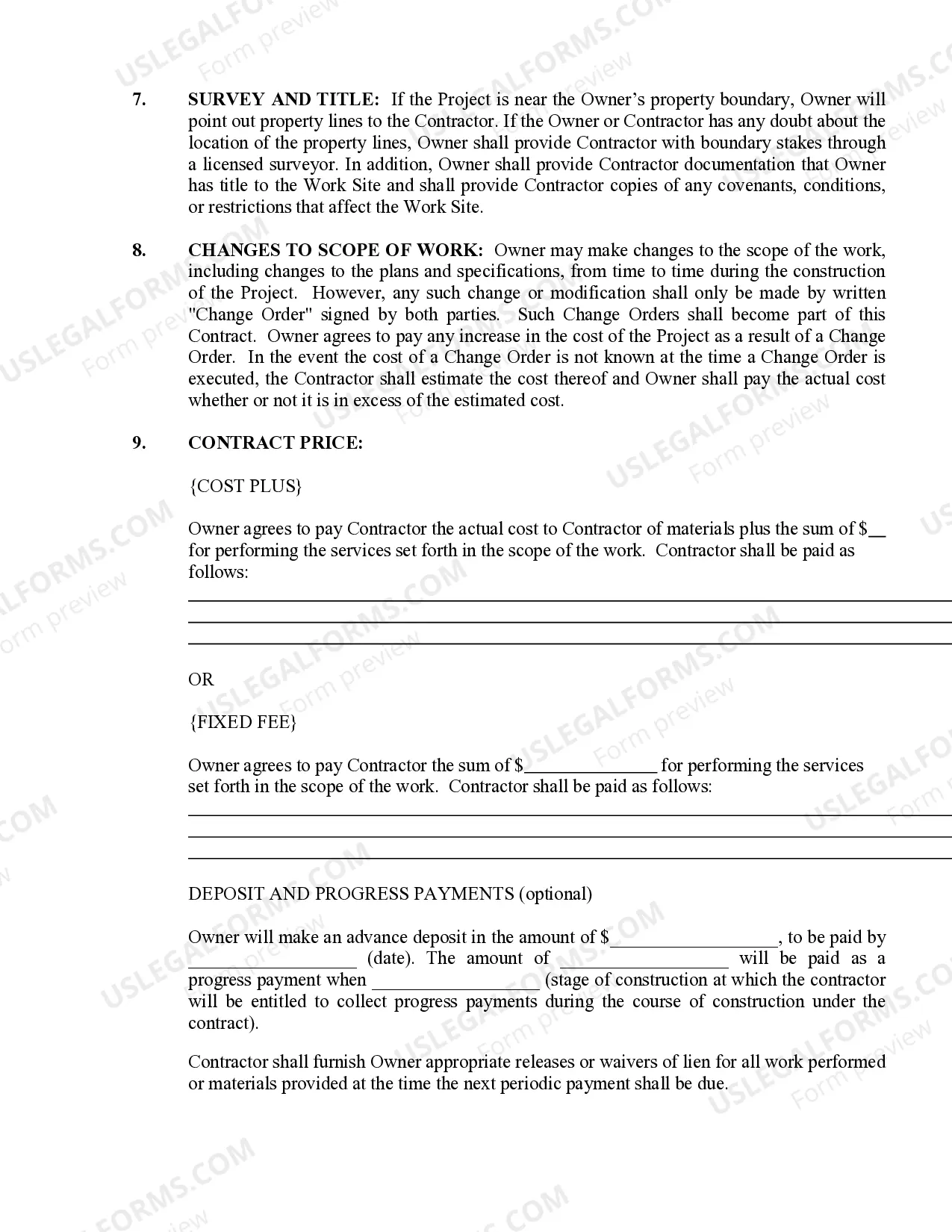
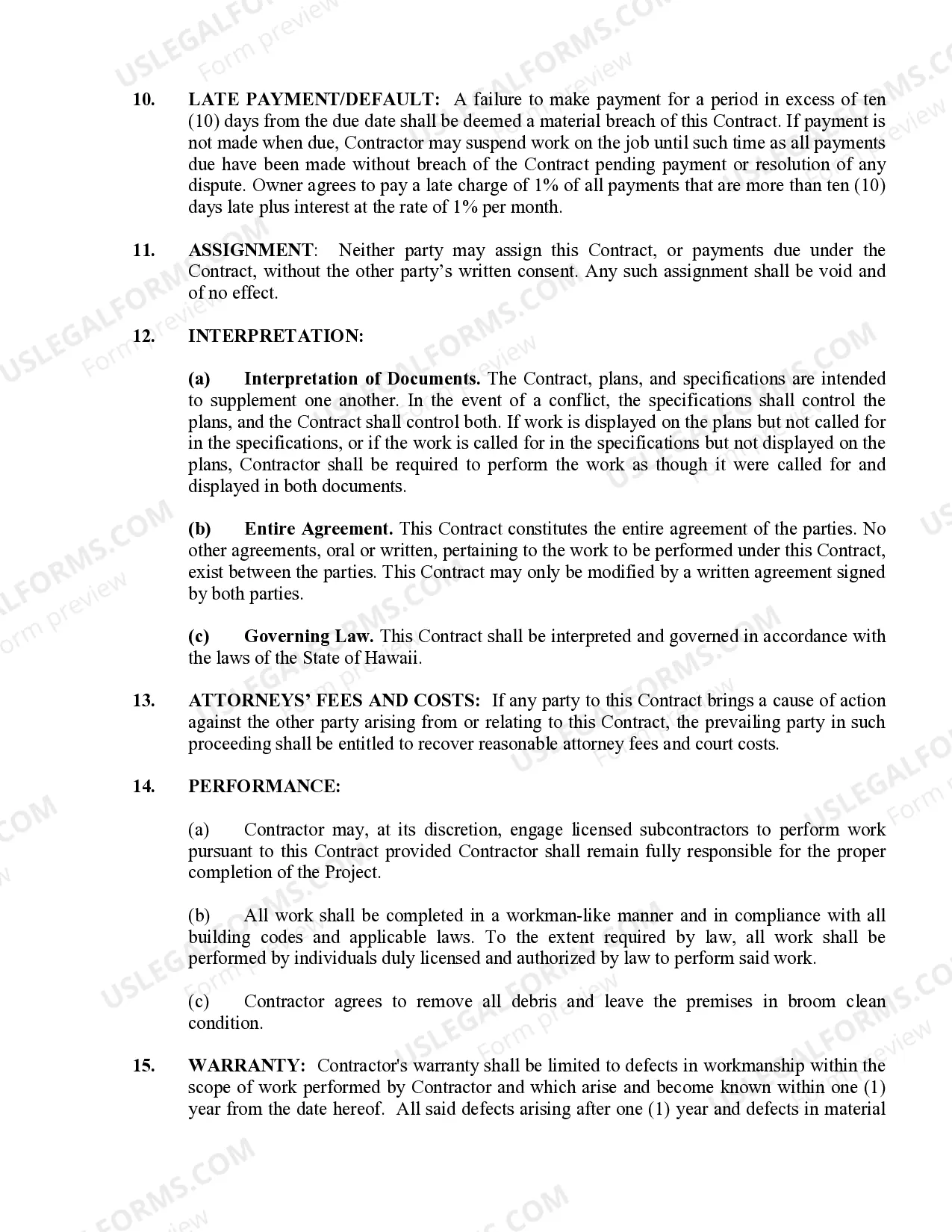
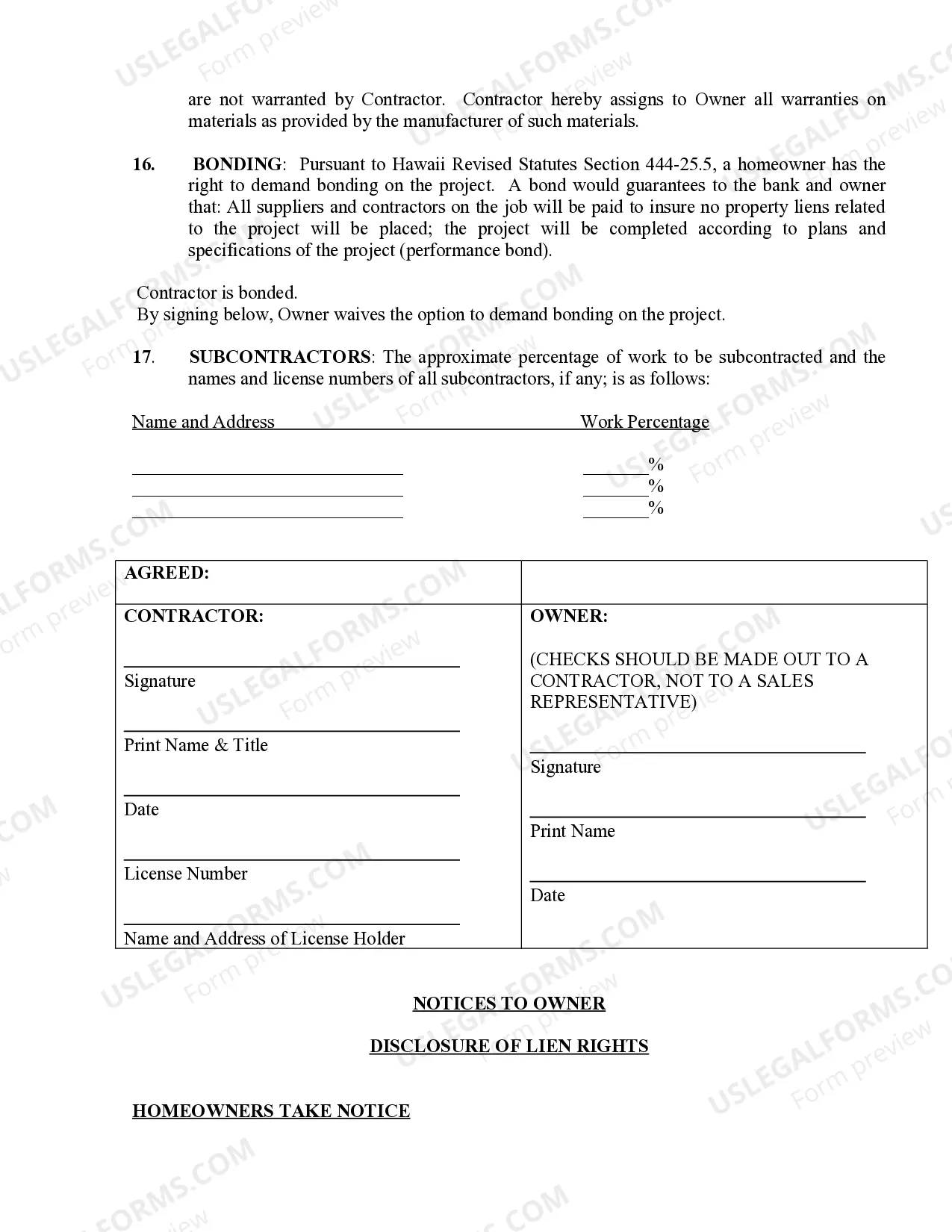
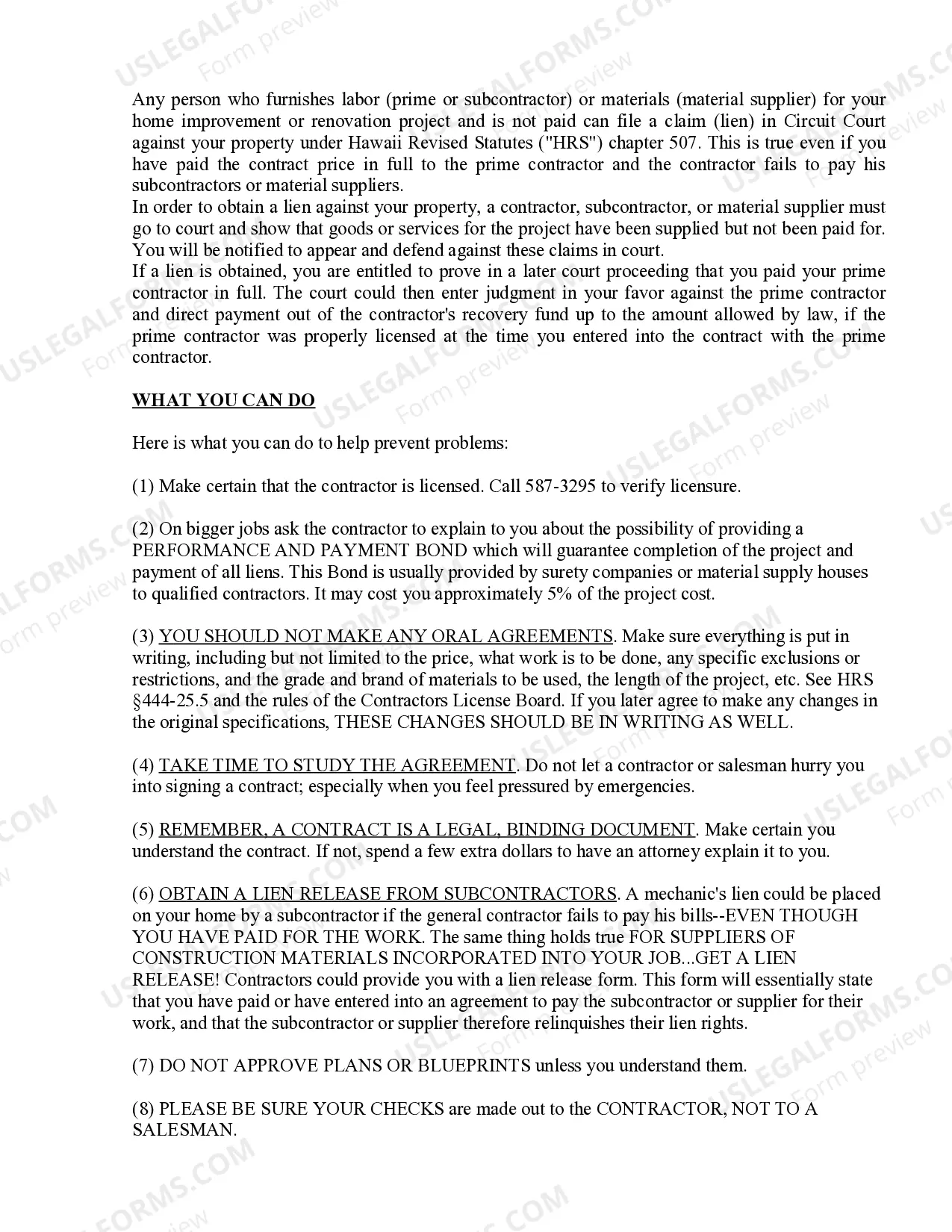
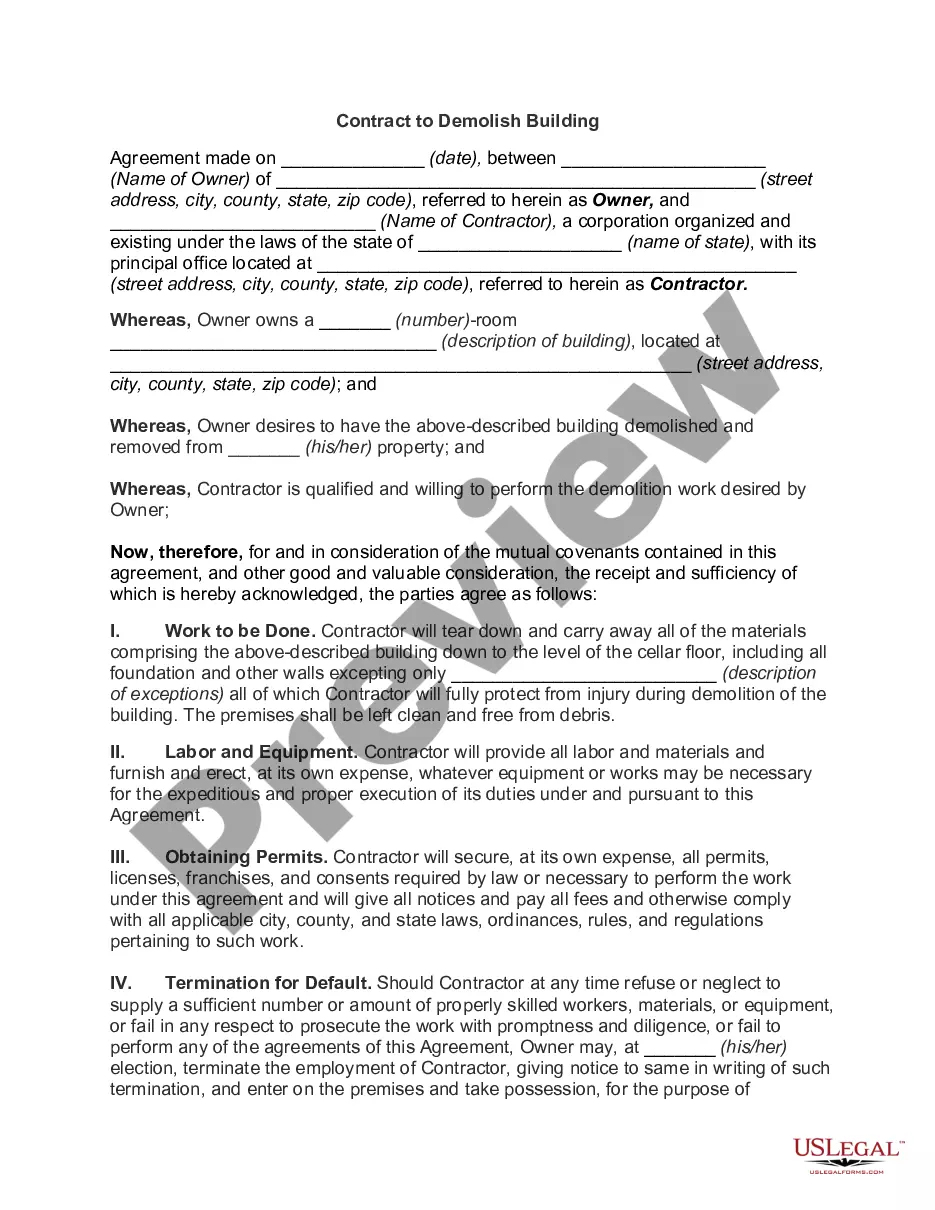
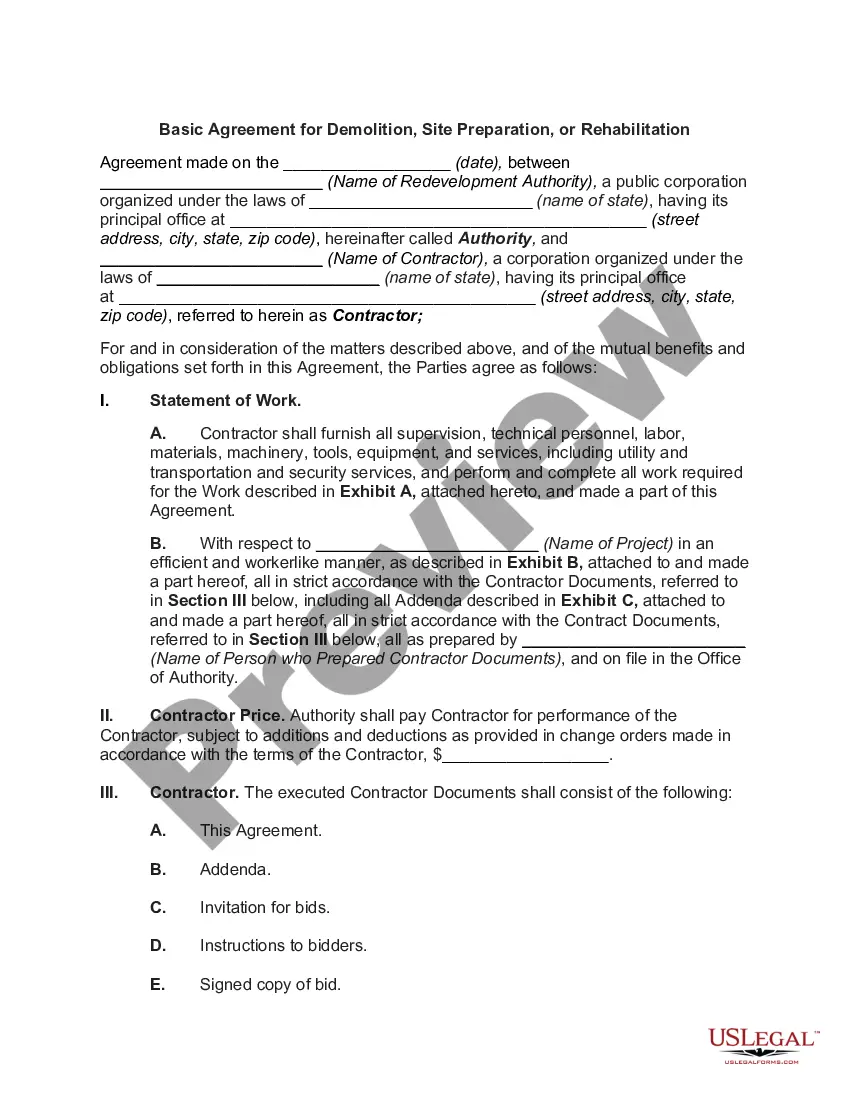
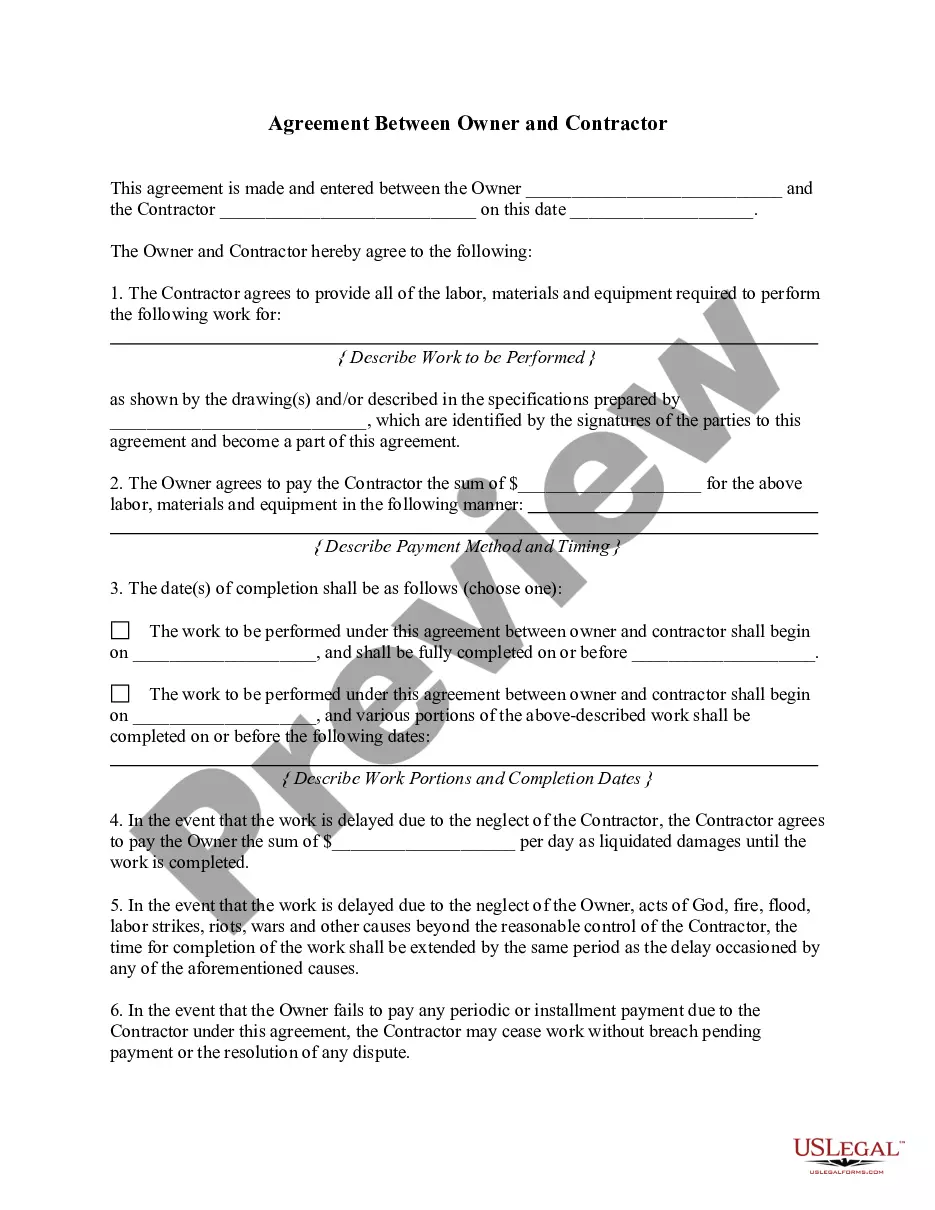
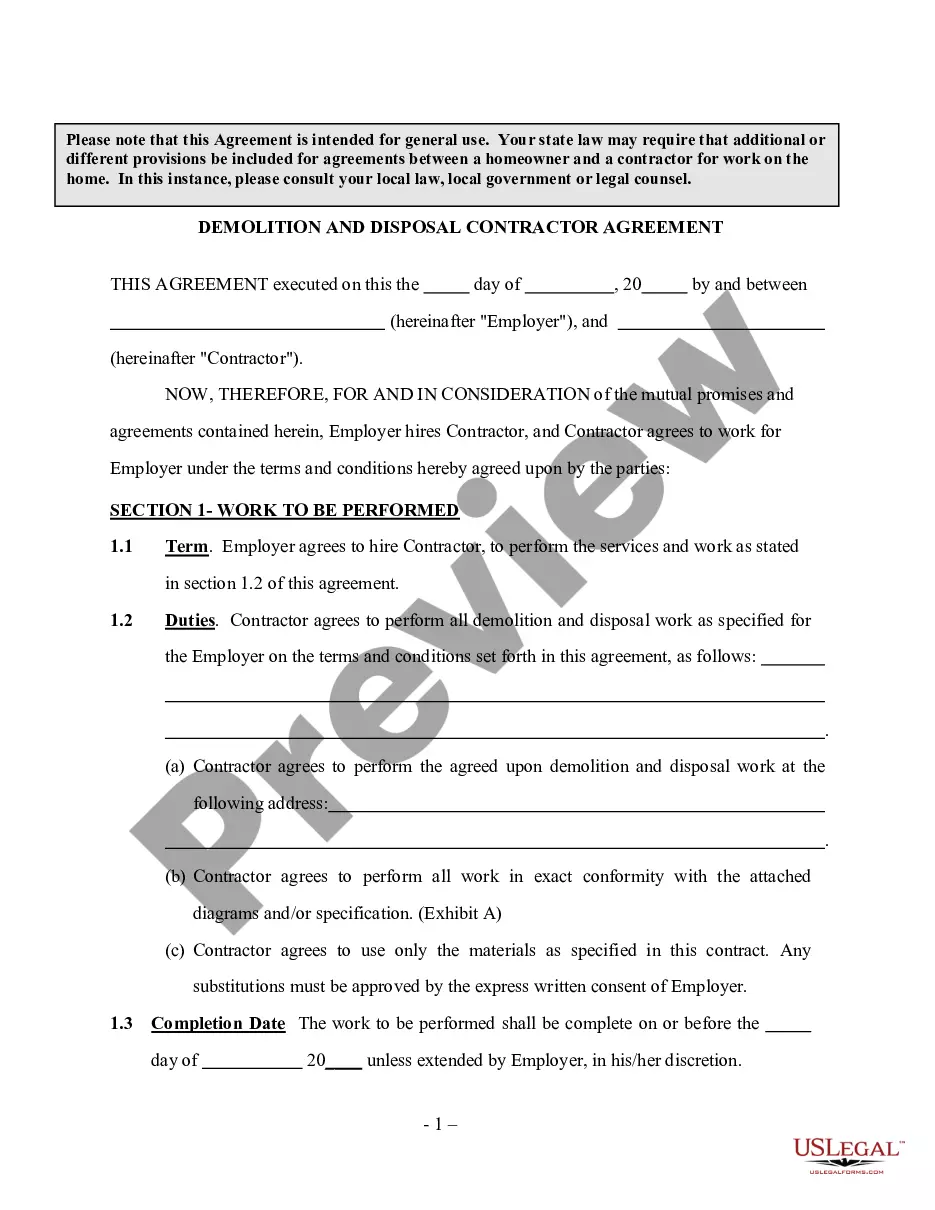
The Demolition Contract for Contractor is a legally binding agreement between demolition contractors and property owners. This contract outlines the terms of engagement, including payment arrangements (either cost plus or fixed fee), responsibilities regarding permits, soil conditions, insurance requirements, and warranty provisions. It is specifically tailored to comply with the laws of the State of Hawaii, distinguishing it from other general construction contracts.
Key components of this form
- Party identification: Names and addresses of the contractor and owner.
- Permits: Contractor's responsibility for obtaining necessary permits.
- Soil conditions: Clarification of contractor's liability concerning soil issues.
- Insurance requirements: Obligations for general liability and workers' compensation coverage.
- Change orders: Process for modifying the scope of work and associated costs.
- Contract price structure: Details on payment terms, including deposits and progress payments.
- Warranty: Specification of contractor's warranty covering workmanship defects.

When to use this form
This form should be used when a property owner engages a demolition contractor for a specific project. It's ideal for situations that involve large-scale demolitions where formal terms need to be defined to ensure clarity and protective measures for both parties. The contract is essential for projects requiring explicit agreements on payment, work specifications, and legal compliance in Hawaii.
Who should use this form
- Property owners hiring demolition contractors.
- Demolition contractors looking to formalize agreements with clients.
- Individuals seeking legal clarity on demolition work terms in Hawaii.
How to prepare this document
- Identify the parties involved: Fill in the names and addresses of both the contractor and the owner.
- Specify the project details: Describe the scope of the demolition work and project location.
- Determine payment structure: Specify deposit amounts and progress payment stages.
- Outline permit responsibilities: Confirm that the contractor will obtain necessary permits.
- Include insurance information: Ensure the contractor's insurance requirements are documented.
- Sign and date the contract: Ensure both parties sign to validate the agreement.
Does this document require notarization?
This form does not typically require notarization unless specified by local law. It is advisable to consult local regulations to confirm requirements for notarization in specific demolition agreements.
Get your form ready online
Our built-in tools help you complete, sign, share, and store your documents in one place.
Make edits, fill in missing information, and update formatting in US Legal Forms—just like you would in MS Word.
Download a copy, print it, send it by email, or mail it via USPS—whatever works best for your next step.
Sign and collect signatures with our SignNow integration. Send to multiple recipients, set reminders, and more. Go Premium to unlock E-Sign.
If this form requires notarization, complete it online through a secure video call—no need to meet a notary in person or wait for an appointment.
We protect your documents and personal data by following strict security and privacy standards.

Make edits, fill in missing information, and update formatting in US Legal Forms—just like you would in MS Word.

Download a copy, print it, send it by email, or mail it via USPS—whatever works best for your next step.

Sign and collect signatures with our SignNow integration. Send to multiple recipients, set reminders, and more. Go Premium to unlock E-Sign.

If this form requires notarization, complete it online through a secure video call—no need to meet a notary in person or wait for an appointment.

We protect your documents and personal data by following strict security and privacy standards.
Common mistakes to avoid
- Failing to clearly define the scope of work, leading to misunderstandings.
- Not specifying payment terms, which can result in delayed payments.
- Omitting necessary insurance clauses, exposing parties to liability.
- Not including a process for handling change orders.
- Neglecting to sign and date the contract, rendering it unenforceable.
Benefits of completing this form online
- Convenience: Easily download the contract and complete it at your convenience.
- Editable: Customize the template to fit your specific project requirements.
- Reliable: Ensure your agreement is legally sound and compliant with Hawaii laws.
Looking for another form?
Form popularity
FAQ
To become an independent contractor in Hawaii, start by registering your business, obtaining necessary licenses, and ensuring compliance with state regulations. Additionally, creating a Hawaii Demolition Contract for Contractor will not only clarify your work scope but also foster trust with potential clients by outlining expectations.
Qualifying as an independent contractor often involves demonstrating a level of skill in your trade and maintaining a business identity separate from your clients. You should also have control over how you complete your projects. Having a well-drafted Hawaii Demolition Contract for Contractor can support your classification and help establish your professionalism.
To operate as an independent contractor in Hawaii, you need a valid business license and any relevant trade permits. Additionally, it's essential to keep accurate financial records and understand your tax obligations. Using a Hawaii Demolition Contract for Contractor can clarify the terms of your work and provide legal protection.
To register as an independent contractor in Hawaii, you first need to apply for a business license with the Department of Commerce and Consumer Affairs. Afterward, obtain any necessary permits specific to your trade. Finally, consider drafting a Hawaii Demolition Contract for Contractor to formalize your agreements with clients.
If you suspect a contractor is not fulfilling their obligations, gather all relevant documentation, including the contract and any correspondence. It may be necessary to confront the contractor directly, but if the issue persists, consider filing a complaint with the Hawaii Department of Commerce and Consumer Affairs. Securing a Hawaii Demolition Contract for Contractor from a reliable source can help protect you from such situations.
A demolition contract is a legal agreement between a contractor and a property owner that outlines the terms and responsibilities for demolishing a structure. This contract details the scope of work, timelines, and payment expectations. Understanding how to draft a Hawaii Demolition Contract for Contractor minimizes potential disputes and ensures a smooth demolition process.
In Hawaii, you can perform a limited amount of work without a contractor license, specifically residential repair or maintenance jobs costing less than $1,000. However, if your project exceeds this amount, you will need a license. Keep in mind that a Hawaii Demolition Contract for Contractor may be necessary for certain demolition activities, ensuring compliance with legal requirements.
An RME, or Responsible Managing Employee, plays a critical role in the construction industry in Hawaii. This licensed individual is responsible for overseeing construction projects and ensuring compliance with local laws and regulations. When dealing with a Hawaii Demolition Contract for Contractor, having an RME can enhance project management and accountability. If you're hiring a contractor, confirm their RME’s qualifications to ensure a smooth operation.
To terminate a contractor for breach of contract in Hawaii, review your Hawaii Demolition Contract for Contractor thoroughly. Gather evidence of the breach, such as missed deadlines or subpar work. Next, send a formal written notice to the contractor, explaining the reasons for termination and any applicable terms from the contract. This ensures that you follow proper procedures and protects your rights.
The basic information in a construction contract includes the names and addresses of all parties, a description of the work to be performed, payment terms, and timelines. Additionally, it should outline any relevant permits or legal requirements to be followed. Using a Hawaii Demolition Contract for Contractor will help ensure you cover all necessary details for a successful partnership.