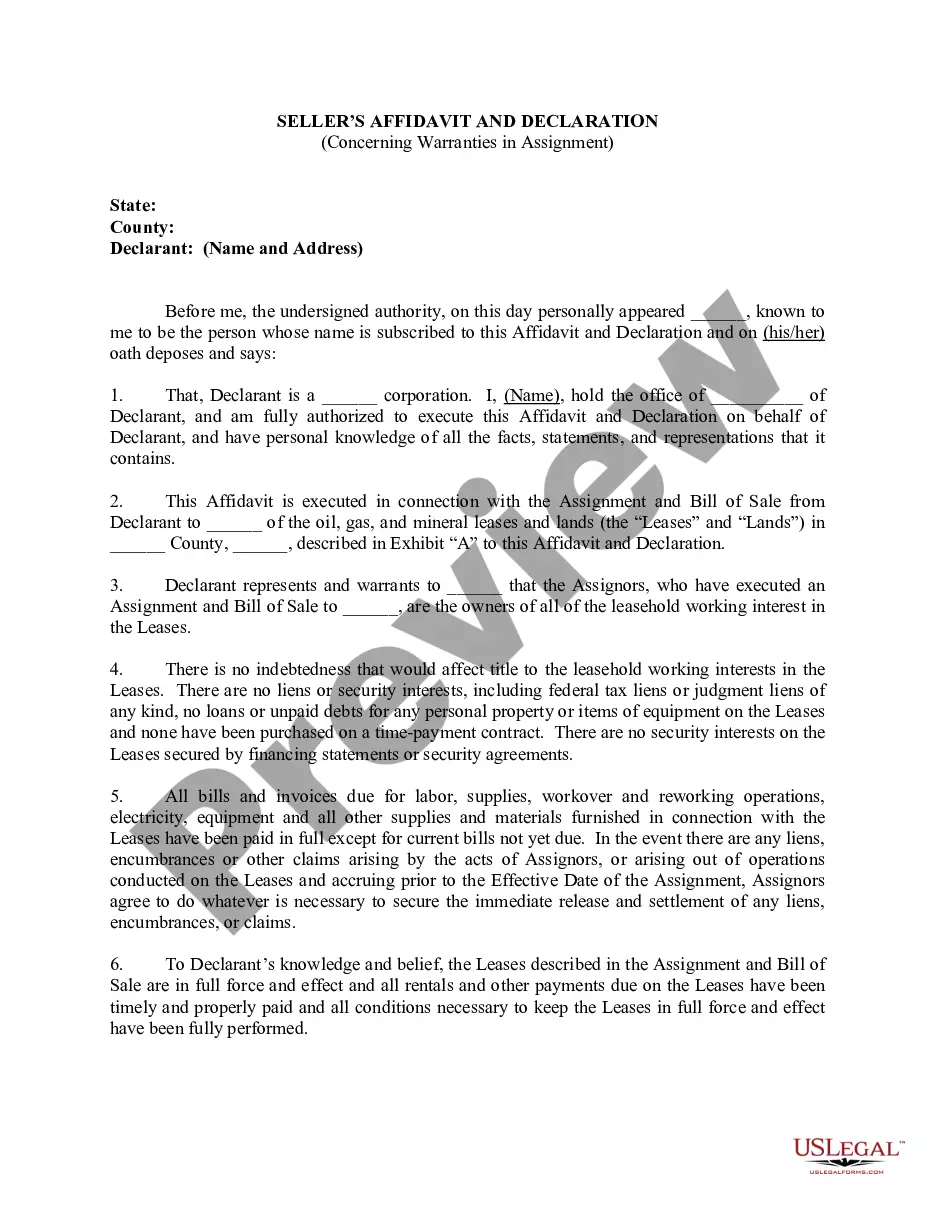
This forms is an agreement between a company and a former employee. Included in this agreement are terms, services and compensation information.
Guam Consulting Agreement with Former Employee
Instant download
Description
Free preview
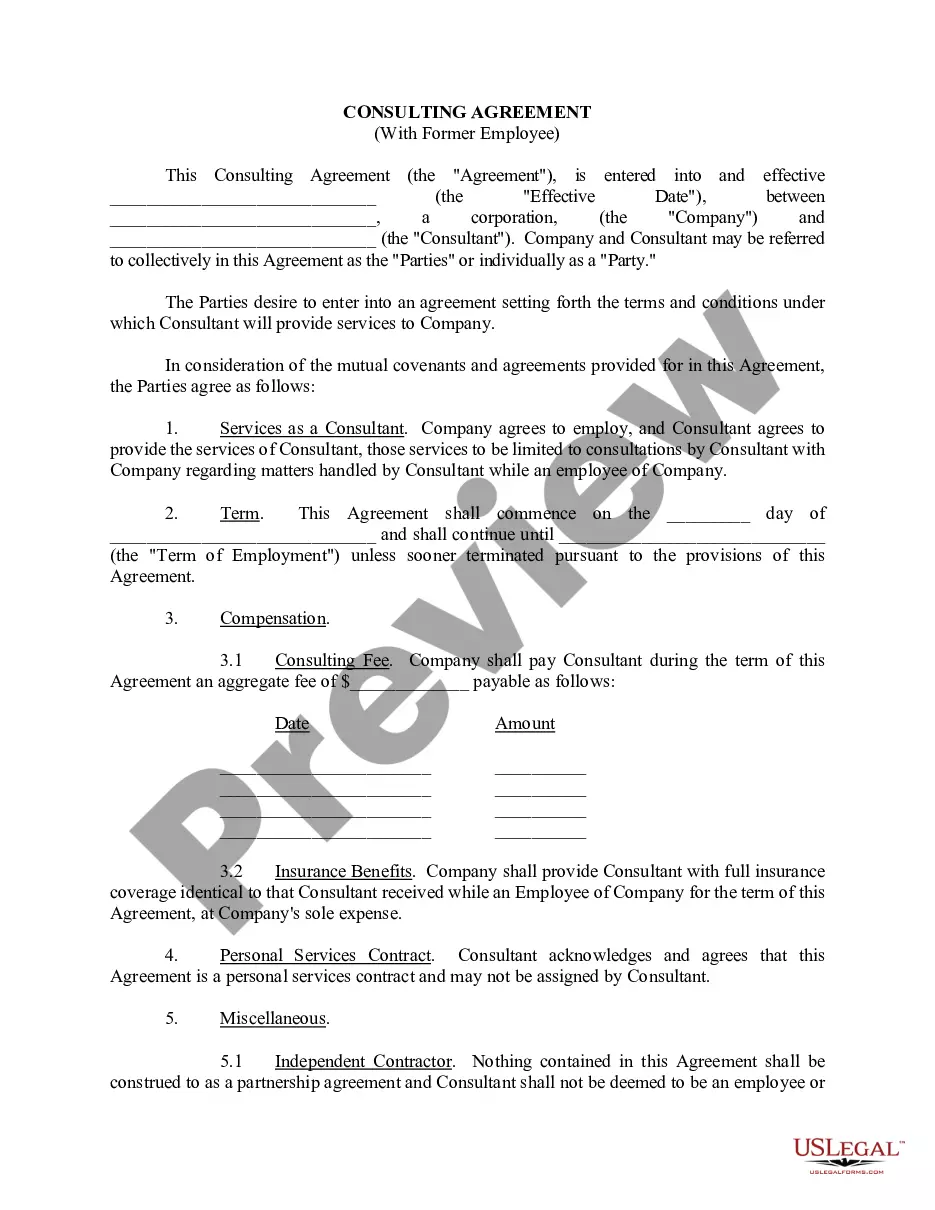
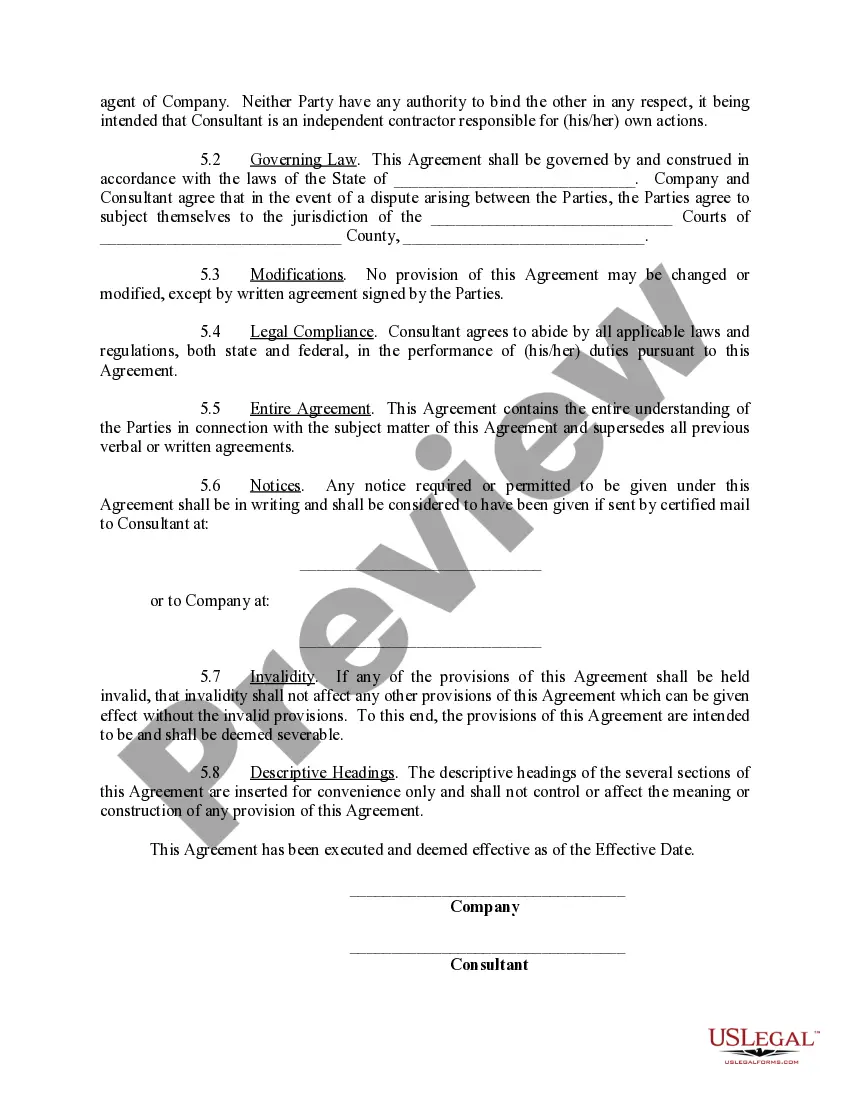
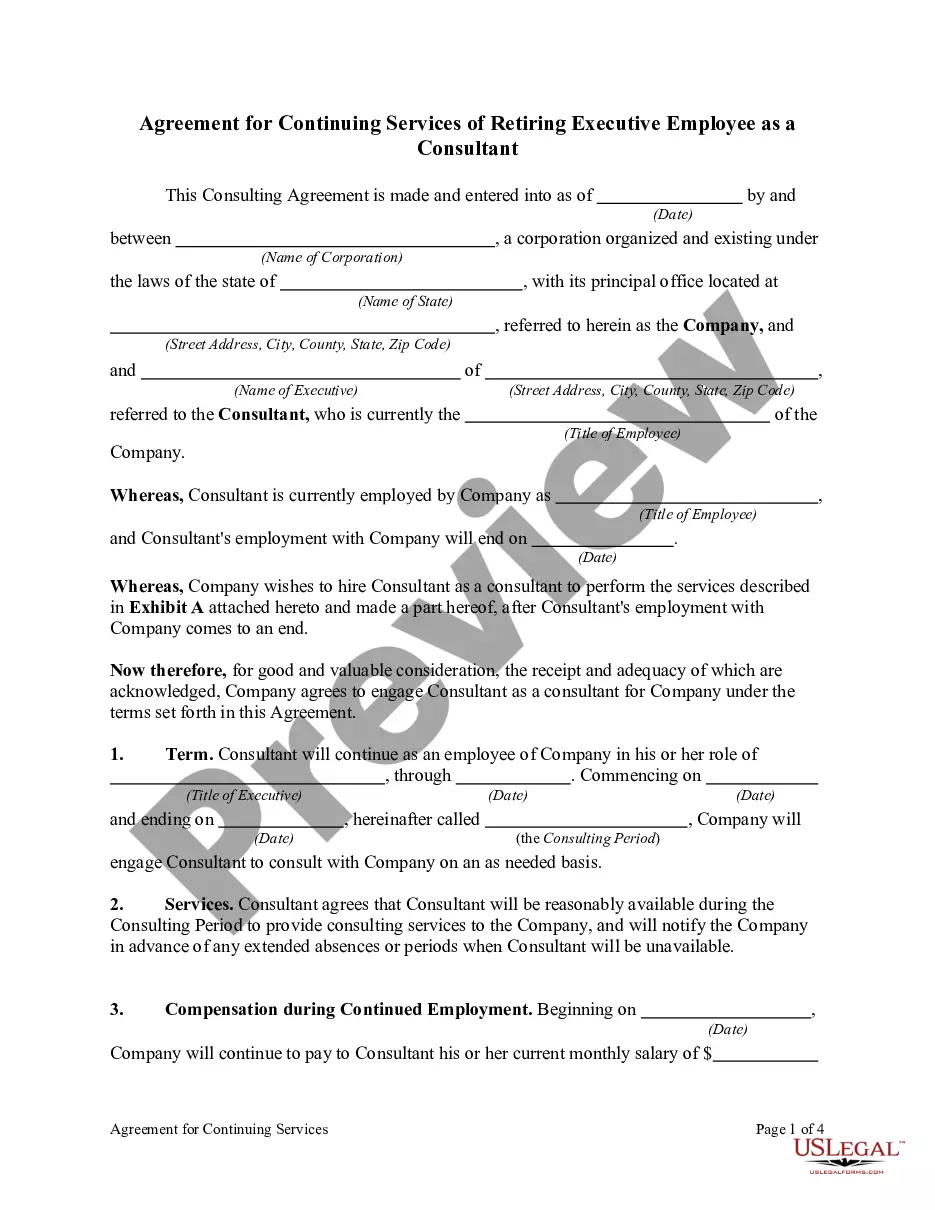
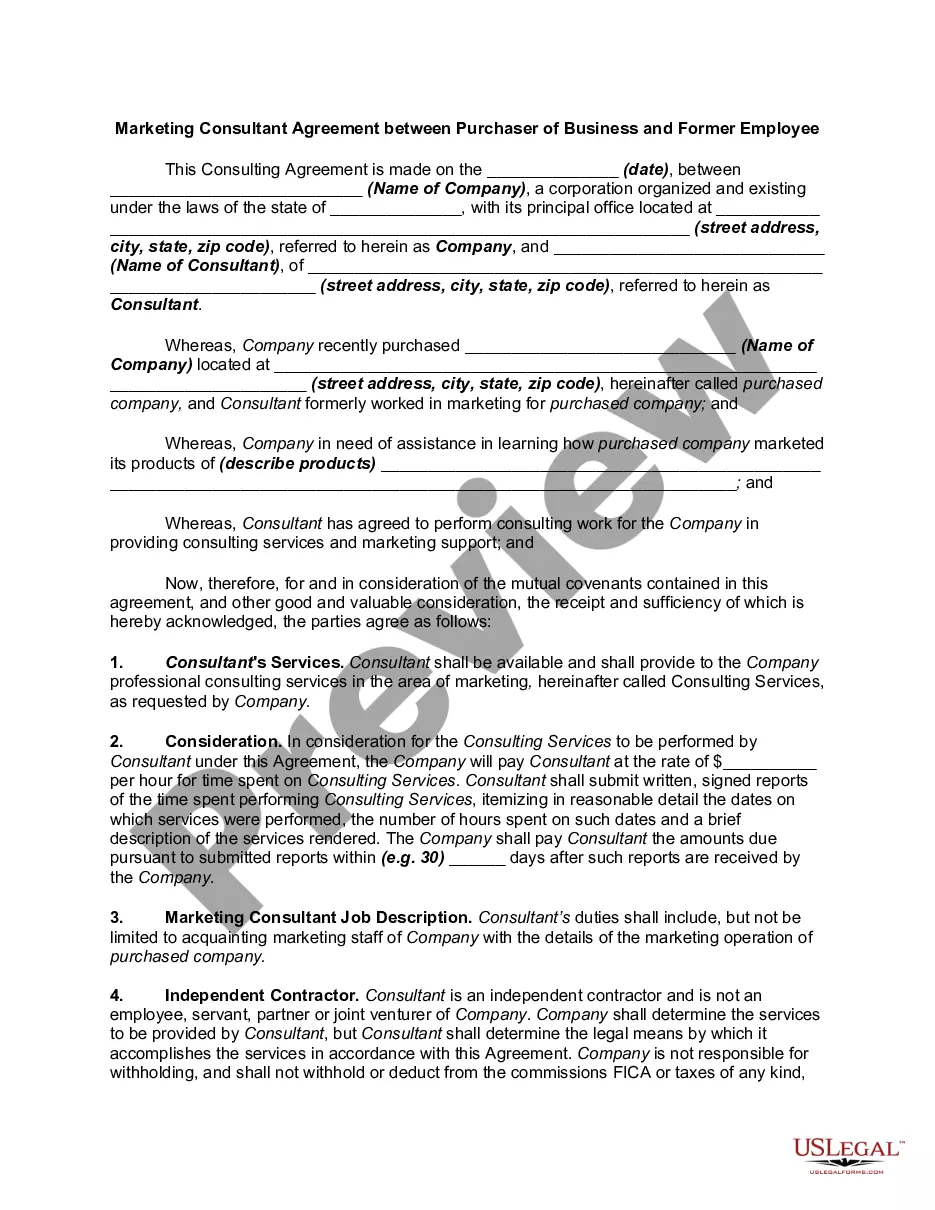
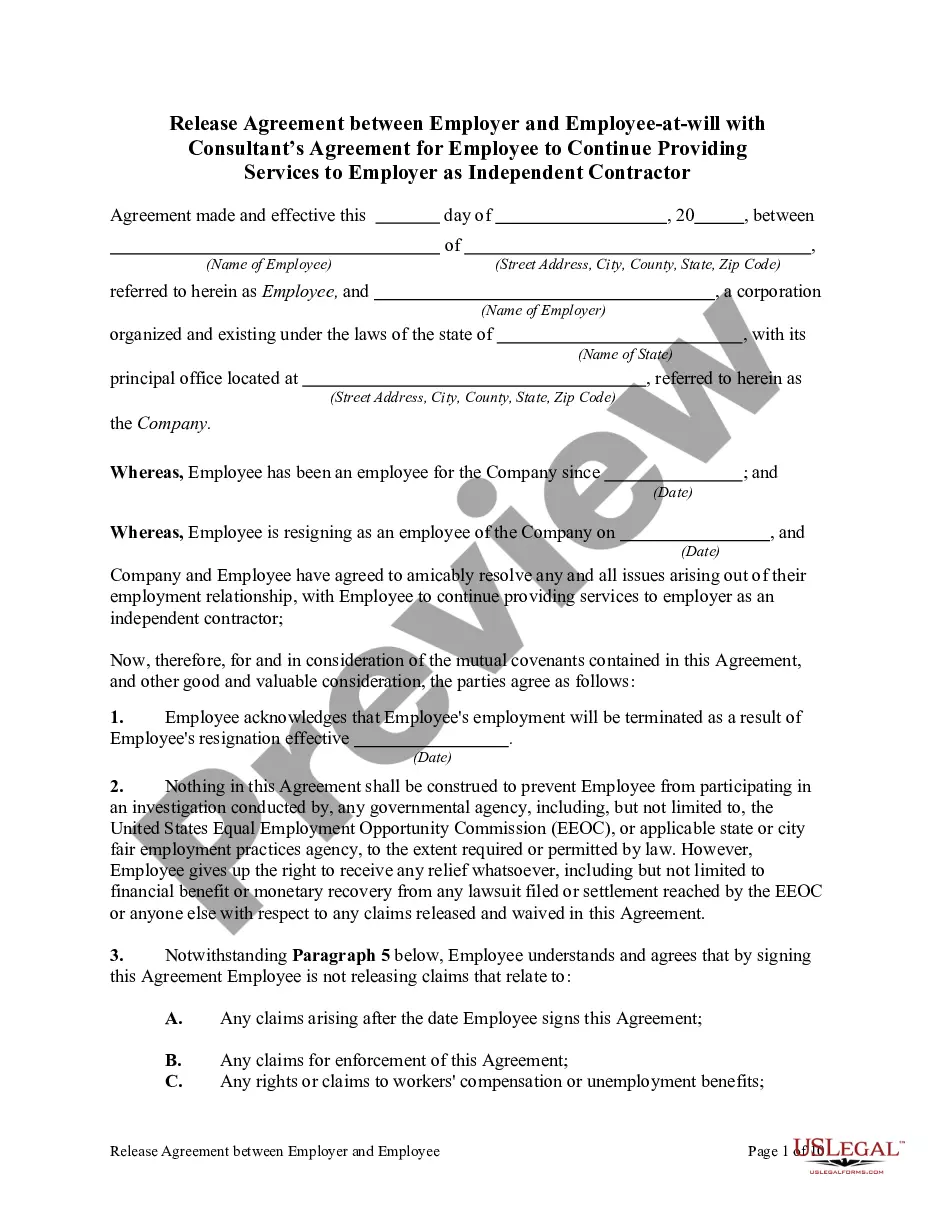
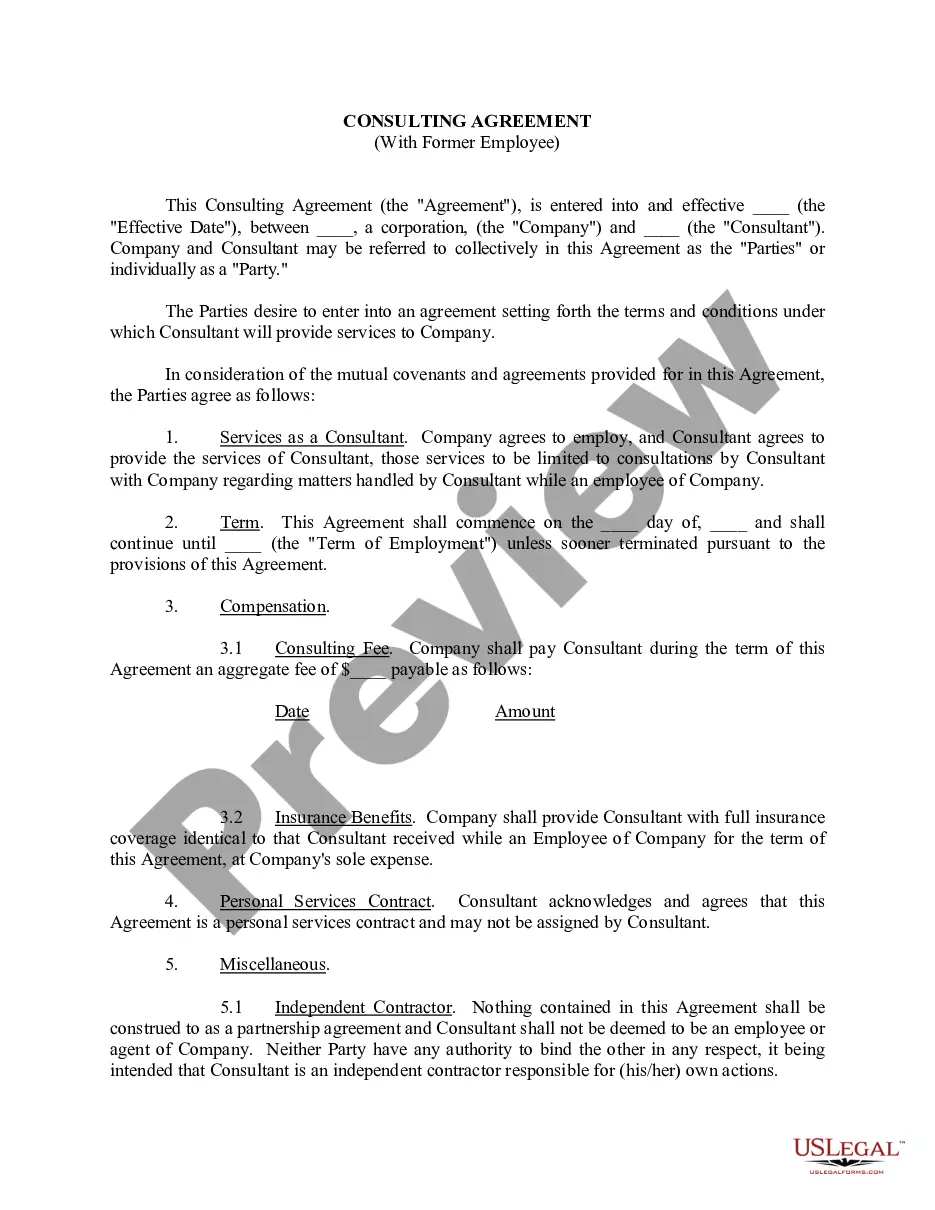


How to fill out Consulting Agreement With Former Employee?
If you desire to compile, retrieve, or produce authentic document templates, utilize US Legal Forms, the premier selection of legal forms accessible online. Take advantage of the site’s straightforward and convenient search to locate the documents you require. Numerous templates for business and personal purposes are organized by categories and states, or keywords. Utilize US Legal Forms to acquire the Guam Consulting Agreement with Former Employee with just a few clicks.
If you are currently a US Legal Forms user, Log In to your account and click the Download button to obtain the Guam Consulting Agreement with Former Employee. You can also access forms you previously downloaded within the My documents section of your account.
If you are utilizing US Legal Forms for the first time, refer to the guidelines below: Step 1. Ensure you have selected the form for the correct state/region. Step 2. Use the Review option to examine the form’s content. Don’t forget to read through the details. Step 3. If you are dissatisfied with the form, use the Search field at the top of the screen to find alternative versions of the legal form format. Step 4. After you have located the form you want, click the Acquire now button. Choose the pricing plan you prefer and enter your credentials to register for an account. Step 5. Process the transaction. You can use your credit card or PayPal account to complete the transaction. Step 6. Select the format of the legal form and download it to your device. Step 7. Complete, modify and print or sign the Guam Consulting Agreement with Former Employee.
Avoid altering or deleting any HTML tags. Only synonymize plain text outside of the HTML tags.
- Each legal document template you purchase is yours permanently.
- You will have access to every form you downloaded with your account.
- Navigate to the My documents section and select a form to print or download again.
- Be proactive and download, and print the Guam Consulting Agreement with Former Employee using US Legal Forms.
- There are numerous professional and state-specific forms available for your business or personal needs.
Form popularity
FAQ
Yes, employment at will is recognized in Guam. This means that either the employer or the employee can terminate the employment relationship at any time, for any legal reason. However, when you engage a former employee through a Guam Consulting Agreement with Former Employee, it is important to outline the terms clearly. This agreement can help protect both parties by specifying the expectations and responsibilities involved in the consulting arrangement.
To structure a consulting agreement, start with an introduction that identifies the parties involved. Outline the project's scope, payment terms, and timelines, followed by clauses addressing confidentiality and termination. In a Guam Consulting Agreement with Former Employee, ensure that the structure reflects both parties' needs and expectations, promoting a clear understanding of the engagement.
The 7 C's of consulting include clarity, competence, credibility, communication, collaboration, commitment, and consistency. These principles guide consultants in delivering effective services and fostering strong client relationships. Applying these concepts can enhance a Guam Consulting Agreement with Former Employee, ensuring both parties remain aligned and satisfied throughout their professional engagement.
The rule of 3 in consulting suggests that you should present information in groups of three for clarity and impact. This technique helps clients easily understand your message and retain key points. When drafting a Guam Consulting Agreement with Former Employee, consider using this rule to outline essential terms or deliverables, improving overall communication and comprehension.
To terminate a consultant contract, refer to the termination provisions outlined in the agreement. Provide written notice to the consultant, specifying the reason for termination if required. It's advisable to review any ongoing obligations, such as confidentiality or non-compete clauses, particularly in a Guam Consulting Agreement with Former Employee. This approach ensures a smooth transition and protects both parties' interests.
A consultancy agreement often involves a specific project or service provided by an independent contractor, while an employment agreement involves a longer-term relationship with an employee under the company's direction. In a Guam Consulting Agreement with Former Employee, the contractor typically retains more control over their work schedule and methods. Understanding these differences helps both parties clearly define their roles and expectations.
To write a consulting contract agreement, begin by outlining the scope of work and deliverables. Clearly state the terms of payment, including rates and payment schedules. It's essential to include confidentiality clauses, especially in a Guam Consulting Agreement with Former Employee, to protect sensitive information. Finally, ensure both parties sign and date the contract to make it legally binding.
Consulting does not typically count as employment in the traditional sense. Consultants operate as independent contractors, which means they are not subject to the same benefits or protections as employees. When drafting a Guam Consulting Agreement with Former Employee, it is important to specify the nature of the relationship to avoid any misconceptions about employment status. This distinction protects both parties and clarifies expectations.
A consulting agreement is a specific type of contract. While all consulting agreements are contracts, not all contracts are consulting agreements. The Guam Consulting Agreement with Former Employee serves as a formal document outlining the terms of the consulting relationship, including duties, compensation, and duration. This clarity helps both parties navigate their professional relationship effectively.
No, a consulting agreement is not the same as an employment contract. While both documents outline a working relationship, a consulting agreement typically involves an independent contractor rather than an employee. In the context of a Guam Consulting Agreement with Former Employee, it is crucial to clarify that the individual operates as a consultant, not as a company employee, to avoid legal complications.