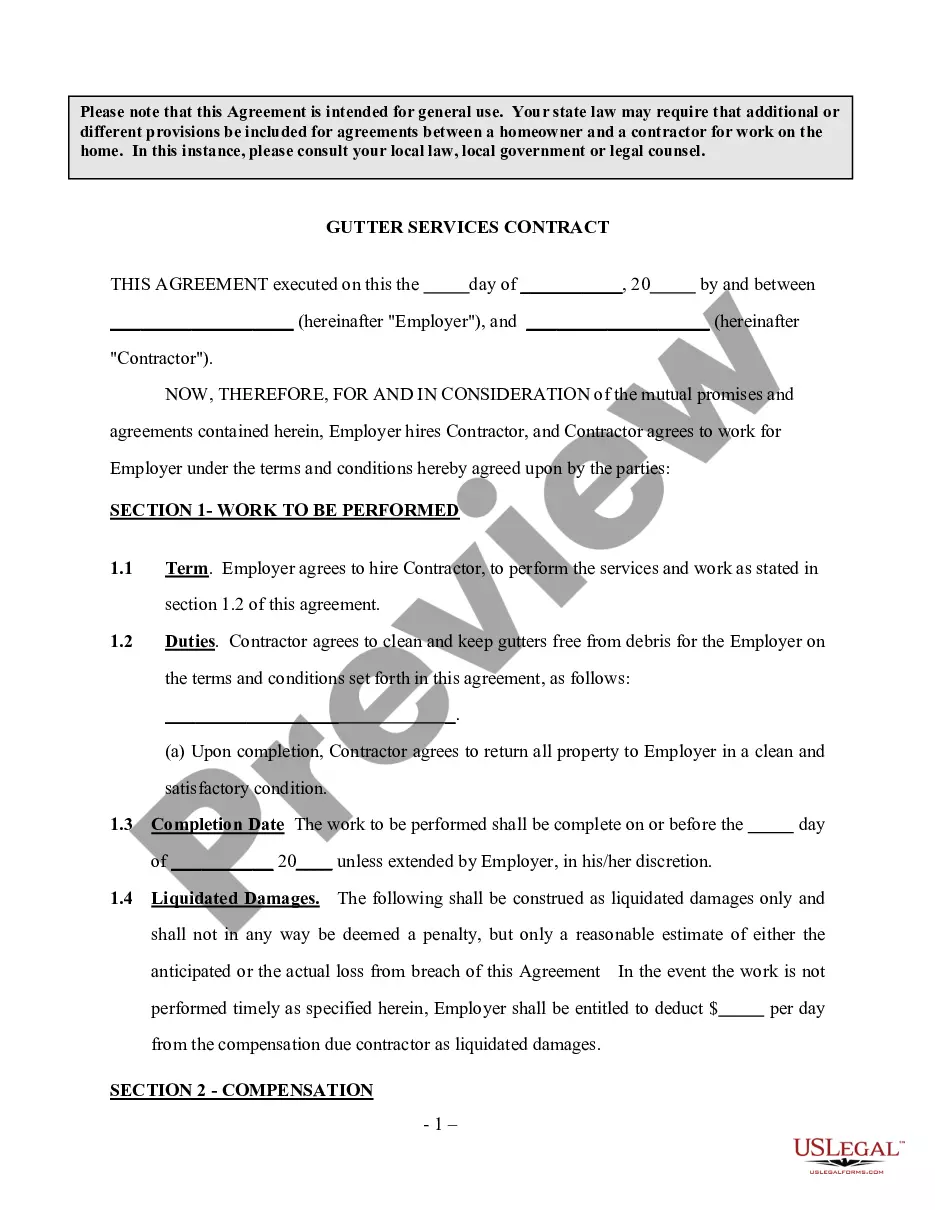
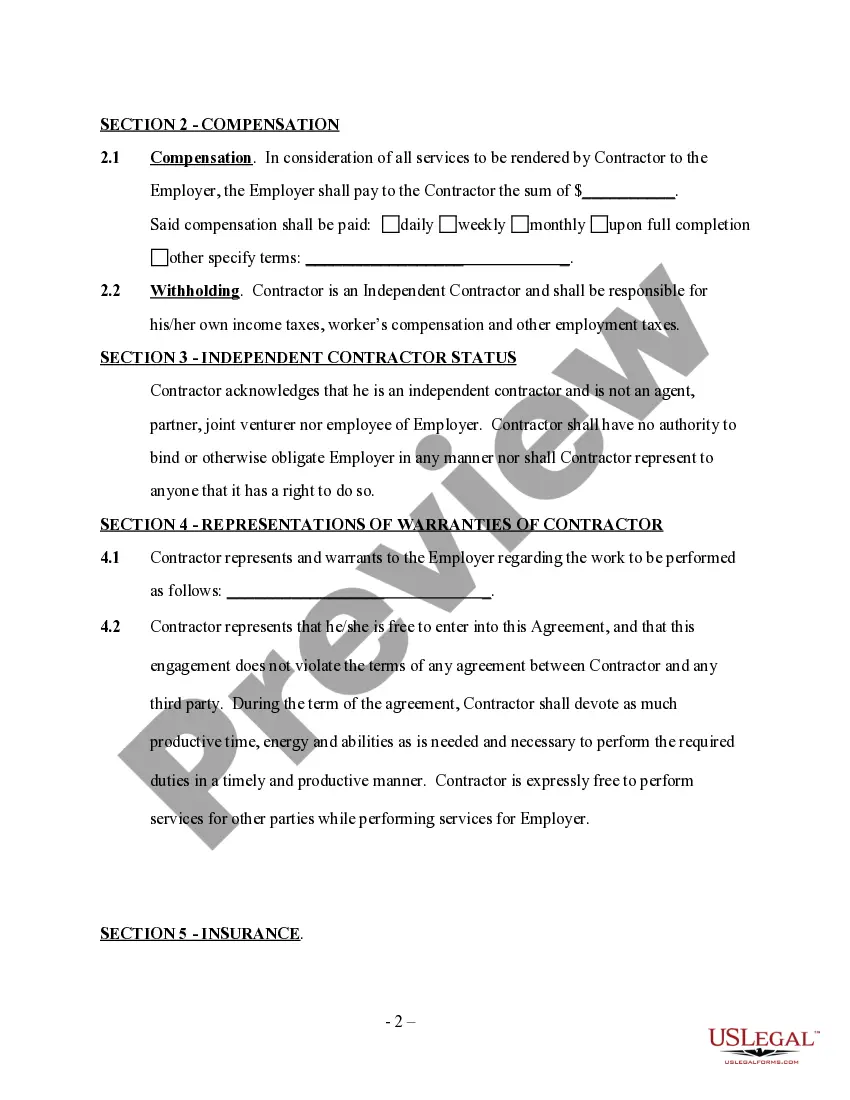
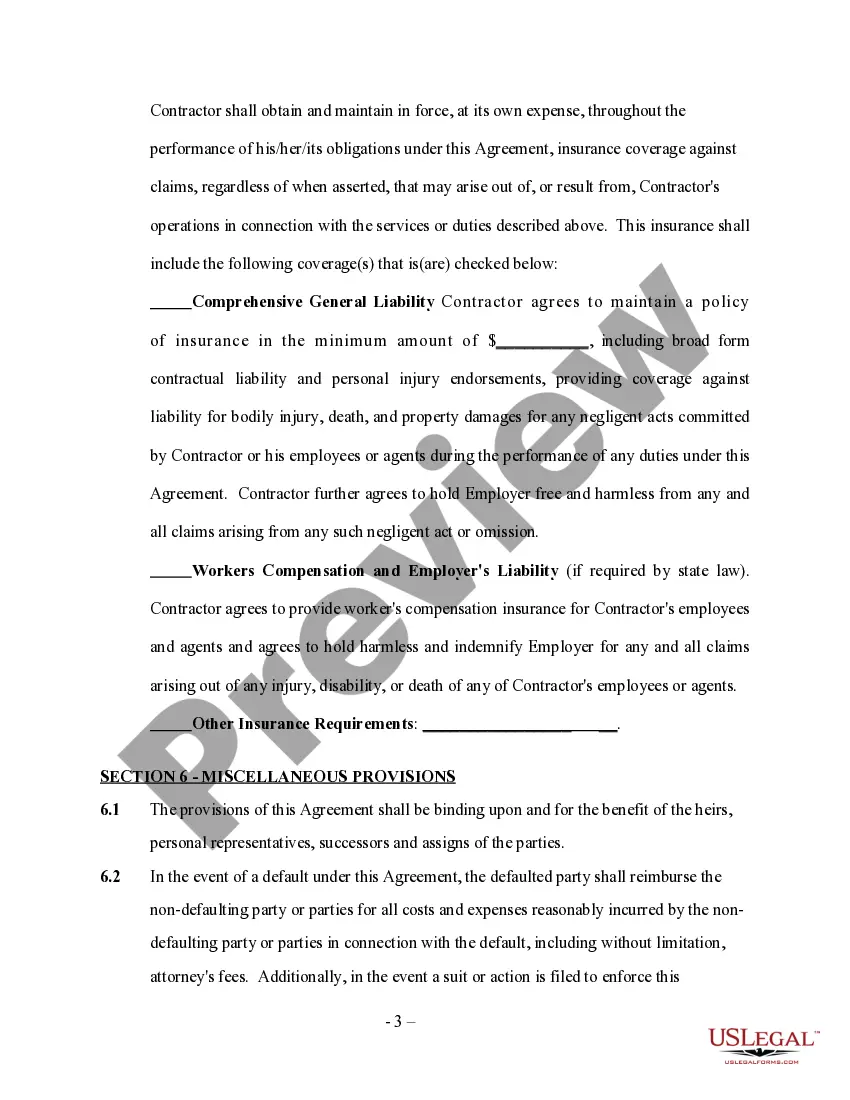
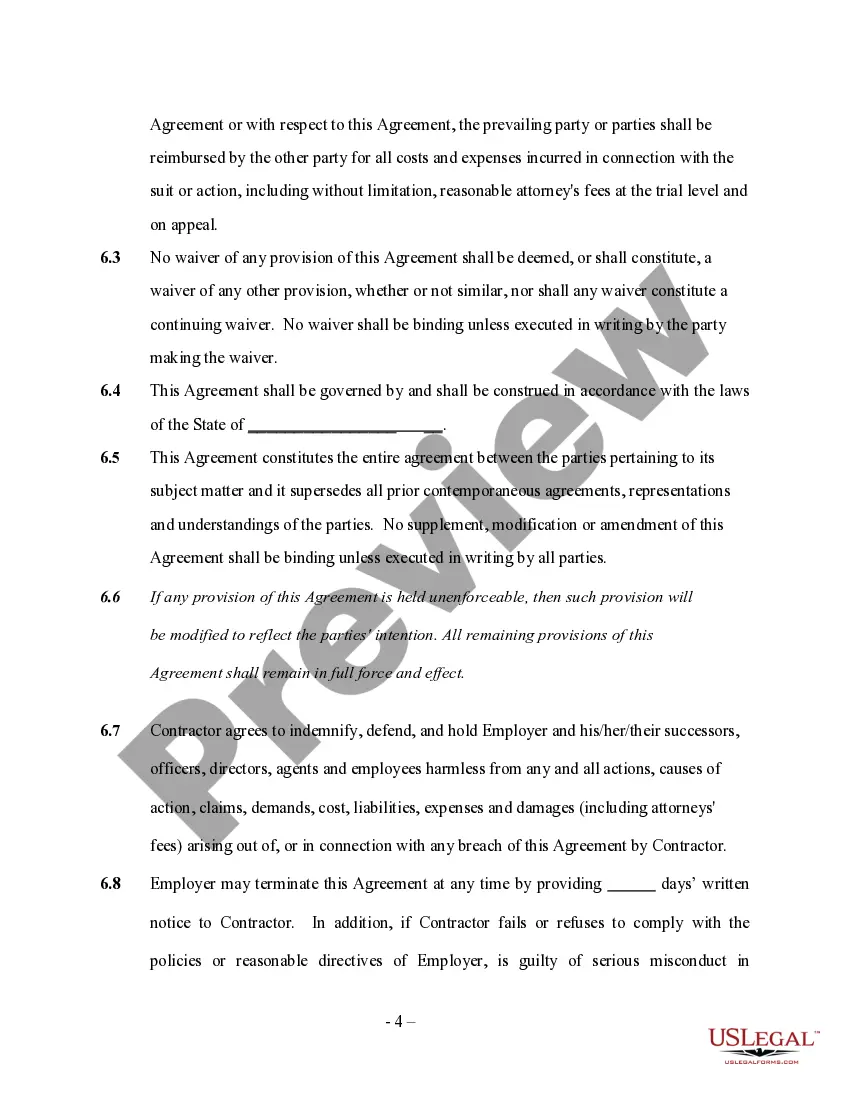
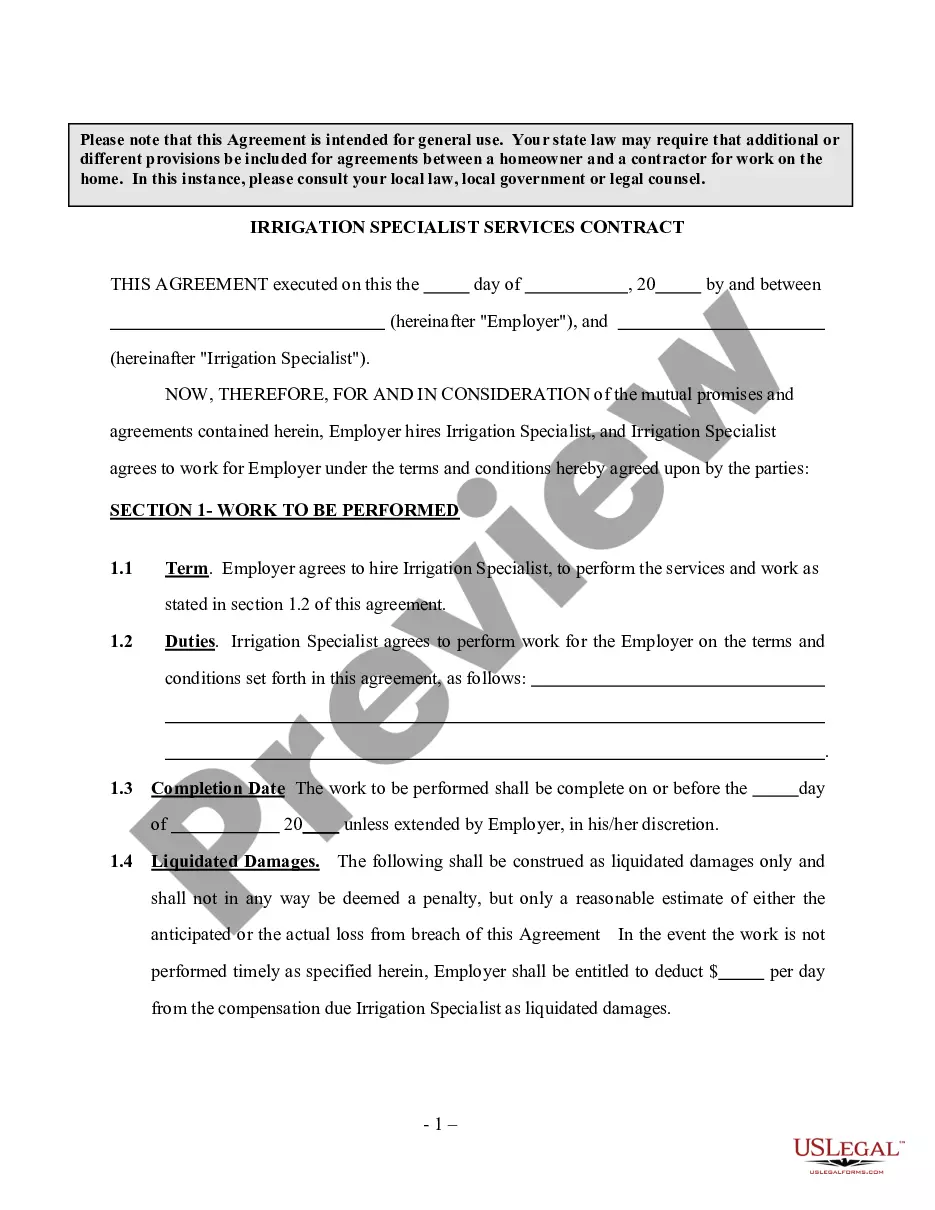
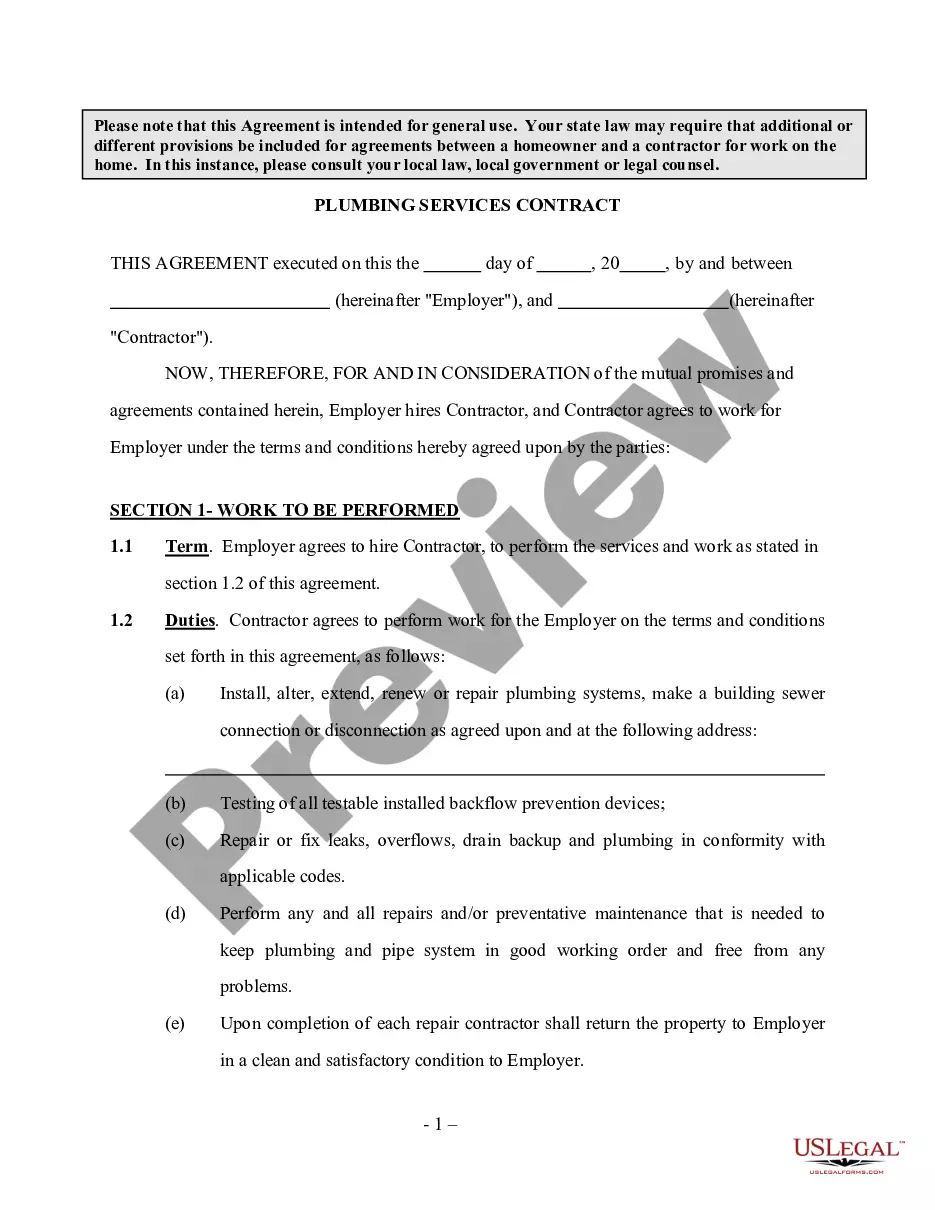
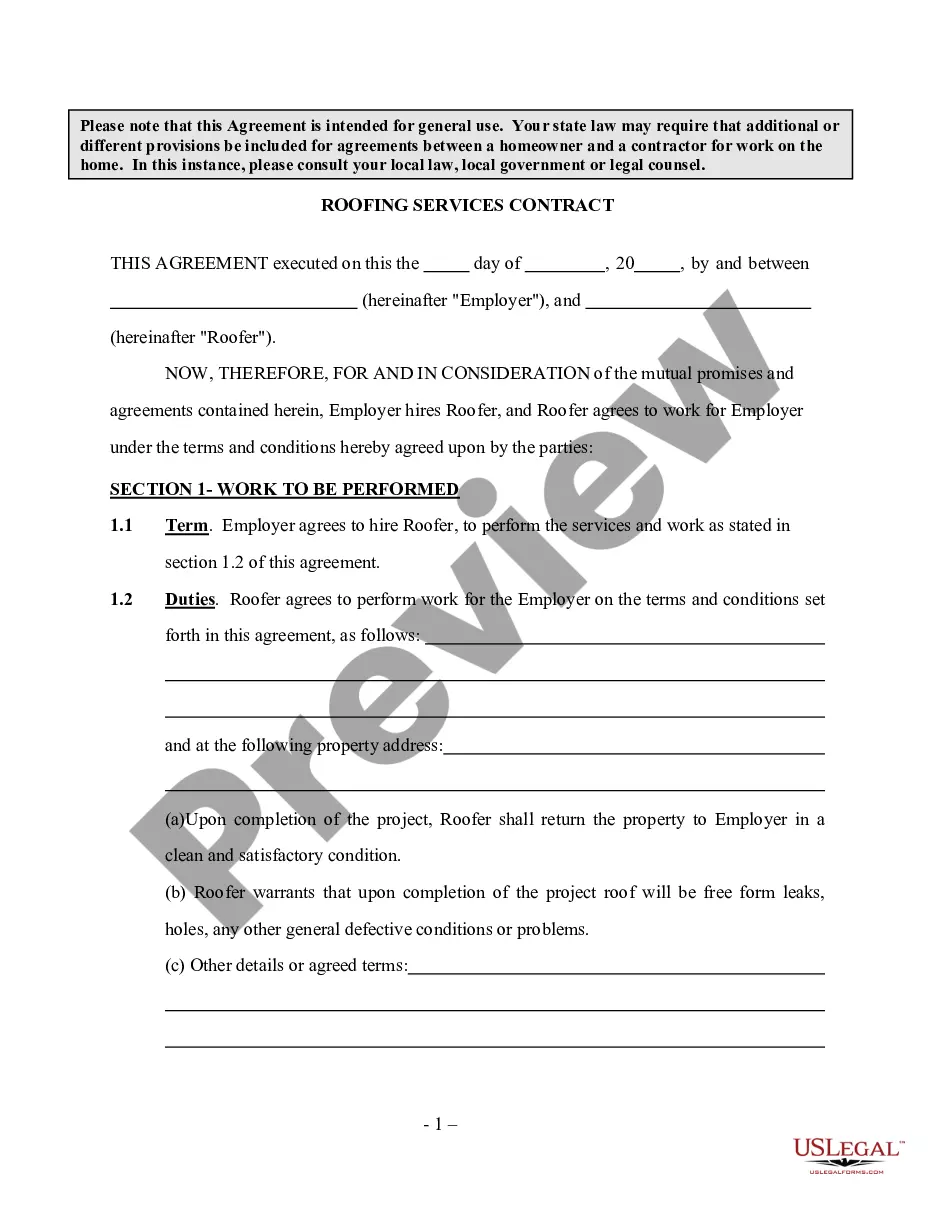
Employer contracts with an independent contractor to install and/or service and clean gutters and eaves drops as specified in the contract. Please note that this Agreement is intended for general use. Your state law may require that additional or different provisions be included for agreements between a homeowner and a contractor for work on the home. In this instance, please consult your local law, local government or legal counsel.
Guam Gutter Services Contract - Self-Employed
State:
Multi-State
Control #:
US-INDC-155
Format:
Word;
Rich Text
Instant download
Description
Free preview
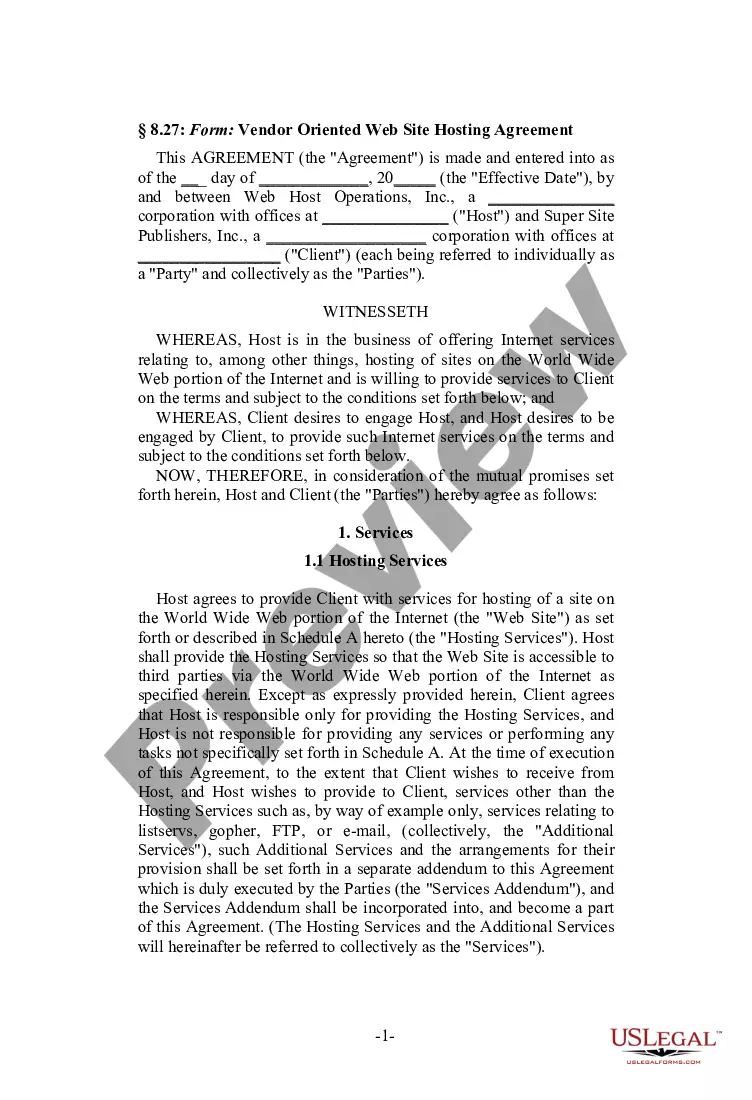
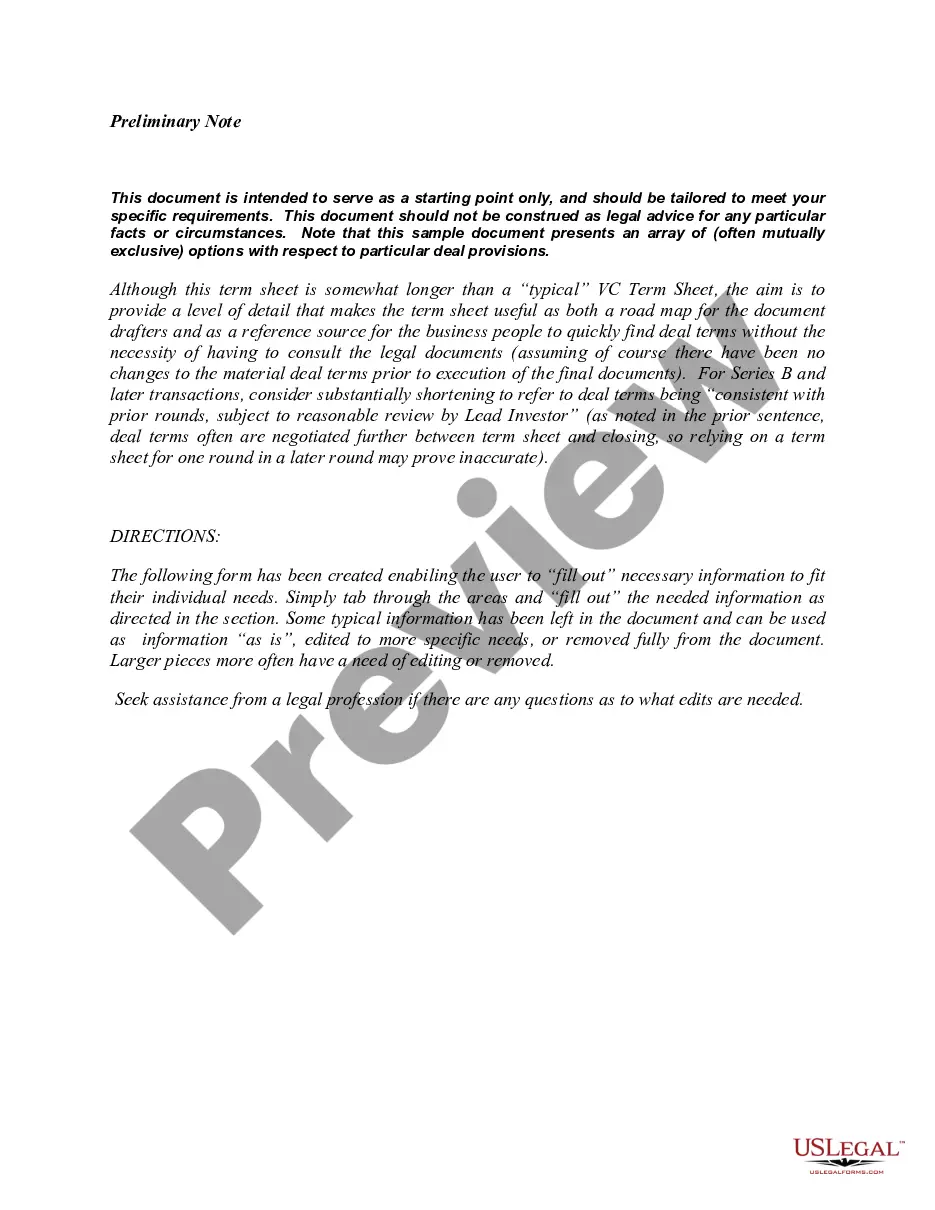
How to fill out Gutter Services Contract - Self-Employed?
US Legal Forms - one of the most important collections of legal documents in the USA - offers a variety of legal form templates that you can download or print.
By utilizing the website, you can access a vast array of forms for business and personal purposes, organized by categories, states, or keywords. You can find the latest editions of forms such as the Guam Gutter Services Contract - Self-Employed in moments.
If you already have an account, Log In and download Guam Gutter Services Contract - Self-Employed from the US Legal Forms library. The Download button will appear on every form you view. You have access to all previously downloaded forms in the My documents section of your account.
Make modifications. Complete, edit, print, and sign the downloaded Guam Gutter Services Contract - Self-Employed.
Each template you add to your account has no expiration date and belongs to you indefinitely. So, if you want to download or print another copy, simply go to the My documents section and click on the form you need. Access the Guam Gutter Services Contract - Self-Employed with US Legal Forms, the most extensive collection of legal document templates. Utilize a wide range of professional and state-specific templates that meet your business or personal needs.
- If you are using US Legal Forms for the first time, here are simple steps to get started:
- Ensure you have selected the correct form for your city/state. Click the Review button to check the form's content. Read the form description to confirm that you have chosen the right form.
- If the form does not meet your requirements, use the Search field at the top of the screen to find one that does.
- If you are satisfied with the form, confirm your choice by clicking the Buy now button. Then, select your preferred pricing plan and provide your information to register for an account.
- Process the payment. Use a Visa or Mastercard or PayPal account to complete the transaction.
- Select the format and download the form to your device.
Form popularity
FAQ
The IRS says that someone is self-employed if they meet one of these conditions:Someone who carries on a trade or business as a sole proprietor or independent contractor,A member of a partnership that carries on a trade or business, or.Someone who is otherwise in business for themselves, including part-time business.
Independent contractors are self-employed workers who provide services for an organisation under a contract for services. Independent contractors are not employees and are typically highly skilled, providing their clients with specialist skills or additional capacity on an as needed basis.
Becoming an independent contractor is one of the many ways to be classified as self-employed. By definition, an independent contractor provides work or services on a contractual basis, whereas, self-employment is simply the act of earning money without operating within an employee-employer relationship.
If you are an independent contractor, then you are self-employed. The earnings of a person who is working as an independent contractor are subject to self-employment tax. To find out what your tax obligations are, visit the Self-Employed Individuals Tax Center.
The three types of self-employed individuals include:Independent contractors. Independent contractors are individuals hired to perform specific jobs for clients, meaning that they are only paid for their jobs.Sole proprietors.Partnerships.
The general rule is that an individual is an independent contractor if the payer has the right to control or direct only the result of the work and not what will be done and how it will be done. If you are an independent contractor, then you are self-employed.
The law does not require you to complete a contract with your self-employed or freelance workers - a verbal contract can exist even when there is nothing in writing.
A 'self-employed contractor' is a person who is genuinely in business for themselves (ie s/he takes responsibility for the success or failure of the business) and is neither an employee nor a worker.
An employee-employer contract is a contract of service. A contractor-client contract is a contract for services.
Becoming an independent contractor is one of the many ways to be classified as self-employed. By definition, an independent contractor provides work or services on a contractual basis, whereas, self-employment is simply the act of earning money without operating within an employee-employer relationship.