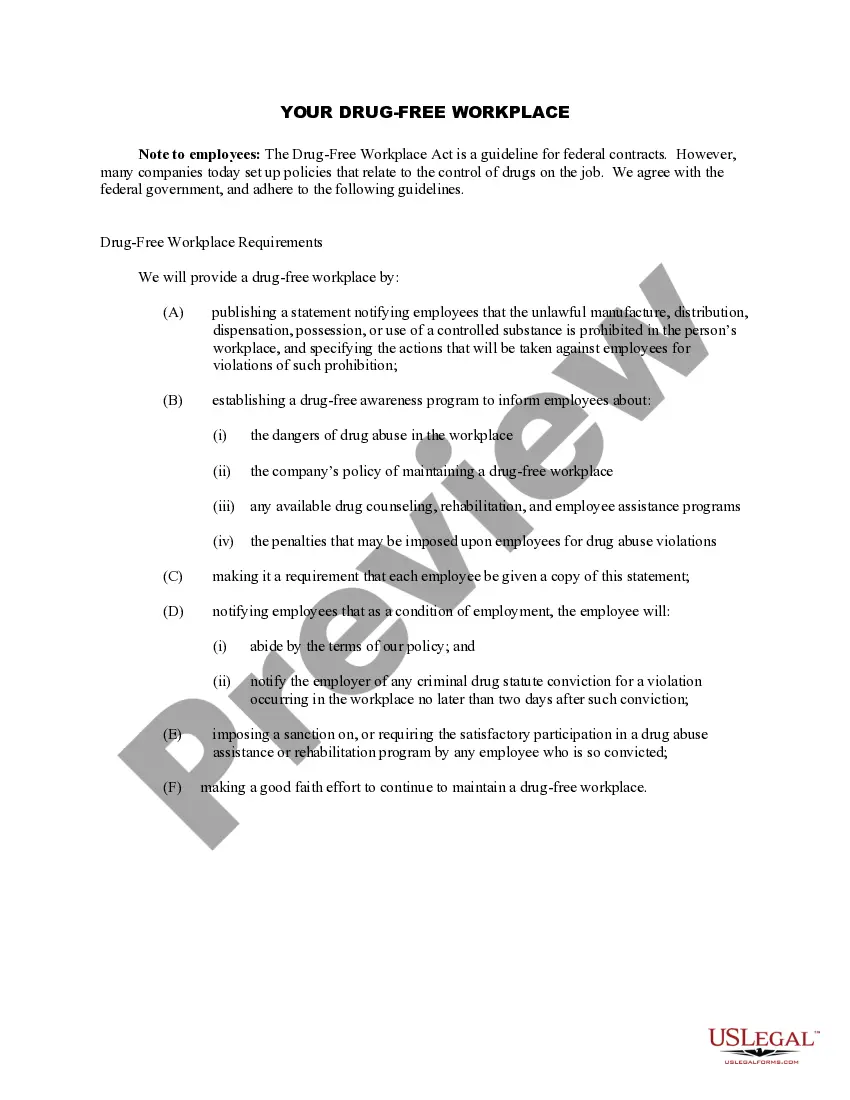
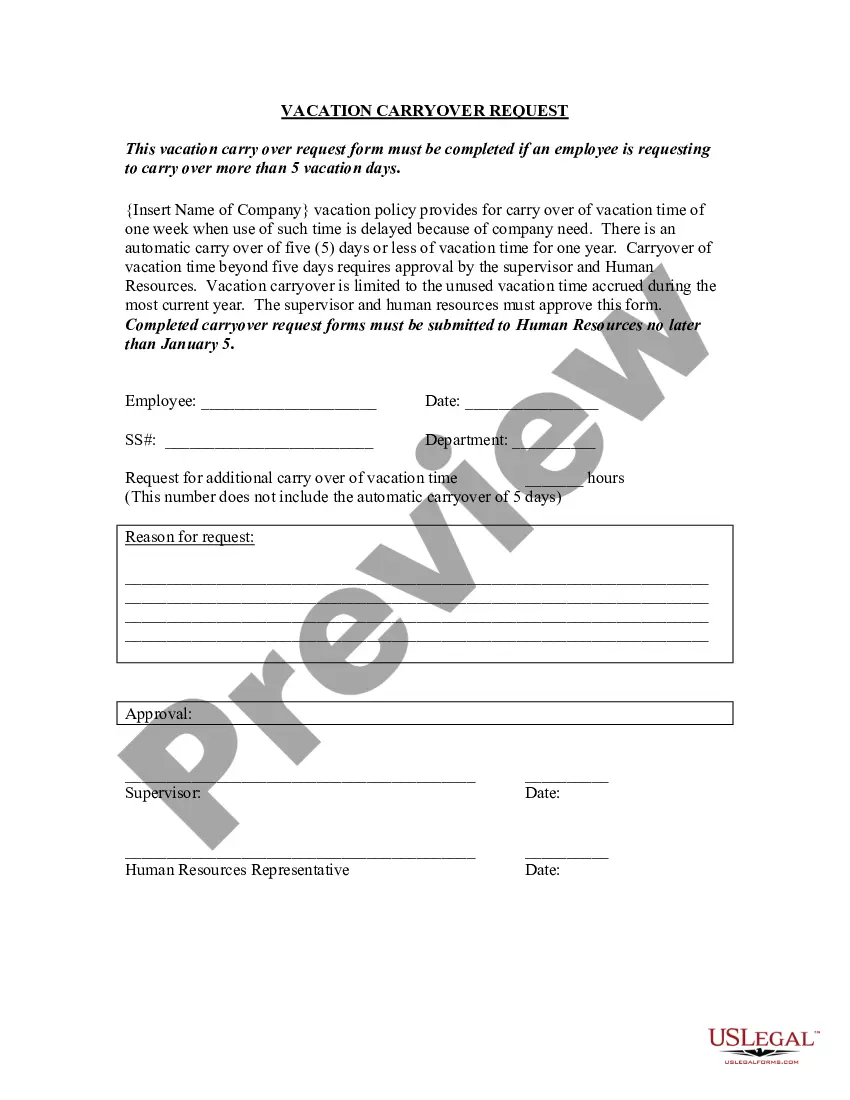
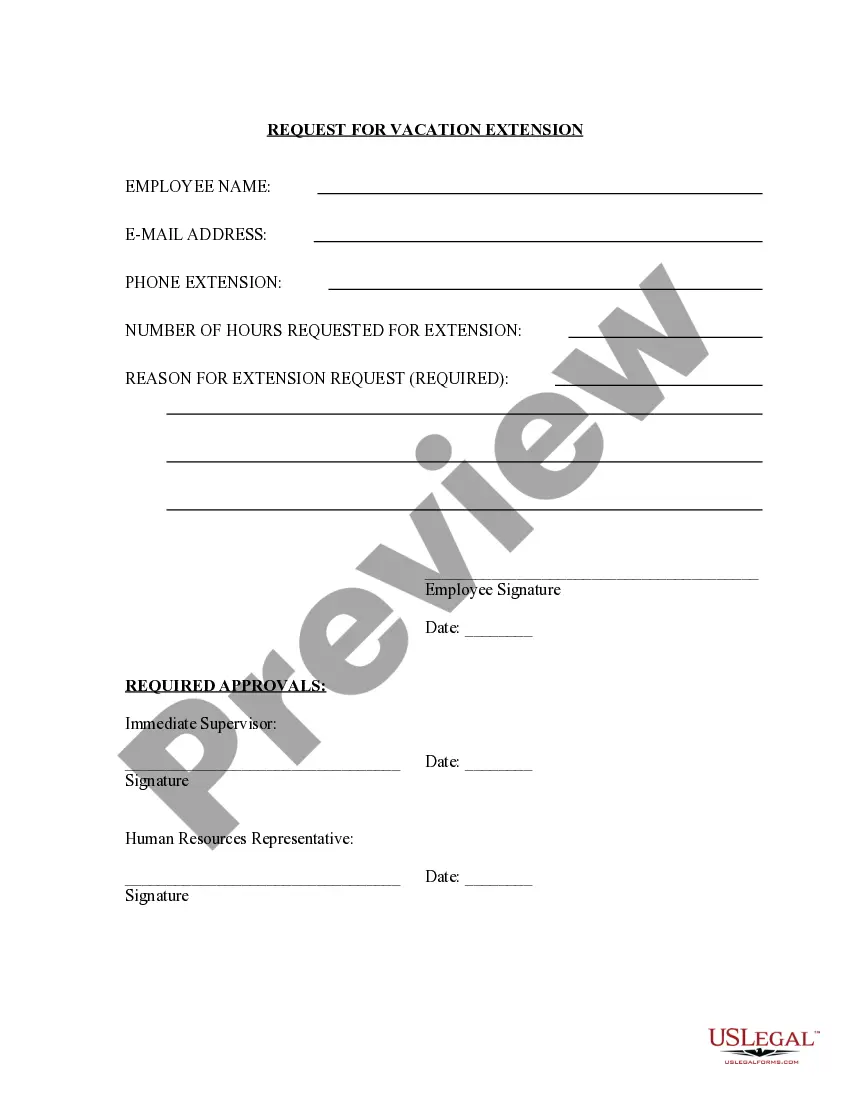
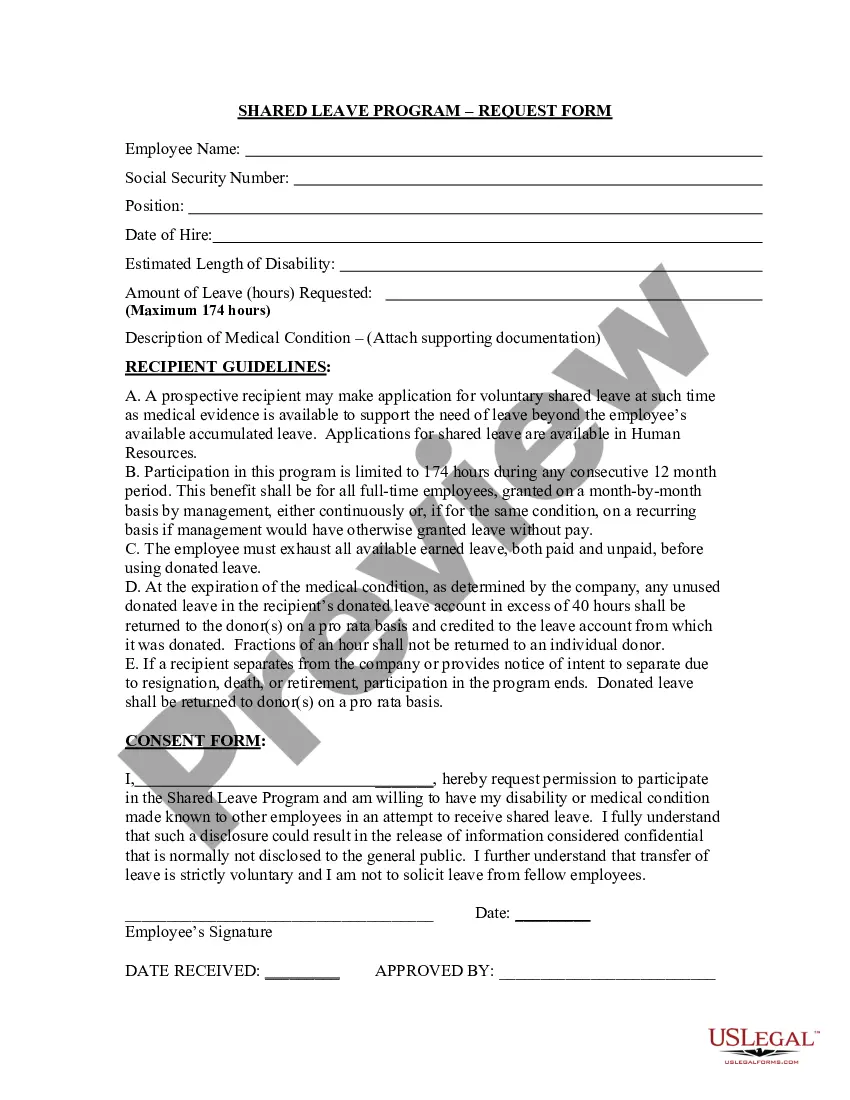
Georgia Vacation Carryover Request
Description

Get your form ready online
Our built-in tools help you complete, sign, share, and store your documents in one place.
Make edits, fill in missing information, and update formatting in US Legal Forms—just like you would in MS Word.
Download a copy, print it, send it by email, or mail it via USPS—whatever works best for your next step.
Sign and collect signatures with our SignNow integration. Send to multiple recipients, set reminders, and more. Go Premium to unlock E-Sign.
If this form requires notarization, complete it online through a secure video call—no need to meet a notary in person or wait for an appointment.
We protect your documents and personal data by following strict security and privacy standards.

Make edits, fill in missing information, and update formatting in US Legal Forms—just like you would in MS Word.

Download a copy, print it, send it by email, or mail it via USPS—whatever works best for your next step.

Sign and collect signatures with our SignNow integration. Send to multiple recipients, set reminders, and more. Go Premium to unlock E-Sign.

If this form requires notarization, complete it online through a secure video call—no need to meet a notary in person or wait for an appointment.

We protect your documents and personal data by following strict security and privacy standards.
Looking for another form?



How to fill out Vacation Carryover Request?
Are you currently in a situation where you need documents for either professional or personal reasons almost every day.
There are numerous legal document templates available online, but locating ones you can trust is challenging.
US Legal Forms offers a vast collection of form templates, such as the Georgia Vacation Carryover Request, created to comply with state and federal regulations.
Choose the payment plan you prefer, complete the necessary information to create your account, and pay for the order using your PayPal or credit card.
Select a convenient document format and download your copy.
- If you already know the US Legal Forms website and have an account, simply Log In.
- After that, you can download the Georgia Vacation Carryover Request template.
- If you do not have an account and wish to start using US Legal Forms, follow these steps.
- Locate the form you require and ensure it corresponds to the appropriate city/state.
- Use the Preview button to view the form.
- Review the details to confirm that you have selected the correct form.
- If the form does not meet your needs, use the Search field to find the form that suits your requirements and criteria.
- Once you find the right form, click on Get now.
Form popularity
FAQ
Vacation Policies Since, Georgia's state law does not mandate paid or unpaid vacation there is also no mandate for payment of accrued vacation time. Employers have the freedom to set up their own vacation accrual policy, or not allow vacation to accrue.
Although Georgia's Legislature and its courts are silent regarding the matter, it is likely an employer may cap the amount of vacation leave an employee may accrue over time. See Shannon v.
Where an employer has a PTO policy, remaining PTO days are generally treated the same as vacation days under the law when an employee leaves the job - see question 5 below. These days are considered to be accrued by the employee and payable when the employee leaves the job. 5.
A maximum of 40 hours of accrued and unused PTO time may be carried over from one calendar year to the next. Employees will not be able to "sell" unused PTO hours back to the company unless authorized by the company president.
Vacation Carryover Definition Vacation carryover is a policy some companies have that allows employees to carry unused paid-time-off hours from one year into the next. In many workplaces, eligible employees accrue paid vacation time based on the amount of hours worked.
Under the law, there should not be any carry over. Moreover, employees cannot carry over their statutory minimum vacation time. If there is carry over, the employer has failed to comply with the Employment Standards Act.
Under California law, unless otherwise stipulated by a collective bargaining agreement, whenever the employment relationship ends, for any reason whatsoever, and the employee has not used all of his or her earned and accrued vacation, the employer must pay the employee at his or her final rate of pay for all of his or
The state of Georgia has no statute governing the payment of vacation time. An employer would also likely be free to implement a use-it-or-lose-it policy requiring employees to use their leave by a set date or lose it. See Shannon v.
No use-it-or-lose-it policies permitted. Under California law, vacation is treated the same as earned wages and vest as the employee performs work. Because vacation is earned proportionally as the employee works, policies requiring employees to lose vacation already earned is illegal under California law.