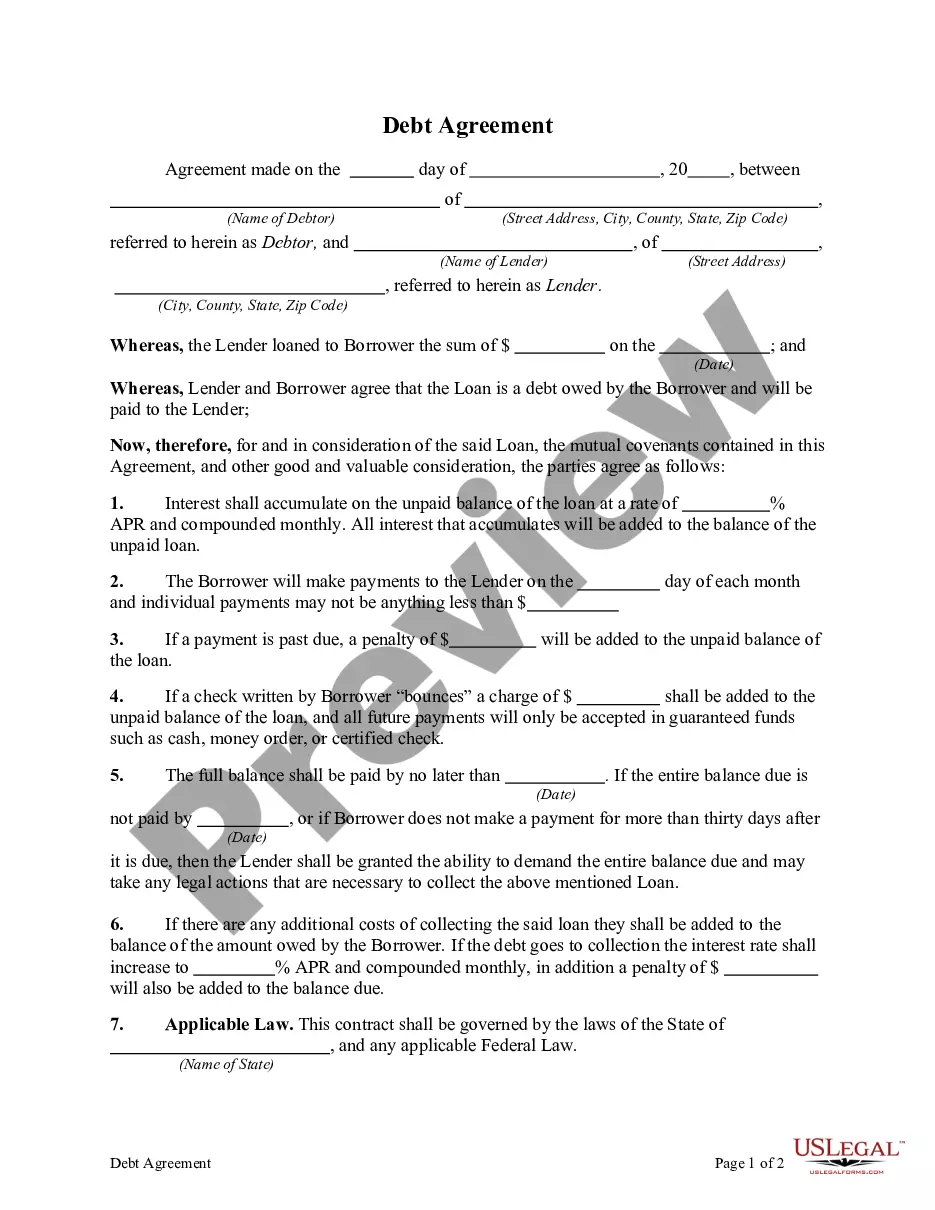
Georgia Debt Agreement
Description
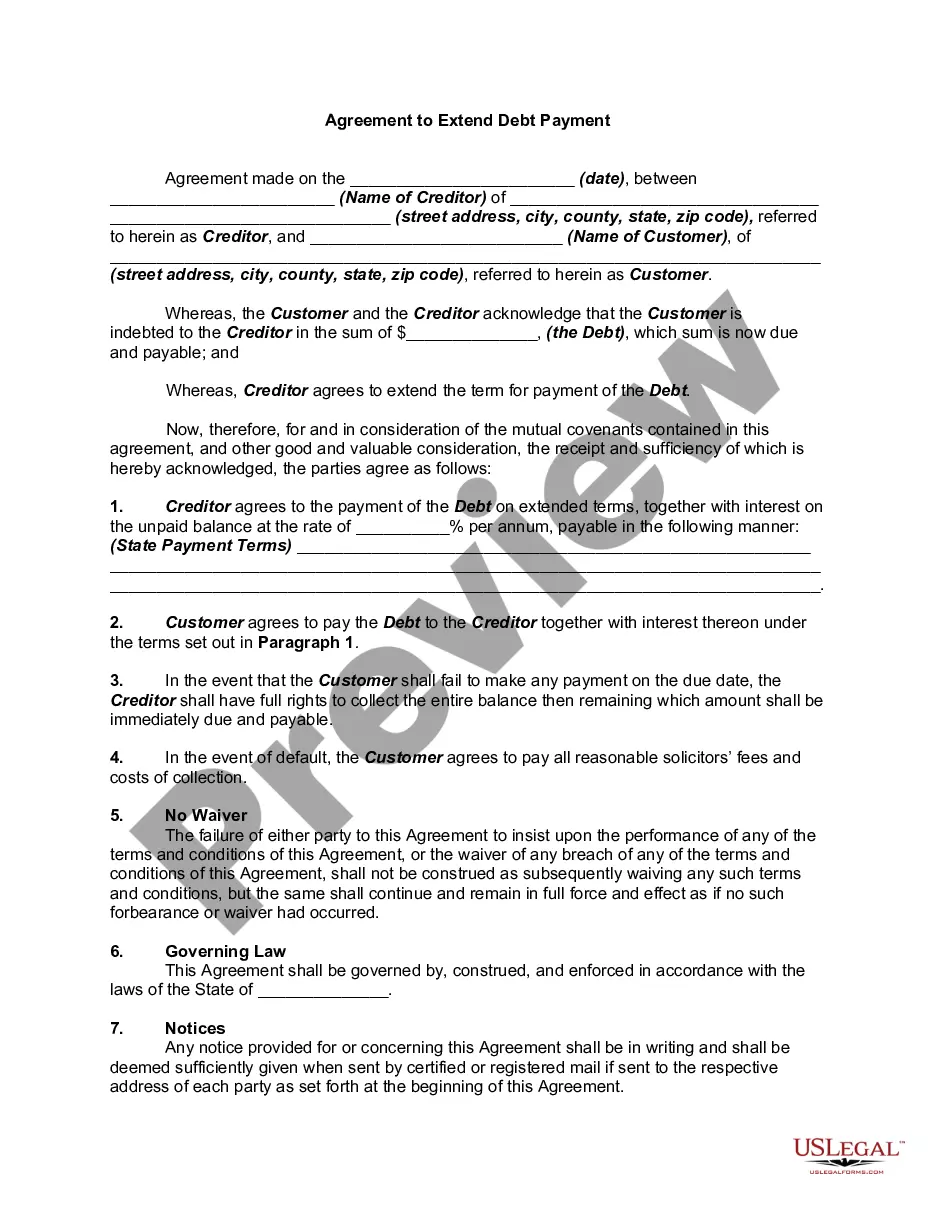
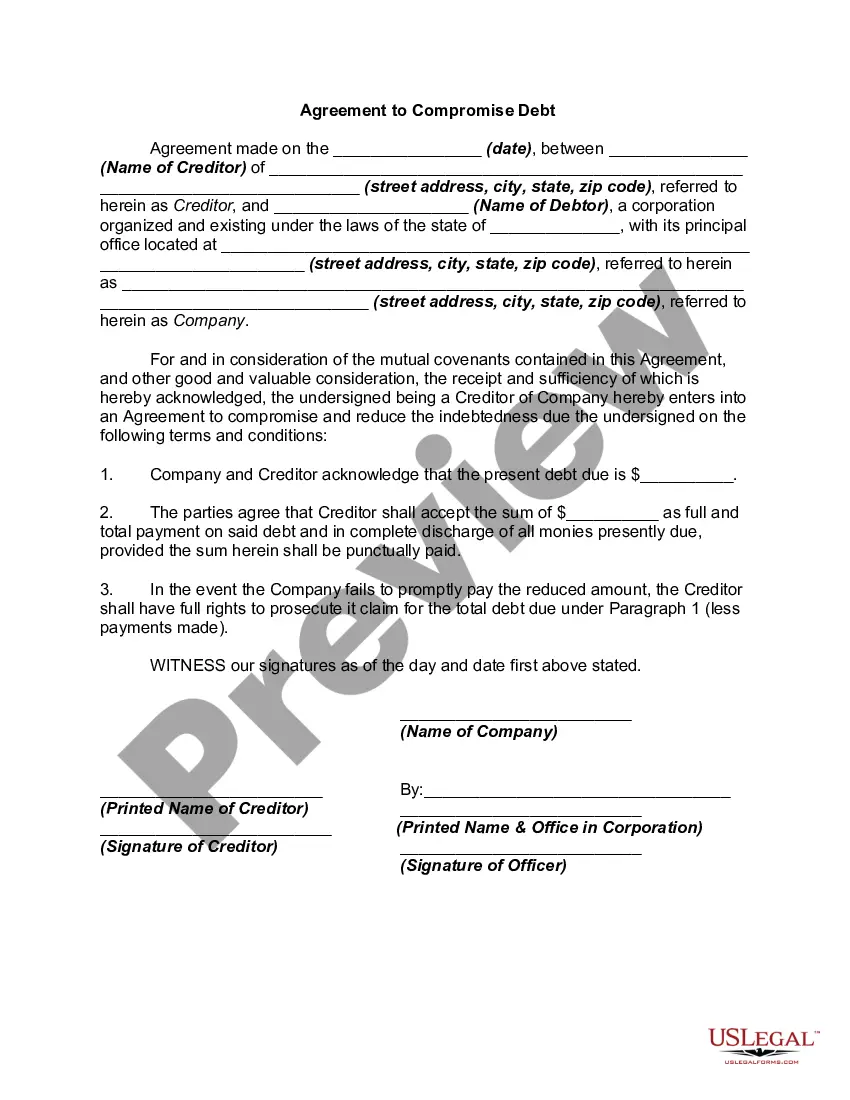
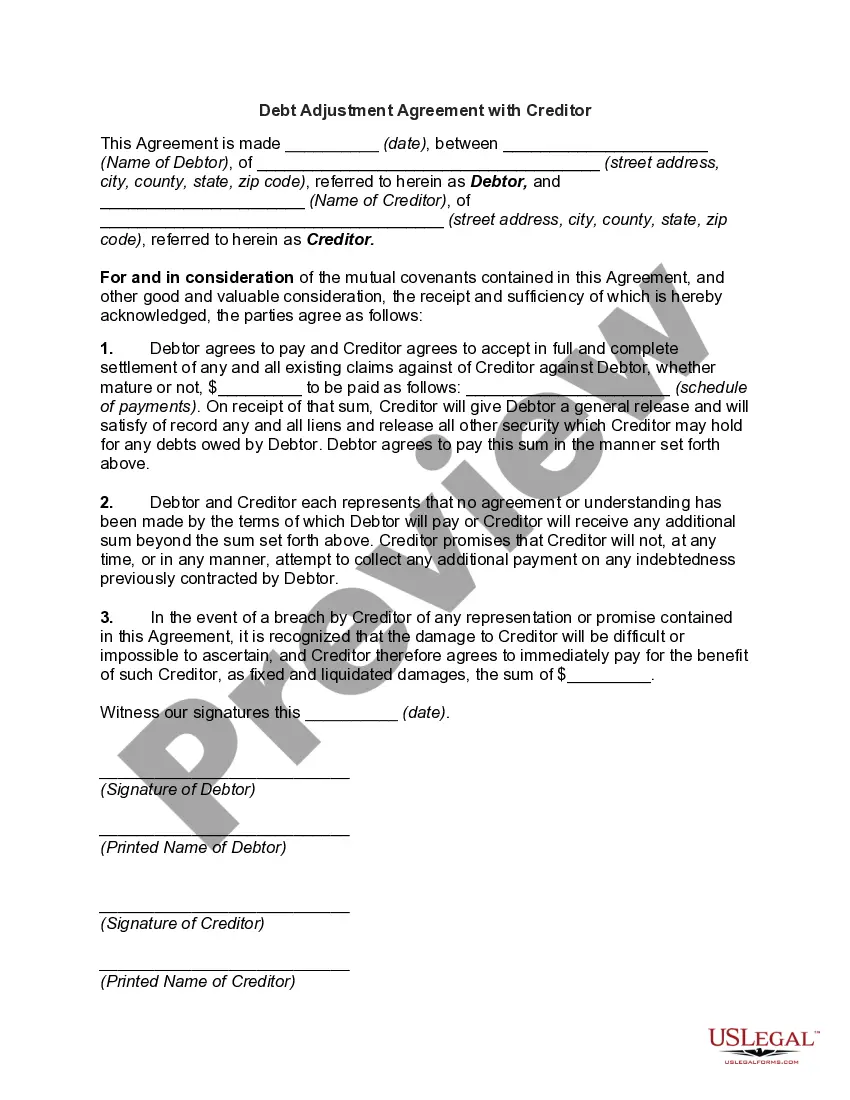
Get your form ready online
Our built-in tools help you complete, sign, share, and store your documents in one place.
Make edits, fill in missing information, and update formatting in US Legal Forms—just like you would in MS Word.
Download a copy, print it, send it by email, or mail it via USPS—whatever works best for your next step.
Sign and collect signatures with our SignNow integration. Send to multiple recipients, set reminders, and more. Go Premium to unlock E-Sign.
If this form requires notarization, complete it online through a secure video call—no need to meet a notary in person or wait for an appointment.
We protect your documents and personal data by following strict security and privacy standards.

Make edits, fill in missing information, and update formatting in US Legal Forms—just like you would in MS Word.

Download a copy, print it, send it by email, or mail it via USPS—whatever works best for your next step.

Sign and collect signatures with our SignNow integration. Send to multiple recipients, set reminders, and more. Go Premium to unlock E-Sign.

If this form requires notarization, complete it online through a secure video call—no need to meet a notary in person or wait for an appointment.

We protect your documents and personal data by following strict security and privacy standards.
Looking for another form?

How to fill out Debt Agreement?
Are you in a situation where you require documents for both business and personal uses almost every time.
There is a multitude of legitimate document templates accessible online, but finding ones you can rely on is challenging.
US Legal Forms provides thousands of form templates, such as the Georgia Debt Agreement, which can be tailored to meet state and federal requirements.
Once you find the appropriate form, click on Purchase now.
Choose the pricing plan you prefer, fill in the required details to create your account, and complete the payment transaction using your PayPal or credit card.
- If you are already familiar with the US Legal Forms website and have an account, just Log In.
- Then, you can download the Georgia Debt Agreement template.
- If you do not have an account and want to start using US Legal Forms, follow these steps.
- Obtain the form you need and ensure it is for the correct city/region.
- Utilize the Preview button to review the form.
- Read the description to verify that you have selected the correct document.
- If the form is not what you are looking for, use the Lookup field to find the form that aligns with your needs and requirements.
Form popularity
FAQ
Debt collectors in Georgia must adhere to specific legal guidelines, which protect consumers. First, they cannot harass you through excessive phone calls or threaten you with legal action they do not intend to pursue. Second, they must not make false statements about your debt or misrepresent themselves, as this violates consumer protection laws. Knowing your rights under the Georgia Debt Agreement provisions can empower you to handle any unlawful tactics from collectors effectively.
Yes, Georgia offers a debt relief program designed to assist individuals struggling with financial debt. This program enables residents to negotiate a Georgia Debt Agreement, simplifying the repayment process and potentially reducing the total amount owed. Many participants find this approach less stressful than managing multiple debts, as it consolidates payments into a single agreement. You can explore your options through platforms like US Legal Forms to help you navigate this process.
To request a payment plan for taxes owed in Georgia, start by filling out a payment plan request form provided by the Georgia Department of Revenue. You’ll need to provide your tax information and a proposal for your payment terms. A well-structured Georgia Debt Agreement can guide you in formulating a repayment strategy that the department is likely to accept.
Yes, Georgia does offer an Offer in Compromise program, which allows taxpayers to settle their tax debts for less than the full amount owed. To qualify, you must demonstrate financial hardship or other significant reasons. Leveraging a Georgia Debt Agreement through this program can provide you with a clear framework for negotiating your tax debt settlement.
Setting up a payment plan for collections in Georgia typically involves reaching out to the creditor to negotiate terms. Document your financial circumstances clearly and propose a plan that is manageable for you. A Georgia Debt Agreement can help standardize these negotiations and ensure that your repayment terms are officially recognized.
To request a payment plan with the Georgia Department of Revenue, you can access their online portal or contact them directly. You will need to provide details on your financial situation and the amount owed. Utilizing a Georgia Debt Agreement can often make this process smoother, as it outlines your repayment terms and obligations.
In Georgia, the filing frequency for tax returns generally depends on your business structure and revenue. For most individual taxpayers, annual filings are required. However, businesses may need to file quarterly or monthly, depending on their predicted tax liability. Understanding your specific requirements can simplify compliance with your Georgia Debt Agreement.
Georgia law provides specific guidelines for debt collection practices to protect consumers. Agencies must comply with the Fair Debt Collection Practices Act, ensuring they engage in fair and ethical collection methods. If you feel overwhelmed by debt, solutions like a Georgia Debt Agreement can offer structured relief while adhering to legal regulations. Always stay informed about your rights to navigate your financial challenges confidently.
In Georgia, a debt typically becomes uncollectible after six years. This statute of limitations applies to most consumer debts, including credit card debts and personal loans. If you are considering options for managing your debts, exploring a Georgia Debt Agreement might be a beneficial step. Be informed about your rights to ensure that your financial actions align with the law.
A debt generally becomes uncollectible after the statute of limitations expires, which is usually six years in Georgia. However, different types of debt may have varying timeframes for collection. Understanding when a debt becomes uncollectible can help individuals seek relief through a Georgia Debt Agreement. Consulting with a financial advisor can provide clarity on your specific situation.