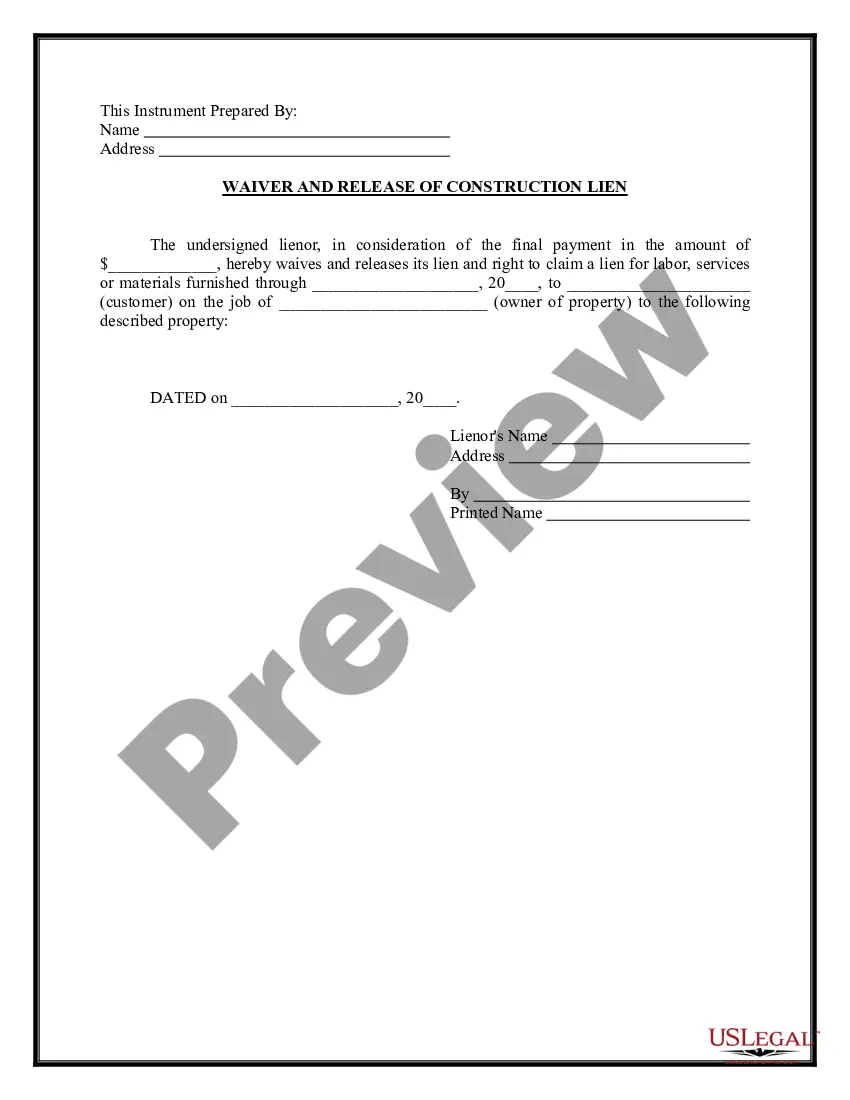
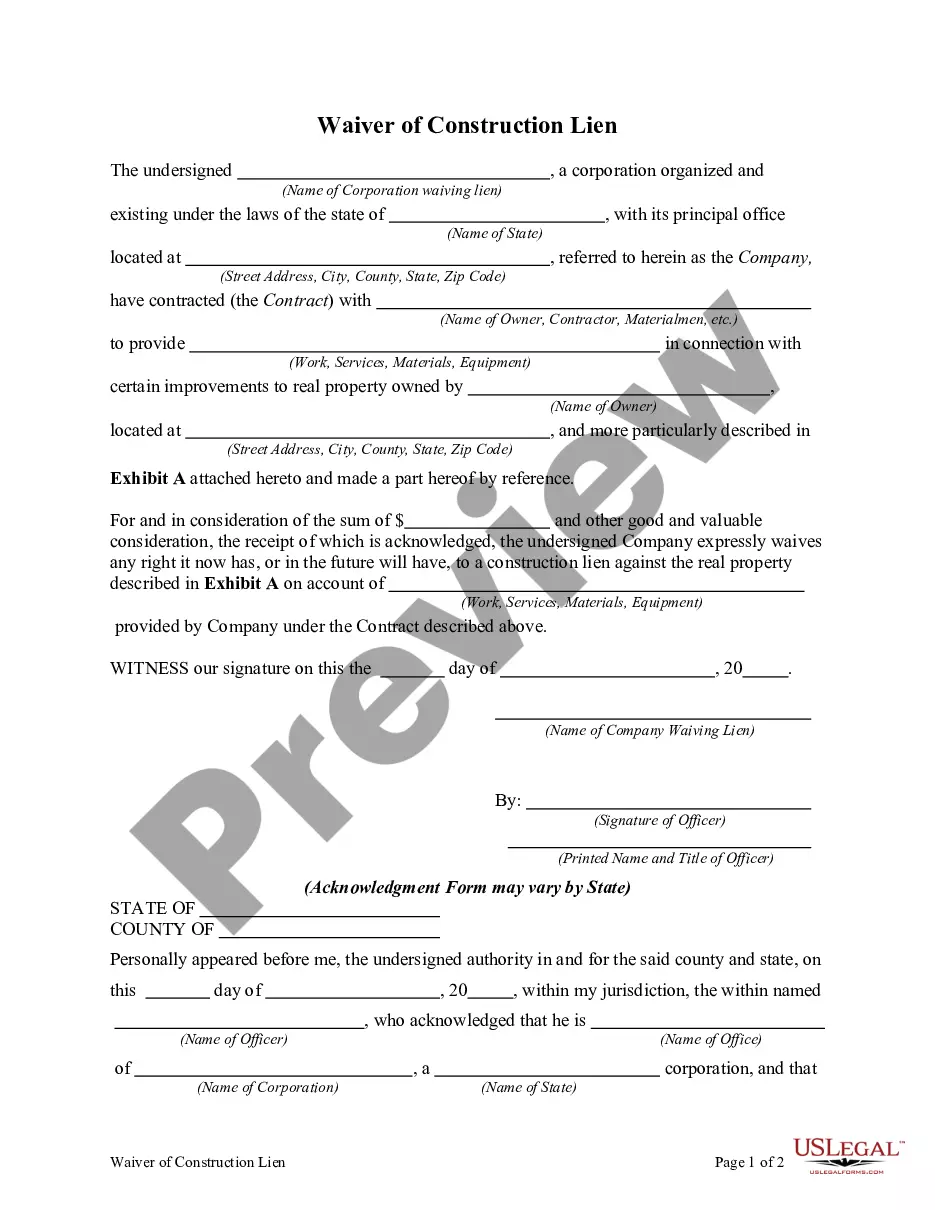
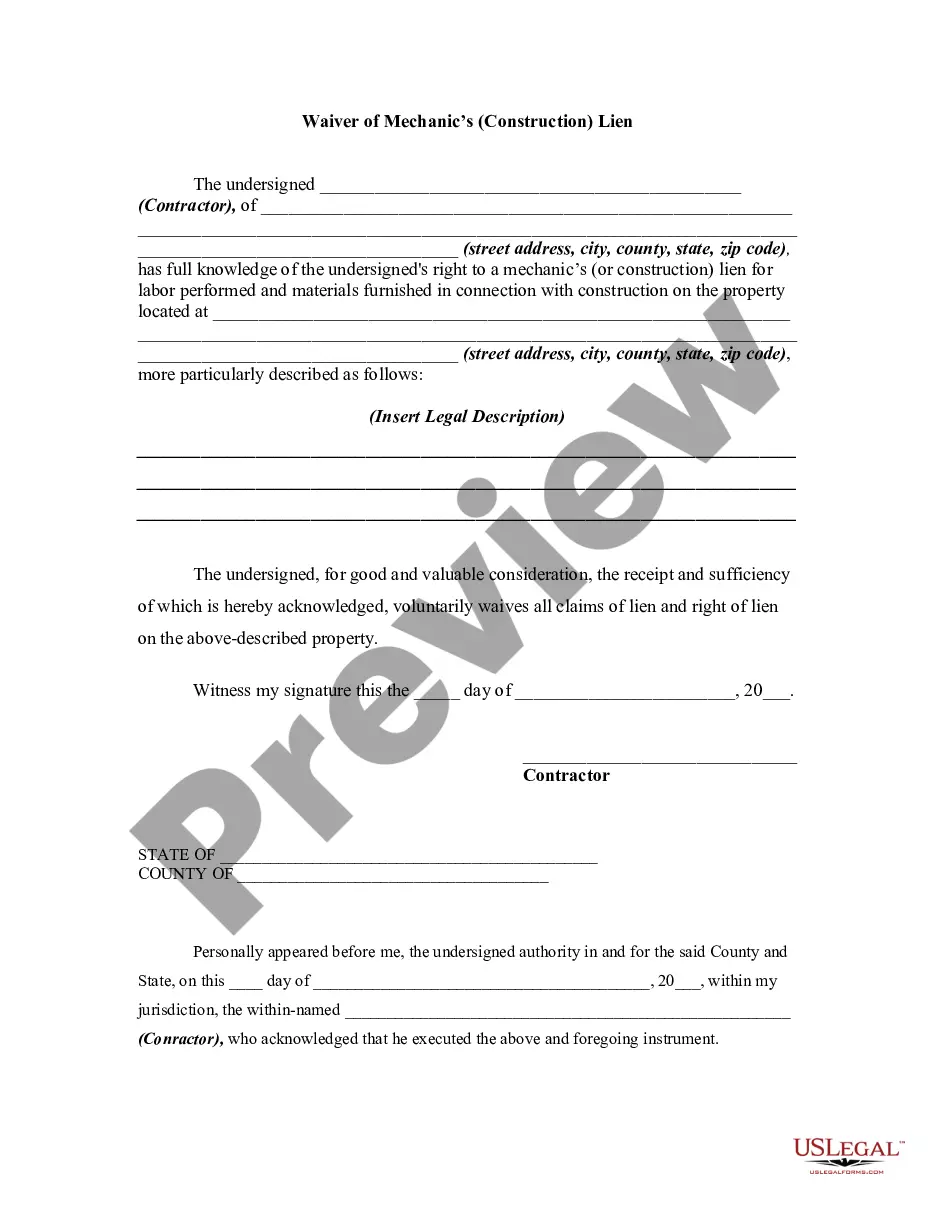
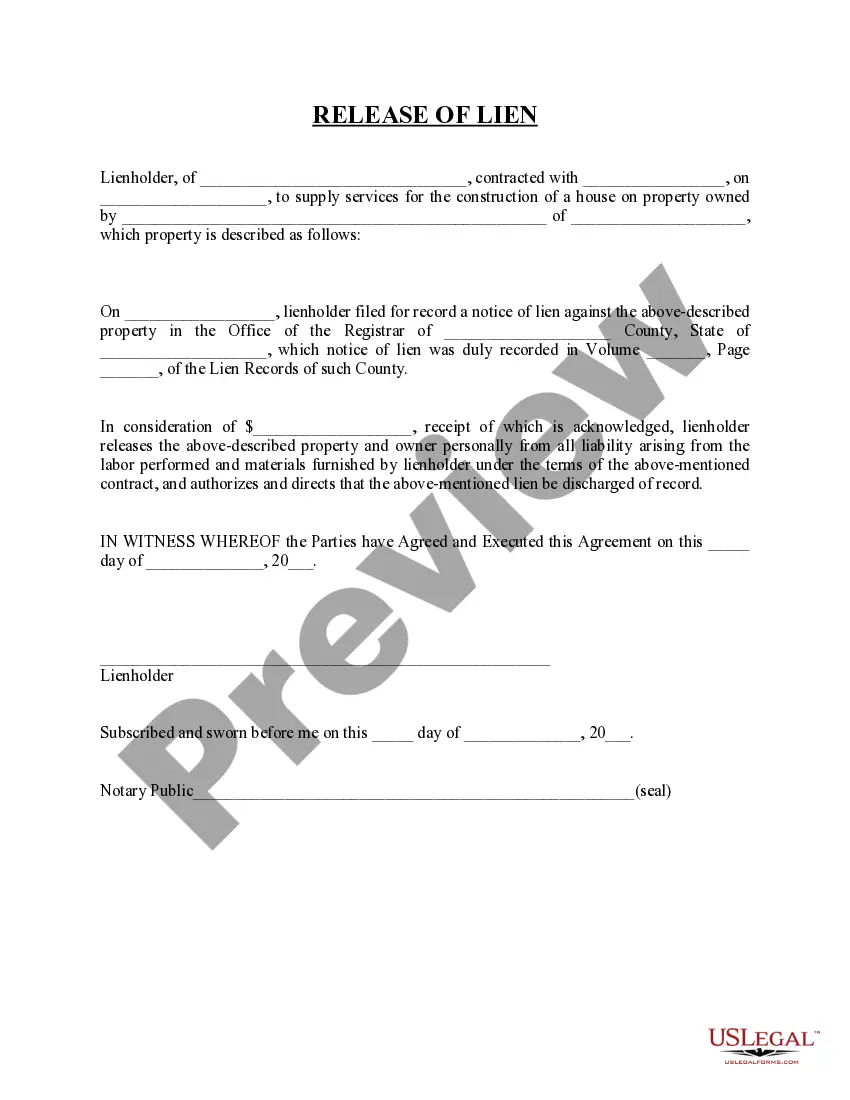
The lienor in consideration for final and full payment, waives and releases its lien and right to claim a lien for labor, services, or materials furnished during a certain date.
Georgia Waiver and Release of Lien by Contractor
State:
Multi-State
Category:
Control #:
US-01740
Format:
Word;
Rich Text
1,093 downloads
Description
Get your form ready online
Our built-in tools help you complete, sign, share, and store your documents in one place.
Built-in online Word editor
Make edits, fill in missing information, and update formatting in US Legal Forms—just like you would in MS Word.
Export easily
Download a copy, print it, send it by email, or mail it via USPS—whatever works best for your next step.
E-sign your document
Sign and collect signatures with our SignNow integration. Send to multiple recipients, set reminders, and more. Go Premium to unlock E-Sign.
Notarize online 24/7
If this form requires notarization, complete it online through a secure video call—no need to meet a notary in person or wait for an appointment.
Store your document securely
We protect your documents and personal data by following strict security and privacy standards.

Make edits, fill in missing information, and update formatting in US Legal Forms—just like you would in MS Word.

Download a copy, print it, send it by email, or mail it via USPS—whatever works best for your next step.

Sign and collect signatures with our SignNow integration. Send to multiple recipients, set reminders, and more. Go Premium to unlock E-Sign.

If this form requires notarization, complete it online through a secure video call—no need to meet a notary in person or wait for an appointment.

We protect your documents and personal data by following strict security and privacy standards.
Looking for another form?
How to fill out Waiver And Release Of Lien By Contractor?
Are you presently in a situation where you require documents for various organizational or personal purposes nearly every day.
There are numerous legal document templates accessible online, but finding ones you can trust is not simple.
US Legal Forms offers thousands of form templates, such as the Georgia Waiver and Release of Lien by Contractor, which can be tailored to meet state and federal regulations.
Once you find the appropriate form, click Purchase now.
Select the pricing plan you desire, provide the necessary information to create your account, and pay for the transaction with your PayPal or credit card.
- If you are already familiar with the US Legal Forms website and have an account, simply Log In.
- After that, you can download the Georgia Waiver and Release of Lien by Contractor template.
- If you do not have an account and wish to start using US Legal Forms, follow these steps.
- Obtain the form you need and ensure it is for the correct state/county.
- Use the Preview button to review the form.
- Read the description to make sure you have selected the correct form.
- If the form is not what you are looking for, use the Search field to find the form that suits your needs.
Form popularity
FAQ
Georgia's lien law is designed to protect those who at the request of the property owner or the owner's representative (i.e., the general contractor) provide materials or services that are used to improve the owner's property and to provide such persons a means of insuring payment from the property they improved if the ...
In Georgia, a mechanics lien automatically expires one year from filing, unless the claimant takes an action to enforce it. If the claimant has been paid, or the claim has expired, the state doesn't require the claimant to file a lien release, but releasing a lien is good practice whether it's required or not.
Yes, Georgia requires lien waivers to comply with the statutory forms provided in order for the waiver to be valid and enforceable. Any modifications to the required forms could potentially invalidate the waiver. These statutory form requirements are governed by O.C.G.A.
The Georgia Mechanics Lien Release Form is used to cancel a lien that has already been filed. It's most often used to release a lien claim after a lien claimant receives payment. However, they may also be released based on settlements, legal controversies, because they expired, or more.
If the vehicle title indicates a lien for the previous owner, the lien must be released on the title. If the lien has not been released on the title, you will need to submit a Lien Release form with an original signature (no photocopies or faxes) that has been completed by the lienholder.
How Long Does a Mechanics Lien Last in Georgia? Once you file a mechanics lien it lasts for one year from the day that you filed it. Within this year, you must take action to enforce the lien by initiating a suit of foreclosure or the lien claim will expire and you will be unable to use the lien to get paid.
Georgia Liens are Valid for One Year: In Georgia, a Claim of Lien is valid for one year from the date that the lien is filed. If the lien claimant files a materialmen's lien and then doesn't enforce its lien rights within the year, then the mechanics or materialmen's lien will automatically expire.
The lien release must be filed with the county recorder to cancel the previously filed lien instrument. The lien release is different than a lien waiver because it discharges an already filed lien, while a waiver surrenders the right to file one in the first place.