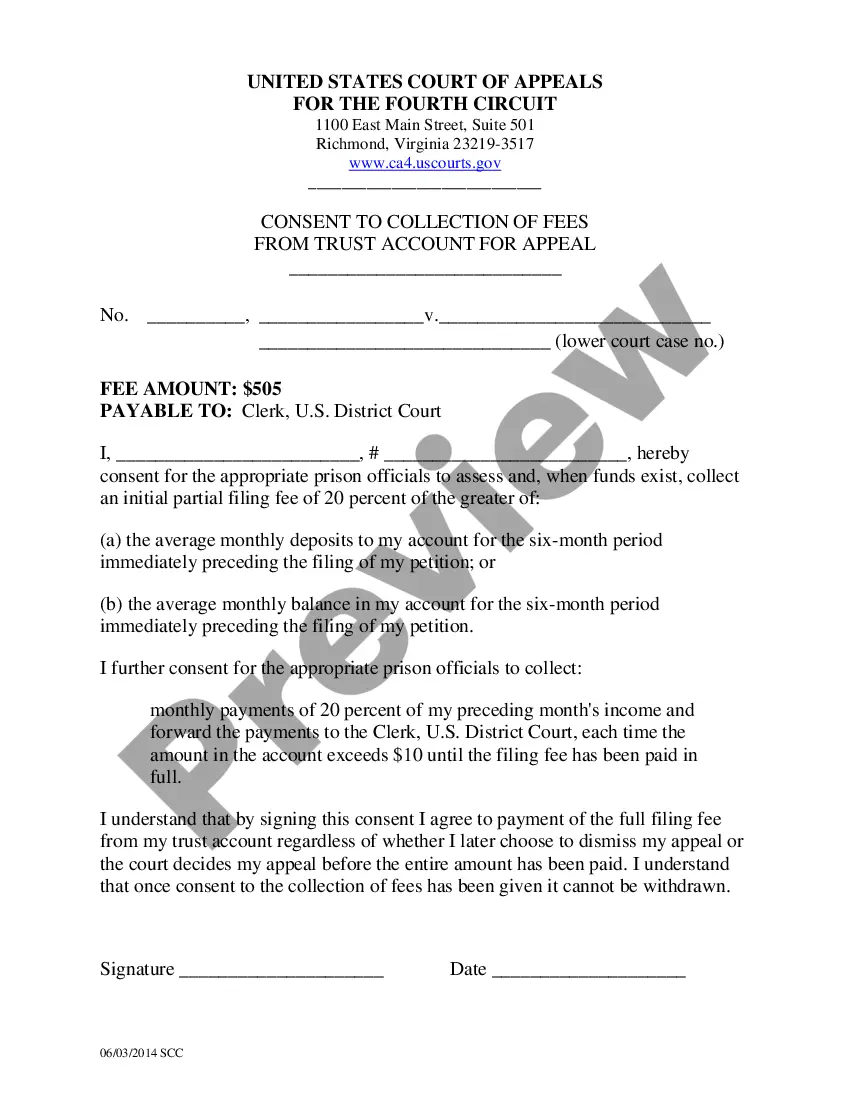
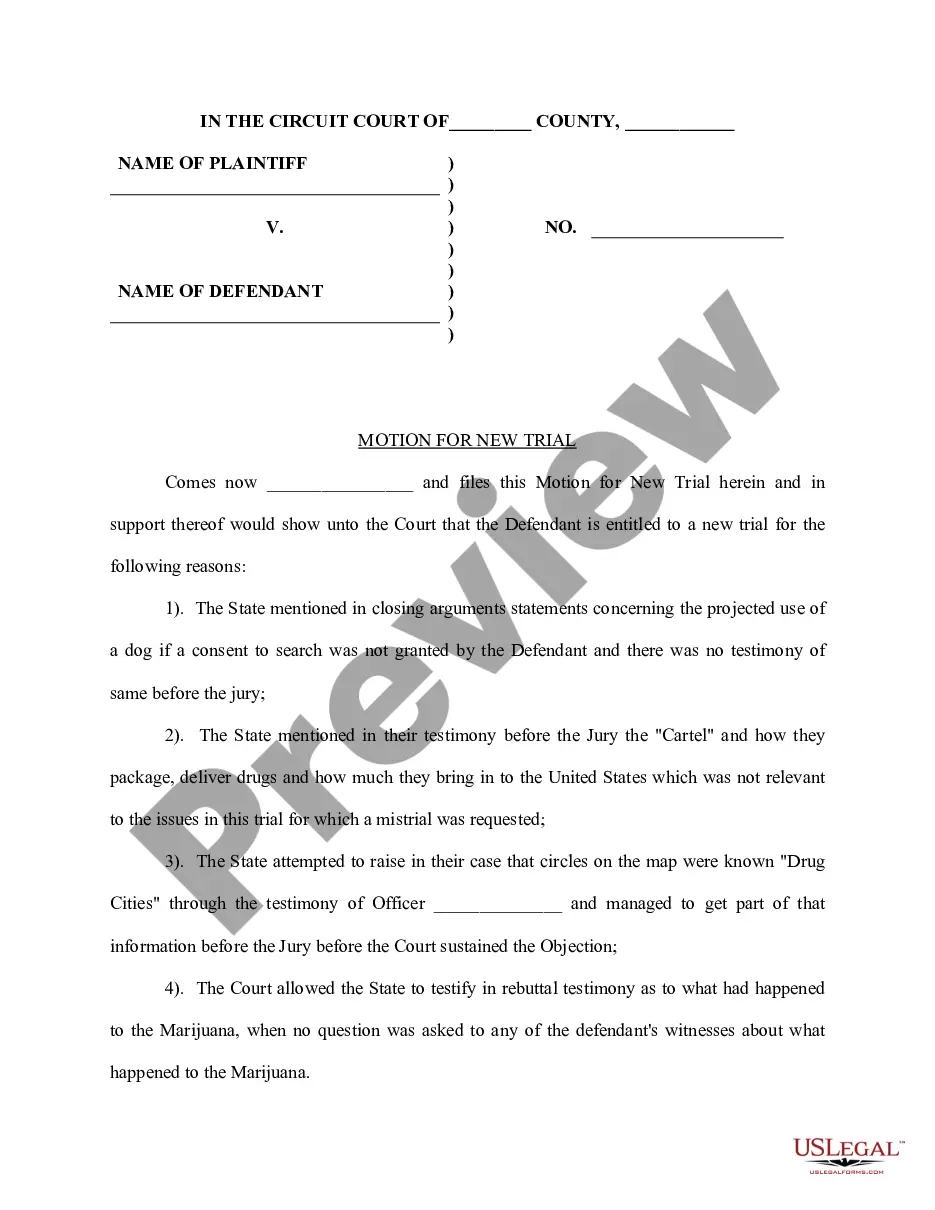
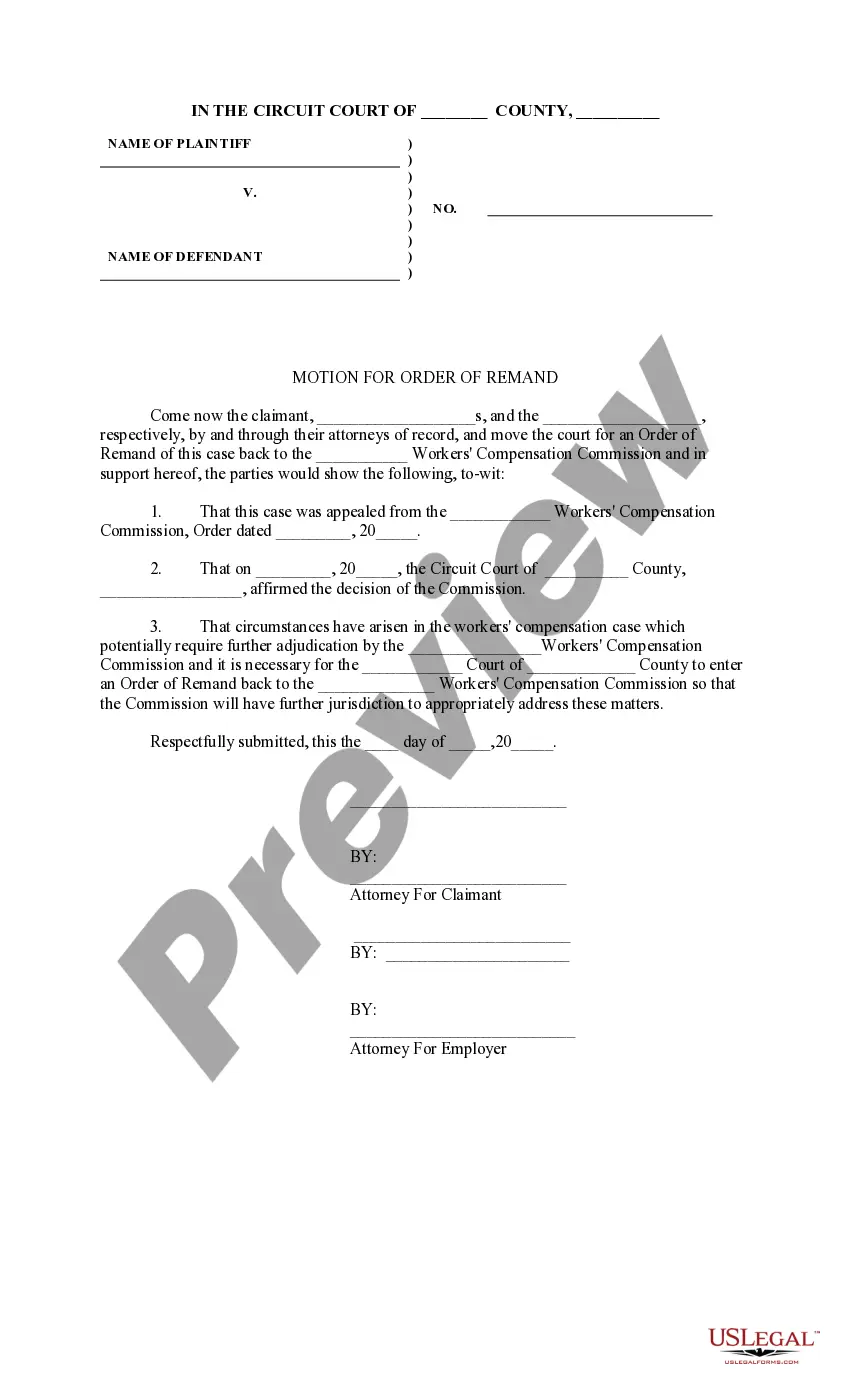
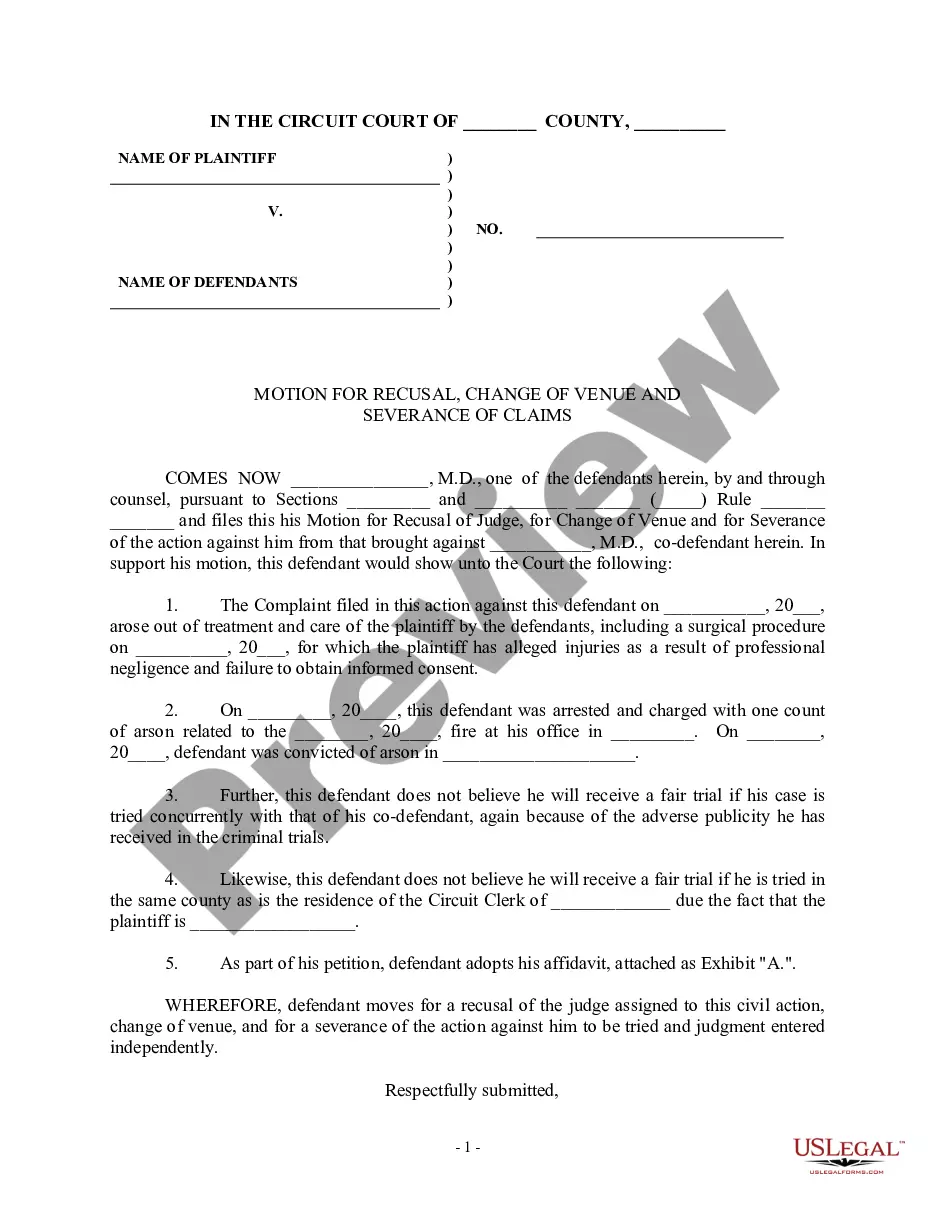
Georgia Emergency Motion to Remand Cause
Description
Get your form ready online
Our built-in tools help you complete, sign, share, and store your documents in one place.
Make edits, fill in missing information, and update formatting in US Legal Forms—just like you would in MS Word.
Download a copy, print it, send it by email, or mail it via USPS—whatever works best for your next step.
Sign and collect signatures with our SignNow integration. Send to multiple recipients, set reminders, and more. Go Premium to unlock E-Sign.
If this form requires notarization, complete it online through a secure video call—no need to meet a notary in person or wait for an appointment.
We protect your documents and personal data by following strict security and privacy standards.

Make edits, fill in missing information, and update formatting in US Legal Forms—just like you would in MS Word.

Download a copy, print it, send it by email, or mail it via USPS—whatever works best for your next step.

Sign and collect signatures with our SignNow integration. Send to multiple recipients, set reminders, and more. Go Premium to unlock E-Sign.

If this form requires notarization, complete it online through a secure video call—no need to meet a notary in person or wait for an appointment.

We protect your documents and personal data by following strict security and privacy standards.
Looking for another form?



How to fill out Emergency Motion To Remand Cause?
Finding the appropriate legitimate document template can be a challenge. Naturally, there are numerous templates accessible online, but how do you locate the authentic form you require? Utilize the US Legal Forms website. The service provides thousands of templates, such as the Georgia Emergency Motion to Remand Cause, that you can utilize for business and personal needs. All of the forms are reviewed by experts and comply with federal and state regulations.
If you are already registered, Log In to your account and click on the Download button to obtain the Georgia Emergency Motion to Remand Cause. Use your account to browse the legal forms you have previously purchased. Navigate to the My documents section of your account and retrieve another copy of the document you need.
If you are a new user of US Legal Forms, here are simple steps for you to follow: First, ensure you have selected the correct form for your city/state. You can view the form using the Preview button and read the form outline to verify that it is suitable for you. If the form does not meet your requirements, utilize the Search field to find the appropriate form. Once you are confident that the form is correct, select the Get now button to retrieve the form. Choose the pricing plan you wish and enter the necessary information. Create your account and pay for the order using your PayPal account or Visa or Mastercard. Choose the document format and download the legal document template to your device. Finally, complete, edit, and print and sign the acquired Georgia Emergency Motion to Remand Cause.
In summary, US Legal Forms is an excellent resource for acquiring the necessary legal documentation efficiently and effectively.
- US Legal Forms is the largest repository of legal forms where you can find a variety of document templates.
- Utilize the service to obtain professionally designed paperwork that adhere to state regulations.
- The forms available are suitable for various legal and personal circumstances.
- You can easily manage your forms through your account.
- The site is user-friendly for both new and returning users.
- The templates are crafted by legal experts to ensure compliance.
Form popularity
FAQ
A motion to suppress is a motion filed by a criminal defense attorney when he or she has reason to believe that evidence was illegally obtained through an unlawful search or seizure. The goal is to have the judge throw out evidence that the State plans to use against you.
An example of a motion to suppress is where a defendant requests the court to suppress a confession by the defendant to the police that was obtained as a result of a Miranda violation.
While in general, on a motion to suppress, the defendant has the burden of proving, by a preponderance of the evidence, that the material in question was seized in violation of his constitutional rights, there are several situations where the burden shifts to the government. United States v.
Motion to Dismiss ? an attempt to get the judge to dismiss a charge or the case. This may be done if there is not enough evidence, if the alleged facts do not amount to a crime. Motion to Suppress ? an attempt to keep certain statements or evidence from being introduced as evidence.
(1) If a party files a motion to dismiss before or at the time of filing an answer and pursuant to the provisions of this Code section, discovery shall be stayed for 90 days after the filing of such motion or until the ruling of the court on such motion, whichever is sooner.
Unless otherwise ordered by the judge or as provided by law, each party opposing a motion shall serve and file a response, reply memorandum, affidavits, or other responsive material not later than 30 days after service of the motion.
A motion to suppress is a request by the defendant that the judge excludes certain evidence from trial. The Fourth Amendment to the Constitution protects citizens from unreasonable search and seizures and motions to suppress are the key resource to protecting this right.