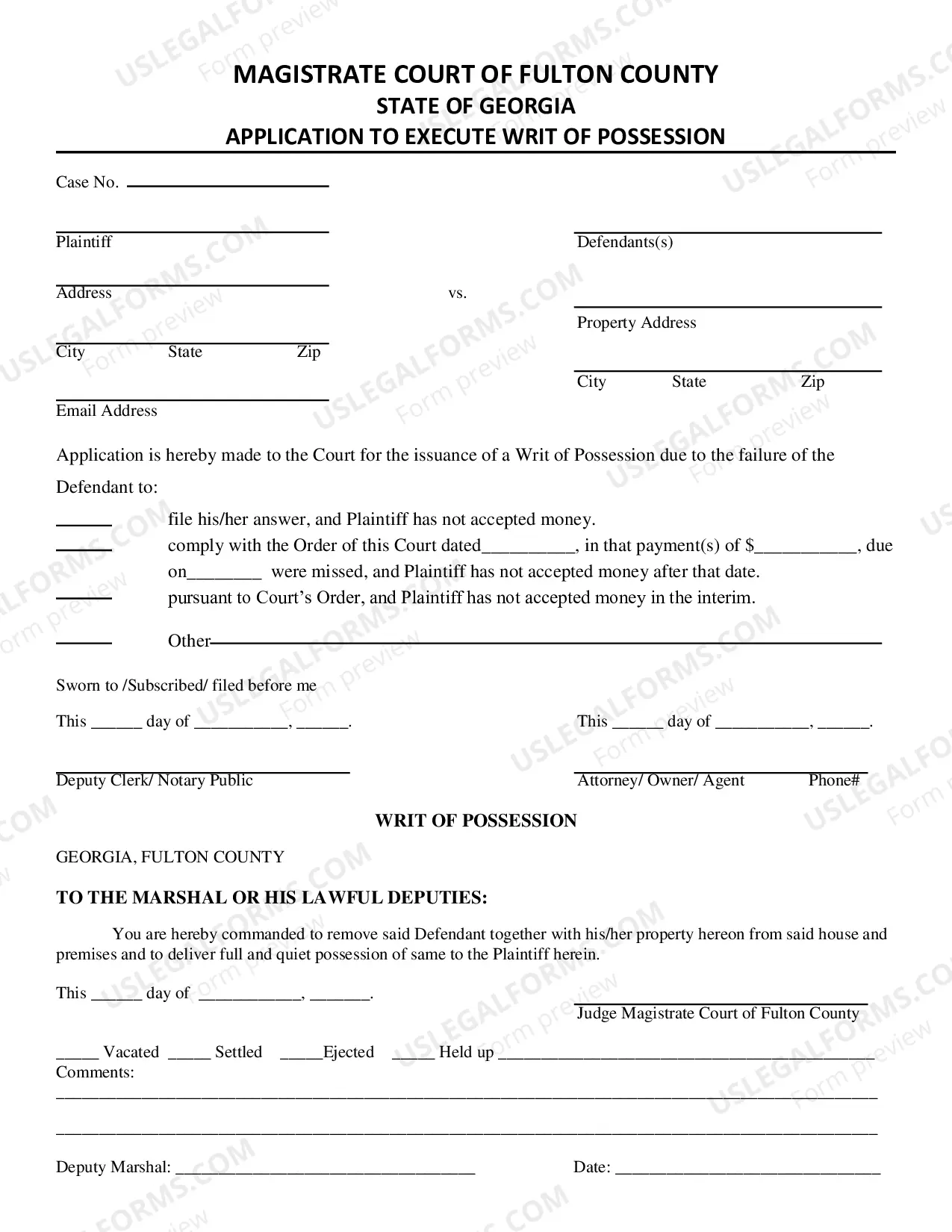
Georgia Application For Writ Of Possession
Overview of this form
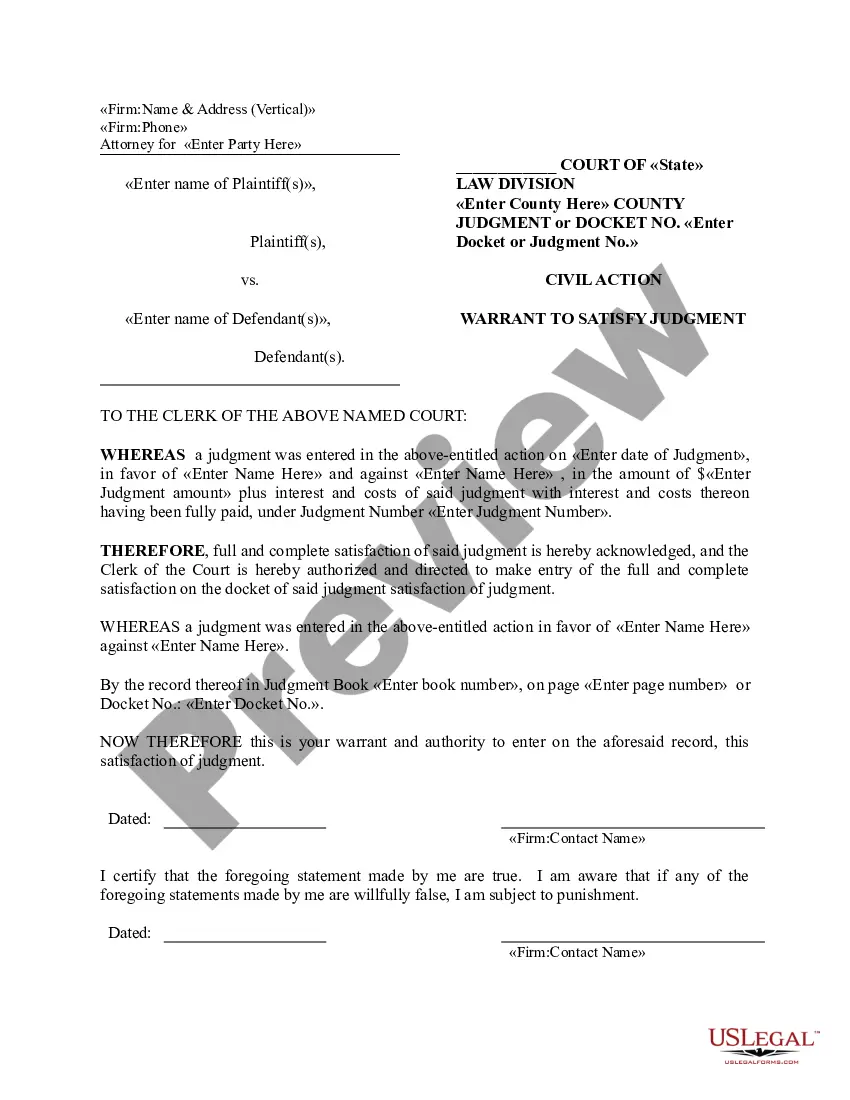
The Application for Writ of Possession is a legal document used to request the court's permission to repossess property from a tenant or occupant who has failed to comply with a court order or has not responded to legal proceedings. This form is distinct from eviction notices and is specifically utilized when a court has already ruled in favor of the landlord or property owner, making it essential for enforcing possession rights.
Key components of this form
- Case Number: Identifying the specific court case.
- Plaintiff and Defendant Information: Details of the parties involved, including names and addresses.
- Reason for Application: Citing the failure to respond or comply with previous court orders.
- Sworn Affidavit Section: Indicates where to authorize the form legally.
- Writ of Possession Clause: Commands the removal of the defendant and their property from the premises.
- Deputy Marshal Section: Provides space for law enforcement to document their actions upon execution of the writ.
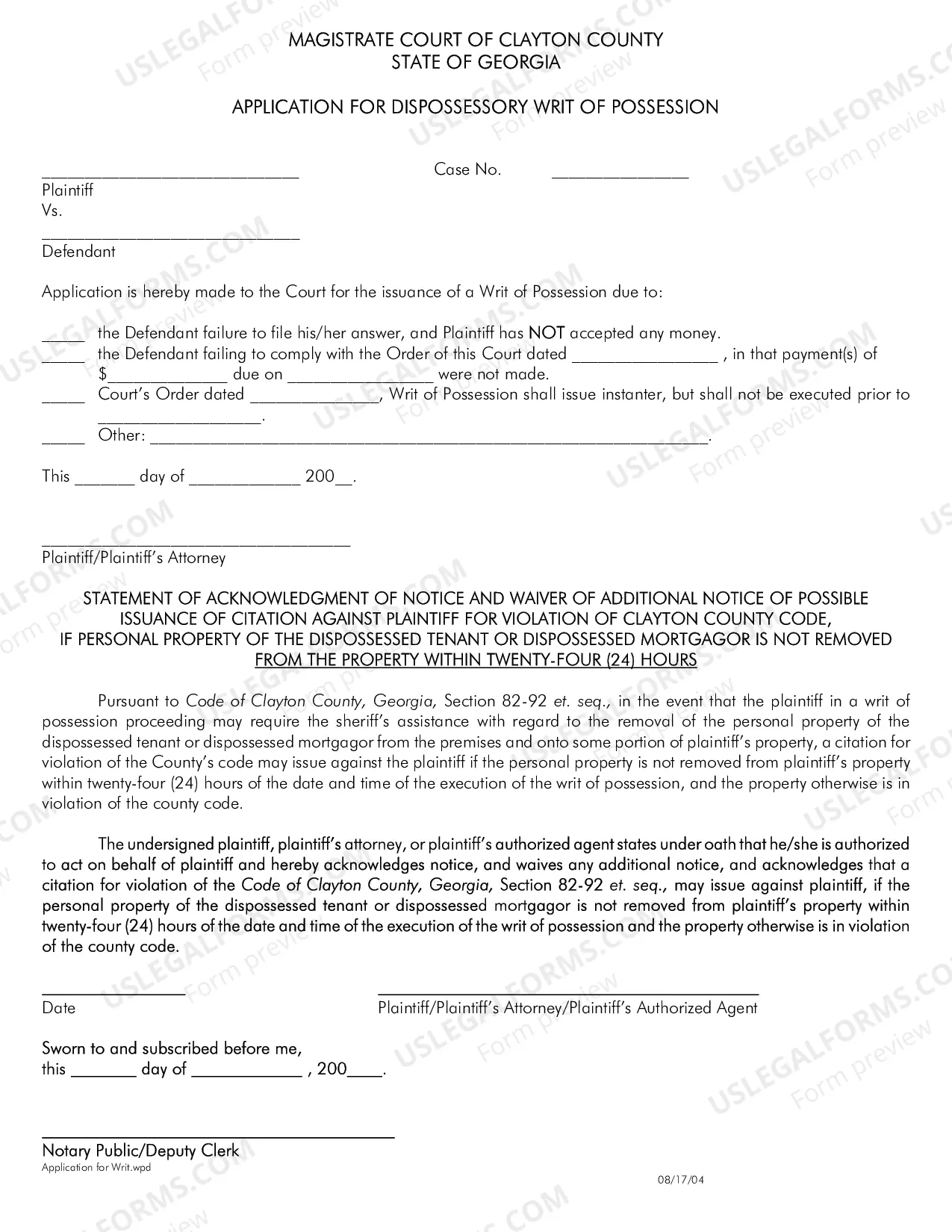
When to use this document
This form should be used after a court has issued a ruling in favor of the plaintiff regarding possession of property. It is necessary when the defendant has not filed an answer to the complaint or has failed to comply with payment or other legal obligations established by the court. Common scenarios include non-payment of rent or violation of lease terms after a judgment has been made.
Who needs this form
This form is intended for:
- Landlords seeking to repossess their property due to tenant non-compliance.
- Property owners who have won a court judgment but require legal authority to enforce possession.
- Attorneys representing landlords in eviction proceedings.
How to complete this form
- Identify the parties involved by entering the names and addresses of the plaintiff and defendant.
- Specify the property address from which the defendant is to be evicted.
- Indicate the case number assigned to the court proceedings.
- Complete the section detailing the reason for seeking the writ of possession.
- Sign and date the application in the presence of a notary or deputy clerk.
Does this form need to be notarized?
Notarization is not commonly needed for this form. However, certain documents or local rules may make it necessary. Our notarization service, powered by Notarize, allows you to finalize it securely online anytime, day or night.
Get your form ready online
Our built-in tools help you complete, sign, share, and store your documents in one place.
Make edits, fill in missing information, and update formatting in US Legal Forms—just like you would in MS Word.
Download a copy, print it, send it by email, or mail it via USPS—whatever works best for your next step.
Sign and collect signatures with our SignNow integration. Send to multiple recipients, set reminders, and more. Go Premium to unlock E-Sign.
If this form requires notarization, complete it online through a secure video call—no need to meet a notary in person or wait for an appointment.
We protect your documents and personal data by following strict security and privacy standards.

Make edits, fill in missing information, and update formatting in US Legal Forms—just like you would in MS Word.

Download a copy, print it, send it by email, or mail it via USPS—whatever works best for your next step.

Sign and collect signatures with our SignNow integration. Send to multiple recipients, set reminders, and more. Go Premium to unlock E-Sign.

If this form requires notarization, complete it online through a secure video call—no need to meet a notary in person or wait for an appointment.

We protect your documents and personal data by following strict security and privacy standards.
Avoid these common issues
- Failing to include the correct case number, leading to delays.
- Not providing complete or accurate information for both parties.
- Omitting required signatures or notarization where applicable.
Benefits of using this form online
- Convenient access to legal forms from any location at any time.
- Editable fields to customize the form according to specific case details.
- Reliable templates drafted by licensed attorneys ensuring compliance with legal standards.
Key takeaways
- The Application for Writ of Possession is crucial for landlords to reclaim property.
- Ensure all information is accurate and complete to avoid delays.
- Familiarize yourself with local court rules to ensure proper submission.
Looking for another form?
Form popularity
FAQ
An immediate writ of possession in Georgia allows a landlord to regain possession of their property without delay. This option is often pursued when a tenant poses a risk or has abandoned the property. Filing a Georgia Application For Writ Of Possession under these circumstances can expedite the process significantly. For those seeking clarity on immediate writs, USLegalForms provides valuable resources and support to help landlords navigate their rights.
The total duration for a writ of possession in Georgia varies based on several factors, including court schedules and the responsiveness of the parties involved. Generally, once you file the Georgia Application For Writ Of Possession and the court grants the order, the process can take anywhere from a few days to a few weeks. It's crucial to prepare in advance and ensure all required documents are complete, as this can help prevent delays. Working with USLegalForms simplifies this process by offering easy access to the necessary forms and guidance.
The timeline for the sheriff to serve a writ of possession in Georgia can typically range from a few days to a couple of weeks. Once the court issues the Georgia Application For Writ Of Possession, the sheriff's office will take immediate action to deliver the writ to the tenant. It is essential to stay in communication with your local sheriff's office to understand their specific timeframes and processes. Utilizing platforms like USLegalForms can help streamline this process by providing necessary documentation.
You may have options to stop eviction after a writ is issued, depending on your circumstances. This can include presenting a defense in court or filing necessary motions to delay the eviction. Seeking assistance through services like USLegalForms can provide guidance and resources to help you explore your best options.
In some situations, it is possible to stop an eviction even after a writ of possession has been issued. This can involve filing a motion for a stay or appealing the court's decision, especially if you can prove that there is a valid reason to retain possession of the property. Engaging with legal resources or platforms like USLegalForms can help you navigate the process effectively.
A writ of possession is the legal order that allows for the physical removal of a tenant, while eviction refers to the entire legal process that leads to this order. In Georgia, when you file a Georgia Application For Writ Of Possession, it is typically after a court has ruled in favor of the landlord in an eviction case. Understanding this difference is crucial for both landlords and tenants involved in the legal proceedings.
Typically, a writ of possession remains on your public record for a number of years, often around seven years, in most jurisdictions. This record can affect your credit and ability to rent in the future. It's essential to understand the implications of applying for a Georgia Application For Writ Of Possession, as it can have long-term effects on your financial stability and housing opportunities.
A motion to stay a writ of possession in Georgia is a request to temporarily halt the enforcement of an eviction order. If you have applied for a writ of possession, you can file this motion to give yourself more time before the eviction takes place. This can be particularly beneficial if you are seeking to resolve an outstanding dispute or if you have new information that could affect the eviction process.
A writ of eviction is a legal document that allows a landlord to remove a tenant from a property. When you apply for a writ of possession in Georgia, you are essentially seeking permission from the court to regain control of your rental unit. This document is vital for landlords to enforce their rights and ensure compliance with rental agreements.
The time it takes to obtain a writ of possession in Georgia varies based on court schedules and the specifics of your case. Generally, once you file the application post-judgment, it can take a week or longer to receive the writ. Prompt action and accurate documentation can facilitate a quicker process. For a smoother experience, consider using the Georgia Application for Writ of Possession, which guides you every step of the way.