Georgia Executors Deed with Life Estate and Conditions of Divestment
Overview of this form
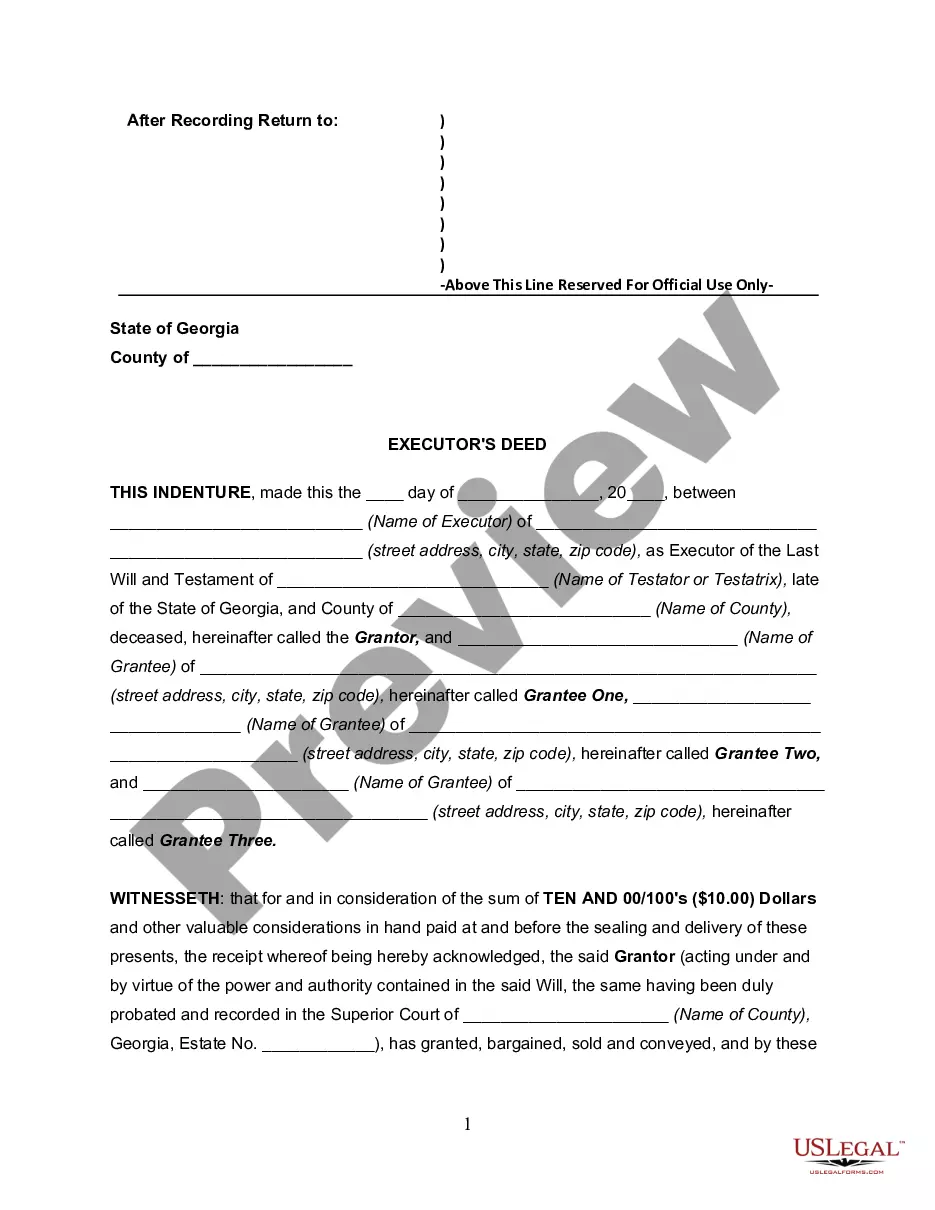
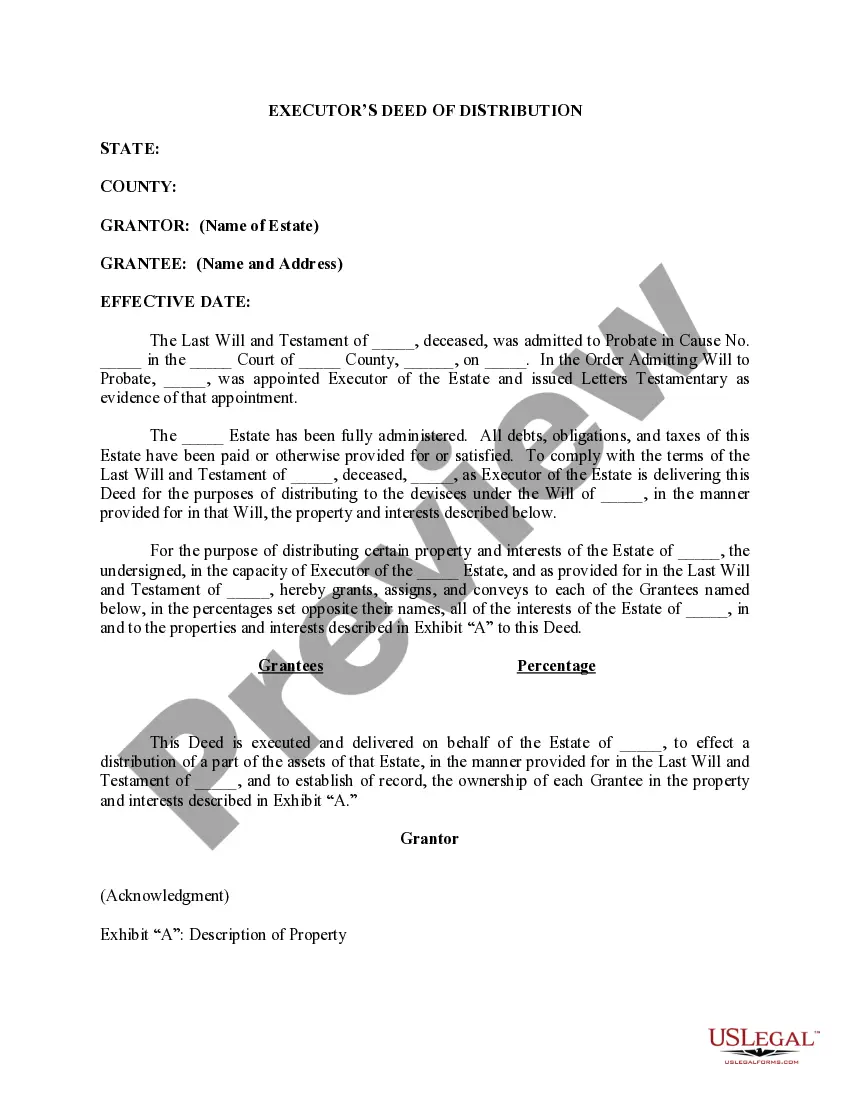
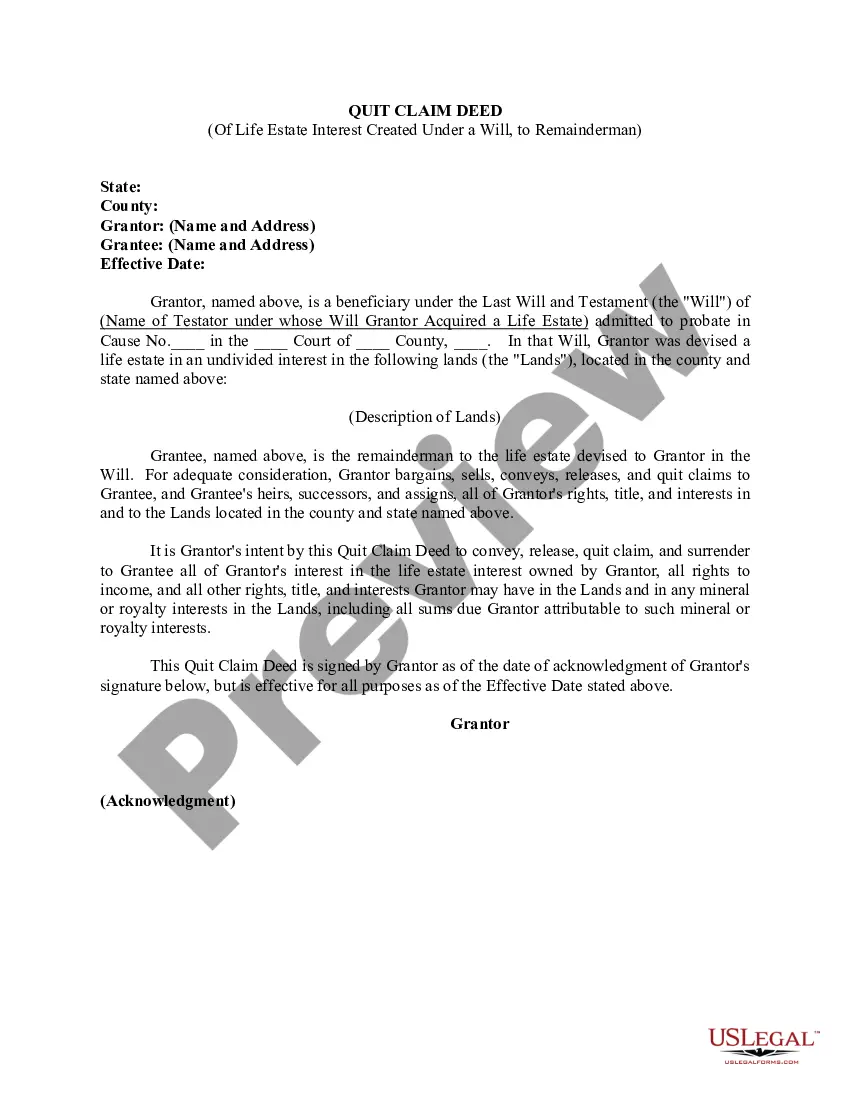
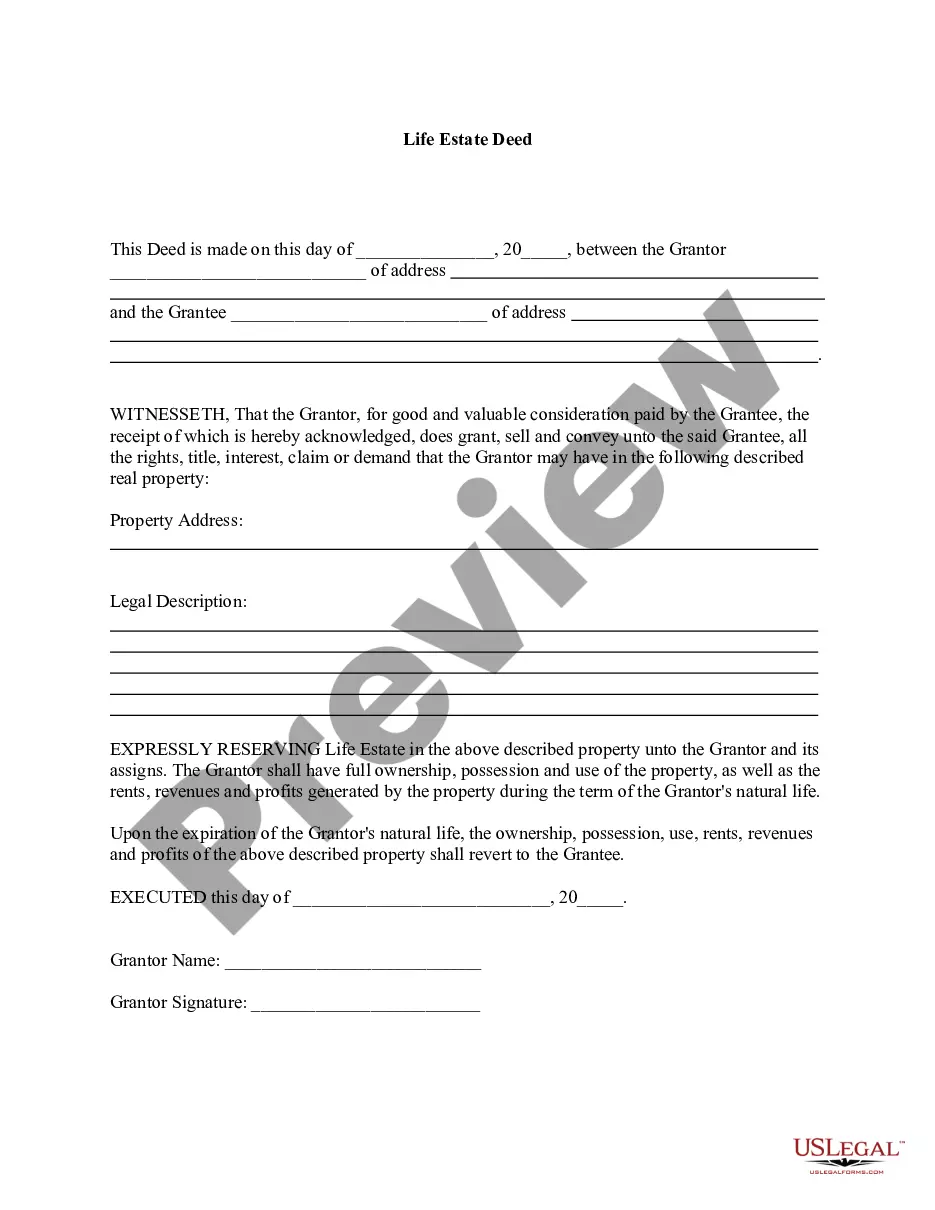
The Executors Deed with Life Estate and Conditions of Divestment is a legal document that allows an executor of an estate to transfer real property to designated heirs according to the wishes expressed in a decedent's will. Unlike other property transfer documents, this deed includes specific conditions related to life estates, where ownership is granted to a grantee for the duration of their life, and outlines circumstances that could lead to divestment of property rights. This ensures clarity about the use and management of the property during and after the life estate holder's lifetime.
Form components explained
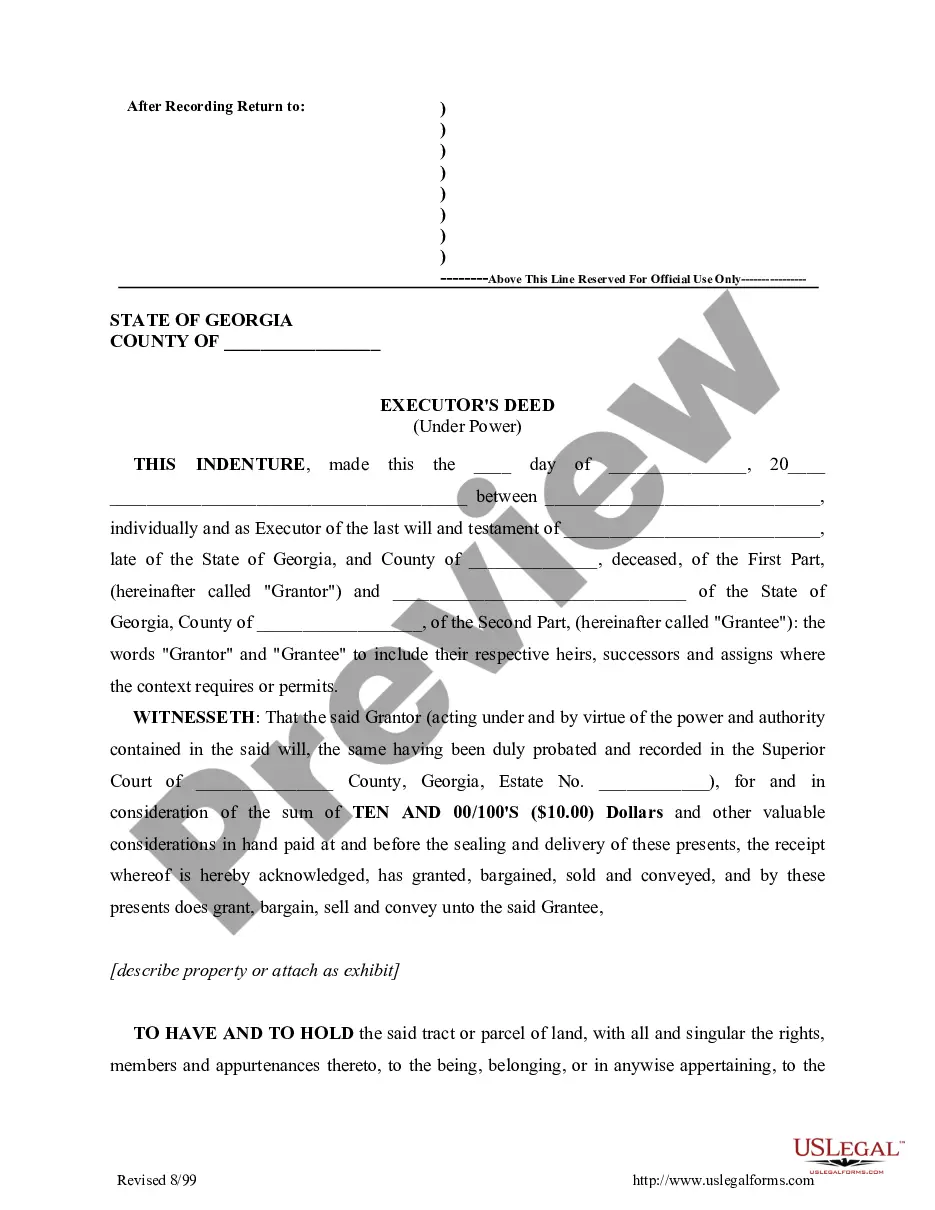
- Executor details, including name and address
- Names and addresses of the grantees (heirs receiving the property)
- Description of the property being transferred
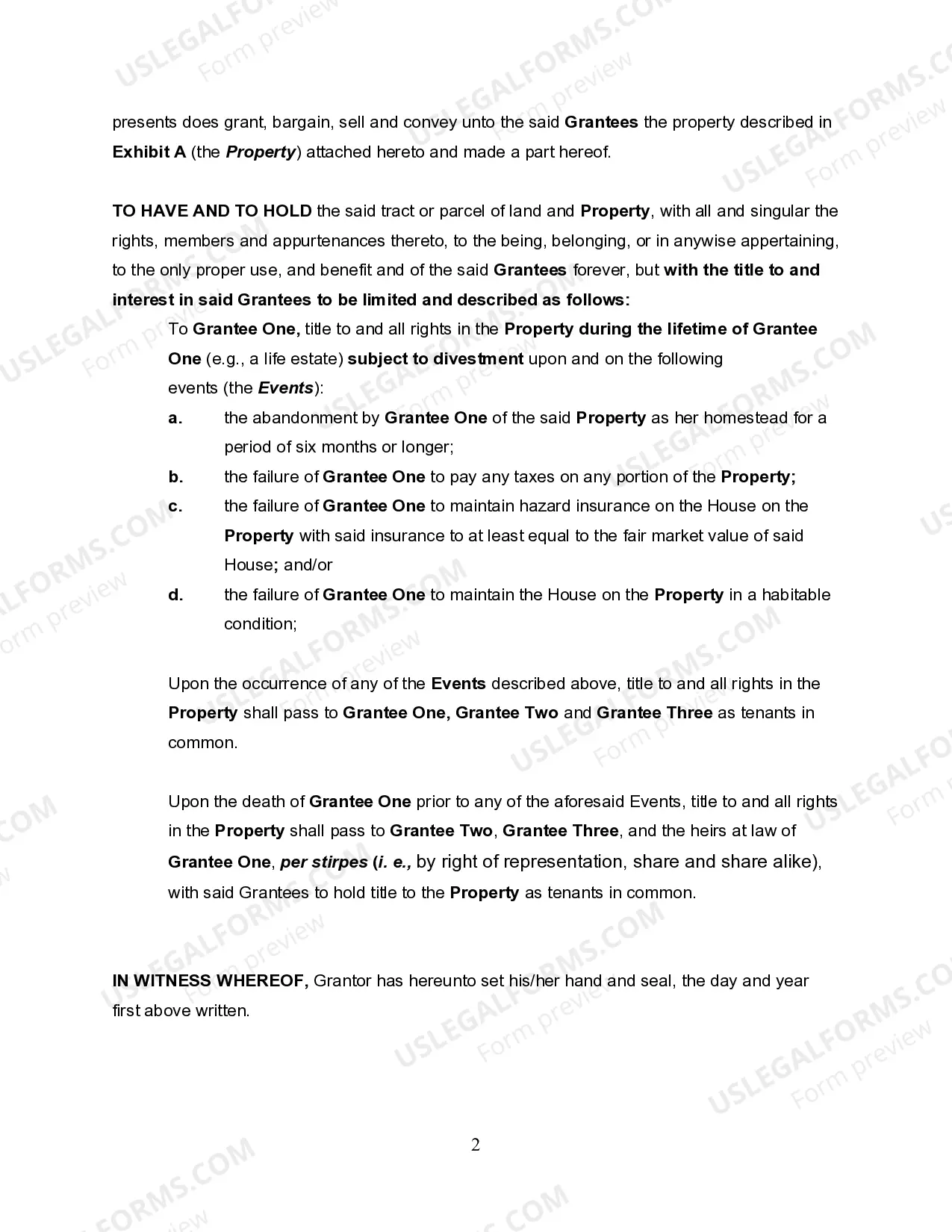
- Specific conditions outlining the limitations of the life estate
- Provisions for what happens upon the death of the life tenant
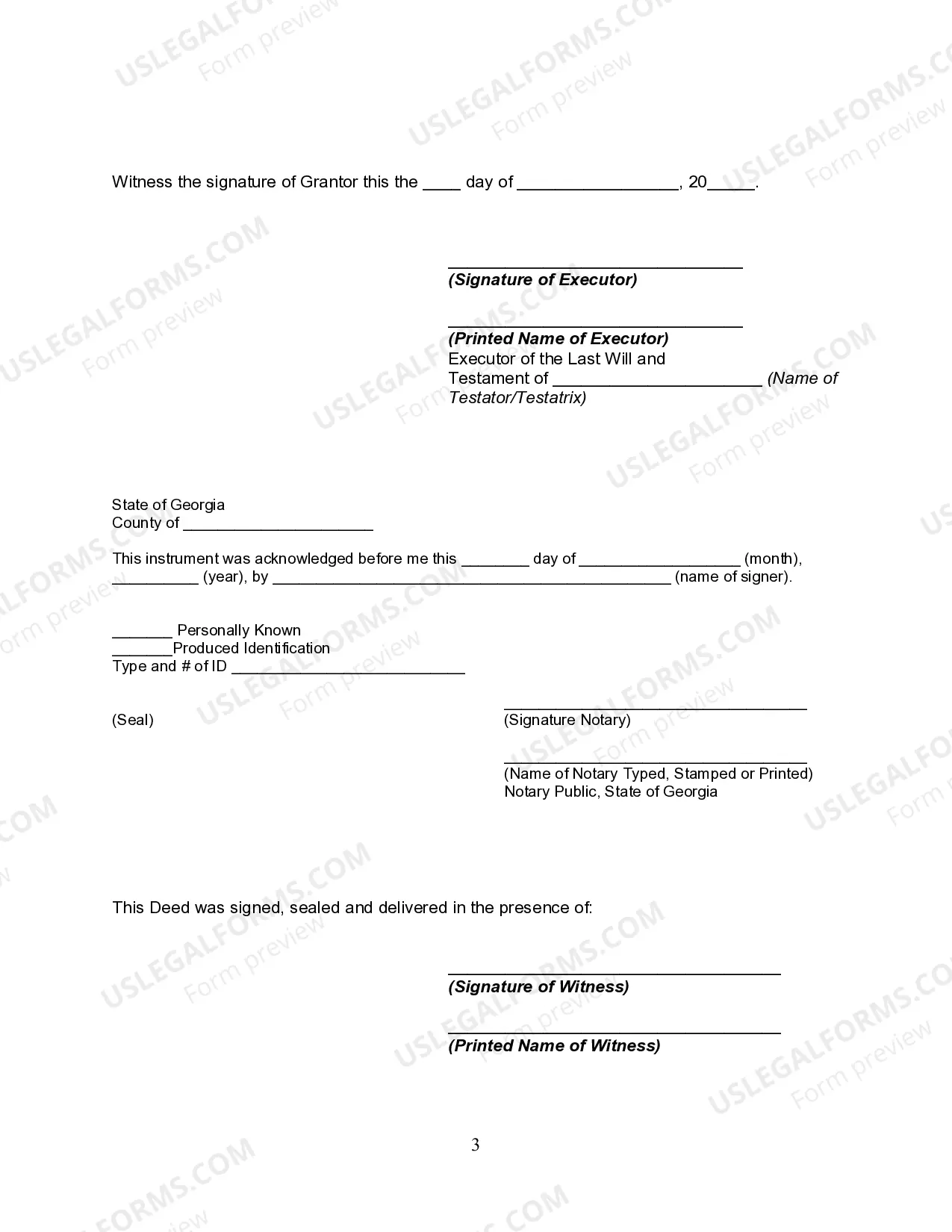
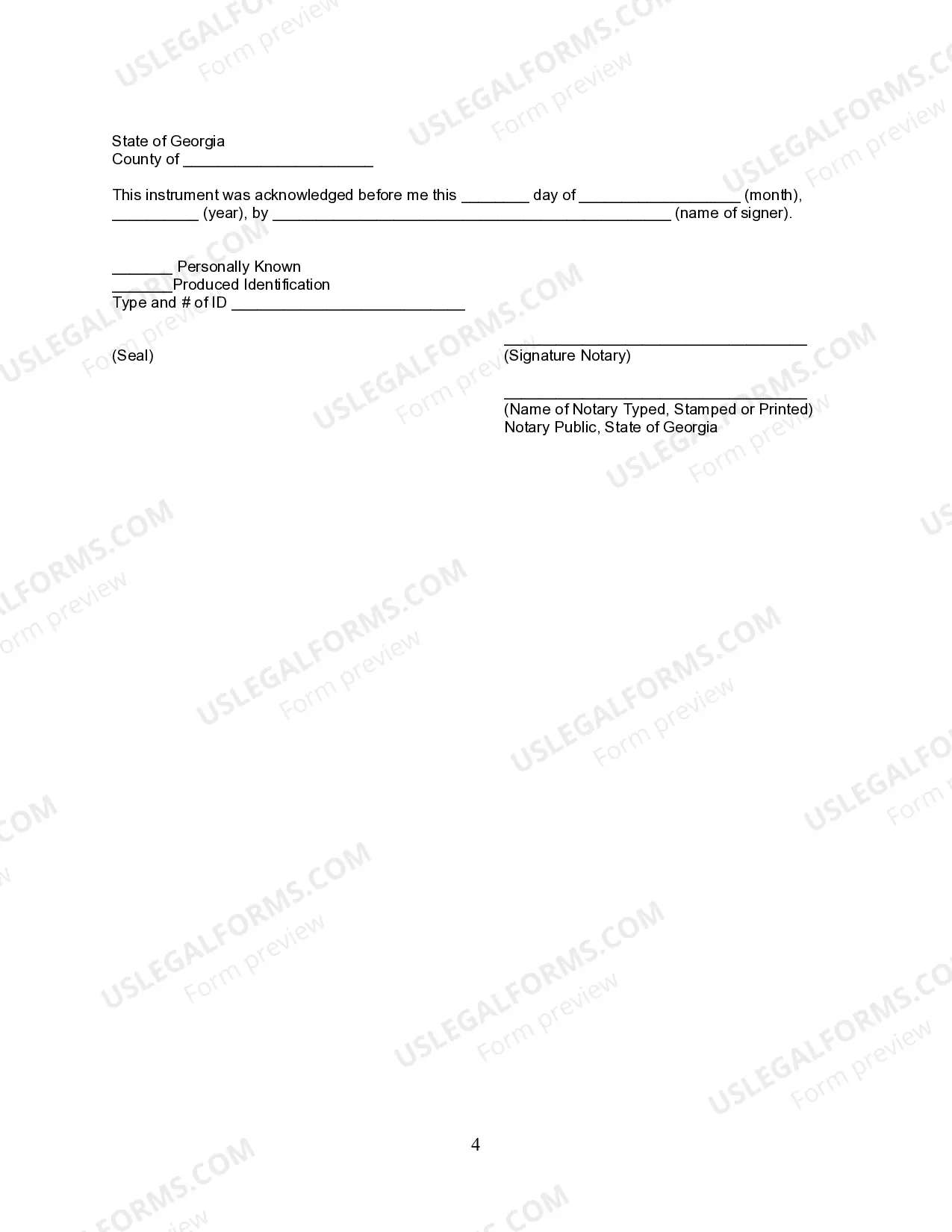
- Signatures of the executor, witnesses, and notary public
When to use this form
This form is needed when a property owner has passed away and their will specifies the transfer of property to certain heirs. It is specifically useful when the heirs' ownership is intended to be limited to a life estate, providing ongoing rights to the life tenant while establishing conditions that could lead to the property reverting to other heirs or parties in specific circumstances.
Who should use this form
- Executors or administrators managing the estate of a deceased person
- Heirs or beneficiaries designated in a will to receive property
- Individuals seeking to establish specific conditions regarding property ownership
How to complete this form
- Identify the executor by entering their name and contact information.
- List the names and addresses of all grantees who will receive the property.
- Provide a detailed description of the property being conveyed.
- Outline specific conditions that could lead to the loss of the life estate.
- Gather signatures from the executor, witnesses, and notary public to finalize the document.
Does this document require notarization?
Yes, this form must be notarized to be legally valid. The signatures of the executor and witnesses, along with the notary's seal, are required for proper execution, ensuring the document is legally recognized and enforceable.
Get your form ready online
Our built-in tools help you complete, sign, share, and store your documents in one place.
Make edits, fill in missing information, and update formatting in US Legal Forms—just like you would in MS Word.
Download a copy, print it, send it by email, or mail it via USPS—whatever works best for your next step.
Sign and collect signatures with our SignNow integration. Send to multiple recipients, set reminders, and more. Go Premium to unlock E-Sign.
If this form requires notarization, complete it online through a secure video call—no need to meet a notary in person or wait for an appointment.
We protect your documents and personal data by following strict security and privacy standards.

Make edits, fill in missing information, and update formatting in US Legal Forms—just like you would in MS Word.

Download a copy, print it, send it by email, or mail it via USPS—whatever works best for your next step.

Sign and collect signatures with our SignNow integration. Send to multiple recipients, set reminders, and more. Go Premium to unlock E-Sign.

If this form requires notarization, complete it online through a secure video call—no need to meet a notary in person or wait for an appointment.

We protect your documents and personal data by following strict security and privacy standards.
Mistakes to watch out for
- Failing to accurately describe the property in question.
- Not including all necessary parties' names and addresses.
- Leaving out conditions that could lead to divestment of the life estate.
Benefits of using this form online
- Convenient access to the form allows immediate downloading and customization.
- Easy editing features enable tailored adjustments to fit individual needs.
- Reliability of templates drafted by licensed attorneys ensures legal validity.
What to keep in mind
- The Executors Deed with Life Estate allows property transfer from an estate to designated heirs.
- This form establishes a life estate, giving the heir living rights until death.
- Conditions are set for potential divestment of ownership, protecting the decedent's estate.
Key terms explained
- Executor: A person appointed to execute the terms of a will.
- Life Estate: An interest in property allowing one to occupy and use the property during their lifetime.
- Divestment: The loss of ownership or interest in property under certain conditions.
Looking for another form?
Form popularity
FAQ
Yes, Georgia recognizes a life estate deed. This type of deed allows the property owner to retain rights to the property during their lifetime, with the remaining interest transferring to beneficiaries upon their death. Utilizing a Georgia Executors Deed with Life Estate and Conditions of Divestment ensures that property is managed according to the owner's wishes, while also complying with state laws.
An executor transfers property by following specific legal procedures and requirements set forth by state law. In Georgia, executing a Georgia Executors Deed with Life Estate and Conditions of Divestment allows the executor to transfer property while retaining a life estate for themselves or the deceased. This process safeguards the interests of all parties involved in the transaction.
An executor transfers property in Georgia by obtaining the appropriate legal documents through the probate process. This process usually involves the executor executing a Georgia Executors Deed with Life Estate and Conditions of Divestment, which grants property rights to heirs or beneficiaries. This deed must be recorded with the county clerk to formalize ownership transfer.
In Georgia, an executor typically has up to six months to settle an estate, but this timeline can vary. It often depends on the estate's complexity and any potential disputes among beneficiaries. The executor should adhere to Georgia laws, including the management and transfer of the property through a Georgia Executors Deed with Life Estate and Conditions of Divestment, to ensure a smooth settlement.
To transfer a property deed after death in Georgia, you need to initiate the probate process. The executor must file the deceased's will, if available, along with the death certificate in the probate court. Following this, the executor can execute a Georgia Executors Deed with Life Estate and Conditions of Divestment, allowing for the transfer of ownership to the beneficiaries.
Typically, a will cannot override a life estate deed, as the deed grants a legal right to the life tenant for their lifetime. This means that the property remains under the control of the life tenant, regardless of the will's provisions. However, certain conditions could impact the estate or the deed’s terms, so consulting with a legal professional on the Georgia Executors Deed with Life Estate and Conditions of Divestment is advisable. They can guide you on any potential intersections between estate planning documents.
To buy someone out of a life estate, you first need to determine the value of the property and the interest held by the life tenant. This often involves a fair market appraisal. Next, discuss terms with the life tenant and outline a buyout agreement that reflects the agreed compensation. After completing the transaction, make sure to update the Georgia Executors Deed with Life Estate and Conditions of Divestment to reflect these changes legally.
An executor's deed in Georgia is a legal document used to transfer property from a deceased person's estate to the rightful heirs or beneficiaries. This deed is typically executed by the executor appointed through the will and is essential for the legal transfer of property ownership. When dealing with a life estate, understanding how an executor's deed works with the conditions of divestment can be complex. For assistance in creating and handling executor's deeds, check out US Legal Forms for tailored resources that simplify this process.
The holder of a life estate can potentially borrow against the property, but they must seek permission from the remainderman first. Lenders may also be hesitant to provide loans secured by a life estate due to the uncertainty surrounding the property’s future ownership. Therefore, it's essential to understand the implications of borrowing against a life estate. Consult with US Legal Forms to access reliable information and support about securing financing with a life estate in Georgia.
In Georgia, a life estate grants an individual the right to use and benefit from a property for the duration of their life. This means the person can live in, rent, or improve the property but cannot sell or transfer it without the remainderman's consent. Upon the life tenant's death, the property automatically transfers to the remainderman. To ensure you understand your ownership and responsibilities under a life estate, refer to resources from US Legal Forms to navigate Georgia's legal framework effectively.