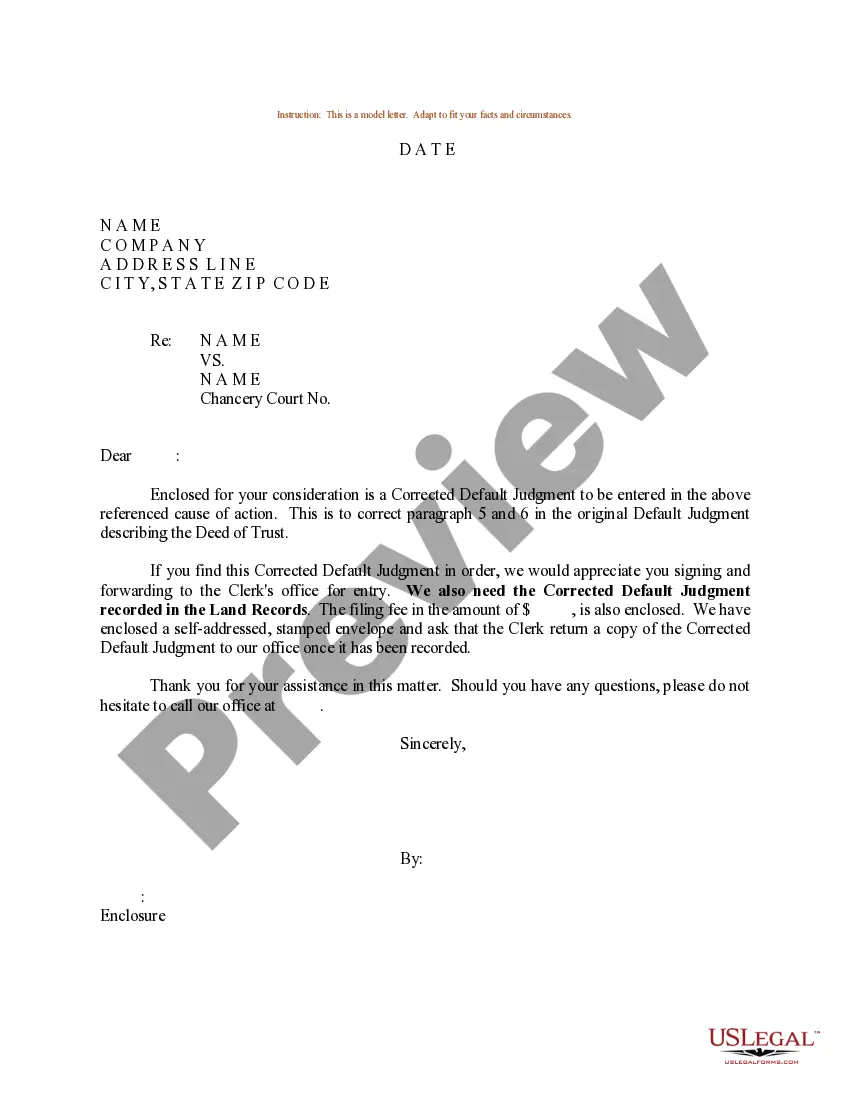
Georgia Construction Contract Cost Plus or Fixed Fee
What is this form?
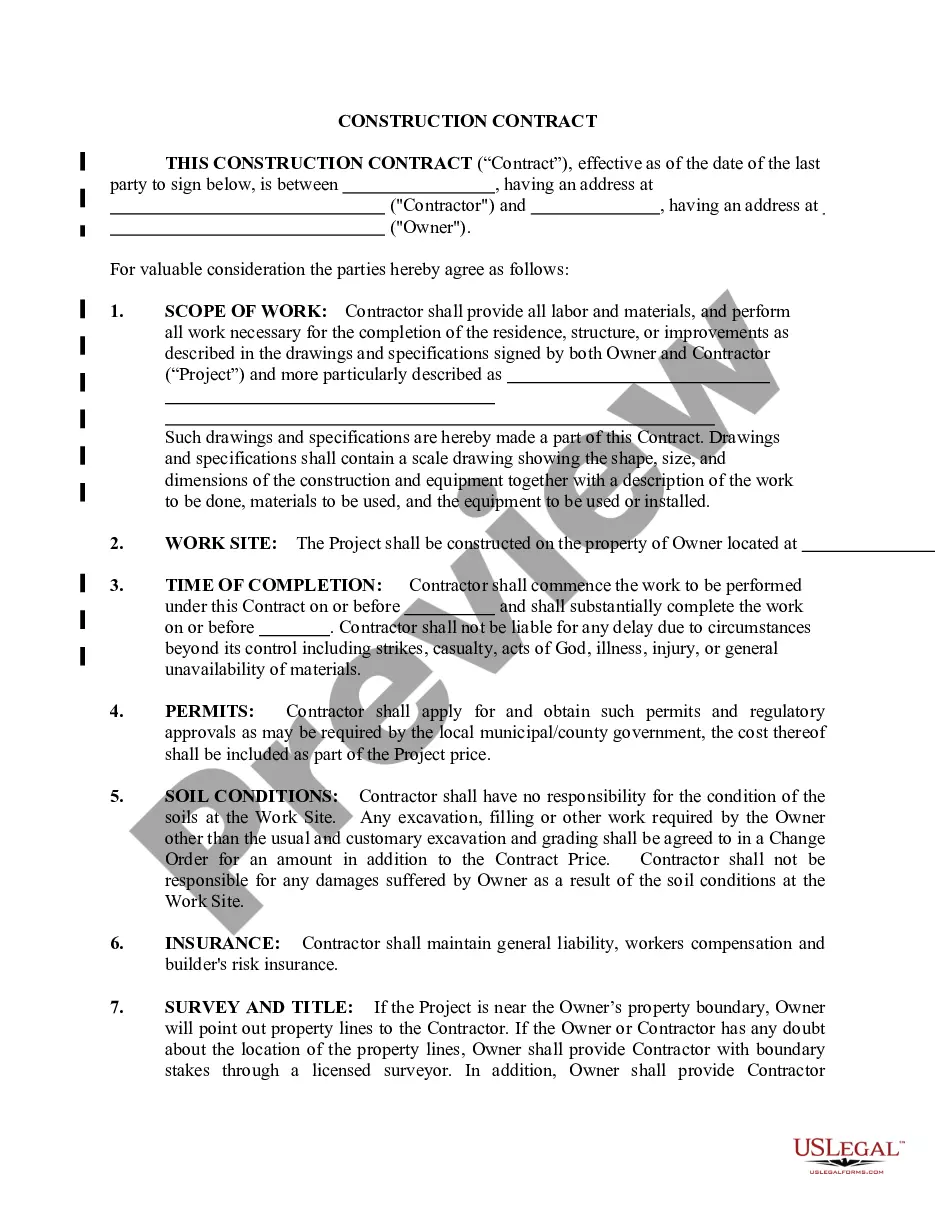
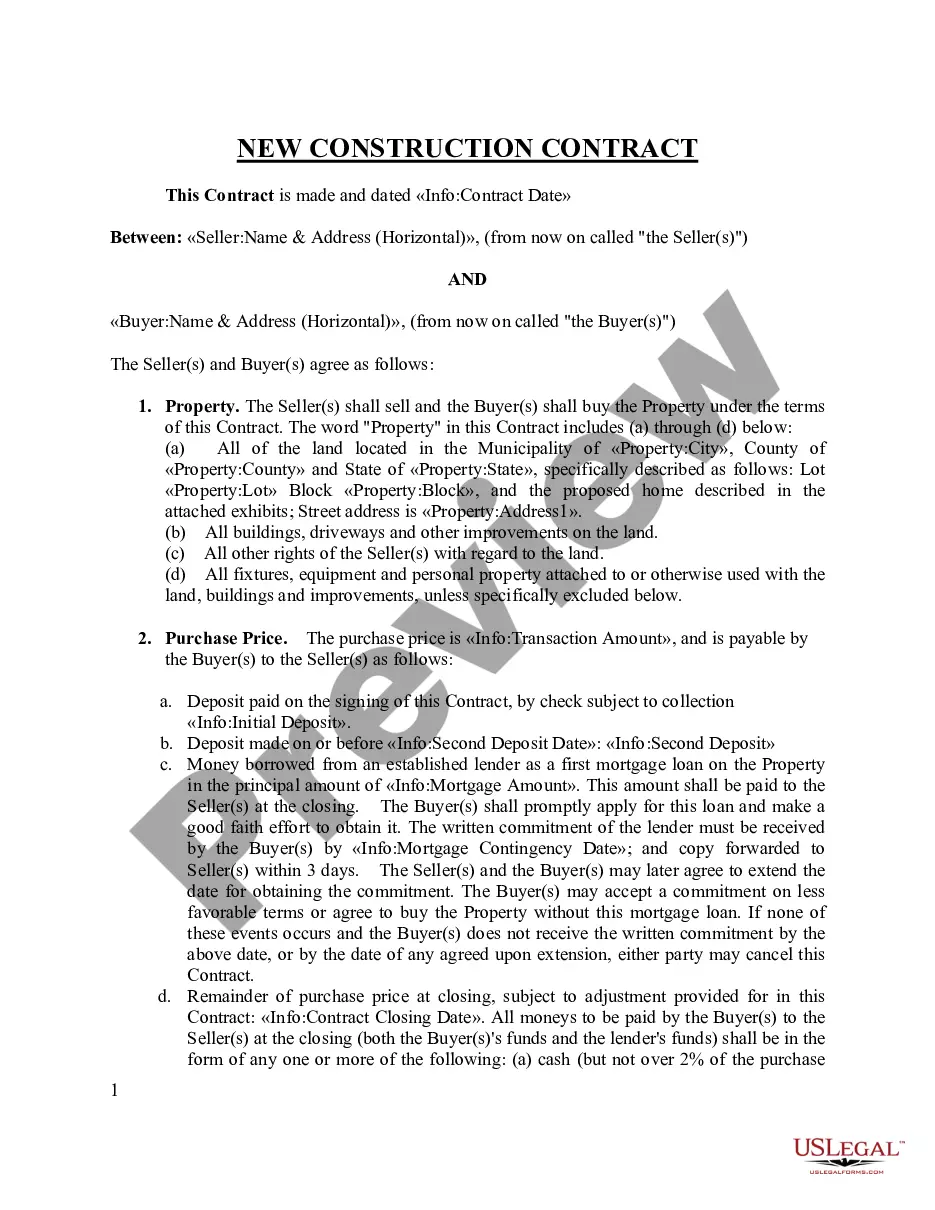
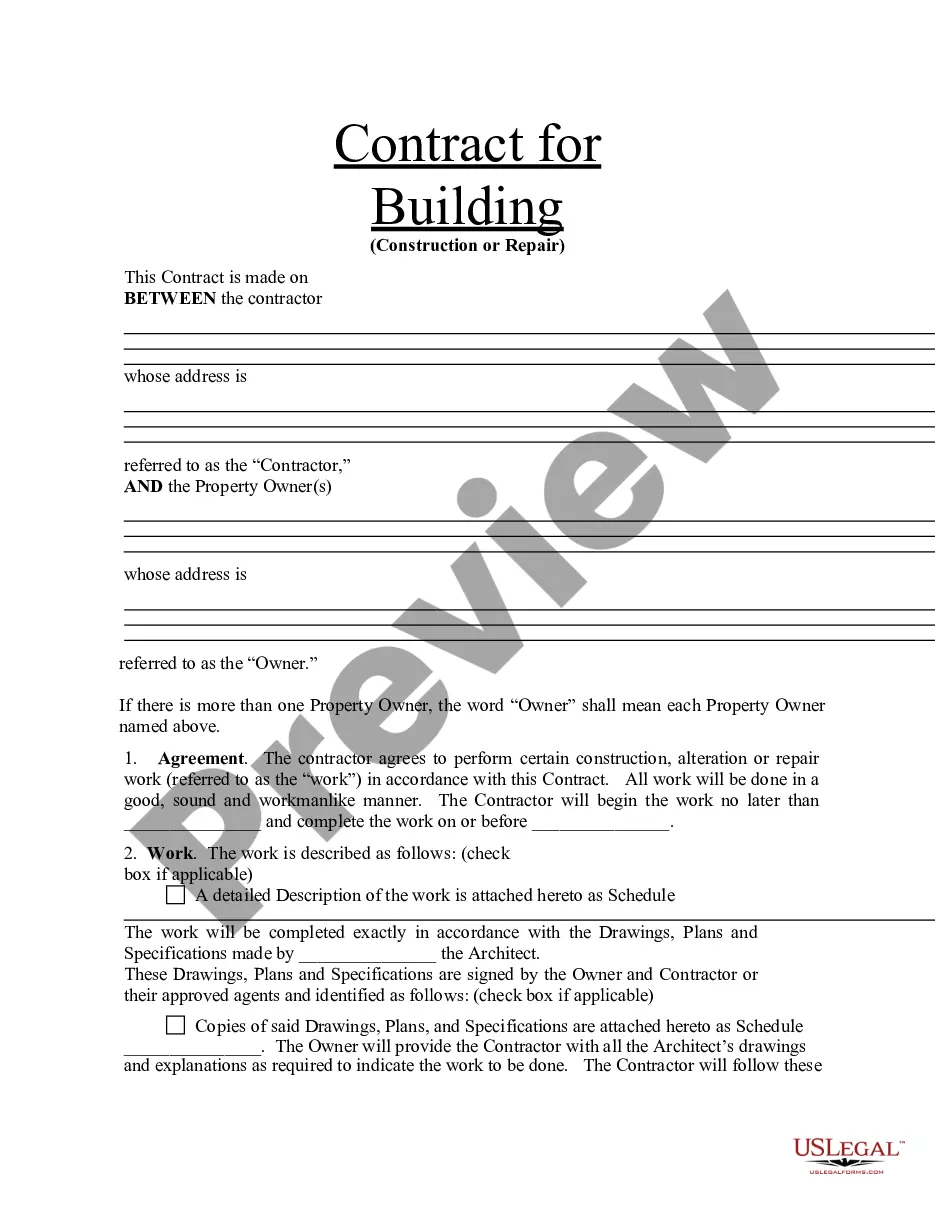
This form is a Construction Contract that allows parties to establish a payment arrangement based on either cost plus or fixed fee methods. It provides a framework for construction projects, outlining the responsibilities and expectations of both the owner and contractor. This contract is distinct from standard fixed-price contracts as it allows for flexibility in costs associated with the construction.
Key components of this form
- Work Site: Specifies the location where the project will take place.
- Permits: Mandates that the contractor obtain necessary permits, with associated costs included in the contract price.
- Soil Conditions: Clarifies that the contractor is not liable for existing soil conditions and outlines the procedure for additional excavation work.
- Insurance: Requires the contractor to maintain comprehensive insurance covering various liabilities.
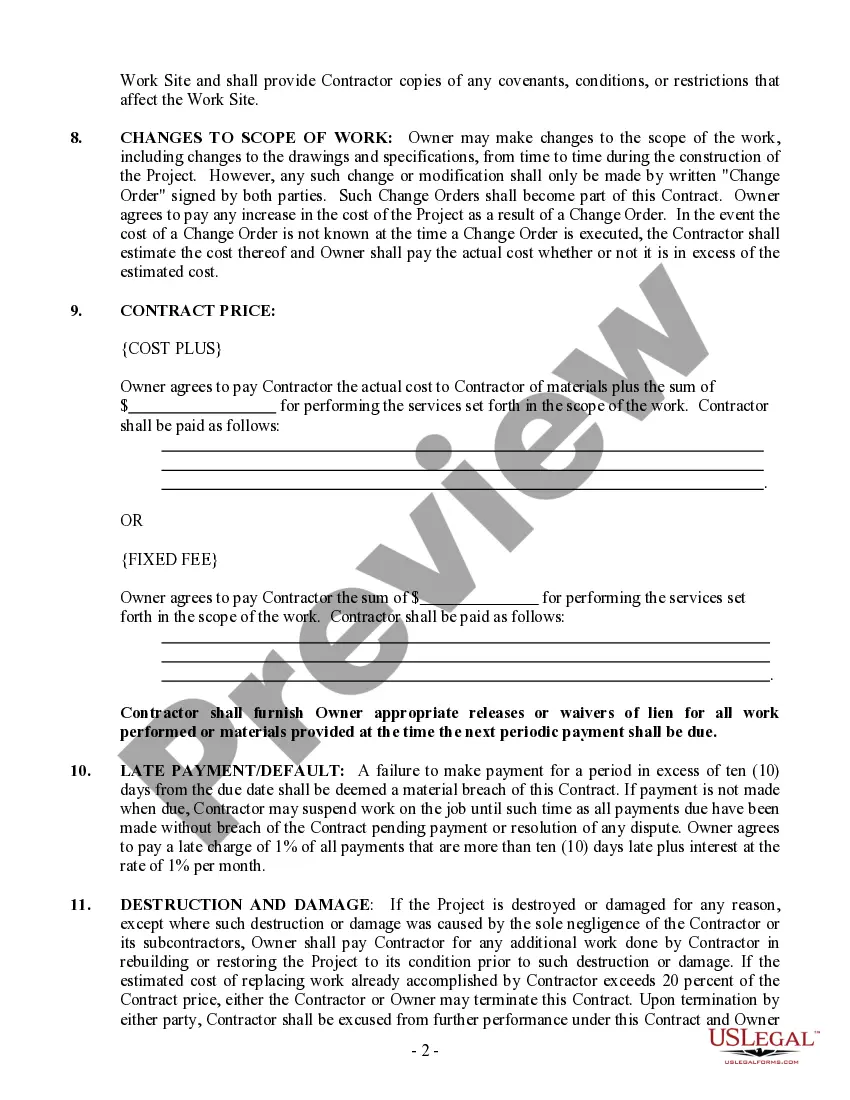
- Changes to Scope of Work: Allows the owner to modify project details, with provisions regarding payment for changes.
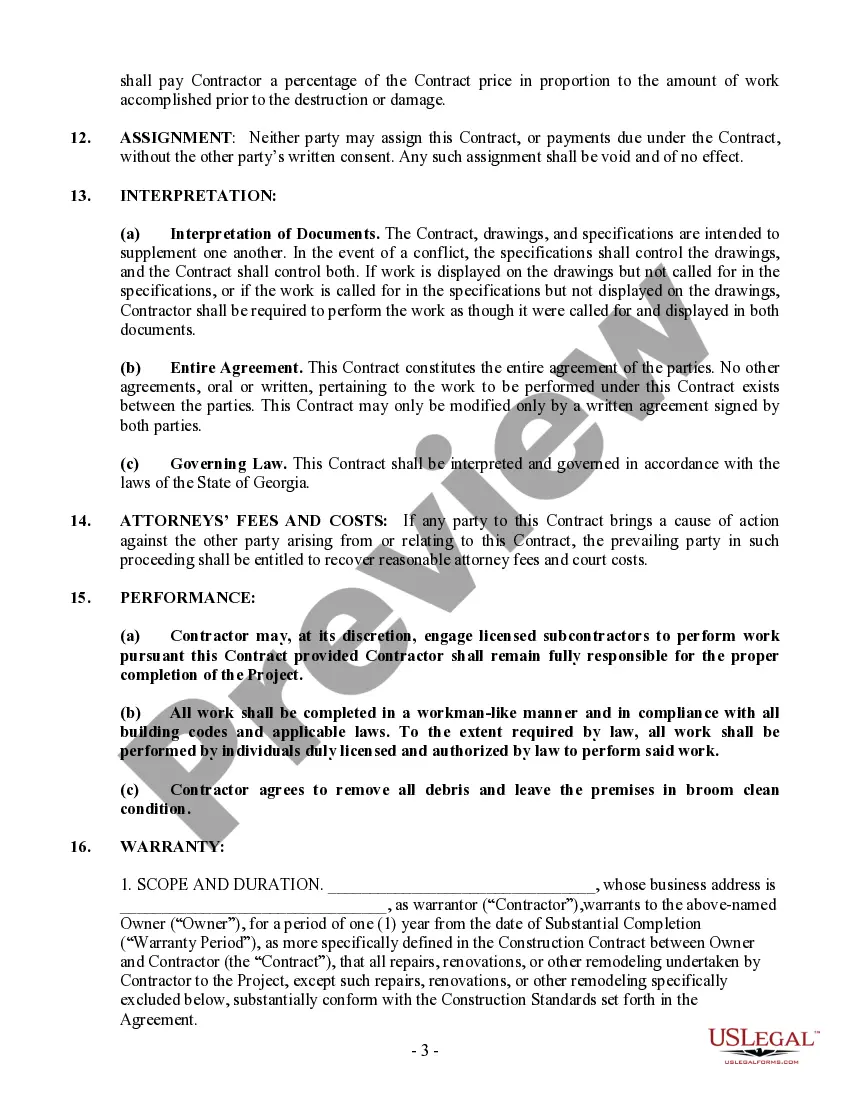
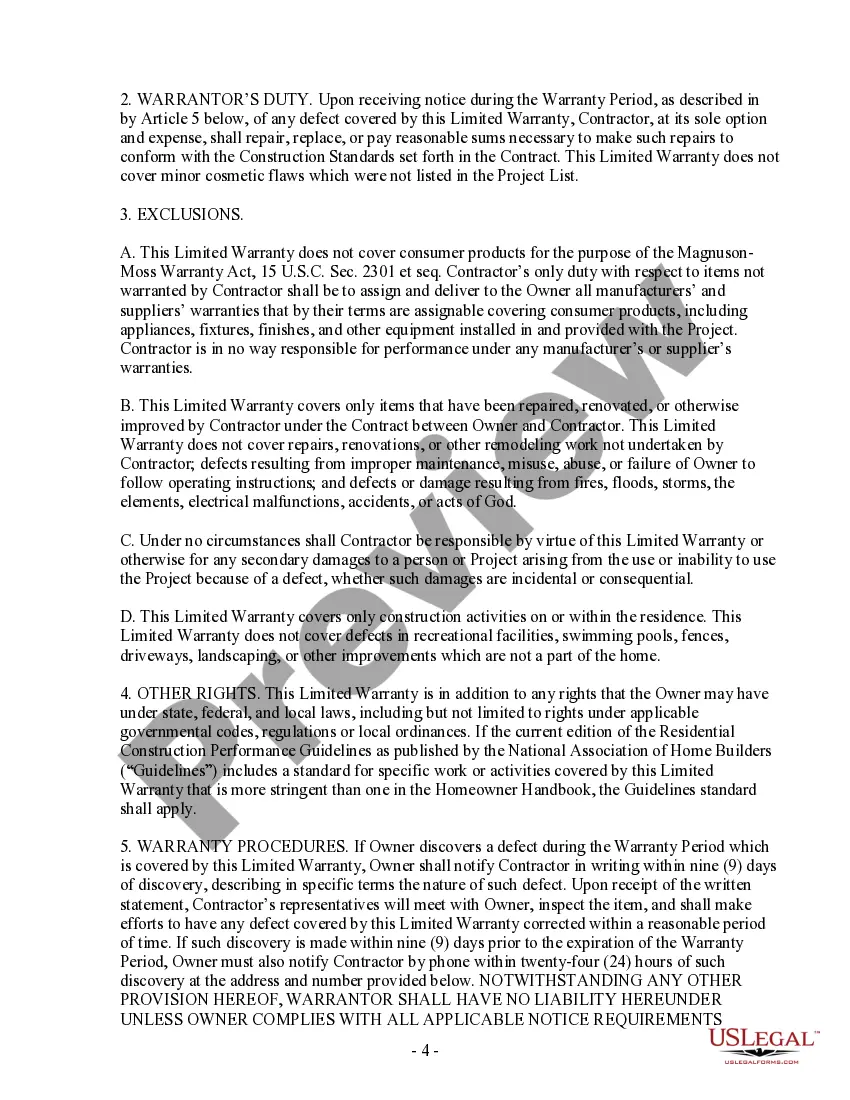
- Warranty: Details the warranty period for the work and the contractor's responsibilities regarding defects.

When to use this document
This Construction Contract should be used when a property owner hires a contractor to undertake a construction project where costs may vary. Ideal scenarios include new home construction, major renovations, or repairs where the final costs are uncertain at the project's outset.
Who should use this form
This form is suitable for:
- Property owners looking to hire contractors for construction work.
- Contractors who require a standard agreement to clarify the terms of a construction project.
- Small business owners seeking flexible payment arrangements for construction services.
How to prepare this document
To complete this form, follow these steps:
- Identify the parties involved by entering the names and contact information of the owner and contractor.
- Specify the work site where the construction will occur, including the full address.
- Outline the scope of work to be performed under the contract.
- Indicate the payment arrangement, selecting either cost plus or fixed fee, based on your agreement.
- Complete the warranty section to define the contractor's obligations regarding defects.
- Ensure that both parties sign and date the contract to validate it.
Is notarization required?
Notarization is not commonly needed for this form. However, certain documents or local rules may make it necessary. Our notarization service, powered by Notarize, allows you to finalize it securely online anytime, day or night.
Get your form ready online
Our built-in tools help you complete, sign, share, and store your documents in one place.
Make edits, fill in missing information, and update formatting in US Legal Forms—just like you would in MS Word.
Download a copy, print it, send it by email, or mail it via USPS—whatever works best for your next step.
Sign and collect signatures with our SignNow integration. Send to multiple recipients, set reminders, and more. Go Premium to unlock E-Sign.
If this form requires notarization, complete it online through a secure video call—no need to meet a notary in person or wait for an appointment.
We protect your documents and personal data by following strict security and privacy standards.

Make edits, fill in missing information, and update formatting in US Legal Forms—just like you would in MS Word.

Download a copy, print it, send it by email, or mail it via USPS—whatever works best for your next step.

Sign and collect signatures with our SignNow integration. Send to multiple recipients, set reminders, and more. Go Premium to unlock E-Sign.

If this form requires notarization, complete it online through a secure video call—no need to meet a notary in person or wait for an appointment.

We protect your documents and personal data by following strict security and privacy standards.
Common mistakes to avoid
- Failing to specify the work site accurately, leading to disputes over project location.
- Not obtaining the necessary permits before beginning construction.
- Overlooking the need to document changes to the scope of work with a signed Change Order.
- Failing to discuss soil conditions upfront, which can lead to unforeseen costs.
Why use this form online
- Convenient access to a customizable Construction Contract template created by licensed attorneys.
- Ability to fill out the form online, making it easy to edit and save your information.
- Secure downloading, allowing for immediate access to necessary legal documents.
- Peace of mind knowing the form complies with Georgia state laws.
Main things to remember
- The Construction Contract offers flexibility in payment methods for construction projects.
- Key terms, such as warranty and change orders, are crucial for protecting both parties.
- Using a detailed and legally sound contract can help prevent disputes and misunderstandings.
Looking for another form?

Form popularity
FAQ
A cost-plus contract, also known as a cost-reimbursement contract, is a form of contract wherein the contractor is paid for all of their construction-related expenses. Plus, the contractor is paid a specific agreed-upon amount for profit.
A Cost-Based Pricing Example Suppose that a company sells a product for $1, and that $1 includes all the costs that go into making and marketing the product. The company may then add a percentage on top of that $1 as the "plus" part of cost-plus pricing. That portion of the price is the company's profit.
A cost-plus contract is an agreement to reimburse a company for expenses incurred plus a specific amount of profit, usually stated as a percentage of the contract's full price.
Determine your COGS (cost of goods sold). For example $40 . Find out your gross profit by subtracting the cost from the revenue. Divide profit by COGS. Express it as a percentage: 0.25 100 = 25% . This is how to find markup... or simply use our markup calculator!
Cost Plus Contract Advantages Higher quality since the contractor has incentive to use the best labor and materials. Less chance of having the project overbid. Often less expensive than a fixed-price contract since contractors don't need to charge a higher price to cover the risk of a higher materials cost than
In the cost plus a percentage arrangement, the contractor bills the client for his direct costs for labor, materials, and subs, plus a percentage to cover his overhead and profit. Markups might range anywhere from 10% to 25%.
A cost plus percentage of cost contract or CPPC is a cost reimbursement contract containing some element that obligates the non-state entity to pay the contractor an amount, undetermined at the time the contract was made and to be incurred in the future, based on a percentage of future costs.
Cost Plus Contract Disadvantages For the buyer, the major disadvantage of this type of contract is the risk for paying much more than expected on materials. The contractor also has less incentive to be efficient since they will profit either way.
WHY USE A COST-PLUS CONTRACT? A cost-plus contract is an attractive option for a contractor for these two reasons: The contractor cannot produce a proposal for the work because of incomplete information about the project, and therefore transfers the risk of the cost of the project to the owner.