Georgia Drainage Contract for Contractor
What this document covers
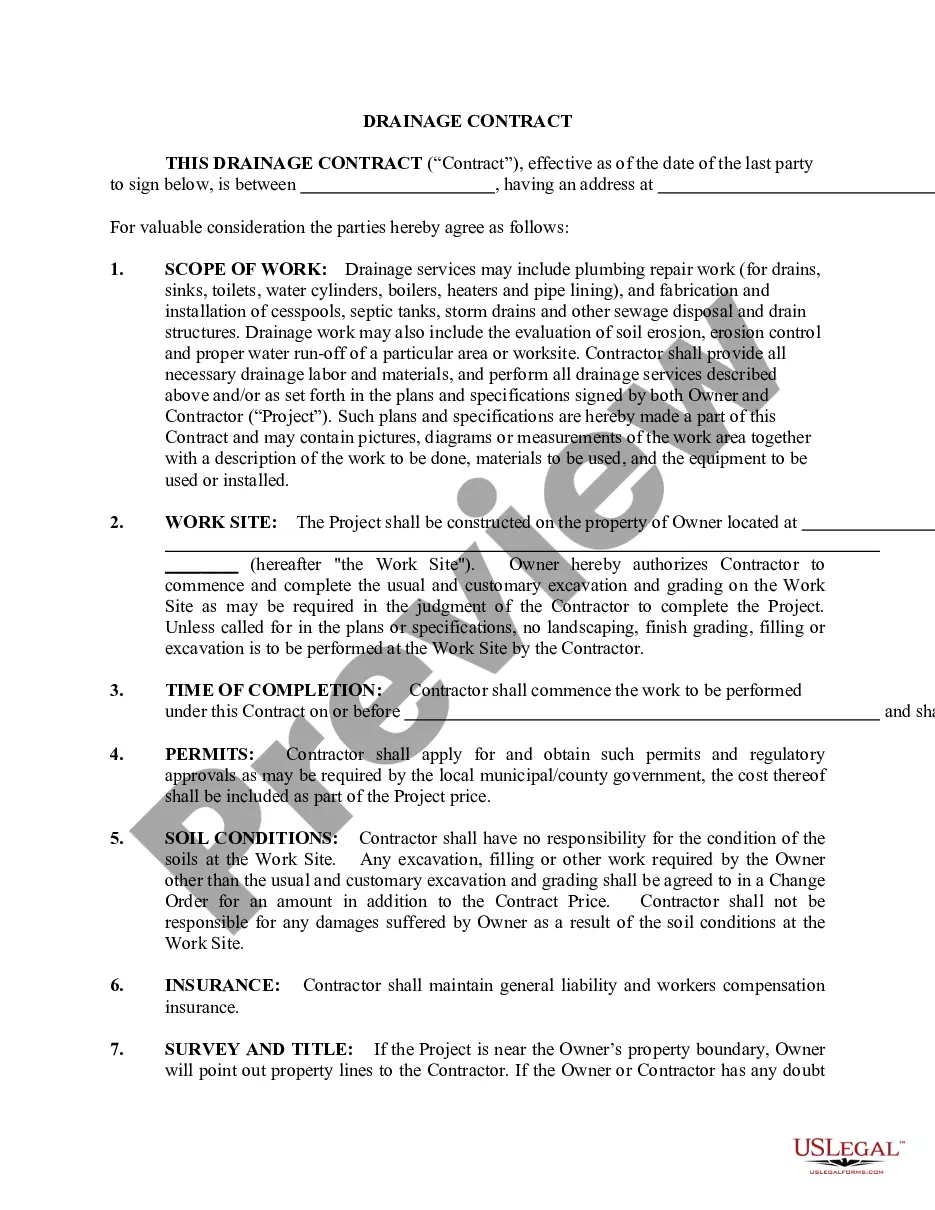
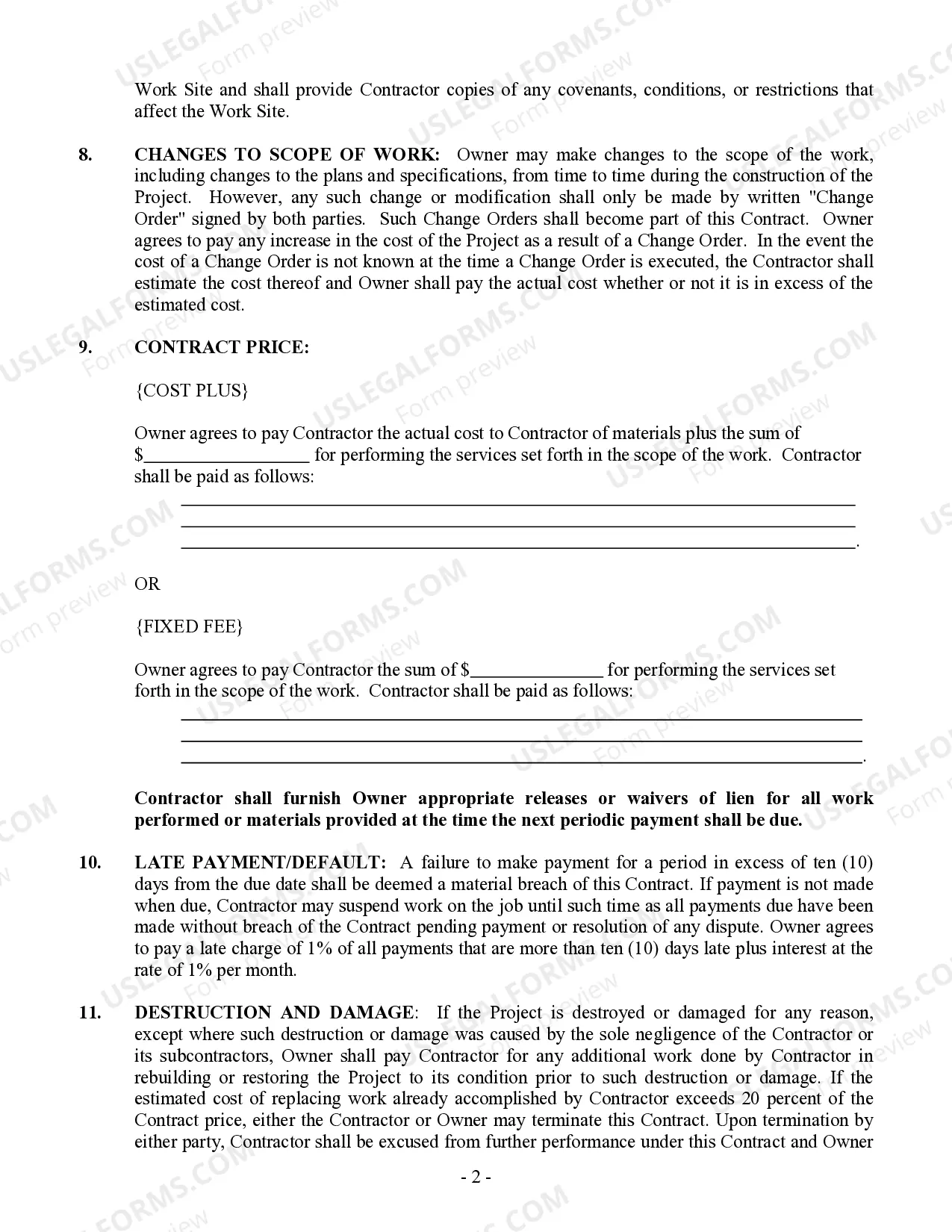
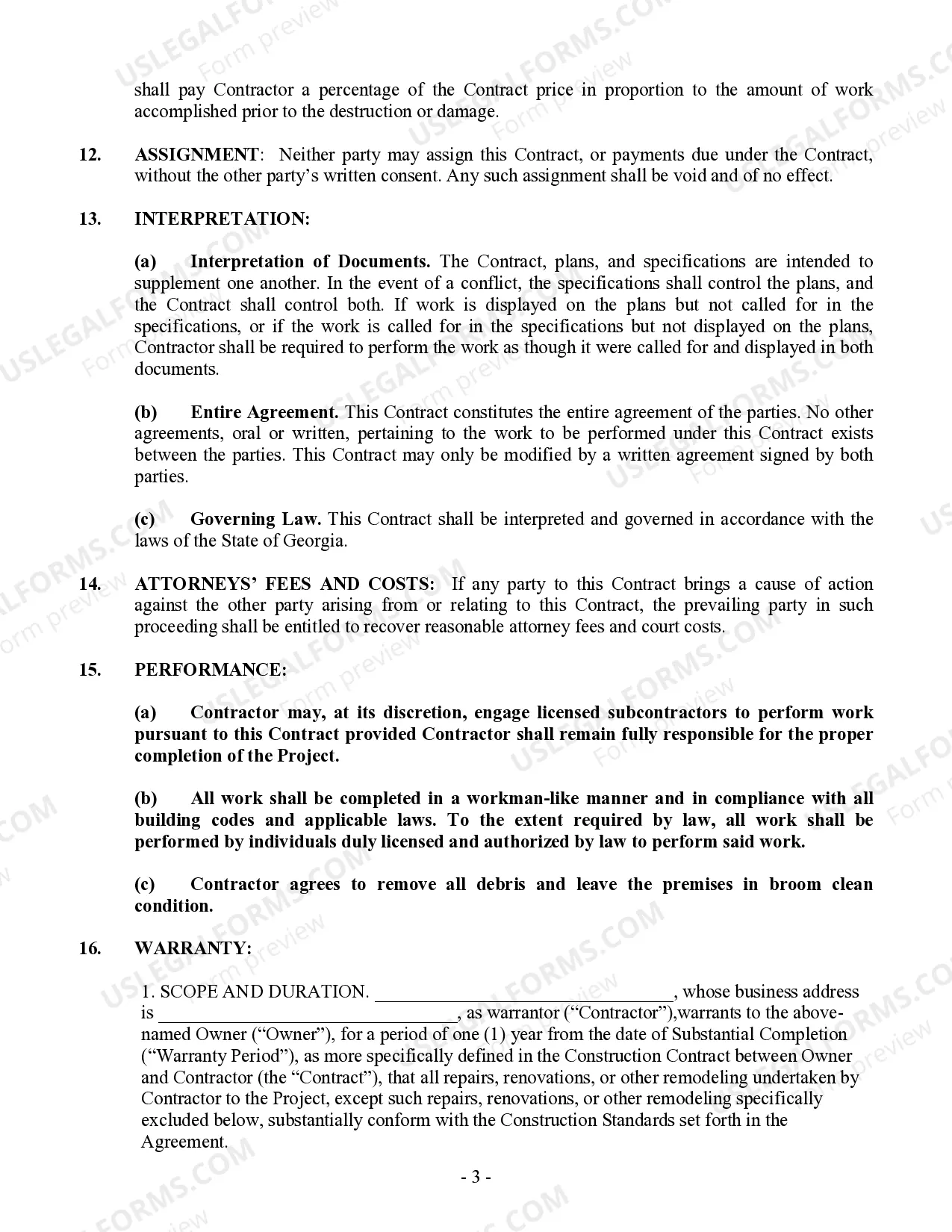
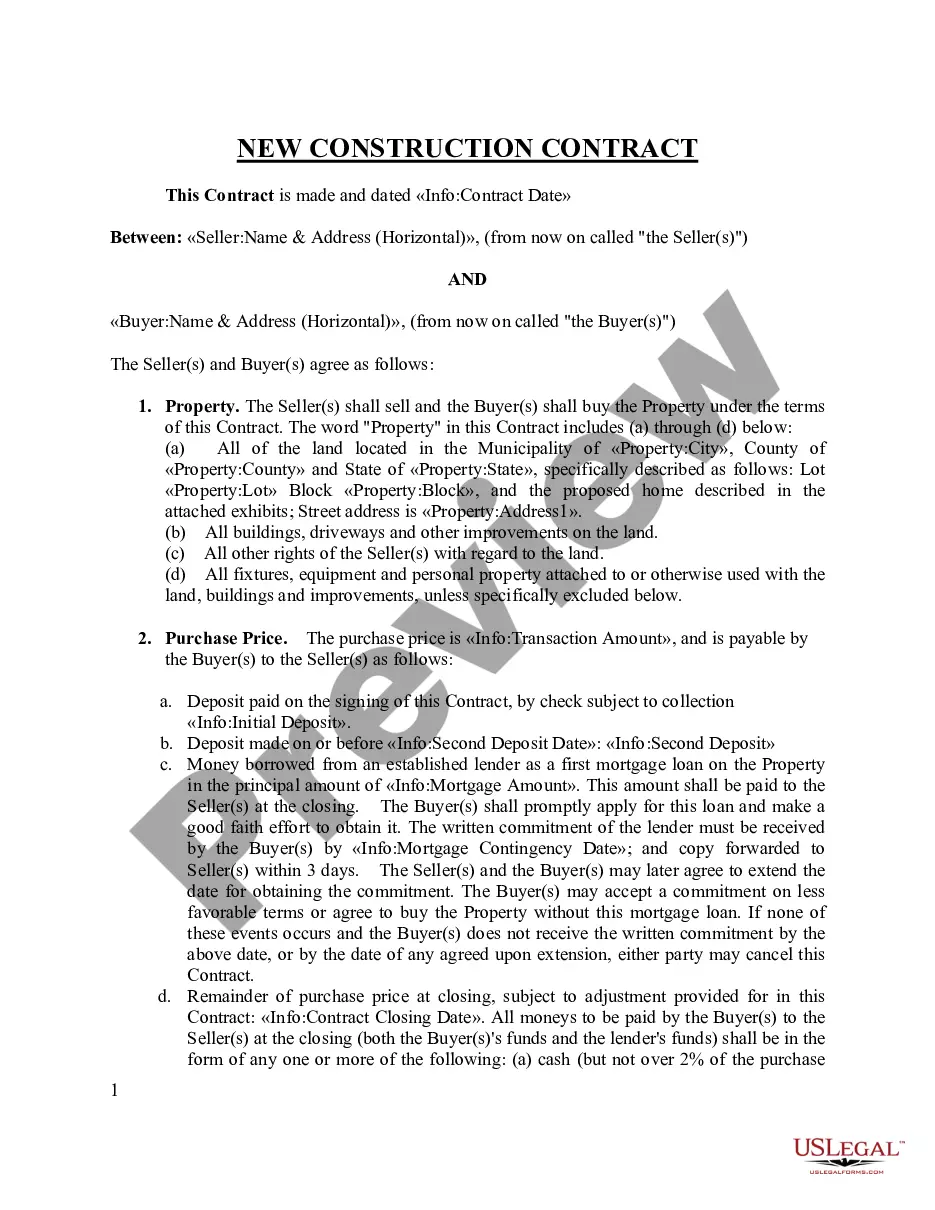
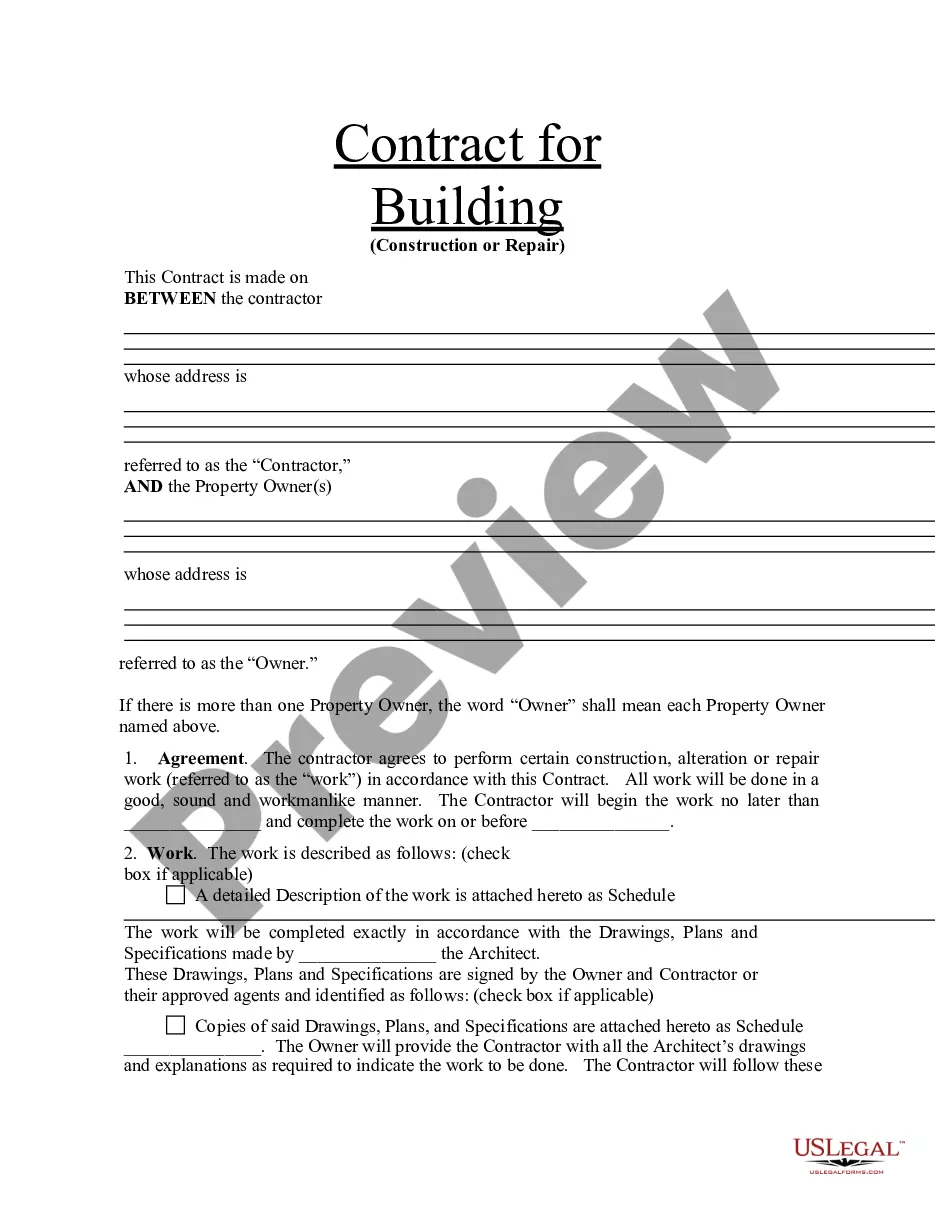
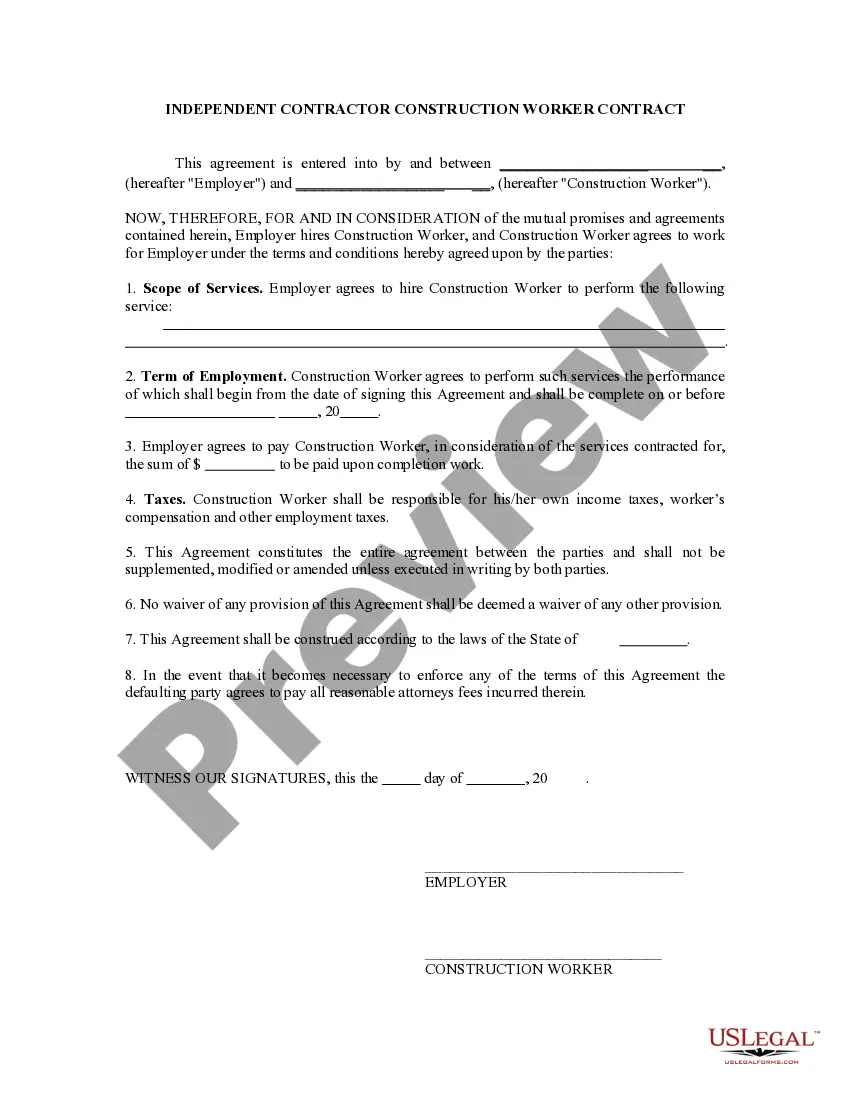
The Drainage Contract for Contractor is a legal agreement between drainage contractors and property owners, outlining terms for the construction of drainage projects. This contract is uniquely designed for use in Georgia and can accommodate either cost-plus or fixed fee payment arrangements, ensuring clarity and security for both parties. Its comprehensive nature distinguishes it from other construction contracts by specifically addressing aspects like change orders, work site conditions, insurance requirements, and warranties.
Form components explained
- Work site details, including location and access information.
- Requirements for obtaining necessary permits and approvals.
- Provisions regarding soil conditions and responsibilities of the contractor.
- Insurance obligations, including general liability and workerâs compensation.
- Procedures for handling changes to the scope of work through written change orders.
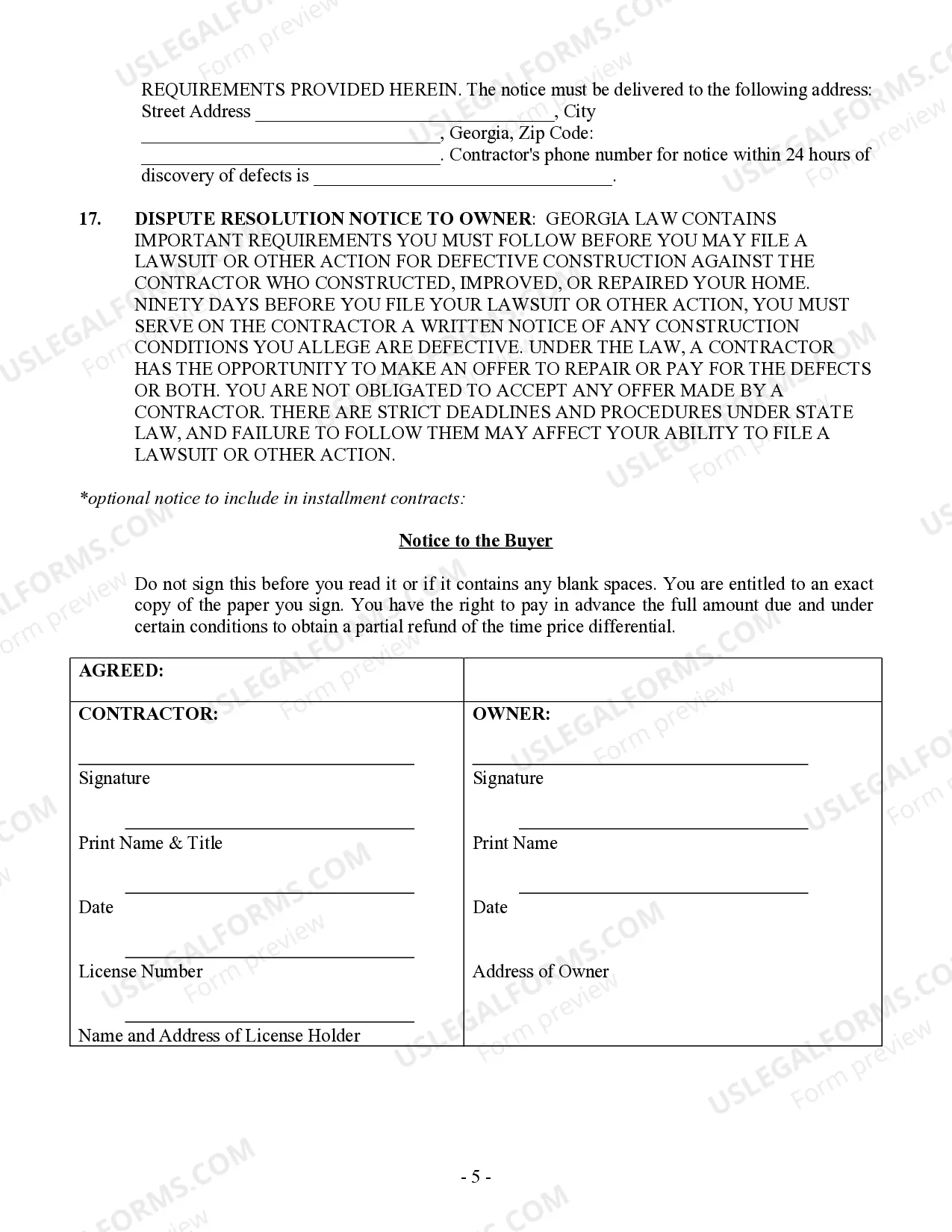
- Terms regarding late payments, defaults, and penalties for non-compliance.
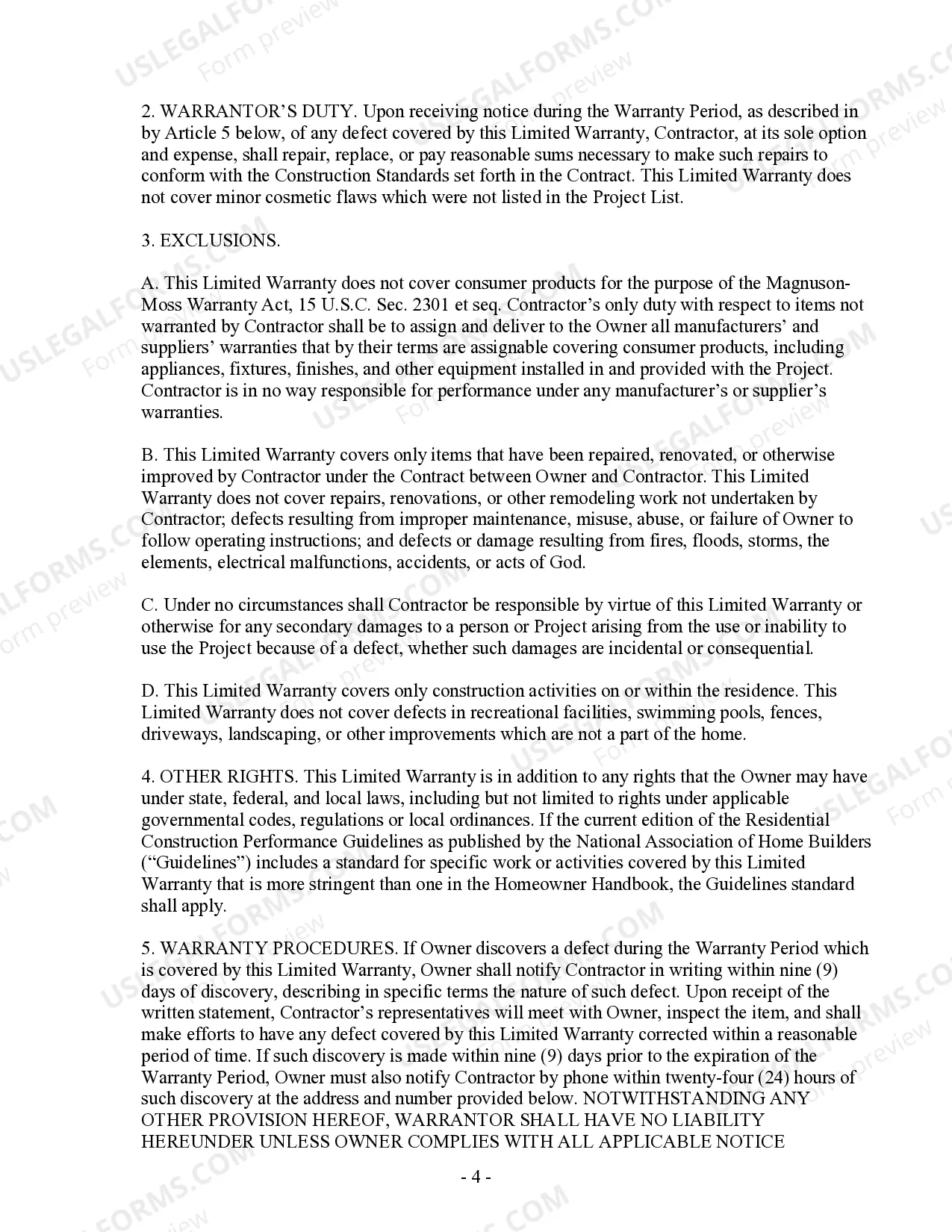
- Warranty terms covering the quality of work performed for a specified period.
When this form is needed
This contract is useful when a property owner hires a drainage contractor to undertake drainage work on their property. It is applicable in various scenarios, including new construction projects that require drainage systems, renovation projects that necessitate changes to existing drainage systems, or any situation where drainage work is needed to prevent water damage to property.
Who this form is for
- Property owners seeking to hire a drainage contractor for new or existing drainage systems.
- Drainage contractors who need a structured framework for their agreements with property owners.
- Both parties looking for clarity on payment arrangements and legal responsibilities.
Instructions for completing this form
- Identify the parties involved, including the contractor's and owner's names and addresses.
- Specify the location of the work site where the drainage project will take place.
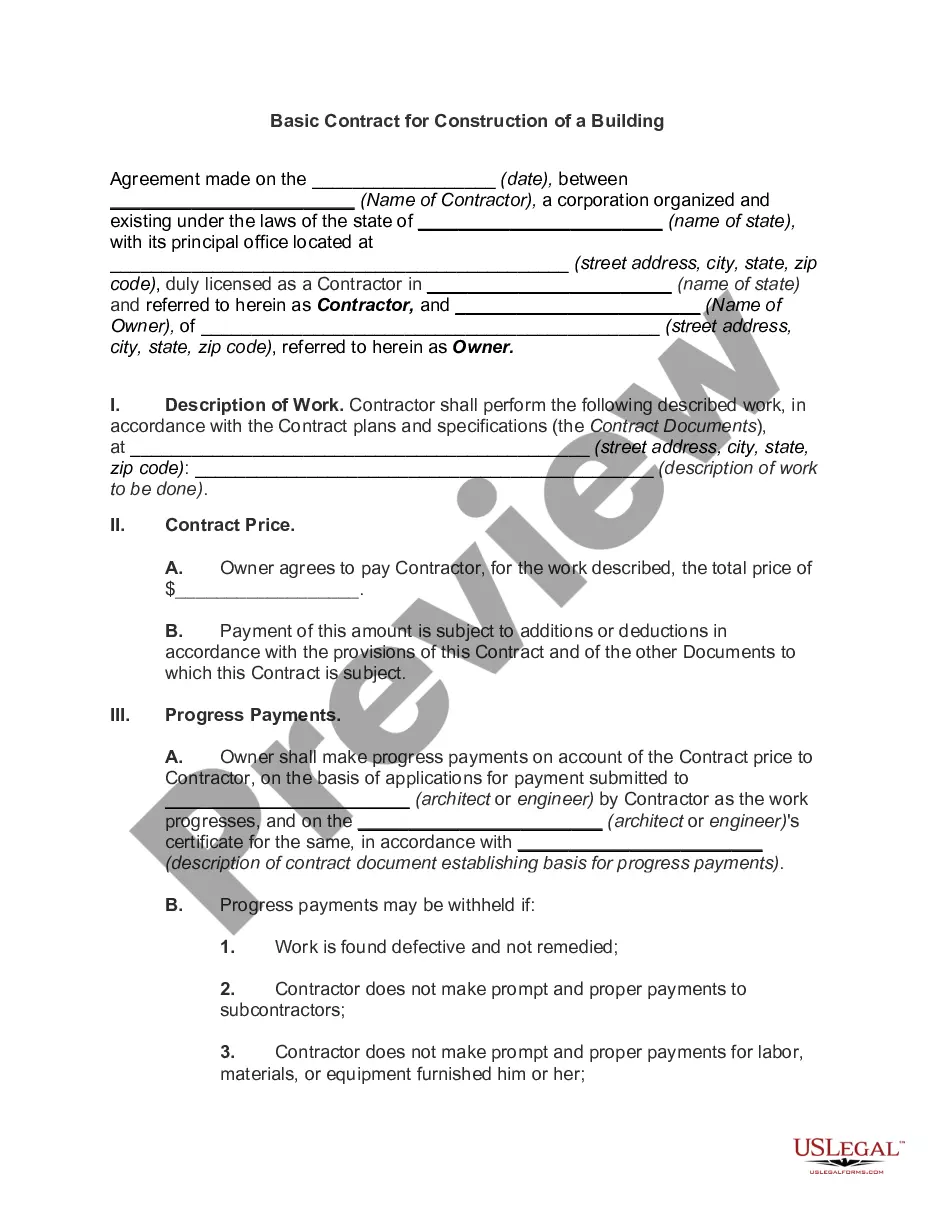
- Detail the payment structure, chosen between cost-plus and fixed fee arrangements.
- Include clauses regarding permits, insurance, warranty, and responsibilities for soil conditions.
- Ensure that all parties sign the contract to validate the agreement.
Notarization guidance
This form does not typically require notarization unless specified by local law. It is advisable to check local regulations to ensure compliance with any additional requirements.
Get your form ready online
Our built-in tools help you complete, sign, share, and store your documents in one place.
Make edits, fill in missing information, and update formatting in US Legal Forms—just like you would in MS Word.
Download a copy, print it, send it by email, or mail it via USPS—whatever works best for your next step.
Sign and collect signatures with our SignNow integration. Send to multiple recipients, set reminders, and more. Go Premium to unlock E-Sign.
If this form requires notarization, complete it online through a secure video call—no need to meet a notary in person or wait for an appointment.
We protect your documents and personal data by following strict security and privacy standards.

Make edits, fill in missing information, and update formatting in US Legal Forms—just like you would in MS Word.

Download a copy, print it, send it by email, or mail it via USPS—whatever works best for your next step.

Sign and collect signatures with our SignNow integration. Send to multiple recipients, set reminders, and more. Go Premium to unlock E-Sign.

If this form requires notarization, complete it online through a secure video call—no need to meet a notary in person or wait for an appointment.

We protect your documents and personal data by following strict security and privacy standards.
Mistakes to watch out for
- Failing to clearly define the scope of work, which can lead to disputes later.
- Not including necessary insurance requirements, exposing parties to liability risks.
- Neglecting to obtain required permits before beginning work, potentially leading to fines.
- Overlooking the importance of signing change orders for any modifications made during the project.
Benefits of using this form online
- Convenience: Download the form at any time, from anywhere.
- Editability: Customize the contract to fit specific project needs easily.
- Reliability: Ensure compliance with Georgia state laws with a properly drafted template.
Looking for another form?


Form popularity
FAQ
Without a contractor's license in Georgia, you can perform certain handyman services, small repairs, and maintenance work not exceeding $2,500. Engaging in larger-scale projects requires a licensed contractor to ensure compliance with safety and regulatory standards. Consider documenting your agreement through a Georgia Drainage Contract for Contractor to maintain transparency. This guarantees both parties have a clear understanding of the work and expectations.
If you need to report a contractor in Georgia, you can file a complaint with the Georgia State Licensing Board. Ensure you gather all relevant documentation and details regarding your case, as this will aid in your complaint process. Additionally, if there were issues with your Georgia Drainage Contract for Contractor, include this information as it can strengthen your report. Be prepared for the process to take time as investigations are conducted.
To void a contract with a contractor, you should first review the contract terms and any applicable laws. Notify the contractor in writing of your intention to void the agreement, citing the reasons for your decision. If needed, creating a Georgia Drainage Contract for Contractor can help clarify the terms moving forward. Consulting with an attorney can also ensure your rights are protected during this process.
Hiring an unlicensed contractor in Georgia is not illegal, but it does come with risks. If any issues arise related to the work performed, you may have limited recourse. A well-drafted Georgia Drainage Contract for Contractor can provide some protection against potential disputes. It’s always best to vet contractors and ensure they meet the licensing requirements for larger projects.
In Georgia, you can complete up to $2,500 worth of work without a contractor's license. This includes both labor and materials used in the project. For anything beyond this threshold, such as extensive drainage work, it's advisable to engage a licensed contractor and establish a clear Georgia Drainage Contract for Contractor. This not only keeps you compliant with the law but also ensures quality work.
In Georgia, a contractor can file a lien even if there is no written contract. However, to strengthen their position, it’s beneficial to have some form of agreement, even if informal. A Georgia Drainage Contract for Contractor provides clarity on the work performed and can significantly support any claim for payment. Always consult with a legal expert to understand your rights and responsibilities.
To inform a contractor that you no longer need their services, contact them promptly and explain your decision. It is helpful to express gratitude for their efforts, even if the outcome was not as desired. In a Georgia Drainage Contract for Contractor, this approach maintains professionalism and helps preserve a positive working relationship for the future.
Filling out a contractor agreement requires careful attention to details. Begin by accurately identifying both parties, including business names and addresses. In the context of a Georgia Drainage Contract for Contractor, clearly outline the scope of work, payment terms, and any deadlines. You can use platforms like uslegalforms to ensure compliance and clarity.
When terminating a contractor, it's best to be straightforward and professional. You might say something like, 'We have decided to move in a different direction regarding our drainage project.' This direct but respectful approach ensures clarity while minimizing potential conflict in a Georgia Drainage Contract for Contractor.
To release a contractor effectively, begin by reviewing the provisions of your Georgia Drainage Contract for Contractor. Prepare a written notice that clearly states your decision to terminate the contract. Include any necessary details, such as final payments or outstanding obligations, to ensure a comprehensive conclusion to the relationship.