Florida Gas Storage Unit Agreement
Description

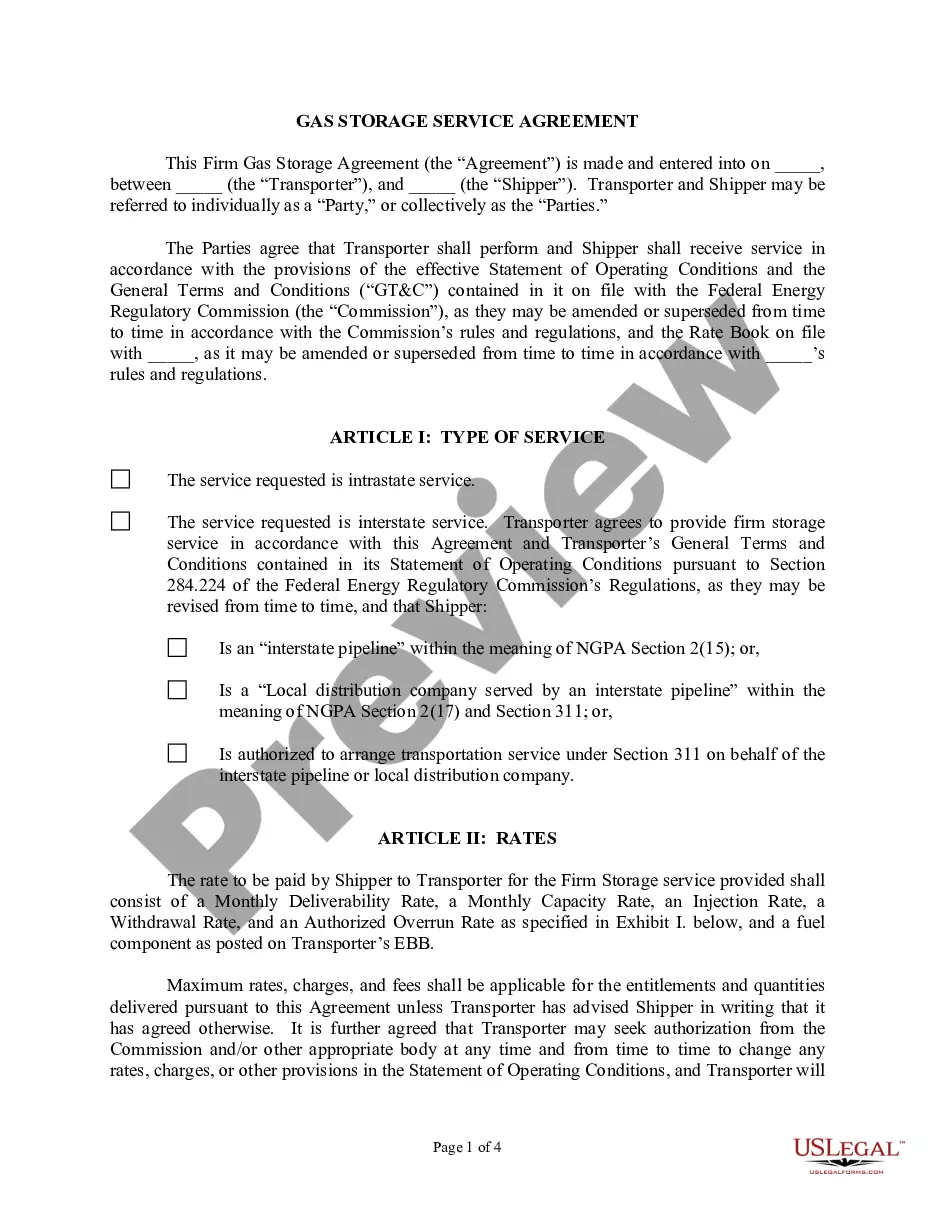
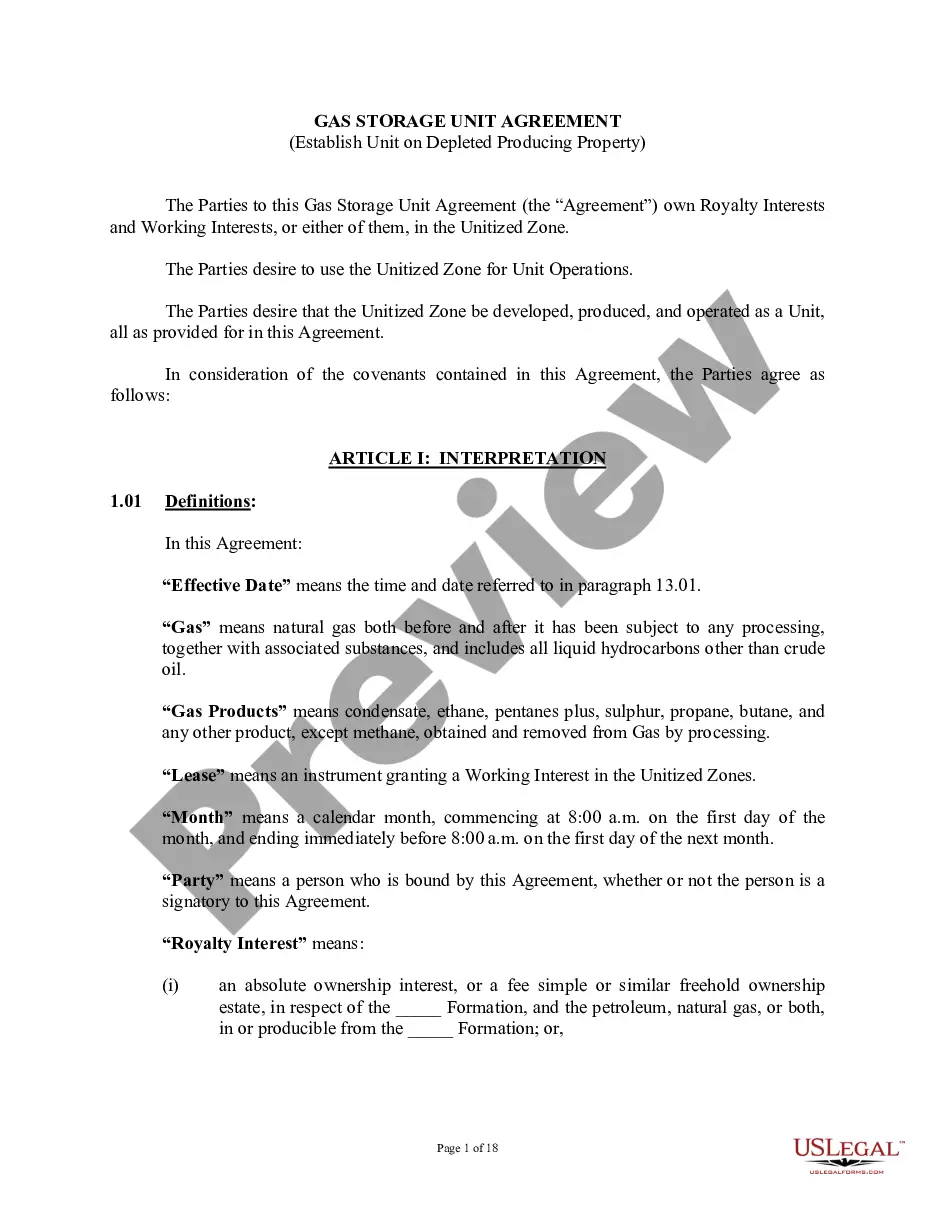
Get your form ready online
Our built-in tools help you complete, sign, share, and store your documents in one place.
Make edits, fill in missing information, and update formatting in US Legal Forms—just like you would in MS Word.
Download a copy, print it, send it by email, or mail it via USPS—whatever works best for your next step.
Sign and collect signatures with our SignNow integration. Send to multiple recipients, set reminders, and more. Go Premium to unlock E-Sign.
If this form requires notarization, complete it online through a secure video call—no need to meet a notary in person or wait for an appointment.
We protect your documents and personal data by following strict security and privacy standards.

Make edits, fill in missing information, and update formatting in US Legal Forms—just like you would in MS Word.

Download a copy, print it, send it by email, or mail it via USPS—whatever works best for your next step.

Sign and collect signatures with our SignNow integration. Send to multiple recipients, set reminders, and more. Go Premium to unlock E-Sign.

If this form requires notarization, complete it online through a secure video call—no need to meet a notary in person or wait for an appointment.

We protect your documents and personal data by following strict security and privacy standards.
Looking for another form?


How to fill out Gas Storage Unit Agreement?
Choosing the best legal document design might be a battle. Obviously, there are a lot of themes accessible on the Internet, but how can you get the legal develop you want? Make use of the US Legal Forms internet site. The support gives 1000s of themes, including the Florida Gas Storage Unit Agreement, that you can use for company and personal needs. Every one of the types are inspected by professionals and fulfill federal and state specifications.
When you are previously signed up, log in for your profile and click the Acquire button to find the Florida Gas Storage Unit Agreement. Make use of your profile to search through the legal types you may have acquired earlier. Visit the My Forms tab of the profile and acquire another copy from the document you want.
When you are a whole new consumer of US Legal Forms, listed here are basic guidelines that you should adhere to:
- Initial, be sure you have chosen the proper develop for your personal city/county. You may look over the form using the Review button and read the form description to guarantee it will be the best for you.
- If the develop does not fulfill your requirements, use the Seach industry to find the right develop.
- When you are positive that the form is suitable, select the Buy now button to find the develop.
- Select the rates plan you desire and enter in the required information. Create your profile and pay for the order using your PayPal profile or bank card.
- Select the document file format and obtain the legal document design for your product.
- Comprehensive, revise and print and indicator the attained Florida Gas Storage Unit Agreement.
US Legal Forms will be the biggest library of legal types in which you can see numerous document themes. Make use of the company to obtain expertly-manufactured paperwork that adhere to condition specifications.
Form popularity
FAQ
The regulated size for an Aboveground Storage Tank (AST) is 550 gallons or greater and the regulated size for an Underground Storage Tank (UST) is 110 gallons or greater.
Depleted natural gas or oil fields function as gas storage reservoirs in California. Natural gas is injected into the storage reservoirs through gas storage wells and stored until withdrawn for use. There are 12 underground natural gas storage fields in the state.
Natural gas storage during periods of low demand helps to ensure that enough natural gas is available during periods of high demand. Natural gas is stored in large volumes in underground facilities and in smaller volumes in tanks above or below ground.
Keep gasoline containers tightly closed and handle them gently to avoid spills. Gasoline is a flammable liquid and should be stored at room temperature, away from potential heat sources such as the sun, a hot water heater, space heater or a furnace, and a least 50 feet away from ignition sources, such as pilot lights.
In short, methane is not stored in household tanks because the symmetry of its molecule makes it hard to liquify. You could in principle store methane in a tank in the gas state, but methane has such low density in the gas state that you could not store a usable amount.
Natural gas storage comes with certain risks, including gas leaks, health hazards, environmental impacts, and infrastructure failures. However, implementing safety measures such as regular inspections, emergency response plans, enhanced monitoring systems, and public awareness campaigns can greatly reduce these risks.
How is Natural Gas Stored? Natural gas is stored underground primarily in three reservoir types: depleted oil and natural gas fields, salt formations and depleted aquifers.