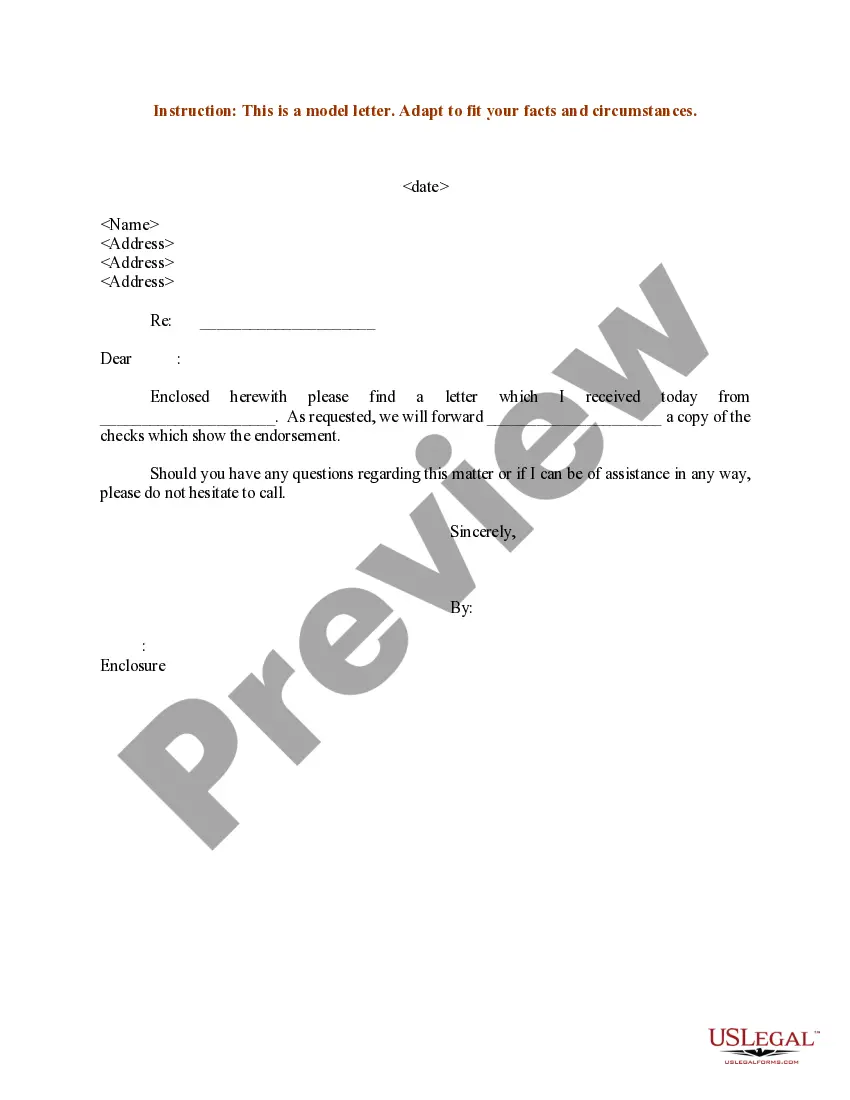
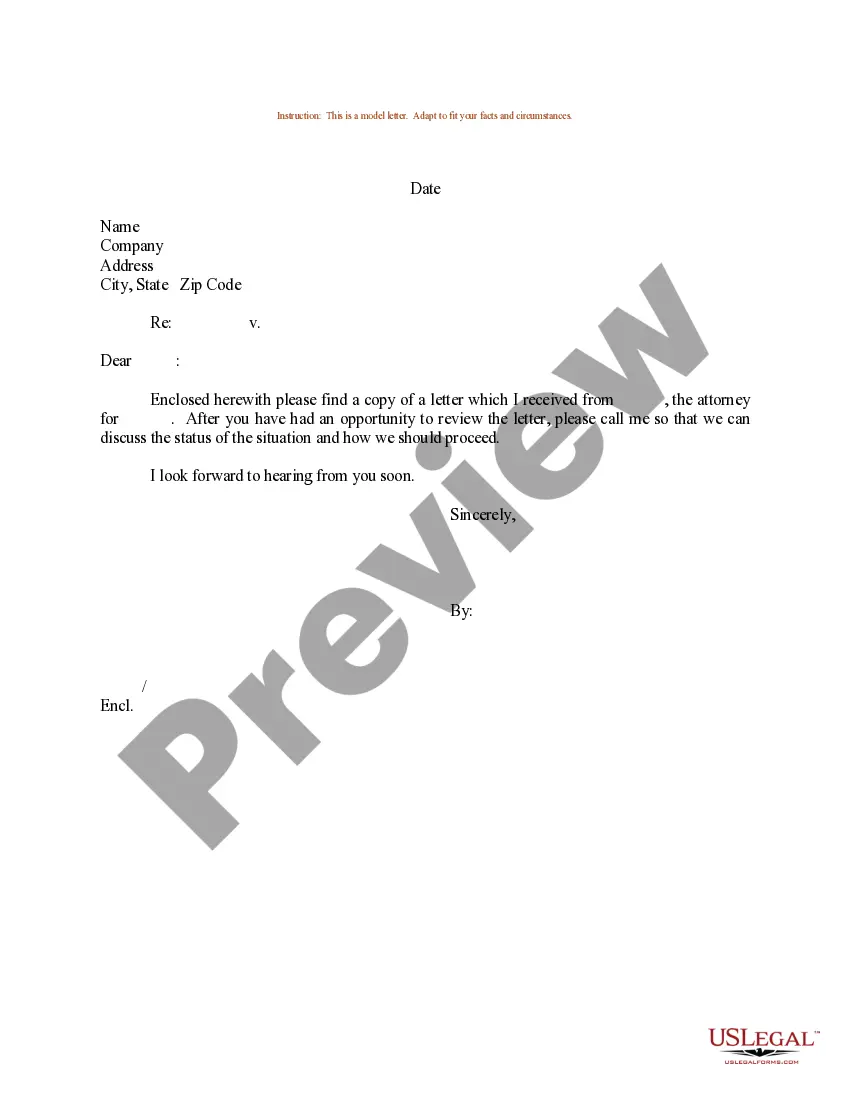
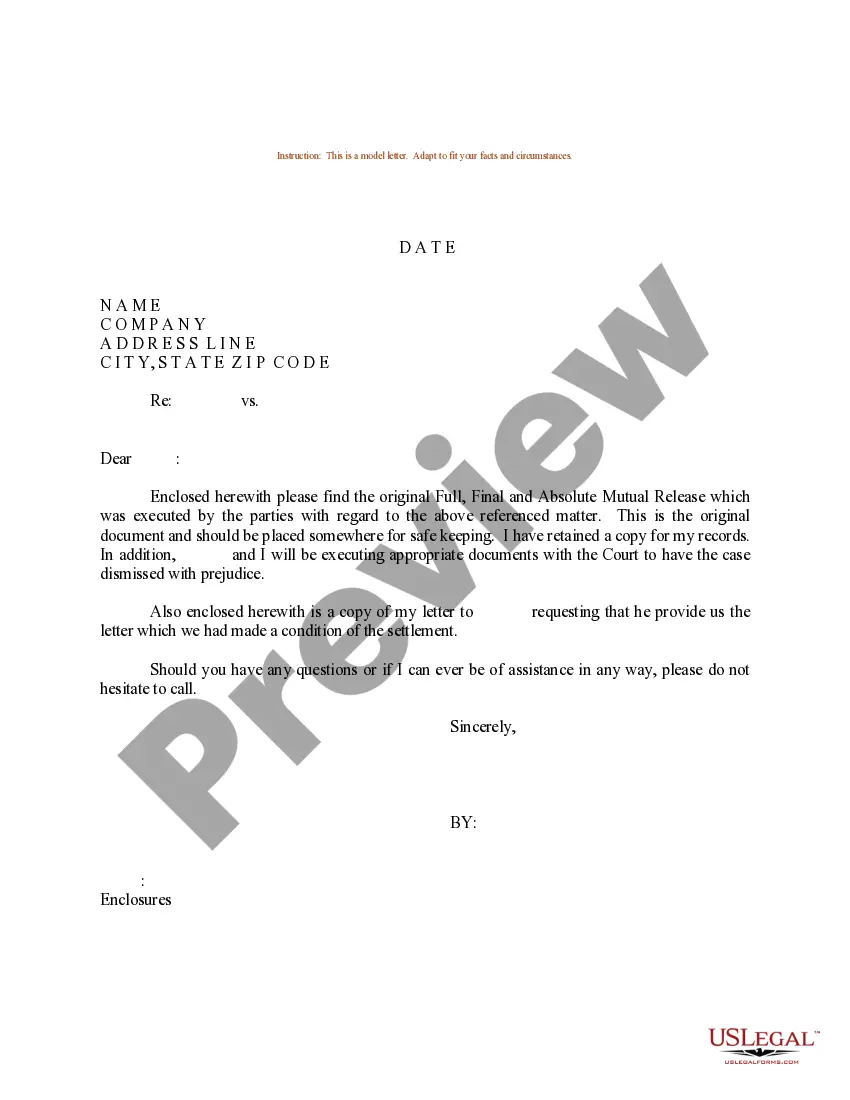
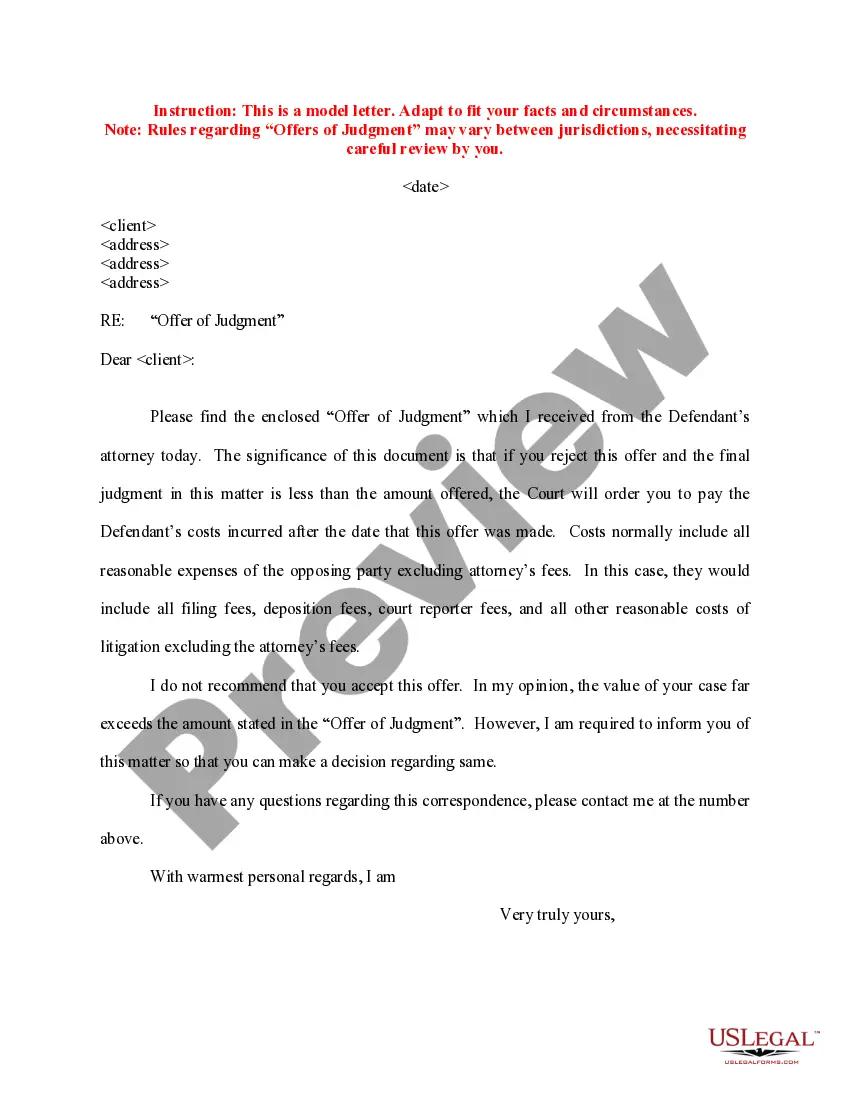
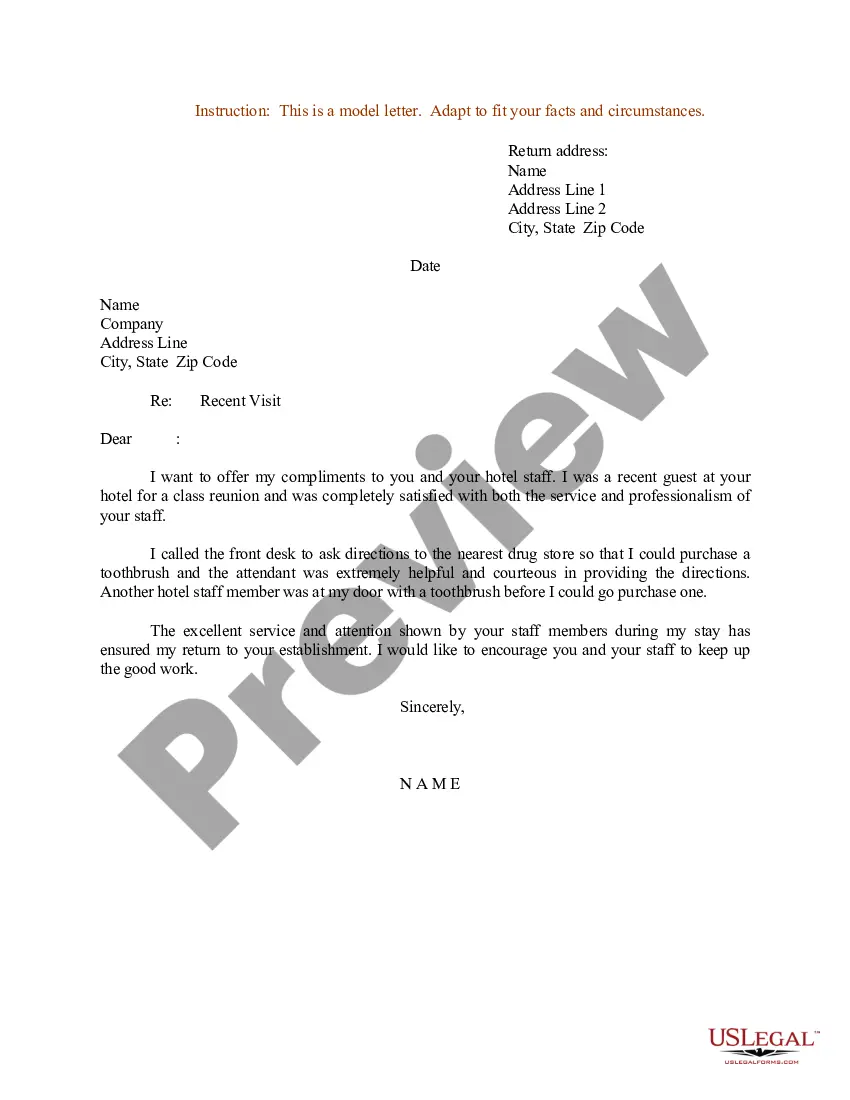
Florida Sample Letter for Correspondence received from Defendant
Description
Get your form ready online
Our built-in tools help you complete, sign, share, and store your documents in one place.
Make edits, fill in missing information, and update formatting in US Legal Forms—just like you would in MS Word.
Download a copy, print it, send it by email, or mail it via USPS—whatever works best for your next step.
Sign and collect signatures with our SignNow integration. Send to multiple recipients, set reminders, and more. Go Premium to unlock E-Sign.
If this form requires notarization, complete it online through a secure video call—no need to meet a notary in person or wait for an appointment.
We protect your documents and personal data by following strict security and privacy standards.
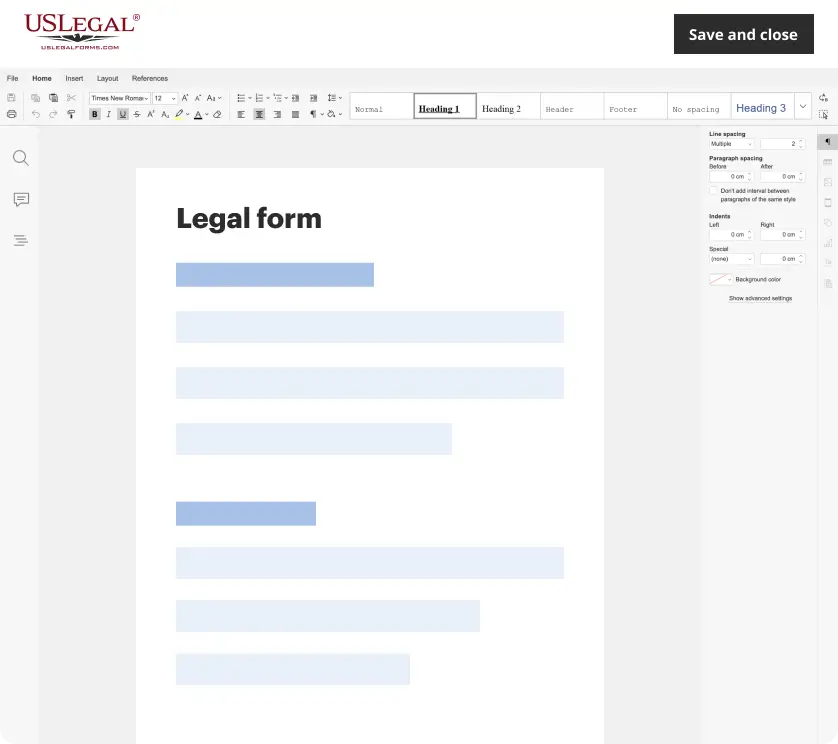
Make edits, fill in missing information, and update formatting in US Legal Forms—just like you would in MS Word.
Download a copy, print it, send it by email, or mail it via USPS—whatever works best for your next step.
Sign and collect signatures with our SignNow integration. Send to multiple recipients, set reminders, and more. Go Premium to unlock E-Sign.
If this form requires notarization, complete it online through a secure video call—no need to meet a notary in person or wait for an appointment.
We protect your documents and personal data by following strict security and privacy standards.
Looking for another form?





How to fill out Sample Letter For Correspondence Received From Defendant?
If you want to accumulate, acquire, or print legal document templates, utilize US Legal Forms, the largest repository of legal forms available online.
Employ the site's straightforward and user-friendly search to locate the documents you require.
A variety of templates for business and personal use are organized by categories and jurisdictions, or keywords.
Step 3. If you are dissatisfied with the form, utilize the Search field at the top of the screen to find other versions of the legal form template.
Step 4. Once you have found the form you need, click the Get now button. Select the payment plan you prefer and enter your credentials to register for an account.
- Utilize US Legal Forms to obtain the Florida Sample Letter for Correspondence received from Defendant with just a few clicks.
- If you are already a US Legal Forms user, Log In to your account and click the Acquire button to obtain the Florida Sample Letter for Correspondence received from Defendant.
- You can also access forms you previously downloaded in the My documents tab of your account.
- If this is your first time using US Legal Forms, follow the instructions below.
- Step 1. Ensure you have chosen the form for the correct city/state.
- Step 2. Use the Review option to examine the form’s content. Always remember to read the summary.
Form popularity
FAQ
N. Written communications, especially those sent by courier or post, organized as a series rather than interfiled with records relating to a specific subject.
Guidelines for Letters of Support The letter should be addressed to the Judge, but mailed to the defendant's attorney. ... Who are you? ... Make it personal when describing the defendant's characteristics. ... Only talk about what you know. ... Be truthful. ... Never attack the victims or law enforcement.
The 5 most common tips in writing an effective leniency letter to a judge include: write a clear introduction, introduce yourself and establish credibility, provide reasons for leniency, tell a story, and. provide contact information.
THE BUILDING BLOCKS OF LEGAL CORRESPONDENCE[1] Transmittal Letters. Letters Requesting or Sending Information. Advice Letters. Demand Letters. Instruction Letters. Combination Letters.
Correspondence is defined as the exchange of letters as a means of communication. Correspondence from one party to another and responses to such letters constitute what is known as correspondence between parties.
Correspondence from one party to another and responses to such letters constitute what is known as correspondence between parties. In most cases, communication between the parties provides the most accurate documentation of the events to which it relates.
Correspondence1 is distinguished from other documents by the fact that it is typically addressed to a specific individual or group, and is intended to be delivered by a third party. Examples include letters2, email, postcards, and telegrams.
This letter is often called a good faith letter. And it is needed under many courts' rules before you can file a motion to compel discovery if the other party ignores your requests or provides evasive responses or move for sanctions if your opponent refuses to comply with the court's discovery order.