Florida Warranty Deed for Three Individuals to One Individual with Retained Life Estates in Two Grantors
Overview of this form
The Warranty Deed for Three Individuals to One Individual with Retained Life Estates in Two Grantors is a legal document that enables the transfer of property ownership from two grantors to a single grantee while allowing the grantors to retain a life estate in the property. Unlike a general warranty deed, this form specifically addresses the complexities of life estates, making it essential for those who wish to maintain certain rights to the property even after the transfer of ownership has occurred.
What’s included in this form
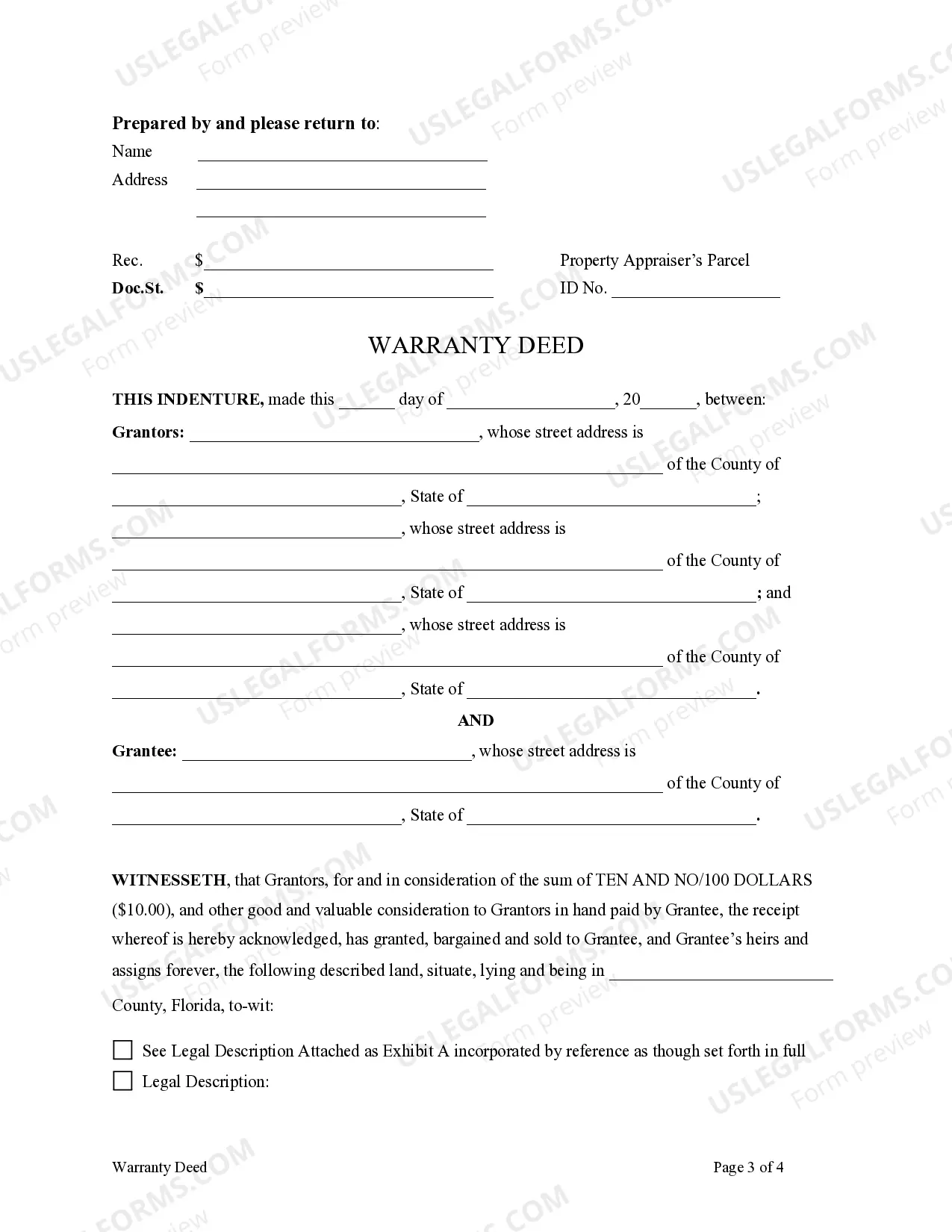
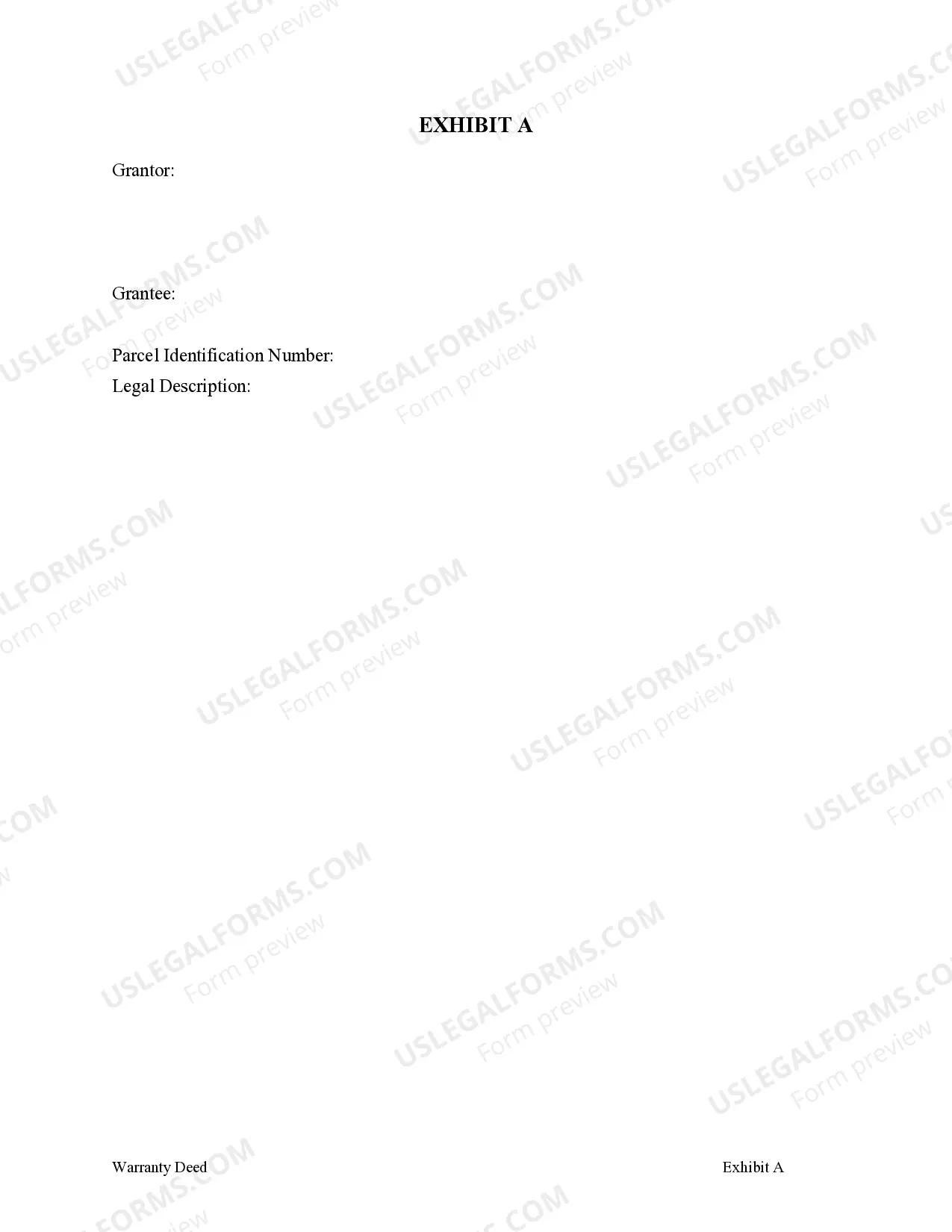
- The names and addresses of the grantors and the grantee.
- A clear description of the property being conveyed.
- Clauses outlining the retained life estates for the two grantors.
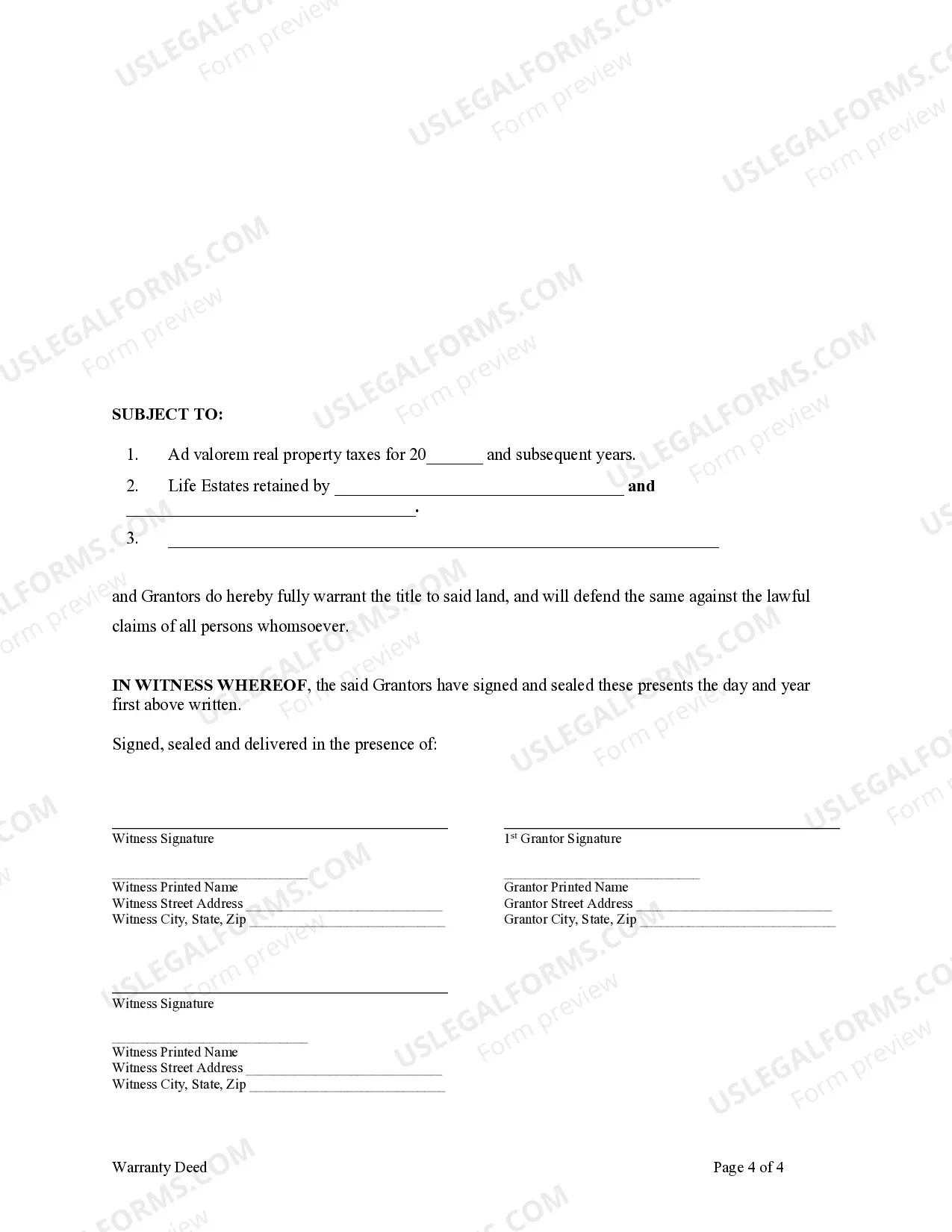
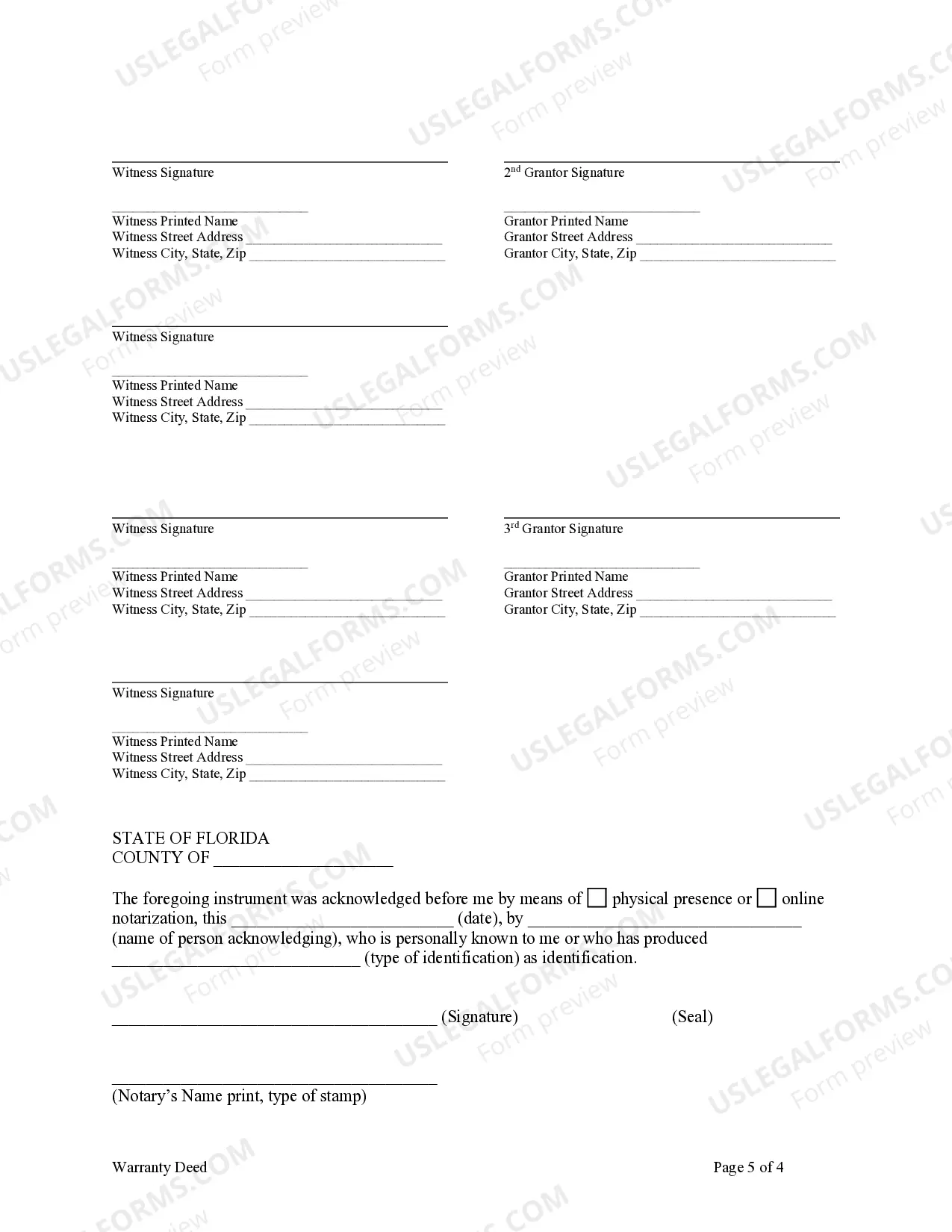
- Spaces for signing and dating by all parties involved.
- A declaration of consideration for the property transfer.
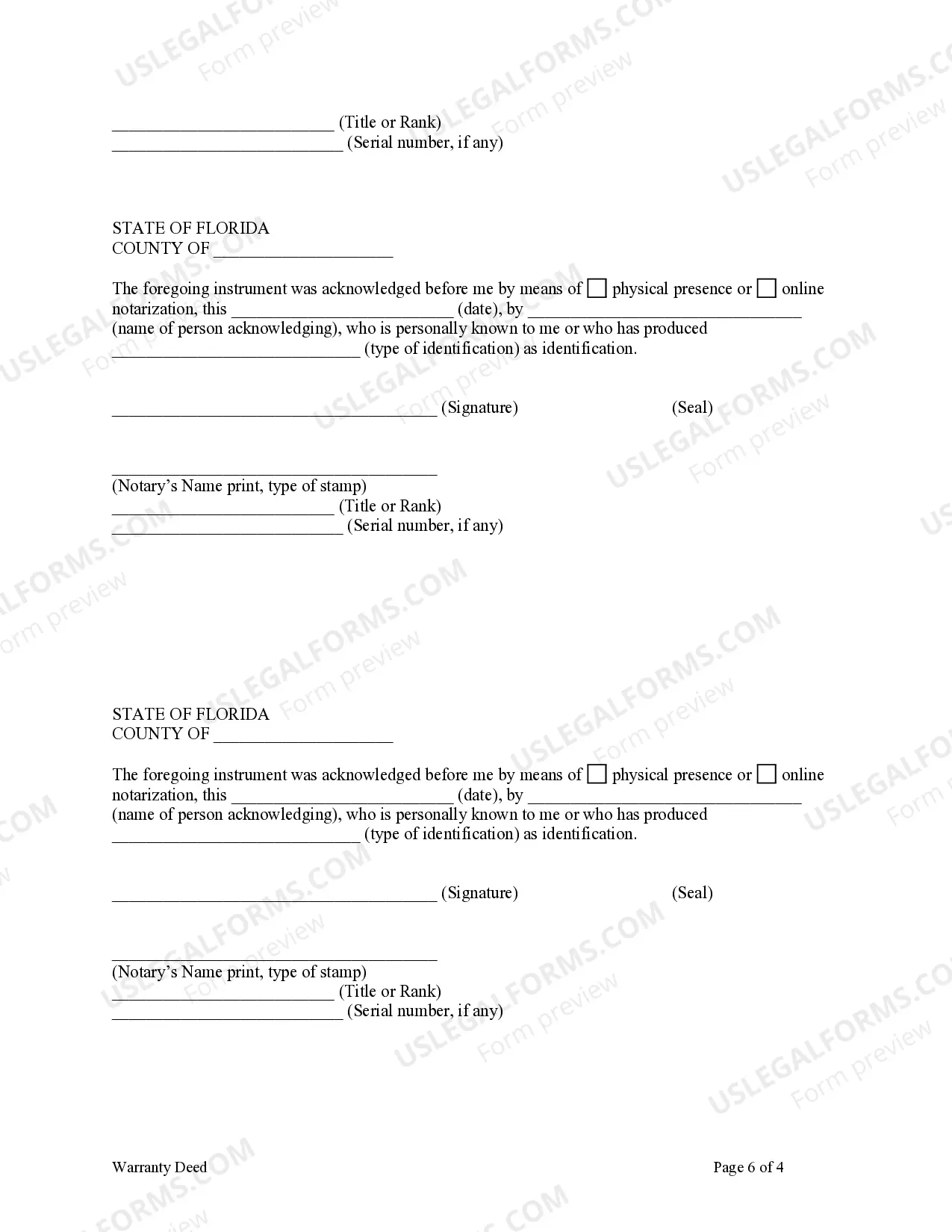
- Notarization requirements, if applicable.




When this form is needed
This form should be used when two individuals wish to transfer property ownership to a third individual while retaining the right to live on the property for the rest of their lives. It is commonly utilized in family situations where parents transfer ownership of a home to their children but wish to continue residing there without losing ownership rights during their lifetime.
Who can use this document
- Individuals who are transferring property to family members.
- Owners looking to maintain a life estate in their property after transfer.
- Anyone needing a specific arrangement for property transfer to avoid probate complications.
Steps to complete this form
- Identify the parties involved, entering the full names of the grantors and the grantee.
- Clearly specify the property being transferred, including its legal description.
- Enter the details regarding the life estates retained by the grantors.
- Include the date of the transfer and the consideration amount, if applicable.
- Sign and date the form in front of a notary public, if required.
Notarization guidance
Notarization is required for this form to take effect. Our online notarization service, powered by Notarize, lets you verify and sign documents remotely through an encrypted video session, available 24/7.
Get your form ready online
Our built-in tools help you complete, sign, share, and store your documents in one place.
Make edits, fill in missing information, and update formatting in US Legal Forms—just like you would in MS Word.
Download a copy, print it, send it by email, or mail it via USPS—whatever works best for your next step.
Sign and collect signatures with our SignNow integration. Send to multiple recipients, set reminders, and more. Go Premium to unlock E-Sign.
If this form requires notarization, complete it online through a secure video call—no need to meet a notary in person or wait for an appointment.
We protect your documents and personal data by following strict security and privacy standards.

Make edits, fill in missing information, and update formatting in US Legal Forms—just like you would in MS Word.

Download a copy, print it, send it by email, or mail it via USPS—whatever works best for your next step.

Sign and collect signatures with our SignNow integration. Send to multiple recipients, set reminders, and more. Go Premium to unlock E-Sign.

If this form requires notarization, complete it online through a secure video call—no need to meet a notary in person or wait for an appointment.

We protect your documents and personal data by following strict security and privacy standards.
Common mistakes to avoid
- Failing to include accurate legal descriptions of the property.
- Not specifying the terms of the retained life estate correctly.
- Omitting signatures or dating the document in the wrong section.
- Not consulting local laws regarding life estates and property transfers.
Benefits of completing this form online
- Convenient access to legal forms without needing to visit an attorney.
- Editability allows users to tailor the form to their specific needs.
- Reliability backed by templates drafted by licensed attorneys.
Looking for another form?
Form popularity
FAQ
The right of survivorship in Florida allows co-owners to inherit each other's share of the property automatically upon death. This means that if one individual passes away, their interest in the property transfers directly to the surviving co-owner(s, bypassing probate. When dealing with a Florida Warranty Deed for Three Individuals to One Individual with Retained Life Estates in Two Grantors, it is crucial to specify these rights clearly to ensure proper estate planning.
In Florida, the life tenant is responsible for paying property taxes on a property held under a life estate. This obligation arises because the life tenant benefits from the use of the property during their lifetime. It's important for both grantors and life tenants involved in a Florida Warranty Deed for Three Individuals to One Individual with Retained Life Estates in Two Grantors to clearly understand this financial responsibility to avoid penalties.
Typically, a person holding a life estate cannot sell the property without the approval of the remaindermen. Since the remaindermen have an interest in the property after the life tenant's death, their consent is necessary for any sale. Understanding these restrictions is crucial when dealing with a Florida Warranty Deed for Three Individuals to One Individual with Retained Life Estates in Two Grantors, as it impacts decision-making regarding property management.
A life estate can limit the owner's control over the property. The owner cannot sell or transfer the property without the consent of the remaindermen. Additionally, when the life tenant passes away, the property automatically transfers to the remaindermen, which may not align with the owner's wishes. In the context of a Florida Warranty Deed for Three Individuals to One Individual with Retained Life Estates in Two Grantors, careful planning is essential to avoid complications.
You can add someone to a warranty deed, which may require legal steps to ensure the change is valid. This action can create joint ownership, allowing both parties to share in the responsibilities and rights. In the context of a Florida Warranty Deed for Three Individuals to One Individual with Retained Life Estates in Two Grantors, careful consideration is essential. Using services like USLegalForms can help navigate the process efficiently.
Yes, you can have two names on a deed. This setup allows joint ownership and can simplify property rights and responsibilities. For those exploring a Florida Warranty Deed for Three Individuals to One Individual with Retained Life Estates in Two Grantors, having multiple names on a deed can streamline estate planning. Consulting with professionals can help ensure the deed aligns with your long-term goals.
When two people are placed on a deed, it's typically referred to as joint ownership. This shared ownership means that both parties have rights and responsibilities regarding the property. In the case of a Florida Warranty Deed for Three Individuals to One Individual with Retained Life Estates in Two Grantors, this arrangement can help facilitate smoother transitions for property transfer when planning for the future. Be sure to consider the implications of joint ownership carefully.
Yes, two or more people can certainly be named on a warranty deed. This arrangement allows co-owners to share rights and responsibilities related to the property. In the context of a Florida Warranty Deed for Three Individuals to One Individual with Retained Life Estates in Two Grantors, understanding how ownership works can help clarify each person's interests. It's beneficial to seek legal advice to ensure the deed reflects your intentions accurately.
In Florida, the property owner who retains a life estate holds the right to use and enjoy the property during their lifetime. Once that person passes, the property typically passes to the designated remainder beneficiaries. This structure makes the Florida Warranty Deed for Three Individuals to One Individual with Retained Life Estates in Two Grantors an attractive option for estate planning. Understanding these roles can help facilitate better decision-making within families.
Adding someone to a deed can lead to potential disagreements over property use and management. If disputes arise, both parties may have difficulty accessing their investment. Furthermore, a Florida Warranty Deed for Three Individuals to One Individual with Retained Life Estates in Two Grantors may also expose the property to the new owner's liabilities or creditors. It's crucial to weigh these considerations carefully.