Florida Residential Eviction Summons
Understanding this form
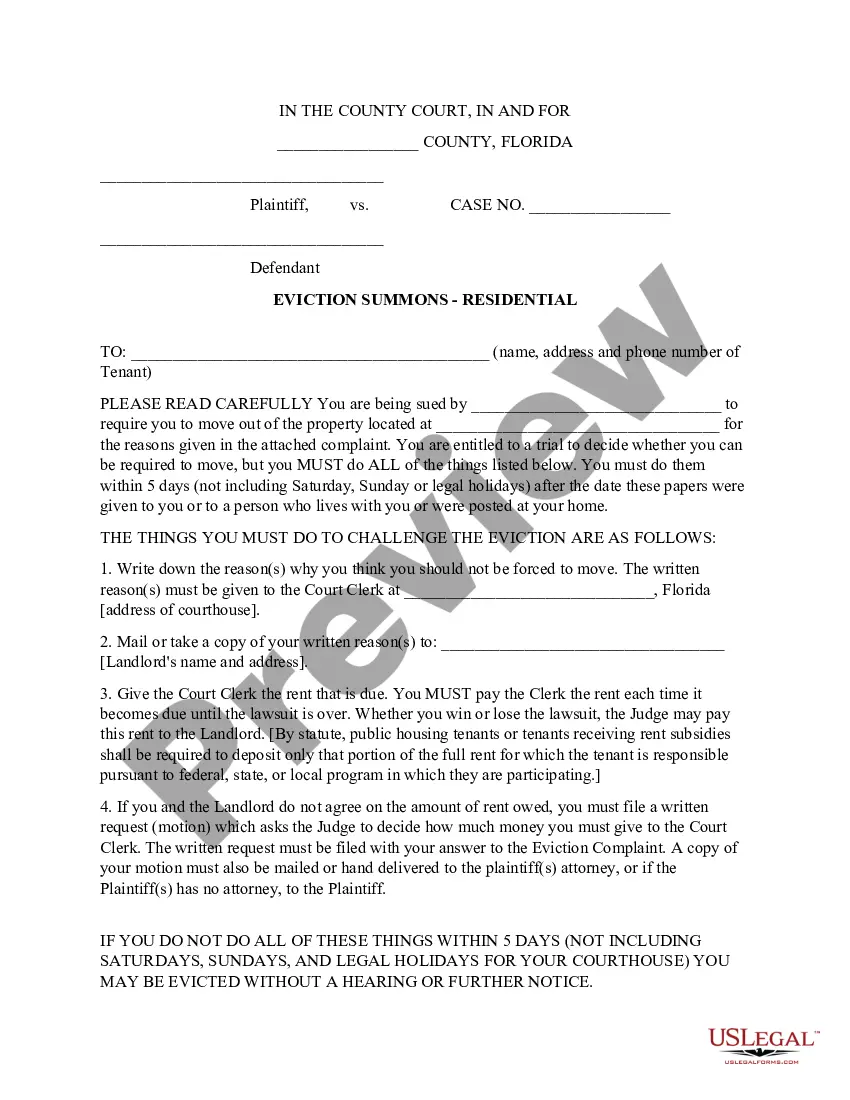
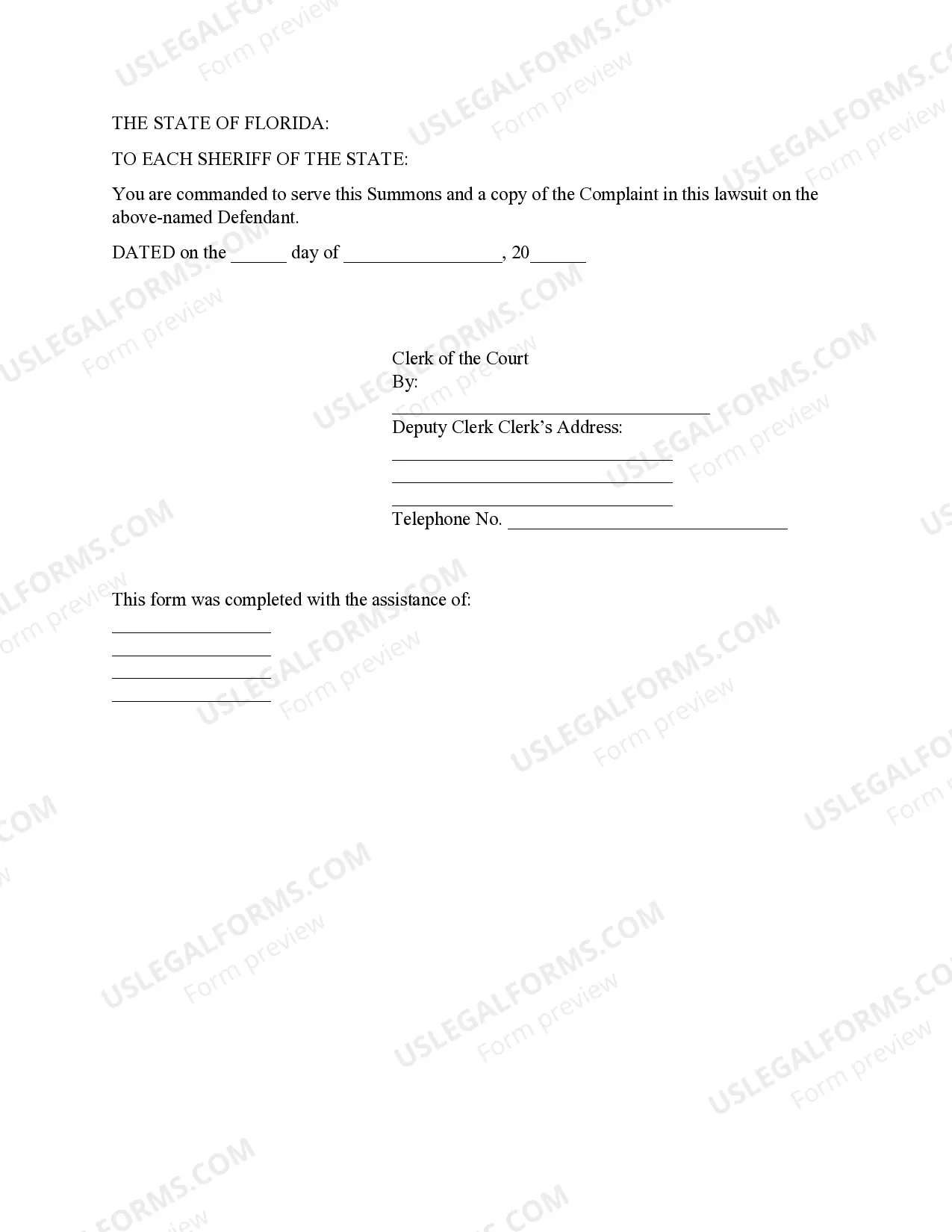
The Residential Eviction Summons is a legal document that informs a tenant that their landlord is initiating an eviction process. It serves to recover property that the landlord believes the tenant is unlawfully occupying. This summons outlines the steps the tenant must take to contest the eviction, differentiating it from other eviction-related documents by its specific focus on the notice of eviction and the tenant's rights to respond.
Key parts of this document
- The title and court information, including the county and case number.
- The parties involved: the landlord as the Plaintiff and the tenant as the Defendant.
- A detailed notice to the tenant regarding the eviction and the reasons provided in the attached complaint.
- Steps to contest the eviction, including timelines and specific actions required from the tenant.
- Instructions on how to handle rent payments during the legal process.
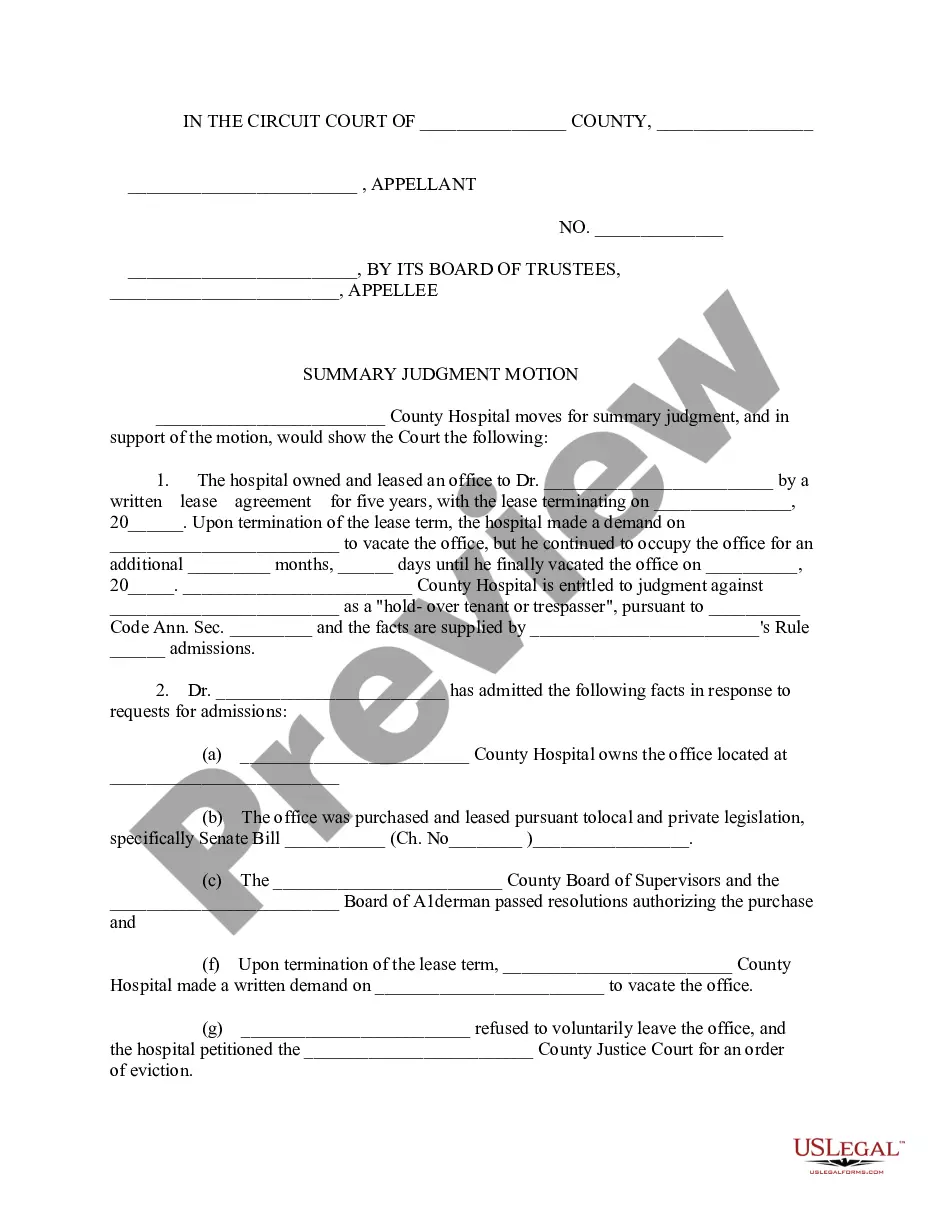
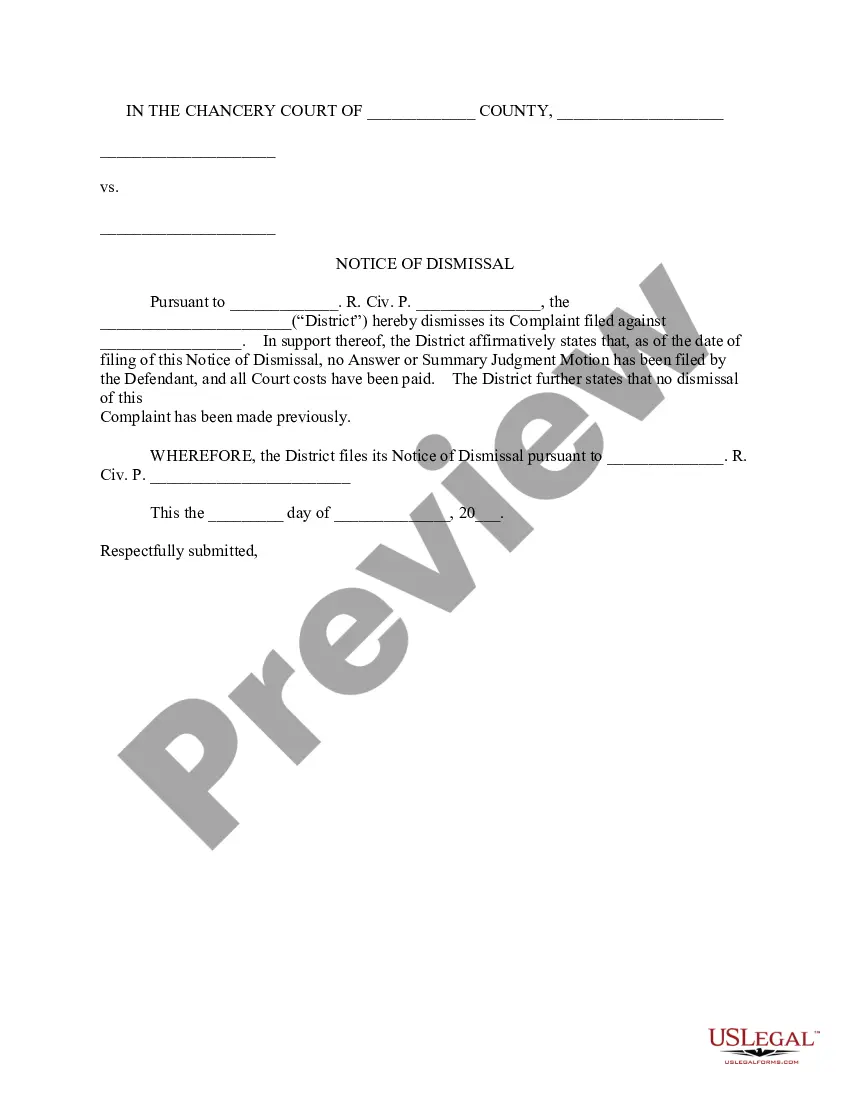
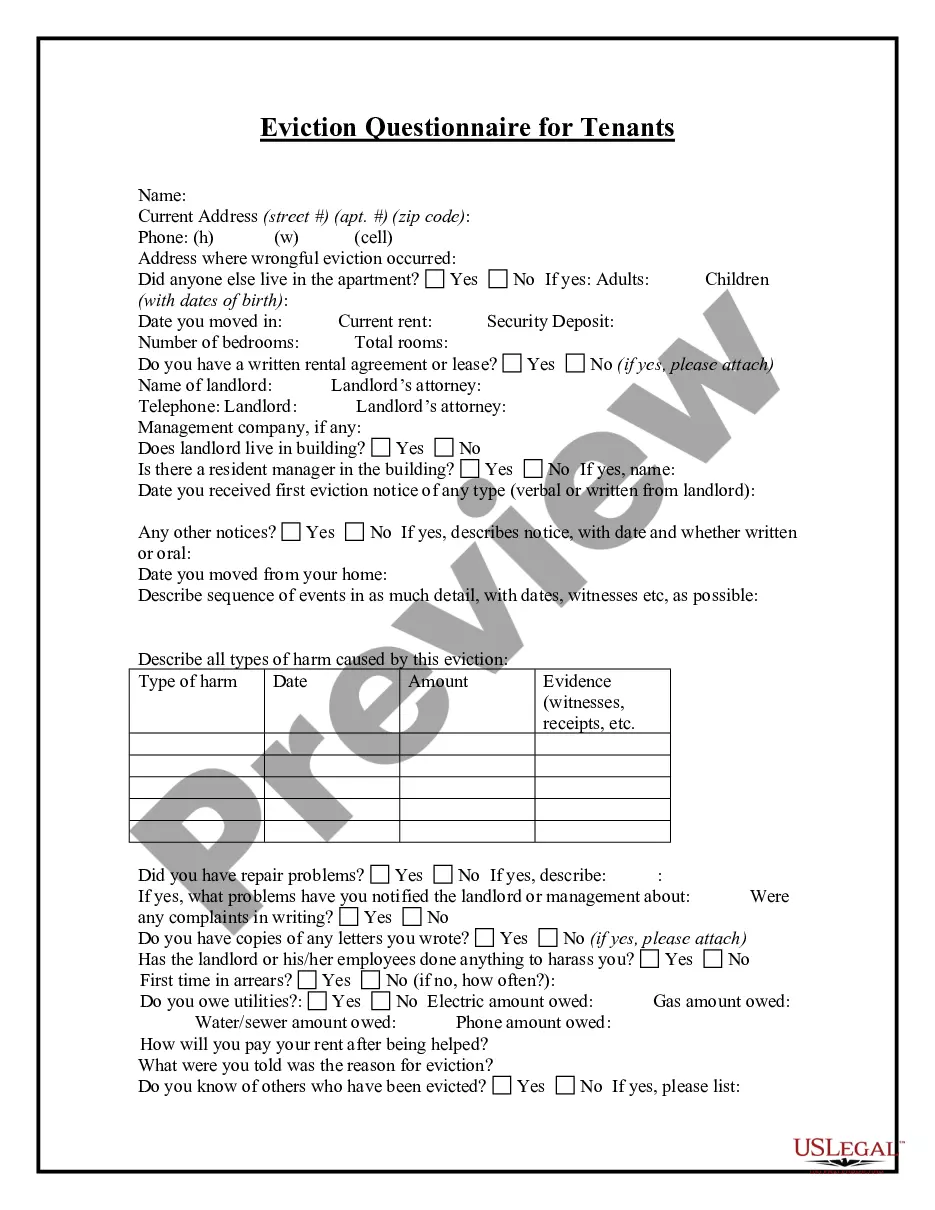
When to use this document
Intended users of this form
- Landlords seeking to evict a tenant for non-payment or lease violations.
- Property managers representing landlords in eviction proceedings.
- Tenants who have received this summons and wish to understand their rights and obligations.
How to complete this form
- Fill in the Plaintiff's name, address, and contact information at the top of the summons.
- State the Defendant's name, address, and contact information clearly.
- Provide the case number and date when the summons is issued.
- Detail the reasons for the eviction as stated in the attached complaint.
- Outline the required steps that the tenant must take to contest the eviction within the specified timeframe.
Notarization guidance
This form does not typically require notarization unless specified by local law.
Get your form ready online
Our built-in tools help you complete, sign, share, and store your documents in one place.
Make edits, fill in missing information, and update formatting in US Legal Forms—just like you would in MS Word.
Download a copy, print it, send it by email, or mail it via USPS—whatever works best for your next step.
Sign and collect signatures with our SignNow integration. Send to multiple recipients, set reminders, and more. Go Premium to unlock E-Sign.
If this form requires notarization, complete it online through a secure video call—no need to meet a notary in person or wait for an appointment.
We protect your documents and personal data by following strict security and privacy standards.

Make edits, fill in missing information, and update formatting in US Legal Forms—just like you would in MS Word.

Download a copy, print it, send it by email, or mail it via USPS—whatever works best for your next step.

Sign and collect signatures with our SignNow integration. Send to multiple recipients, set reminders, and more. Go Premium to unlock E-Sign.

If this form requires notarization, complete it online through a secure video call—no need to meet a notary in person or wait for an appointment.

We protect your documents and personal data by following strict security and privacy standards.
Typical mistakes to avoid
- Failing to deliver the summons properly to the tenant or a resident at the tenant's address.
- Not including all necessary parties on the summons.
- Neglecting to follow the court's guidelines for filing the eviction complaint.
- Ignoring the five-day response requirement from the tenant.
Benefits of using this form online
- Convenience of accessing and downloading the form immediately.
- Editability allows for customization to fit individual circumstances.
- Reliability from using templates drafted by licensed attorneys.
Main things to remember
- The Residential Eviction Summons is essential for landlords starting the eviction process.
- Tenants must respond within five days to contest the eviction.
- The form addresses the obligations of both the tenant and landlord during the eviction proceedings.
Looking for another form?
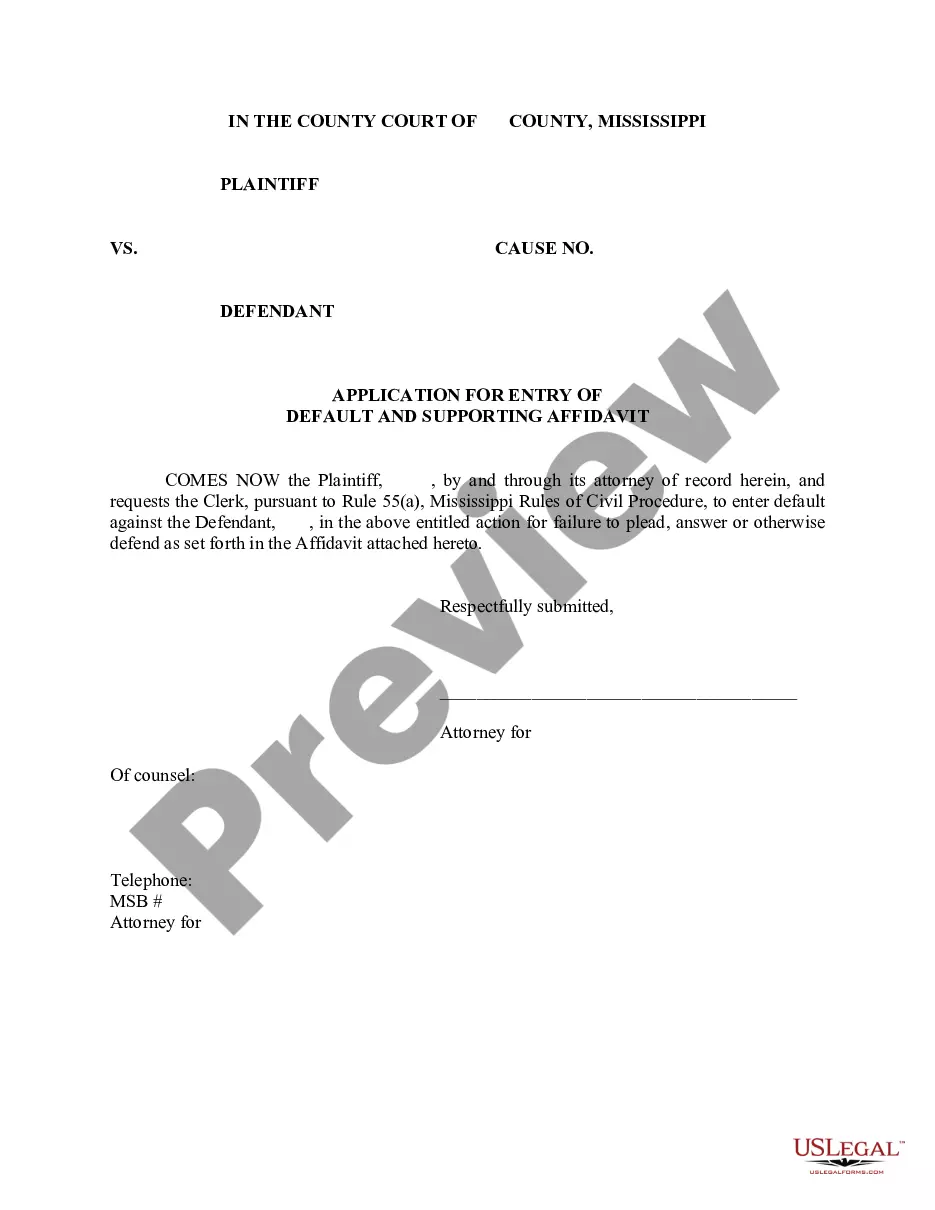
Form popularity
FAQ
The speed at which a landlord can evict you in Florida varies depending on several factors, including the type of eviction. Generally, after receiving a Florida Residential Eviction Summons, you have five days to respond. If the landlord wins in court, the eviction can proceed swiftly, emphasizing the importance of addressing notices promptly.
In Florida, eviction notices must be served in person or via certified mail. The notice must clearly state the reason for eviction and provide a timeframe to respond. Following the proper procedure is crucial for landlords, as failing to do so may delay the process of issuing a Florida Residential Eviction Summons.
A wrongful eviction in Florida occurs when a landlord forcibly removes a tenant without a court order or in violation of lease terms. Circumstances like retaliatory eviction or evicting without proper notice can be considered wrongful. Knowing your rights can help you respond effectively if you face such a situation.
Recently, Florida enacted laws to streamline the eviction process, focusing on tenant protections. These changes include clearer guidelines for notice periods and court procedures. Staying informed about these developments is essential, especially if you receive a Florida Residential Eviction Summons.
No, a landlord cannot legally evict you without going to court in Florida. They must serve you with a Florida Residential Eviction Summons and follow the appropriate legal procedures. This ensures that the eviction is justified and protects your rights as a tenant.
Yes, you can look up evictions in Florida through various public records. Many counties offer online databases where you can search for eviction cases. Accessing these records helps you understand the eviction history of a property, which can be useful when deciding where to rent.
In Florida, a landlord cannot simply kick you out without following the legal process. This process begins with a Florida Residential Eviction Summons. Landlords must provide proper notice and may only evict you through a court order, ensuring that your rights are protected during the eviction process.
The overall timeline for evicting a residential tenant in Florida can take several weeks to several months, depending on the circumstances. A Florida Residential Eviction Summons marks the beginning of this legal journey, and delays can occur if the tenant contests the eviction. Factors like court schedules and the complexity of the case also play a role. Being proactive and informed can help you navigate this process effectively.
Responding to an eviction summons in Florida involves filing a written response with the court. You have a limited time to do this after receiving the Florida Residential Eviction Summons, usually five days. Make sure to clearly state your defenses and any relevant details relating to your case. You might find it helpful to use platforms like USLegalForms to access resources that can guide you through the response process.
Currently, eviction timelines in Florida vary depending on several factors, including court caseloads and specific jurisdictional rules. Generally, a Florida Residential Eviction Summons can lead to an eviction process that takes anywhere from a few weeks to several months. Keeping an eye on legal developments can provide clarity on how long your situation may take. Preparing appropriate documentation can expedite your case.