Florida Siding Contract for Contractor
Understanding this form
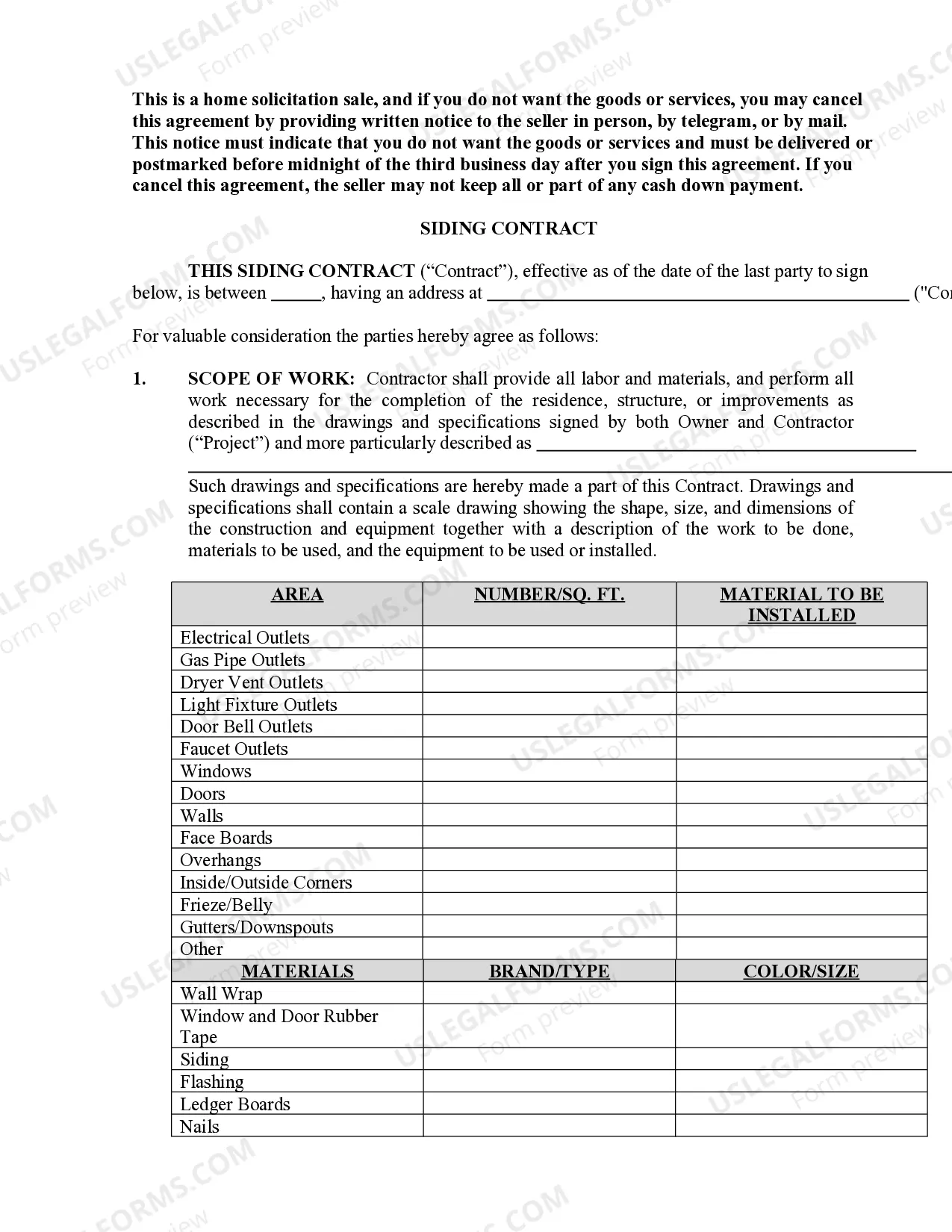
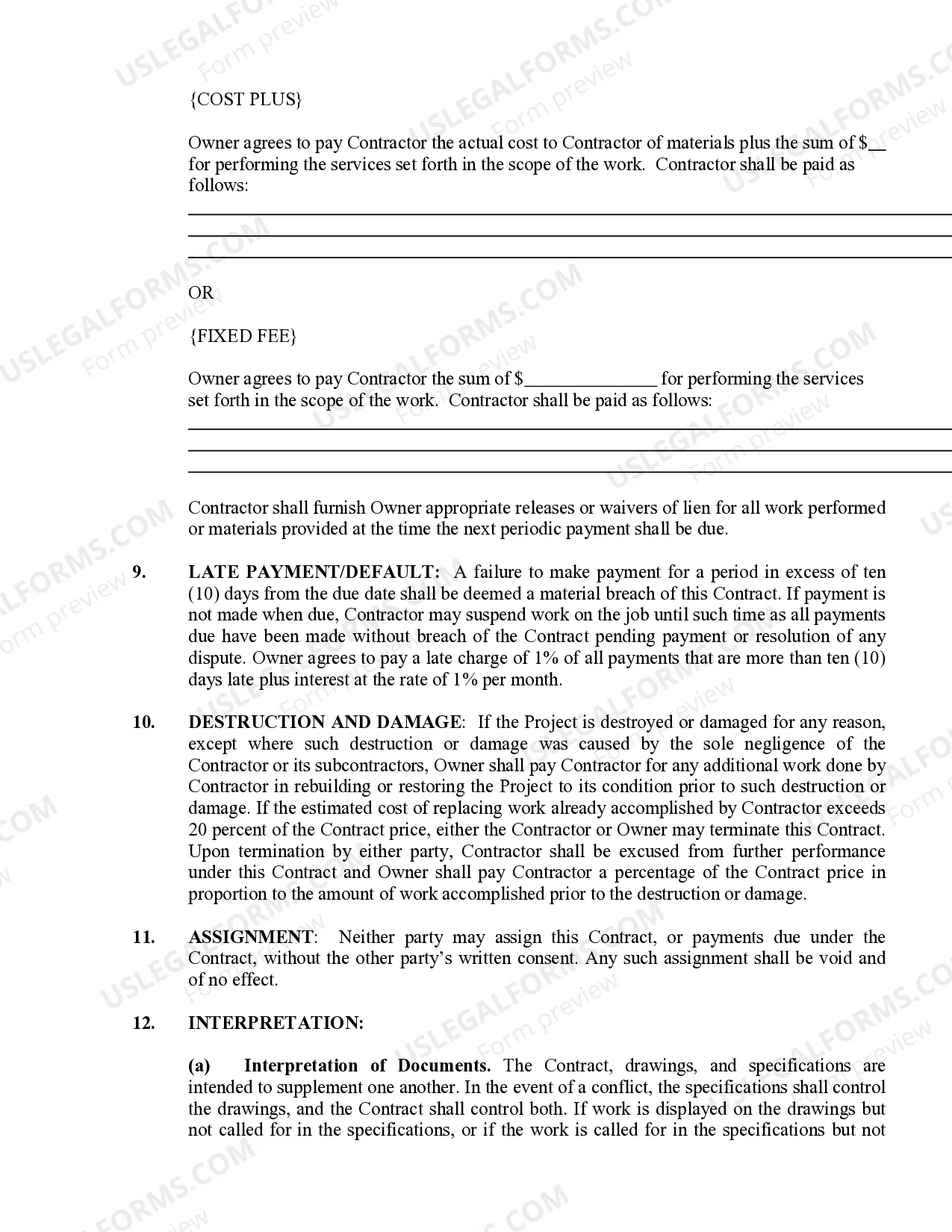
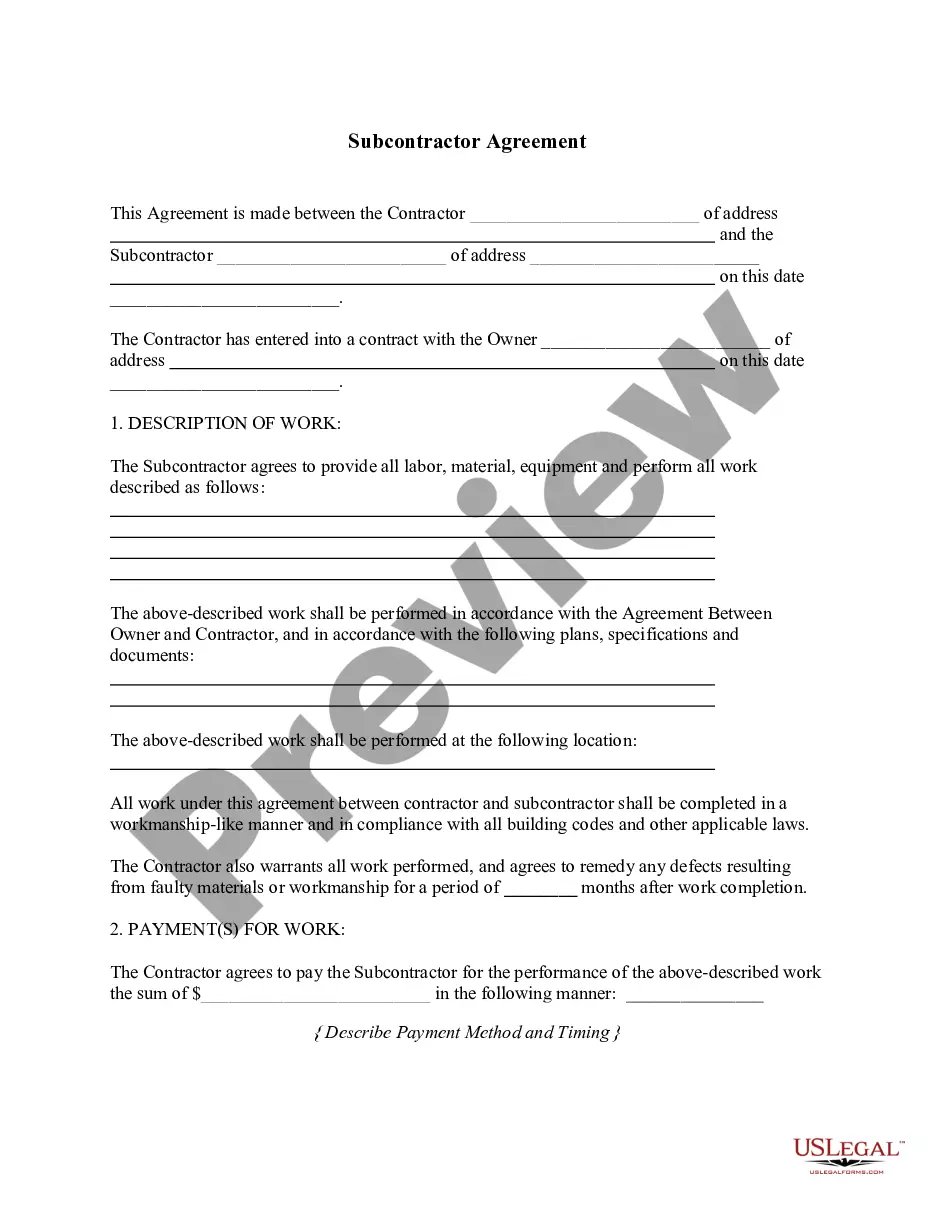
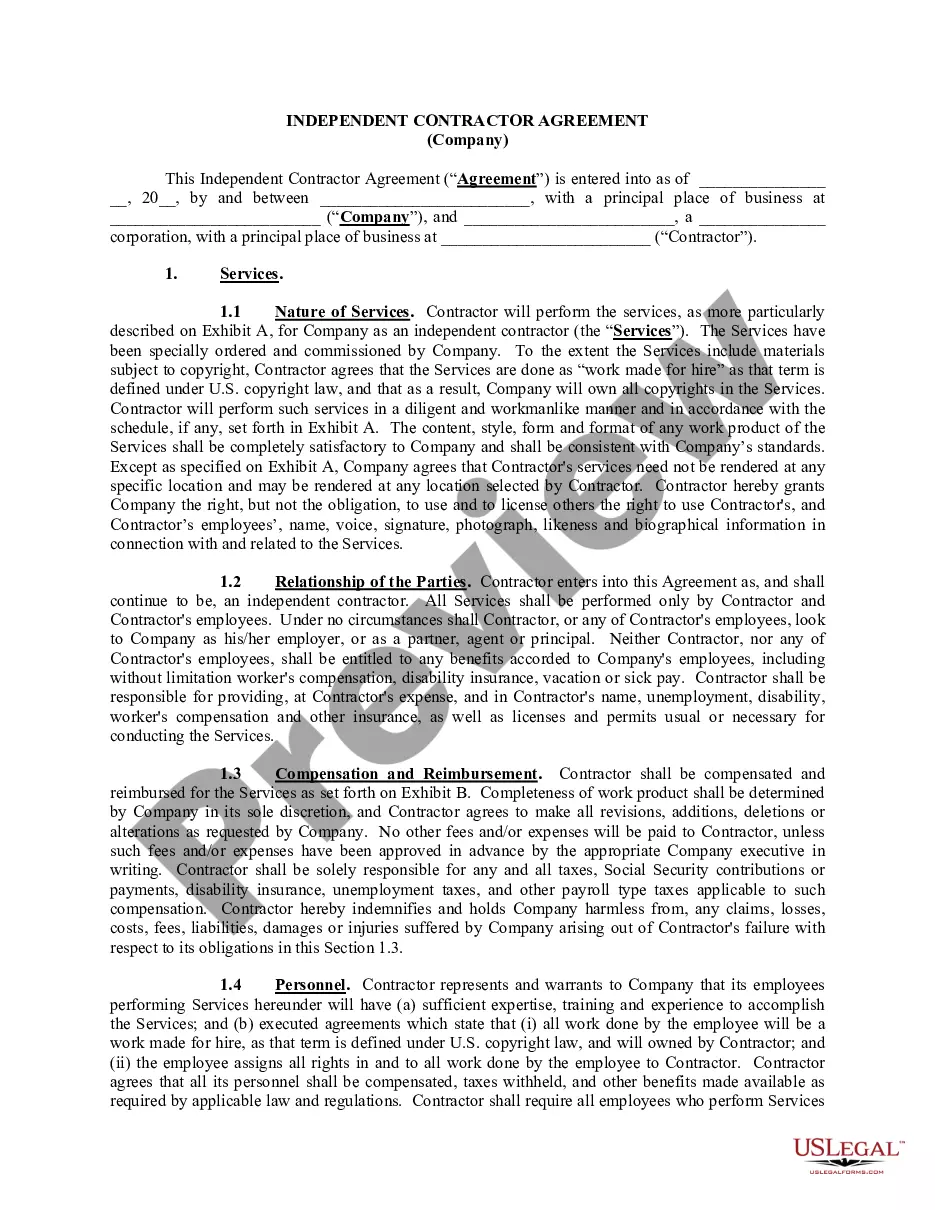
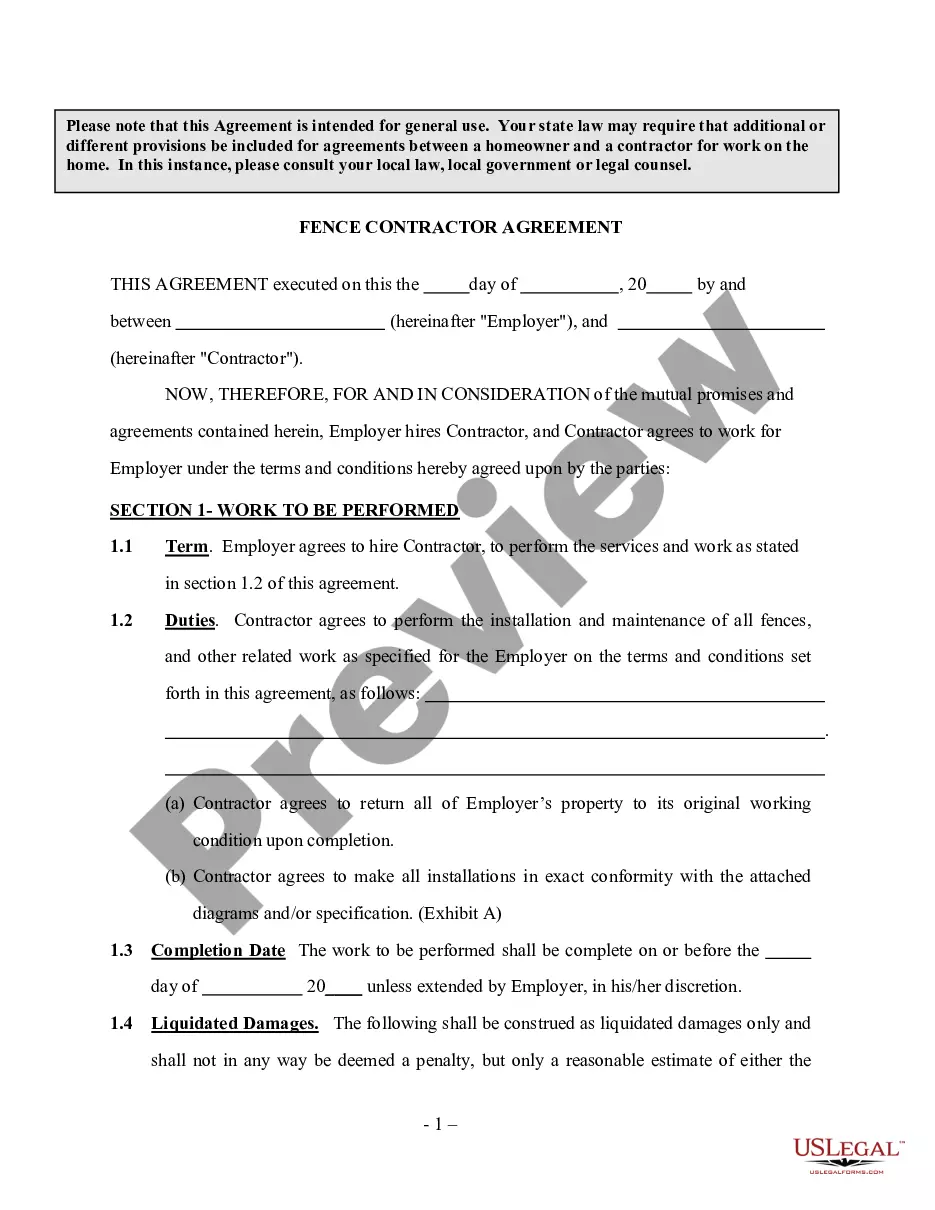
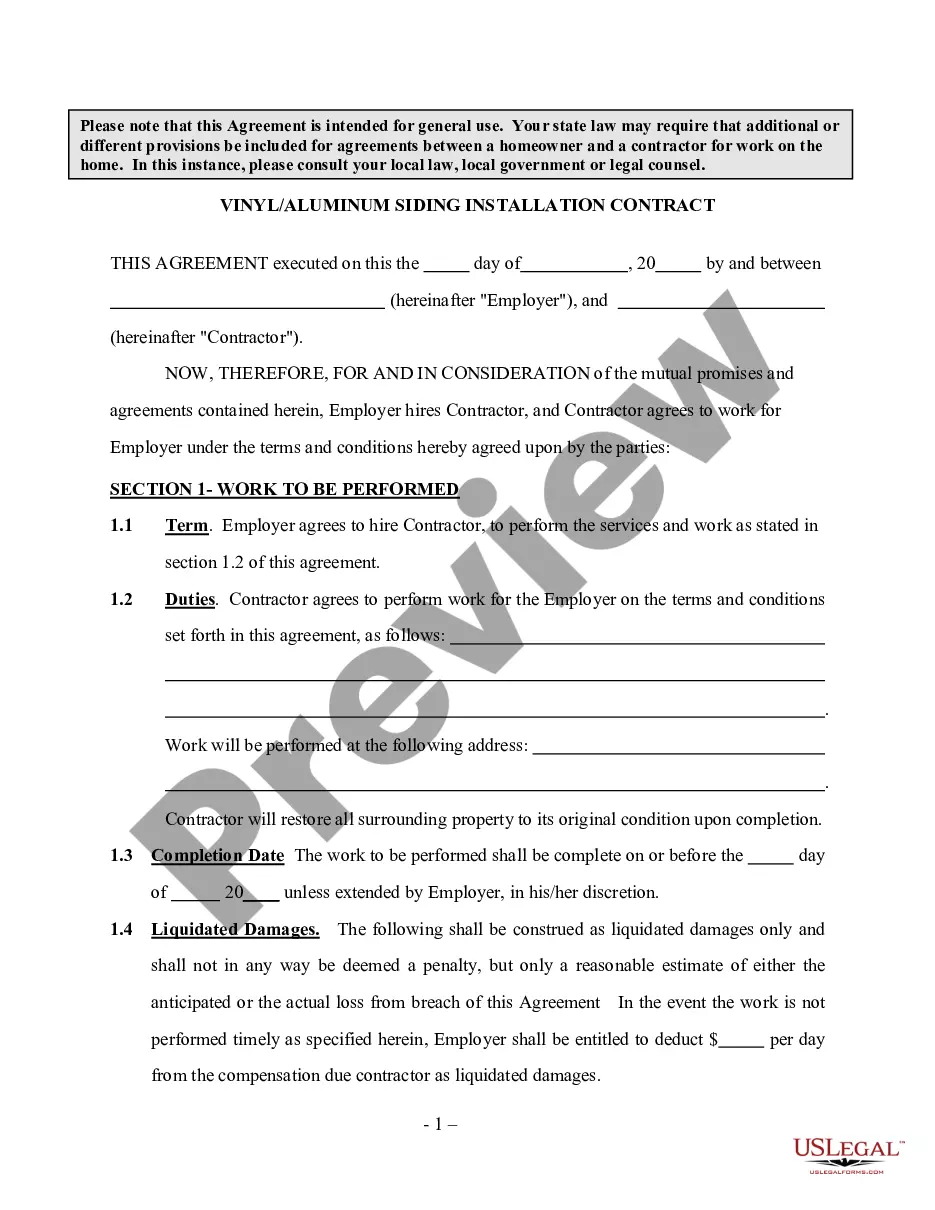
The Siding Contract for Contractor is a legal document that outlines the agreement between siding contractors and property owners for the installation or repair of siding. This contract can be executed as either a cost-plus or fixed fee arrangement, detailing responsibilities, payment terms, and project specifications. It is specifically designed to meet the legal requirements of the State of Florida, ensuring both parties are protected under Florida law.
Main sections of this form
- Payment arrangement: Specify cost-plus or fixed fee payment terms.
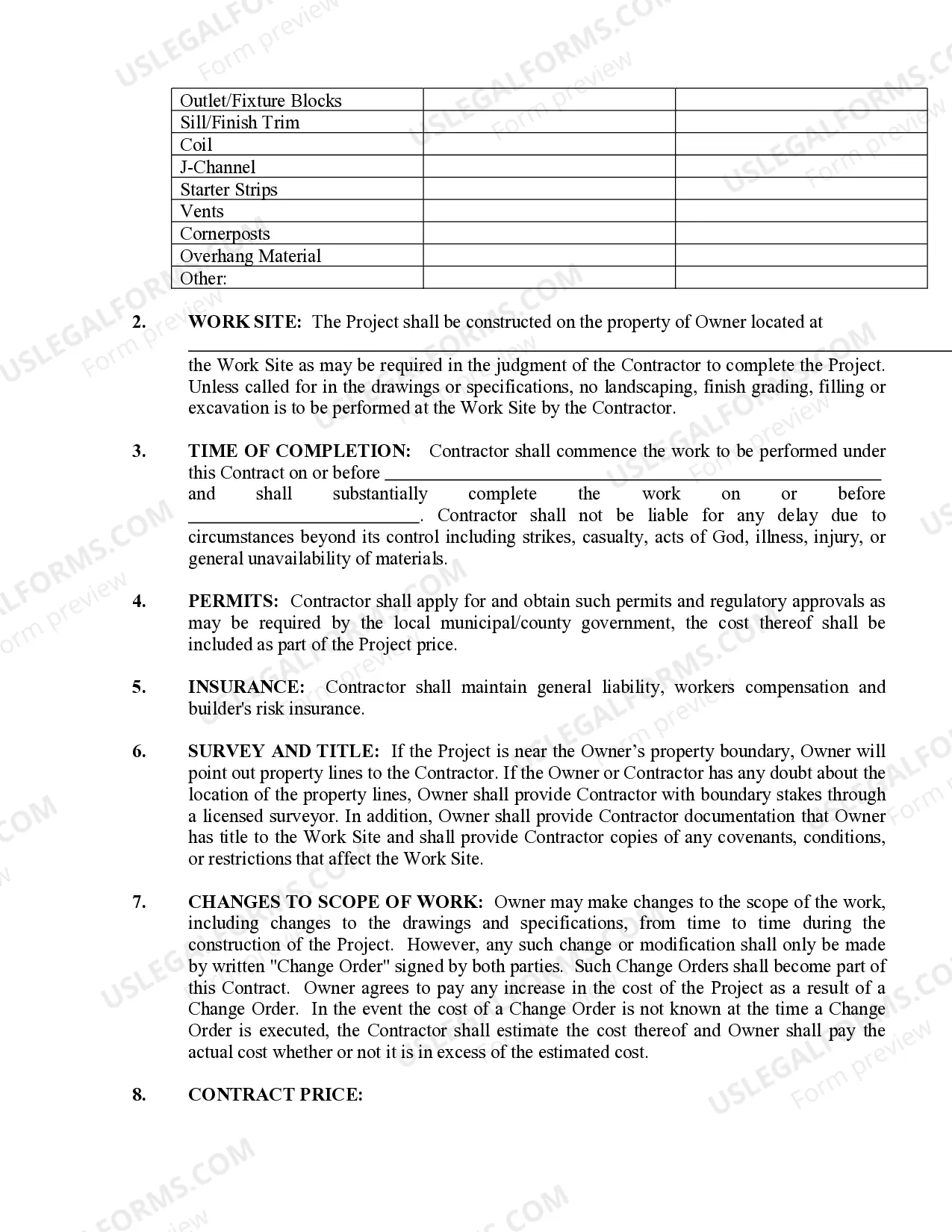
- Work site information: Includes details about property lines and permits required.
- Insurance obligations: Outlines the contractor's insurance requirements, including general liability and worker's compensation.
- Change orders: Details the process for making changes to the project scope and the associated costs.
- Destruction and damage: Explains the responsibilities of both parties in case the project is damaged.
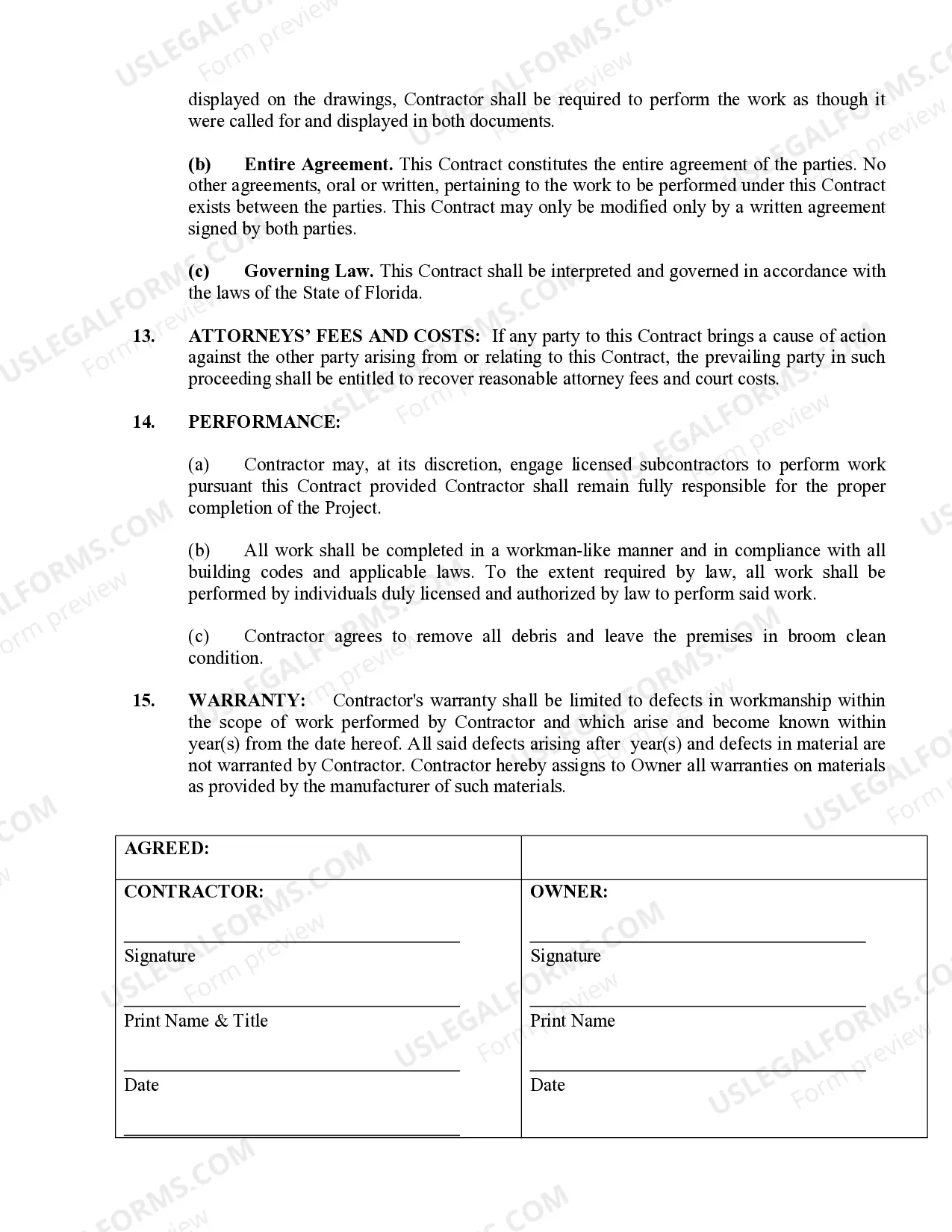
- Governing law: States that the contract is governed by Florida laws.
Situations where this form applies
This form should be used when a homeowner hires a siding contractor to install or repair siding on their property. It is essential when negotiating project terms, establishing payment agreements, and defining each party's responsibilities. Utilizing this contract can help prevent disputes and misunderstandings during the project.
Who needs this form
- Homeowners planning to install or repair siding on their properties.
- Siding contractors seeking a legally compliant contract for their services.
- Property managers overseeing maintenance and renovations involving siding.
How to complete this form
- Identify the parties: Enter the names and addresses of the contractor and the property owner.
- Specify the project details: Clearly outline the scope of the work, including materials and labor costs.
- Choose a payment arrangement: Indicate whether the contract is cost-plus or fixed fee.
- Include insurance and permit information: Ensure to detail insurance coverage and assign responsibility for obtaining necessary permits.
- Enter dates and signatures: Provide the start date of the project and signatures of both parties to finalize the contract.
Does this document require notarization?
In most cases, this form does not require notarization. However, some jurisdictions or signing circumstances might. US Legal Forms offers online notarization powered by Notarize, accessible 24/7 for a quick, remote process.
Get your form ready online
Our built-in tools help you complete, sign, share, and store your documents in one place.
Make edits, fill in missing information, and update formatting in US Legal Forms—just like you would in MS Word.
Download a copy, print it, send it by email, or mail it via USPS—whatever works best for your next step.
Sign and collect signatures with our SignNow integration. Send to multiple recipients, set reminders, and more. Go Premium to unlock E-Sign.
If this form requires notarization, complete it online through a secure video call—no need to meet a notary in person or wait for an appointment.
We protect your documents and personal data by following strict security and privacy standards.

Make edits, fill in missing information, and update formatting in US Legal Forms—just like you would in MS Word.

Download a copy, print it, send it by email, or mail it via USPS—whatever works best for your next step.

Sign and collect signatures with our SignNow integration. Send to multiple recipients, set reminders, and more. Go Premium to unlock E-Sign.

If this form requires notarization, complete it online through a secure video call—no need to meet a notary in person or wait for an appointment.

We protect your documents and personal data by following strict security and privacy standards.
Typical mistakes to avoid
- Failing to specify the payment arrangement clearly, leading to potential disputes.
- Neglecting to outline the process for change orders, which can complicate project adjustments.
- Omitting insurance details, leaving one party vulnerable to claims.
- Not including a termination clause, which might limit the ability to cancel the contract if necessary.
Benefits of completing this form online
- Convenience: Easily download and fill out the form at your own pace.
- Editability: Customize the document to fit the specific needs of your project.
- Reliability: Ensure that you have a legally sound contract compliant with Florida law, minimizing the risk of legal issues.
Legal use & context
This contract is enforceable under Florida state law and outlines the legal obligations of both parties.
Failure to comply with the terms may result in legal disputes that could incur costs or lead to contract termination.
Looking for another form?


Form popularity
FAQ
To create a siding contract, begin by outlining project details such as specifications, materials, and costs. Include all relevant legal clauses, payment schedules, and completion timelines. Utilizing platforms like uslegalforms can simplify this process, ensuring you create a comprehensive Florida siding contract that protects both you and the contractor.
Contractors typically need to fill out forms such as the W9 for tax purposes and county or state licensing forms as required in Florida. They may also need to submit insurance documentation and potentially a lien waiver once the job is done. Understanding these requirements can streamline processes in a Florida siding contract for contractors.
When writing construction contracts, avoid using vague language that can lead to misinterpretation. Additionally, failing to include payment terms or timelines can cause disputes later. It is crucial to be clear and precise, especially in a Florida siding contract, to protect all parties involved.
A construction contract may be deemed invalid if it lacks essential elements such as mutual consent, a lawful purpose, or consideration. Additionally, if one party does not have the legal capacity to contract, or if the contract violates local laws, it may not hold up in court. It’s essential to ensure all aspects are sound when drafting a Florida siding contract for contractors.
Independent contractors typically fill out a W9 form to provide their taxpayer identification number. This form is essential for the contractor to receive payments and for businesses to report income to the IRS. Understanding this requirement is important when entering into a Florida siding contract for contractors.
A contract can be poorly written if it lacks clarity, includes vague terms, or omits essential details such as deadlines and payment schedules. Additionally, a lack of obvious identification of the parties involved can lead to confusion. Finally, failing to account for dispute resolution can make resolving potential issues difficult, which is vital in a Florida siding contract.
Writing a simple contract agreement involves outlining the essential details such as parties' names, project description, payment terms, and timelines. Always use straightforward language and avoid complex legal jargon to ensure clarity. This approach helps everyone involved understand their obligations, especially in the context of a Florida siding contract for contractors.
To write a simple construction contract, start with a clear title and include the names and addresses of both parties. Define the scope of work, payment terms, and timeline for completion, ensuring both parties agree on these elements. A well-structured document protects both you and the contractor, establishing a clear understanding of the Florida siding contract.
When working with a contractor on a Florida siding contract, you need to gather essential details such as their license number, insurance information, and references from past projects. Additionally, understanding their scope of work, estimated timeline, and payment structure is crucial. This ensures you have a solid foundation for your agreement and helps avoid misunderstandings.
A contractor typically needs to fill out various forms, such as licenses, permits, and tax documents. Additionally, a well-structured contractor agreement is vital for clarifying roles and responsibilities. By ensuring all cards are on the table, these documents protect both the contractor and the client within a Florida Siding Contract for Contractor. Be precise and thorough with the paperwork to limit potential issues.