Delaware Last Will and Testament for Divorced Person Not Remarried with No Children
What this document covers
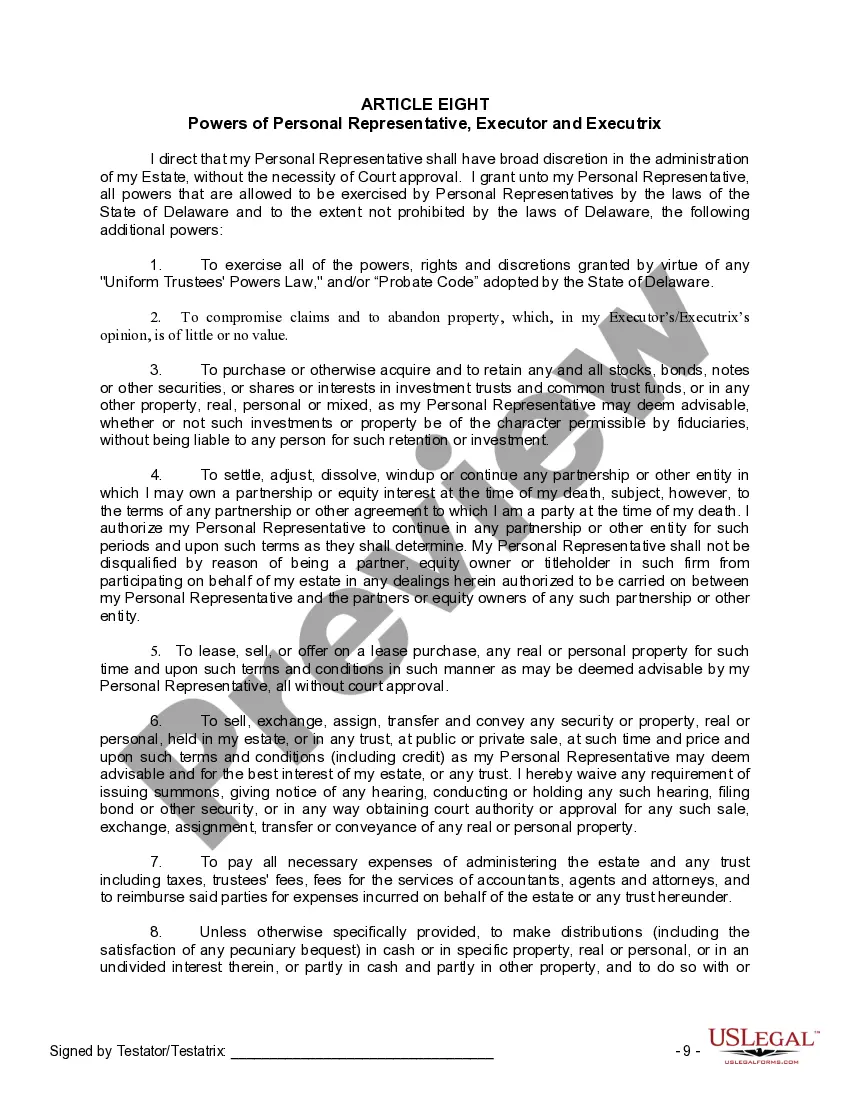
This Last Will and Testament is specifically designed for individuals who are divorced, have no children, and have not remarried. Its primary purpose is to clearly outline how your assets will be distributed after your death, ensuring that your wishes are respected. Unlike other wills, this one caters specifically to your unique situation, allowing you to appoint a personal representative and designate heirs for your property.
Form components explained
- Your Name and Address: The document requires your personal details to establish your identity.
- Appointment of Personal Representative: You can designate someone to manage your estate.
- Specific Bequests: Specify any particular items or property you wish to leave to specific individuals.
- Homestead Designation: If you own a home, you can indicate who should inherit it.
- Residuary Clause: This section outlines how any remaining assets should be distributed.
- Witness Requirements: The will must be signed in front of two witnesses not mentioned in the will.




Situations where this form applies
This form is essential when you want to ensure that your wishes about asset distribution are upheld after your passing. It is particularly relevant for individuals who have experienced a divorce, possess no children, and seek to avoid complications that can arise from intestate succession. Using this will helps prevent disputes among potential heirs and simplifies the probate process.
Who should use this form
- Individuals who are divorced and have no children.
- People who have not remarried and wish to plan their estate.
- Anyone looking to specify how their property should be divided after death.
- Individuals who want to appoint a trusted person to manage their estate.
How to prepare this document
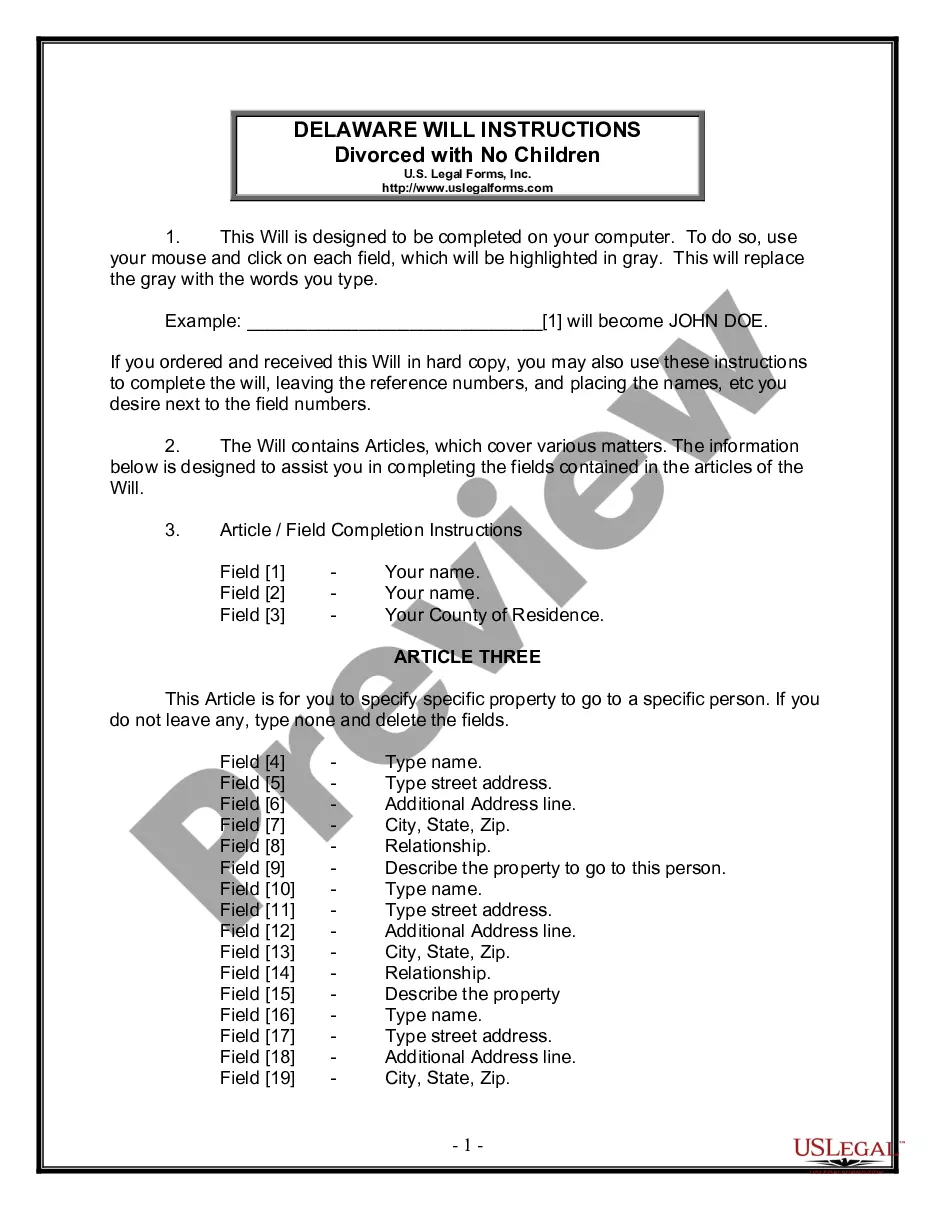
- Enter your name and county of residence in the designated fields.
- Specify any specific property or assets you wish to leave to particular individuals.
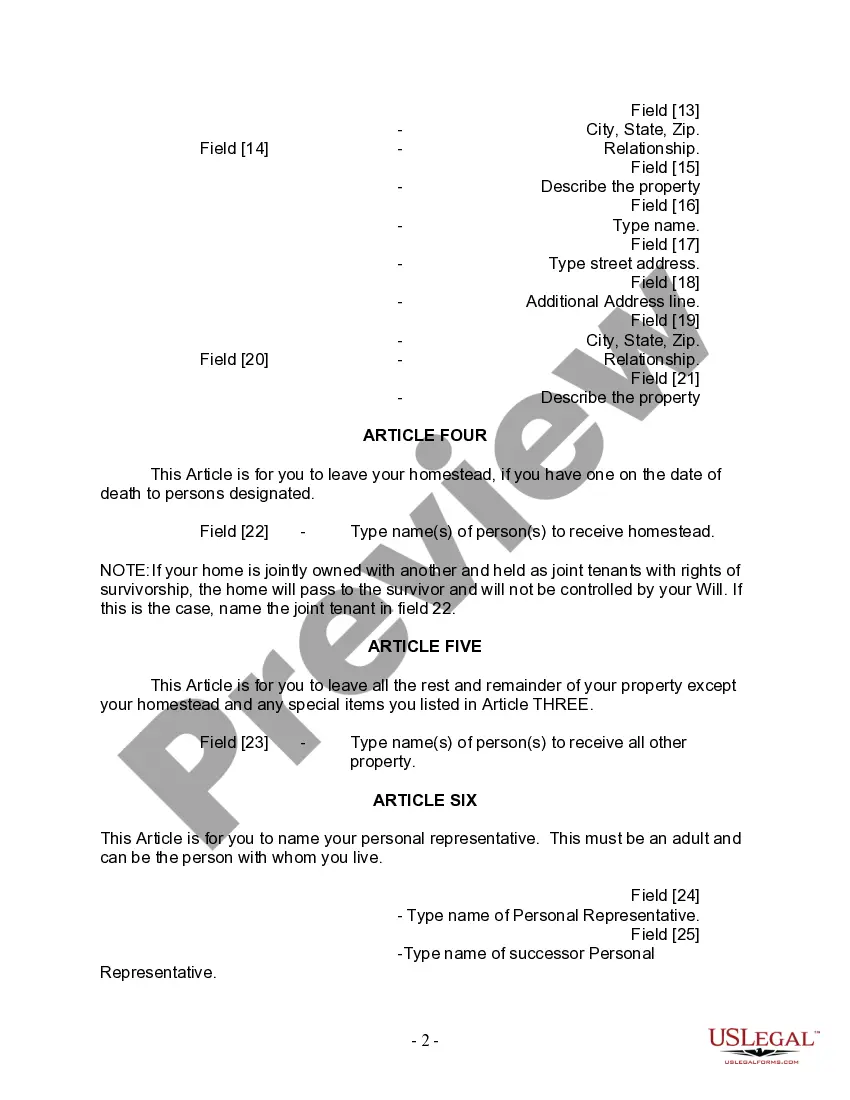
- Designate who will inherit your homestead, if applicable.
- Appoint your personal representative and a successor if needed.
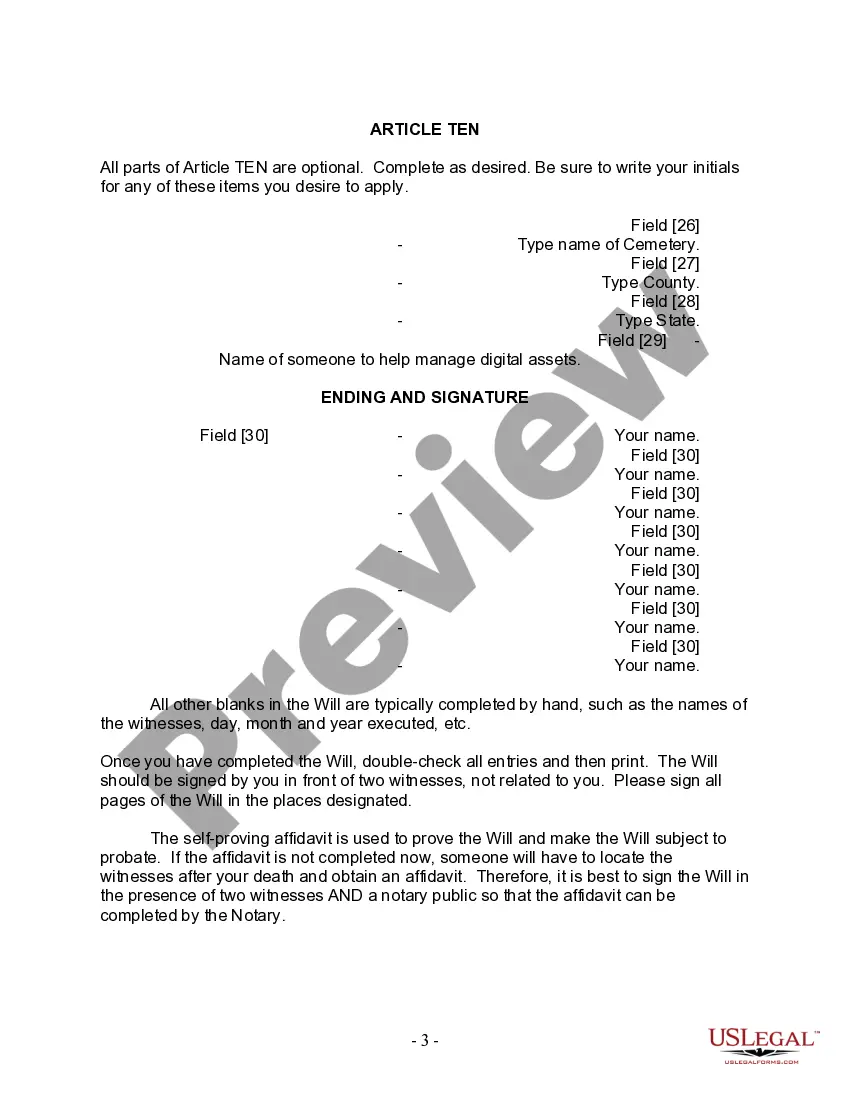
- Ensure all fields are filled out clearly and accurately before signing.
- Sign the will in the presence of two witnesses and, if necessary, a notary public.
Notarization guidance
This document requires notarization to meet legal standards. US Legal Forms provides secure online notarization powered by Notarize, allowing you to complete the process through a verified video call, available 24/7.
Get your form ready online
Our built-in tools help you complete, sign, share, and store your documents in one place.
Make edits, fill in missing information, and update formatting in US Legal Forms—just like you would in MS Word.
Download a copy, print it, send it by email, or mail it via USPS—whatever works best for your next step.
Sign and collect signatures with our SignNow integration. Send to multiple recipients, set reminders, and more. Go Premium to unlock E-Sign.
If this form requires notarization, complete it online through a secure video call—no need to meet a notary in person or wait for an appointment.
We protect your documents and personal data by following strict security and privacy standards.

Make edits, fill in missing information, and update formatting in US Legal Forms—just like you would in MS Word.

Download a copy, print it, send it by email, or mail it via USPS—whatever works best for your next step.

Sign and collect signatures with our SignNow integration. Send to multiple recipients, set reminders, and more. Go Premium to unlock E-Sign.

If this form requires notarization, complete it online through a secure video call—no need to meet a notary in person or wait for an appointment.

We protect your documents and personal data by following strict security and privacy standards.
Mistakes to watch out for
- Not having the will signed by the required number of witnesses.
- Failing to clearly specify bequests, which can lead to confusion or disputes.
- Not updating the will after significant life events, such as changes in property or relations.
- Assuming the will is valid without proper witnessing or notarization when required.
Benefits of using this form online
- Convenience of completing the form from your computer at your own pace.
- Editability allows for quick updates should personal circumstances change.
- Access to legal forms drafted by licensed attorneys, ensuring reliability and compliance.
What to keep in mind
- This Last Will and Testament is tailored for divorced individuals without children.
- It allows you to specify asset distribution clearly, preventing potential disputes.
- The form requires signatures from two witnesses and must be notarized in Delaware.
- Using this will provides peace of mind knowing your final wishes are documented and legally recognized.
Looking for another form?

Form popularity
FAQ
In Delaware, a spouse does not automatically inherit everything if you are a divorced person not remarried with no children. When you create a Last Will and Testament, you can specify how you want your assets distributed, independent of your marital status. Using a service like USLegalForms can help clarify these details and ensure your wishes are accurately documented.
Yes, you can write your own will in Delaware, including a Last Will and Testament for a divorced person not remarried with no children. However, it’s essential to follow specific legal guidelines to ensure validity, such as proper witnessing. Online resources, like USLegalForms, provide templates and instructions to help you craft a will that meets Delaware's legal standards.
To create a valid will in Delaware, including a Last Will and Testament for a divorced person not remarried with no children, you need to be at least 18 years old and of sound mind. The will must be written and signed by the testator in the presence of two witnesses. Ensuring these requirements are met can help prevent complications after your passing, so consider using USLegalForms for guidance.
Creating a Delaware Last Will and Testament for a divorced person not remarried with no children typically requires only personal identification and a clear outline of your wishes regarding asset distribution. It's helpful to gather documentation of your assets, such as property deeds, bank statements, and other financial records. Platforms like USLegalForms assist you in compiling these documents efficiently.
In Delaware, notarization is not a strict requirement for your Last Will and Testament, even for a divorced person not remarried with no children. However, having your will notarized can help avoid challenges in court, making the execution of your document smoother. It's wise to consult with legal experts or platforms like USLegalForms to ensure your Delaware Last Will and Testament reflects your intentions clearly.
You do not need a lawyer to create a will in Delaware, especially if your needs are straightforward. Many individuals find success using online resources such as uslegalforms to draft a Delaware Last Will and Testament for Divorced Person Not Remarried with No Children. These platforms offer guided templates that ensure your will is legally valid without the necessity for legal representation.
In Delaware, a divorce typically revokes any provisions in your will that pertain to your ex-spouse. Consequently, if you have a Delaware Last Will and Testament for Divorced Person Not Remarried with No Children, it is essential to update your will post-divorce. This ensures that your assets are distributed according to your current wishes and not inadvertently to your former partner.
The cheapest way to create a Delaware Last Will and Testament for Divorced Person Not Remarried with No Children is to use an online platform like uslegalforms. This service offers affordable templates that guide you through the process of creating a valid will. You can fill out the necessary forms at your own pace and ensure your wishes are clearly outlined without any hidden fees.
Divorce does not automatically void a will in Delaware, but it can impact the distribution of your assets. For individuals with a Delaware Last Will and Testament for Divorced Person Not Remarried with No Children, it is vital to review and modify your will after a divorce to ensure it aligns with your current wishes. Regularly revisiting your estate plan can provide peace of mind and clarity.
A last will and testament can override any arrangements made in a marriage, particularly following a divorce. If you create a Delaware Last Will and Testament for Divorced Person Not Remarried with No Children, this document serves as your definitive statement regarding the distribution of your estate. It's essential to keep it updated to reflect any changes in your personal situation.