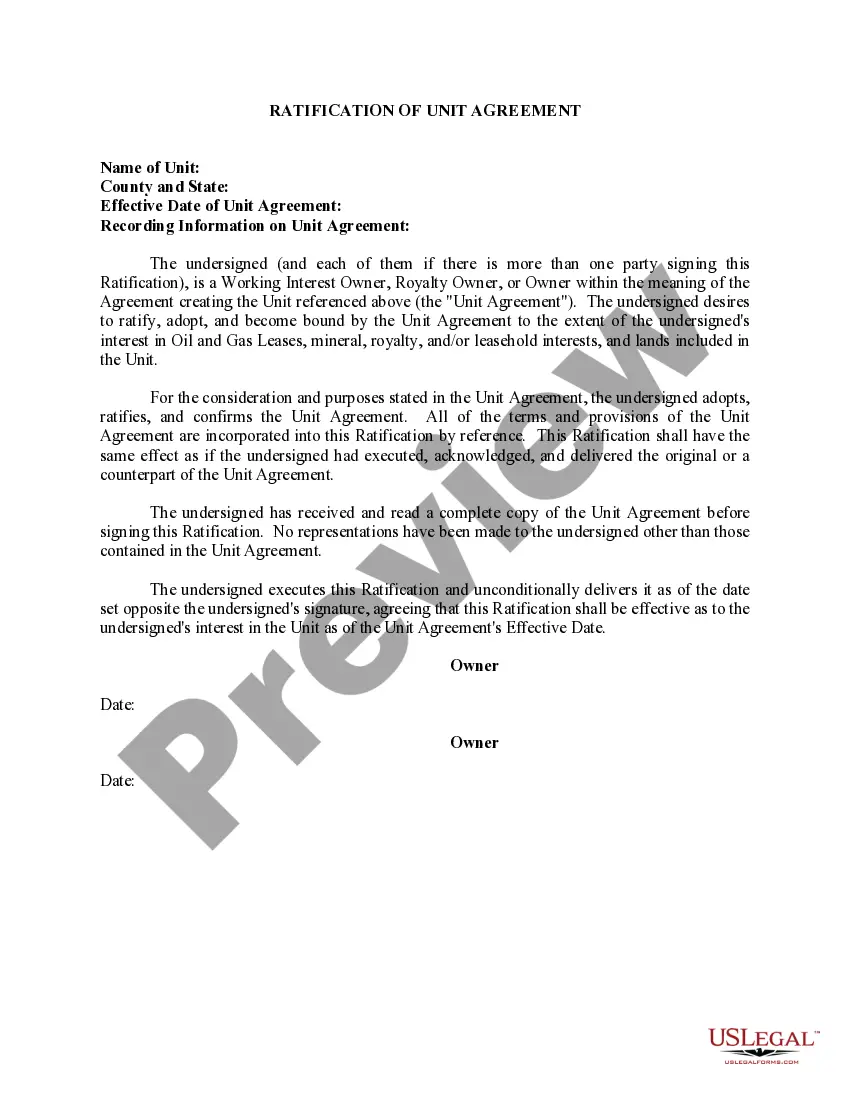
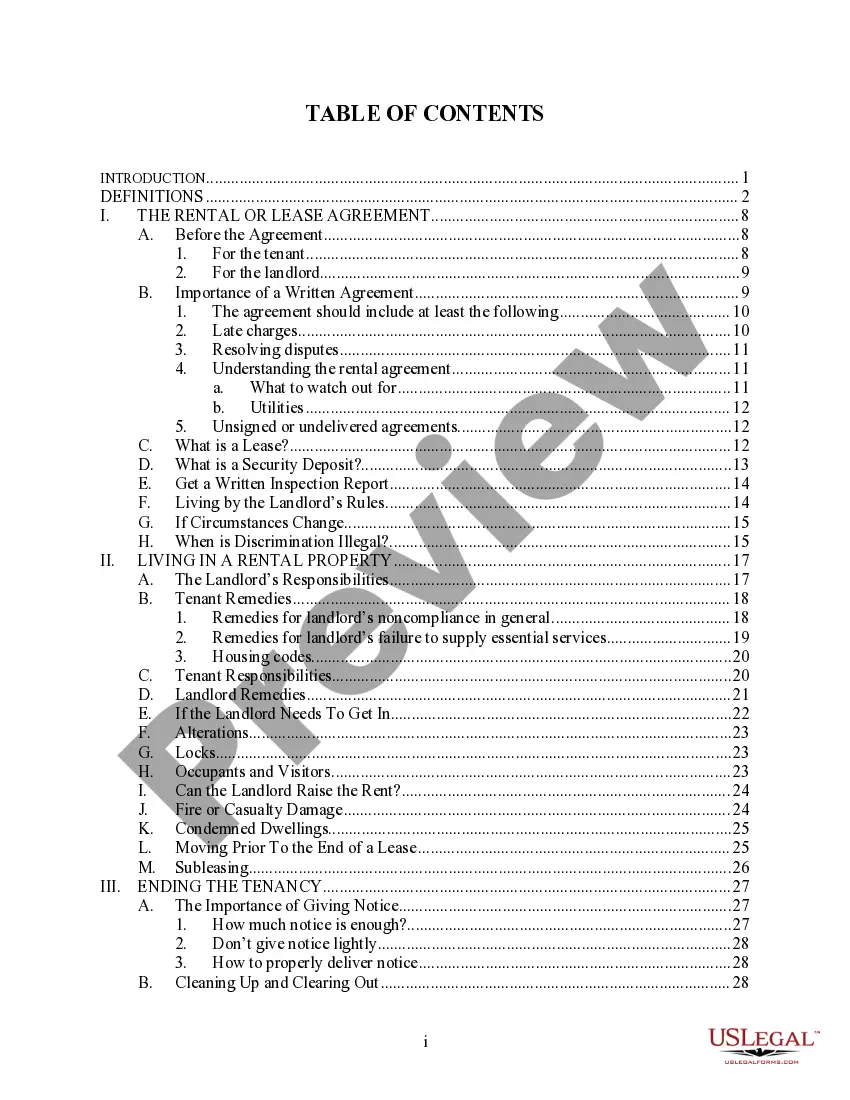
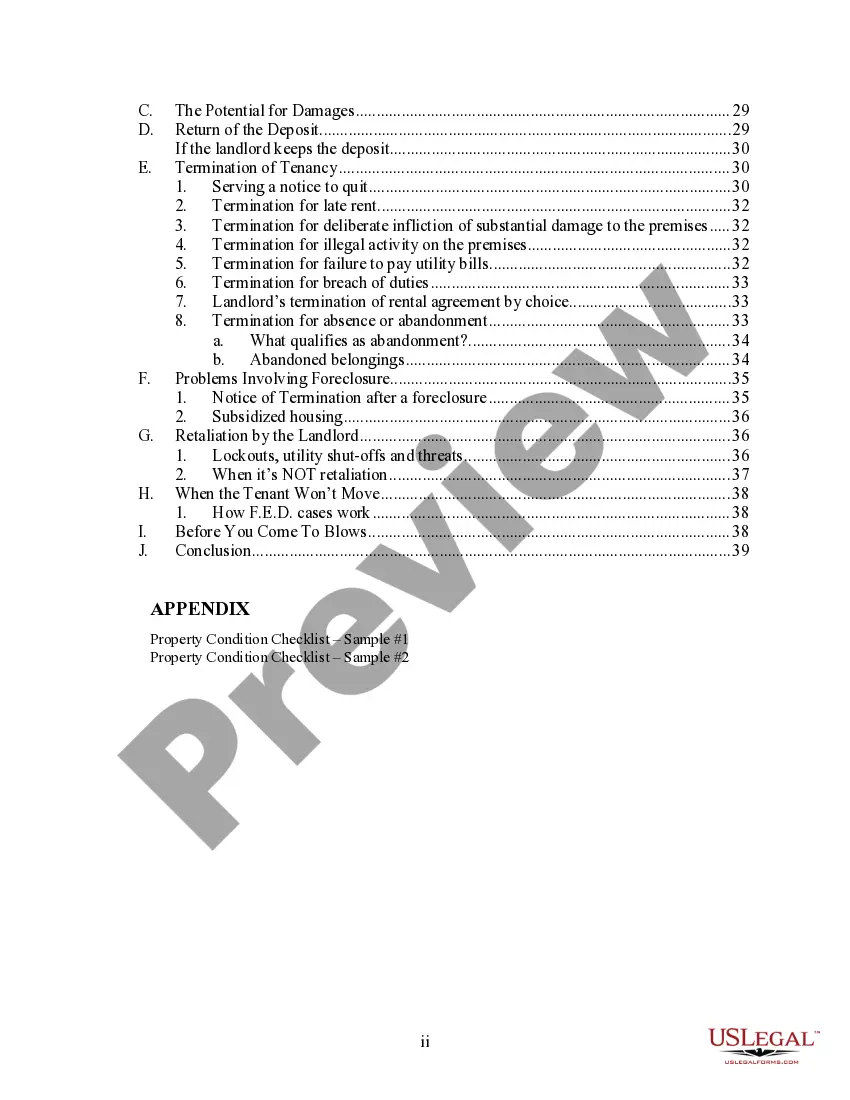
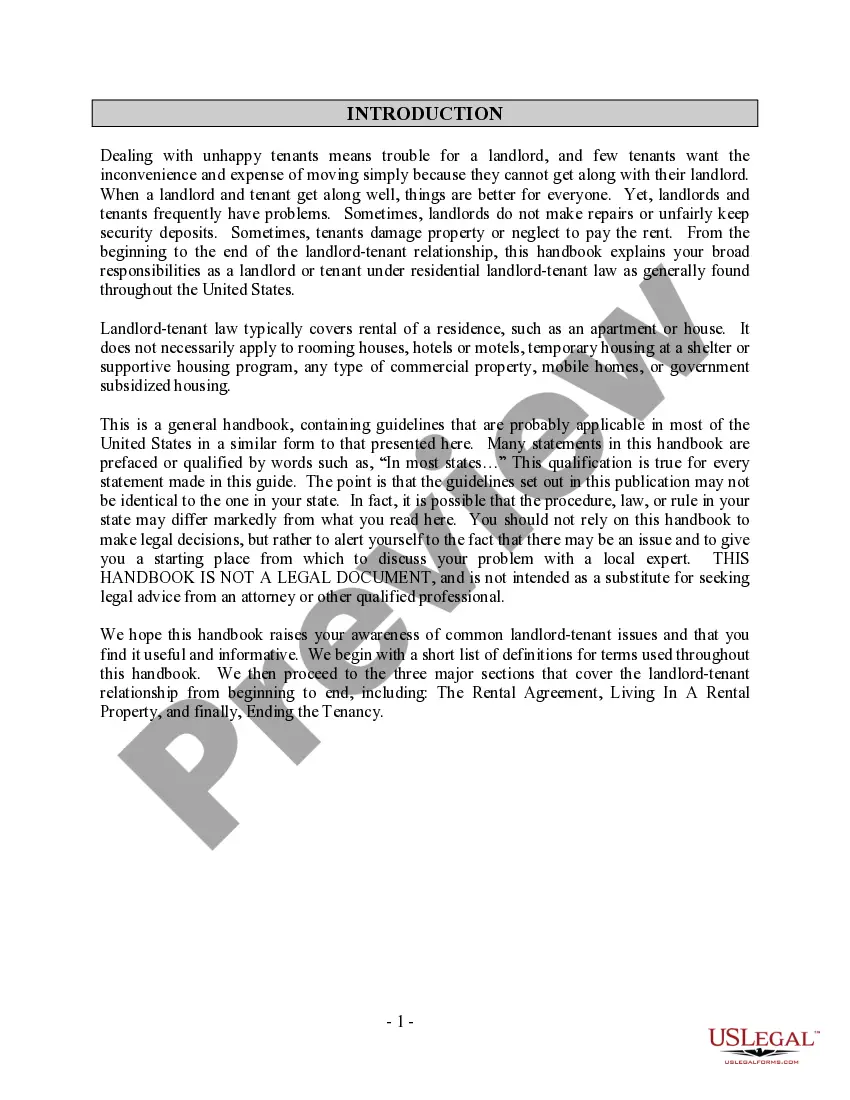
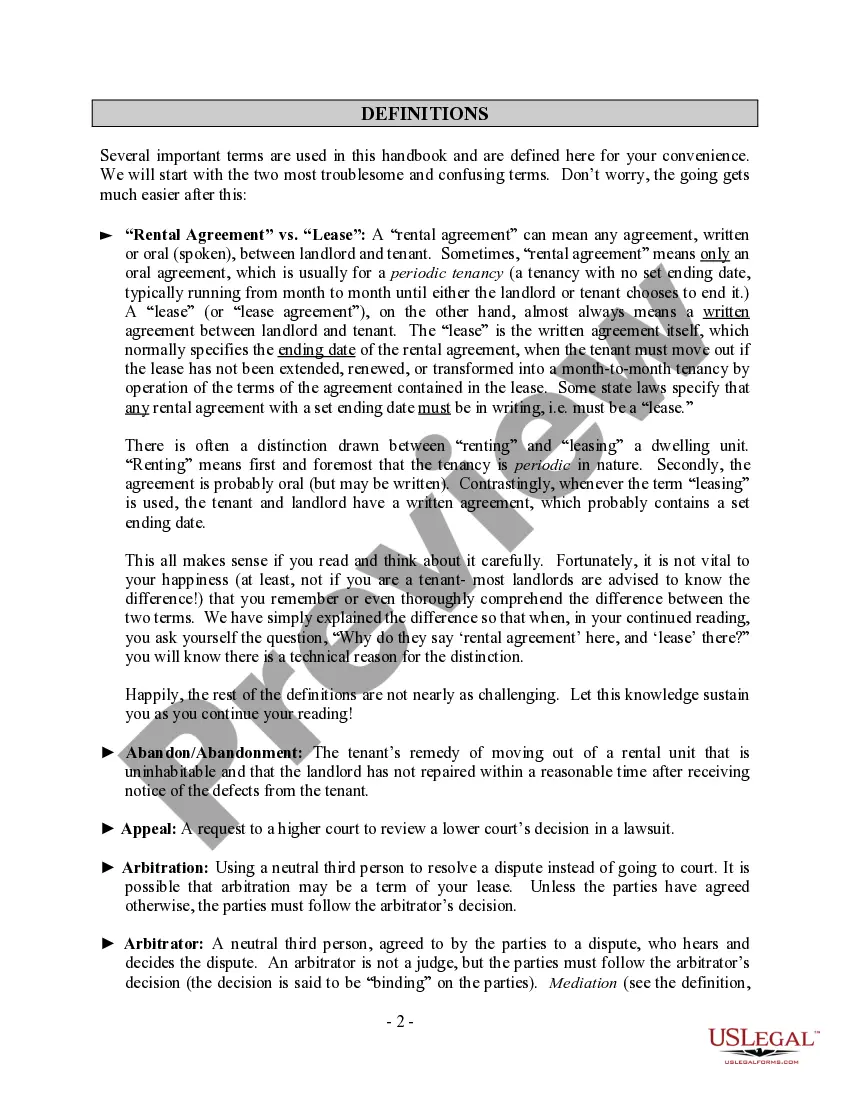
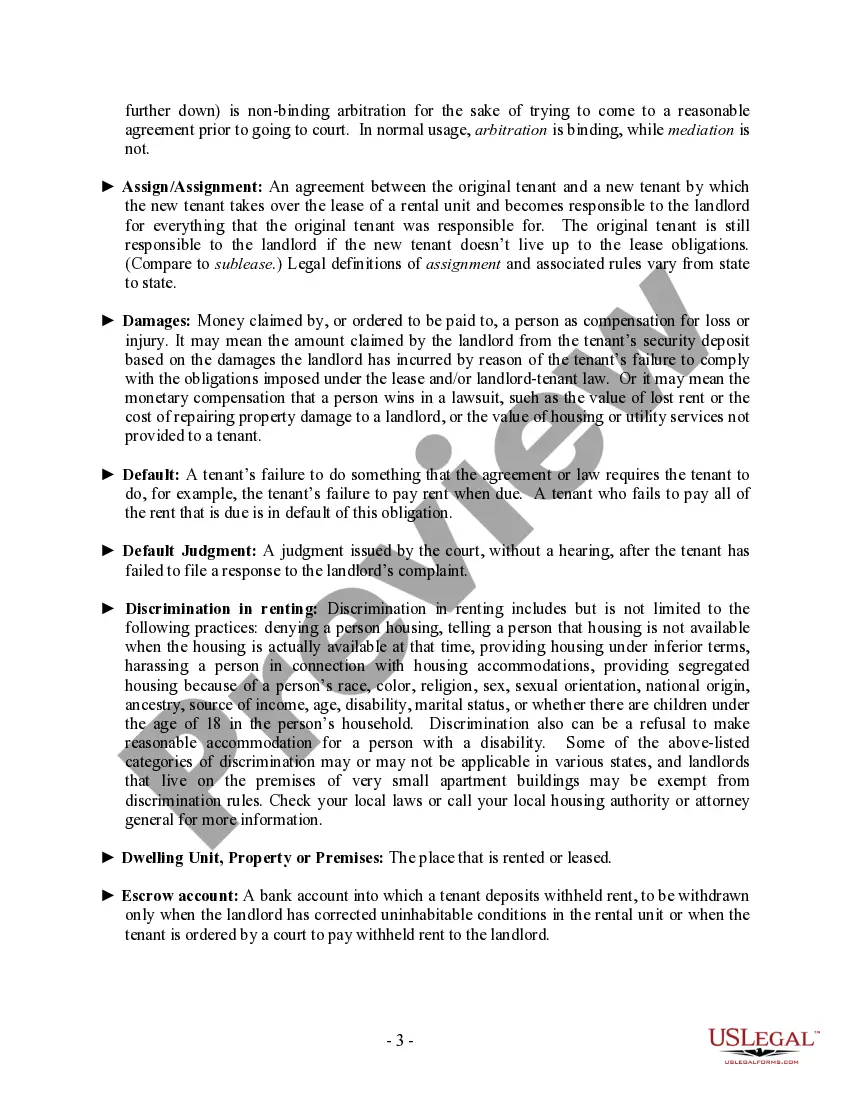
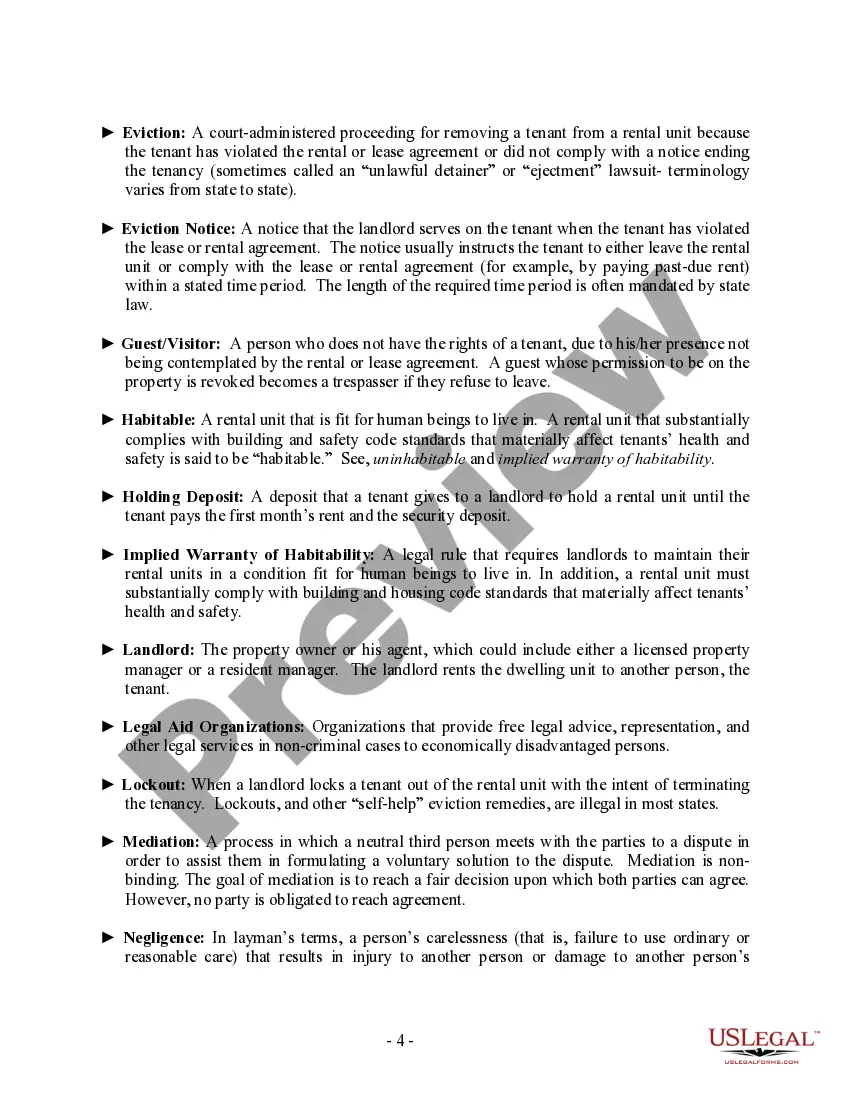
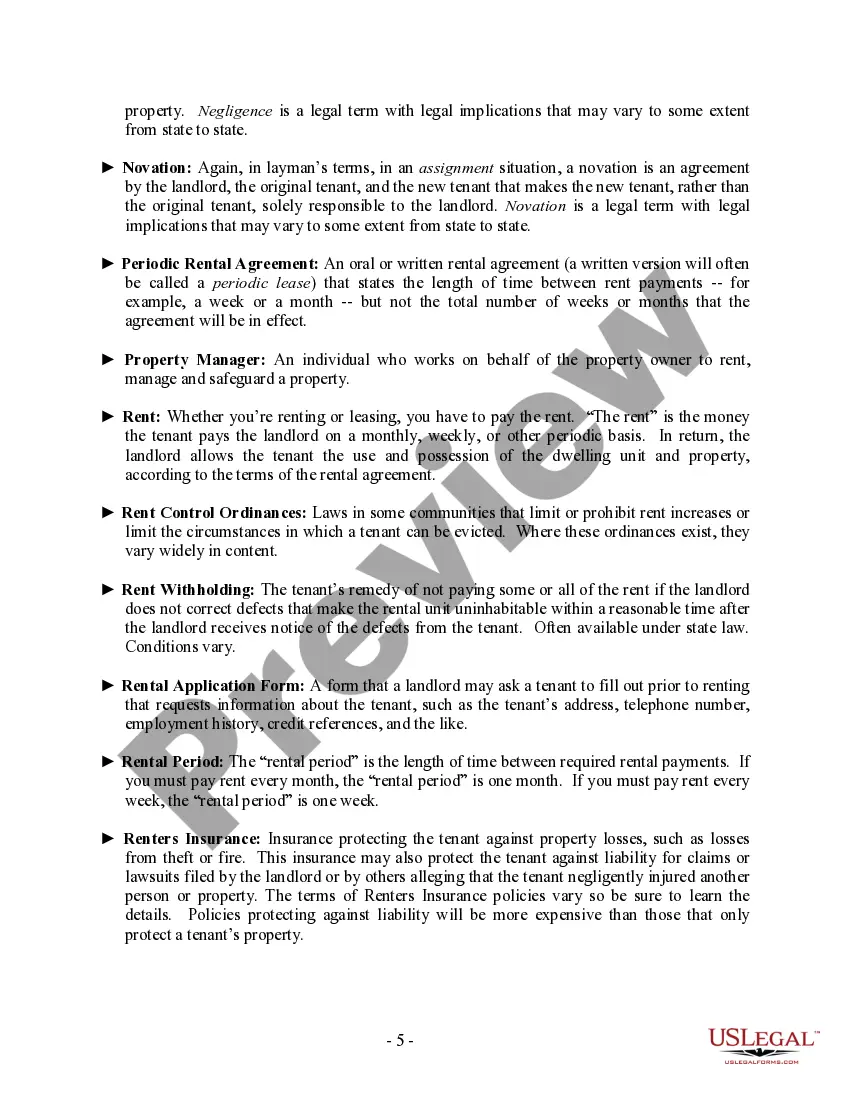
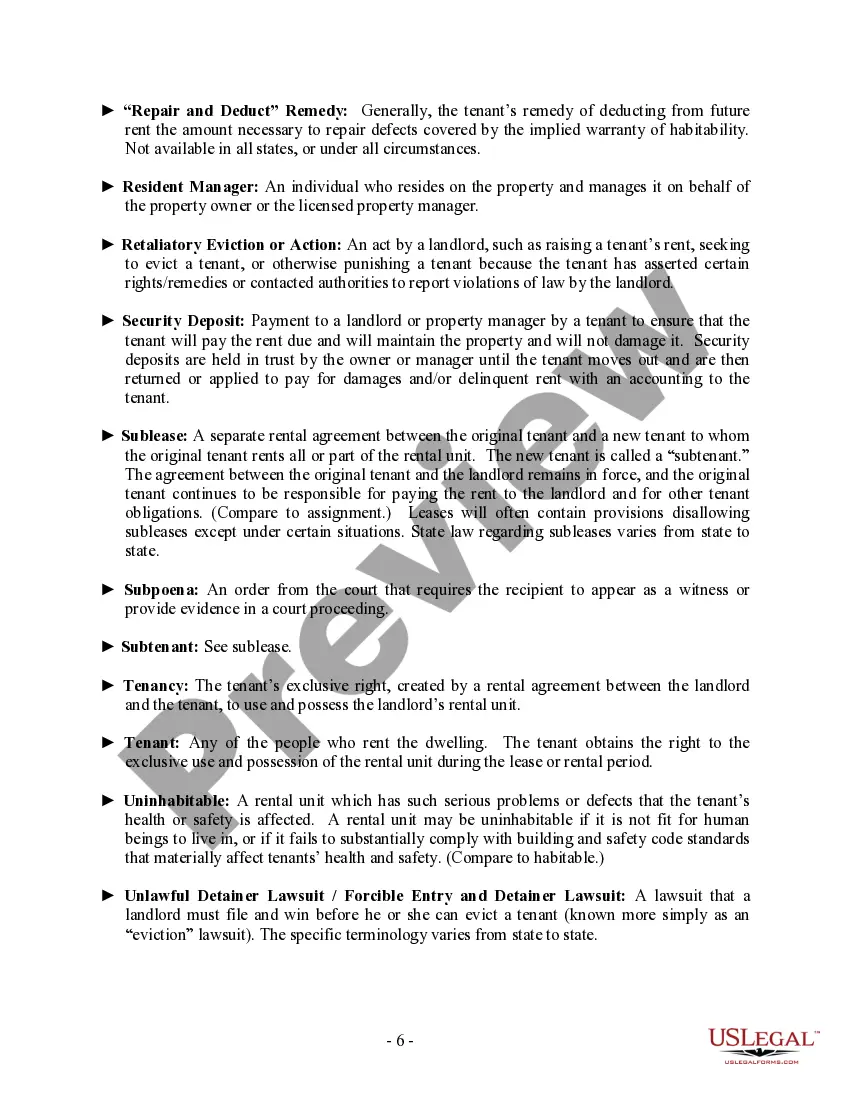
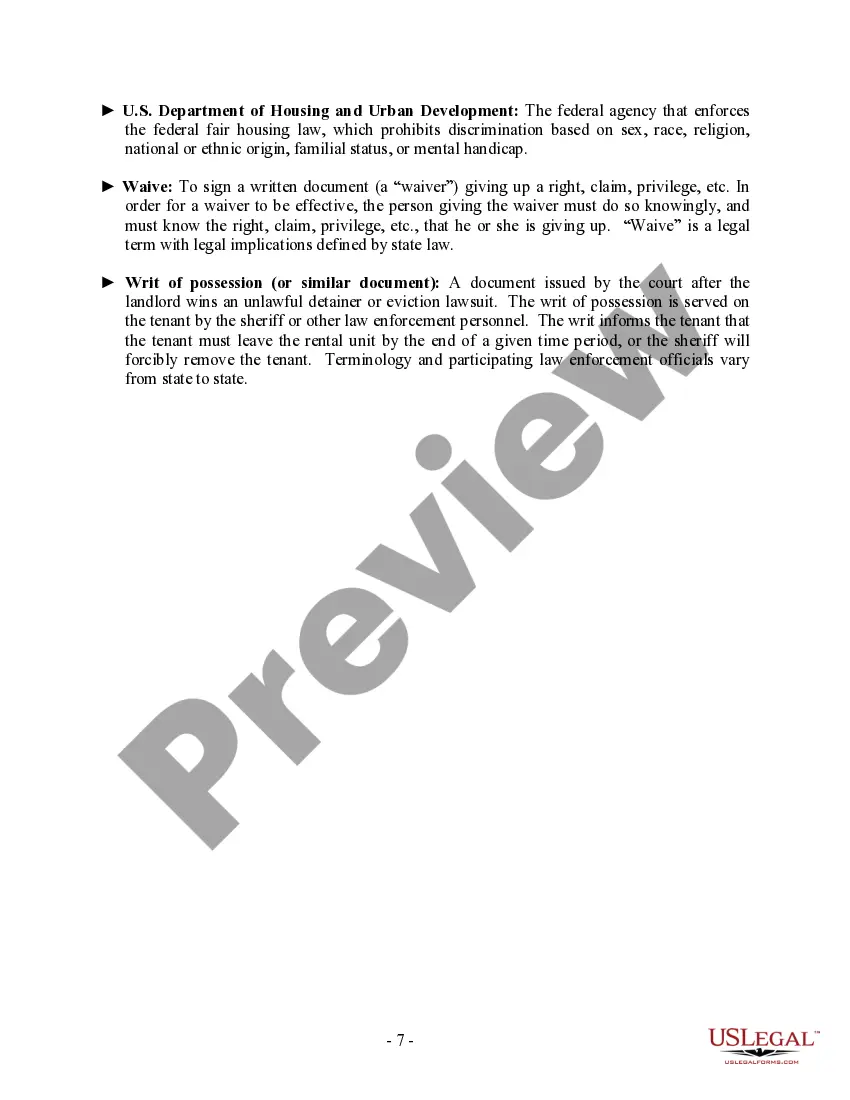
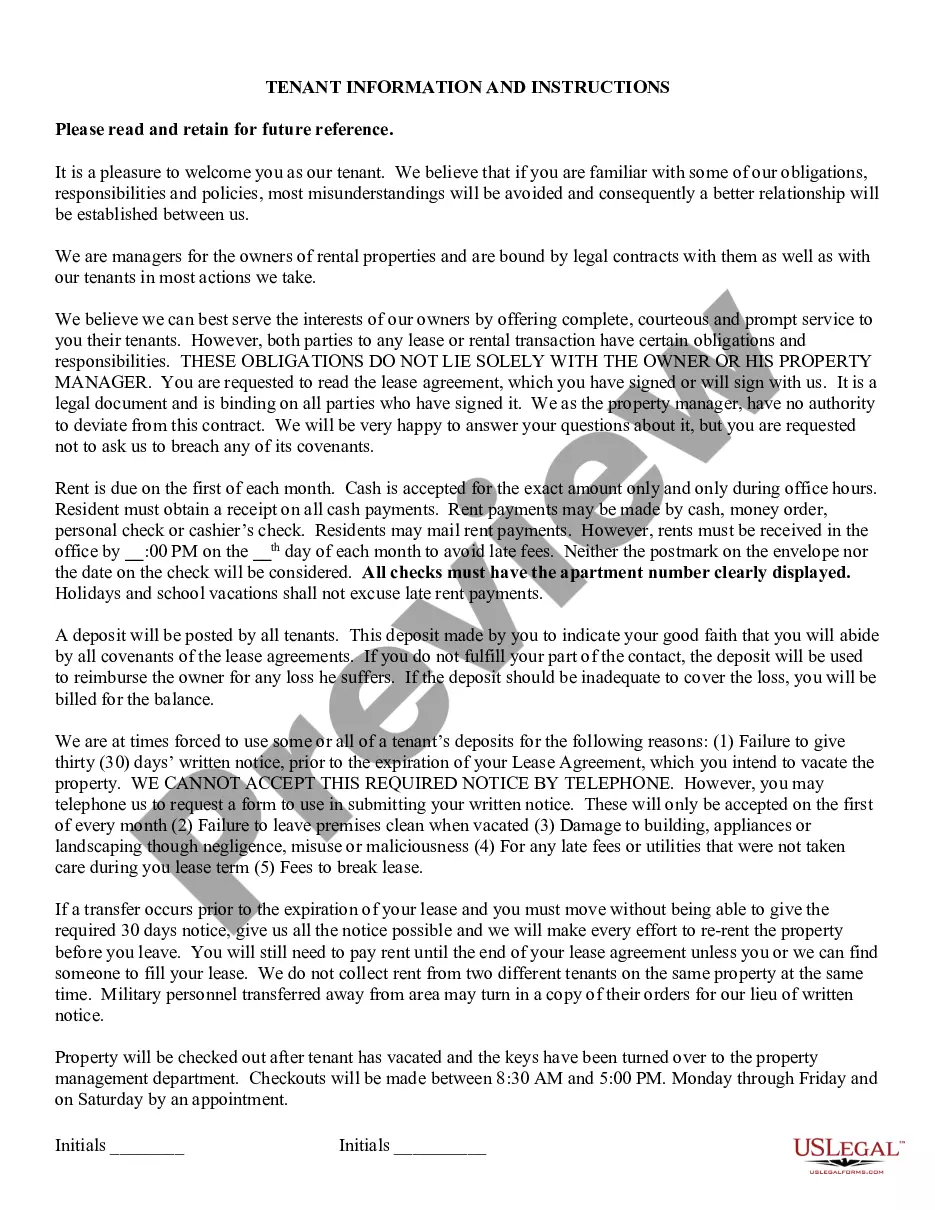
This Handbook summarizes the rights and obligations of landlords and tenants, and is designed to be a helpful guide to both landlords and tenants. Information about rental applications, leases, security deposits, inventory checklists, repair responsibilities, rent increases, termination of leases, eviction notices and much more is included in 40+ pages of materials.
Delaware Multistate Landlord Tenant Handbook - Guide - Laws
Instant download
Description
Free preview
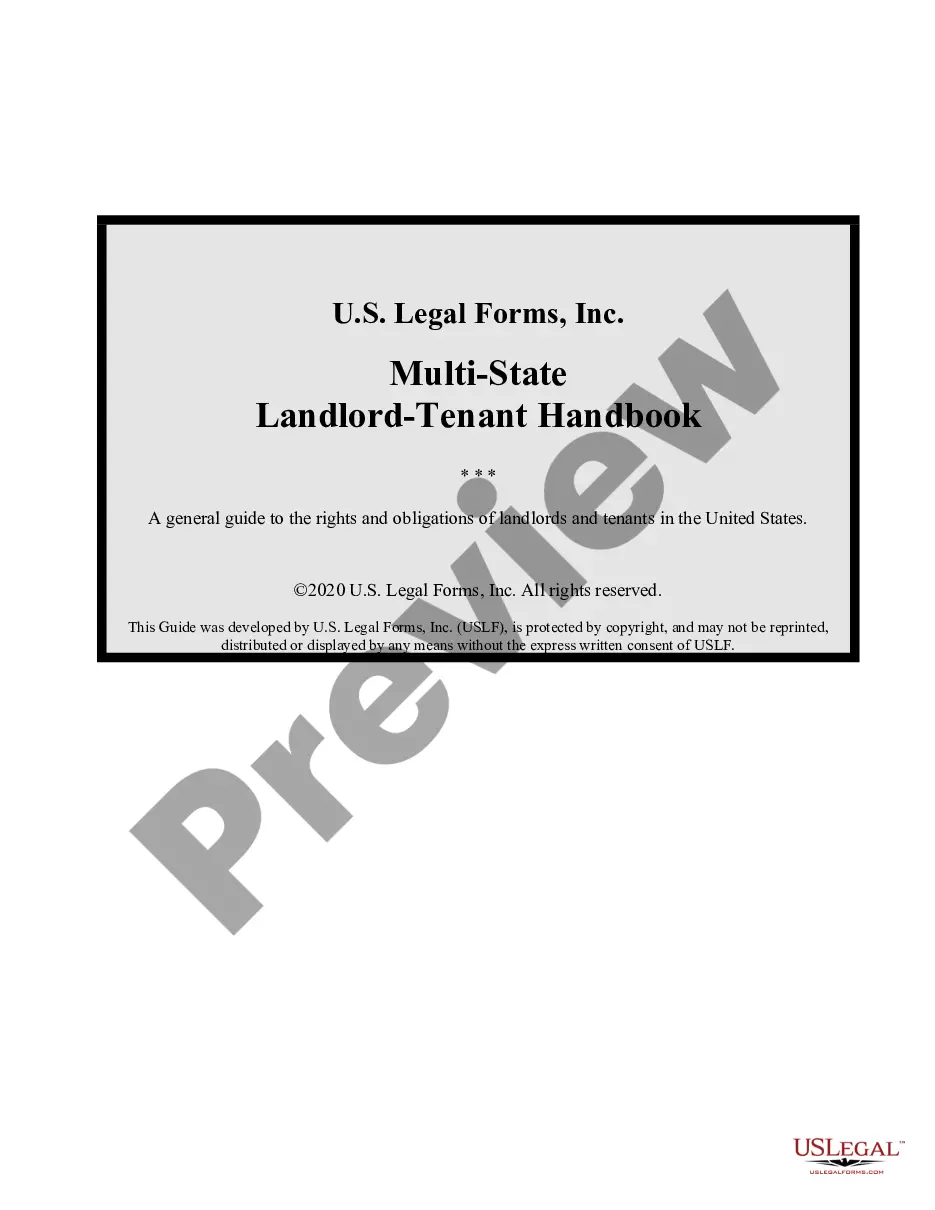

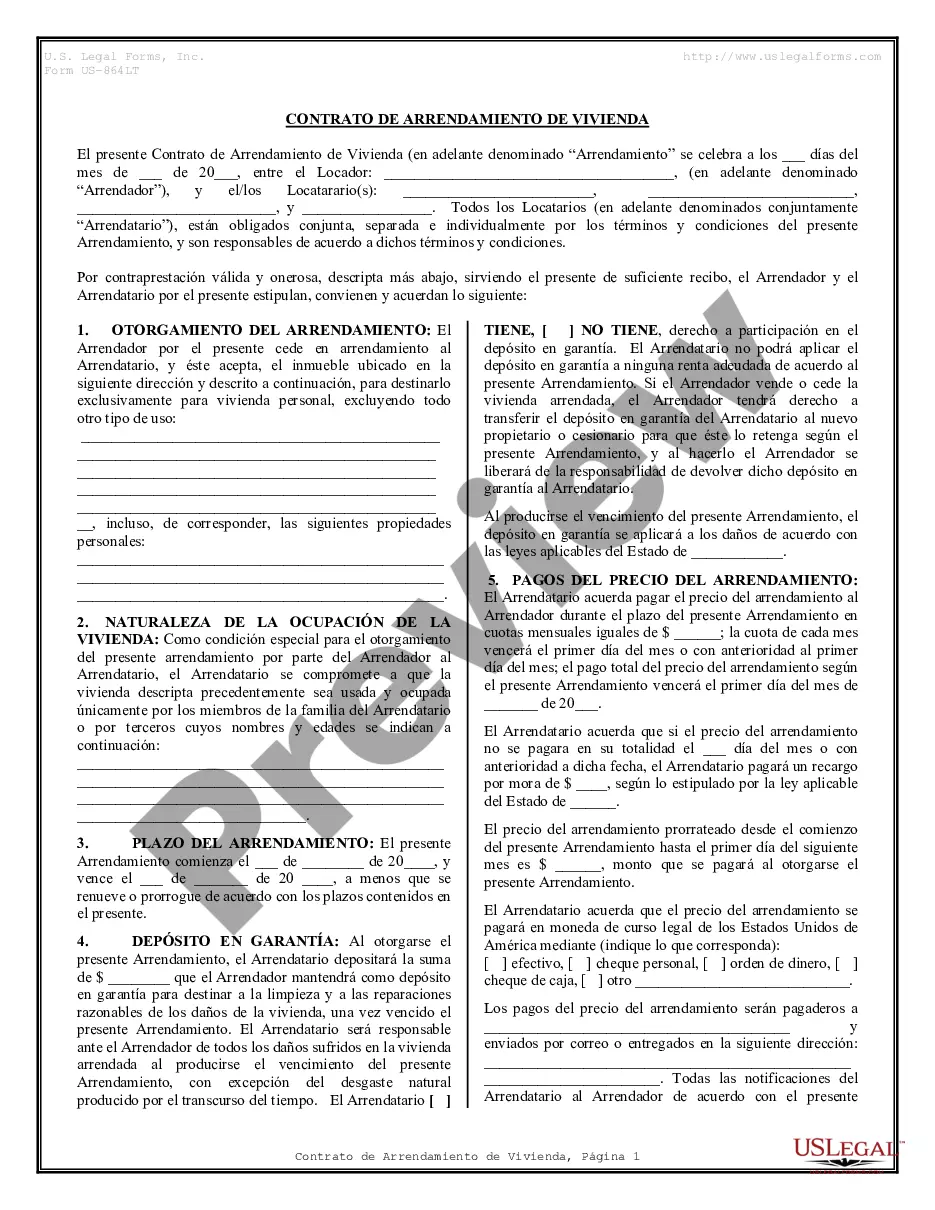
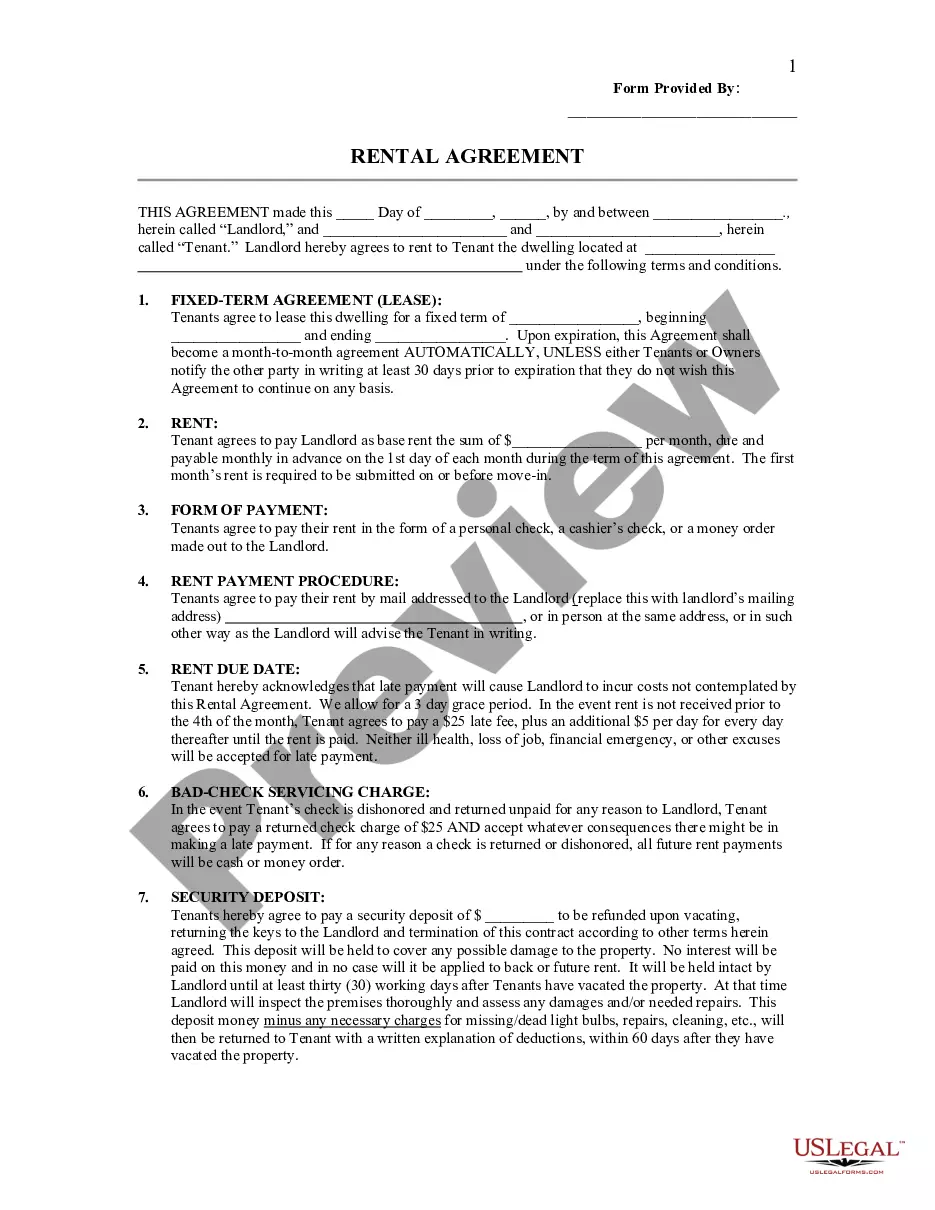
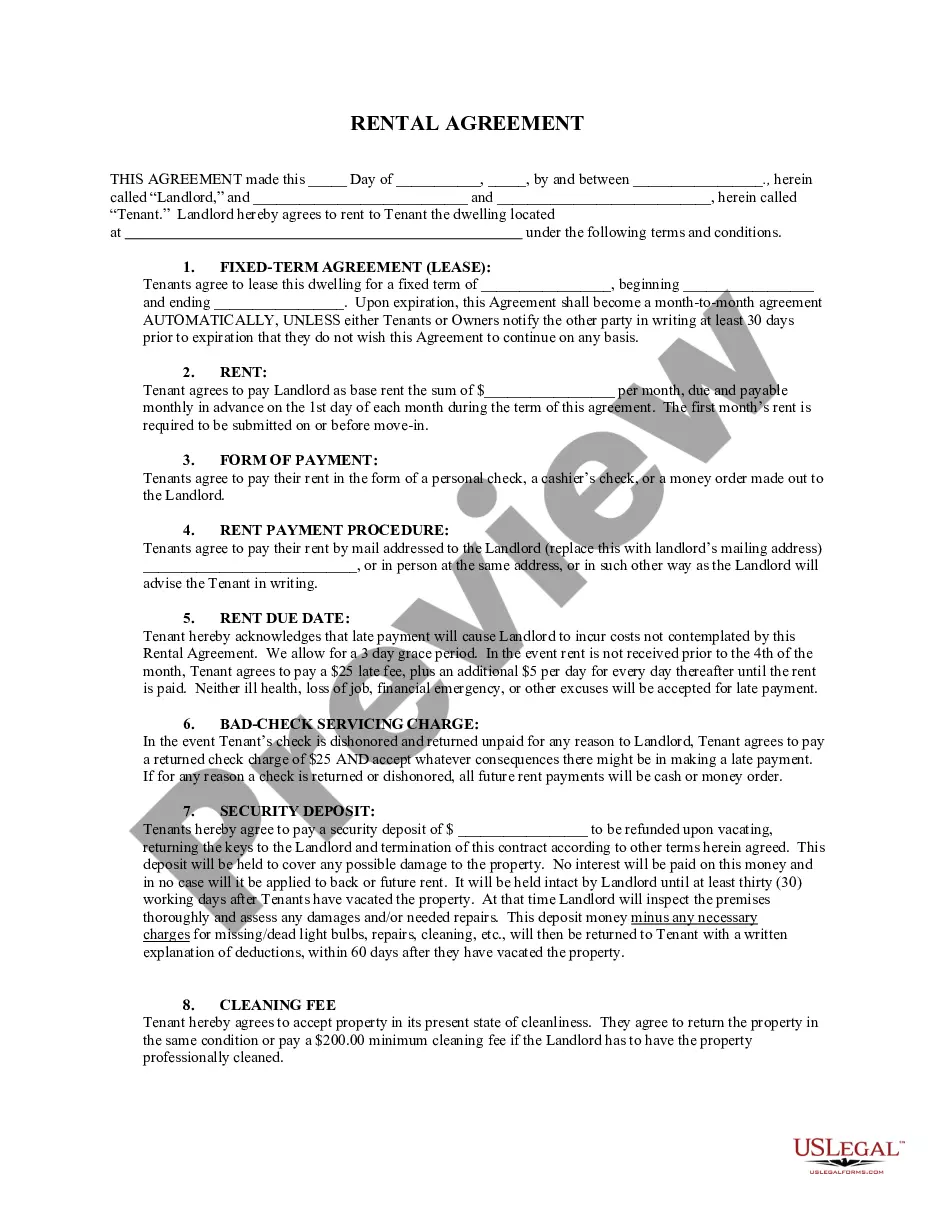
How to fill out Multistate Landlord Tenant Handbook - Guide - Laws?
It is feasible to invest hours online trying to locate the authentic document template that meets the state and federal requirements you need.
US Legal Forms provides thousands of authentic templates that can be examined by professionals.
It is easy to obtain or print the Delaware Multistate Landlord Tenant Handbook - Guide - Laws from the services.
If you wish to find another version of the form, use the Search field to locate the template that suits your requirements.
Once you have found the template you want, click Buy now to proceed.
Select the pricing plan you prefer, enter your details, and register for an account on US Legal Forms.
Complete the transaction. You can use your Visa or Mastercard or PayPal account to pay for the authentic form.
Choose the format of the document and download it to your device.
Make adjustments to your document if necessary. You can fill out, edit, sign, and print the Delaware Multistate Landlord Tenant Handbook - Guide - Laws.
Download and print thousands of document templates using the US Legal Forms website, which offers the largest collection of authentic forms.
Utilize professional and state-specific templates to address your business or personal needs.
- If you already have a US Legal Forms account, you may Log In and select the Acquire option.
- Then, you can fill out, edit, print, or sign the Delaware Multistate Landlord Tenant Handbook - Guide - Laws.
- Each authentic document template you receive is yours indefinitely.
- To access another copy of any downloaded form, go to the My documents tab and click on the corresponding option.
- If you are using the US Legal Forms site for the first time, follow the simple instructions provided below.
- First, ensure you have selected the correct document template for the state/region of your choice.
- Review the form details to confirm you have chosen the right form.
- If available, use the Preview option to view the document template simultaneously.
Form popularity
FAQ
Landlords must adhere to specific laws that protect tenant rights. For instance, they cannot enter your rental unit without proper notice unless it's an emergency. Additionally, landlords cannot discriminate against tenants based on race, gender, or other protected characteristics. Familiarizing yourself with the Delaware Multistate Landlord Tenant Handbook - Guide - Laws will clarify these prohibitions and help you assert your rights.
When communicating with your landlord, avoid making statements that could undermine your position. For example, don't mention financial struggles unless necessary, as this might affect their perception of your reliability. Additionally, refrain from making demands without understanding your lease terms. The Delaware Multistate Landlord Tenant Handbook - Guide - Laws can help you navigate these conversations more effectively.
In Delaware, landlords can generally raise rent as they see fit, but they must provide proper notice to tenants. Typically, this notice is at least 60 days before the increase takes effect. Understanding the legal limits and requirements is essential for both landlords and tenants. The Delaware Multistate Landlord Tenant Handbook - Guide - Laws offers detailed insights on this topic.
When renting a house, be alert for signs that may indicate potential problems. For instance, if the landlord is unwilling to provide a written lease or if the property has an unusual number of maintenance issues, these could be red flags. Additionally, watch for high turnover rates in tenants or if the landlord pressures you to sign quickly. To better understand your rights and responsibilities, refer to the Delaware Multistate Landlord Tenant Handbook - Guide - Laws.
In Delaware, it is common practice for landlords to require tenants to demonstrate that they earn three times the monthly rent to qualify for a lease. While it is not illegal, this requirement can be viewed as a barrier for some potential tenants. Understanding the implications of this practice is important for both sides. For more details on tenant qualifications, consult the Delaware Multistate Landlord Tenant Handbook - Guide - Laws.
Section 5106 of the Delaware landlord-tenant code deals with the rights of tenants regarding security deposits. This section specifies how much can be charged and the conditions for returning the deposit after a lease ends. Understanding this section is crucial for both landlords and tenants to ensure fair treatment. For comprehensive information, check the Delaware Multistate Landlord Tenant Handbook - Guide - Laws.
When communicating with your landlord, it is important to avoid confrontational or disrespectful language. Phrases that imply negligence on their part can escalate tensions. Instead, focus on expressing your concerns clearly and respectfully. For effective communication strategies, refer to the Delaware Multistate Landlord Tenant Handbook - Guide - Laws.
The eviction process in Delaware typically takes about 2 to 4 weeks, depending on various factors such as court schedules and the tenant's response. After filing an eviction complaint, landlords must wait for a hearing, and if granted, a judgment will be issued. Understanding the timeline and legal process is vital for landlords to ensure compliance with the law. For more insights, review the Delaware Multistate Landlord Tenant Handbook - Guide - Laws.
Section 5314 of the Delaware tenant code addresses tenant rights and landlord obligations related to property maintenance. It ensures that tenants can live in a safe and well-maintained environment. This section also outlines the procedures for tenants to report issues to their landlords. For a detailed understanding, consult the Delaware Multistate Landlord Tenant Handbook - Guide - Laws.
In Delaware, there is no statewide limit on how much rent can be increased, making it essential for tenants to review their lease agreements carefully. However, local regulations may apply, so it is important to check specific city ordinances. Knowing your rights regarding rent increases can help tenants negotiate better lease terms. For comprehensive details, refer to the Delaware Multistate Landlord Tenant Handbook - Guide - Laws.