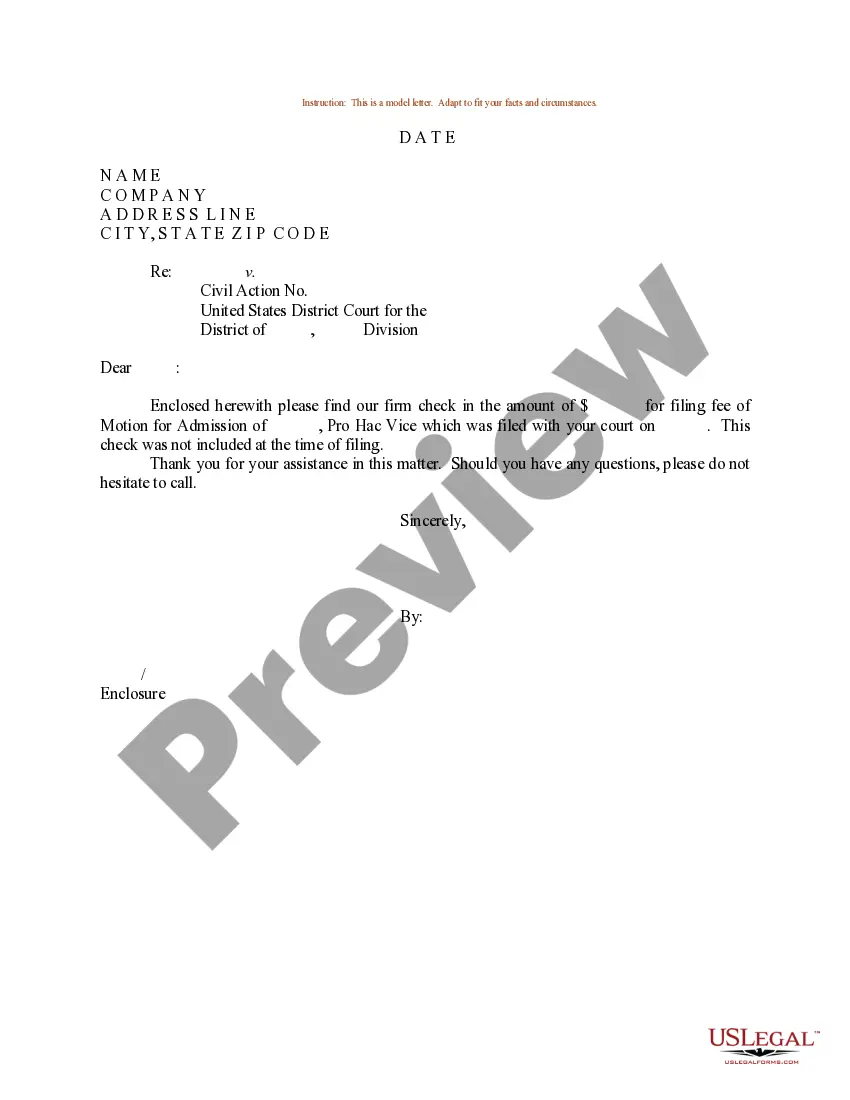
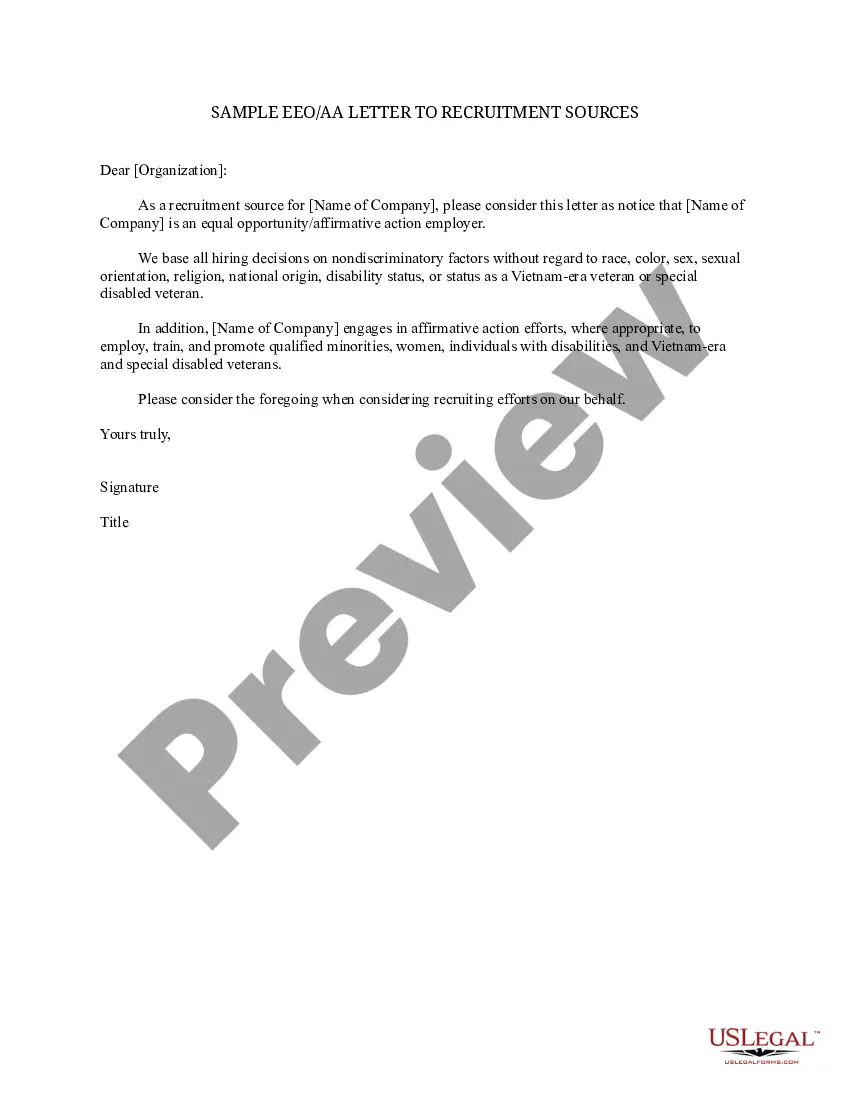
Delaware Sample EEO / AA Letter to Recruitment Sources
Description
Get your form ready online
Our built-in tools help you complete, sign, share, and store your documents in one place.
Make edits, fill in missing information, and update formatting in US Legal Forms—just like you would in MS Word.
Download a copy, print it, send it by email, or mail it via USPS—whatever works best for your next step.
Sign and collect signatures with our SignNow integration. Send to multiple recipients, set reminders, and more. Go Premium to unlock E-Sign.
If this form requires notarization, complete it online through a secure video call—no need to meet a notary in person or wait for an appointment.
We protect your documents and personal data by following strict security and privacy standards.

Make edits, fill in missing information, and update formatting in US Legal Forms—just like you would in MS Word.

Download a copy, print it, send it by email, or mail it via USPS—whatever works best for your next step.

Sign and collect signatures with our SignNow integration. Send to multiple recipients, set reminders, and more. Go Premium to unlock E-Sign.

If this form requires notarization, complete it online through a secure video call—no need to meet a notary in person or wait for an appointment.

We protect your documents and personal data by following strict security and privacy standards.
Looking for another form?


How to fill out Sample EEO / AA Letter To Recruitment Sources?
You can allocate time on the internet searching for the legal document template that satisfies the federal and state requirements you require.
US Legal Forms offers thousands of legal templates that can be reviewed by experts.
You can download or print the Delaware Sample EEO / AA Letter to Recruitment Sources from my service.
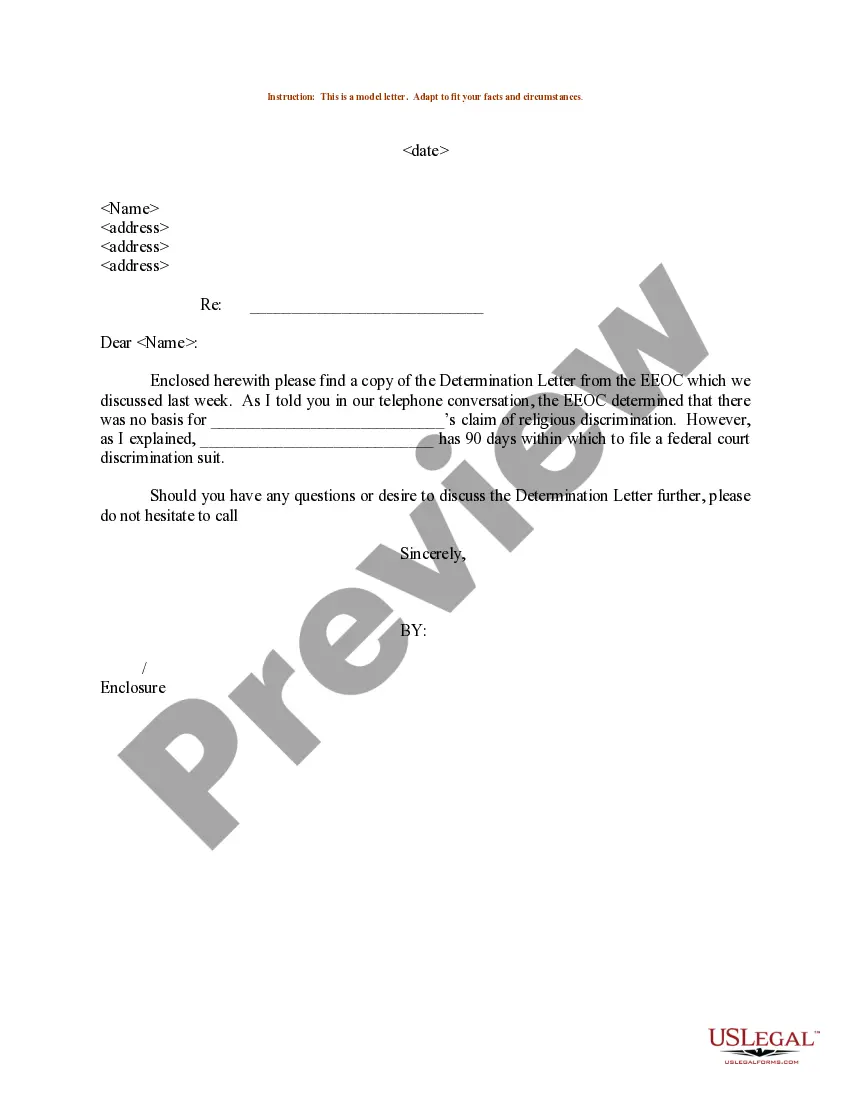
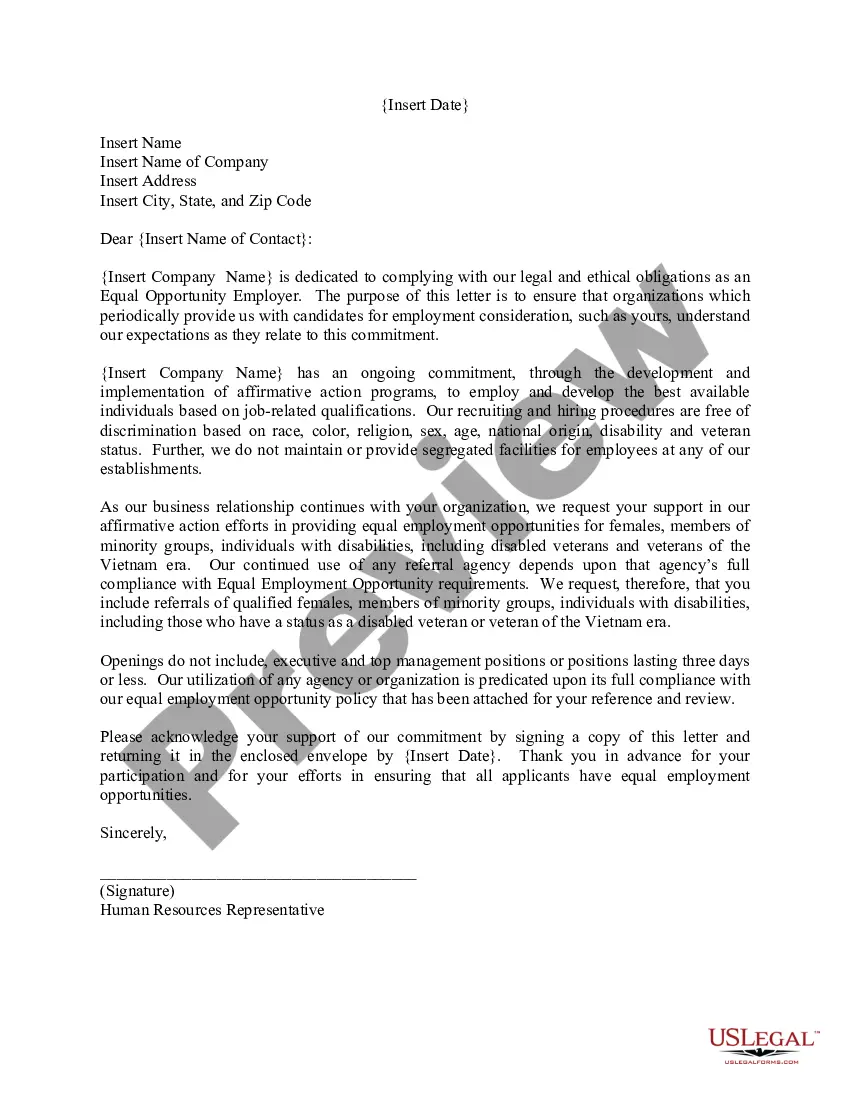
If available, utilize the Preview button to view the document template as well.
- If you already have a US Legal Forms account, you can Log In and click on the Download button.
- Then, you can complete, edit, print, or sign the Delaware Sample EEO / AA Letter to Recruitment Sources.
- Every legal document template you purchase is yours permanently.
- To get an additional copy of a purchased template, navigate to the My documents tab and click on the corresponding button.
- If you are using the US Legal Forms website for the first time, follow these simple instructions.
- First, ensure you have selected the correct document template for the area/city you choose.
- Check the template description to confirm you have selected the proper form.
Form popularity
FAQ
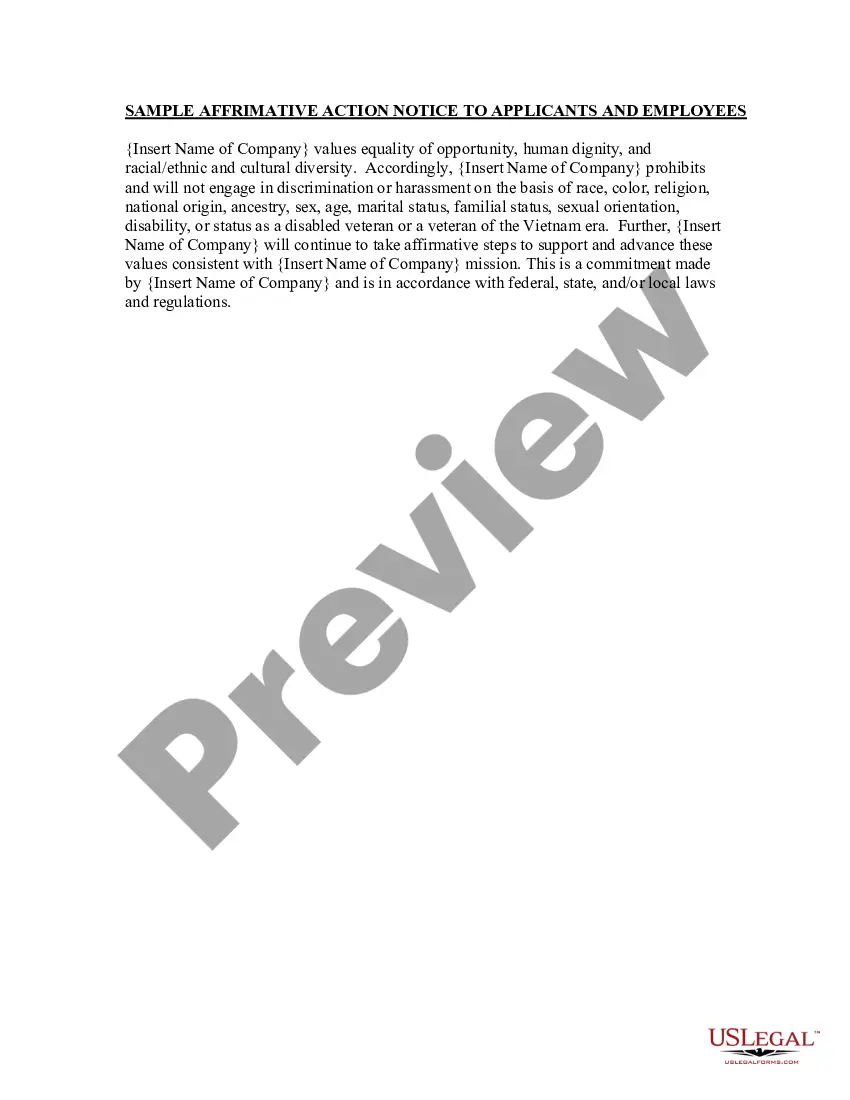
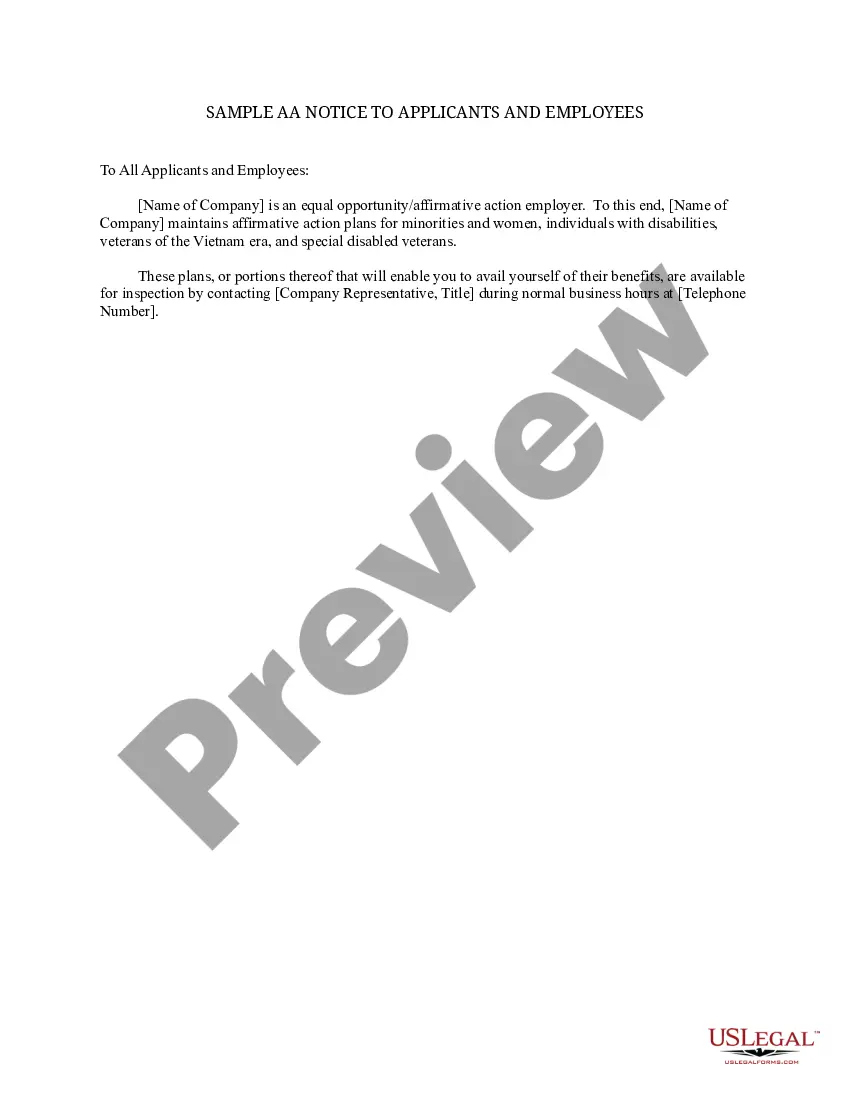
The requirements for the EEO statement typically include a commitment to equal employment opportunities and affirmative action. You need to ensure that your statement is clear, concise, and reflects your organization's intent to promote diversity and inclusion. A Delaware Sample EEO / AA Letter to Recruitment Sources can serve as a useful template to guide you in crafting your statement effectively. By using a structured approach, you can enhance your outreach to potential candidates and demonstrate your dedication to fair hiring practices.
The Equal Employment Opportunity Commission requires that every American employer include an EEO in their job postings. You must include the words (Company X) is an Equal Opportunity Employer followed by a policy statement that details non-discriminatory practices.
EEO or Equal Employment Opportunity is the principle that everyone has equal way to pursue a job that is based on merit regardless of characteristics such as race, sex or sexual orientation. Equal Opportunity for Employment (EEO) law makes it illegally possible for employers to discriminate under certain features.
Overview U.S. Equal Employment Opportunity Commission.
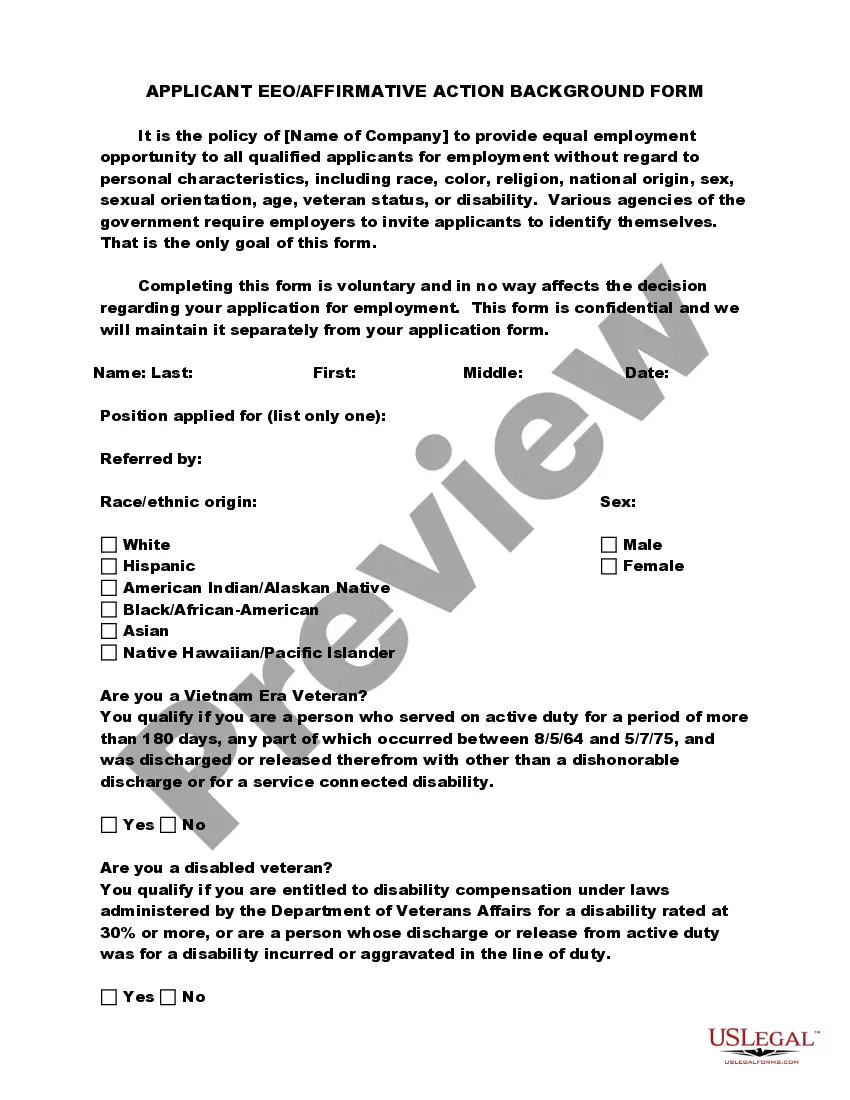
EEO (Equal Employment Opportunity) questions are most commonly found at the very end of a job application. Companies are required to ask EEO questions on job applications in order to file the EEO-1 Report; a compliance survey mandated by federal statute and regulations.
Some employers opt for a short, formal acknowledgement: We're an equal opportunity employer. All applicants will be considered for employment without attention to race, color, religion, sex, sexual orientation, gender identity, national origin, veteran or disability status.
Under EEO law related to the recruitment process, employers cannot discriminate based on age (forty years or older), disability, genetic information, national origin, sex, pregnancy, race, and religion. In a job announcement, organizations usually have an EEO statement.
Under EEO law related to the recruitment process, employers cannot discriminate based on age (forty years or older), disability, genetic information, national origin, sex, pregnancy, race, and religion.
No, job seekers are not required to answer EEO questions regarding job applications and may refuse to respond if they do not want to take the survey. The process is entirely voluntary and will have absolutely no reflection on your employment, should you refuse.
The purpose of EEO regulations is to make sure nobody will face rejection or difficulties because they're in a protected group. For example, under several EEO laws, you cannot reject a candidate simply because they're Jewish or Christian, African or Caucasian, or because they're pregnant.