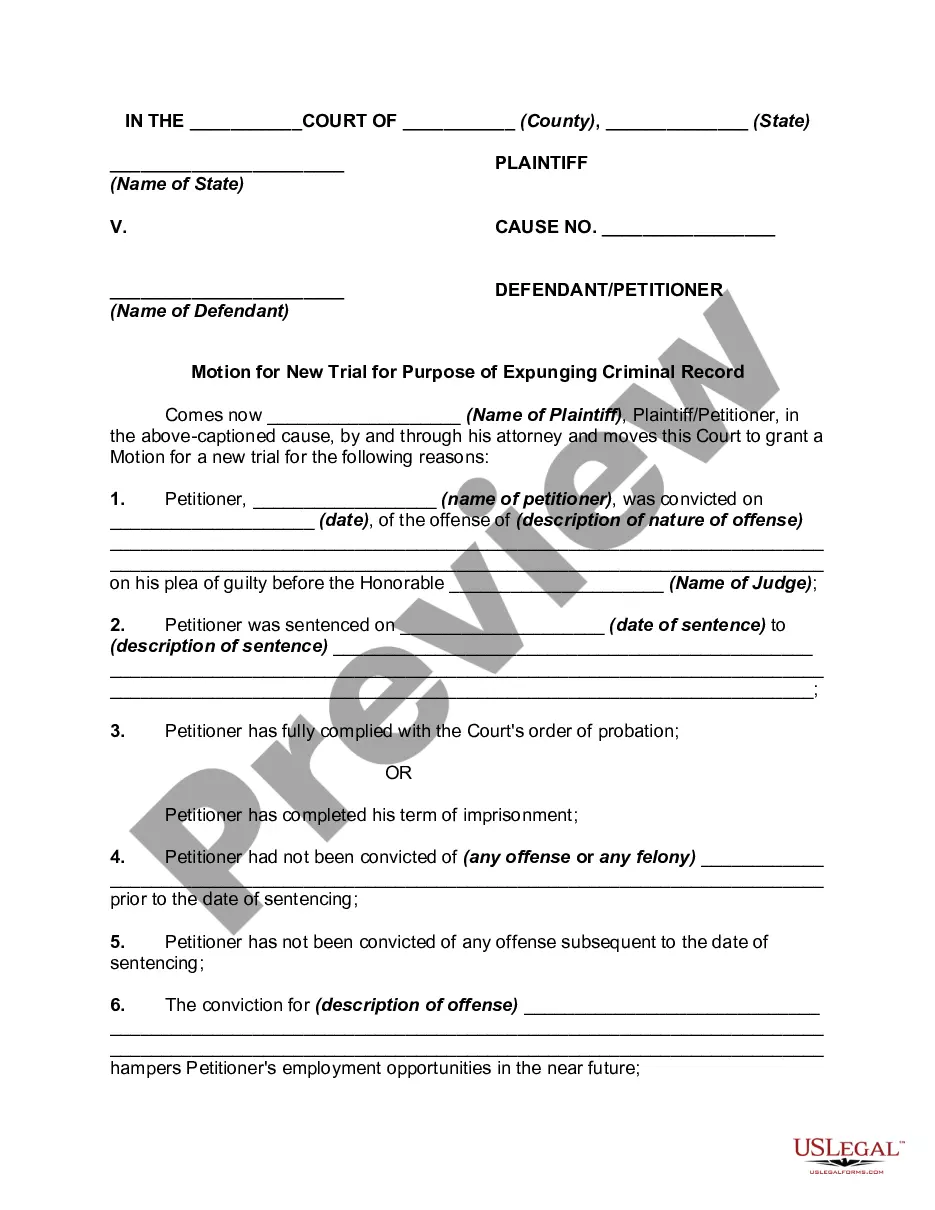
Delaware Comprehensive Special Tax Notice Regarding Plan Payments
Description
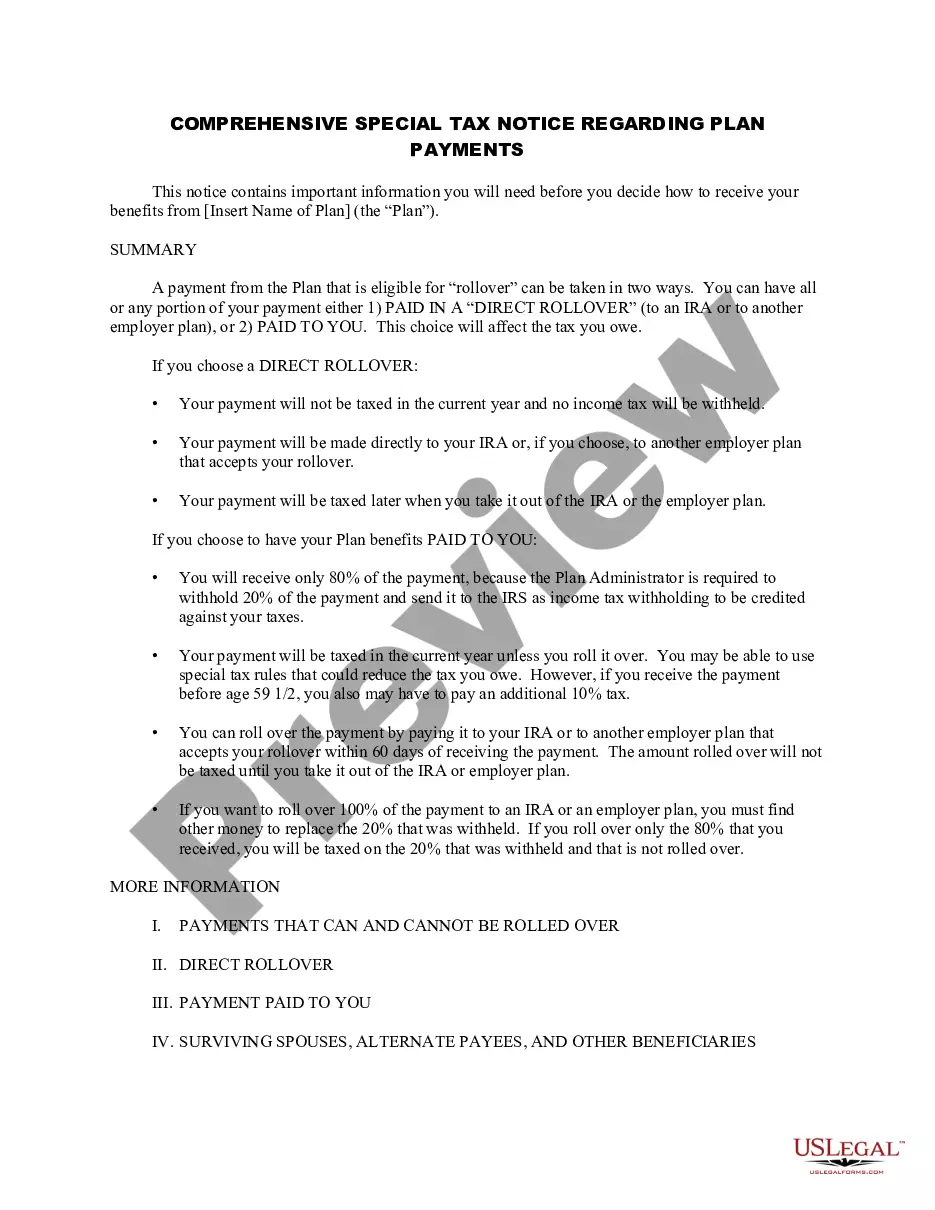
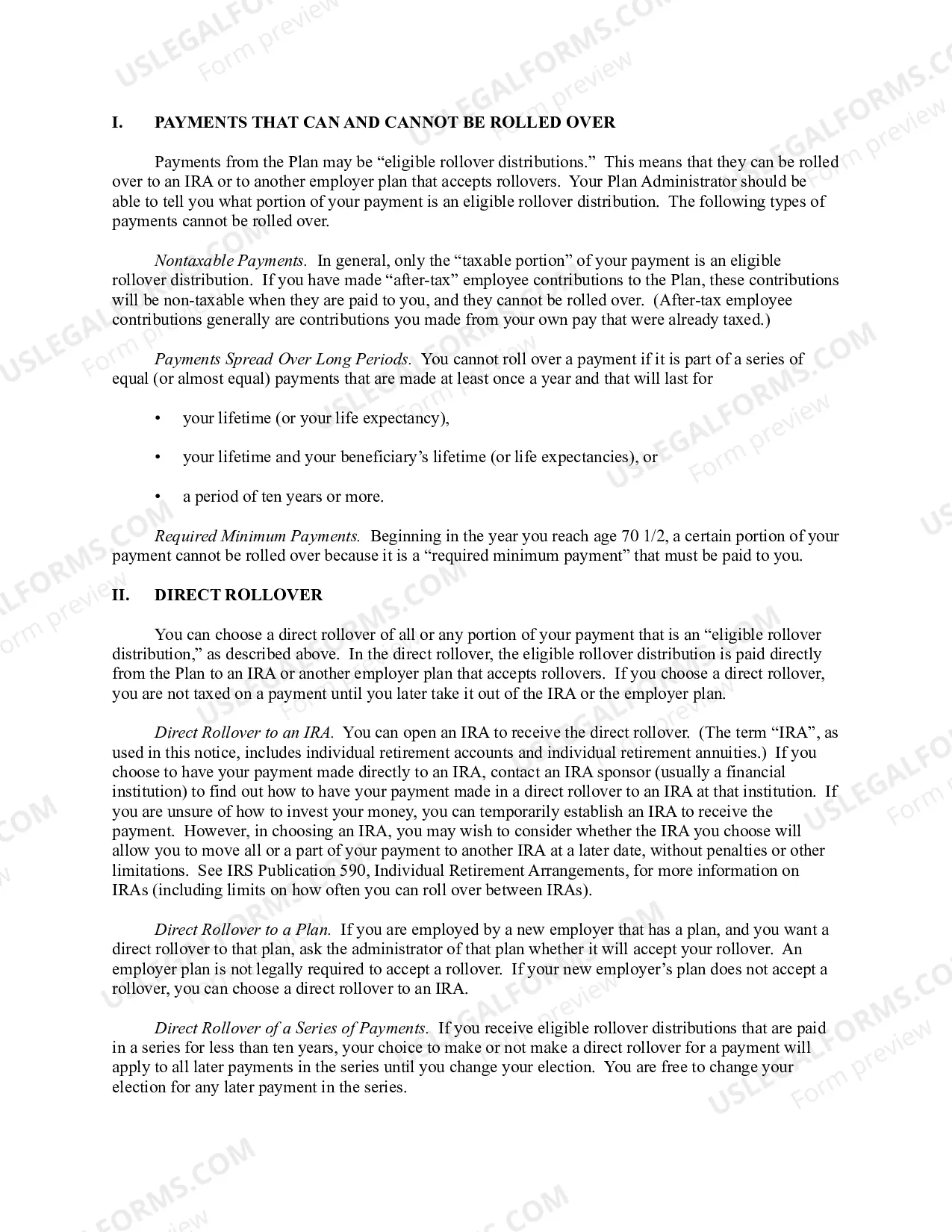
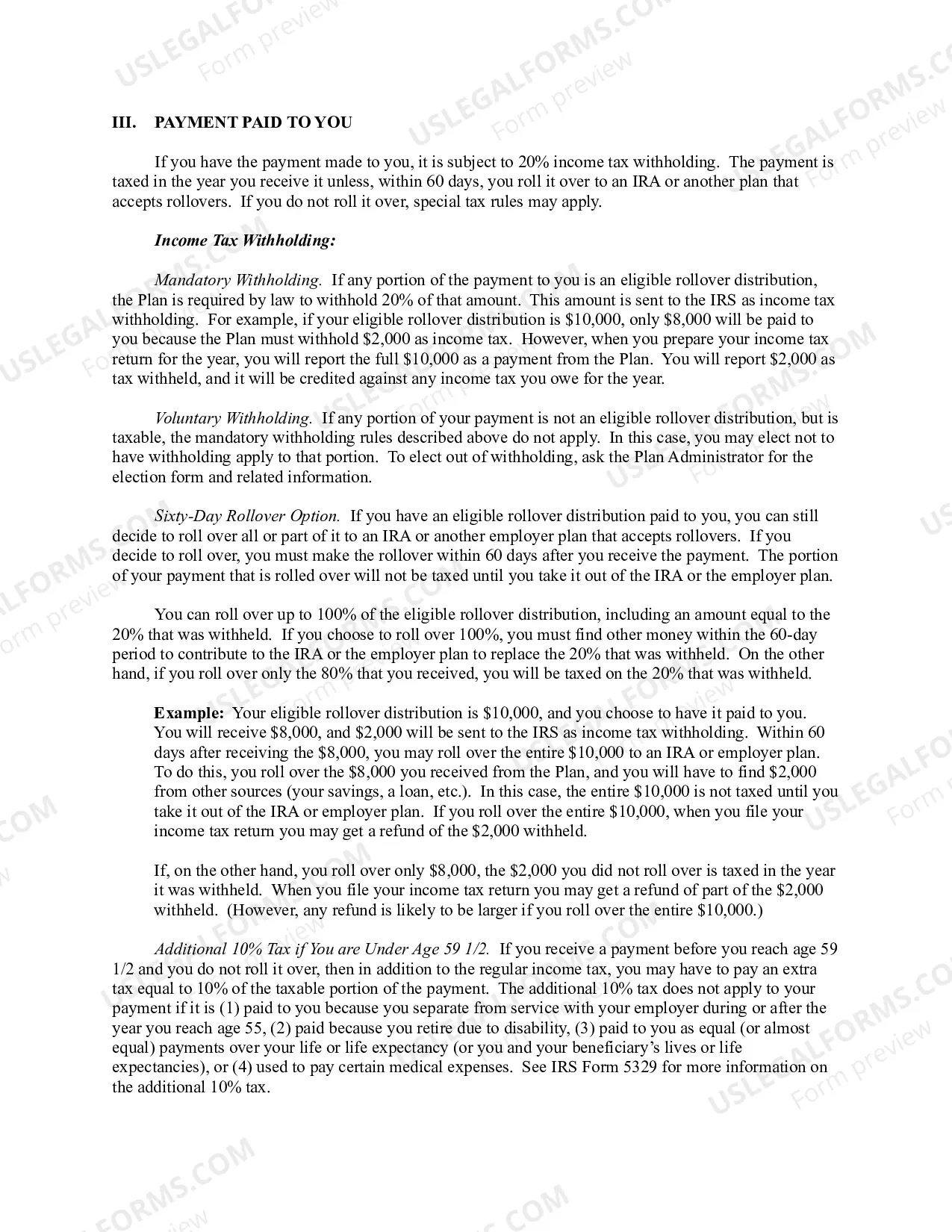



How to fill out Comprehensive Special Tax Notice Regarding Plan Payments?
Are you in a situation where you will require documents for either business or personal purposes almost every day.
There are numerous legal document templates accessible online, but finding ones you can rely on is challenging.
US Legal Forms offers thousands of document templates, such as the Delaware Comprehensive Special Tax Notice Regarding Plan Payments, tailored to comply with state and federal requirements.
If you locate the correct document, click on Acquire now.
Choose the pricing plan you prefer, fill in the necessary information to create your account, and finalize the purchase using your PayPal or credit card.
- If you are already familiar with the US Legal Forms website and possess an account, simply Log In.
- After that, you can download the Delaware Comprehensive Special Tax Notice Regarding Plan Payments template.
- If you do not have an account and wish to start using US Legal Forms, follow these steps.
- Find the document you need and ensure it is for your correct city/state.
- Utilize the Preview button to review the form.
- Examine the details to ensure you have selected the correct document.
- If the document isn't what you're looking for, use the Lookup field to find the form that meets your needs.
Form popularity
FAQ
As long as you do not withdraw your investment gains and keep them in the annuity, they are not taxed. A variable annuity is linked to market performance. If you do not withdraw your earnings from the investments in the annuity, they are tax-deferred until you withdraw them.
What is the General Rule? The General Rule is one of the two methods used to figure the tax-free part of each annuity payment based on the ratio of your investment in the contract to the total expected return. The other method is the Simplified Method, which is discussed in Pub. 575, Pension and Annuity Income.
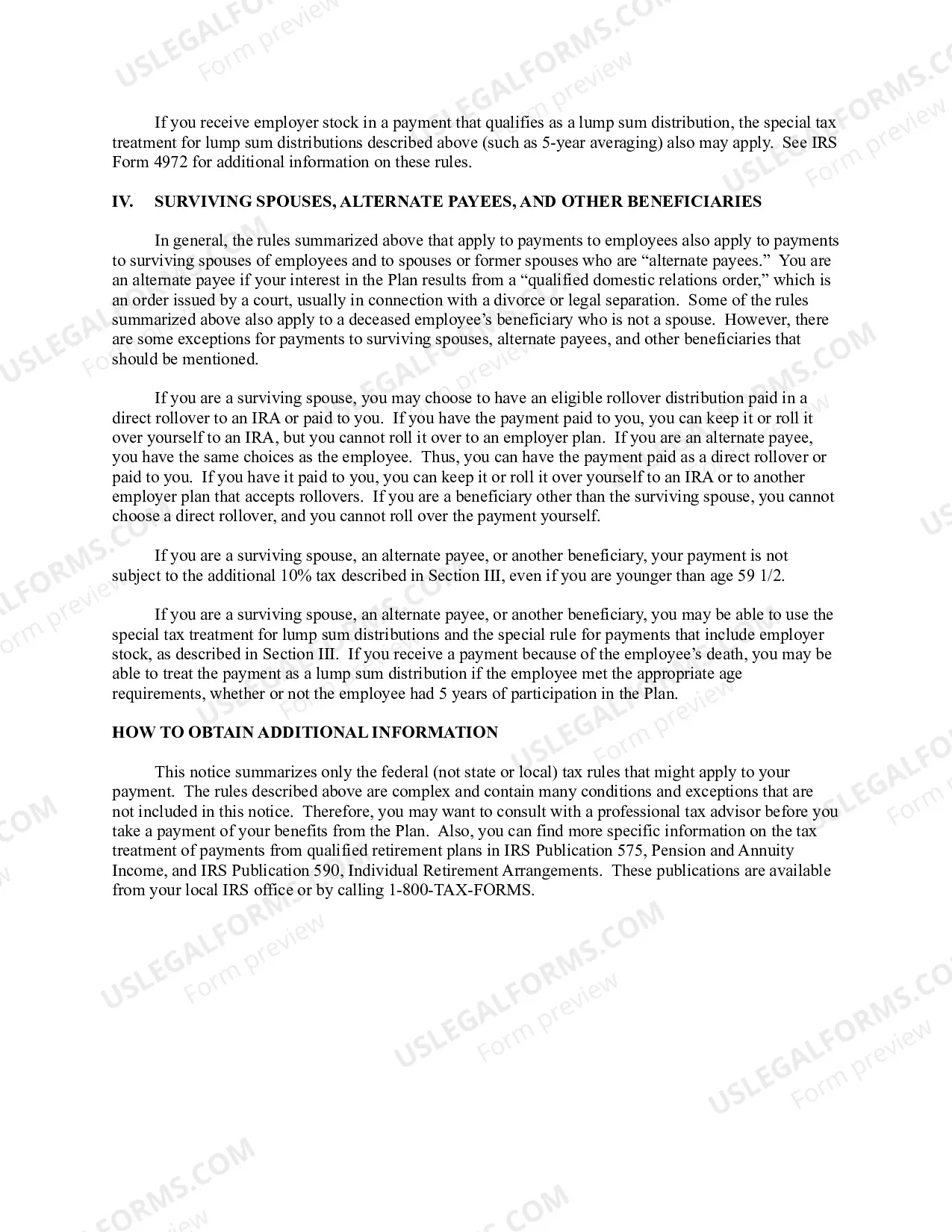
Under the special rule, the net unrealized appreciation on the stock included in the earnings in the payment will not be taxed when distributed to you from the Plan and will be taxed at capital gain rates when you sell the stock.
IRS Publication 575 is a document published by the Internal Revenue Service (IRS) that provides information on how to treat distributions from pensions and annuities, and how to report income from these distributions on a tax return. It also outlines how to roll distributions into another retirement plan.
Your rollover is reported as a distribution, even when it is rolled over into another eligible retirement account. Report your gross distribution on line 15a of IRS Form 1040. This amount is shown in Box 1 of the 1099-R. Report any taxable portion of your gross distribution.
The 402(f) notice provides important information about rolling over an eligible rollover distribution (i.e., generally, any lump sum payment or series of installment payments over a period of less than 10 years) to another eligible retirement plan, or individual retirement account (IRA).
You are receiving this notice because all or a portion of a payment you are receiving from the Plan is eligible to be rolled over to either an IRA or an employer plan; or if your payment is from a Designated Roth Account to a Roth IRA or Designated Roth Account in an employer plan.
This notice is intended to help you decide whether to do such a rollover. This notice describes the rollover rules that apply to payments from the Plan that are not from a designated Roth account (a type of account with special tax rules in some employer plans).