Delaware Merchandise License Agreement
Description
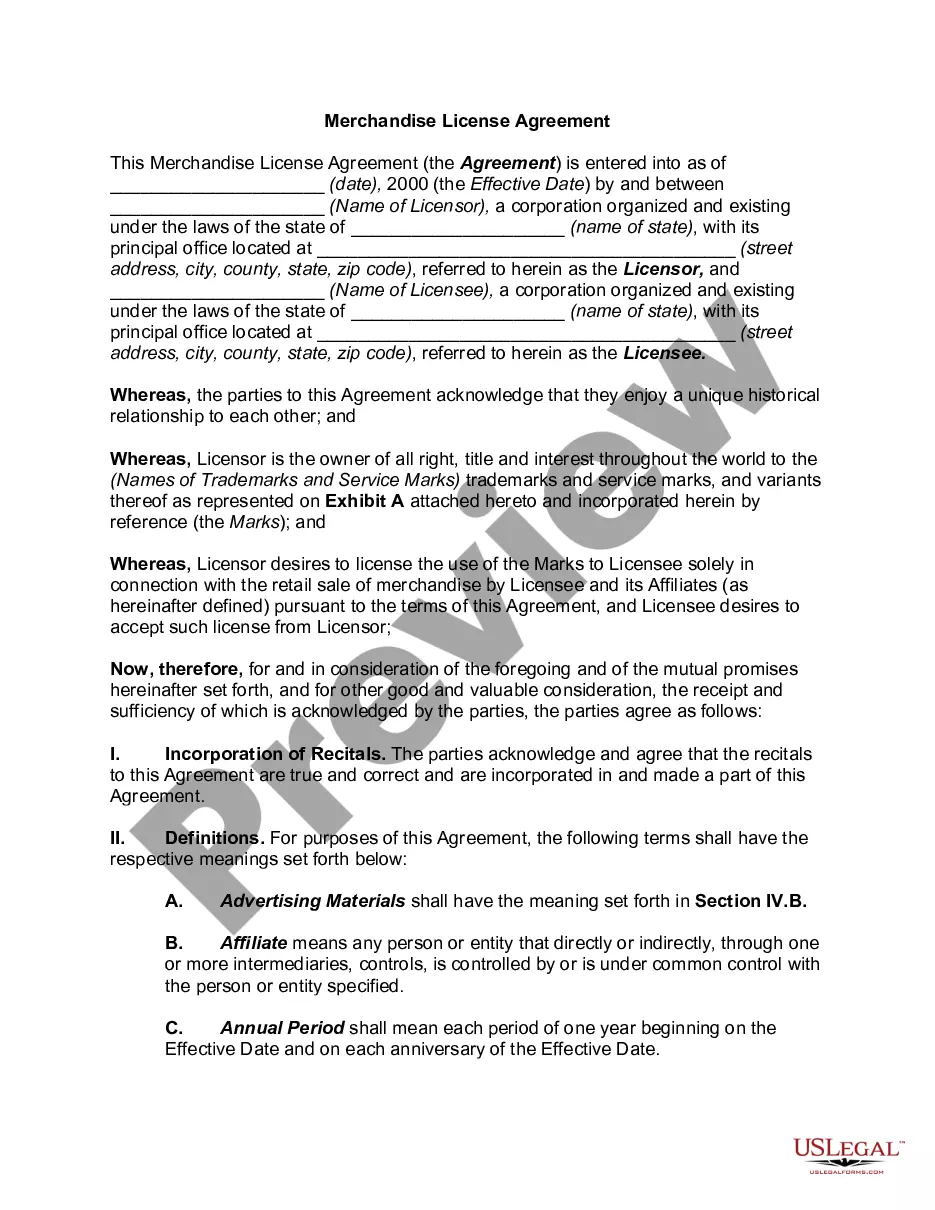
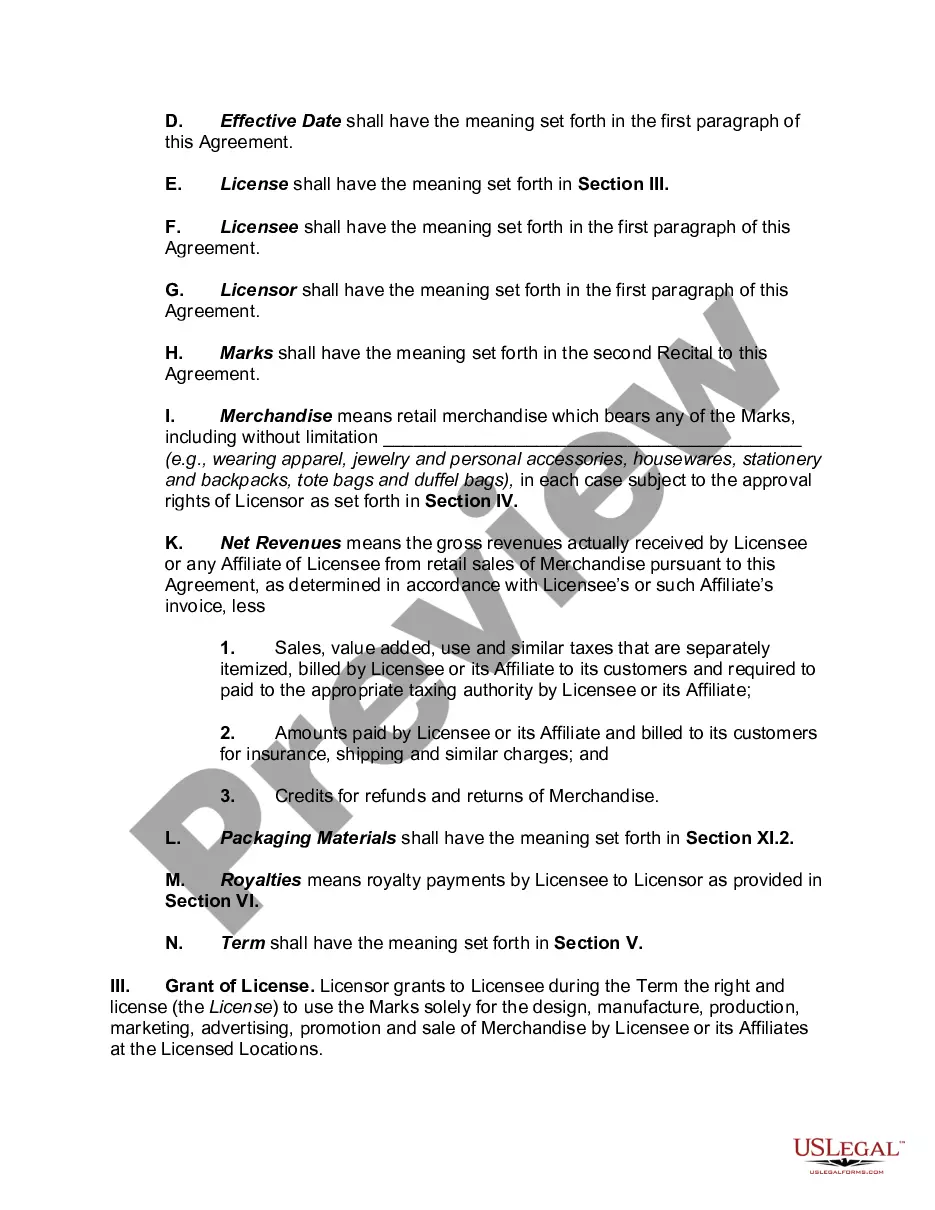
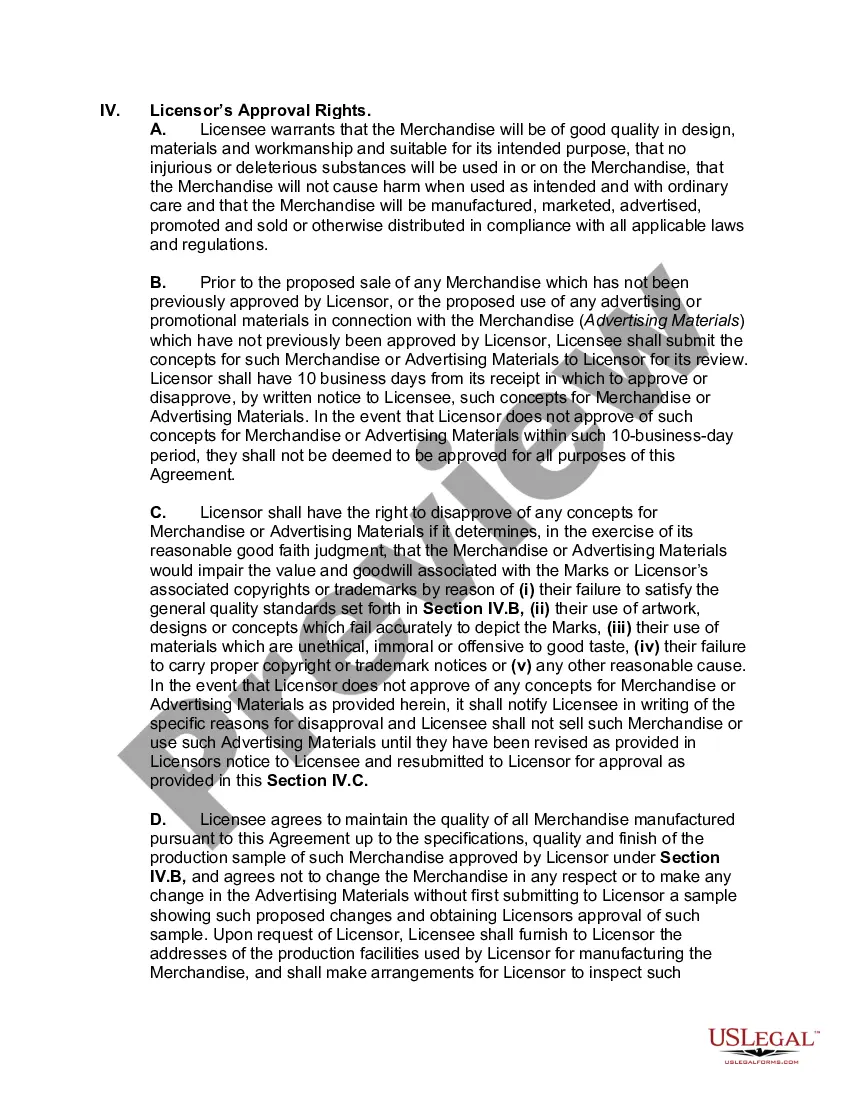
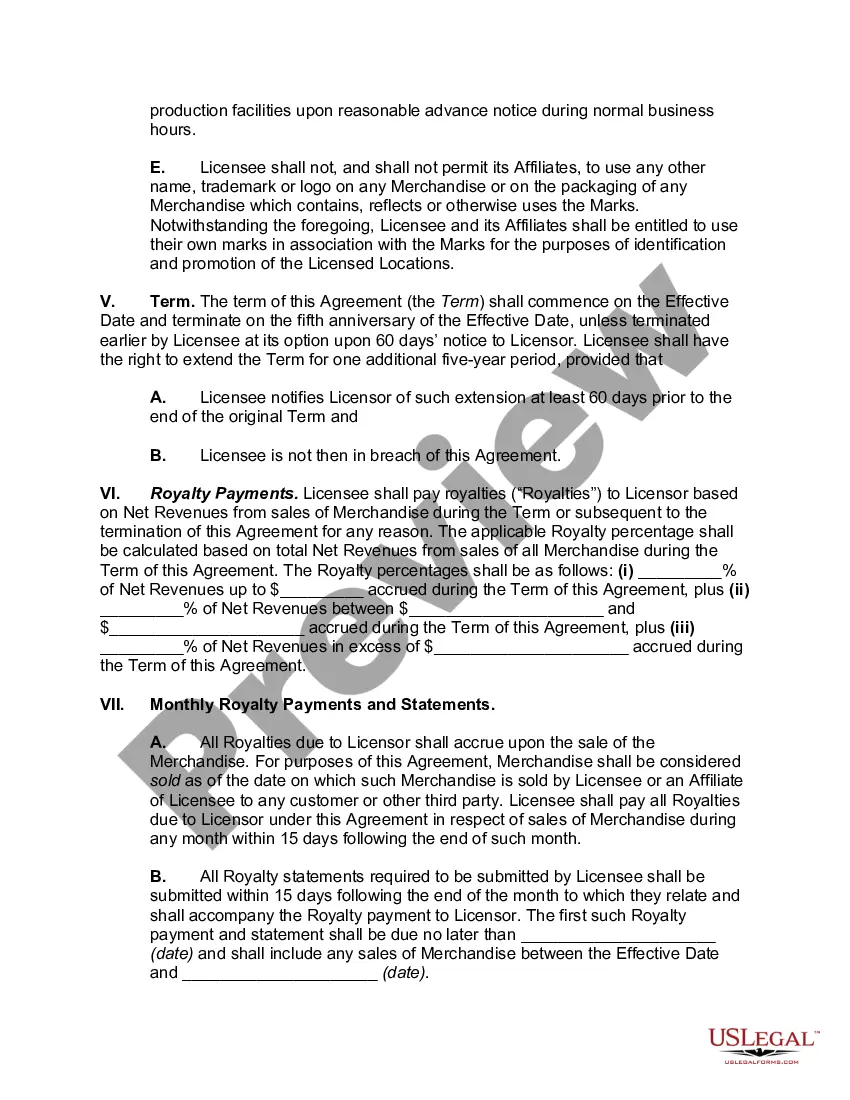
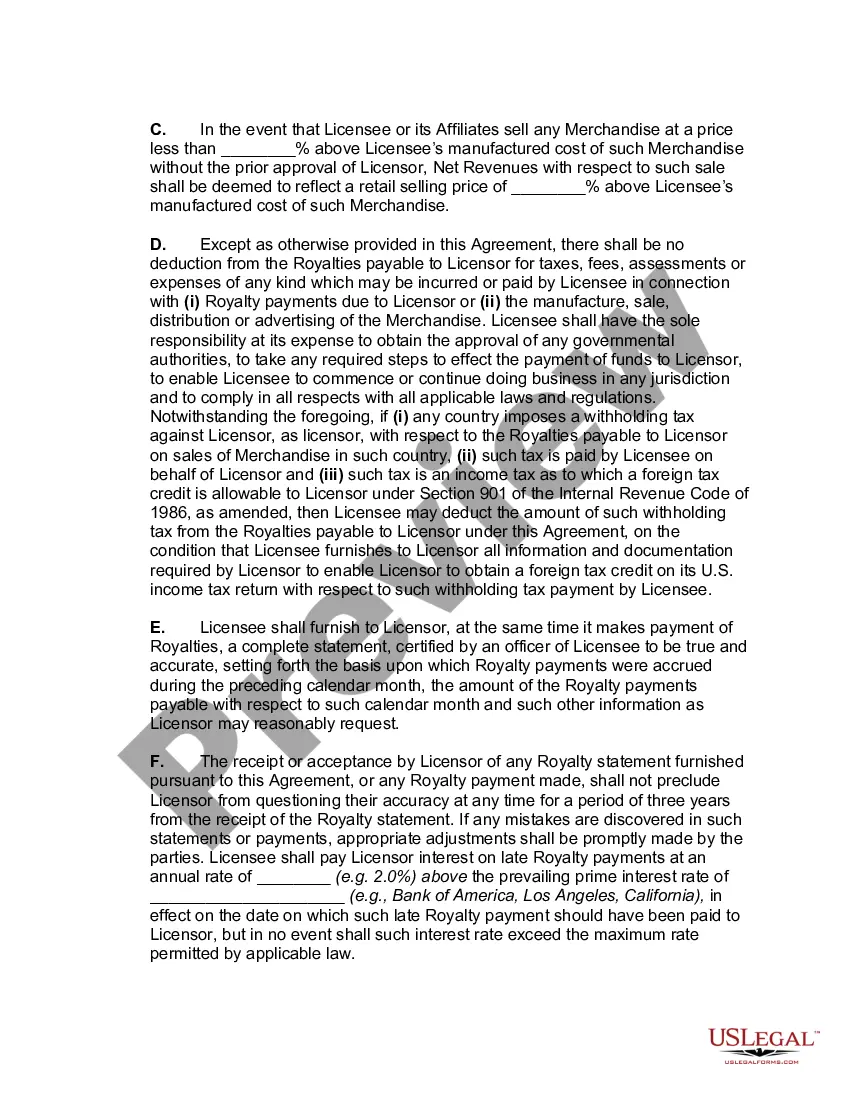
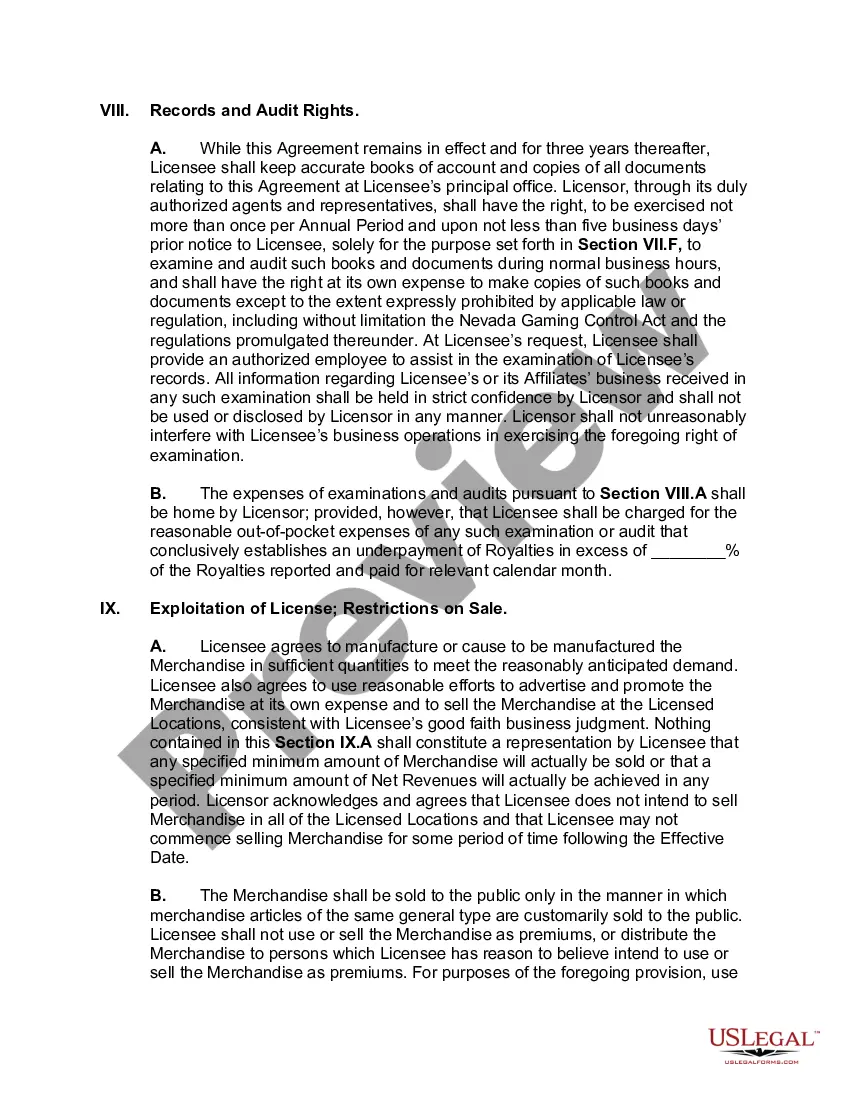
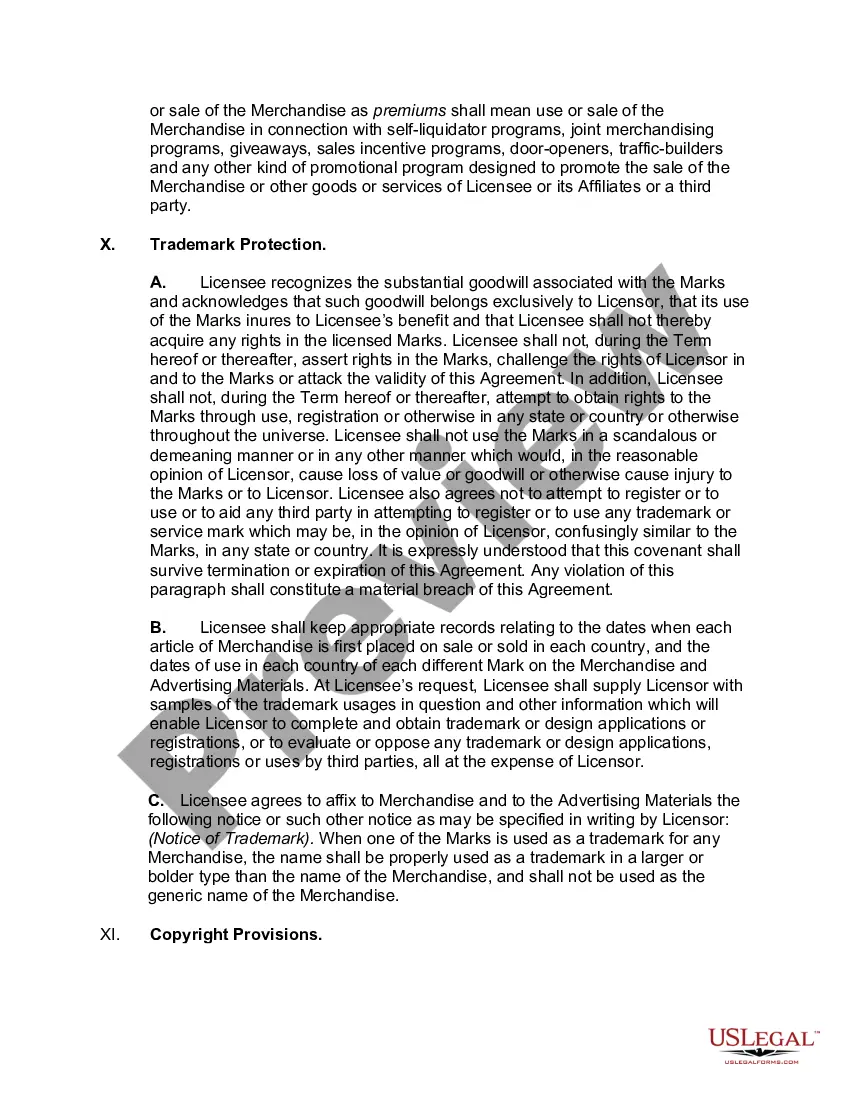


How to fill out Merchandise License Agreement?
Have you ever been in a location where you require documents for both business or personal purposes almost daily.
There are numerous certified document templates accessible online, but finding versions you can trust is challenging.
US Legal Forms offers a vast array of form templates, such as the Delaware Merchandise License Agreement, which are created to comply with state and federal requirements.
Once you find the right form, simply click Buy now.
Select the pricing plan you prefer, provide the necessary information to create your account, and complete the purchase using your PayPal or credit card.
- If you are already familiar with the US Legal Forms site and have an account, simply Log In.
- Then, you can download the Delaware Merchandise License Agreement template.
- If you do not have an account and wish to begin using US Legal Forms, follow these steps.
- Locate the form you need and ensure it pertains to the correct city/region.
- Utilize the Review feature to inspect the document.
- Examine the description to confirm that you have selected the correct form.
- If the form does not meet your needs, use the Lookup field to find the form that matches your requirements and specifications.
Form popularity
FAQ
25% Rule for Intellectual Property Patent or trademark owners use the 25% rule as a yardstick for defining a reasonable amount of royalty payments.
First StepsIdentify the owner of the trademarked merchandise you want to sell.Identify the demographics that will pay you money for the licensed merchandise.Obtain permission from the owner of the trademark to sell the goods.More items...
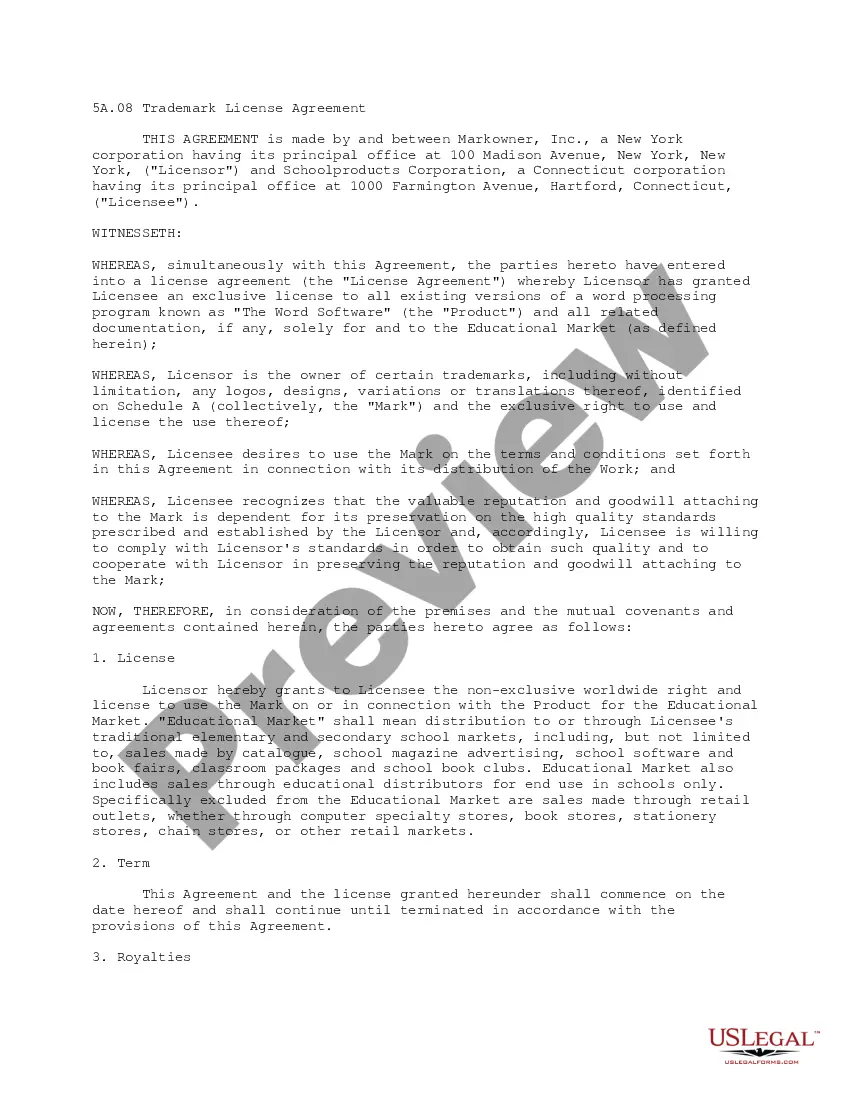
A trademark licensing agreement is a legal contract between a trademark owner and another party that have agreed to use the trademark on preapproved terms decided between the contracting parties.
Practitioners and licensing executives often refer to three basic types of voluntary licenses: non-exclusive, sole, and exclusive. A non-exclusive licence allows the licensor to retain the right to use the licensed property and the right to grant additional licenses to third parties.
Royalty rates in fashion are usually set as percentages of the revenue generated by your intellectual property. This can be gross or net revenue. A royalty percentage allows both parties to receive a fair share based on the current value generation and profitability of the intellectual property.
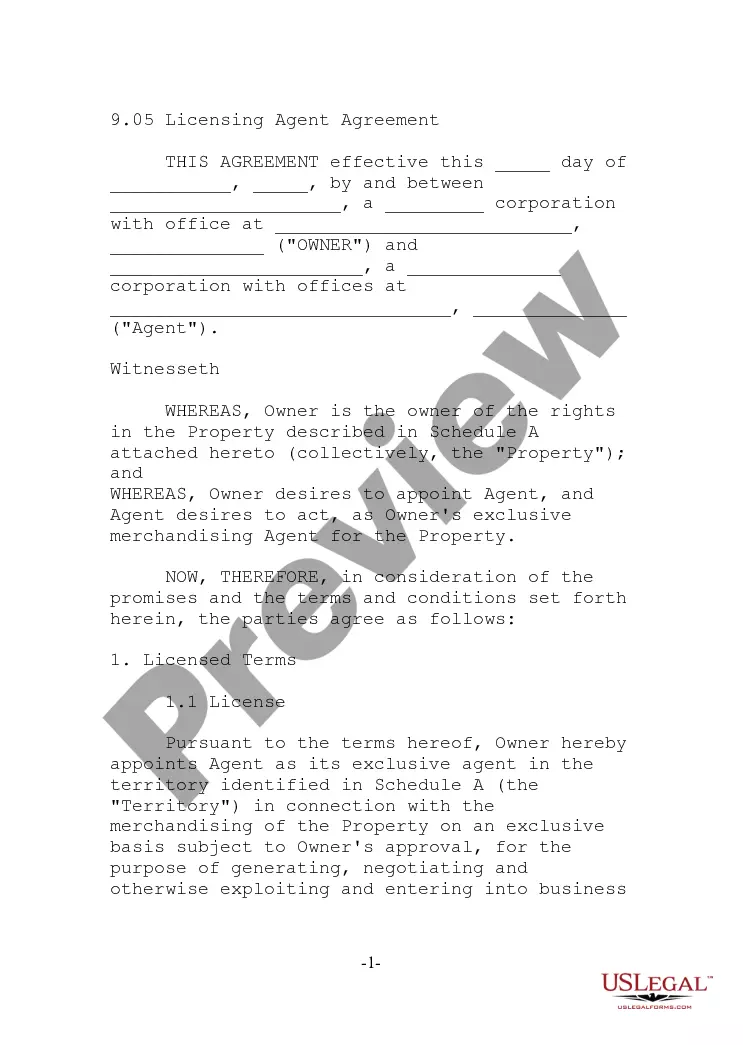
A licensing agreement allows one party (the licensee) to use and/or earn revenue from the property of the owner (the licensor). Licensing agreements generate revenues, called royalties, earned by a company for allowing its copyrighted or patented material to be used by another company.
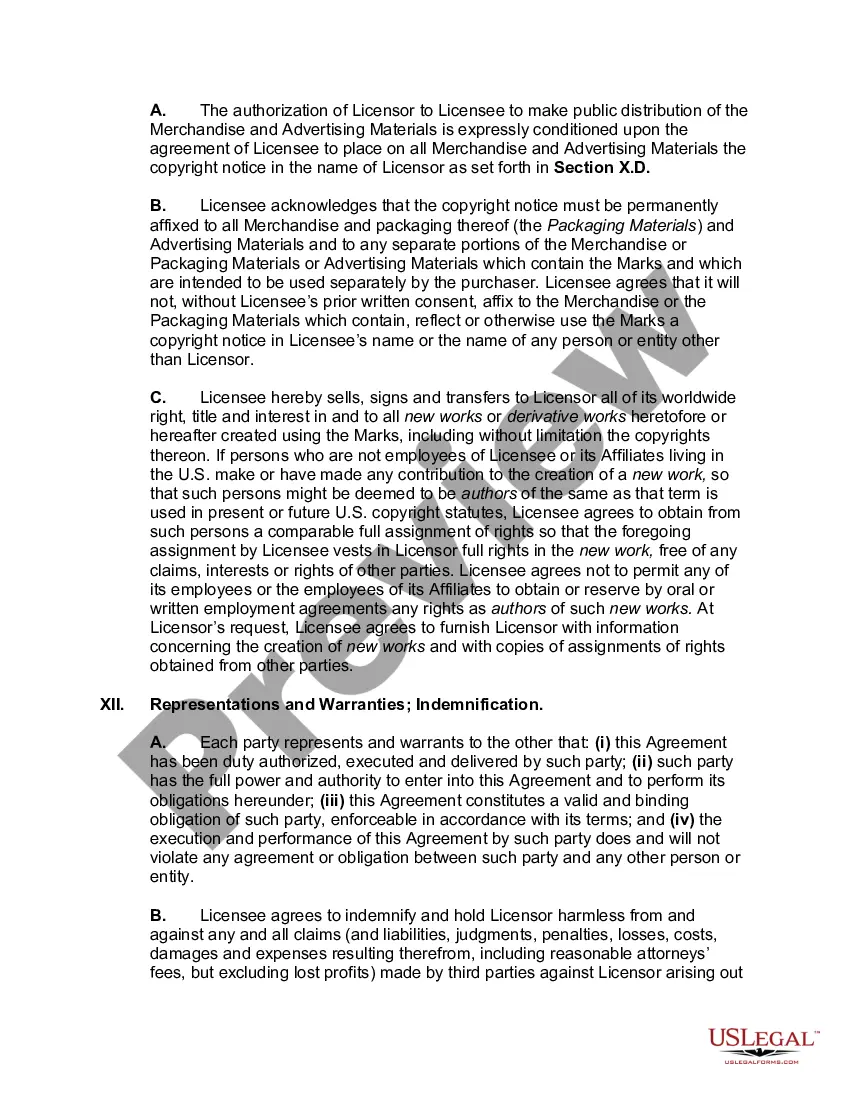
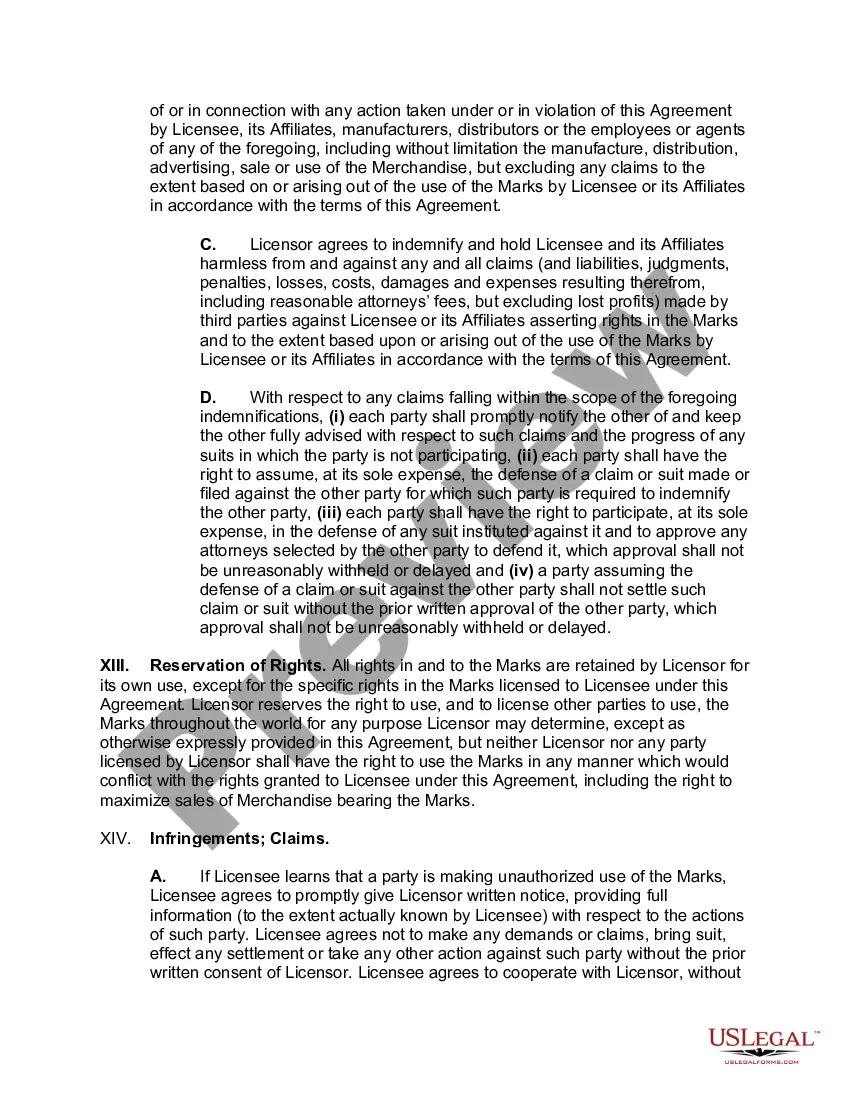
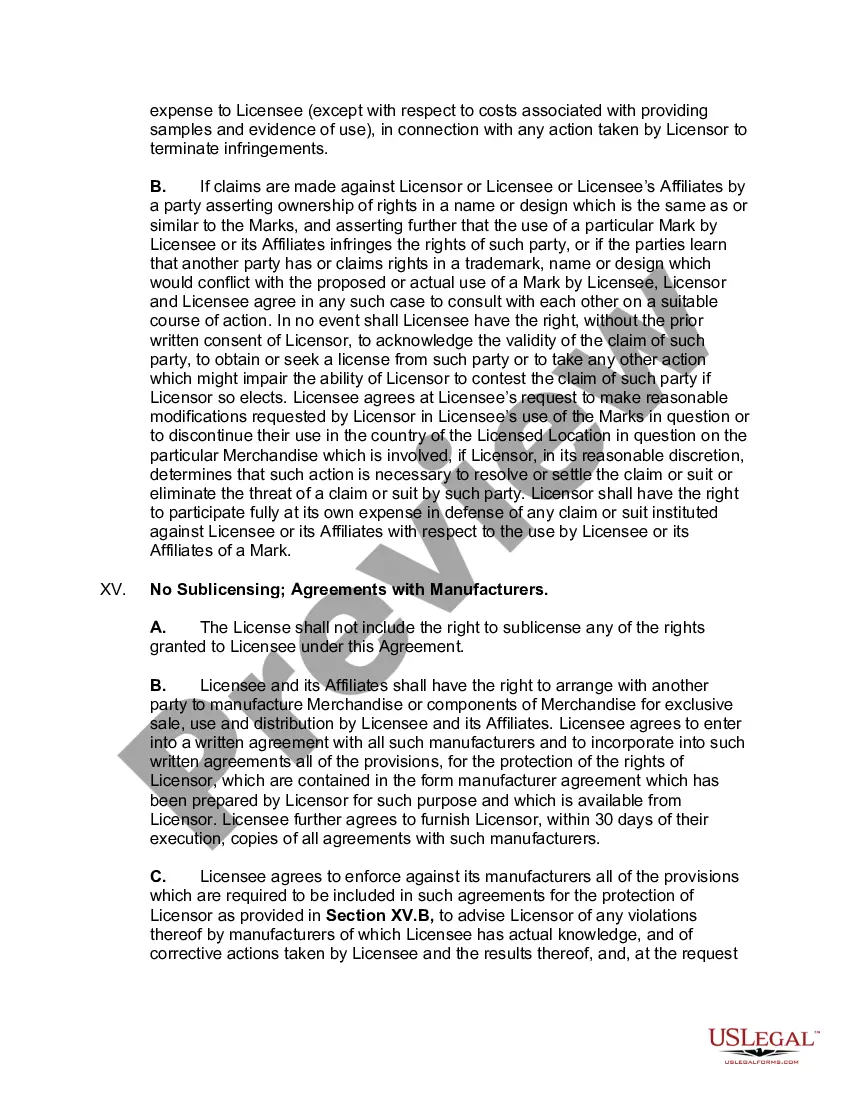
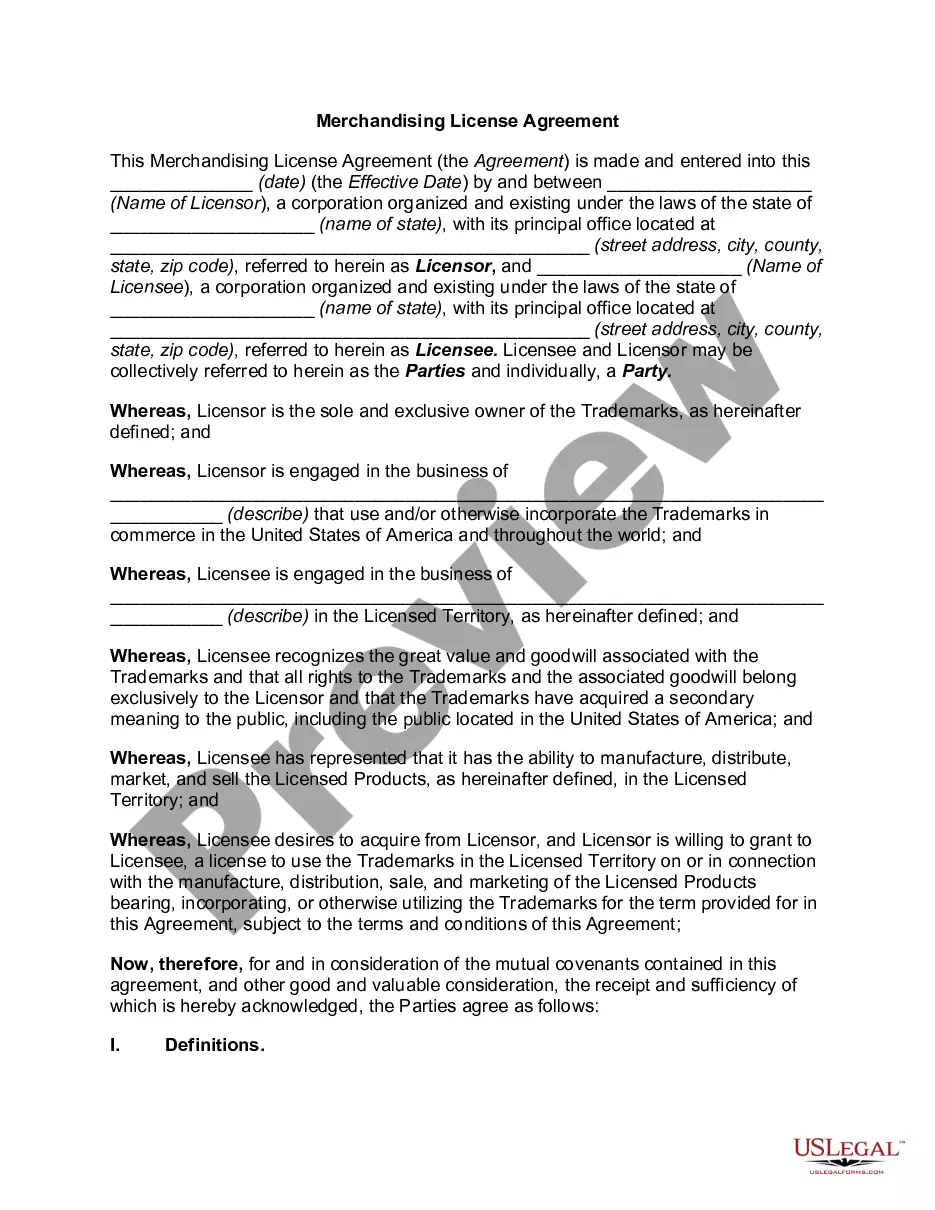
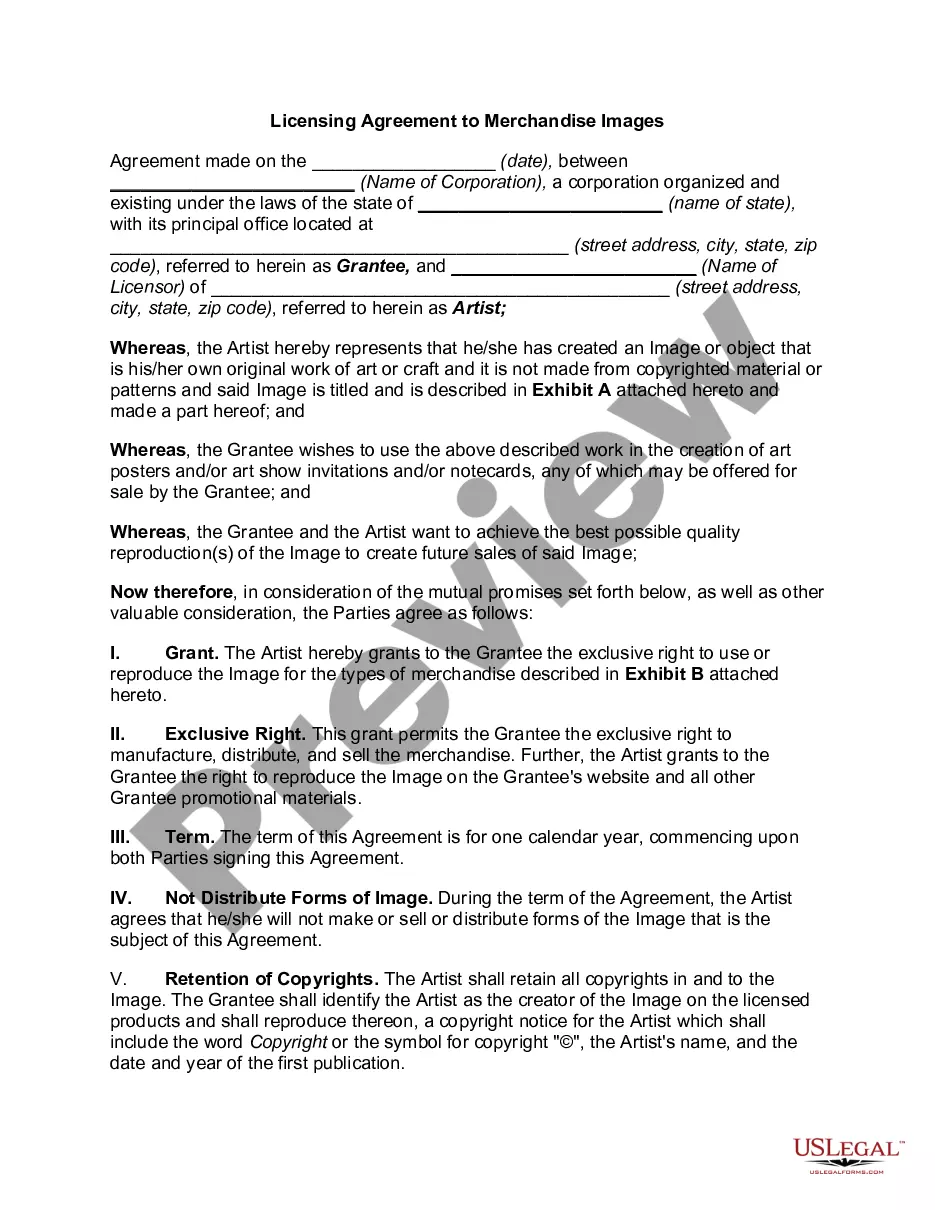
A merchandise license agreement describes the terms through which the owner of intellectual property, notably in the form of a trademark, service mark or copyright, grants a party, called the licensee, the right to use the property for distribution, marketing, and sale.
A licensing agreement allows one party (the licensee) to use and/or earn revenue from the property of the owner (the licensor). Licensing agreements generate revenues, called royalties, earned by a company for allowing its copyrighted or patented material to be used by another company.
In trademark licensing, a trademark owner (Licensor) grants permission to another (Licensee) to use that trademark on mutually agreed terms and conditions.
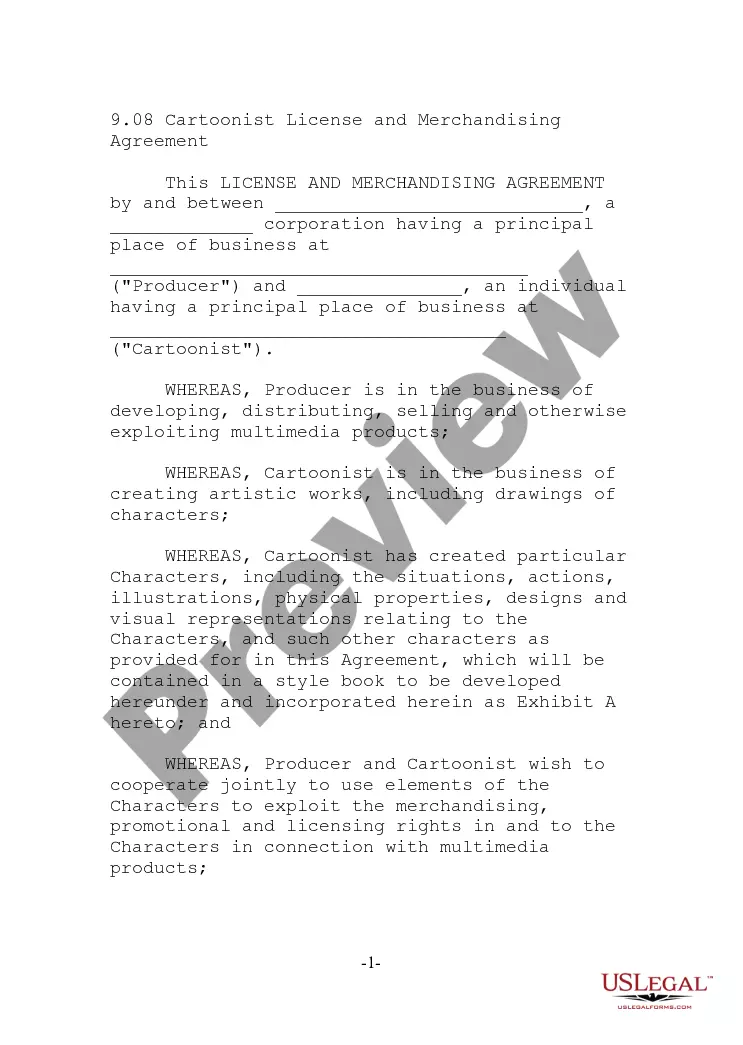
Basics of a Merchandise Licensing AgreementTypically the licensor and licensee put together the best written agreement so they can both profit. The licensor usually garners extra income and publicity, while the licensee obtains a chance to benefit from an association with the licensor's properties.