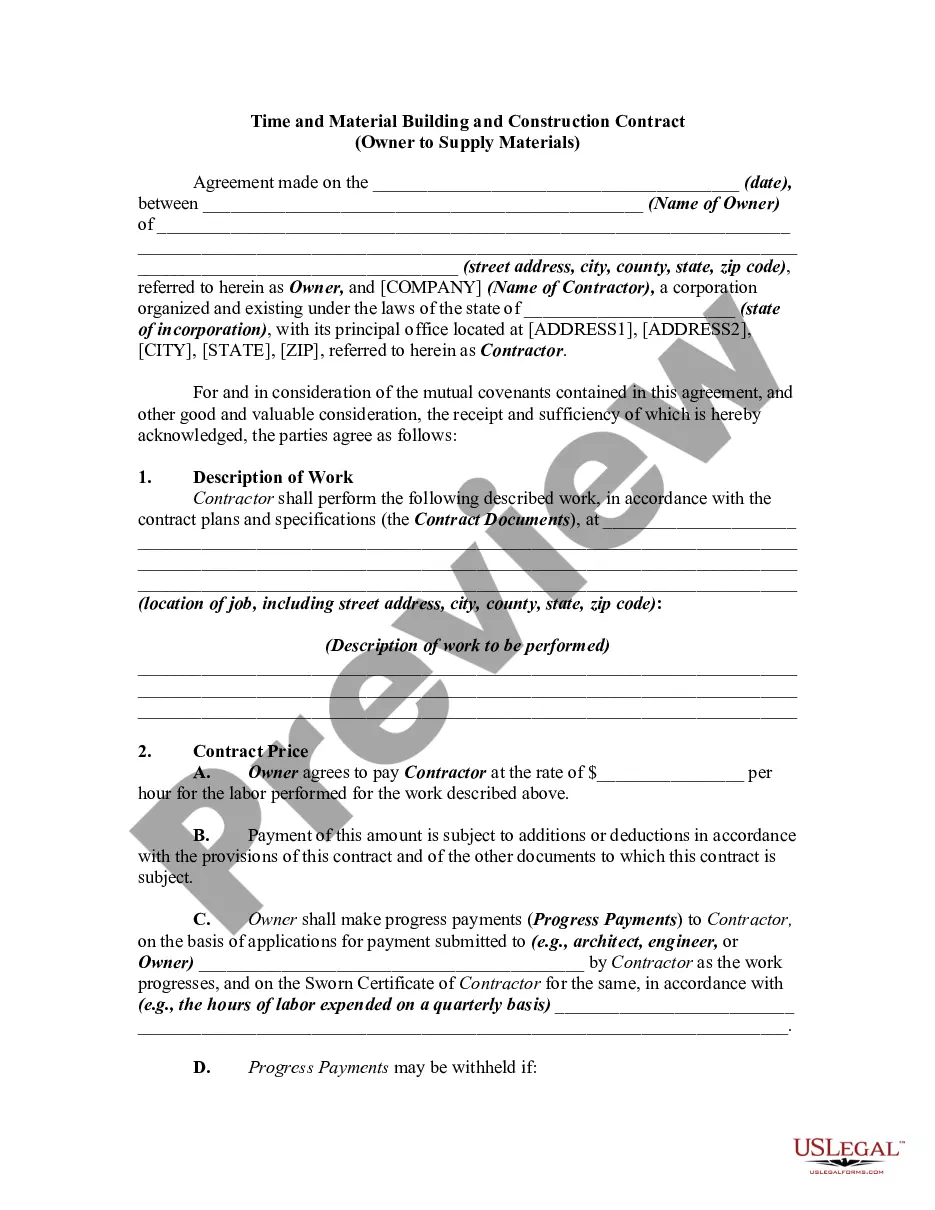
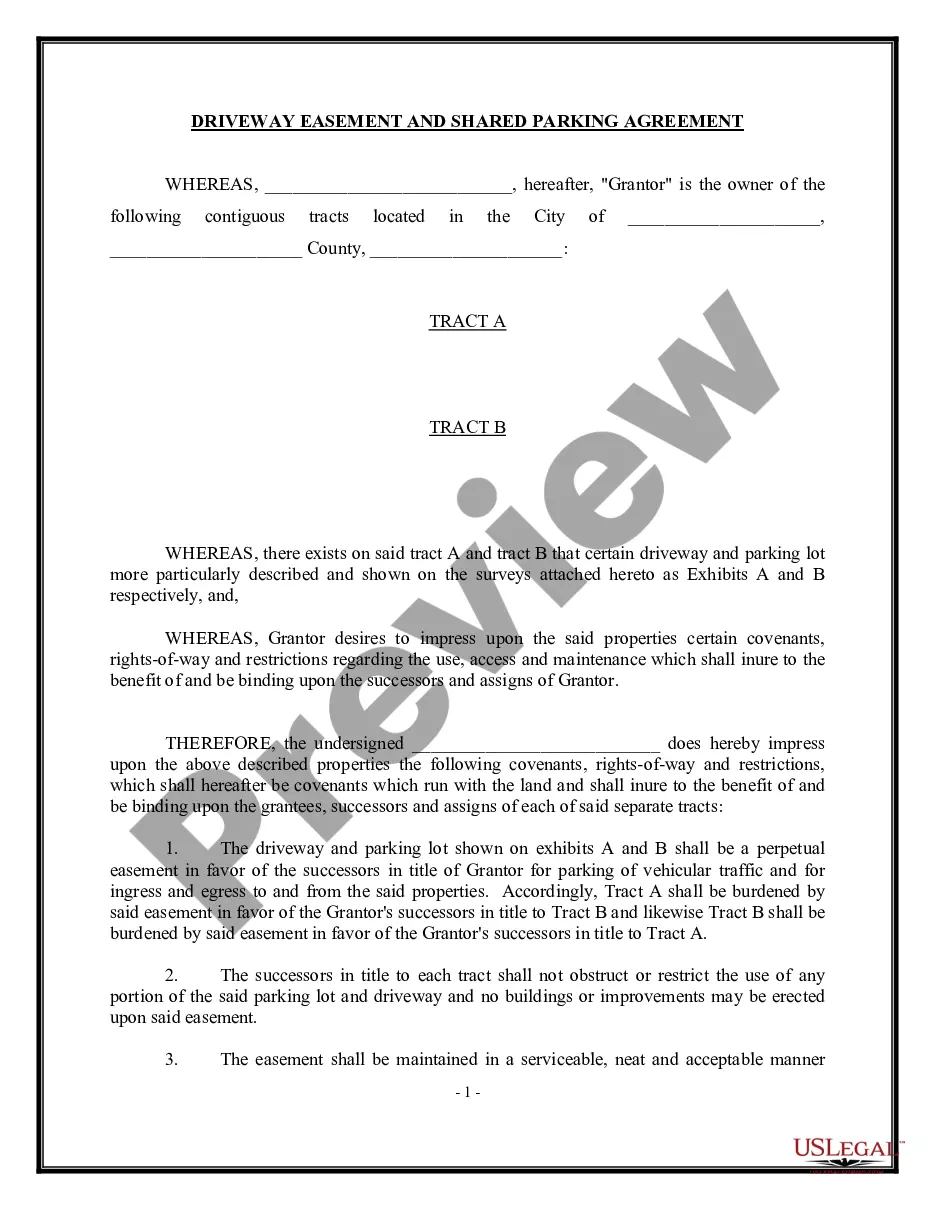
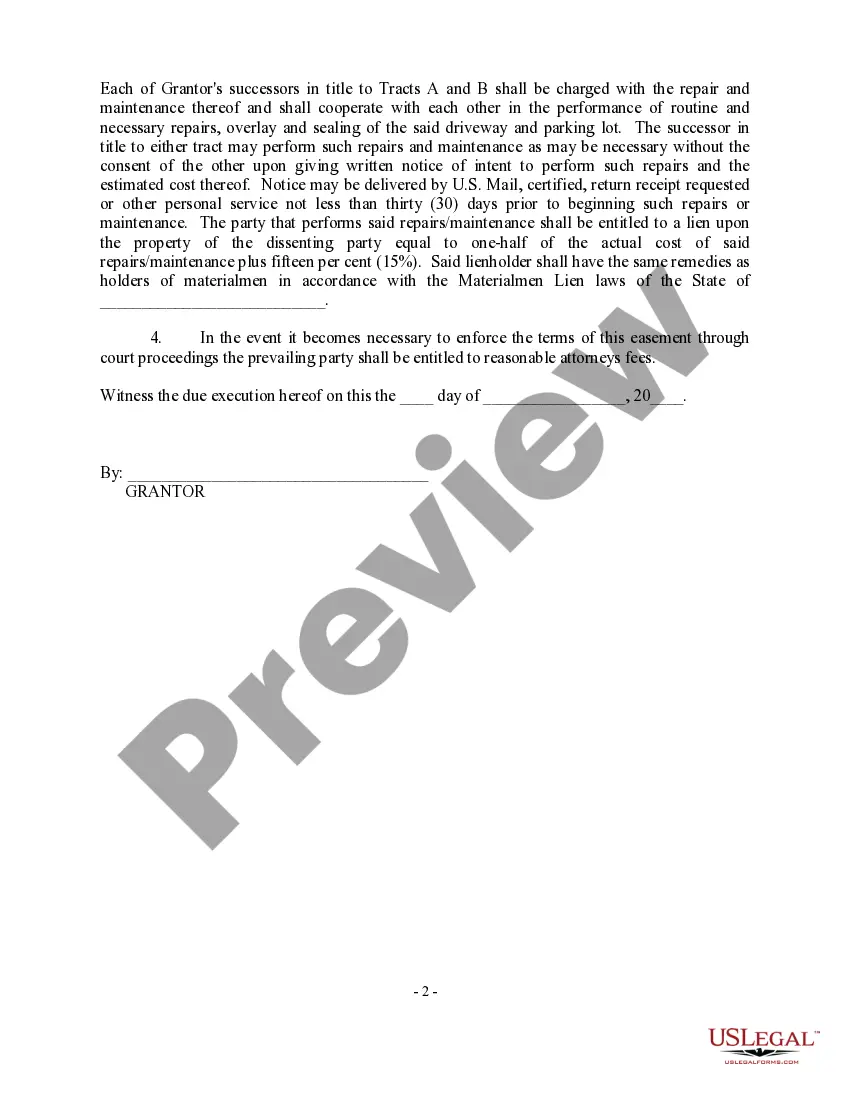
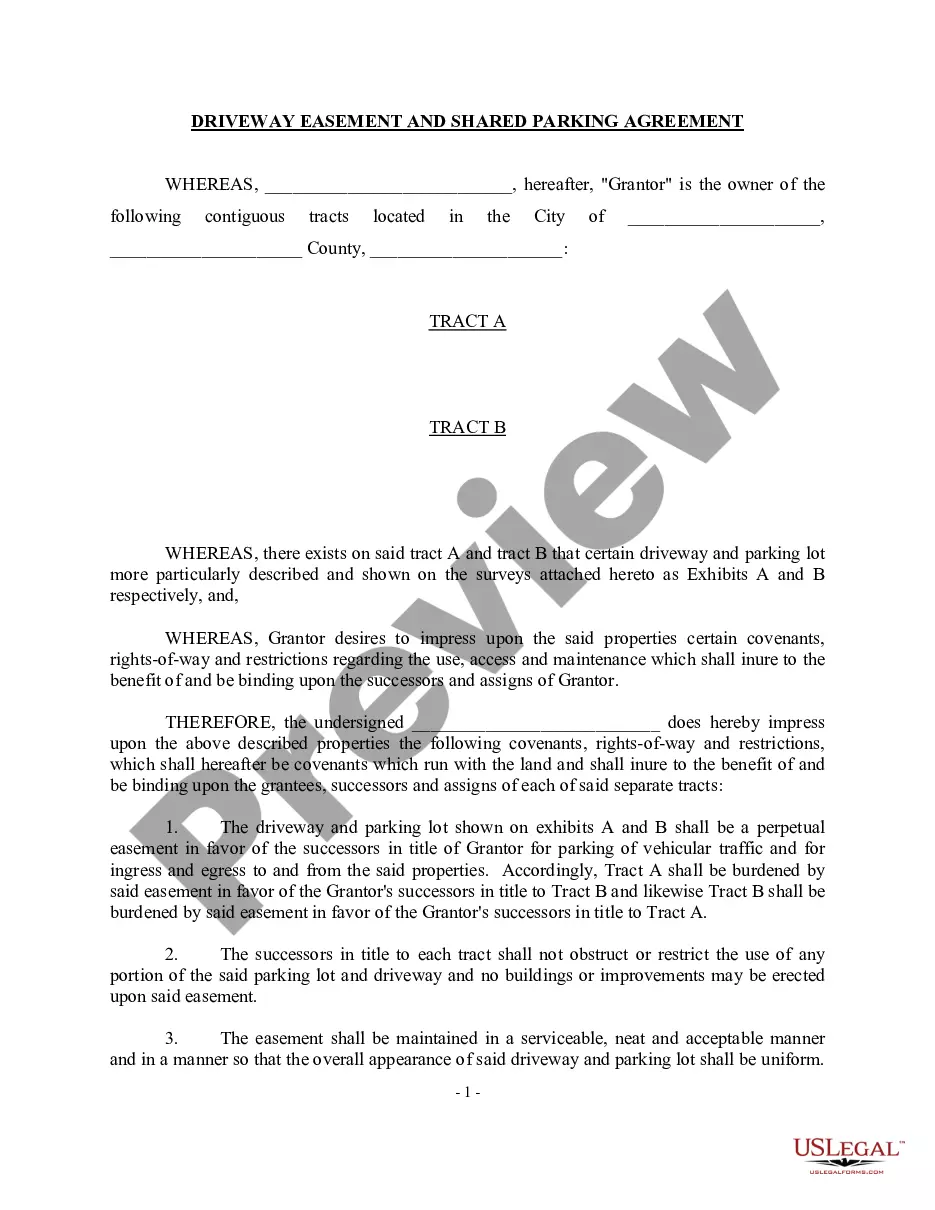
This form is a Driveway Easement and Shared Parking Agreement. The grantor conveys to the grantee certain covenants, rights-of-way, and restrictions regarding the use of a driveway and parking lot.
Delaware Easement - Shared Parking
State:
Multi-State
Control #:
US-00498
Format:
Word;
Rich Text
Instant download
Description
Free preview
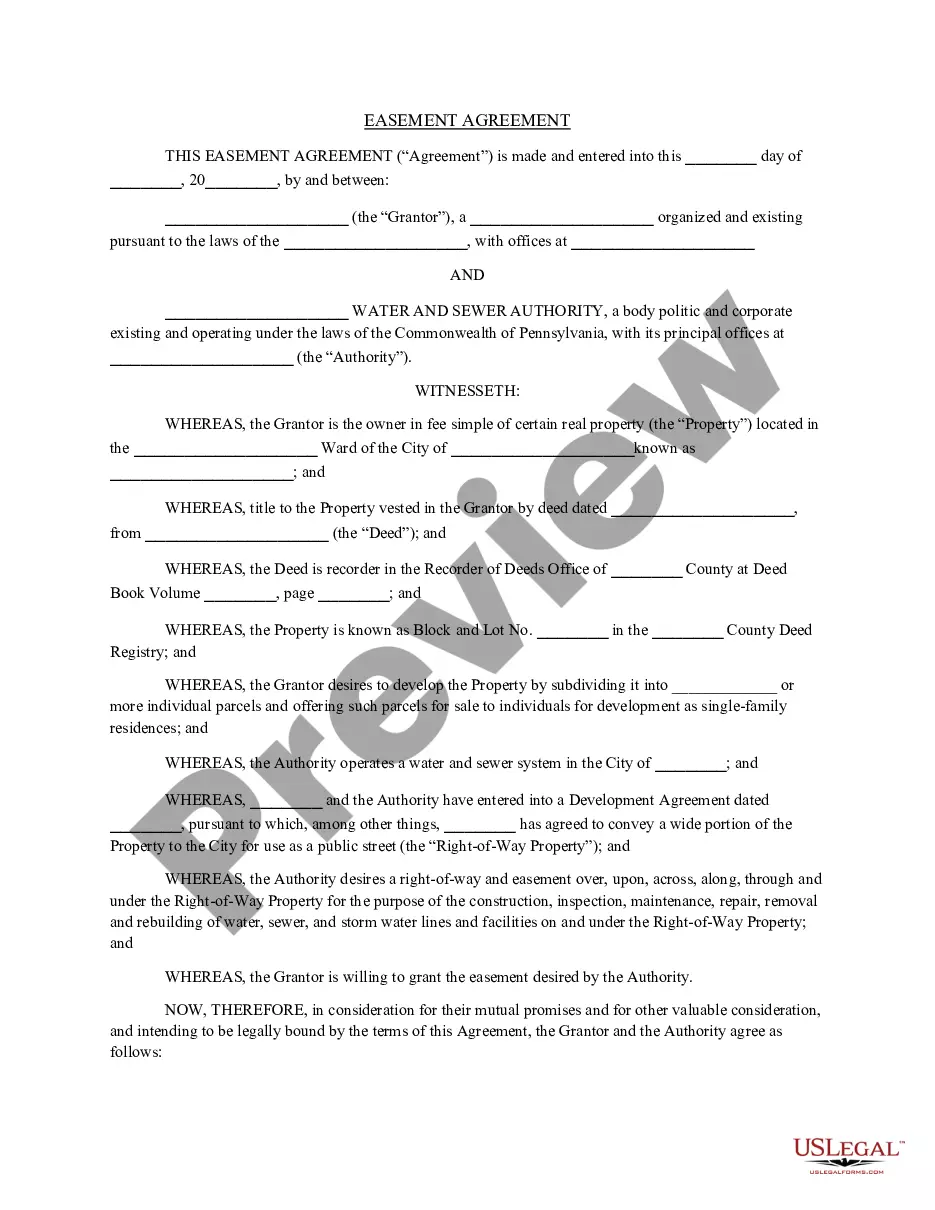
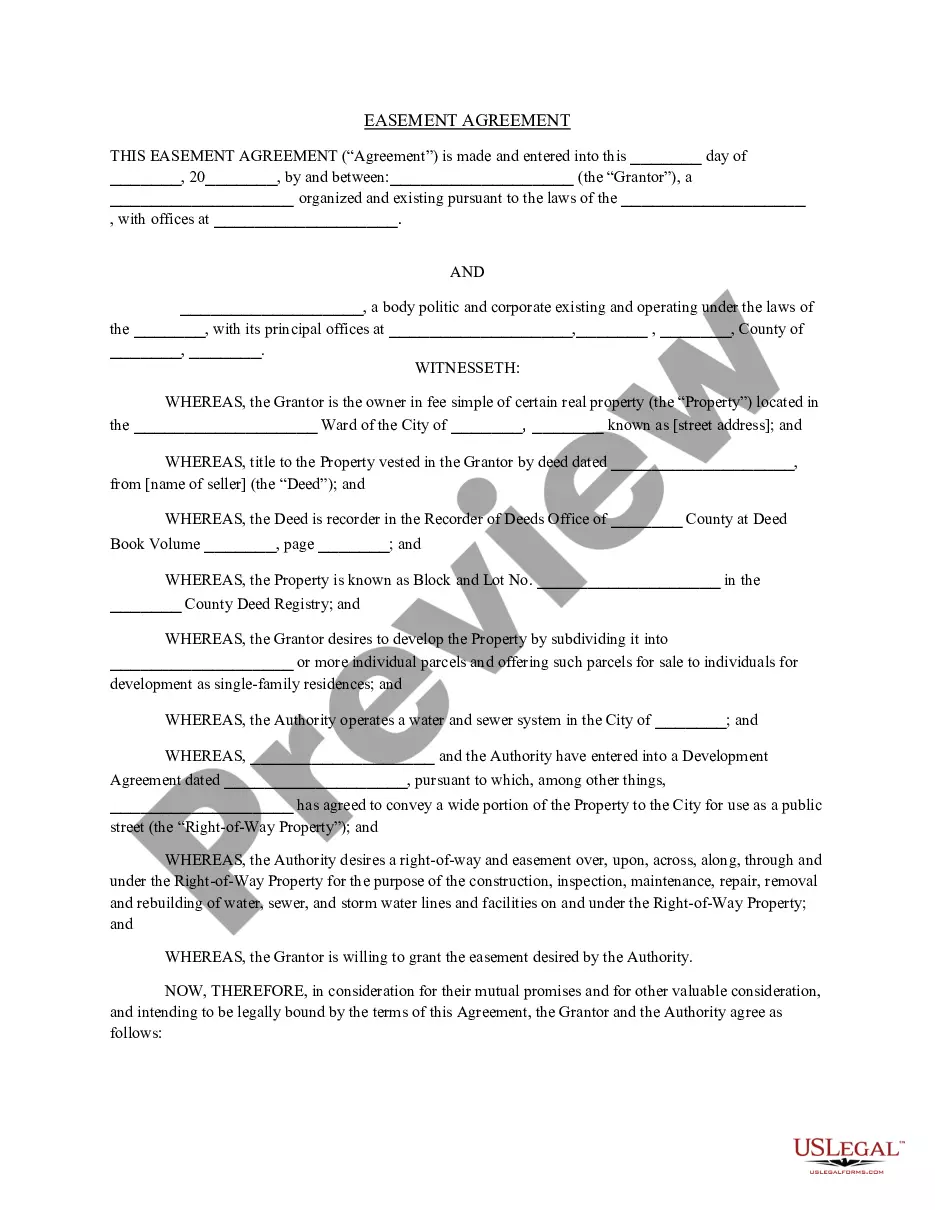
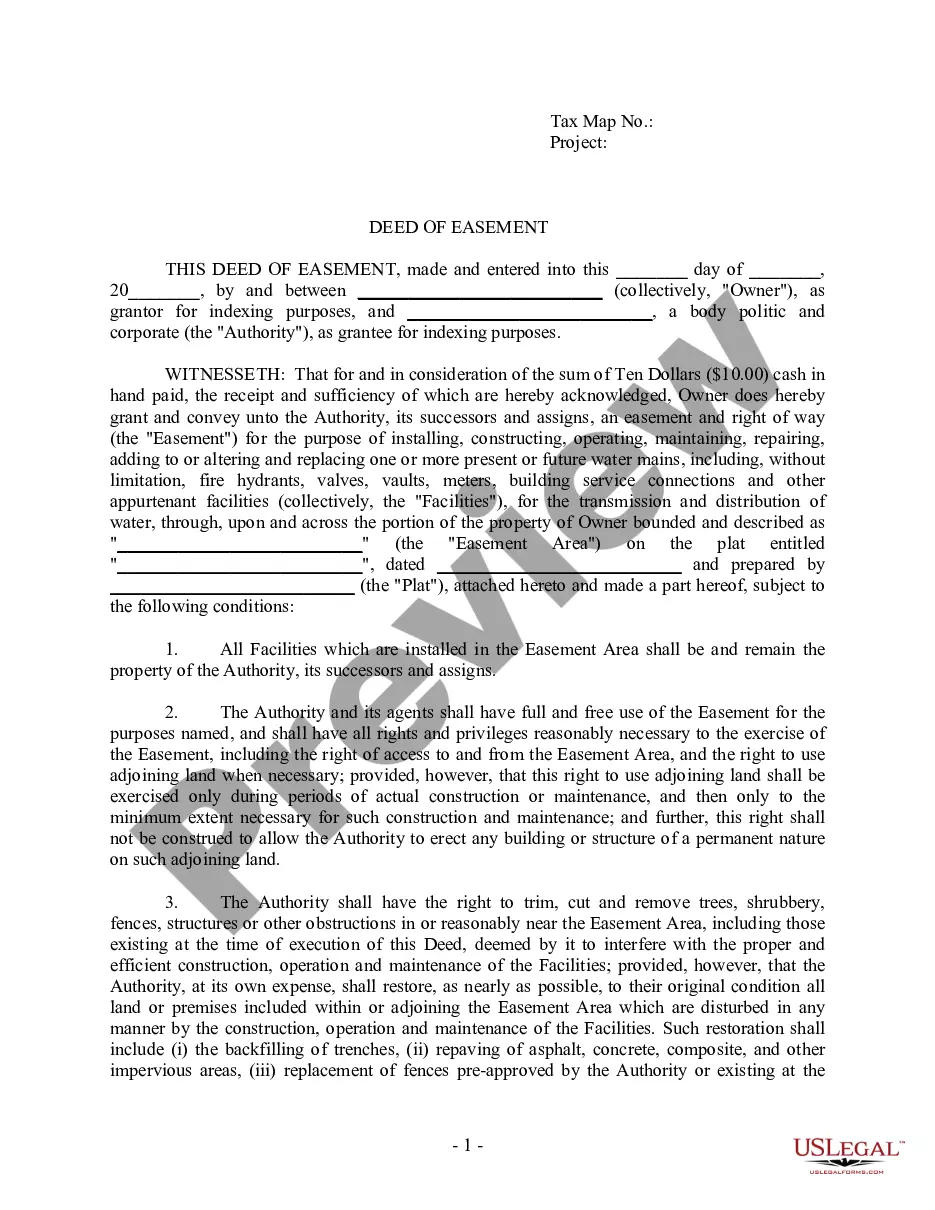
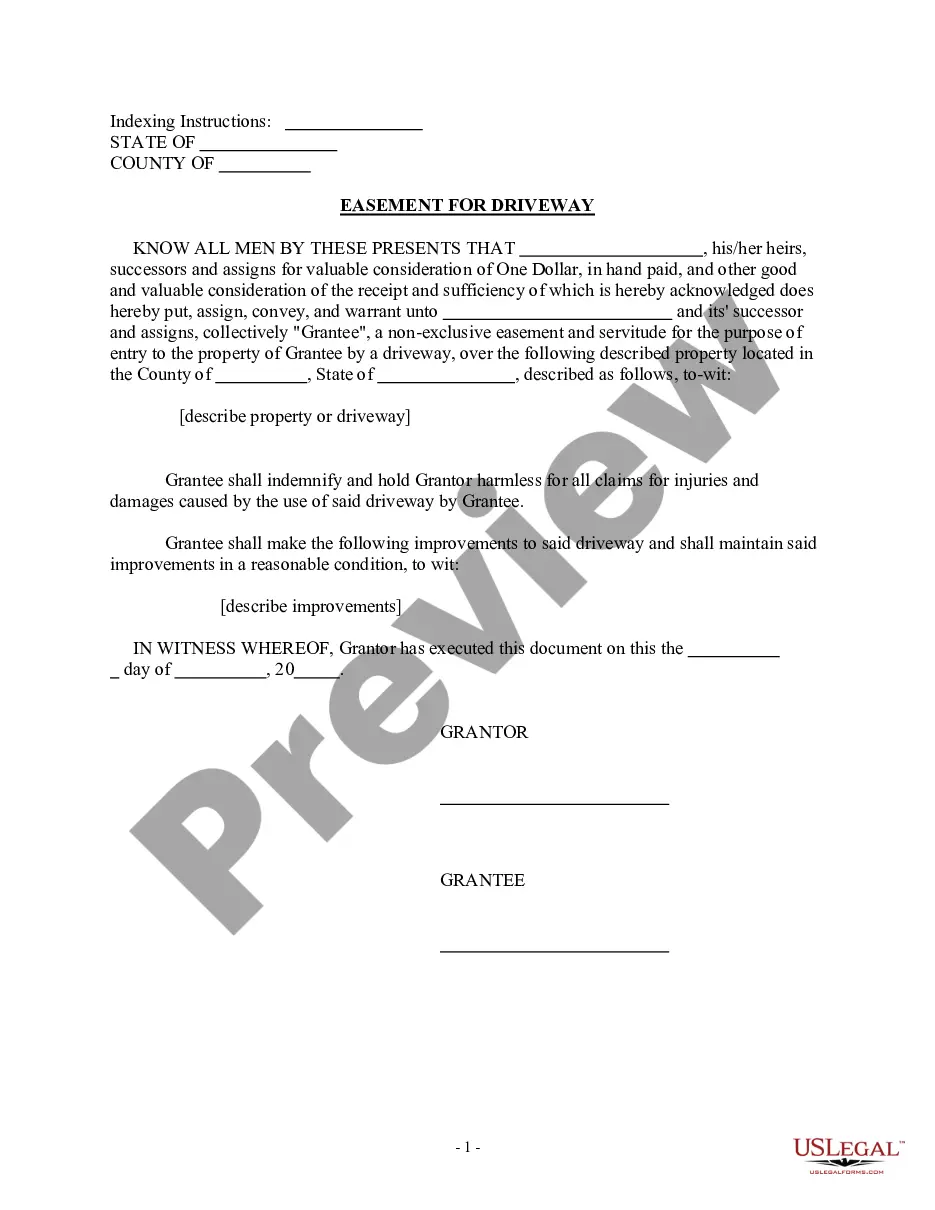
Get your form ready online
Our built-in tools help you complete, sign, share, and store your documents in one place.
Built-in online Word editor
Make edits, fill in missing information, and update formatting in US Legal Forms—just like you would in MS Word.
Export easily
Download a copy, print it, send it by email, or mail it via USPS—whatever works best for your next step.
E-sign your document
Sign and collect signatures with our SignNow integration. Send to multiple recipients, set reminders, and more. Go Premium to unlock E-Sign.
Notarize online 24/7
If this form requires notarization, complete it online through a secure video call—no need to meet a notary in person or wait for an appointment.
Store your document securely
We protect your documents and personal data by following strict security and privacy standards.

Make edits, fill in missing information, and update formatting in US Legal Forms—just like you would in MS Word.

Download a copy, print it, send it by email, or mail it via USPS—whatever works best for your next step.

Sign and collect signatures with our SignNow integration. Send to multiple recipients, set reminders, and more. Go Premium to unlock E-Sign.

If this form requires notarization, complete it online through a secure video call—no need to meet a notary in person or wait for an appointment.

We protect your documents and personal data by following strict security and privacy standards.
Looking for another form?


How to fill out Easement - Shared Parking?
US Legal Forms - one of the largest collections of legal documents in the United States - offers a broad selection of legal form templates that you can download or print. By utilizing the website, you can access thousands of forms for both business and personal use, organized by categories, states, or keywords.
You can obtain the latest forms such as the Delaware Easement - Shared Parking in just moments. If you already have a monthly subscription, Log In to access the Delaware Easement - Shared Parking in the US Legal Forms library. The Download button will appear on every form you view. You can access all previously downloaded forms in the My documents section of your account.
If you are using US Legal Forms for the first time, here are simple instructions to get started: Ensure you have selected the correct form for your city/state. Click the Preview button to review the content of the form. Check the description of the form to confirm that you have selected the right one. If the form does not meet your needs, use the Search field at the top of the page to find one that does. If you are satisfied with the form, confirm your choice by clicking the Buy now button. Then, select the pricing plan you prefer and provide your details to register for an account. Process the transaction. Use a credit card or PayPal account to complete the purchase. Choose the format and download the form to your device. Edit. Complete, modify, print, and sign the downloaded Delaware Easement - Shared Parking. Every template you add to your account has no expiration date and is yours permanently. Therefore, if you want to download or print another copy, simply go to the My documents section and click on the form you need.
- Access the Delaware Easement - Shared Parking through US Legal Forms, the largest repository of legal document templates.
- Utilize thousands of professional and state-specific templates that meet your business or personal requirements and specifications.
Form popularity
FAQ
In areas where a proposed Shared-Use Path (SUP) and/or Sidewalk (SW) is designed to meander beyond the minimum right-of-way listed in Figure 3.2. 5-a and outside of the 15-foot Frontage Easement required in Section 3.2.
§ 4146. Pedestrians on highways; penalty. (a) Where a sidewalk is provided and is accessible, it shall be unlawful for any pedestrian to walk along and upon an adjacent roadway.
An easement gives the easement holder a right of use over the land of another. Once an easement has been granted, the grantor may not interfere with the grantee's use of the easement.