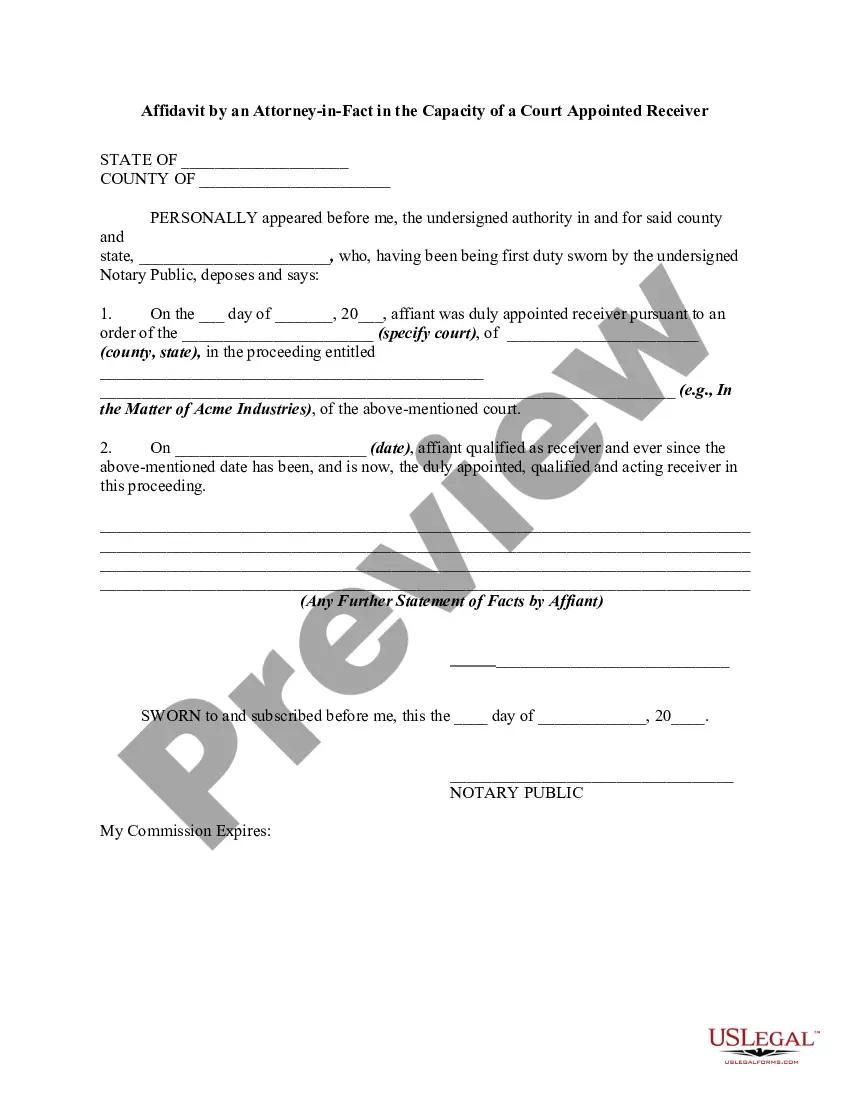
Delaware Affidavit by an Attorney-in-Fact in the Capacity of a Court Appointed Receiver
Description

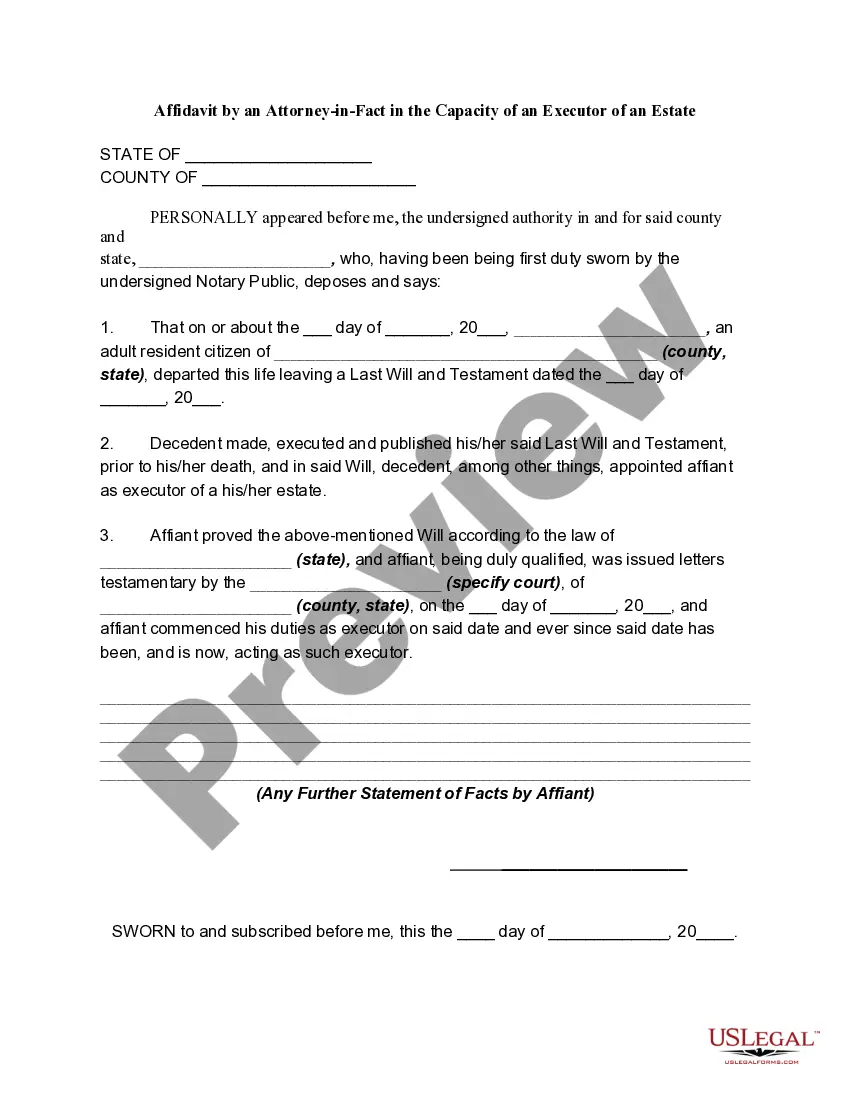
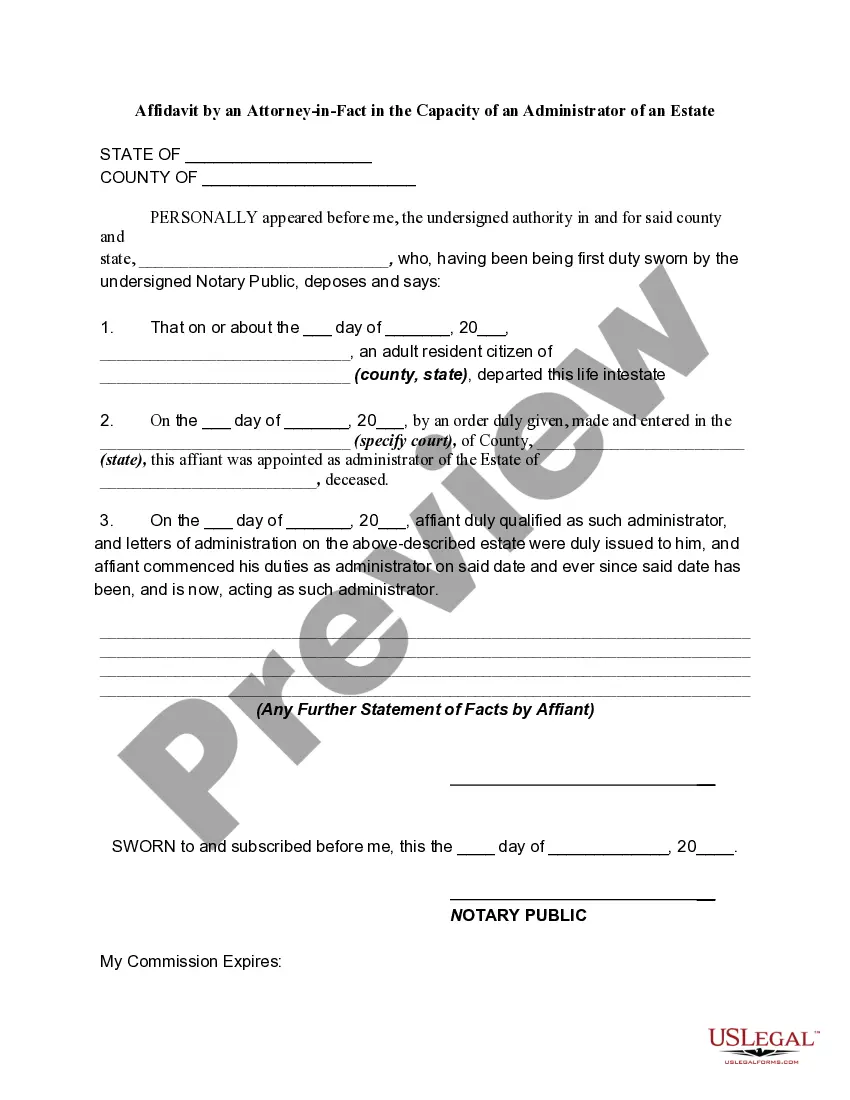
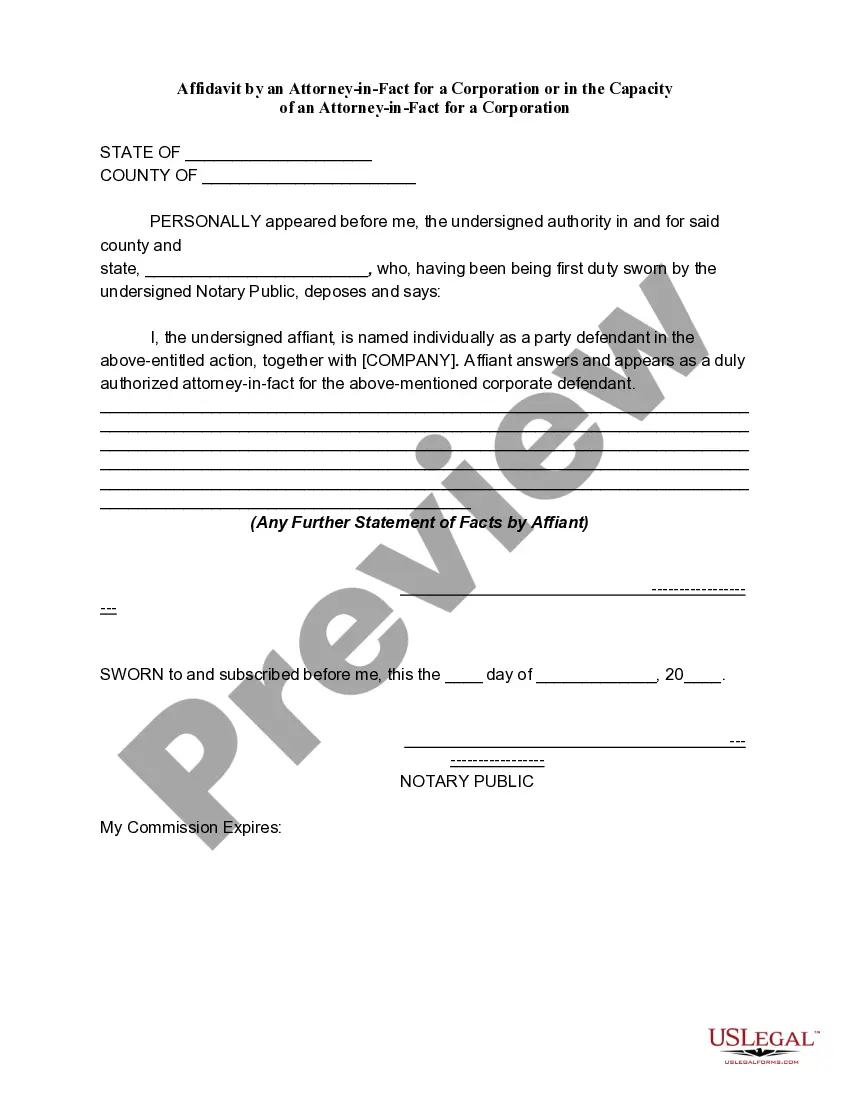
How to fill out Affidavit By An Attorney-in-Fact In The Capacity Of A Court Appointed Receiver?
US Legal Forms - one of the largest collections of legal documents in the United States - offers a broad variety of legal form templates that you can download or print. By using the website, you will access thousands of forms for business and personal purposes, sorted by categories, states, or keywords. You can quickly locate the latest versions of forms such as the Delaware Affidavit by an Attorney-in-Fact in the Role of a Court Appointed Receiver.
If you hold a monthly subscription, Log In and download the Delaware Affidavit by an Attorney-in-Fact in the Role of a Court Appointed Receiver from the US Legal Forms library. The Download button will appear on every form you view. You can access all previously downloaded forms in the My documents section of your account.
If you are using US Legal Forms for the first time, here are simple steps to get you started: Ensure you have selected the correct form for your city/state. Click the Review button to examine the form's content. Read the form description to confirm that you have chosen the right form. If the form does not meet your needs, utilize the Search field at the top of the page to find one that does. Once you are satisfied with the form, confirm your choice by clicking the Purchase now button. Then, select the pricing plan you prefer and provide your details to register for the account. Process the purchase. Use a credit card or PayPal account to complete the transaction. Choose the format and download the form to your device. Make edits. Fill out, modify, print, and sign the downloaded Delaware Affidavit by an Attorney-in-Fact in the Role of a Court Appointed Receiver.
With US Legal Forms, you can find a comprehensive catalog of legal document layouts tailored to various purposes, ensuring you have the right tools to meet your legal needs.
Don't miss out on the opportunity to streamline your legal documentation process with reliable and accessible forms.
- Every template you added to your account has no expiration date and is yours indefinitely.
- So, if you wish to download or print another copy, just go to the My documents section and click on the form you need.
- Access the Delaware Affidavit by an Attorney-in-Fact in the Role of a Court Appointed Receiver with US Legal Forms, the most extensive library of legal document templates.
- Utilize thousands of professional and state-specific templates that meet your business or personal needs and requirements.
- Enjoy a seamless experience with a vast assortment of legal forms.
- Navigate through user-friendly options to find the documents you need.
Form popularity
FAQ
(B) A party may discover facts known or opinions held by an expert who has been retained or specially employed by another party in anticipation of litigation or preparation for trial and who is not expected to be called as a witness at trial, only as provided in Rule 35(b) or upon a showing of exceptional circumstances ...
Rule 37 - Failure to Make Discovery: Sanctions (a) Motion for order compelling discovery. A party, upon reasonable notice to other parties and all persons affected thereby, may apply for an order compelling discovery as follows: (1) Appropriate court.
Rule 28 - Brief of amicus curiae (a)When permitted. -A brief of an amicus curiae may be filed only by leave of Court granted on motion or at the request of the Court. (b)Motion for leave to file.
Rule 12. Attorneys of record; withdrawal. (i) Original signature by Delaware attorney. ?Except in the case of a party appearing pro se, all papers filed with the Court shall be signed by an attorney who is an active member of the Bar of this Court and who maintains an office in Delaware for the practice of law.
-- Rule 26 protects communications between the party's attorney and any witness required to provide an opinion under Rule 26(b)(4) regardless of the form of the communications, except to the extent that communications: (i) relate to compensation for the expert study or testimony; (ii) identify facts or data that the ...
Misjoinder of parties is not ground for dismissal of an action. Parties may be dropped or added by order of the Court on motion of any party or of its own initiative at any stage of the action and on such terms as are just. Any claim against a party may be severed and proceeded with separately.
An answering party may not give lack of information or knowledge as a reason for failure to admit or deny unless the party states that the party has made reasonable inquiry and that the information known or readily obtainable by the party is insufficient to enable the party to admit or deny.
If a derivative plaintiff or derivative counsel fails to adequately represent the interests of the entity in pursuing the derivative action, then the Court may dismiss the derivative action without prejudice, replace the derivative plaintiff or derivative counsel, or make further orders as warranted.