Delaware Apartment Rules and Regulations
What is this form?
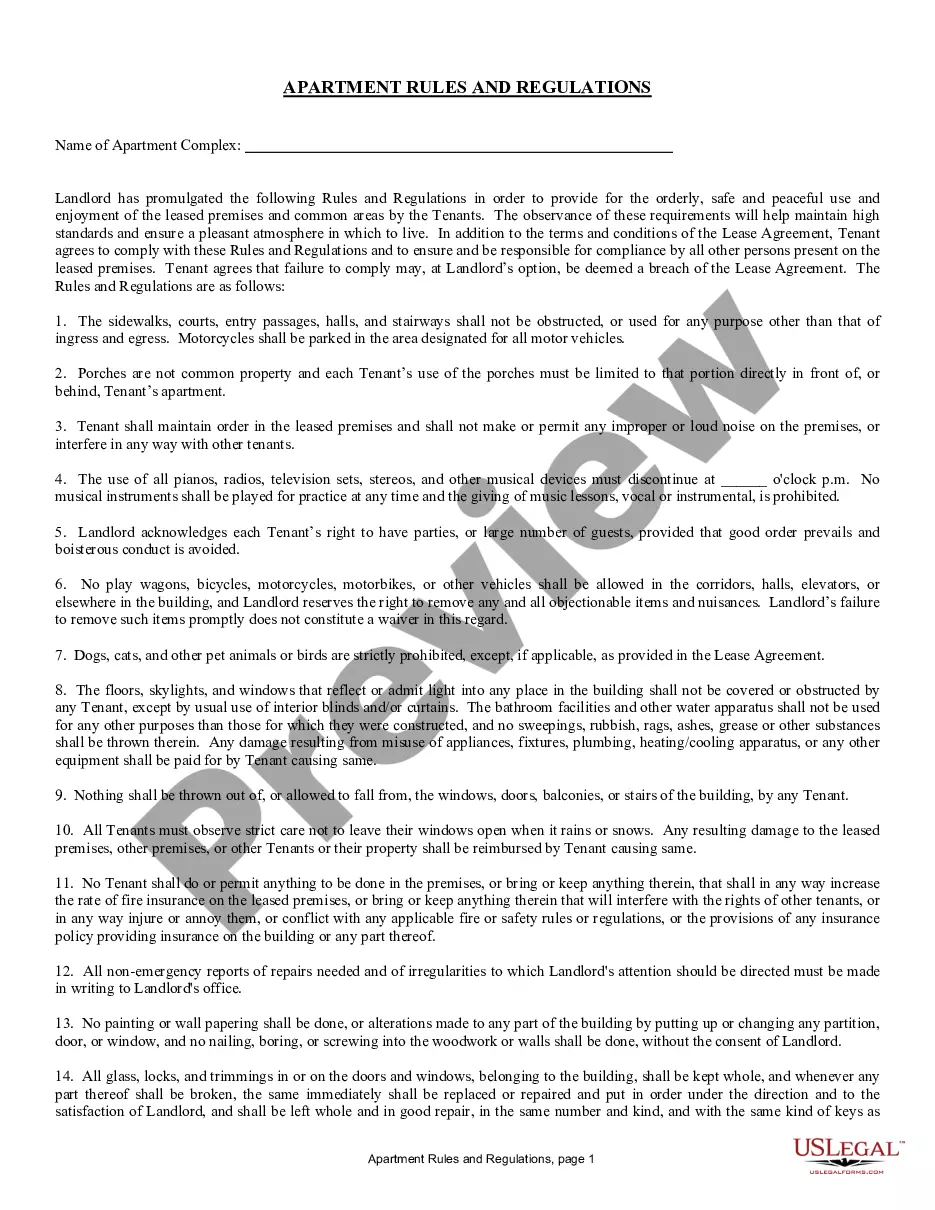
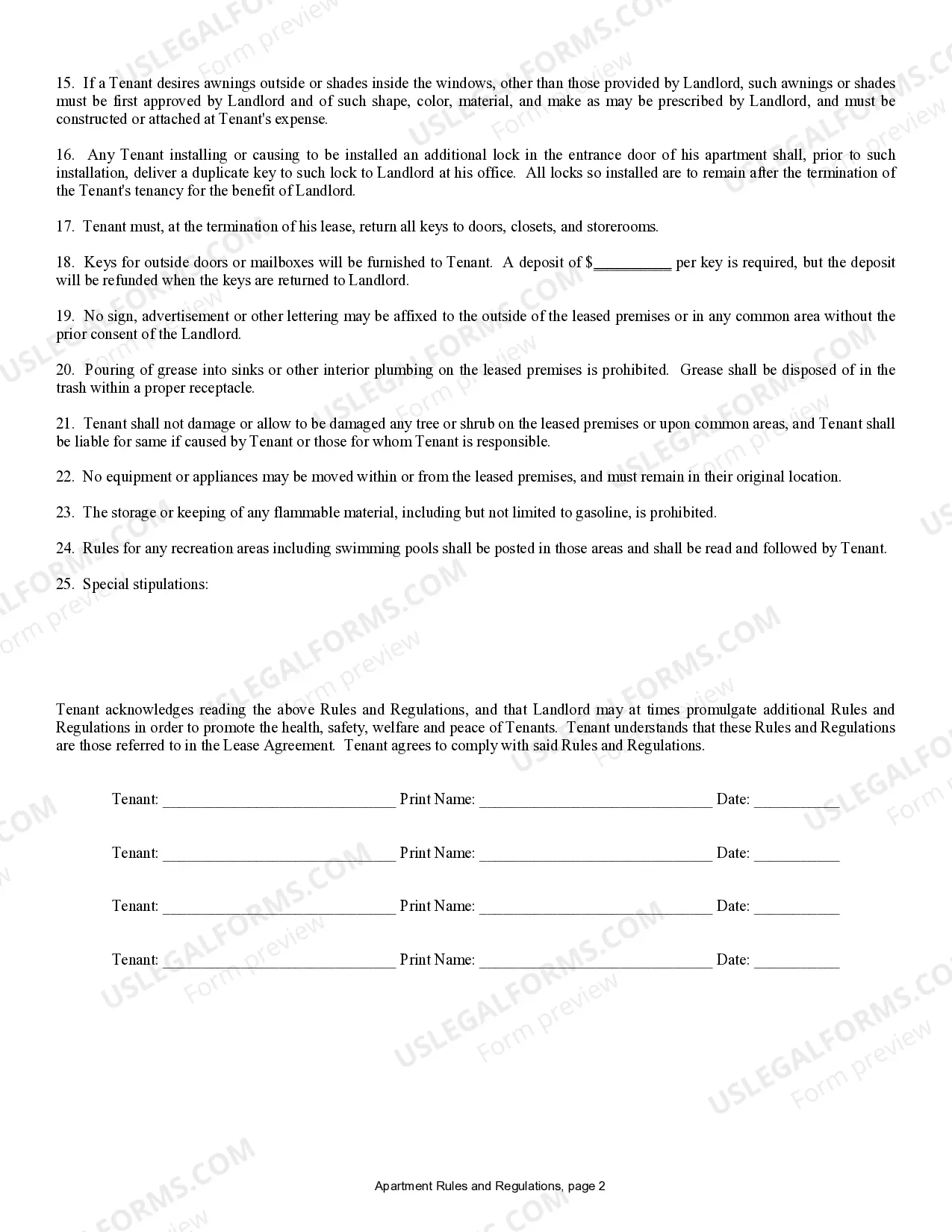
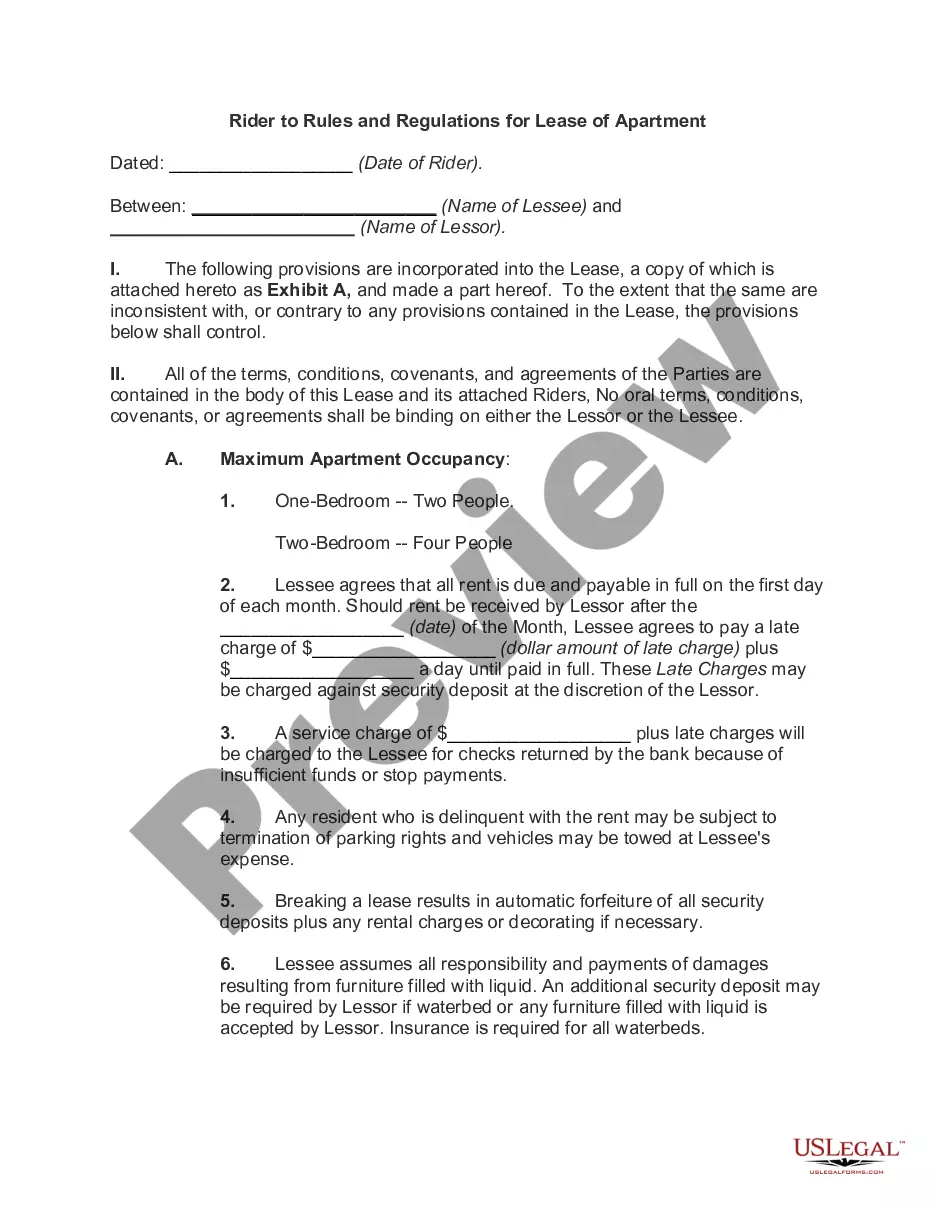
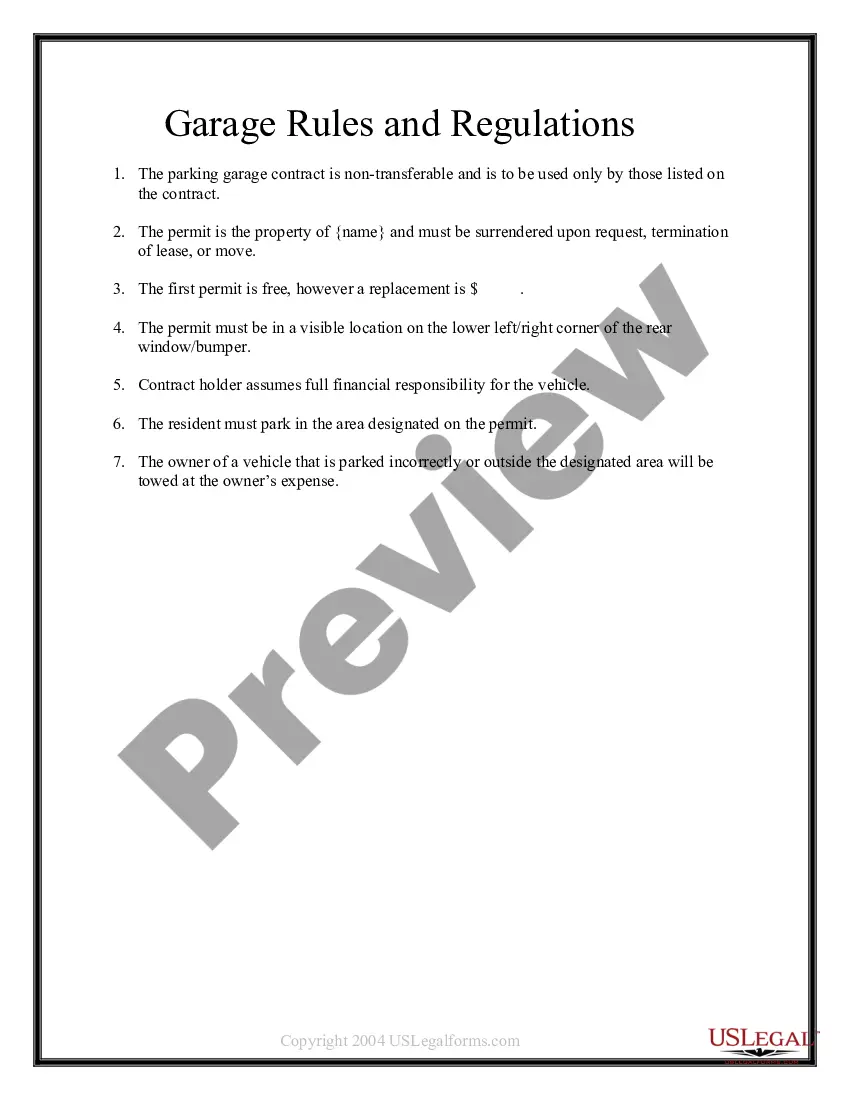
The Apartment Rules and Regulations form provides a structured overview of the guidelines that tenants are required to follow within an apartment complex. This form outlines essential rules that are not typically detailed in the Apartment Lease Agreement, ensuring that all residents understand their responsibilities and the expectations for maintaining a peaceful living environment. It serves as a crucial tool in fostering community standards and can be used in conjunction with the lease agreement for comprehensive tenant management.
Key parts of this document
- Identification of the apartment complex and landlord responsibilities.
- Specific rules about noise control and common area usage.
- Guidelines for pet ownership and maintenance of property standards.
- Requirements for tenant-installed locks and alterations to the apartment.
- Procedures for reporting repairs and maintenance to the landlord.
- Consequences for non-compliance with the outlined rules.
When to use this form
This form is typically used when establishing or clarifying the rules and regulations for tenants in an apartment complex. It is essential during the leasing process to ensure that all parties understand their obligations. Property managers may also use this form when updating regulations or when new tenants move in to maintain a consistent standard of living for all residents.
Who needs this form
- Landlords and property managers overseeing apartment complexes.
- Tenants entering into or renewing a lease agreement.
- Real estate professionals involved in property leasing.
- Legal representatives ensuring compliance with local housing regulations.
Steps to complete this form
- Begin by entering the name of the apartment complex and landlord.
- Review the rules outlined in the document to ensure clarity and understanding.
- Specify any additional stipulations or exceptions as necessary.
- Each tenant should sign and date the form to acknowledge their agreement to the rules.
- Keep a copy for your records and provide one to the landlord.
Does this form need to be notarized?
This form does not typically require notarization to be legally valid. However, some jurisdictions or document types may still require it. US Legal Forms provides secure online notarization powered by Notarize, available 24/7 for added convenience.
Get your form ready online
Our built-in tools help you complete, sign, share, and store your documents in one place.
Make edits, fill in missing information, and update formatting in US Legal Forms—just like you would in MS Word.
Download a copy, print it, send it by email, or mail it via USPS—whatever works best for your next step.
Sign and collect signatures with our SignNow integration. Send to multiple recipients, set reminders, and more. Go Premium to unlock E-Sign.
If this form requires notarization, complete it online through a secure video call—no need to meet a notary in person or wait for an appointment.
We protect your documents and personal data by following strict security and privacy standards.

Make edits, fill in missing information, and update formatting in US Legal Forms—just like you would in MS Word.

Download a copy, print it, send it by email, or mail it via USPS—whatever works best for your next step.

Sign and collect signatures with our SignNow integration. Send to multiple recipients, set reminders, and more. Go Premium to unlock E-Sign.

If this form requires notarization, complete it online through a secure video call—no need to meet a notary in person or wait for an appointment.

We protect your documents and personal data by following strict security and privacy standards.
Avoid these common issues
- Failing to read and understand all rules listed in the form.
- Not signing or dating the form, which may invalidate the agreement.
- Neglecting to communicate special stipulations that might conflict with the regulations.
Why use this form online
- Convenient access to legal forms that can be downloaded and customized.
- Editability allows landlords to tailor rules according to specific tenant needs.
- Reliable templates drafted by licensed attorneys ensure compliance with legal standards.
Summary of main points
- The Apartment Rules and Regulations form outlines critical guidelines for tenant conduct.
- It's vital for landlords to communicate rules clearly to maintain a harmonious living environment.
- Completion and distribution of the form ensure all tenants acknowledge their responsibilities.
Looking for another form?

Form popularity
FAQ
Filling out a rent check involves writing the recipient’s name, typically your landlord, and the correct amount in both numerical and written form. Be certain to include the address of the rental property in the memo section to clarify the payment's purpose. This practice aligns with the Delaware Apartment Rules and Regulations regarding payment records. Finally, double-check all details for accuracy before signing the check to avoid potential issues.
To fill out a rental verification form, collect all necessary information about your rental history, including your previous addresses, dates of residency, and any relevant landlord contact details. Be honest about your rental conduct and provide accurate references to help facilitate a smooth verification process. Understanding the Delaware Apartment Rules and Regulations can also guide you in what information to disclose and the rights you have concerning rental inquiries.
Filling out an apartment condition form requires attention to detail. Begin by inspecting every area of your apartment, documenting the existing conditions of walls, floors, and appliances. Clearly note any damages or issues, providing as much detail as necessary to avoid disputes later. Familiarize yourself with the Delaware Apartment Rules and Regulations to ensure you cover all pertinent aspects of the rental agreement.
When communicating with a landlord, avoid making negative comments about the property or neighborhood without offering constructive feedback. Stay clear of discussing personal financial issues, which could raise red flags. Additionally, refrain from expressing uncertainty about your rental commitment, as it may lead your landlord to doubt your reliability. Understanding the Delaware Apartment Rules and Regulations will help you navigate this relationship with confidence.
To fill out a tenant checklist effectively, start by gathering all necessary information about your apartment hunt. Make sure to note vital details such as location, rent amount, and any amenities offered, while also considering the Delaware Apartment Rules and Regulations. A comprehensive checklist helps you stay organized and ensures you don’t miss any essential features. Additionally, using a reliable platform like uslegalforms can provide templates and guidance tailored to your needs.
In Delaware, you must be at least 18 years old to legally enter into a rental agreement. This age requirement aligns with the Delaware Apartment Rules and Regulations, which view individuals younger than 18 as minors unable to contract. If you are under 18, consider asking a parent or guardian to co-sign your lease.
Yes, Delaware is often considered a tenant-friendly state due to its comprehensive tenant protection laws. The Delaware Apartment Rules and Regulations outline many rights that empower tenants, such as protection against unjust eviction and the right to a habitable living environment. Understanding these rules can help you navigate your rental experience more effectively.
Yes, if you plan to be a landlord in Delaware, securing a rental license is mandatory. The Delaware Apartment Rules and Regulations stipulate that landlords must register their rental properties with the local authorities. This ensures compliance with safety codes and tenant rights. Utilizing US Legal Forms can streamline the process of obtaining the necessary licensing.
In Delaware, a landlord cannot evict you without proper notice or retaliate against you for reporting issues. They are also prohibited from entering your apartment without your consent, except in emergencies. Understanding these limitations laid out in the Delaware Apartment Rules and Regulations can safeguard your rights as a tenant. If a landlord violates these rules, it's crucial to document the incidents and consider seeking legal assistance.
To report a terrible landlord, start by documenting your concerns with dates, photos, and communication records. You can report him or her to the Delaware Department of Justice, which reviews landlord-tenant disputes. Make sure to reference the Delaware Apartment Rules and Regulations in your complaint to strengthen your case. Additionally, consider seeking legal aid if the situation does not improve.