Delaware Mutual Wills or Last Will and Testaments for Man and Woman living together, not Married with Minor Children
Overview of this form
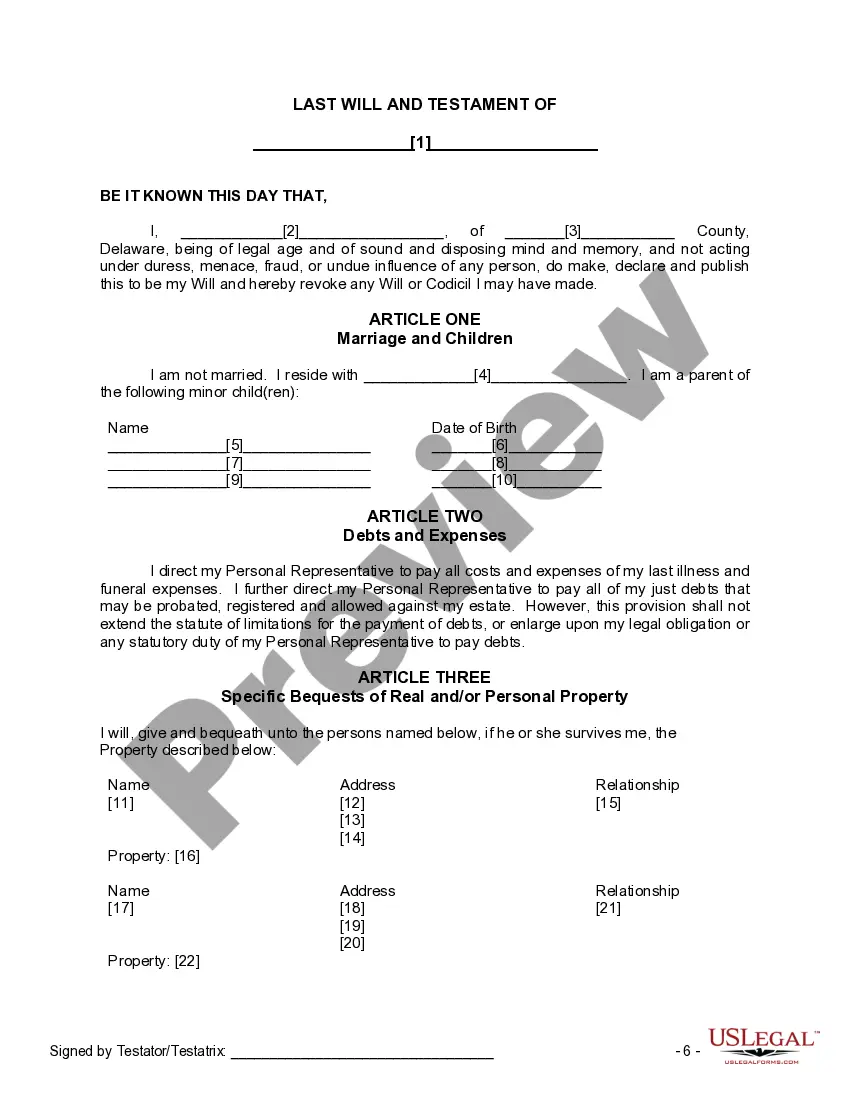
This Mutual Wills package includes two wills for a man and a woman who are living together but are not married and have minor children. It allows each party to designate the other as the primary beneficiary of their estate. Unlike standard individual wills, mutual wills are designed to reflect their commitment to provide for each other and their children, ensuring that in the event of either party's death, the other will be cared for and their children will be protected.
Key components of this form
- Article One: Identifies the testators and their minor children.
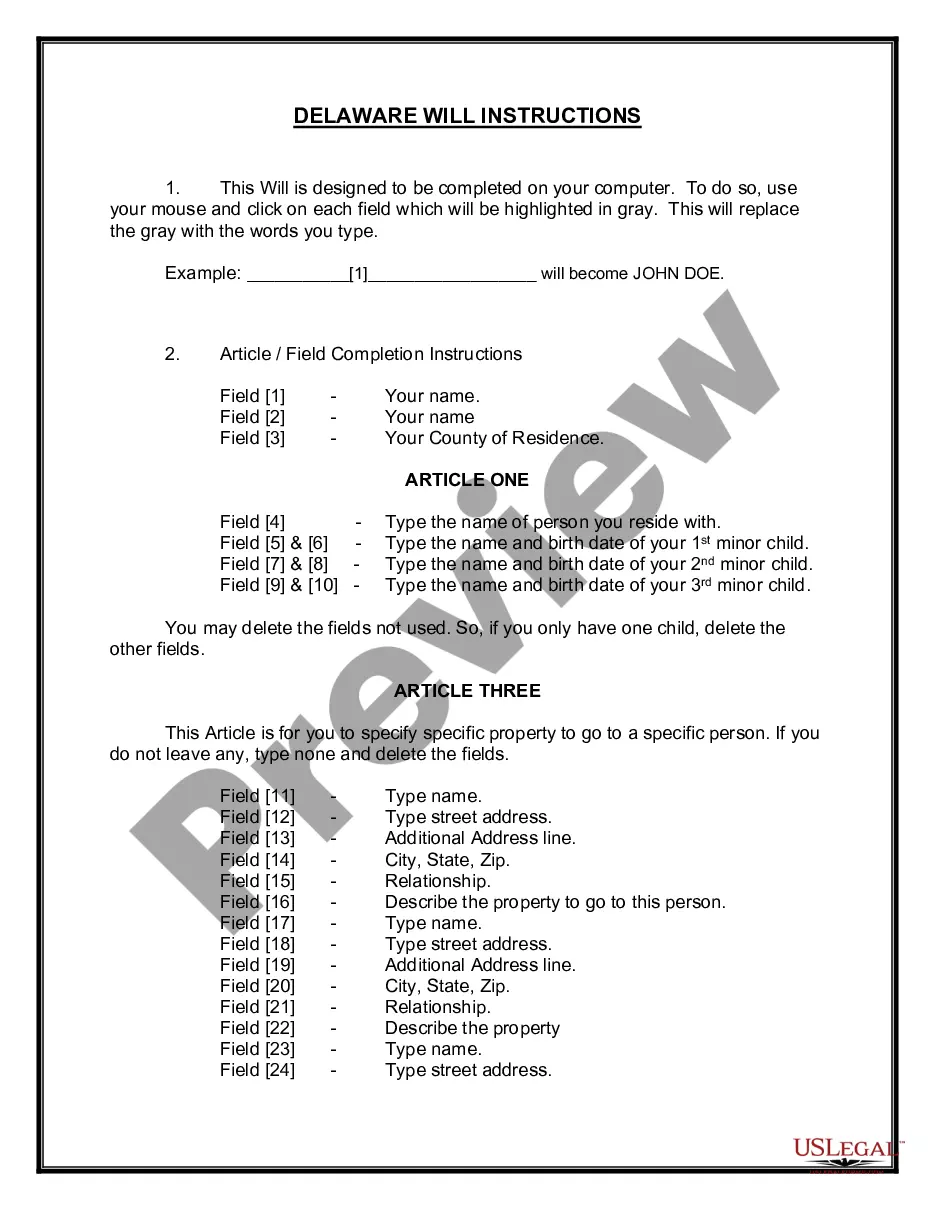
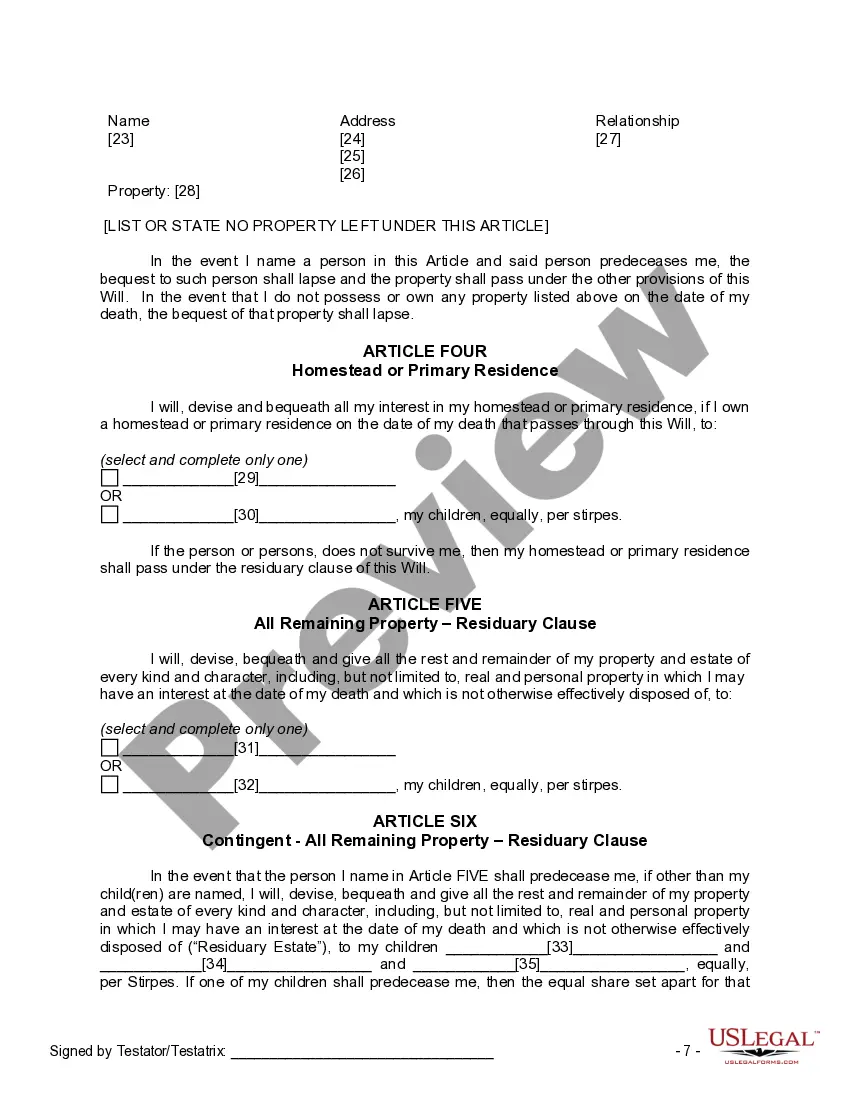
- Article Three: Specific bequests of personal property.
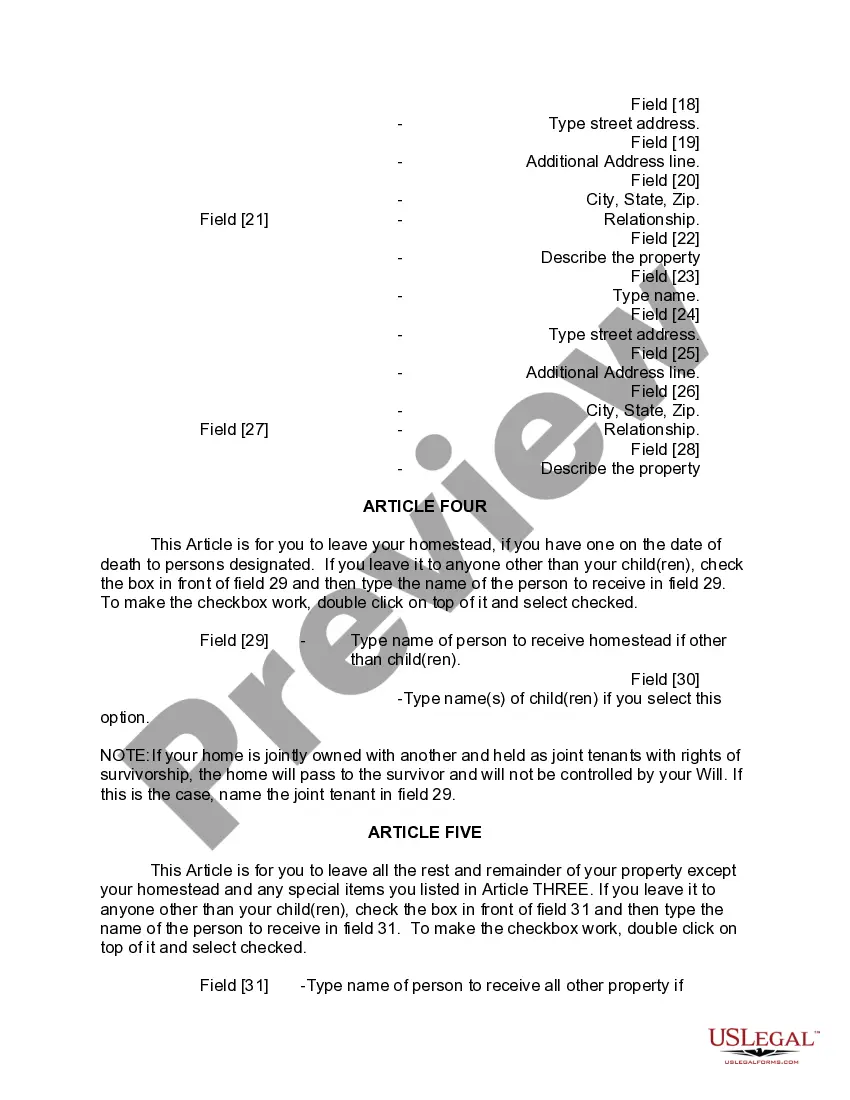
- Article Four: Provisions regarding the homestead or primary residence.
- Article Five: Residual clause, detailing distribution of remaining property.
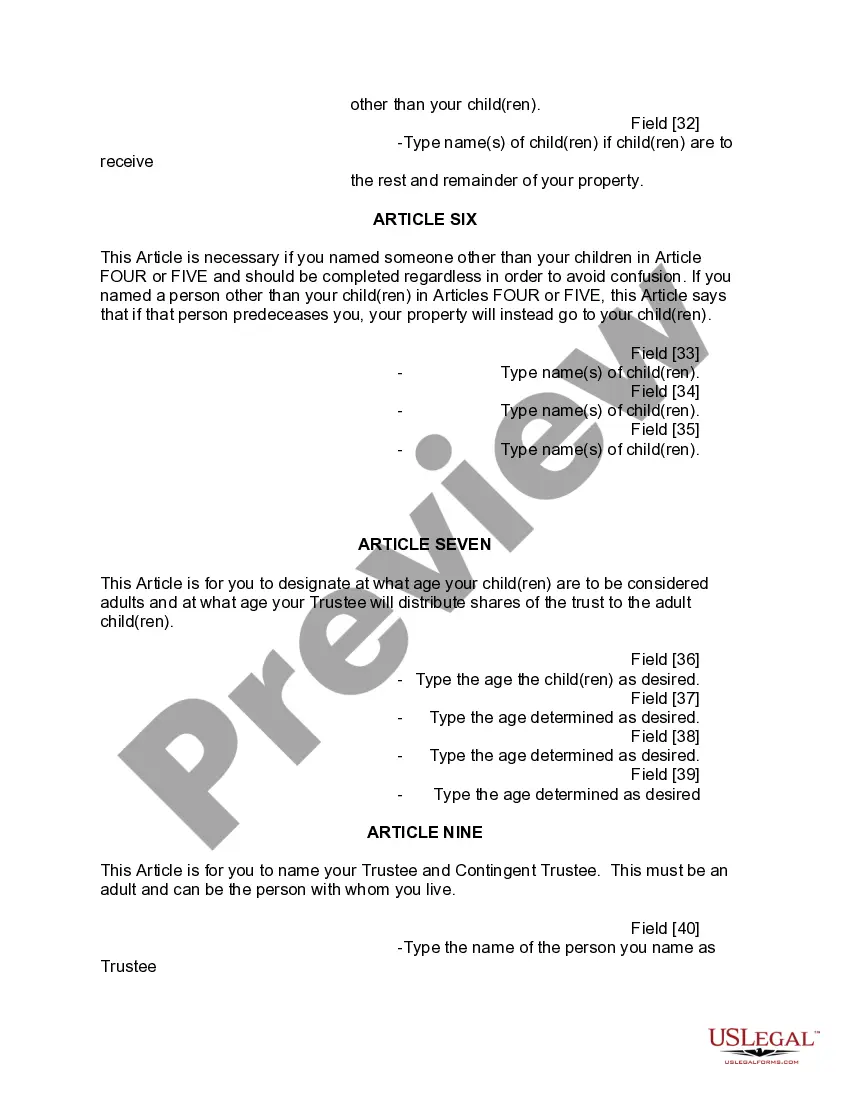
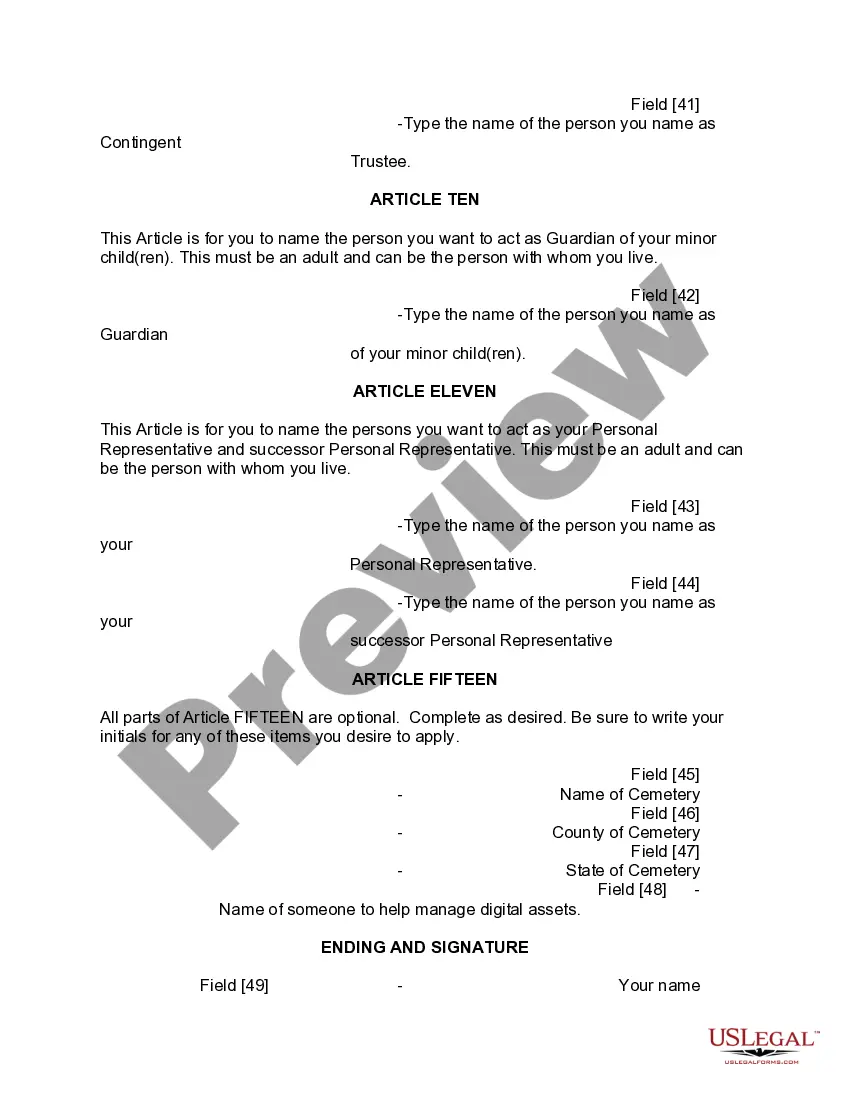
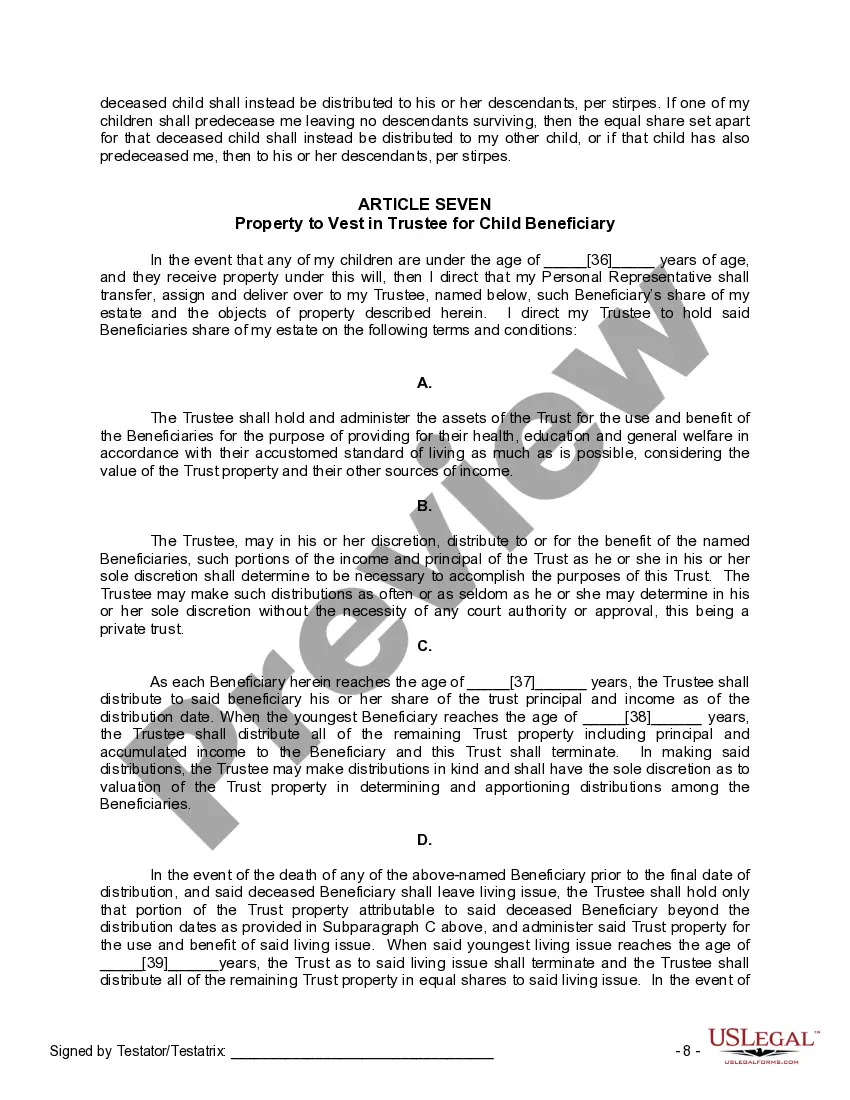
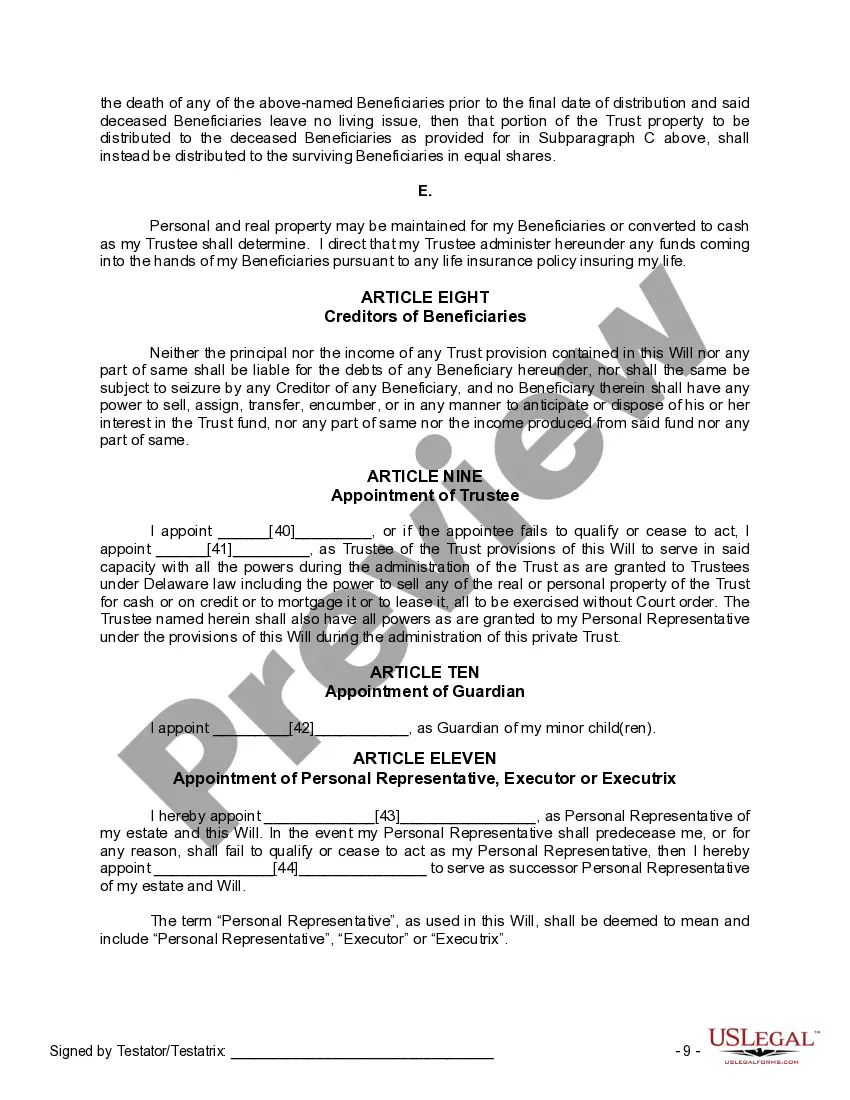
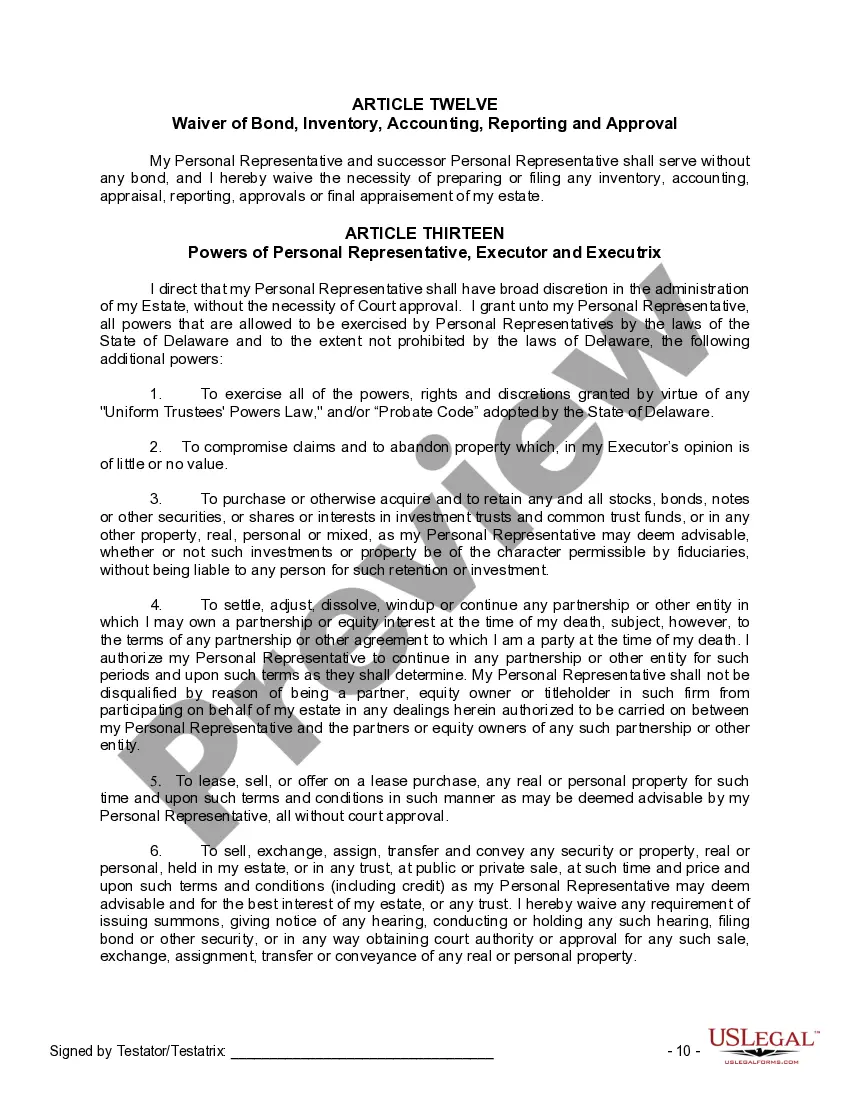
- Articles Six to Eleven: Designation of trustees, guardians, and personal representatives.



When this form is needed
This form is crucial when couples living together, but not legally married, wish to ensure their mutual wishes regarding property and custody of minor children are respected after their passing. It is particularly useful in situations where one or both partners want to leave their estate to the other partner and ensure that their children are provided for.
Who needs this form
Eligibility for this form includes:
- Unmarried couples living together.
- Parents of one or more minor children.
- Individuals who wish to ensure mutual inheritance between partners.
Steps to complete this form
Steps to complete the form:
- Enter personal details such as names and residence addresses in the designated fields.
- List names and birth dates of any minor children in the relevant sections.
- Specify any particular assets or property to be distributed to named beneficiaries.
- Designate trustees, guardians, and personal representatives in the appropriate articles.
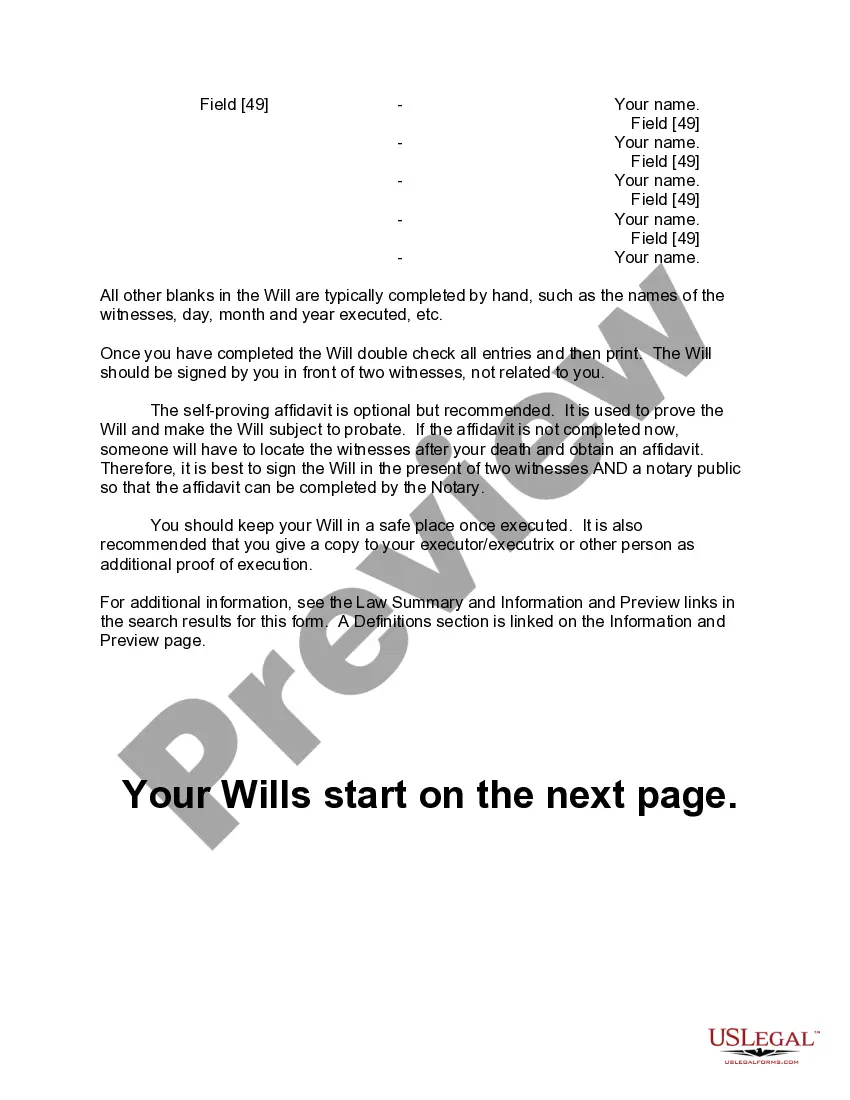
- Have the completed wills signed in the presence of two unrelated witnesses and a notary public if required by state law.
Is notarization required?
Yes, this form must be notarized to be legally valid. It is recommended to sign the wills in the presence of two witnesses and a notary public to ensure proper execution and simplify the probate process later.
Get your form ready online
Our built-in tools help you complete, sign, share, and store your documents in one place.
Make edits, fill in missing information, and update formatting in US Legal Forms—just like you would in MS Word.
Download a copy, print it, send it by email, or mail it via USPS—whatever works best for your next step.
Sign and collect signatures with our SignNow integration. Send to multiple recipients, set reminders, and more. Go Premium to unlock E-Sign.
If this form requires notarization, complete it online through a secure video call—no need to meet a notary in person or wait for an appointment.
We protect your documents and personal data by following strict security and privacy standards.

Make edits, fill in missing information, and update formatting in US Legal Forms—just like you would in MS Word.

Download a copy, print it, send it by email, or mail it via USPS—whatever works best for your next step.

Sign and collect signatures with our SignNow integration. Send to multiple recipients, set reminders, and more. Go Premium to unlock E-Sign.

If this form requires notarization, complete it online through a secure video call—no need to meet a notary in person or wait for an appointment.

We protect your documents and personal data by following strict security and privacy standards.
Common mistakes
- Failing to include all required signatures and witness statements.
- Not specifying alternative beneficiaries in case the primary beneficiary predeceases the testator.
- Leaving out essential details about minor children and their guardianship.
Benefits of completing this form online
- Convenience of filling out the forms from home.
- Editability to adjust terms as needed.
- Reliability, knowing the forms are crafted by licensed attorneys.
Looking for another form?
Form popularity
FAQ
Yes, in Delaware, a husband can create a will without his wife’s consent. However, it is prudent to communicate openly about estate plans, especially in situations like Delaware Mutual Wills or Last Will and Testaments for Man and Woman living together, not Married with Minor Children. By discussing each other's intentions, couples can avoid potential conflicts and ensure that their wishes are respected in the event of death.
To create a valid will in Delaware, you must be at least 18 years old and of sound mind. The will should be in writing, signed by the testator, and witnessed by two individuals who are not beneficiaries. For those considering Delaware Mutual Wills or Last Will and Testaments for Man and Woman living together, not Married with Minor Children, utilizing platforms like US Legal Forms can help ensure all legal requirements are met efficiently.
In general, a spouse does not automatically become a beneficiary unless specified in a will or under the law. For those considering Delaware Mutual Wills or Last Will and Testaments for Man and Woman living together, not Married with Minor Children, assigning beneficiary status must be explicitly addressed in your estate planning documents. Be sure to discuss your plans with your spouse to avoid misunderstandings.
In Delaware, when a husband passes away, the wife may be entitled to a portion of the estate, depending on the existence of a will. If the husband has a Last Will and Testament that includes her, she may receive the assets stipulated in that document. Moreover, it’s wise for couples in situations like Delaware Mutual Wills or Last Will and Testaments for Man and Woman living together, not Married with Minor Children, to discuss inheritance issues ahead of time.
Under Delaware law, your spouse may have a right to inherit from your estate, but this largely depends on whether the estate plan specifies otherwise. In the scenario of Delaware Mutual Wills or Last Will and Testaments for Man and Woman living together, not Married with Minor Children, it becomes crucial to clearly express your wishes in the will. It's advisable to consult a legal expert to navigate these complexities.
In the context of Delaware Mutual Wills or Last Will and Testaments for Man and Woman living together, not Married with Minor Children, a will can dictate how your assets are distributed. If a will explicitly names beneficiaries and states the intentions of the deceased, those wishes typically prevail. However, it is essential to ensure that the will aligns with existing state laws regarding marital rights.
You do not need a lawyer to make a will in Delaware, as you can choose to draft one yourself using templates. However, consulting a legal professional might provide additional peace of mind, especially for complicated situations. For a straightforward Last Will and Testament for Man and Woman living together, not Married with Minor Children, many find the resources from USLegalForms sufficient. Their templates make it easy to create a will that meets Delaware's legal standards.
Yes, once a will is submitted to the probate court in Delaware, it becomes part of the public record. This means anyone can access the document and see how your assets are distributed. If privacy is a concern for you and your partner, consider how Delaware Mutual Wills can serve to organize your estate without unnecessary exposure. Platforms like USLegalForms offer solutions to help you confidently navigate this process.
In Delaware, a will does not need to be notarized to be considered valid, but having it notarized can help reduce disputes in the future. A self-proving will, which is notarized, can streamline the probate process. If you're drafting a Last Will and Testament for Man and Woman living together, not Married with Minor Children, consider this option for peace of mind. USLegalForms provides guidance on how to create a self-proving will to make things easier.
Yes, a husband and wife can have separate wills, which is common for partners who want to address specific concerns regarding their assets and children. This allows each partner to decide independently how to manage their property and designate guardians for their minor children. If you and your partner are living together, not married, Delaware Mutual Wills might be your best option to ensure clarity. USLegalForms offers user-friendly tools to help create these documents.