Delaware Certificate of Trust by Individual
Overview of this form
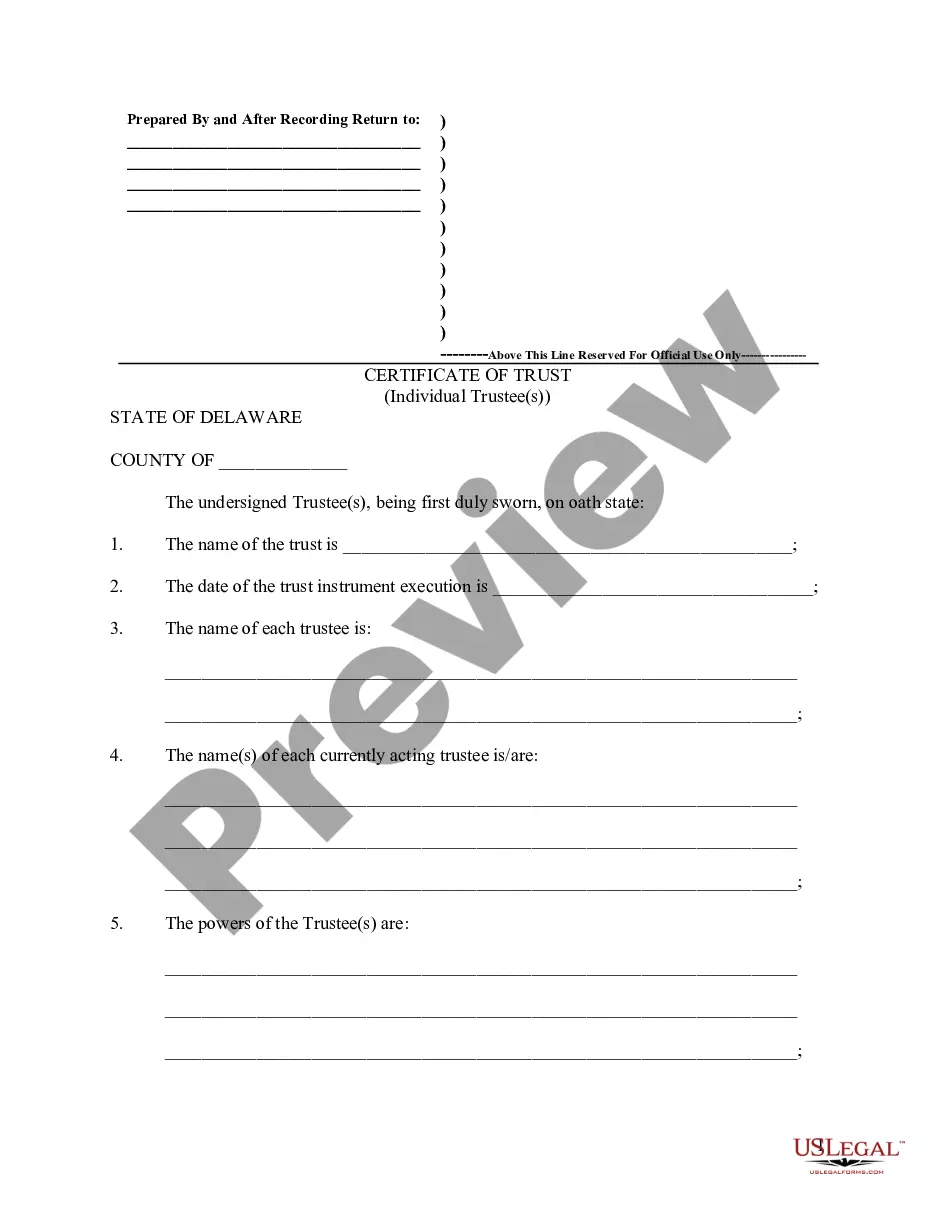
The Delaware Certificate of Trust by Individual is a legal document that provides evidence of the existence of a trust without requiring the entire trust document to be disclosed. This certificate can be presented by the individual trustee to establish the terms of the trust to third parties. It differs from a full trust document by summarizing key aspects of the trust, which allows for a more efficient and private verification process for involved parties.
What’s included in this form
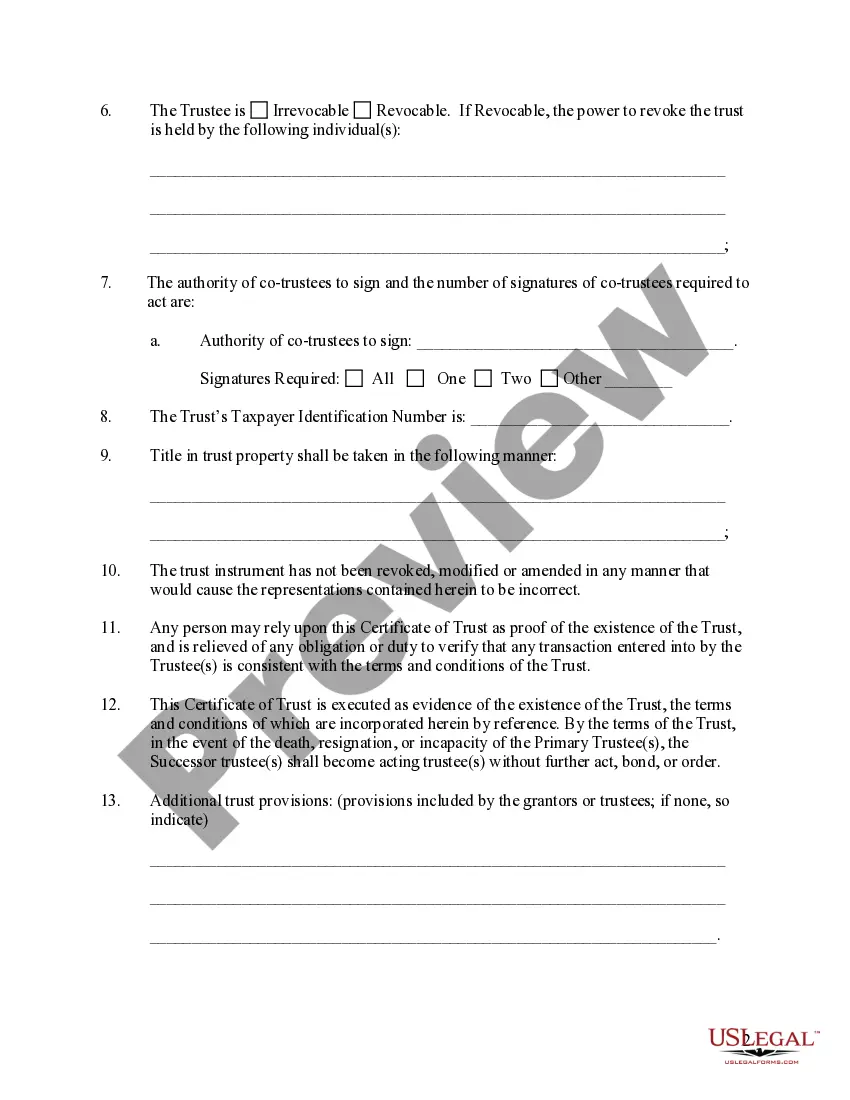
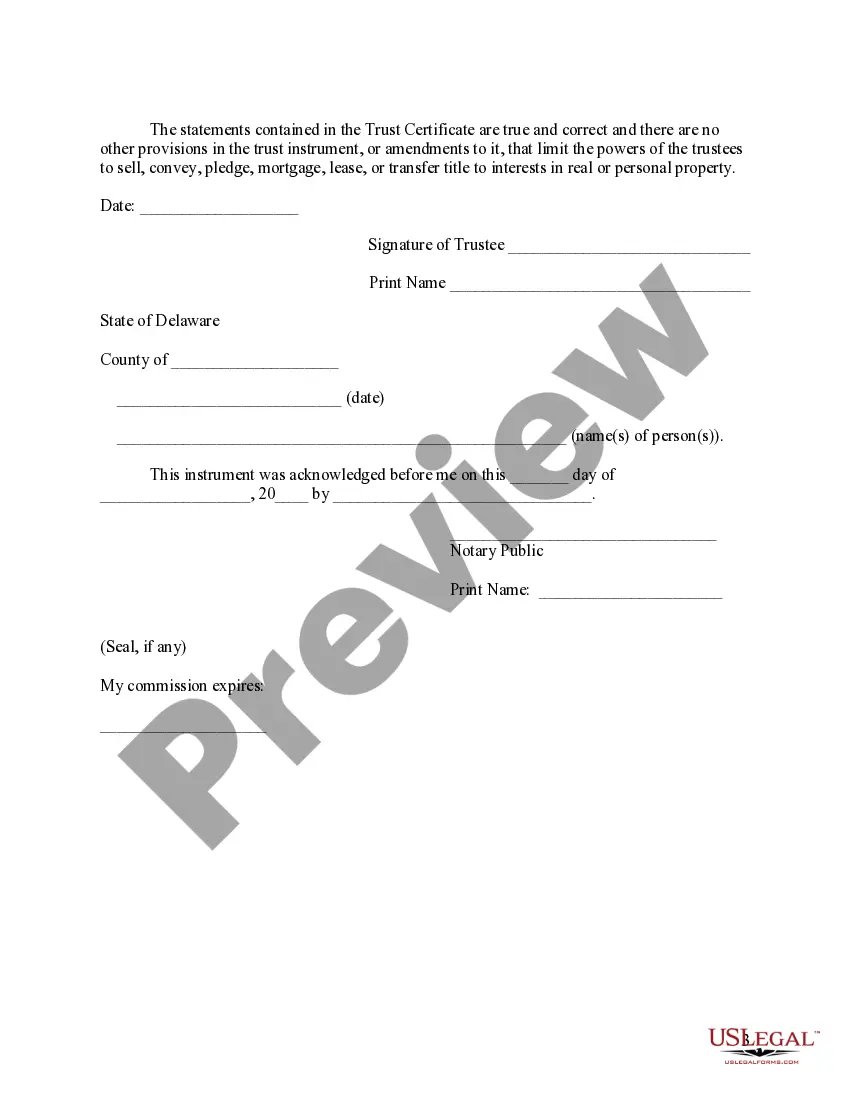
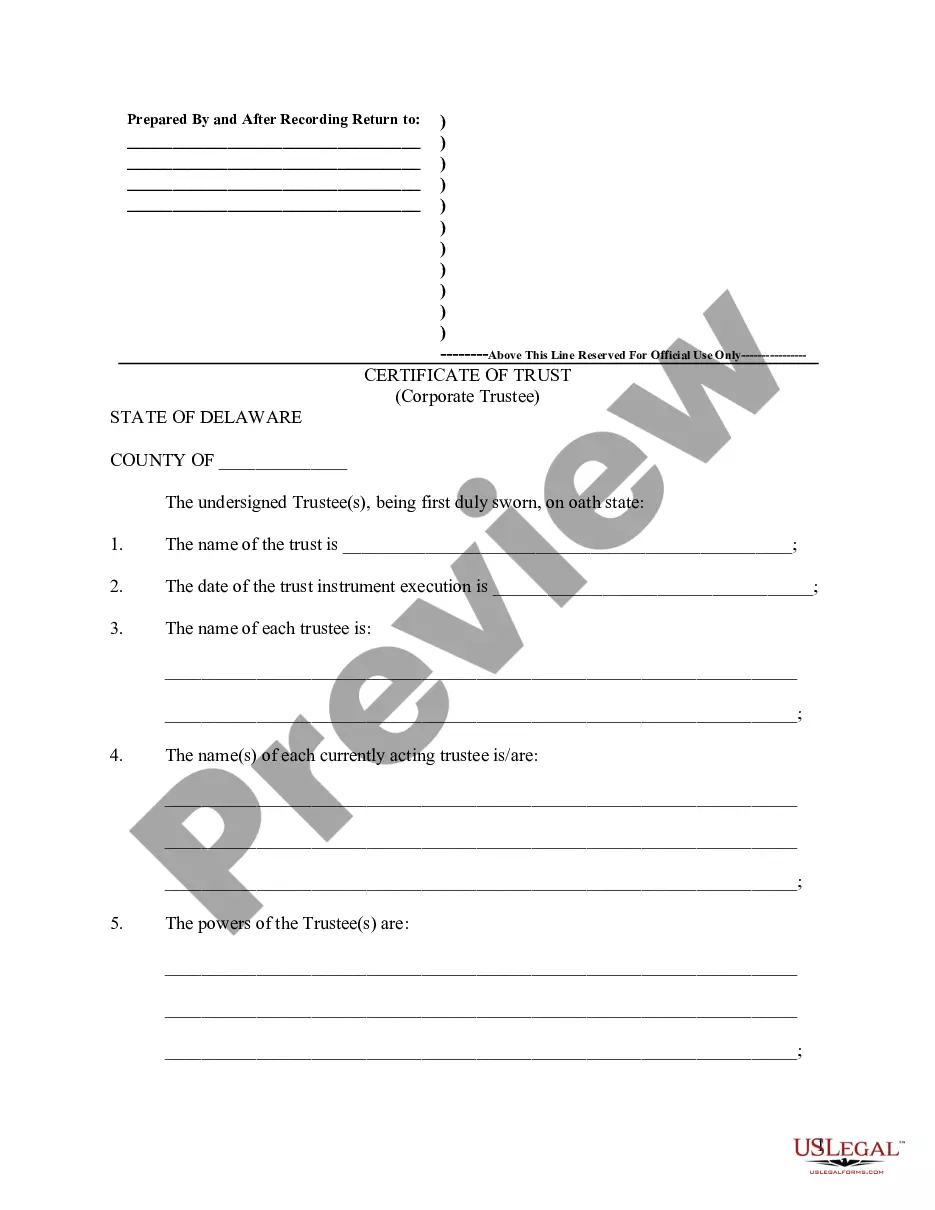
- Name of the trust
- Date of trust instrument execution
- Names of all trustees
- Powers granted to trustees
- Revocability status of the trust
- Trust's taxpayer identification number
- Details on co-trusteesâ authority
- Provisions for successor trustees
When to use this form
This certificate is typically used when an individual trustee needs to provide proof of a trust's existence or its terms without revealing the entire trust document. Common scenarios for using this form include transactions involving trust assets, clarifications with financial institutions, or during estate planning discussions where proof of a trust is necessary.
Who needs this form
- Individuals acting as trustees of a trust
- Beneficiaries of a trust who need to confirm its details
- Financial institutions or other parties dealing with a trust
- Attorneys representing clients with trust relationships
Completing this form step by step
- Identify and write the name of the trust at the top of the document.
- Enter the execution date of the original trust document.
- List all individuals serving as trustees, ensuring accuracy.
- Specify the powers granted to the trustee(s) as outlined in the trust document.
- Indicate whether the trust is revocable or irrevocable, and name the holder of the revocation power if applicable.
- Provide the trust's taxpayer identification number and describe how title in trust property should be taken.
Notarization guidance
Yes, this form must be notarized to be legally valid. Notarization ensures that the signatures on the Certificate of Trust are authentic and that the trustee is properly identified. US Legal Forms offers integrated online notarization services, available 24/7 through secure video calls, ensuring a simple and legally recognized process without the need for travel.
Get your form ready online
Our built-in tools help you complete, sign, share, and store your documents in one place.
Make edits, fill in missing information, and update formatting in US Legal Forms—just like you would in MS Word.
Download a copy, print it, send it by email, or mail it via USPS—whatever works best for your next step.
Sign and collect signatures with our SignNow integration. Send to multiple recipients, set reminders, and more. Go Premium to unlock E-Sign.
If this form requires notarization, complete it online through a secure video call—no need to meet a notary in person or wait for an appointment.
We protect your documents and personal data by following strict security and privacy standards.

Make edits, fill in missing information, and update formatting in US Legal Forms—just like you would in MS Word.

Download a copy, print it, send it by email, or mail it via USPS—whatever works best for your next step.

Sign and collect signatures with our SignNow integration. Send to multiple recipients, set reminders, and more. Go Premium to unlock E-Sign.

If this form requires notarization, complete it online through a secure video call—no need to meet a notary in person or wait for an appointment.

We protect your documents and personal data by following strict security and privacy standards.
Avoid these common issues
- Failing to include all currently acting trusteesâ names.
- Neglecting to specify if the trust is revocable or irrevocable.
- Omitting the trust's taxpayer identification number.
- Inaccurate representation of the powers granted to the trustee(s).
Why complete this form online
- Convenience of downloading and completing the form from home.
- Editable format allows for easy adjustments and accuracy.
- Access to templates drafted by licensed attorneys ensures compliance.
- Time savings over traditional methods of obtaining legal forms.
What to keep in mind
- The Delaware Certificate of Trust by Individual allows trustees to prove the existence of a trust efficiently.
- Understanding how to complete the form correctly is crucial to avoid common errors.
- Notarization is necessary for validating the certificate, ensuring its acceptance in legal and financial matters.
Looking for another form?
Form popularity
FAQ
The Delaware Certificate of Trust by Individual is a summary document that proves a trust exists and outlines key terms to third parties without disclosing the full trust instrument. It’s used by an individual trustee to confirm details such as the trust name, execution date, trustees, powers, revocability, tax ID, co-trustee authority, and successor provisions—useful in asset transactions and with financial institutions.
You can obtain the Delaware Certificate of Trust by Individual from a reputable legal forms provider or an attorney. The certificate should summarize core trust details—the name of the trust, date of execution, names of trustees, powers, revocability, the trust’s tax identification number, co-trustee authority, and provisions for successors—for use in transactions or with financial institutions.
Yes, it’s possible to prepare your own certificate, provided it accurately includes all required items: name of the trust, date of execution, names of trustees, powers, revocability, tax ID, co-trustee authority, and successor provisions. Consider having the document reviewed by a licensed attorney before presenting it to third parties.
Common mistakes include omitting required items (for example, revocability status or the tax identification number), misnaming trustees or powers, or asserting terms beyond the certificate’s scope. The Delaware Certificate of Trust by Individual should reflect the exact items listed in its components to ensure accuracy in third-party verifications.
A declaration of trust is a document that states the existence of a trust and its terms; it is a different instrument from a certificate. The Delaware Certificate of Trust by Individual provides a summarized proof of existence and key terms for third parties and does not replace the full trust or a formal declaration.
A trust is the full legal instrument that sets out all terms, powers, and assets. A Delaware Certificate of Trust by Individual is a summarized document that proves the trust exists and highlights key details (name, date, trustees, powers, revocability, tax ID, co-trustee authority, successor provisions) for third parties; it does not replace the full trust.