Delaware Interrogatories to Plaintiff for Motor Vehicle Occurrence
Understanding this form
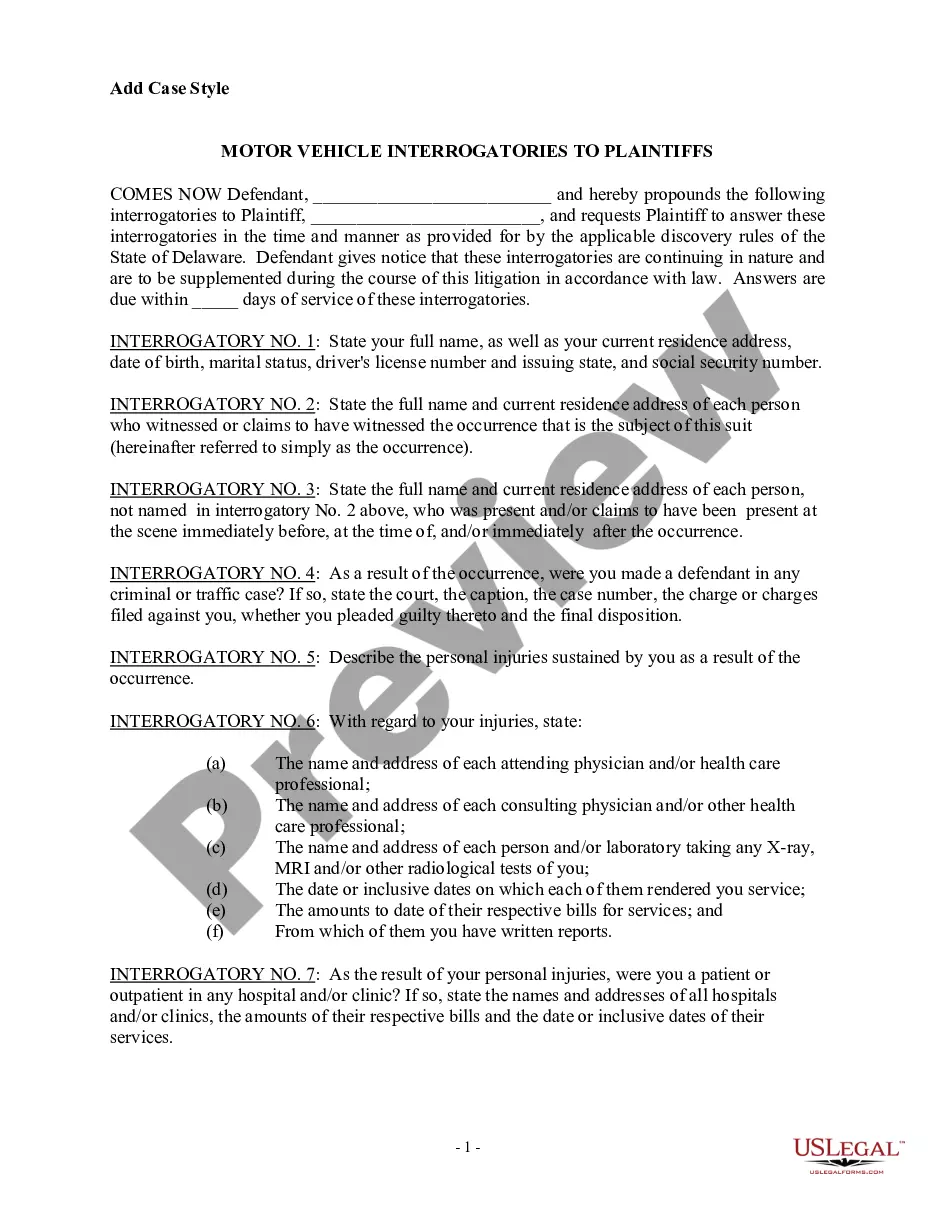
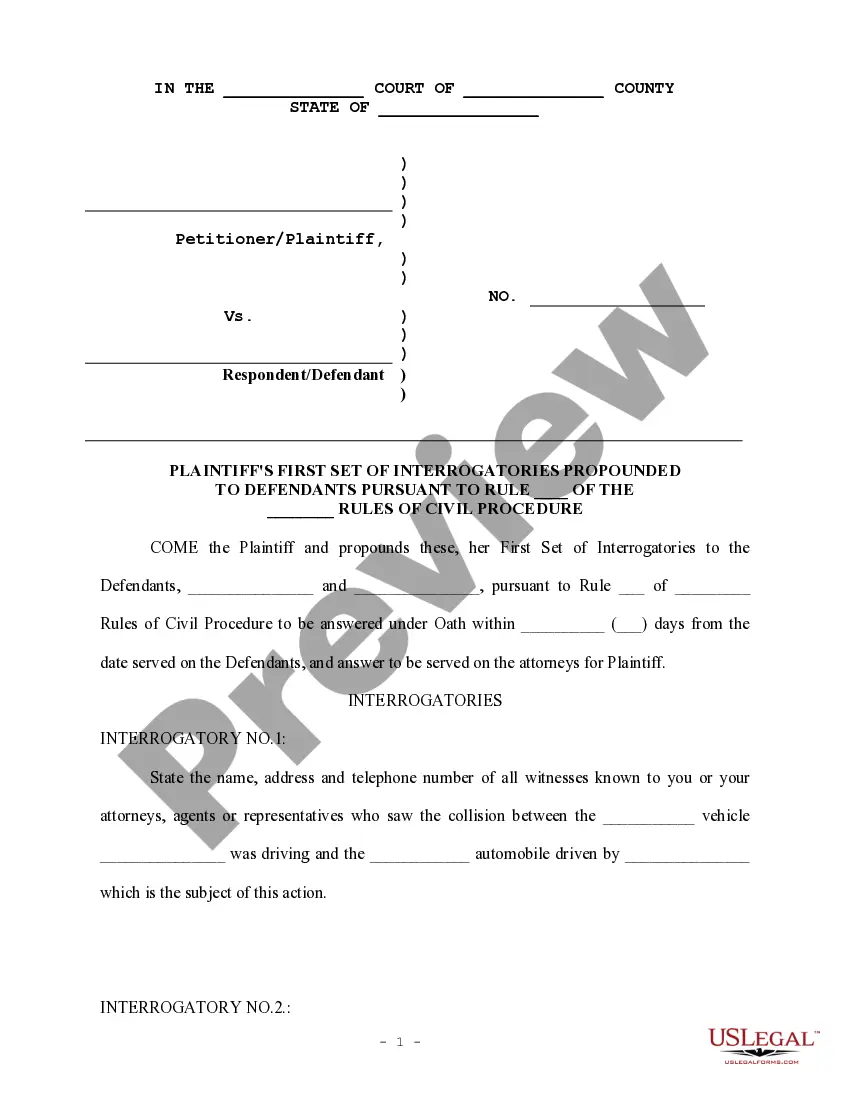
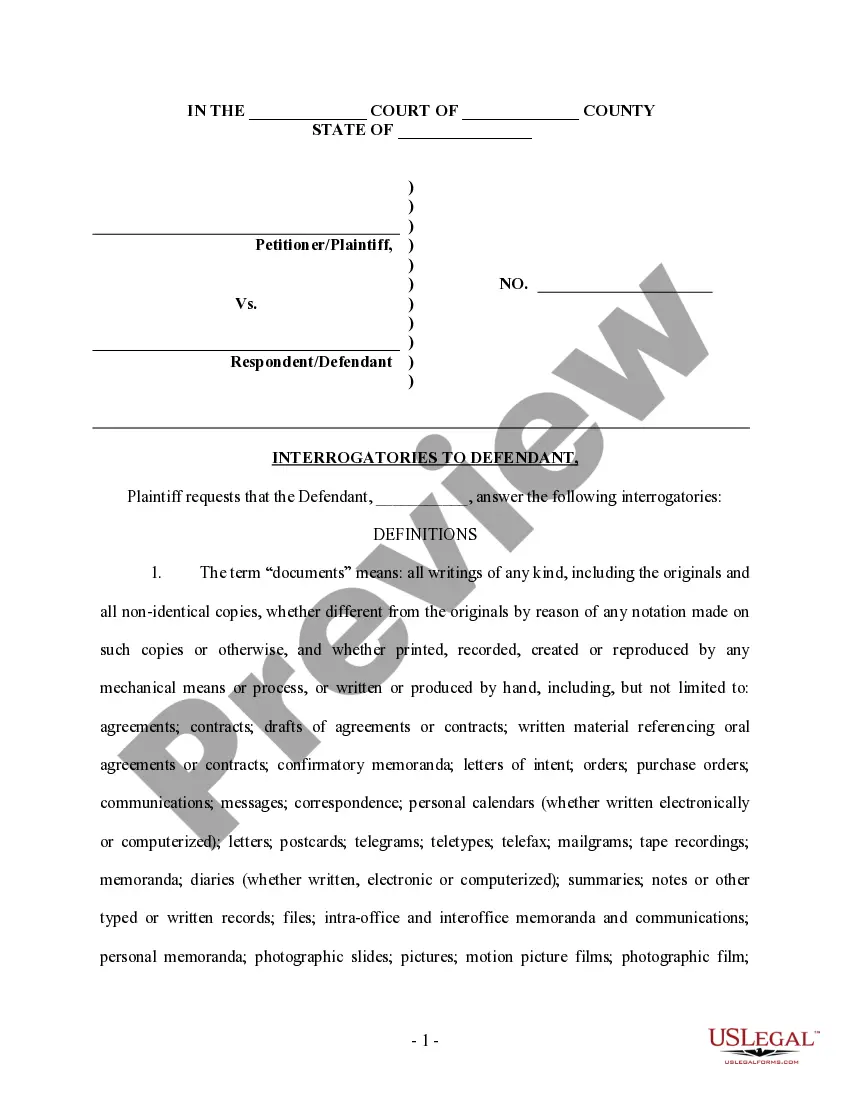
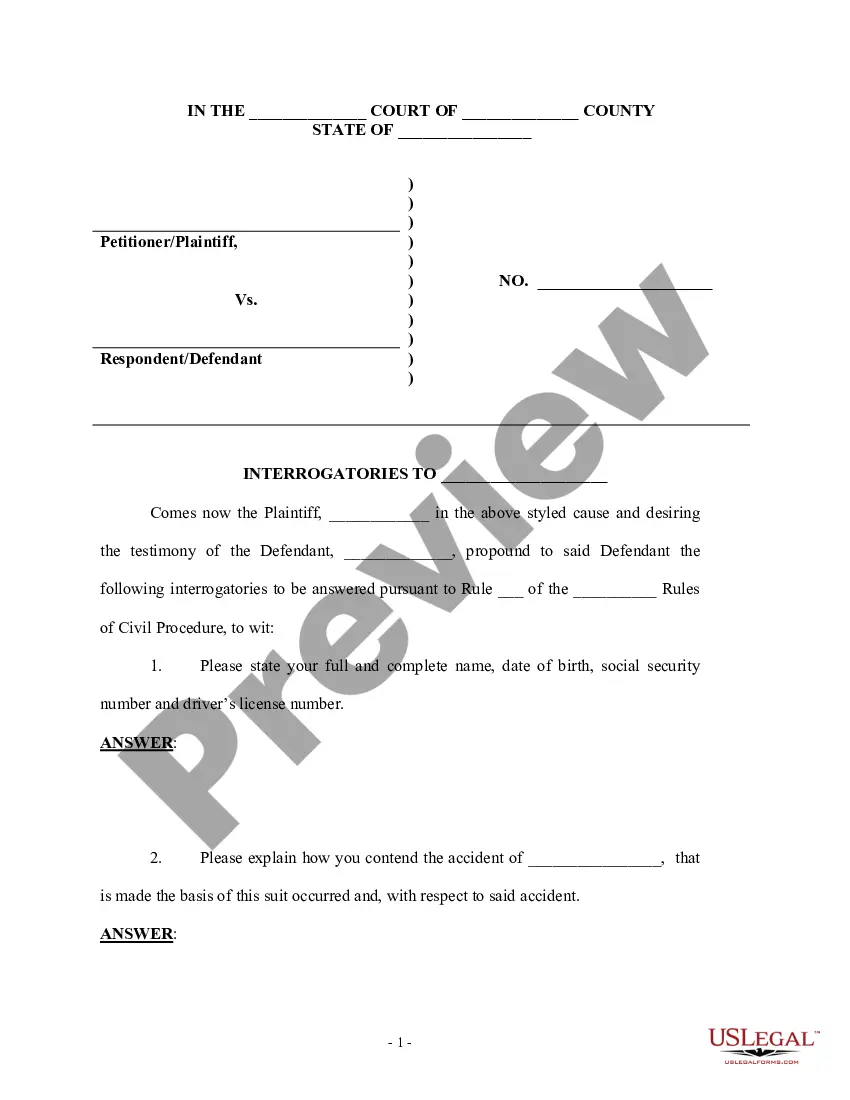
The Interrogatories to Plaintiff for Motor Vehicle Occurrence is a legal document used during the discovery phase of a lawsuit involving a vehicle incident, such as a car accident. This form consists of a set of interrogatories, which are written questions directed to the plaintiff, aimed at gathering relevant information regarding the case. Unlike other legal forms, this document is specialized for motor vehicle occurrences and serves as a guide for defendants to ask necessary questions concerning the plaintiff's claims and circumstances surrounding the incident.
What’s included in this form
- Defendantâs details: Information about the defendant, including name and address.
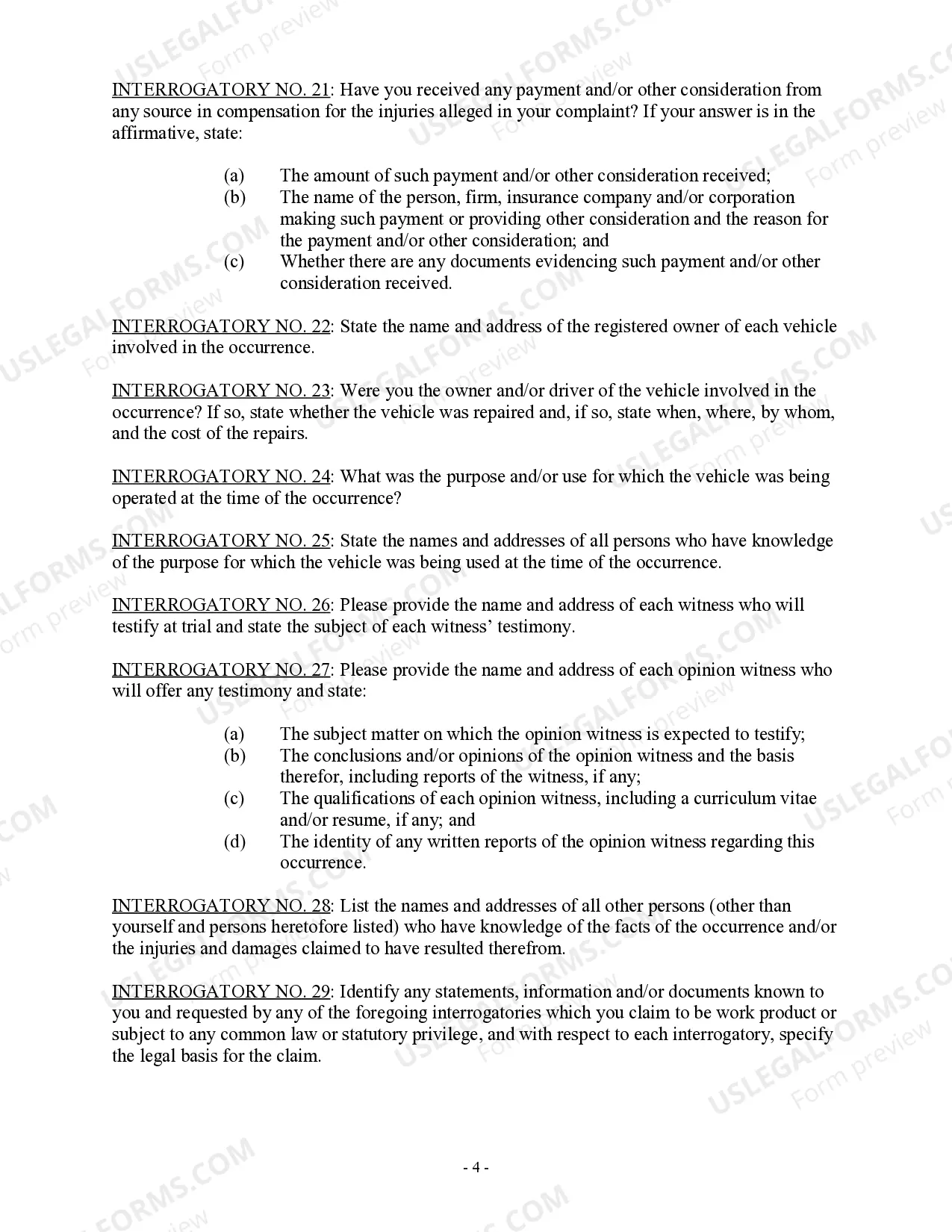
- Witness information: Names and addresses of any witnesses to the occurrence.
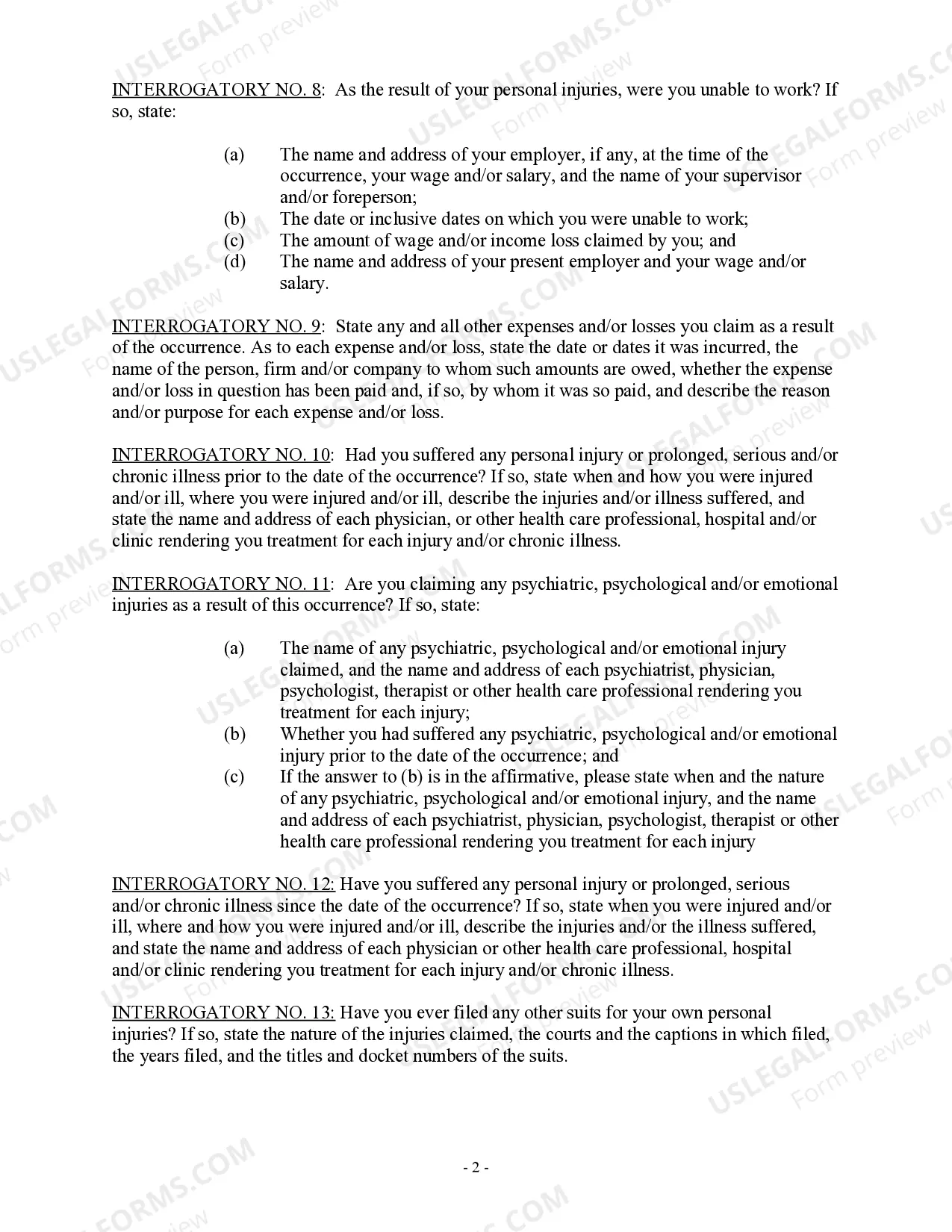
- Injury details: Description of personal injuries sustained by the plaintiff.
- Medical treatment: Information about healthcare providers and medical expenses incurred due to the incident.
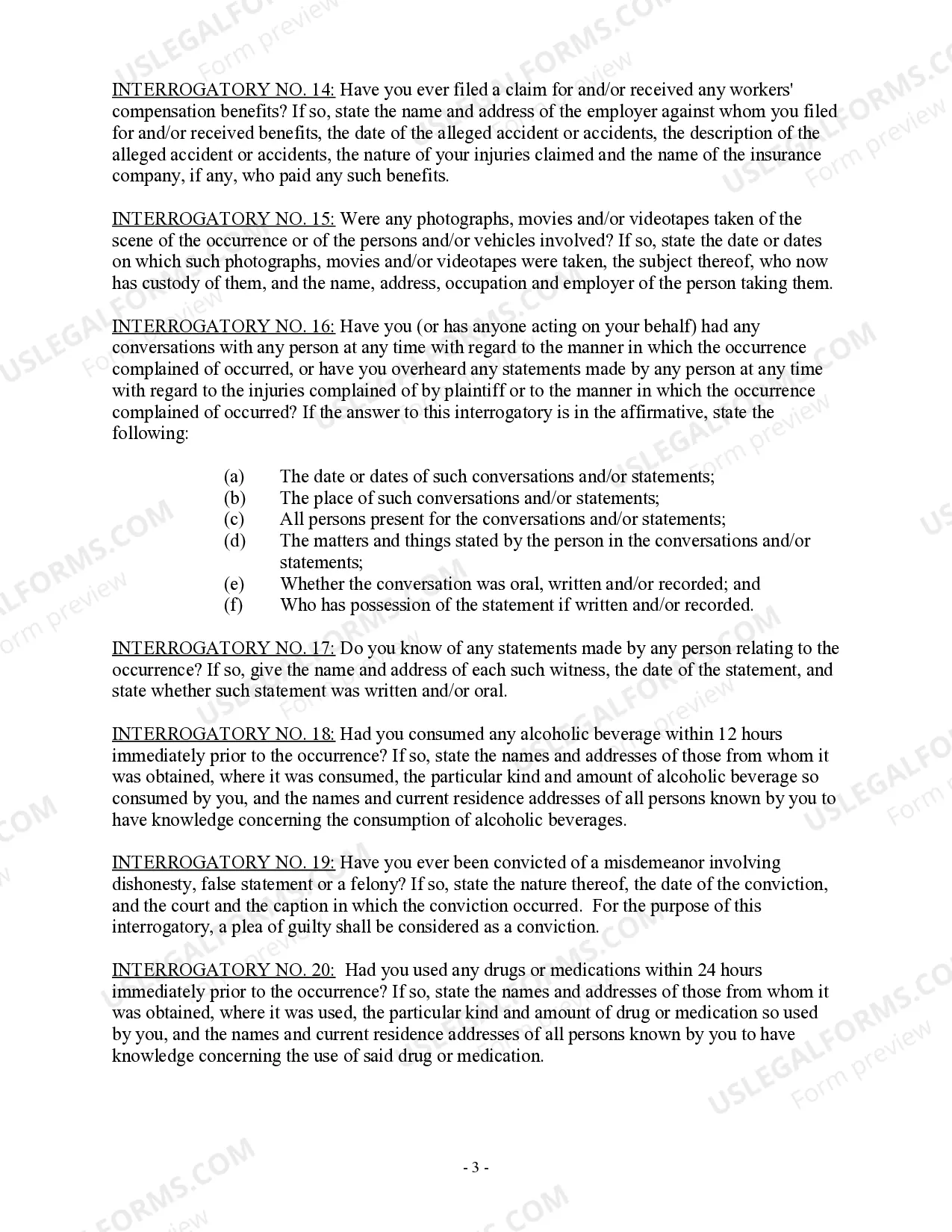
- Employment impact: Details about any loss of income or inability to work resulting from injuries.
- Prior injuries: Disclosure of any previous injuries or medical conditions related to the case.
- Statements: Collection of any statements made by witnesses regarding the incident.
When to use this document
This form is essential when a defendant in a motor vehicle case needs to obtain specific information from the plaintiff. It may be used when the defendant seeks to clarify the circumstances of the accident, the extent of the plaintiff's injuries, and any impacts those injuries may have on the plaintiff's life and finances. Filing this form allows the defendant to gather factual details necessary for preparing their defense or negotiating a settlement.
Who should use this form
- Defendants in motor vehicle accident lawsuits seeking information from the plaintiff.
- Attorneys representing defendants in civil litigation involving vehicle incidents.
- Insurance companies managing claims related to motor vehicle accidents.
How to complete this form
- Identify the parties: Fill in the names and addresses of the defendant and plaintiff on the first page of the form.
- Provide personal details: Input the personal information required in the interrogatories, such as full name, address, and date of birth.
- Answer the interrogatories: Complete each of the 28 questions honestly and thoroughly based on your knowledge and the facts of the case.
- Review for accuracy: Double-check all entries for correctness and ensure that no questions relevant to the case have been omitted.
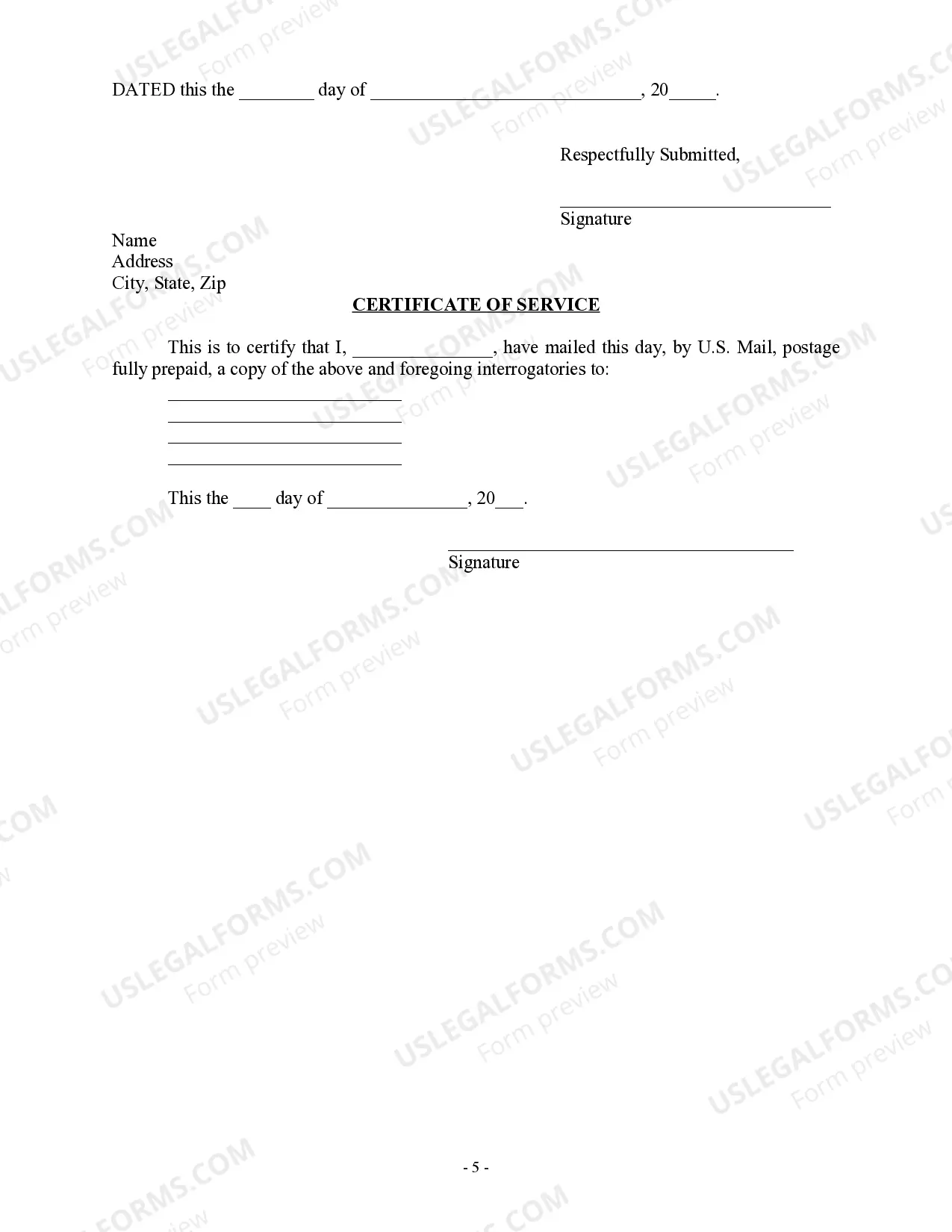
- Sign and date the document: Ensure that the defendant signs the form and dates it before serving it to the plaintiff.
- Serve the form: Deliver the completed form to the plaintiff according to the rules for service of process in your jurisdiction.
Does this document require notarization?
This form does not typically require notarization unless specified by local law. It is primarily used as a part of the discovery process in motor vehicle accident cases, where notarization is not usually mandated.
Get your form ready online
Our built-in tools help you complete, sign, share, and store your documents in one place.
Make edits, fill in missing information, and update formatting in US Legal Forms—just like you would in MS Word.
Download a copy, print it, send it by email, or mail it via USPS—whatever works best for your next step.
Sign and collect signatures with our SignNow integration. Send to multiple recipients, set reminders, and more. Go Premium to unlock E-Sign.
If this form requires notarization, complete it online through a secure video call—no need to meet a notary in person or wait for an appointment.
We protect your documents and personal data by following strict security and privacy standards.

Make edits, fill in missing information, and update formatting in US Legal Forms—just like you would in MS Word.

Download a copy, print it, send it by email, or mail it via USPS—whatever works best for your next step.

Sign and collect signatures with our SignNow integration. Send to multiple recipients, set reminders, and more. Go Premium to unlock E-Sign.

If this form requires notarization, complete it online through a secure video call—no need to meet a notary in person or wait for an appointment.

We protect your documents and personal data by following strict security and privacy standards.
Mistakes to watch out for
- Failing to answer all interrogatories fully or accurately.
- Leaving out essential details about witnesses or medical treatment.
- Not serving the interrogatories within the deadline set by local rules.
- Neglecting to update answers if new information arises during the litigation process.
Why use this form online
- Convenient access: Download the form instantly from anywhere, anytime.
- Editability: Easily adjust the interrogatories to fit the specifics of your case.
- Guided format: Follow the structured questions to ensure comprehensive responses.
- Cost-effective: Save on legal fees by handling preliminary information requests directly.
Legal use & context
- Utilized during the discovery phase of litigation to collect information essential for the defense.
- Helps clarify issues of fact, allowing both parties to prepare effectively for trial.
- Non-compliance with interrogatories can lead to legal penalties or adverse inferences during litigation.
What to keep in mind
- The Interrogatories to Plaintiff for Motor Vehicle Occurrence is crucial for defendants to gather information in vehicle accident cases.
- Complete all sections accurately and truthfully to avoid complications in legal proceedings.
- Be mindful of state-specific requirements and service deadlines when using this form.
Looking for another form?


Form popularity
FAQ
Criminal Rule 59 deals with motions for a new trial in criminal cases. This rule provides structure for defendants who wish to contest convictions or sentences based on errors during trial. In matters involving Delaware Interrogatories to Plaintiff for Motor Vehicle Occurrence, understanding this rule can be essential for those seeking remedies following a conviction. It ensures that defendants have a clear path to request a review of their case under specific circumstances.
A Rule 59 E motion refers to a specific request for the court to alter or amend its judgment. This type of motion is filed within a designated timeframe and focuses on rectifying errors, which can greatly impact cases like Delaware Interrogatories to Plaintiff for Motor Vehicle Occurrence. By leveraging this motion, parties can seek justice and potentially change the outcome based on new evidence or considerations that the court may have missed.
Rule 59 of the Rules of Civil Procedure outlines the process for motions for a new trial or to alter or amend a judgment. This rule is significant for parties seeking to address errors in court decisions, particularly in cases involving Delaware Interrogatories to Plaintiff for Motor Vehicle Occurrence. It allows for a structured approach to appeal directly after a judgment has been rendered, ensuring that fairness prevails in legal proceedings.
An example of an interrogatory for Delaware Interrogatories to Plaintiff for Motor Vehicle Occurrence could be: 'Please describe in detail the events leading up to the motor vehicle occurrence on date.' This type of question helps gather important facts and establishes a solid foundation for your case.
Answering a plaintiff's interrogatories, particularly Delaware Interrogatories to Plaintiff for Motor Vehicle Occurrence, involves providing honest and comprehensive answers. It is vital to address each section fully and reference relevant documents or evidence when possible. If you feel unsure, consulting a legal professional can be very beneficial.
To fill out an interrogatories form for Delaware Interrogatories to Plaintiff for Motor Vehicle Occurrence, start by entering personal and case information accurately. Follow with answering each interrogatory with precise details relevant to your case. If needed, US Legal Forms can provide the necessary templates and instructions for a seamless experience.
Writing good interrogatories requires clarity and precision. For Delaware Interrogatories to Plaintiff for Motor Vehicle Occurrence, focus on formulating questions that are direct and require detailed responses. This approach can help gather essential information effectively while minimizing ambiguity.
Filling out form interrogatories for Delaware Interrogatories to Plaintiff for Motor Vehicle Occurrence involves understanding the format and requirements of the forms. Begin by providing your contact information and case details at the top. Then, carefully read each question, providing complete answers that refer to the specifics of your case.
To properly answer Delaware Interrogatories to Plaintiff for Motor Vehicle Occurrence, read each question carefully. Provide clear and concise responses based on truthful information, while ensuring you include relevant details. If you're unsure about how to respond, consider consulting with a legal professional or utilizing resources like US Legal Forms for guidance.
Rule 33 in the Delaware Superior Court focuses specifically on written interrogatories, enabling one party to question another about specific facts. This rule is a powerful approach for obtaining vital information, especially in cases related to Delaware Interrogatories to Plaintiff for Motor Vehicle Occurrence. Utilizing Rule 33 can greatly improve your case by clarifying essential details.