District of Columbia Last Will and Testament for a Widow or Widower with Adult and Minor Children
About this form
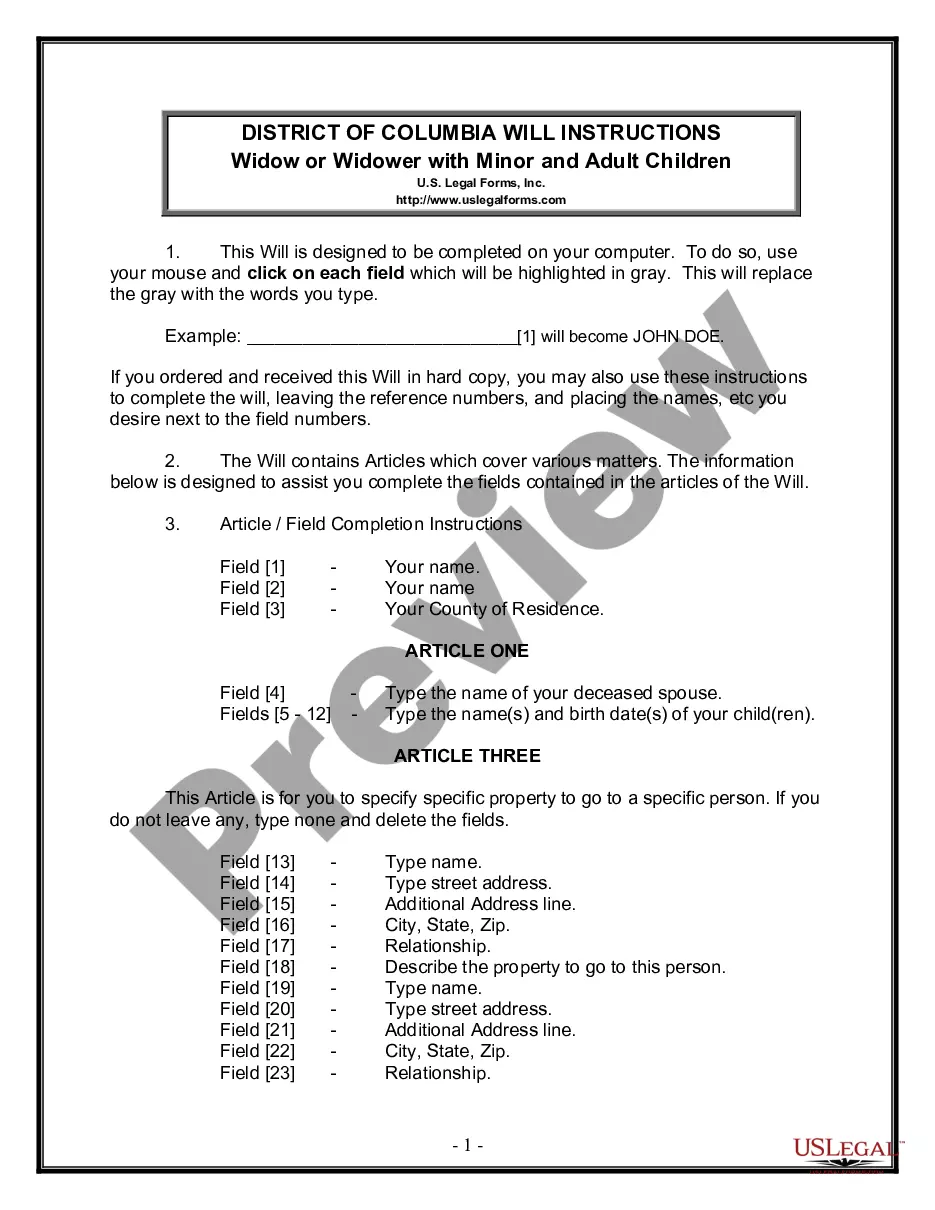
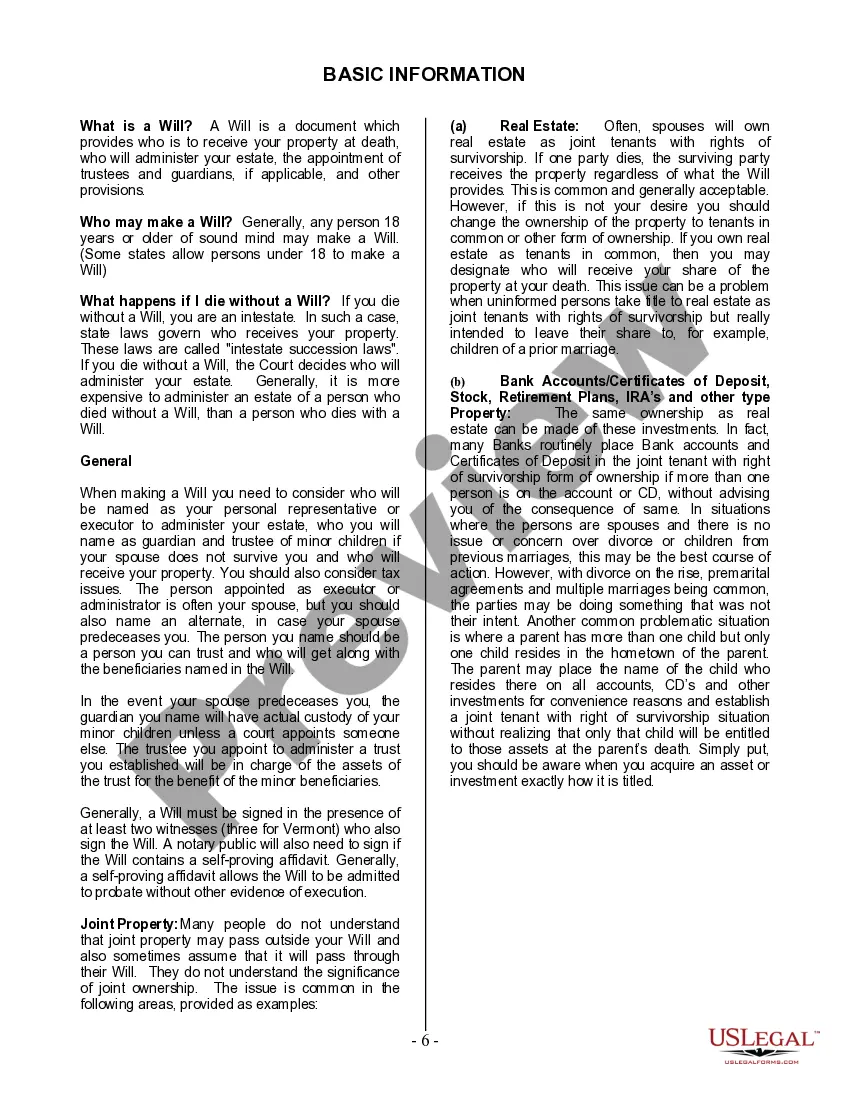
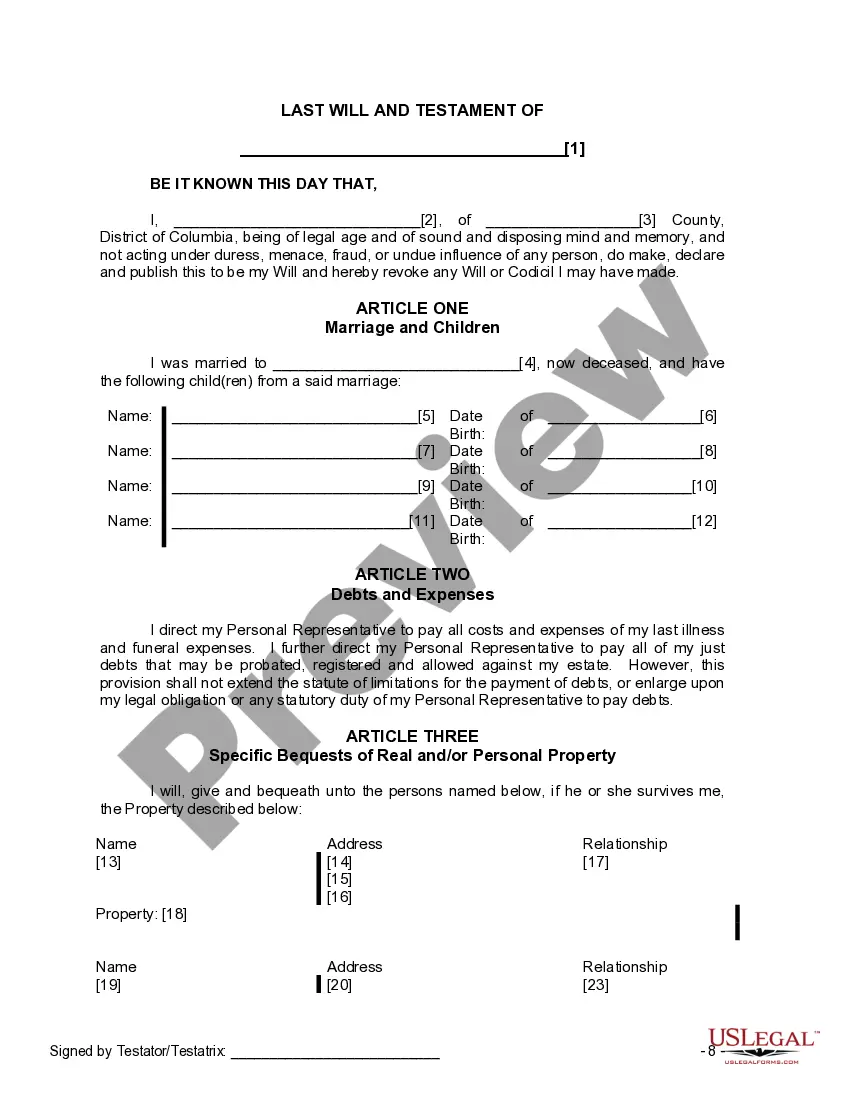
This Last Will and Testament allows a widow or widower with adult and minor children to specify how their estate should be distributed after their death. This document serves to appoint an executor, distribute property, and designate guardians for minor children, ensuring that your wishes regarding asset management and care for your children are clearly outlined.
What’s included in this form
- Appointment of a personal representative or executor to manage the estate.
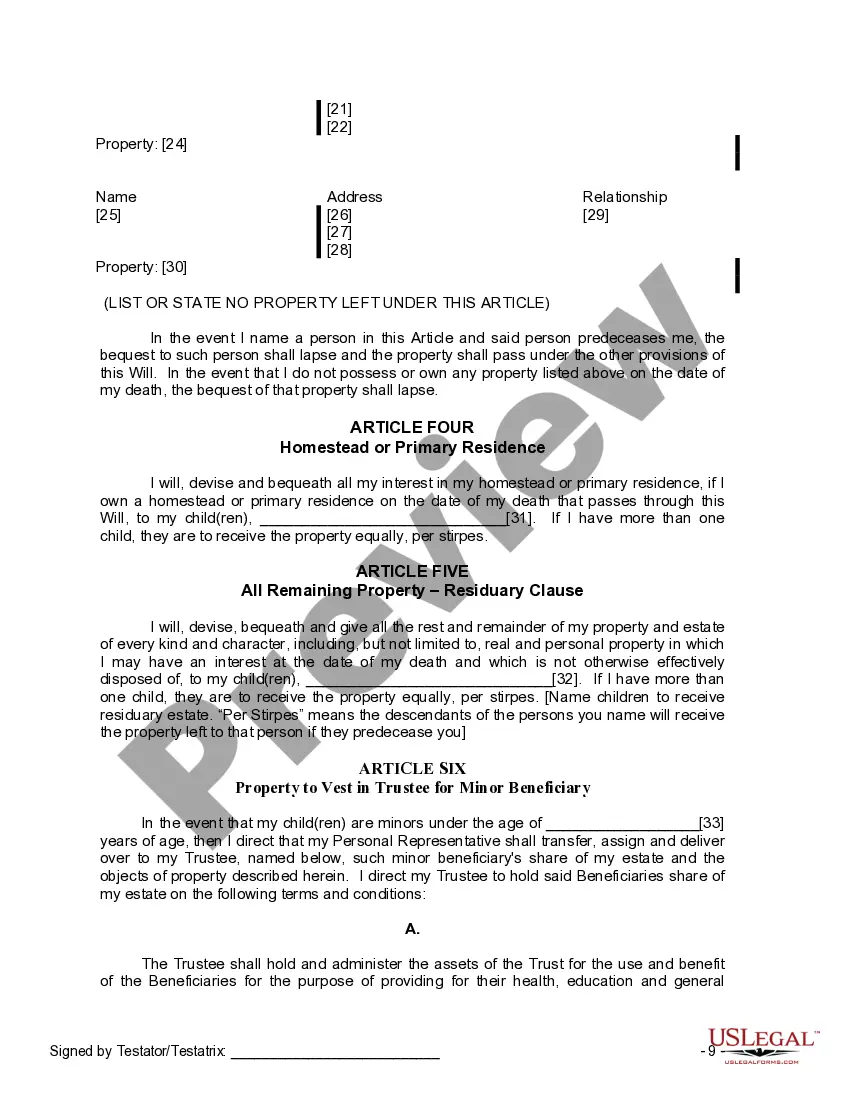
- Designation of beneficiaries, including specific bequests to individuals.
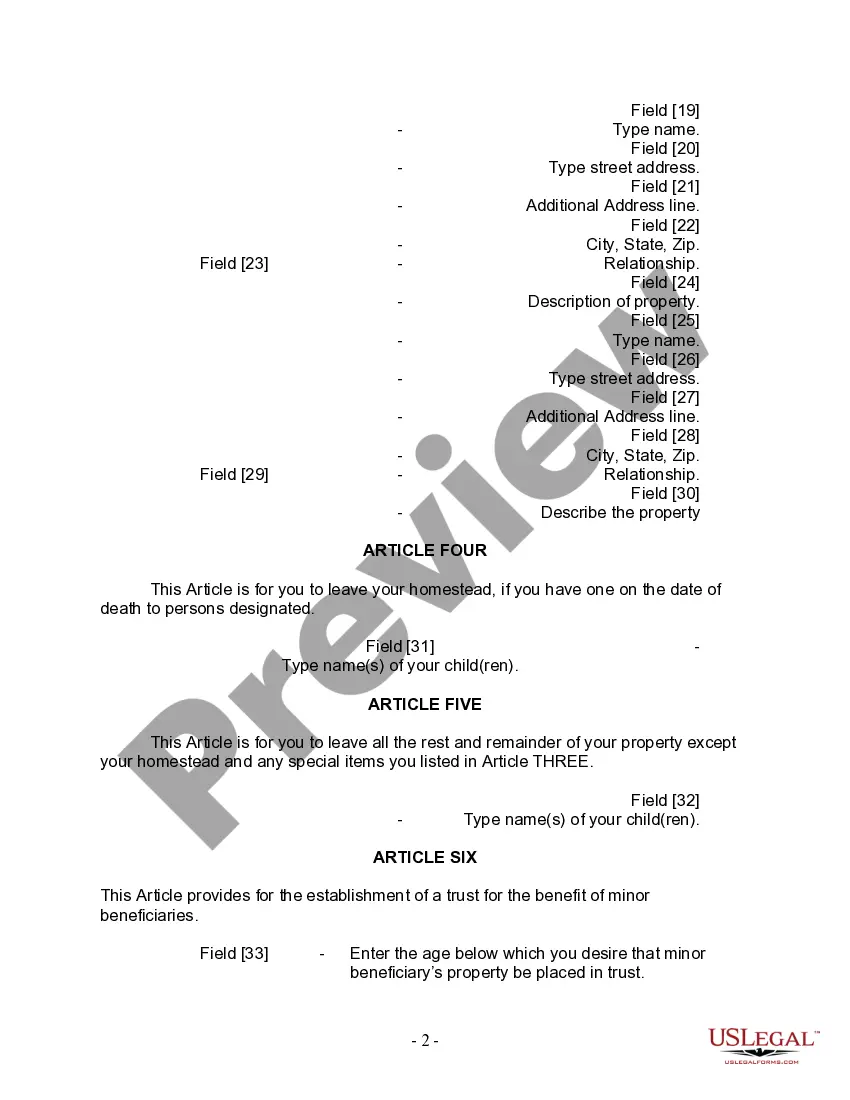
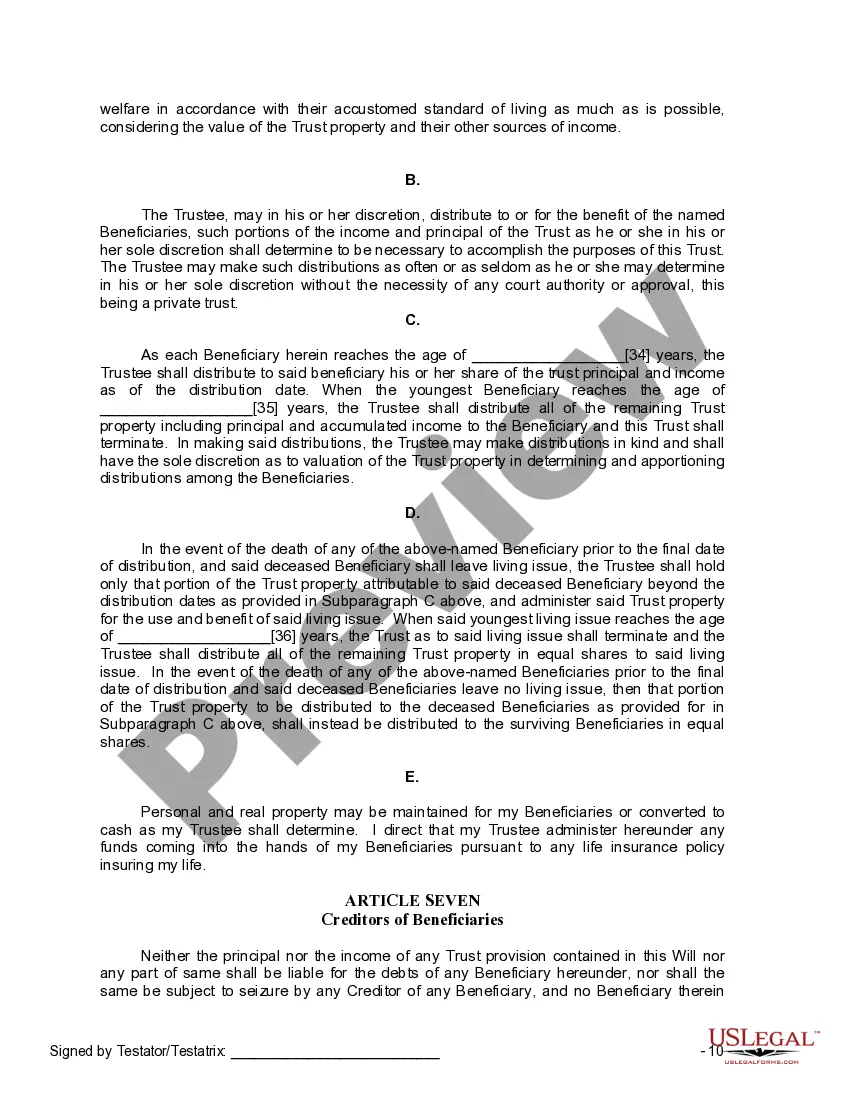
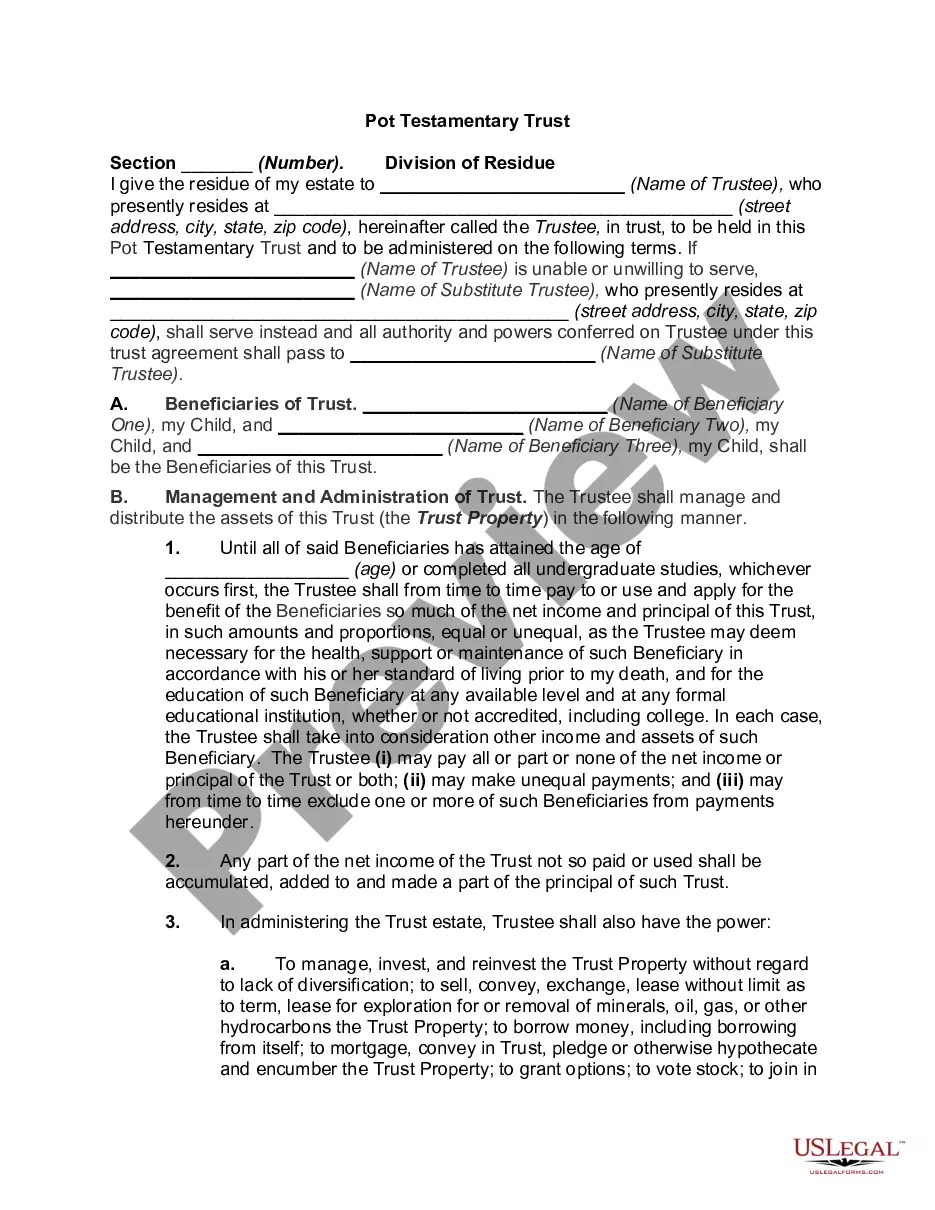
- Setting up a trust for assets left to minor children until they reach a specified age.
- Appointment of guardian(s) for any minor children.
- Self-proving affidavit for easier validation of the will in court.


When this form is needed
This form is essential for individuals who have lost their spouse and wish to ensure their minor and adult children's financial future is secured. It should be used when creating or updating a will to reflect current family circumstances, especially after significant life events like marriage or remarriage. Consider using this will if you want to give specific property to particular individuals or set up a trust for minor beneficiaries.
Who needs this form
This form is suitable for:
- Widows or widowers with minor and adult children.
- Individuals seeking to clarify asset distribution after death.
- Anyone wanting to ensure a guardian is named for their minor children.
Steps to complete this form
Follow these steps to complete your Last Will and Testament:
- Enter your full name and county of residence.
- Specify the name of your deceased spouse and list your children's names and birthdates.
- Designate specific assets for individual beneficiaries if desired.
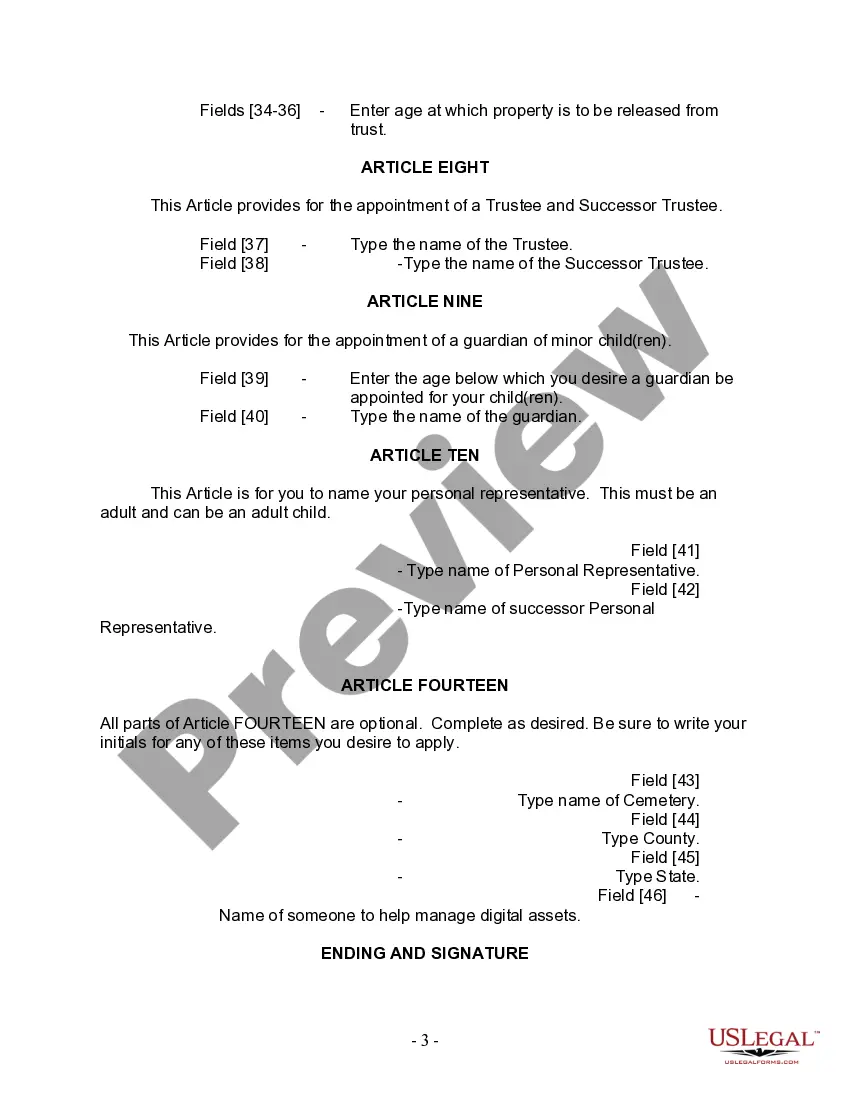
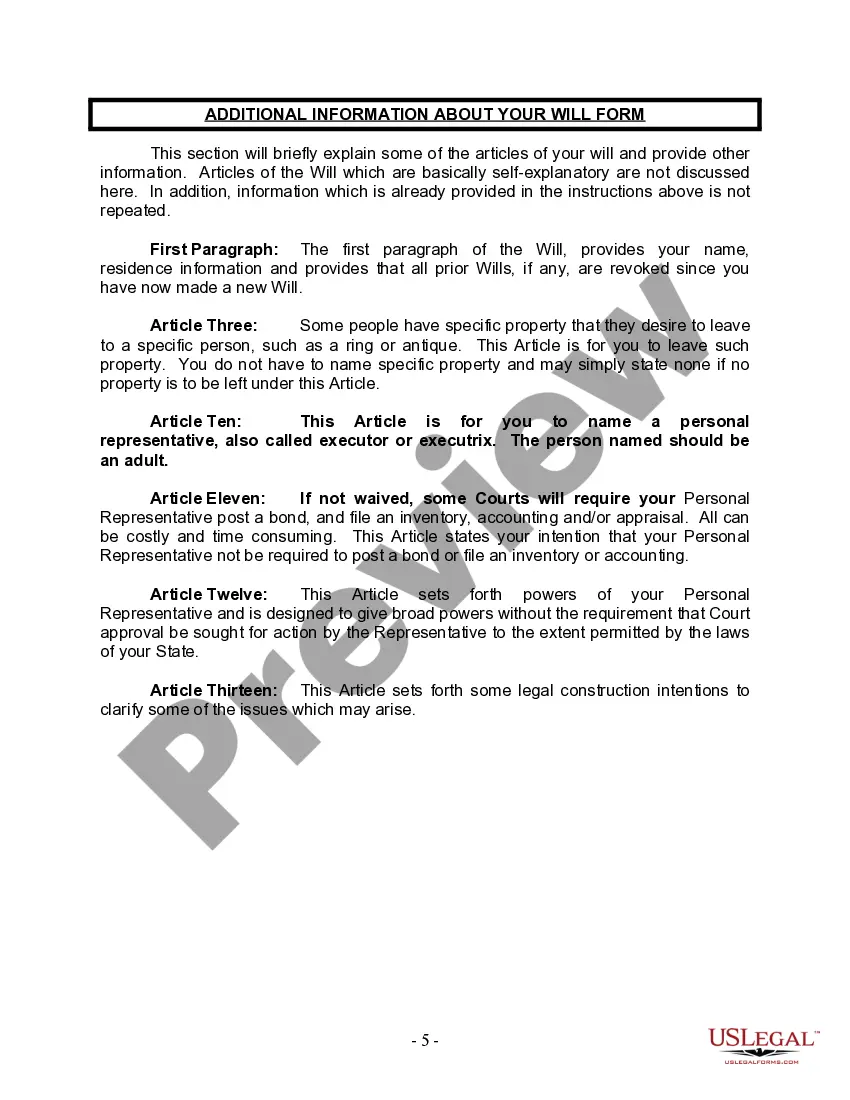
- Appoint a personal representative and include their details, along with any successor representatives.
- Include guardianship information for minor children and set terms for any trusts.
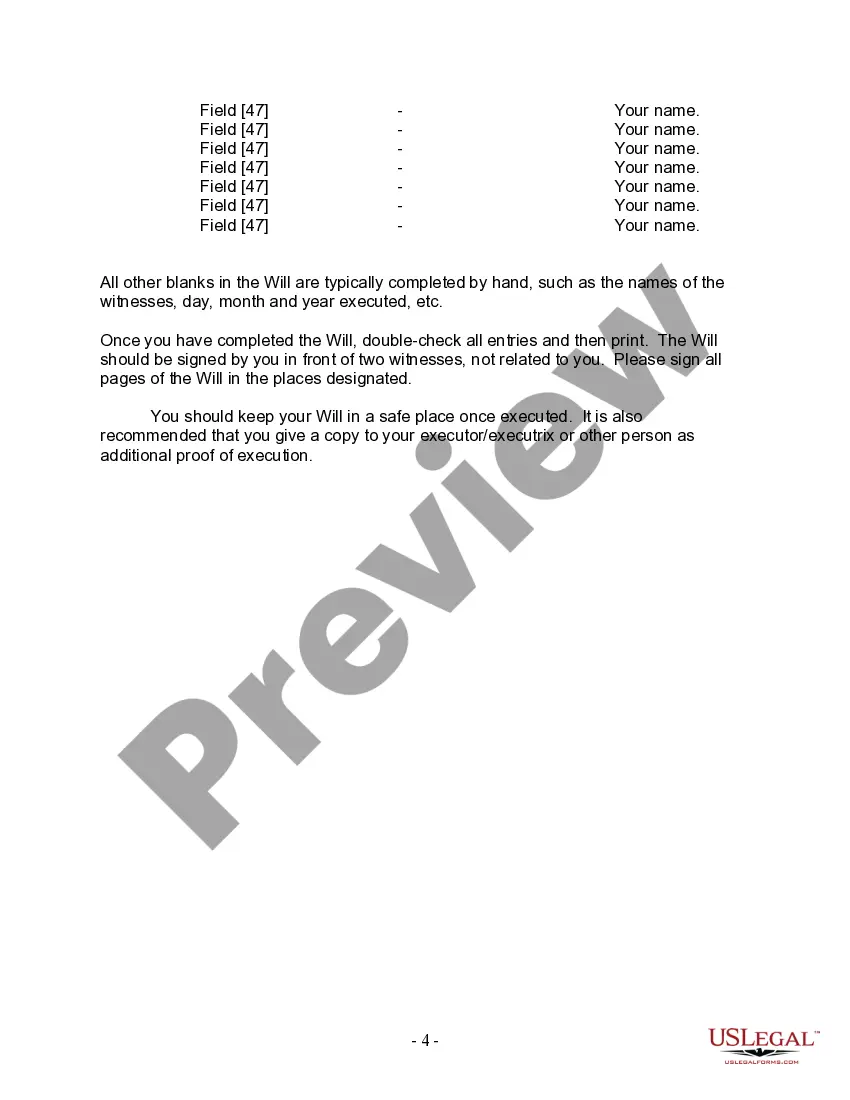
- Sign the will in front of two non-related witnesses and ensure it is notarized if required.
Is notarization required?
Yes, this form must be notarized to be legally valid in many states. If your state has adopted a self-proving affidavit statute, this will require the signature of a notary public, making the probate process more straightforward.
Get your form ready online
Our built-in tools help you complete, sign, share, and store your documents in one place.
Make edits, fill in missing information, and update formatting in US Legal Forms—just like you would in MS Word.
Download a copy, print it, send it by email, or mail it via USPS—whatever works best for your next step.
Sign and collect signatures with our SignNow integration. Send to multiple recipients, set reminders, and more. Go Premium to unlock E-Sign.
If this form requires notarization, complete it online through a secure video call—no need to meet a notary in person or wait for an appointment.
We protect your documents and personal data by following strict security and privacy standards.

Make edits, fill in missing information, and update formatting in US Legal Forms—just like you would in MS Word.

Download a copy, print it, send it by email, or mail it via USPS—whatever works best for your next step.

Sign and collect signatures with our SignNow integration. Send to multiple recipients, set reminders, and more. Go Premium to unlock E-Sign.

If this form requires notarization, complete it online through a secure video call—no need to meet a notary in person or wait for an appointment.

We protect your documents and personal data by following strict security and privacy standards.
Avoid these common issues
- Failing to have the will signed in the presence of two witnesses.
- Not updating the will after major life changes, such as marriage or the birth of children.
- Neglecting to specify who will receive particular assets, leading to ambiguity.
- Forgetting to appoint a guardian for minor children.
Why use this form online
- Convenient access to templates drafted by licensed attorneys.
- Edit and customize your will online, ensuring it meets personal needs.
- Save time and expenses associated with traditional legal consultations.
- Peace of mind knowing your loved ones are provided for according to your wishes.
What to keep in mind
- A Last Will and Testament is crucial for outlining the distribution of your estate.
- This form specifically caters to widows or widowers with minor and adult children, ensuring their needs are addressed.
- Following legal requirements for execution is essential for the will to be valid.
- Updating the will as life circumstances change is necessary to reflect your current wishes.
Looking for another form?

Form popularity
FAQ
Sample wording for a Last Will and Testament in the District of Columbia should include a declaration of your identity, a statement revoking previous wills, and clear instructions for the distribution of your assets. Additionally, you may wish to include language that addresses guardianship for minor children. For practical examples and guidance in crafting your District of Columbia Last Will and Testament for a Widow or Widower with Adult and Minor Children, platforms like uslegalforms can provide valuable resources.
Typically, banks do not offer notarization services specifically for wills, as their notary services are usually intended for routine documents. It's advisable to seek notary services from a legal office or a public notary. When dealing with a District of Columbia Last Will and Testament for a Widow or Widower with Adult and Minor Children, understanding where to find reliable notary assistance can streamline the process.
A will is considered valid in the District of Columbia if it meets specific legal requirements, including being signed by the testator and witnessed by two individuals. Furthermore, the testator must be of sound mind and at least 18 years old when creating the will. Always ensure your District of Columbia Last Will and Testament for a Widow or Widower with Adult and Minor Children adheres to these standards for it to be recognized in court.
To write a will in the District of Columbia, start by clearly stating your intentions regarding the distribution of your assets. Identify your beneficiaries and appoint an executor to manage your estate. For a precise and legally compliant District of Columbia Last Will and Testament for a Widow or Widower with Adult and Minor Children, consider utilizing platforms like uslegalforms, which provide templates and guidance tailored to your specific needs.
Wills in Washington, DC, do not require notarization to be valid. What matters most is that the will is signed by the testator and witnessed appropriately. This process is significant when preparing a District of Columbia Last Will and Testament for a Widow or Widower with Adult and Minor Children, ensuring the document reflects your wishes.
In the District of Columbia, notarization is not a requirement for a will to be valid. It is essential, however, for the will to be witnessed by at least two individuals who are not beneficiaries to ensure its validity. Understanding this is crucial, especially when drafting a District of Columbia Last Will and Testament for a Widow or Widower with Adult and Minor Children.
A surviving spouse can change their own will at any time after their partner's passing, including the District of Columbia Last Will and Testament for a Widow or Widower with Adult and Minor Children. However, they cannot change their deceased spouse's will; only the original testator has that ability. If the surviving spouse wants to make modifications, it would be best to create a new will or amend the existing one. Services like U.S. Legal Forms can facilitate this process by providing forms and guidance.
The executor of a will that includes a surviving spouse is the person appointed by the testator in the will. In a District of Columbia Last Will and Testament for a Widow or Widower with Adult and Minor Children, this role could be filled by the spouse, an adult child, or a close family member. The named executor is responsible for managing the estate, which includes settling debts and distributing assets per the will. Choosing the right executor can greatly affect the estate's administration.
The executor of a surviving spouse's estate in the District of Columbia Last Will and Testament for a Widow or Widower with Adult and Minor Children is usually specified in the will. If the surviving spouse does not have a will, the state will appoint an executor based on intestacy laws. This could mean that the surviving spouse's adult children or other close relatives may be considered for this role. Designating an executor in a will can help streamline this process.
In the case of a District of Columbia Last Will and Testament for a Widow or Widower with Adult and Minor Children, a spouse is not automatically the executor of the estate. The will typically designates an executor, which can be the spouse or another individual. If there is no will, the court may appoint an executor, often favoring the surviving spouse for this role. It's important to have a designated executor to ensure the estate is managed according to the deceased's wishes.