District of Columbia Transfer on Death Deed or TOD - Beneficiary Deed for Individual to Individual
About this form
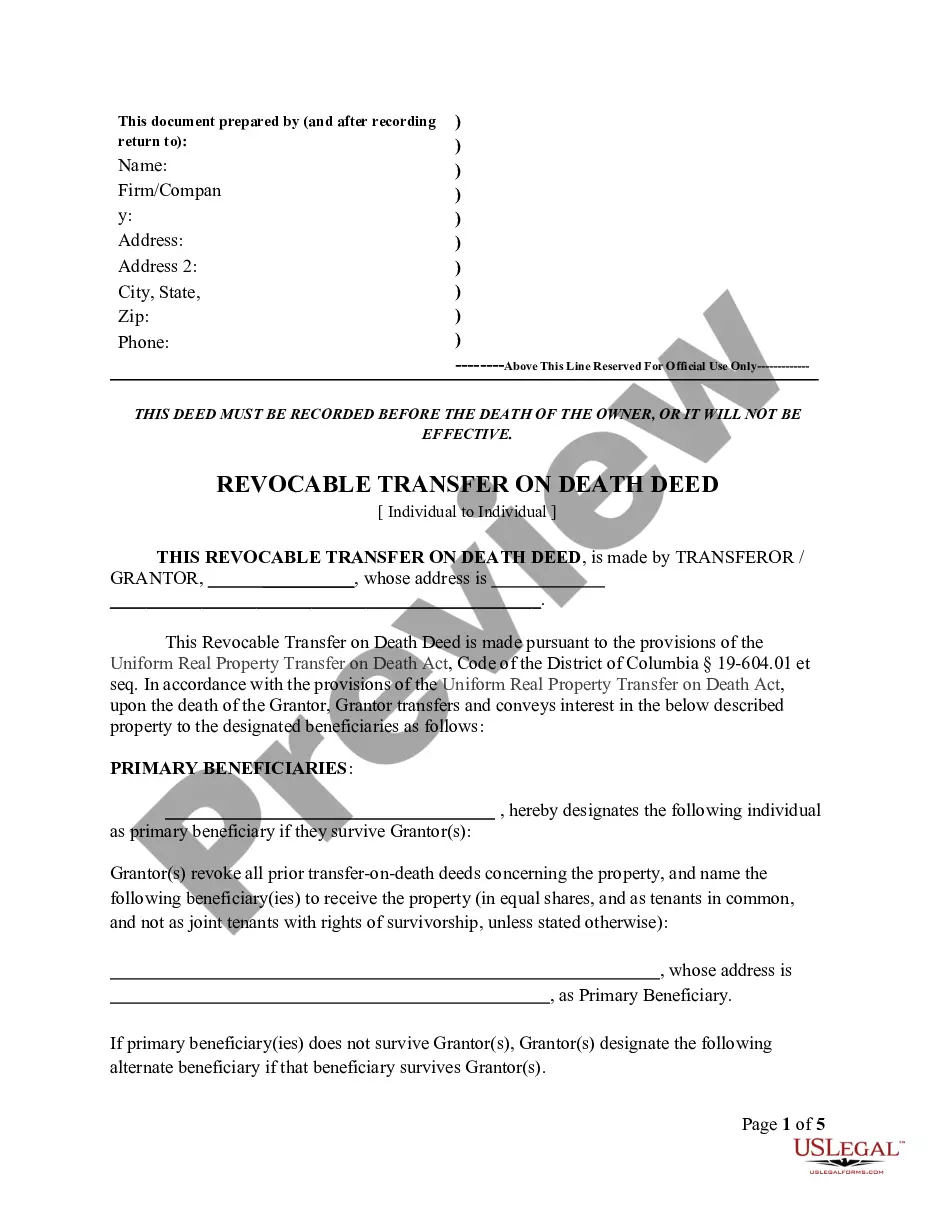
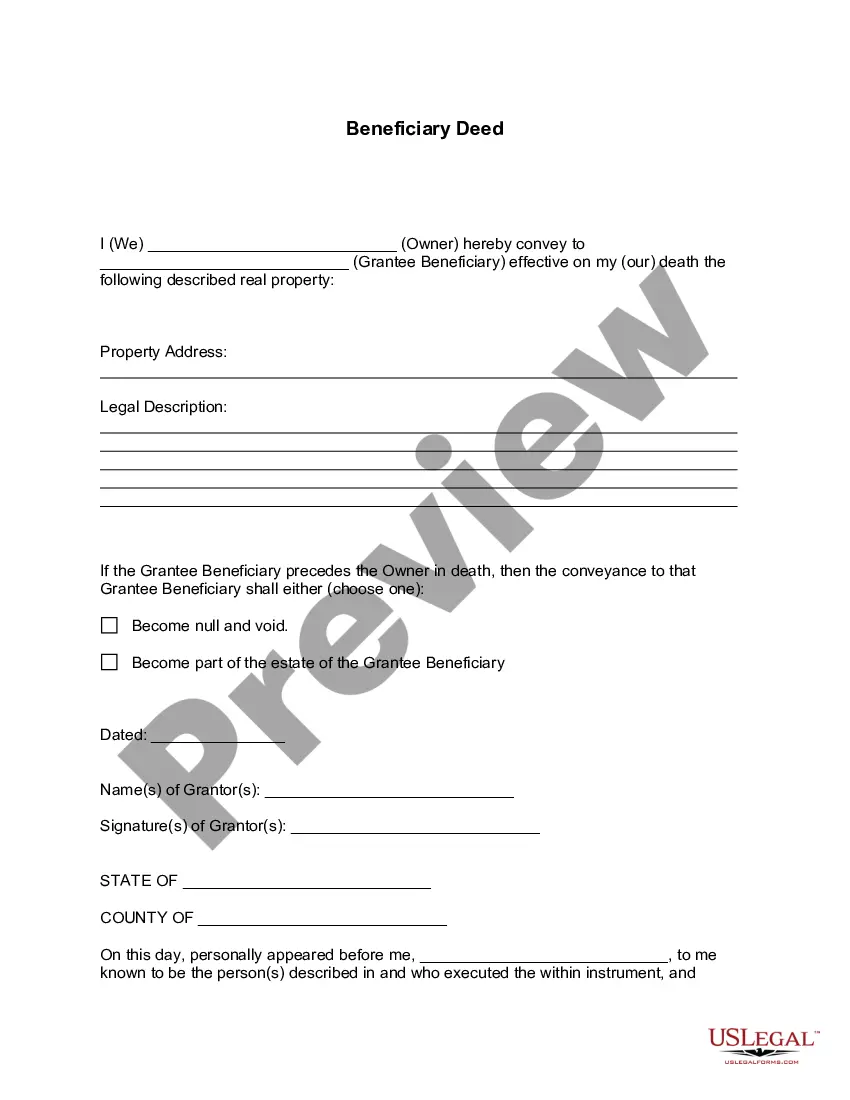
The Transfer on Death Deed (TOD) is a legal document that allows an individual to transfer the ownership of real property to a designated beneficiary upon the owner's death. Unlike other deeds, this form does not transfer ownership during the grantor's lifetime and remains revocable, meaning the grantor can change or cancel it at any time before death. This form adheres to the Uniform Real Property Transfer on Death Act, ensuring clear guidelines for both grantors and beneficiaries.
Main sections of this form
- Transferor/Grantor's information: Name and address of the property owner.
- Designated beneficiaries: Primary and optional alternate beneficiaries to receive the property.
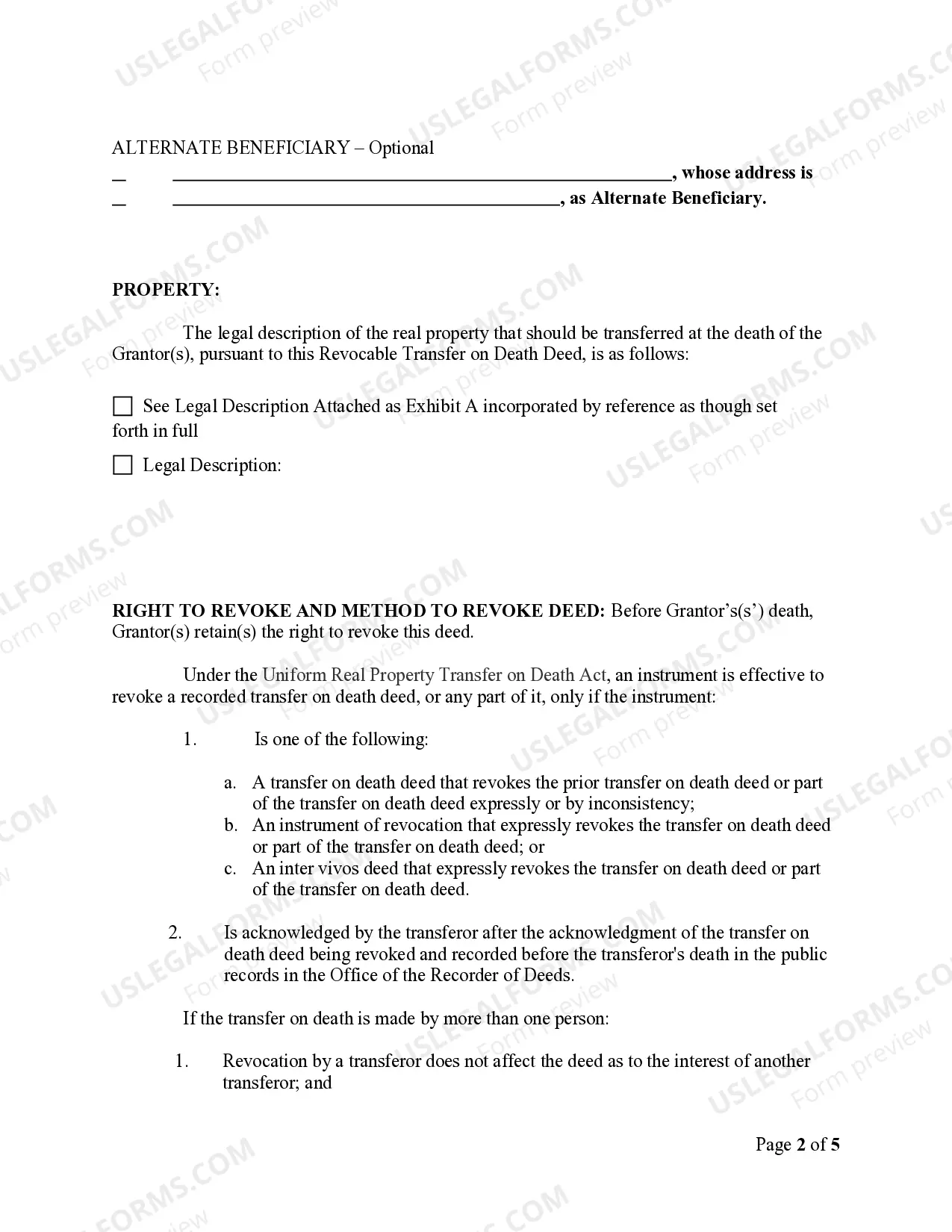
- Property description: Detailed legal description of the real estate being transferred.
- Revocation clause: Information on how the grantor can revoke the deed before death.
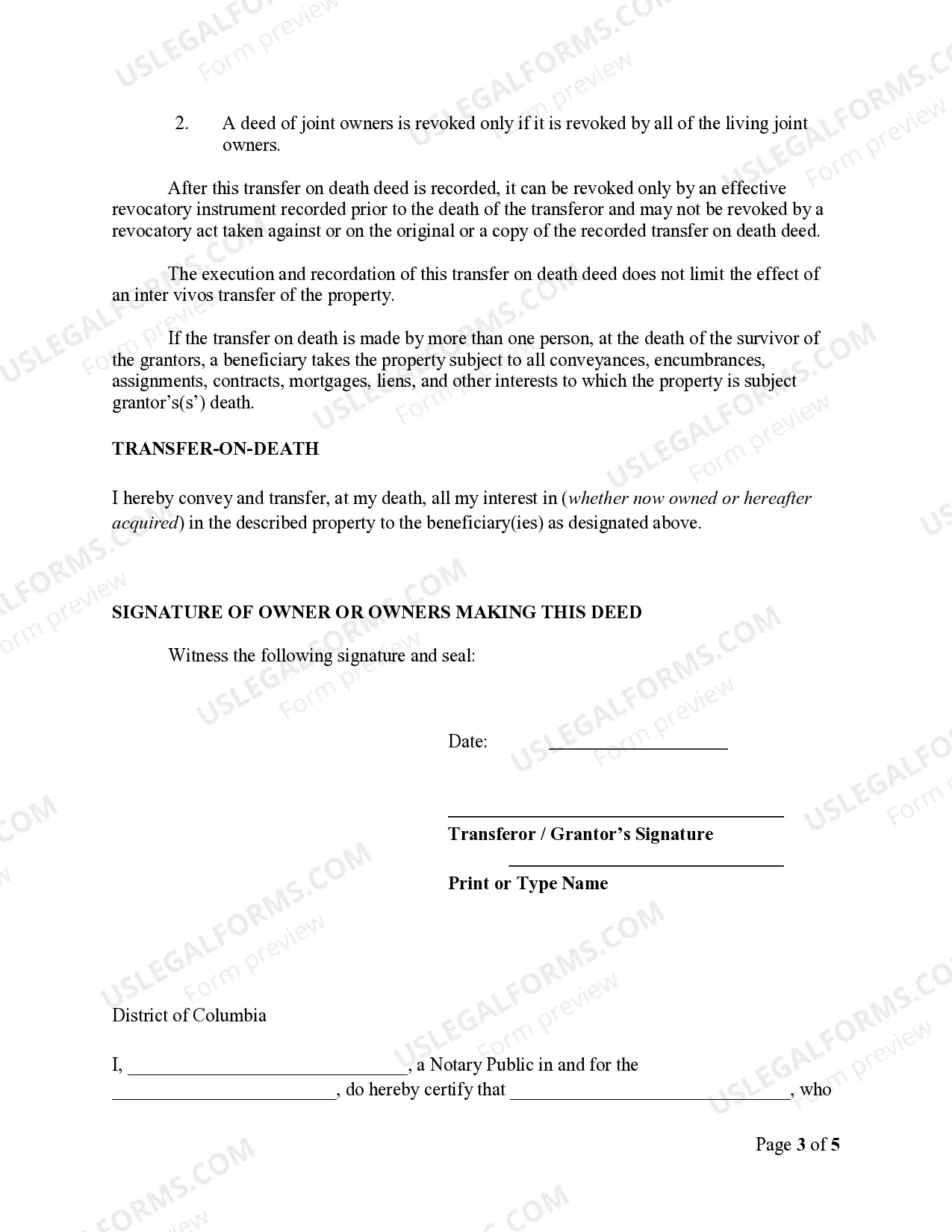
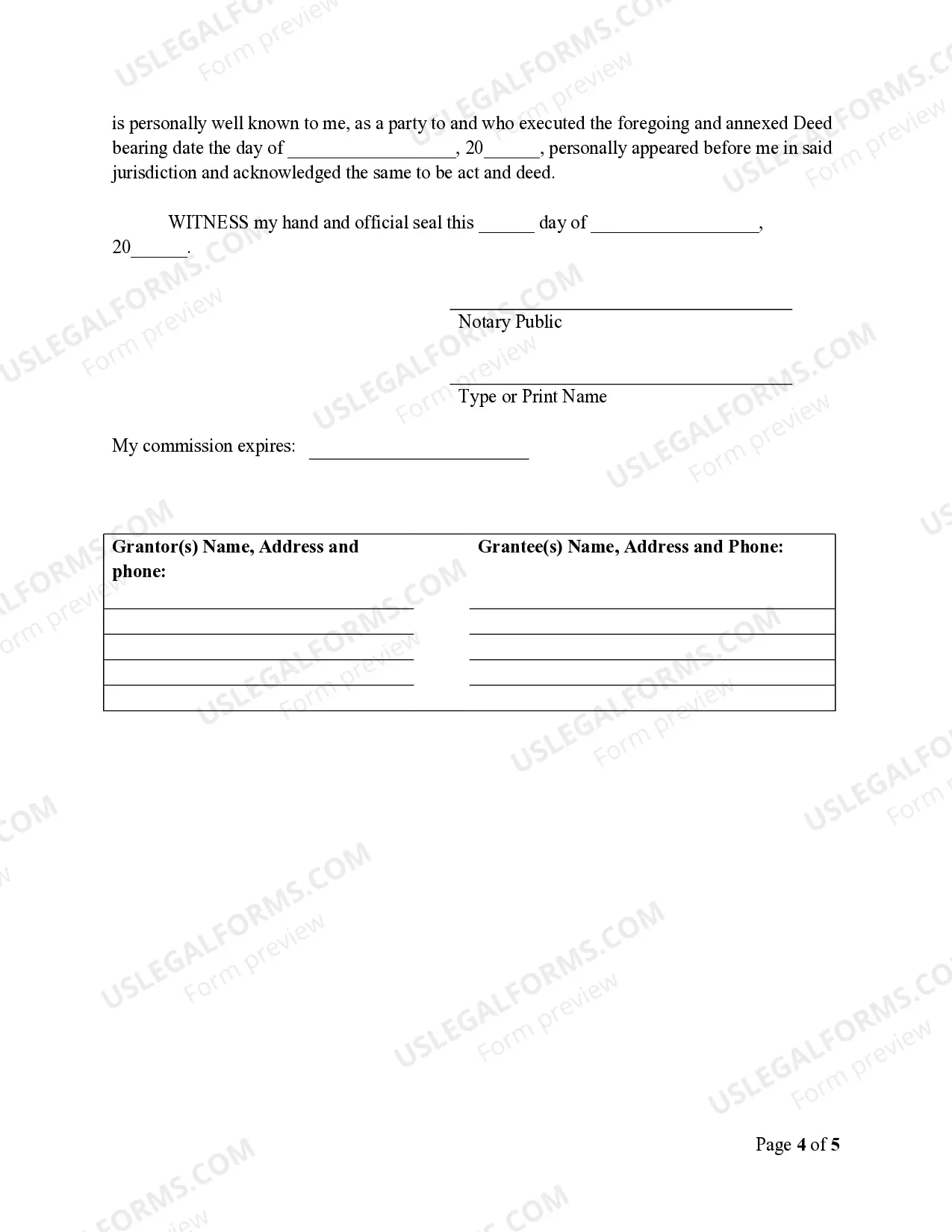
- Signatures: Required signatures of the grantor and a notary public for validation.



Common use cases
This form should be used when a property owner wants to ensure that their property is transferred directly to one or more beneficiaries after their death, avoiding the probate process. It's particularly useful for individuals wanting to keep control of their property during their lifetime while simplifying the transition on death. Situations might include transferring a family home to a child or passing on investment property to a trusted friend.
Who needs this form
Individuals who may benefit from using this form include:
- Homeowners looking to designate a beneficiary for their property.
- Individuals seeking to streamline property transfer upon death without involving a will.
- Anyone who wishes to maintain the right to alter their decisions regarding property ownership during their lifetime.
How to prepare this document
- Identify the parties involved: Fill in the names and addresses of the grantor and the beneficiaries.
- Provide the property description: Attach or specify the legal description of the property being transferred.
- Designate primary and alternate beneficiaries: Clearly state who will receive the property and any alternatives.
- Review the revocation process: Understand how and when you can revoke the deed if necessary.
- Sign the deed: Ensure the grantor signs the document in the presence of a notary public to validate it.
Notarization guidance
Yes, this form must be notarized to be legally valid. Notarization confirms the identity of the grantor and the authenticity of the signature, providing an added layer of security against disputes. US Legal Forms offers integrated online notarization services, available 24/7, ensuring a secure video call experience without the need to travel.
Get your form ready online
Our built-in tools help you complete, sign, share, and store your documents in one place.
Make edits, fill in missing information, and update formatting in US Legal Forms—just like you would in MS Word.
Download a copy, print it, send it by email, or mail it via USPS—whatever works best for your next step.
Sign and collect signatures with our SignNow integration. Send to multiple recipients, set reminders, and more. Go Premium to unlock E-Sign.
If this form requires notarization, complete it online through a secure video call—no need to meet a notary in person or wait for an appointment.
We protect your documents and personal data by following strict security and privacy standards.

Make edits, fill in missing information, and update formatting in US Legal Forms—just like you would in MS Word.

Download a copy, print it, send it by email, or mail it via USPS—whatever works best for your next step.

Sign and collect signatures with our SignNow integration. Send to multiple recipients, set reminders, and more. Go Premium to unlock E-Sign.

If this form requires notarization, complete it online through a secure video call—no need to meet a notary in person or wait for an appointment.

We protect your documents and personal data by following strict security and privacy standards.
Common mistakes
- Failing to record the deed before the grantor's death, making it ineffective.
- Not providing an accurate legal description of the property, which can lead to disputes or invalid transfers.
- Neglecting to include alternative beneficiaries in case the primary beneficiary predeceases the grantor.
Benefits of completing this form online
- Convenience: Download and complete the form from the comfort of your home.
- Editability: Customize the form easily to fit your specific needs.
- Reliability: Access documents prepared by licensed attorneys, ensuring legal compliance.
Looking for another form?
Form popularity
FAQ
Filling out a transfer on death designation affidavit for a District of Columbia Transfer on Death Deed or TOD - Beneficiary Deed for Individual to Individual involves several straightforward steps. Begin by gathering necessary information, such as your property details and beneficiary information. Carefully complete the form, ensuring all sections are filled out accurately. Once you've completed the affidavit, you should file it with the appropriate office, and you might consider using resources from uslegalforms to make the process smoother.
Whether or not you need a lawyer for a District of Columbia Transfer on Death Deed or TOD - Beneficiary Deed for Individual to Individual largely depends on your comfort level with the process. While it's possible to fill out the deed and file it on your own, a lawyer can provide valuable guidance to ensure all details are correctly addressed. Having legal support can also help you navigate any complex situations that might arise. Ultimately, consulting a lawyer can give you peace of mind.
The District of Columbia Transfer on Death Deed or TOD - Beneficiary Deed for Individual to Individual can be a great option depending on your circumstances. If you want a simple way to transfer property directly to a beneficiary without probate, a TOD may work well for you. Consider your specific situation, and if you need assistance, platforms like uslegalforms can guide you through the process and ensure you make informed decisions.
Unfortunately, the District of Columbia Transfer on Death Deed or TOD - Beneficiary Deed for Individual to Individual does not provide an exemption from capital gains tax. When your beneficiary sells the property after inheriting it, they may still face capital gains tax based on the property's appreciated value. It's wise to consult a tax professional to understand the implications and plan accordingly for tax obligations.
While the District of Columbia Transfer on Death Deed or TOD - Beneficiary Deed for Individual to Individual offers many advantages, certain drawbacks exist. One key downside is that it does not offer protection from creditors; therefore, any outstanding debts can still impact your beneficiaries. Additionally, if the beneficiary predeceases you, you may need to amend your deed to ensure your assets are transferred as intended.
Yes, the District of Columbia Transfer on Death Deed or TOD - Beneficiary Deed for Individual to Individual allows your assets to bypass probate. This means that your beneficiaries can access your property directly after your passing, without enduring the often lengthy probate process. By utilizing a TOD, you can simplify the transfer of your property and ensure a smoother transition for your loved ones.
Many states across the U.S. recognize Transfer on Death Deeds, including the District of Columbia. Each state has different laws and stipulations governing the use of these deeds, so it's essential to research your specific state laws. Using platforms like USLegalForms can help you navigate these rules to ensure the proper execution of your estate planning documents.
A disadvantage of the District of Columbia Transfer on Death Deed or TOD - Beneficiary Deed for Individual to Individual is the potential for family disputes. If the beneficiary feels entitled to a larger share or if conflicts arise over property management, tensions can escalate. Moreover, these deeds do not address concerns related to other aspects of estate planning, such as taxes or long-term care costs.
Indeed, the District of Columbia does allow residents to utilize Transfer on Death Deeds or TOD - Beneficiary Deeds for Individual to Individual. This option is designed to help individuals transfer their property effectively upon death without undergoing the probate process. If you're considering this option, it's wise to ensure that your deed is correctly prepared and filed.
While the District of Columbia Transfer on Death Deed or TOD - Beneficiary Deed for Individual to Individual offers many advantages, it does have some disadvantages. One potential drawback is that it does not provide asset protection if the beneficiary faces legal issues. Additionally, you must be cautious about changes in your intentions or beneficiary status, as this could complicate matters.