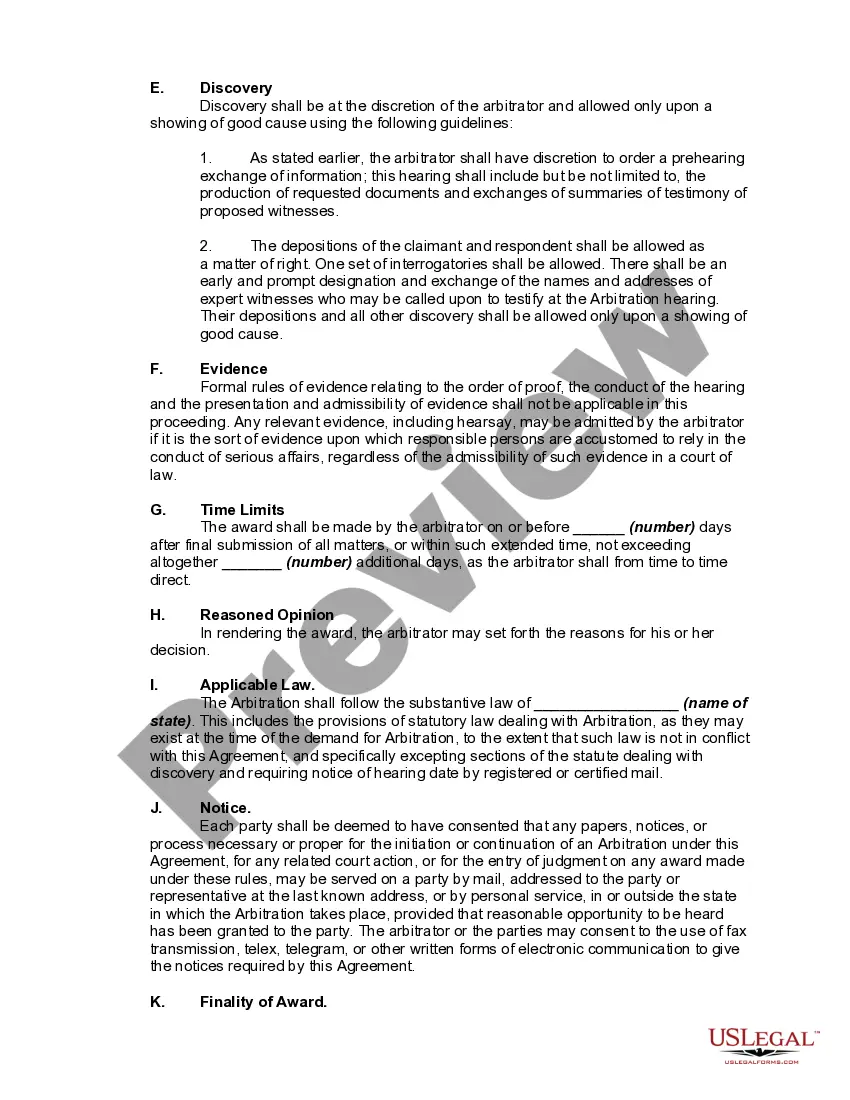
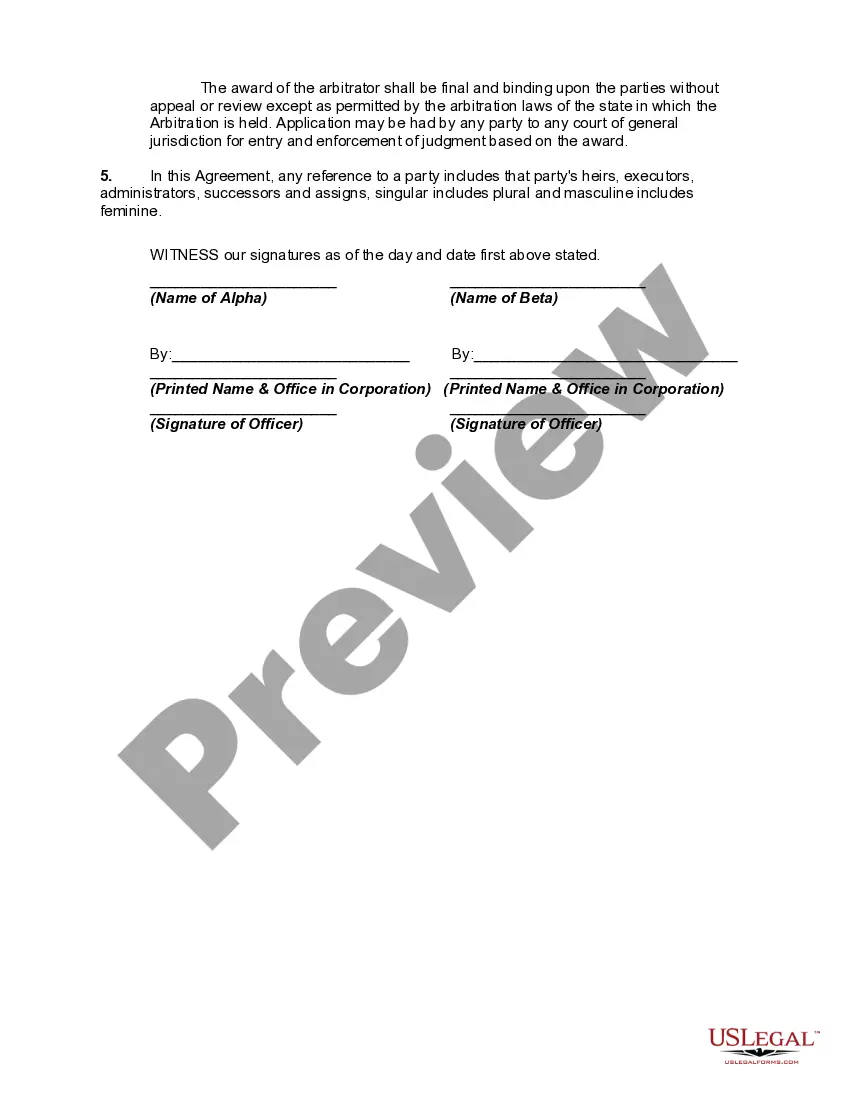
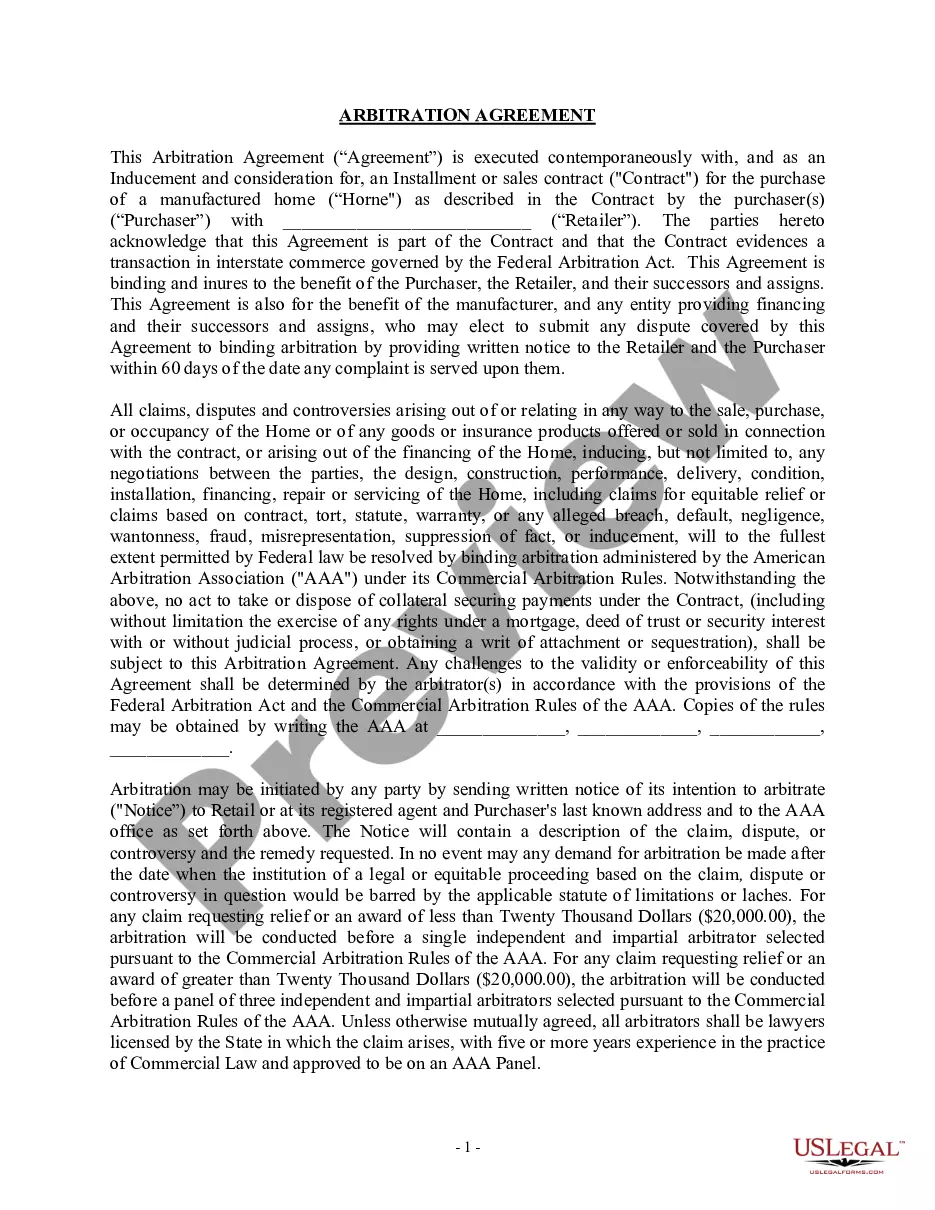
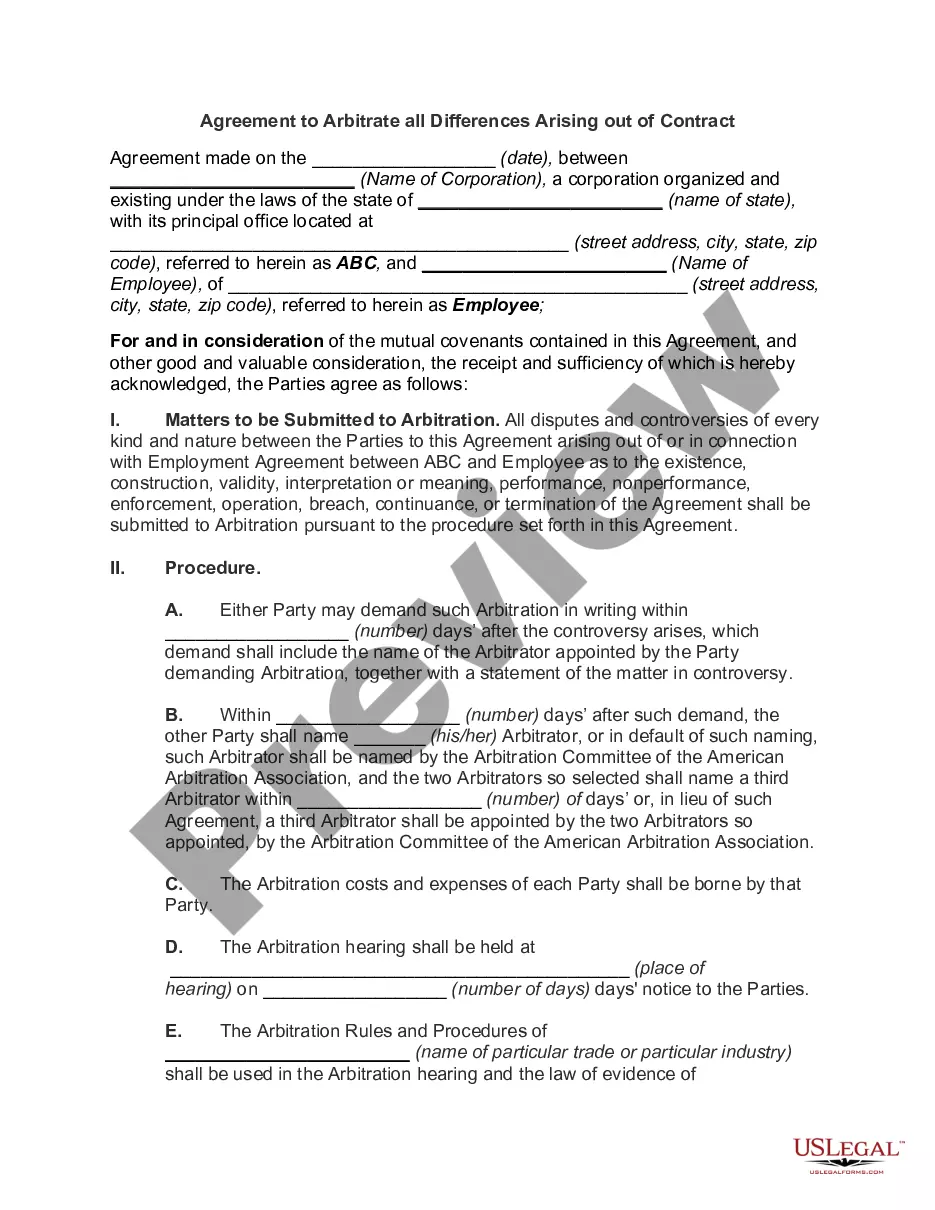
Arbitration is an alternative means of settling a dispute by impartial persons without proceeding to a court trial. It is sometimes preferred as a means of settling a matter in order to avoid the expense, delay, and acrimony of litigation. Discovery is with the discretion of the Arbitrator and there are simplified rules of evidence in arbitration.
Mediation is a non-adversarial method of alternative dispute resolution (ADR) in which a neutral third party helps resolve a dispute. The mediator does not have the power to render a decision on the matter or order an outcome. If a satisfactory resolution cannot be reached, the parties can pursue a lawsuit or arbitration.
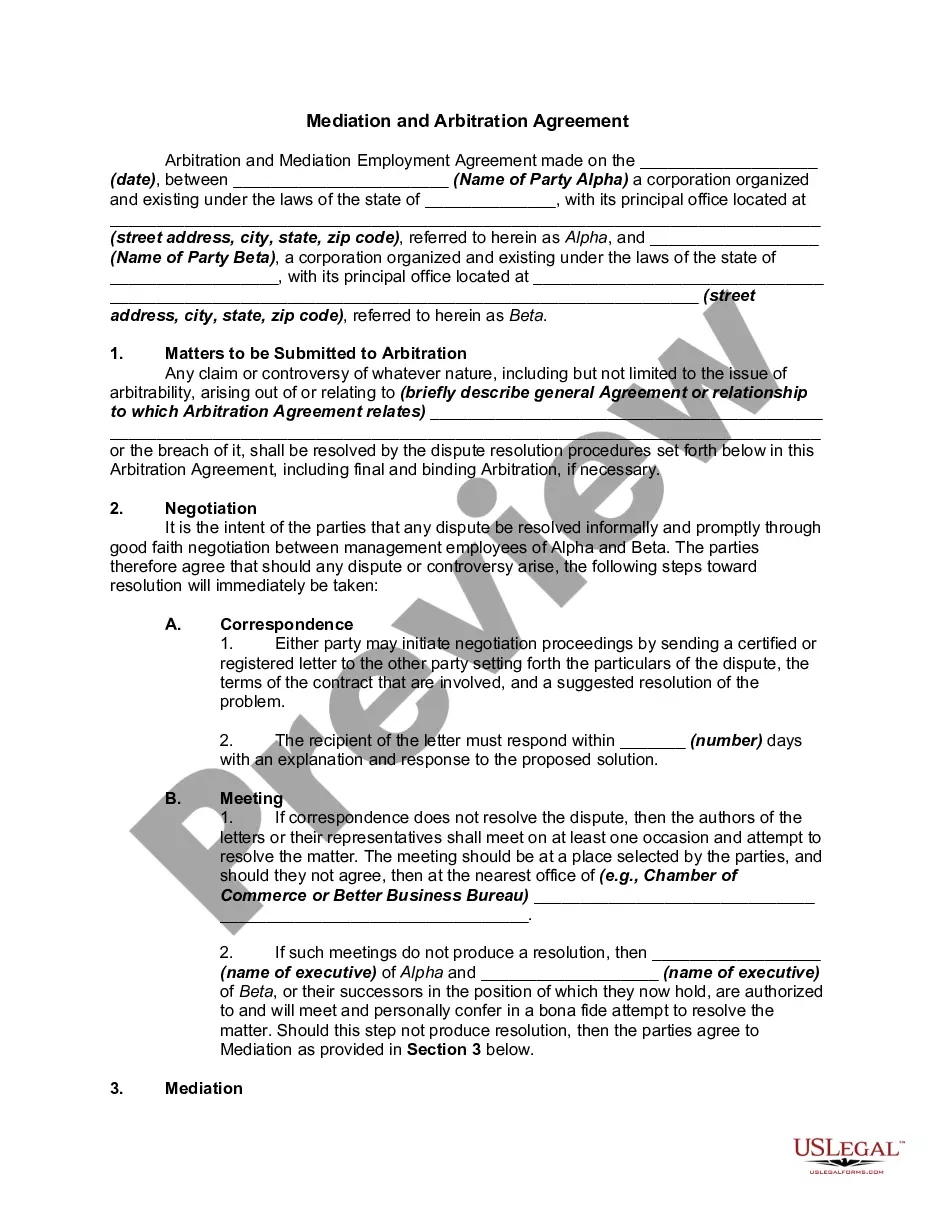
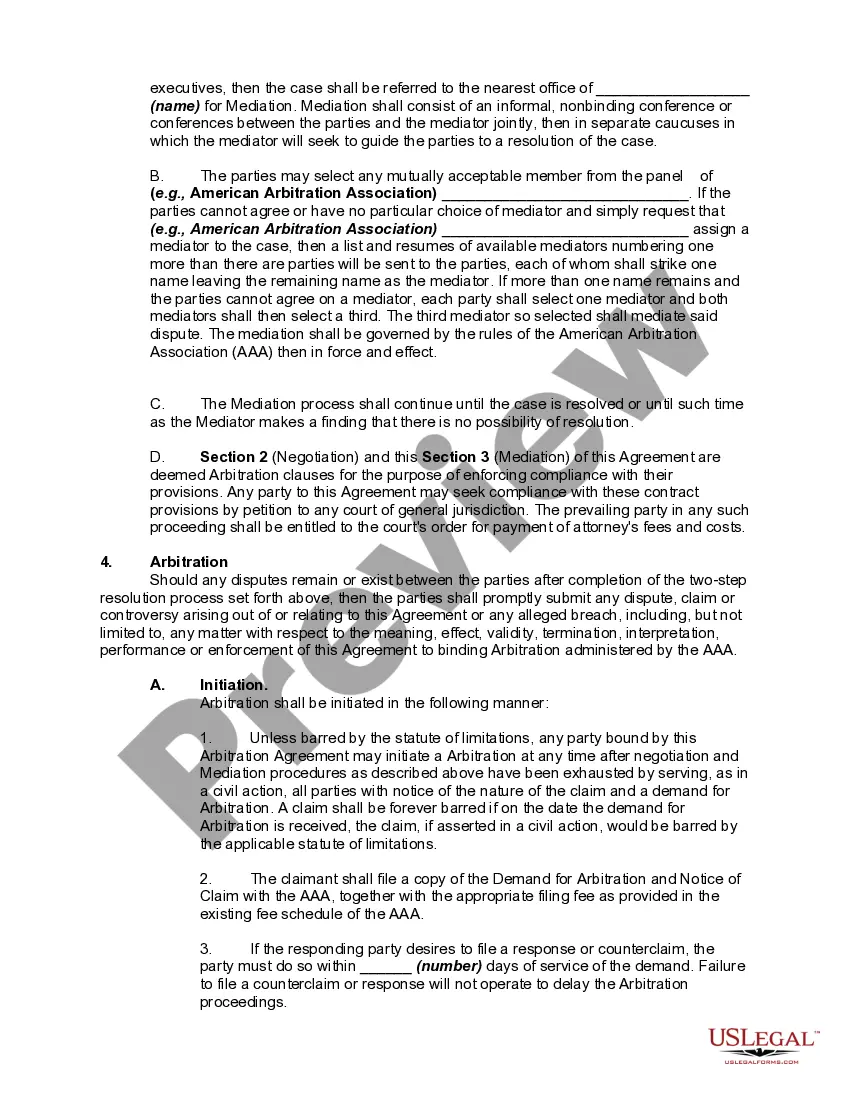
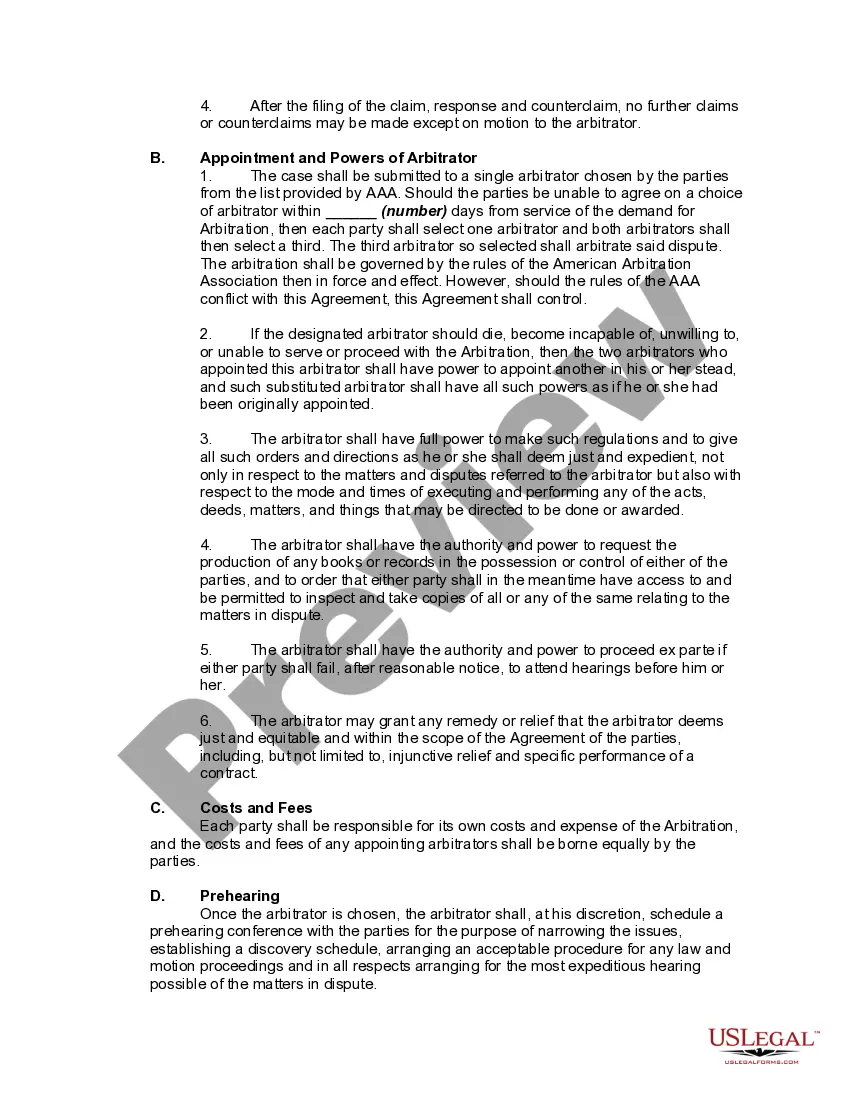
This form provides for negotiation, then mediation if the negotiation fails to resolve the issues. If both negotiation and mediation fail to resolve the issues, the parties arbitrate the dispute.
District of Columbia Mediation and Arbitration Agreement
Category:
State:
Multi-State
Control #:
US-02980BG
Format:
Word;
Rich Text
Instant download
Description
Free preview



Get your form ready online
Our built-in tools help you complete, sign, share, and store your documents in one place.
Built-in online Word editor
Make edits, fill in missing information, and update formatting in US Legal Forms—just like you would in MS Word.
Export easily
Download a copy, print it, send it by email, or mail it via USPS—whatever works best for your next step.
E-sign your document
Sign and collect signatures with our SignNow integration. Send to multiple recipients, set reminders, and more. Go Premium to unlock E-Sign.
Notarize online 24/7
If this form requires notarization, complete it online through a secure video call—no need to meet a notary in person or wait for an appointment.
Store your document securely
We protect your documents and personal data by following strict security and privacy standards.

Make edits, fill in missing information, and update formatting in US Legal Forms—just like you would in MS Word.

Download a copy, print it, send it by email, or mail it via USPS—whatever works best for your next step.

Sign and collect signatures with our SignNow integration. Send to multiple recipients, set reminders, and more. Go Premium to unlock E-Sign.

If this form requires notarization, complete it online through a secure video call—no need to meet a notary in person or wait for an appointment.

We protect your documents and personal data by following strict security and privacy standards.
Looking for another form?


How to fill out Mediation And Arbitration Agreement?
You can spend many hours online searching for the legal document template that meets the state and federal requirements you need.
US Legal Forms offers a vast array of legal documents that are reviewed by experts.
It is easy to download or print the District of Columbia Mediation and Arbitration Agreement from our platform.
If available, use the Preview option to browse through the document template as well.
- If you have an account with US Legal Forms, you can sign in and click on the Obtain option.
- Afterwards, you can complete, modify, print, or sign the District of Columbia Mediation and Arbitration Agreement.
- Every legal document template you acquire is yours indefinitely.
- To get an additional copy of any purchased form, go to the My documents tab and select the relevant option.
- If this is your first time using the US Legal Forms website, follow the simple instructions below.
- First, ensure you have selected the correct document template for your area/city of choice.
- Review the form description to confirm you have chosen the right document.
Form popularity
FAQ
DC Code 16 4423 deals with the modification and termination of mediation agreements. This code allows parties to alter or end an agreement if circumstances change or if both parties agree. Being aware of this provides flexibility in your District of Columbia Mediation and Arbitration Agreement, ensuring it remains relevant to your situation.
The DC code for unlawful entry is outlined in DC Code 16 1321. This provision addresses the legal ramifications of entering another person's property without permission. If you're involved in a dispute regarding unlawful entry, understanding how it interacts with your District of Columbia Mediation and Arbitration Agreement can be crucial to achieving a satisfactory resolution.
Mediation and arbitration agreements serve different purposes in dispute resolution. Mediation involves a neutral third party who helps facilitate discussion and negotiation between parties, while arbitration results in a binding decision made by an arbitrator. Understanding these differences is key when crafting your District of Columbia Mediation and Arbitration Agreement, as they dictate the process and expected outcomes.
DC code 16 4407 outlines the requirements for creating enforceable arbitration agreements in commercial matters. This provision plays a significant role in ensuring that arbitration can effectively resolve disputes in business contexts. When drafting a District of Columbia Mediation and Arbitration Agreement, it’s vital to consider how this code impacts the enforceability of your agreement.
DC Code 16 907 addresses the process for the recognition of arbitration agreements in the District of Columbia. This code establishes the legal framework that supports arbitration, allowing parties to resolve disputes without going to court. Incorporating this understanding into your District of Columbia Mediation and Arbitration Agreement can streamline the resolution process.
DC code 16 4425 pertains to the enforcement of mediation agreements in the District of Columbia. This provision allows courts to recognize and enforce mediation agreements that parties have reached, ensuring that the terms are upheld. Understanding this can be crucial when drafting a District of Columbia Mediation and Arbitration Agreement, as it adds legal weight to the agreed terms.
Mediation usually precedes arbitration in the conflict resolution sequence. The District of Columbia Mediation and Arbitration Agreement emphasizes the importance of attempting mediation first, as it allows parties to resolve disputes amicably. If mediation fails to achieve a resolution, arbitration becomes the next step to obtain a binding decision. This order can save time and resources, so it is essential to follow this progression.
The mediation process involves a neutral third party helping disputing parties reach a voluntary agreement, focusing on collaboration. In contrast, arbitration is a more formal process where an arbitrator makes a binding decision based on the evidence presented. The District of Columbia Mediation and Arbitration Agreement outlines these distinct processes, catering to a range of conflict resolution needs. Choosing between them depends on your preferences for control versus resolution.
Individuals may choose arbitration over mediation for several reasons, including the desire for a definitive outcome. Arbitration results in a legally binding decision, as outlined in the District of Columbia Mediation and Arbitration Agreement, providing closure to the dispute. Additionally, arbitration can be quicker and more straightforward compared to mediation, making it an appealing option for those seeking resolution. Understanding your specific needs will guide your choice in the process.
Mediation typically comes before arbitration in the dispute resolution process. The District of Columbia Mediation and Arbitration Agreement encourages parties to attempt mediation to settle disputes amicably before resorting to arbitration. This approach allows for more control and flexibility in resolving issues. However, if mediation does not yield results, arbitration serves as the next step.