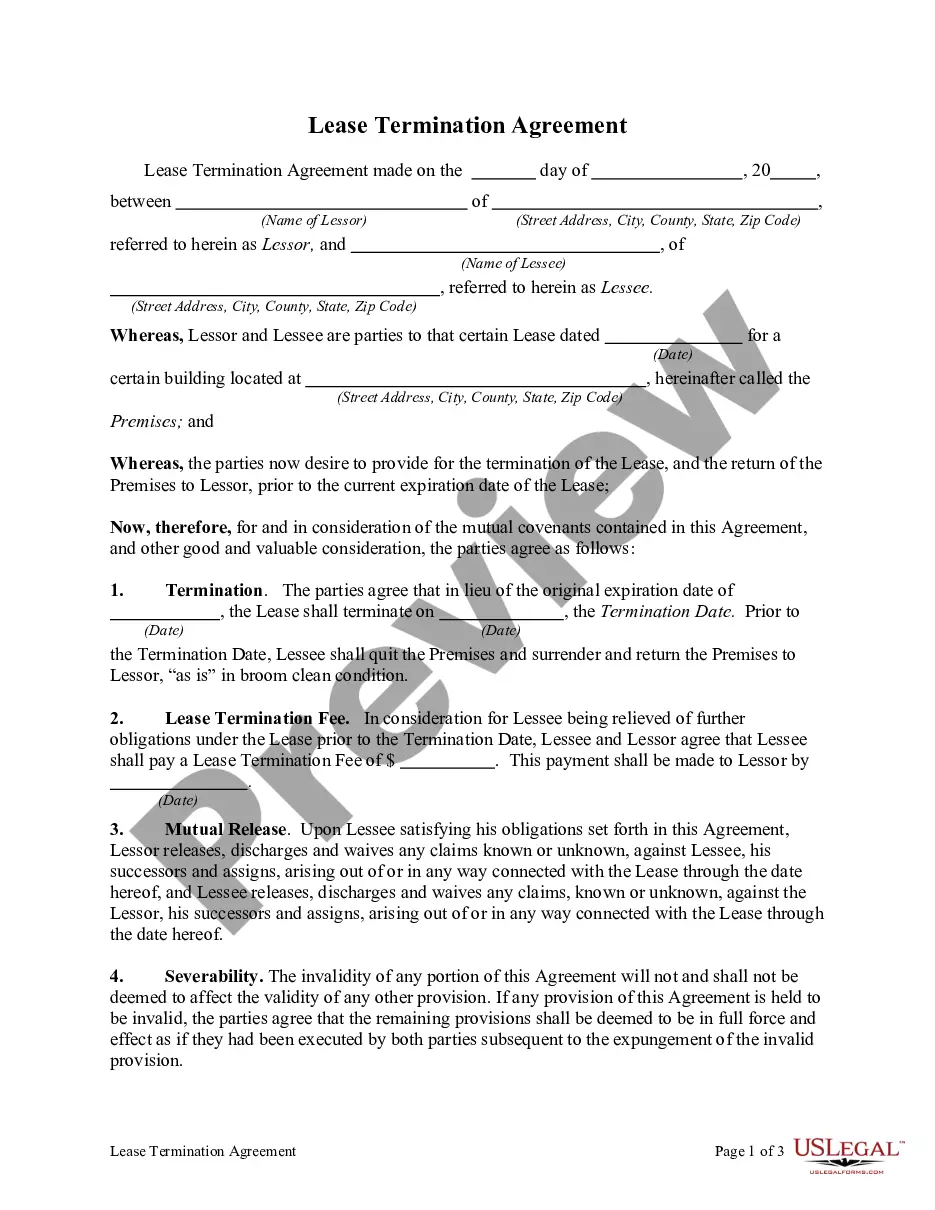
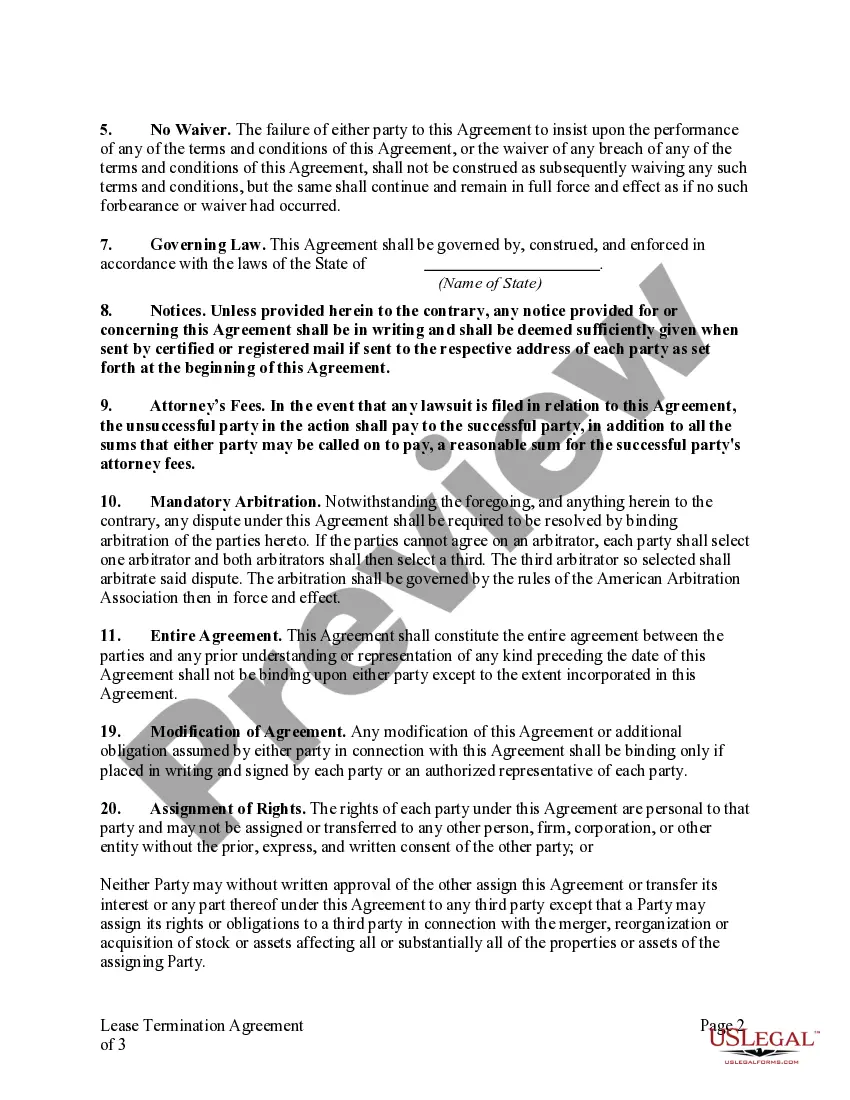
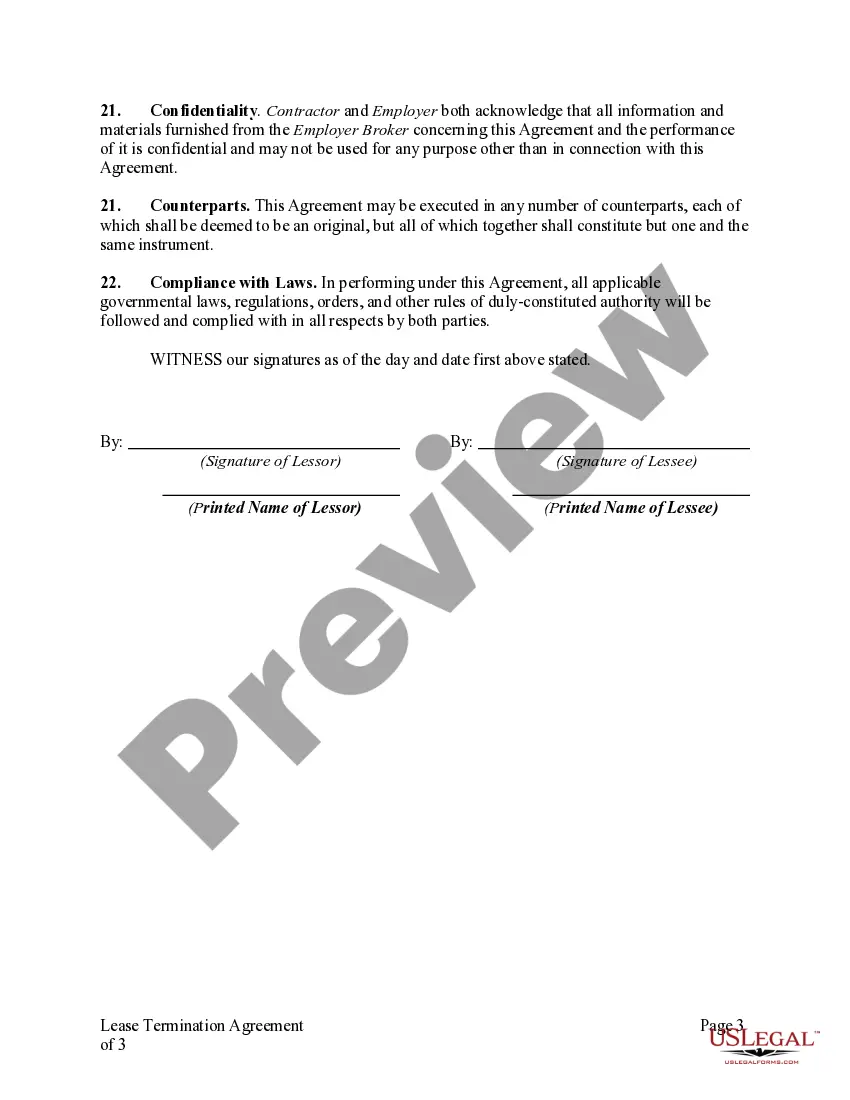
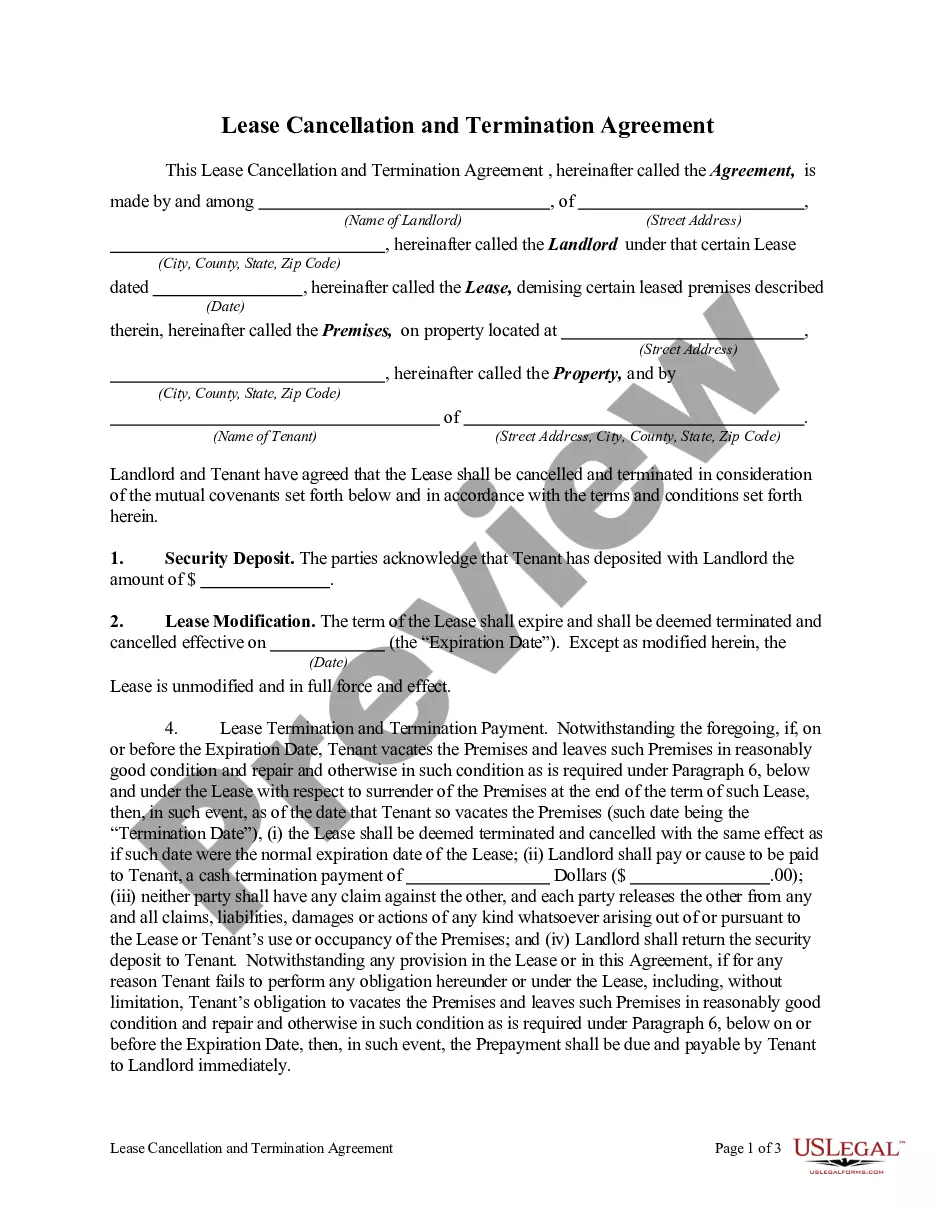
District of Columbia Lease Termination Agreement
Description
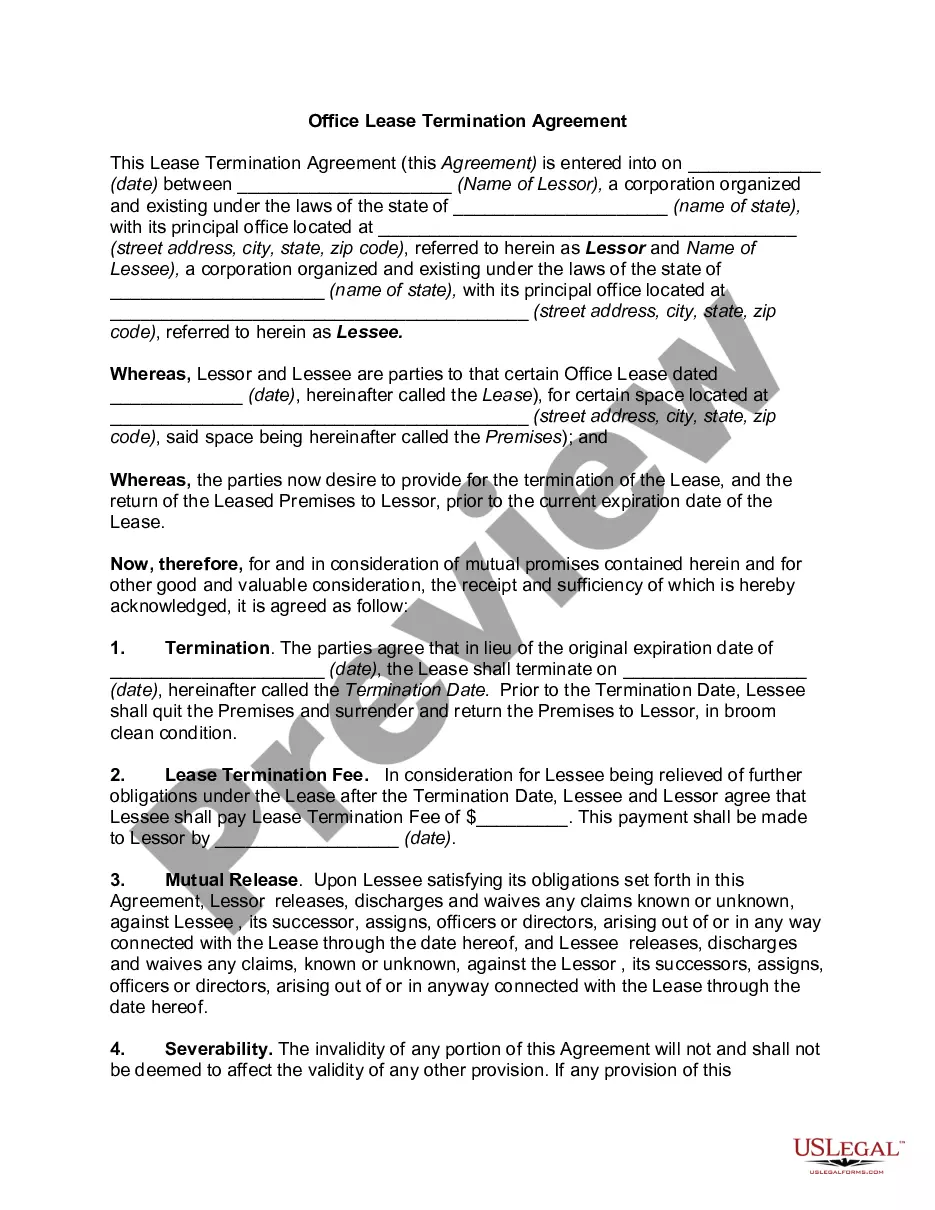
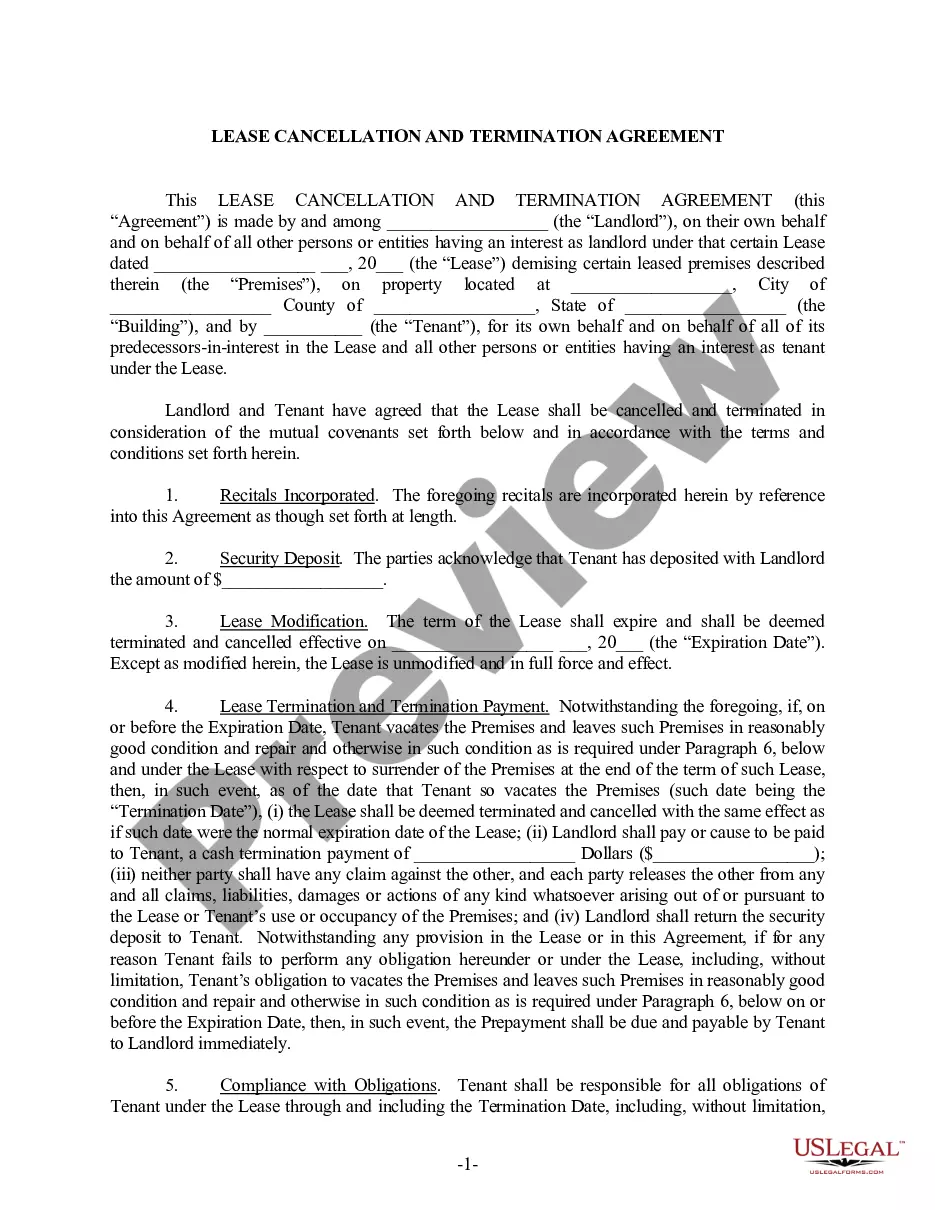
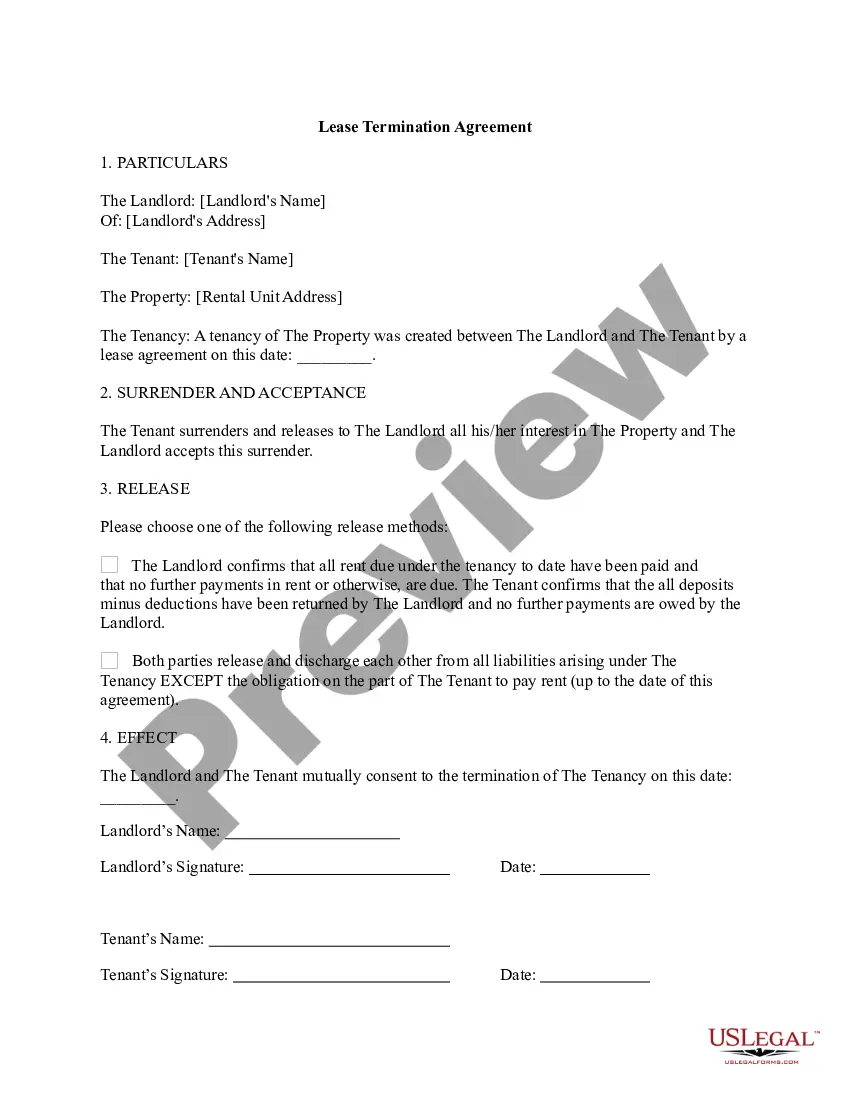
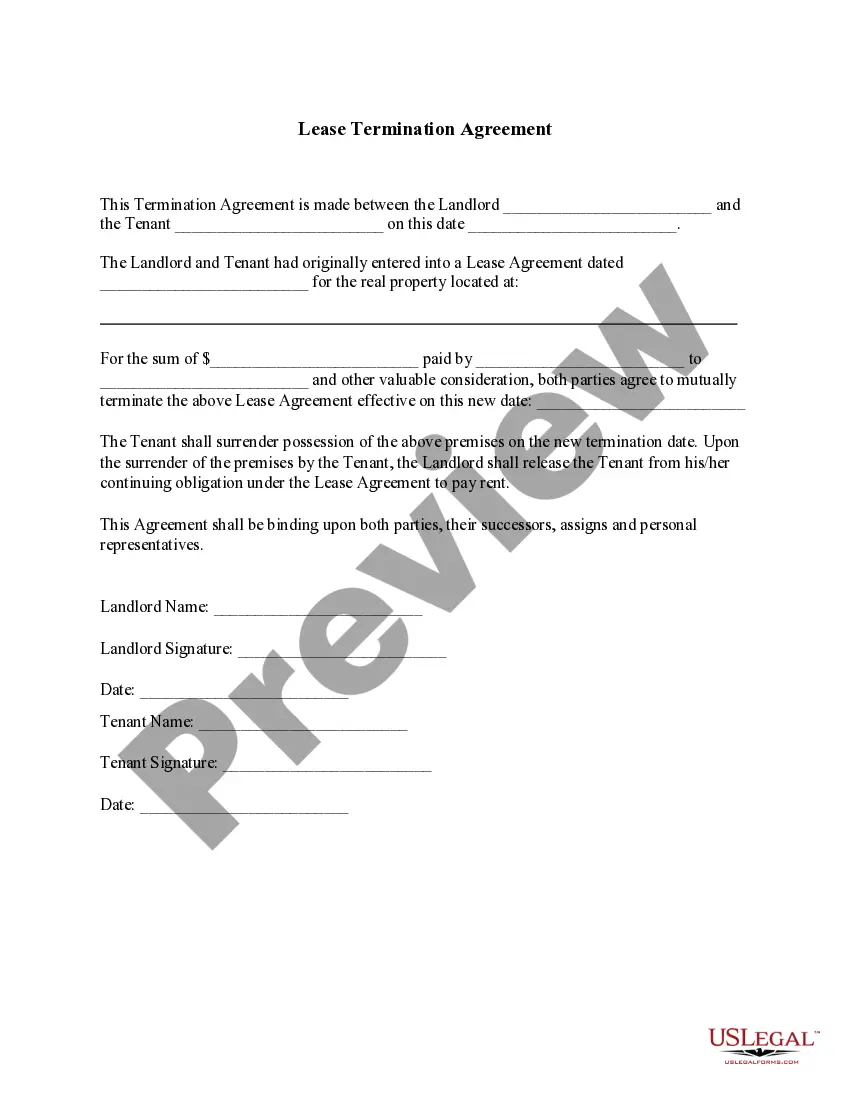
Get your form ready online
Our built-in tools help you complete, sign, share, and store your documents in one place.
Make edits, fill in missing information, and update formatting in US Legal Forms—just like you would in MS Word.
Download a copy, print it, send it by email, or mail it via USPS—whatever works best for your next step.
Sign and collect signatures with our SignNow integration. Send to multiple recipients, set reminders, and more. Go Premium to unlock E-Sign.
If this form requires notarization, complete it online through a secure video call—no need to meet a notary in person or wait for an appointment.
We protect your documents and personal data by following strict security and privacy standards.

Make edits, fill in missing information, and update formatting in US Legal Forms—just like you would in MS Word.

Download a copy, print it, send it by email, or mail it via USPS—whatever works best for your next step.

Sign and collect signatures with our SignNow integration. Send to multiple recipients, set reminders, and more. Go Premium to unlock E-Sign.

If this form requires notarization, complete it online through a secure video call—no need to meet a notary in person or wait for an appointment.

We protect your documents and personal data by following strict security and privacy standards.
Looking for another form?
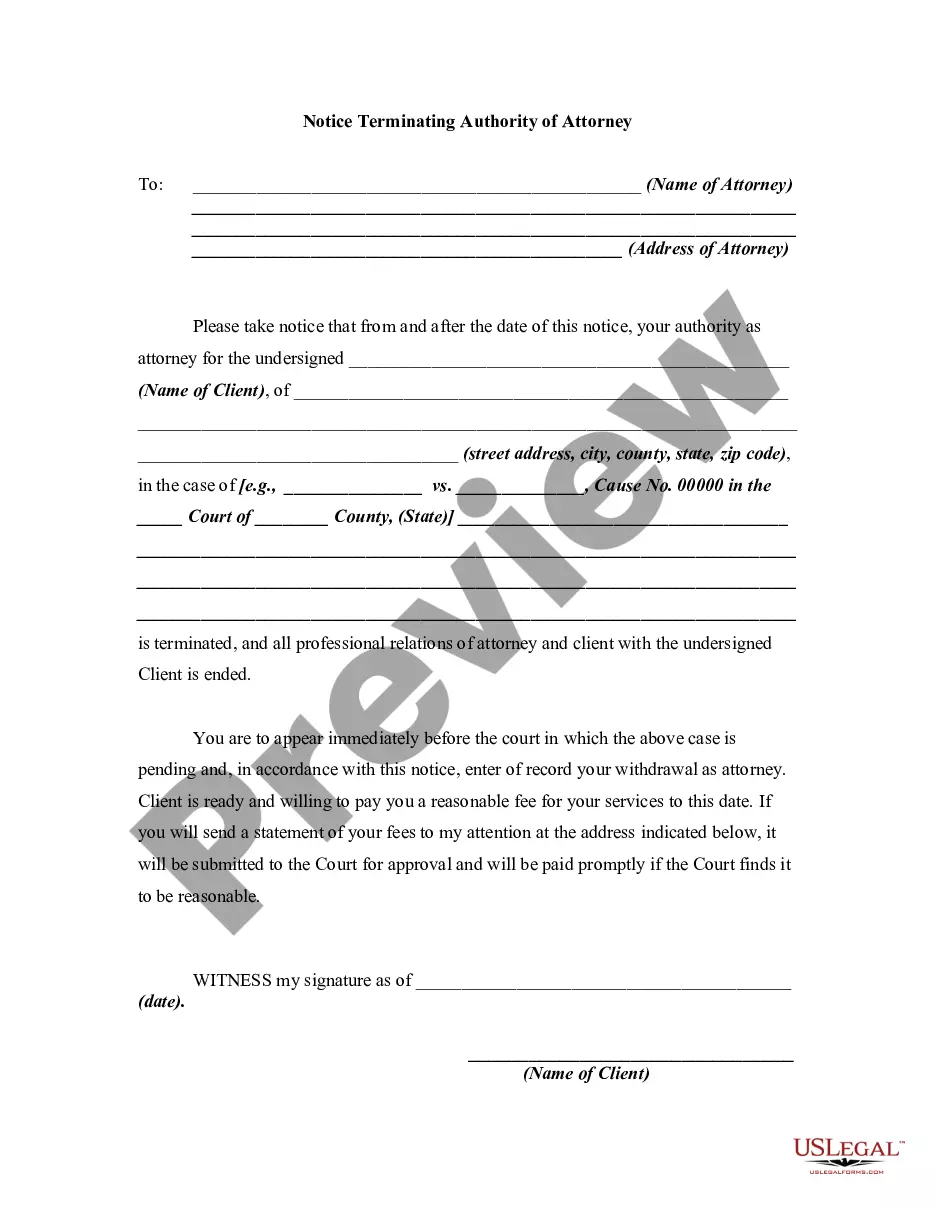
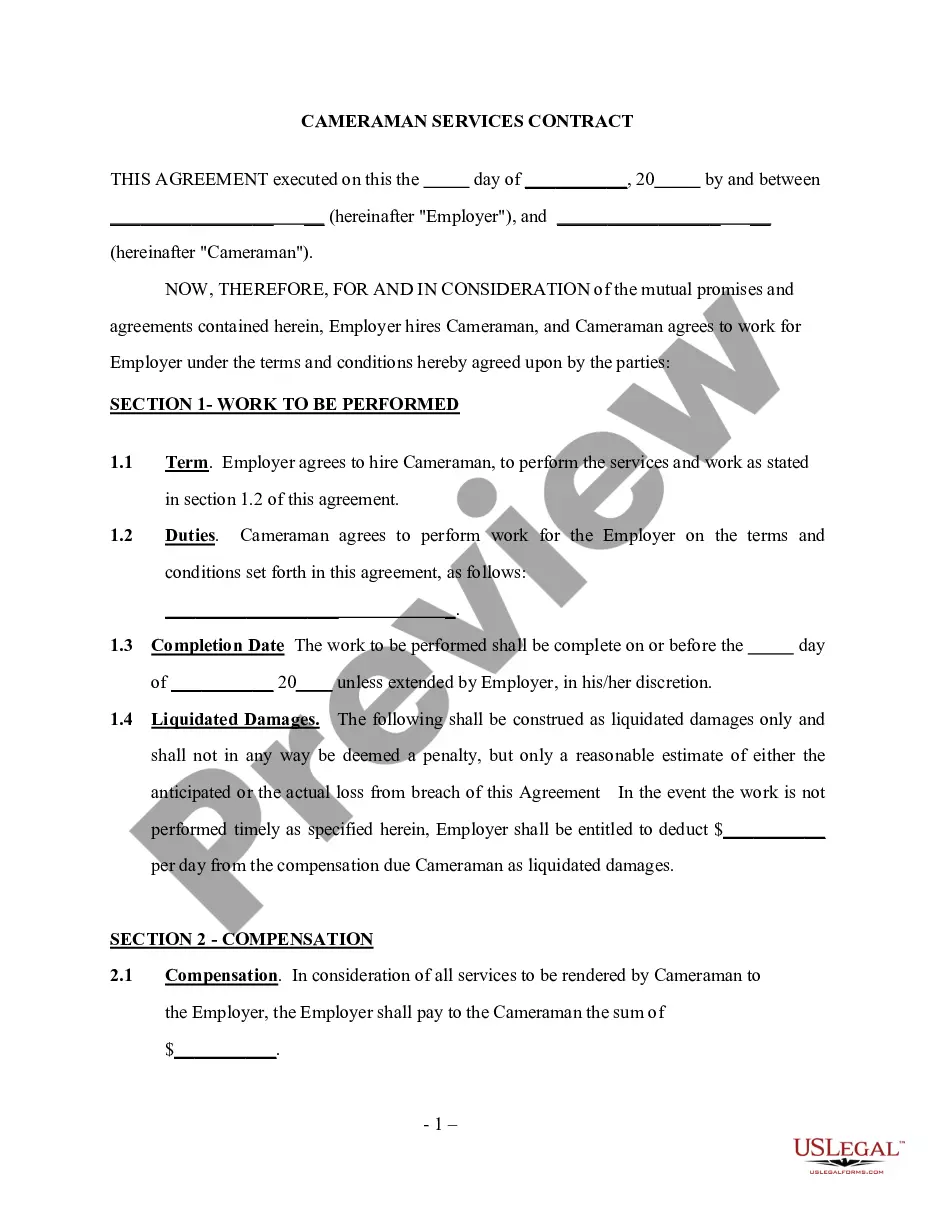
How to fill out Lease Termination Agreement?
If you desire to be thorough, obtain, or print valid document templates, utilize US Legal Forms, the premier collection of legal forms available online.
Utilize the site's straightforward and efficient search to find the documents you need.
A variety of templates for business and personal use are organized by categories and states, or keywords.
Every legal document template you purchase is yours indefinitely. You have access to all forms you saved in your account. Choose the My documents section and select a form to print or download again.
Complete, download, and print the District of Columbia Lease Termination Agreement with US Legal Forms. There are countless professional and state-specific forms you can utilize for your business or personal needs.
- Step 1: Ensure you have selected the correct form for your city/state.
- Step 2: Use the Review option to examine the content of the form. Don’t forget to check the description.
- Step 3: If you are unhappy with the form, use the Search area at the top of the display to find other versions of the legal form.
- Step 4: Once you have found the form you need, click the Get now button. Select your preferred pricing plan and enter your details to register for an account.
- Step 5: Process the payment. You can use your Visa or MasterCard or PayPal account to complete the transaction.
- Step 6: Choose the format of the legal form and download it to your device.
- Step 7: Complete, modify and print or sign the District of Columbia Lease Termination Agreement.
Form popularity
FAQ
In the District of Columbia, the duration a tenant can stay after a lease expires varies based on agreements with the landlord. If no agreement is in place, the tenant may be required to vacate immediately. However, if the landlord accepts payment for continued occupancy, it may lead to a new lease or agreement. For peace of mind, drafting a District of Columbia Lease Termination Agreement can help outline your rights and responsibilities.
When a tenant stays beyond the lease expiration date, it is often termed holdover tenancy. In the District of Columbia, this situation can lead to potential legal issues, as the landlord may seek eviction or adjust lease terms. It's crucial to establish a mutual understanding with the landlord to avoid complications. A well-drafted District of Columbia Lease Termination Agreement can provide guidance for both parties.
When your lease comes to an end in the District of Columbia, you should prepare to vacate unless you have arranged for an extension. The landlord or property manager may require you to provide notice regarding your next steps. If you choose to stay, you could face higher rent or different terms, depending on negotiations. Having a District of Columbia Lease Termination Agreement can help define these transitions clearly.
In the District of Columbia, when your lease expires, you may not have the automatic right to stay. Typically, the tenant should leave by the end of the lease term unless you have an agreement with the landlord. However, if you continue to occupy the property, it may fall under a holdover tenancy, which can introduce legal complexities. For clarity, consider utilizing a District of Columbia Lease Termination Agreement to outline your options.
When signing a lease, you typically need to provide personal identification, proof of income, and a security deposit. It is also essential to review all terms of the District of Columbia Lease Termination Agreement before signing. Ensuring you understand your responsibilities will help you avoid future complications and promote a positive rental experience.
You can write a lease agreement without an attorney, but it is wise to seek professional guidance. A well-drafted District of Columbia Lease Termination Agreement requires specific language and clauses to be enforceable. Platforms like uslegalforms can help you create a comprehensive lease agreement tailored to your needs, reducing potential legal issues down the line.
While you are not legally required to have a lawyer for a lease agreement, consulting one can be beneficial. A lawyer can provide clarity on essential terms and protect your rights. When dealing with a District of Columbia Lease Termination Agreement, their expertise ensures that all legal requirements are met, making the process smoother and less stressful.
In Washington, a landlord must provide at least 30 days’ notice for most lease terminations. This aligns with the terms set forth in the District of Columbia Lease Termination Agreement. However, specific circumstances, like month-to-month leases, can alter this requirement. Familiarizing yourself with local laws and lease terms can help you stay informed and prepared.
Breaking a lease in Washington without penalty requires understanding your rights as a tenant. The District of Columbia Lease Termination Agreement may allow for lease termination under specific circumstances, such as a job relocation or habitability issues. Consulting the terms of the lease and communicating openly with your landlord can often lead to a mutually agreeable solution. The uslegalforms platform provides resources to help navigate this process effectively.
Yes, you can back out of a lease before moving in, but the process depends on the lease terms. In general, reviewing the District of Columbia Lease Termination Agreement is essential, as it may specify penalties or conditions for cancellation. Communicating with your landlord promptly can help facilitate a smooth exit without complications. Make sure to document all communications for your records.