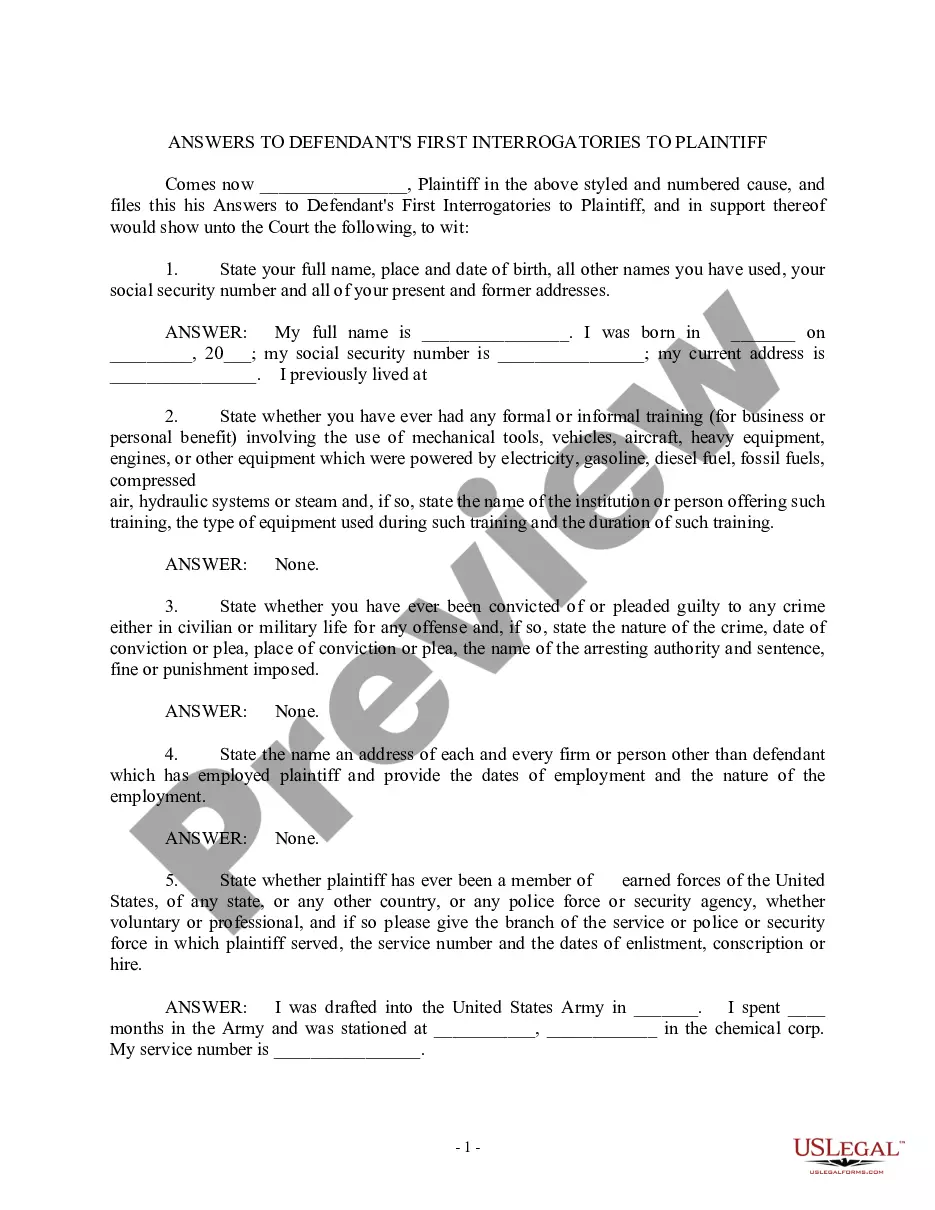
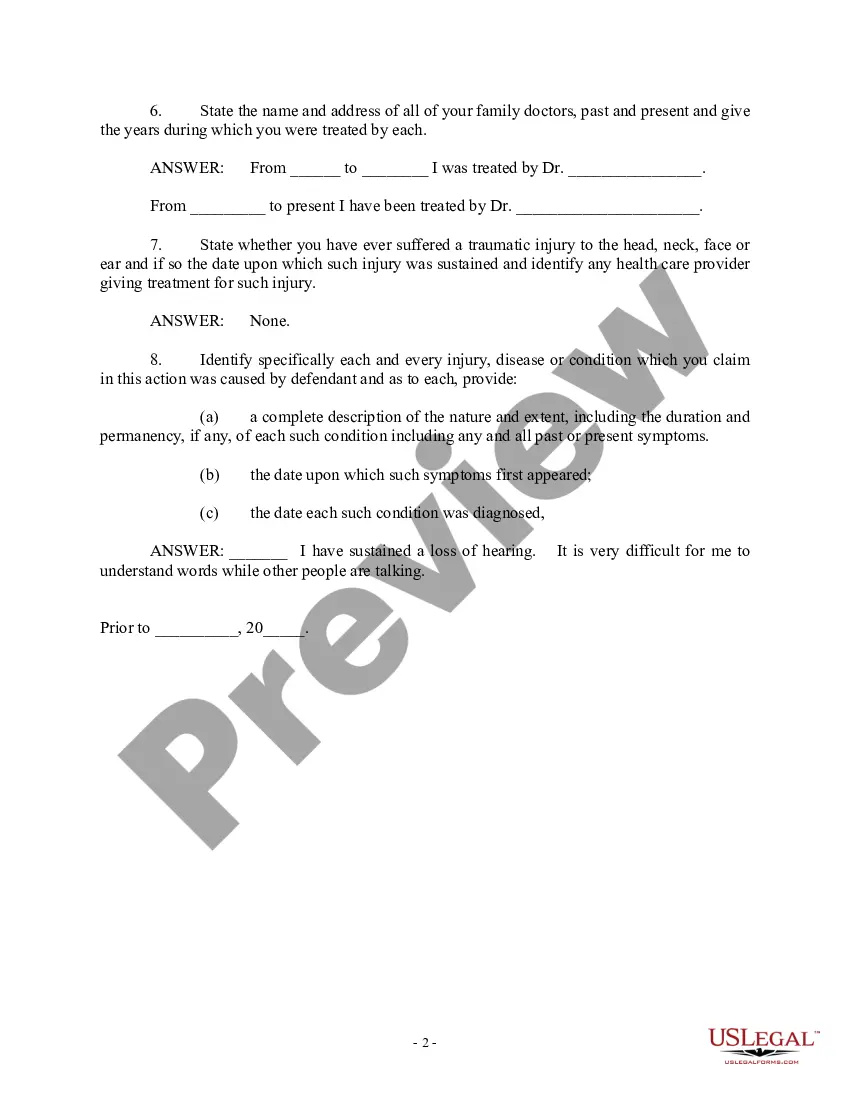
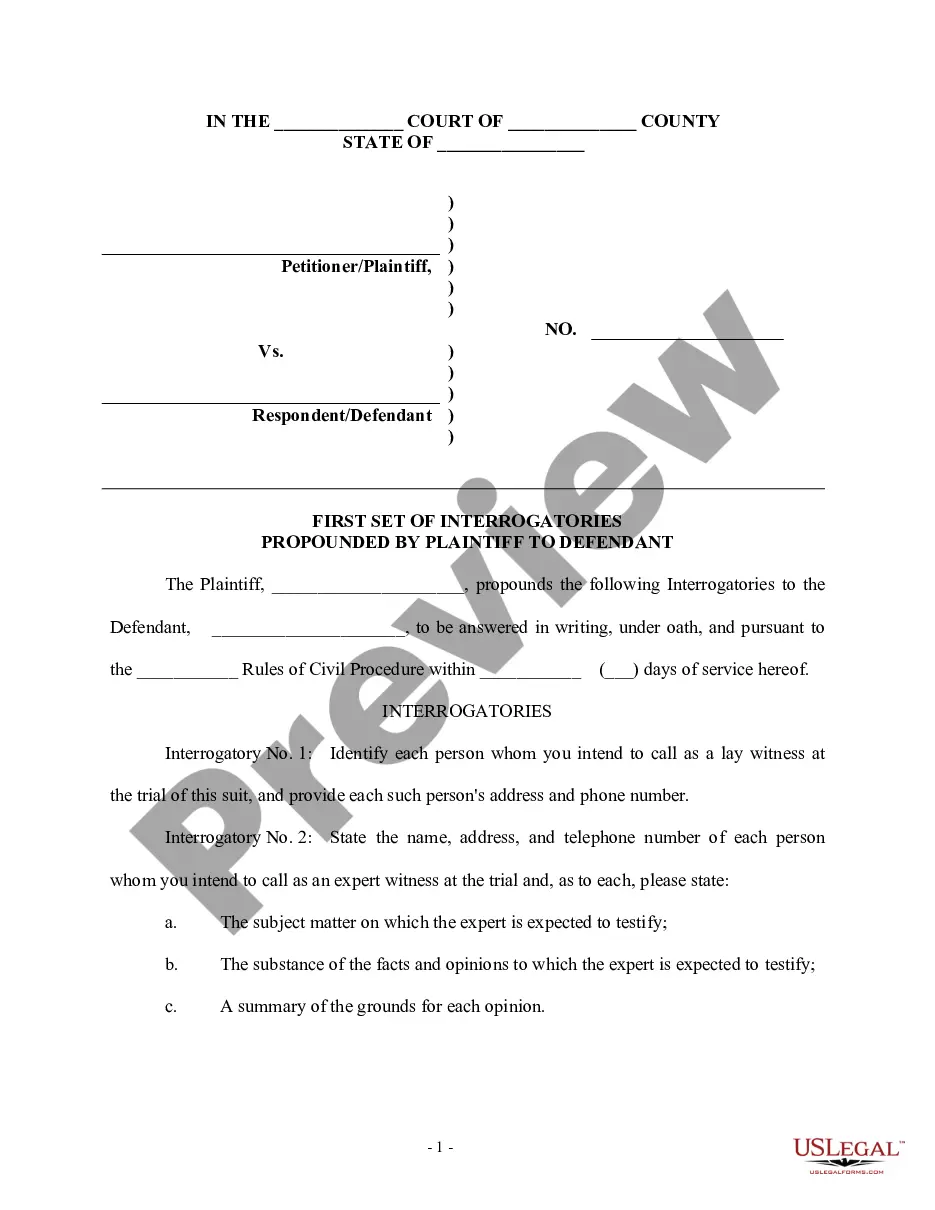
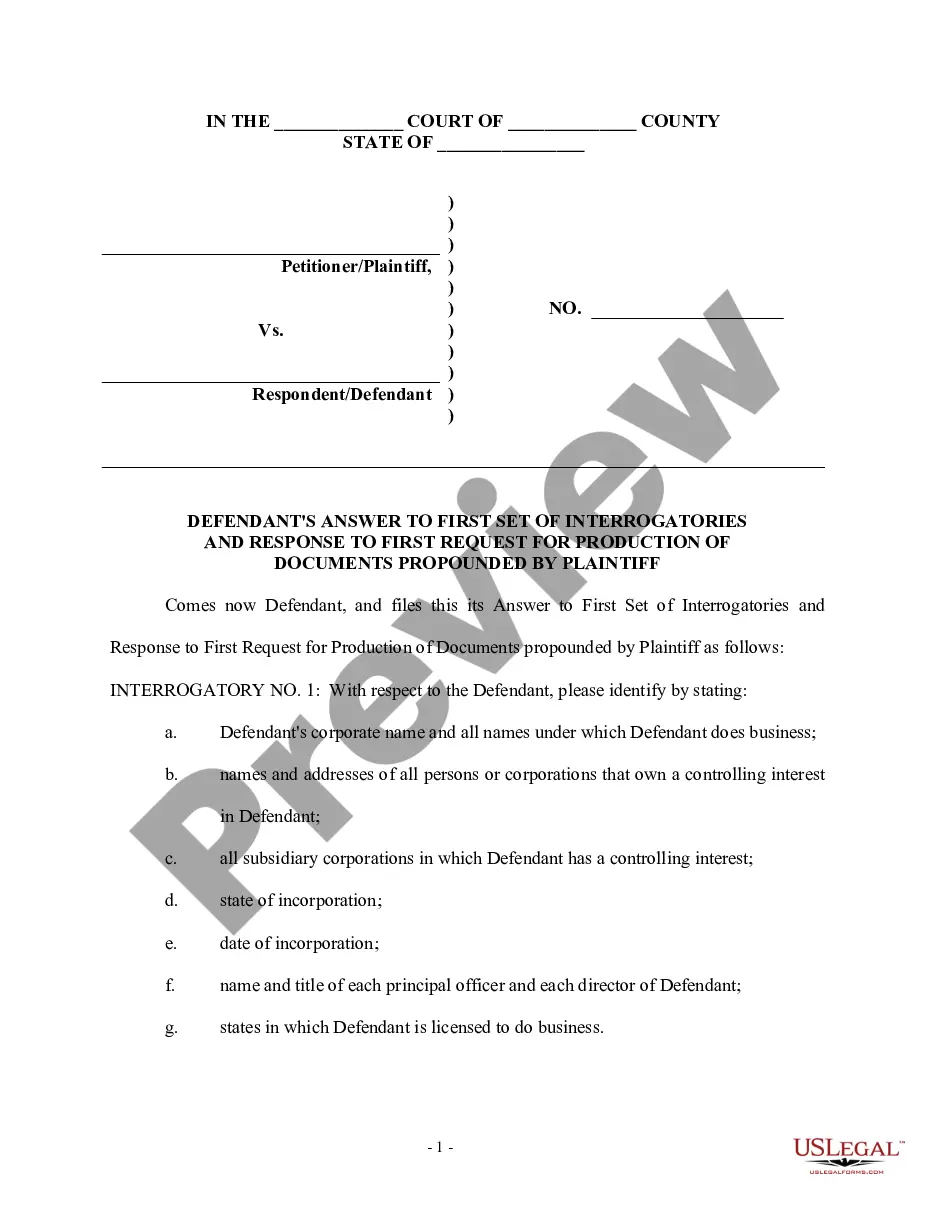
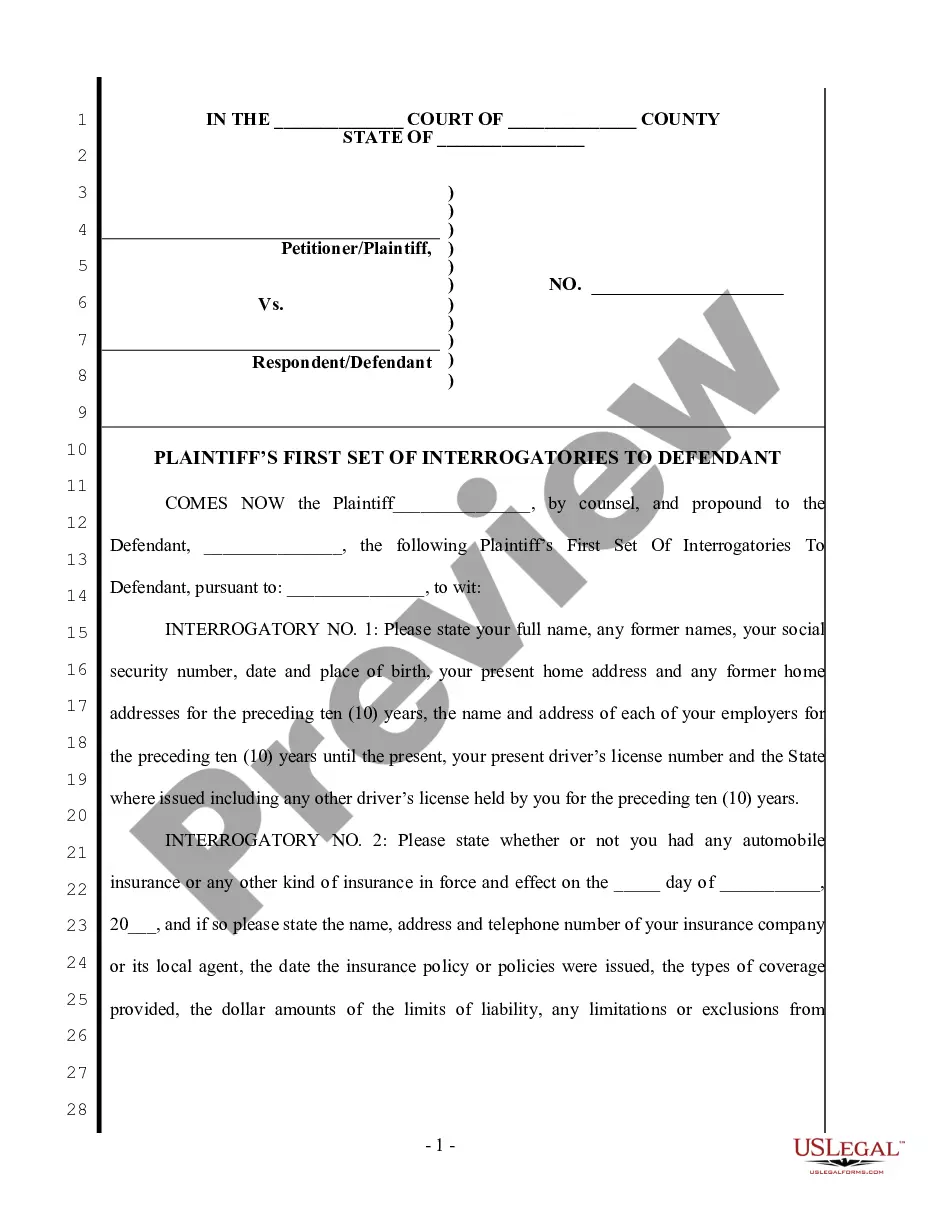
This form contains Answers to Defendant's First Interrogatories to Plaintiff. Plaintiff seeks to answer all questions truthfully before the court.
District of Columbia Answers To Defendant's First Interrogatories To Plaintiff
State:
Multi-State
Control #:
US-01615
Format:
Word;
Rich Text
Instant download
Description
Free preview

Get your form ready online
Our built-in tools help you complete, sign, share, and store your documents in one place.
Built-in online Word editor
Make edits, fill in missing information, and update formatting in US Legal Forms—just like you would in MS Word.
Export easily
Download a copy, print it, send it by email, or mail it via USPS—whatever works best for your next step.
E-sign your document
Sign and collect signatures with our SignNow integration. Send to multiple recipients, set reminders, and more. Go Premium to unlock E-Sign.
Notarize online 24/7
If this form requires notarization, complete it online through a secure video call—no need to meet a notary in person or wait for an appointment.
Store your document securely
We protect your documents and personal data by following strict security and privacy standards.

Make edits, fill in missing information, and update formatting in US Legal Forms—just like you would in MS Word.

Download a copy, print it, send it by email, or mail it via USPS—whatever works best for your next step.

Sign and collect signatures with our SignNow integration. Send to multiple recipients, set reminders, and more. Go Premium to unlock E-Sign.

If this form requires notarization, complete it online through a secure video call—no need to meet a notary in person or wait for an appointment.

We protect your documents and personal data by following strict security and privacy standards.
Looking for another form?





How to fill out Answers To Defendant's First Interrogatories To Plaintiff?
Are you presently in a role where you require documents for either business or particular purposes almost every day.
There are numerous authentic document templates accessible online, but finding reliable ones is not easy.
US Legal Forms provides thousands of form templates, including the District of Columbia Answers To Defendant's First Interrogatories To Plaintiff, which are designed to comply with federal and state regulations.
Utilize US Legal Forms, the most extensive collection of authentic forms, to save time and minimize errors.
The service offers properly crafted legal document templates that can be used for a variety of purposes. Create an account on US Legal Forms and start simplifying your life.
- If you are already familiar with the US Legal Forms website and possess an account, simply Log In.
- Then, you can download the District of Columbia Answers To Defendant's First Interrogatories To Plaintiff template.
- If you do not have an account and wish to start using US Legal Forms, follow these instructions.
- Find the form you need and ensure it is for the correct city/state.
- Utilize the Preview button to review the document.
- Examine the details to ensure you have selected the correct form.
- If the form is not what you are looking for, use the Search field to locate the form that meets your needs.
- Once you find the correct form, click Buy now.
- Select the pricing plan you want, enter the required information to create your account, and complete the transaction using your PayPal or credit card.
- Choose a convenient document format and download your copy.
- Find all the document templates you have purchased in the My documents section.
- You can obtain an additional copy of the District of Columbia Answers To Defendant's First Interrogatories To Plaintiff at any time by clicking on the desired form to download or print the document template.
Form popularity
FAQ
(a) Time for response. The responding party must serve a written response on the requesting party within 30 days after service of the interrogatories, except that a defendant served with interrogatories before the defendant's answer is due need not respond until 50 days after service of the interrogatories.
(2) Time to Respond. The responding party must serve its answers and any objections within 30 days after being served with the interrogatories. A shorter or longer time may be stipulated to under Rule 29 or be ordered by the court. (3) Answering Each Interrogatory.
They are provided for your information. There is no form for your answer, but you typically have to respond in a specified format, using paper with numbers down the left-hand side, with your name and address at the top left, the name of the court and of the case, and the case number.
You have 30 days to respond to the interrogatories. If you were served by mail, you typically have 35 days from the date of mailing to respond. Just below the top caption identifying the case, the form identifies the Answering (or Responding) party. Make sure that this is you.
You can use interrogatories to find out facts about a case but they cannot be used for questions that draw a legal conclusion.
Each interrogatory must, to the extent it is not objected to, be answered separately and fully in writing under oath. Answers and objections to interrogatories must identify and quote each interrogatory in full immediately preceding the answer or objection.
Your answers to the interrogatories should usually be short, clear, and direct and should answer only the question that is being asked. This is not the time to set out your entire case or defense to the other side. Take the time to make sure your answers are correct and truthful.
If you do not answer the questions by the deadline, which is usually about a month, the other side could ask the judge to order you to respond to the interrogatories. If you miss the second deadline, the judge could impose a fine against you or strike your pleadings.