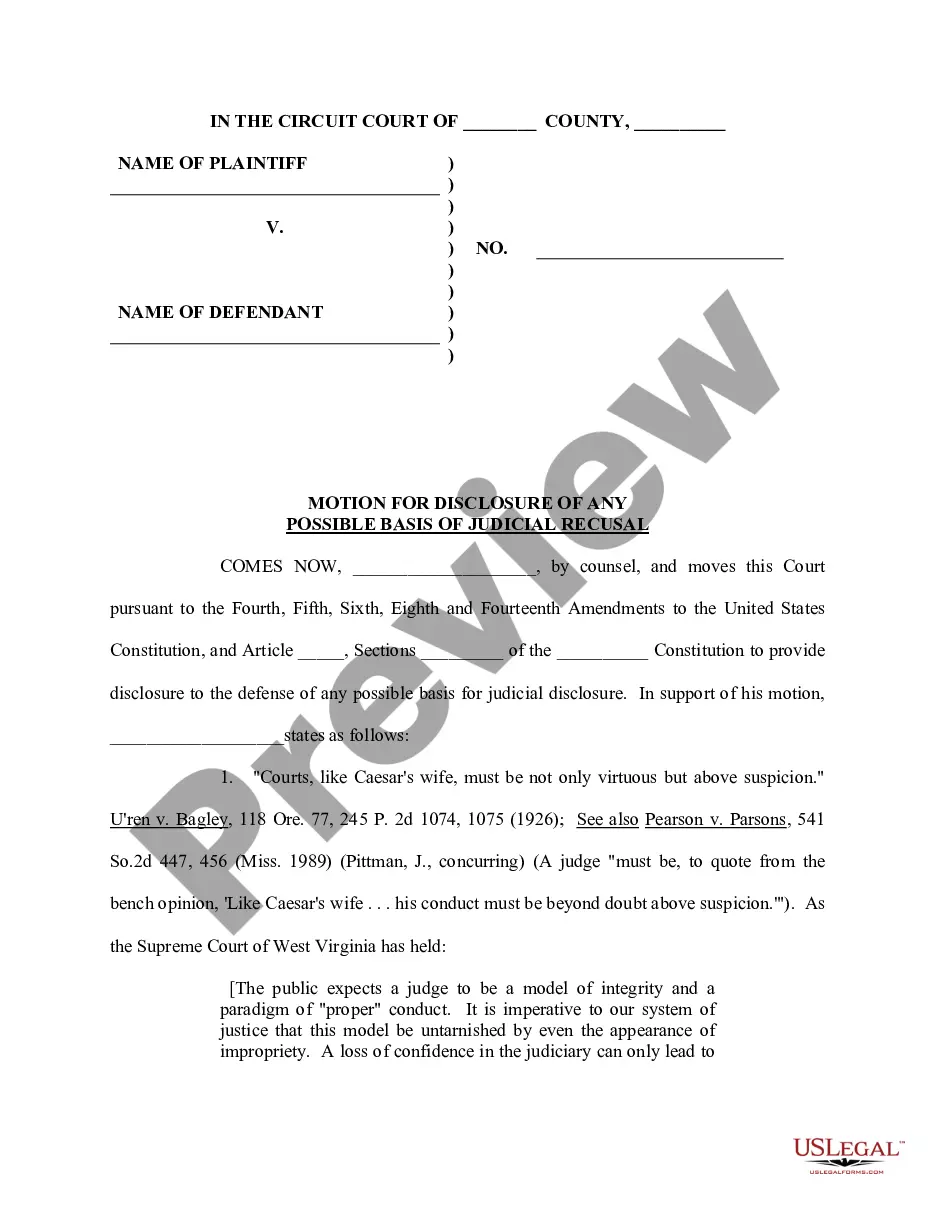
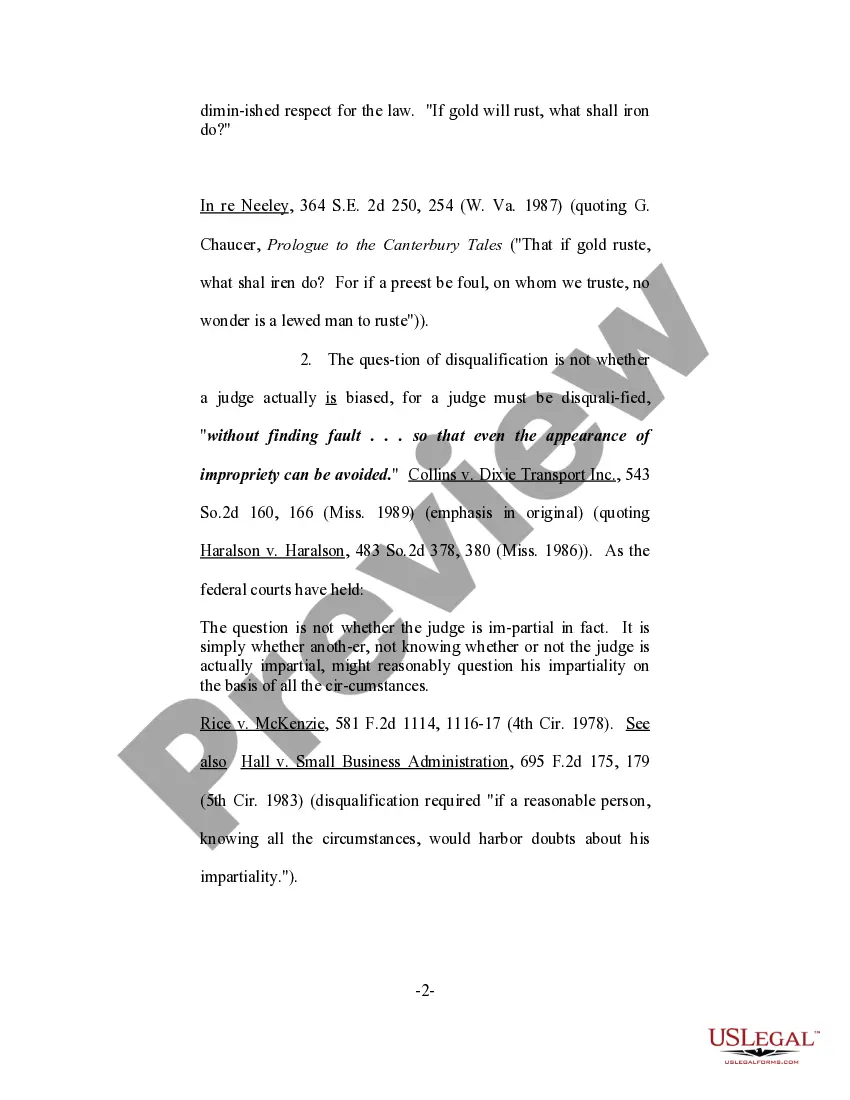
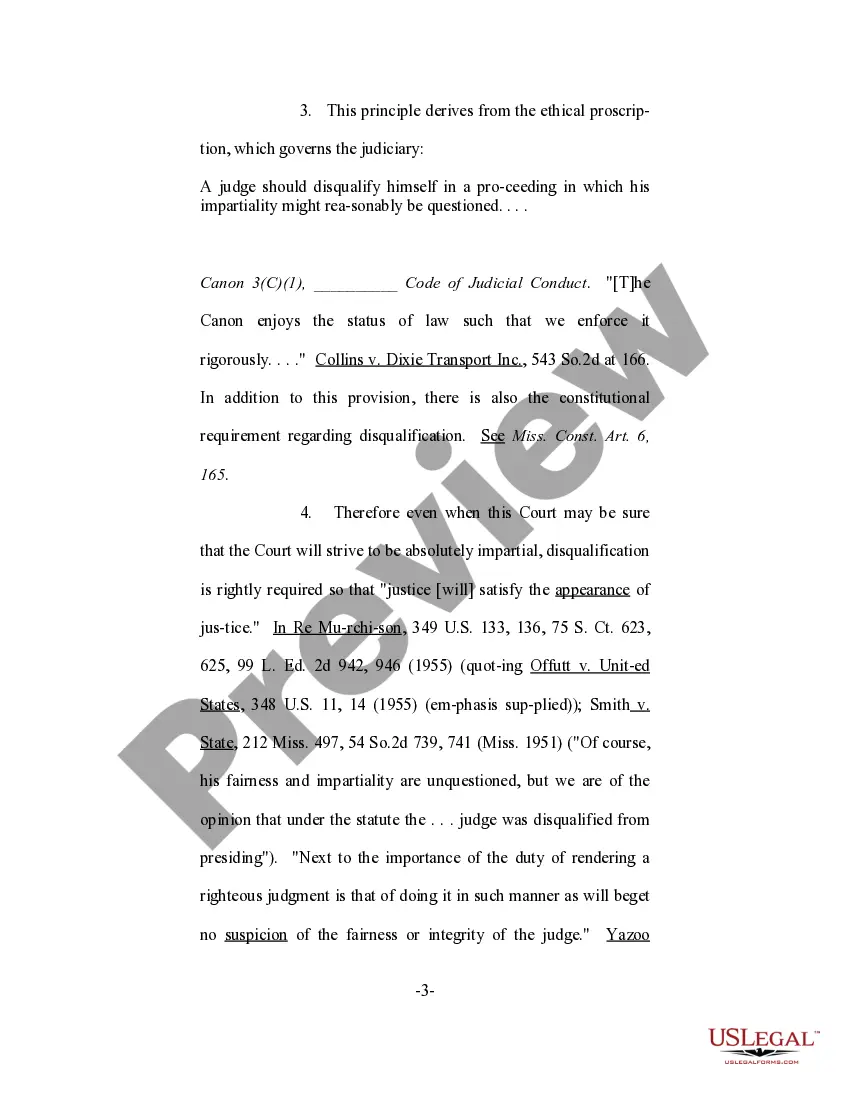
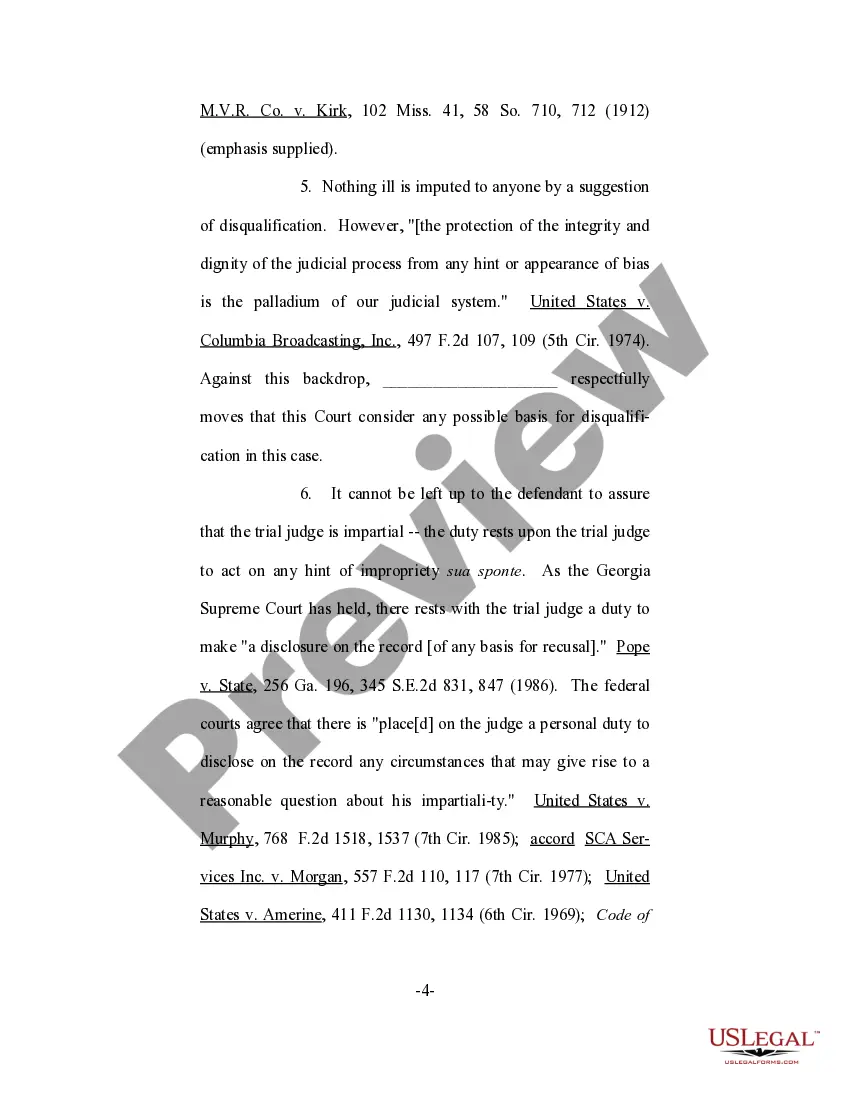
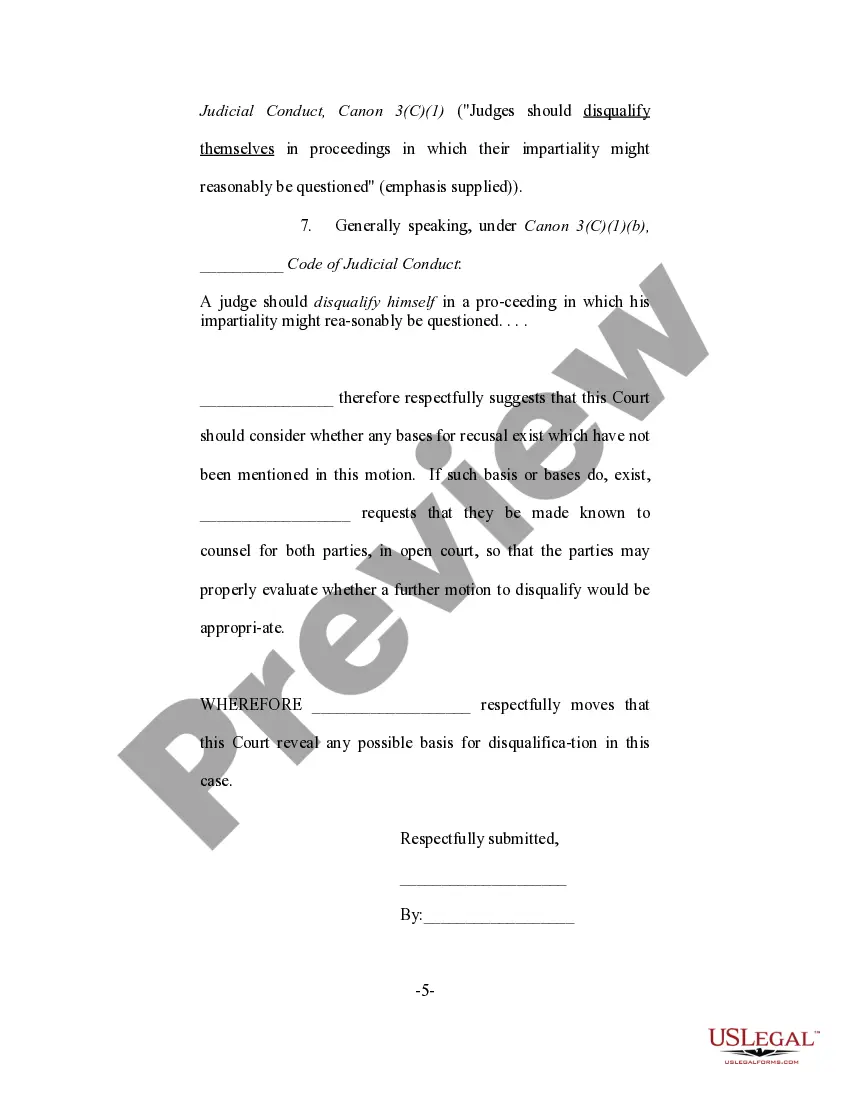
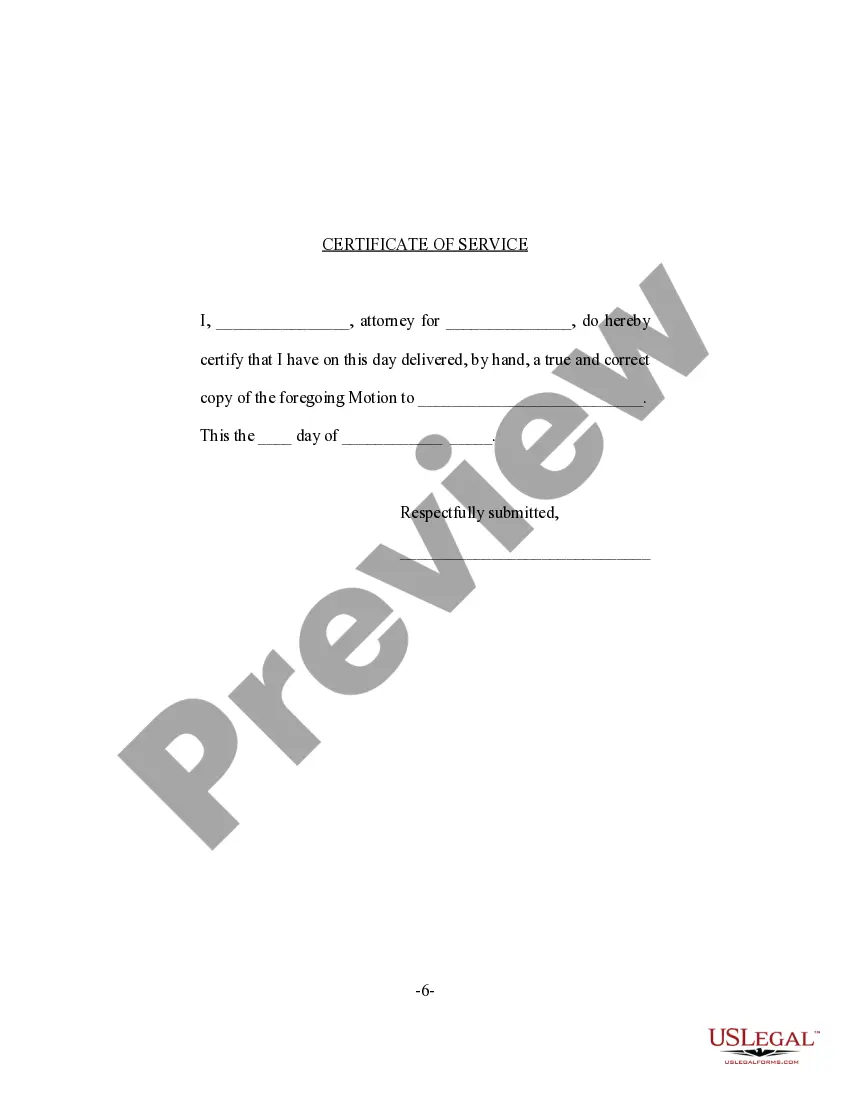
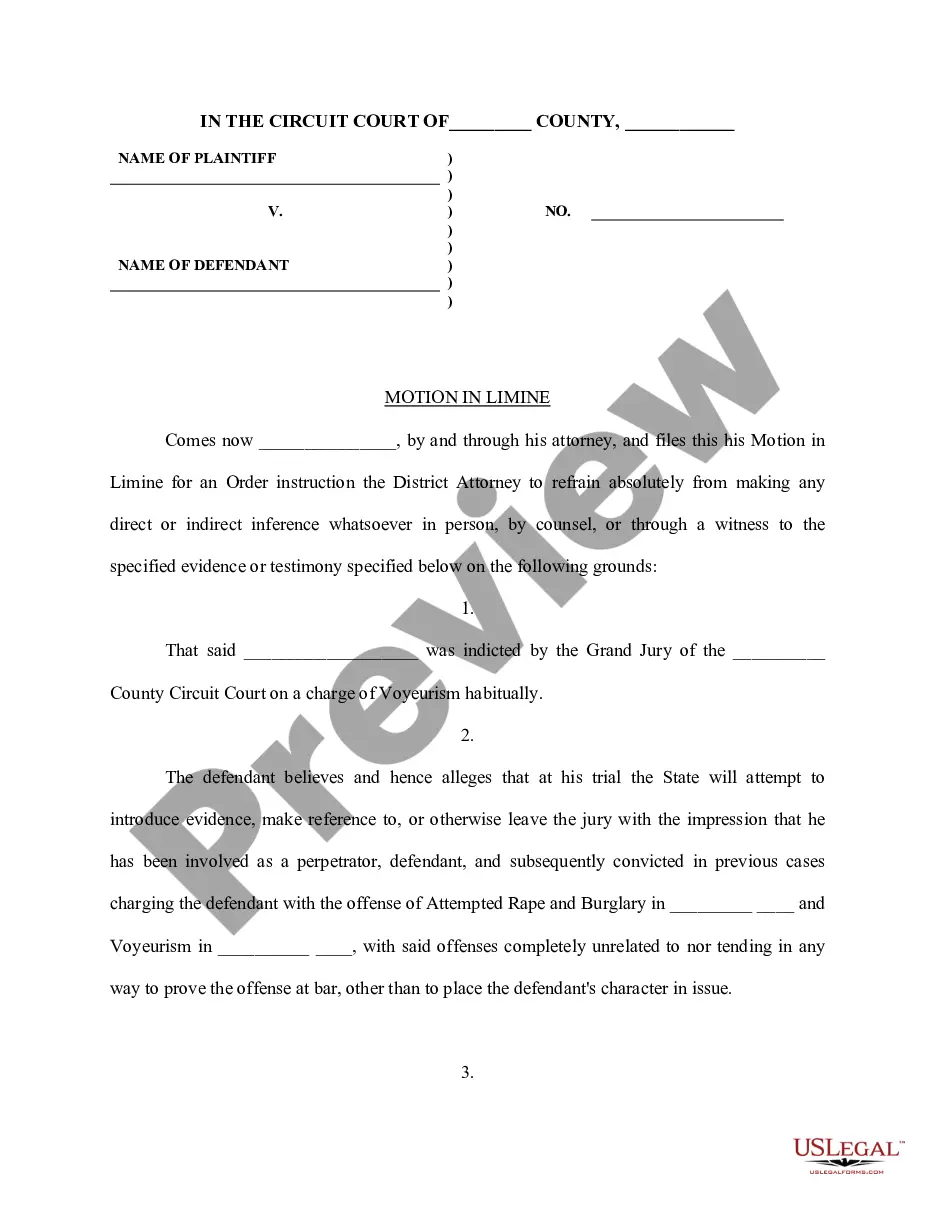
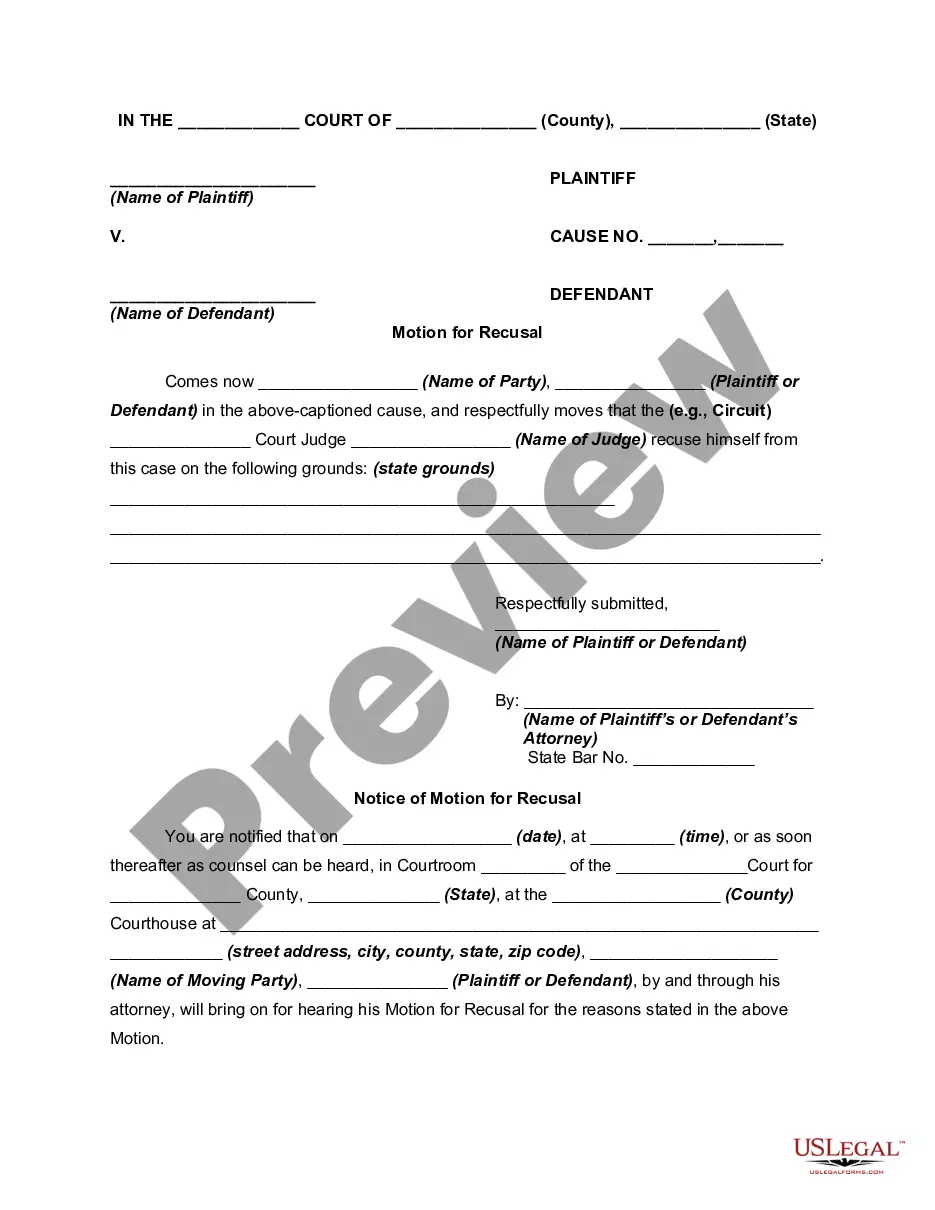
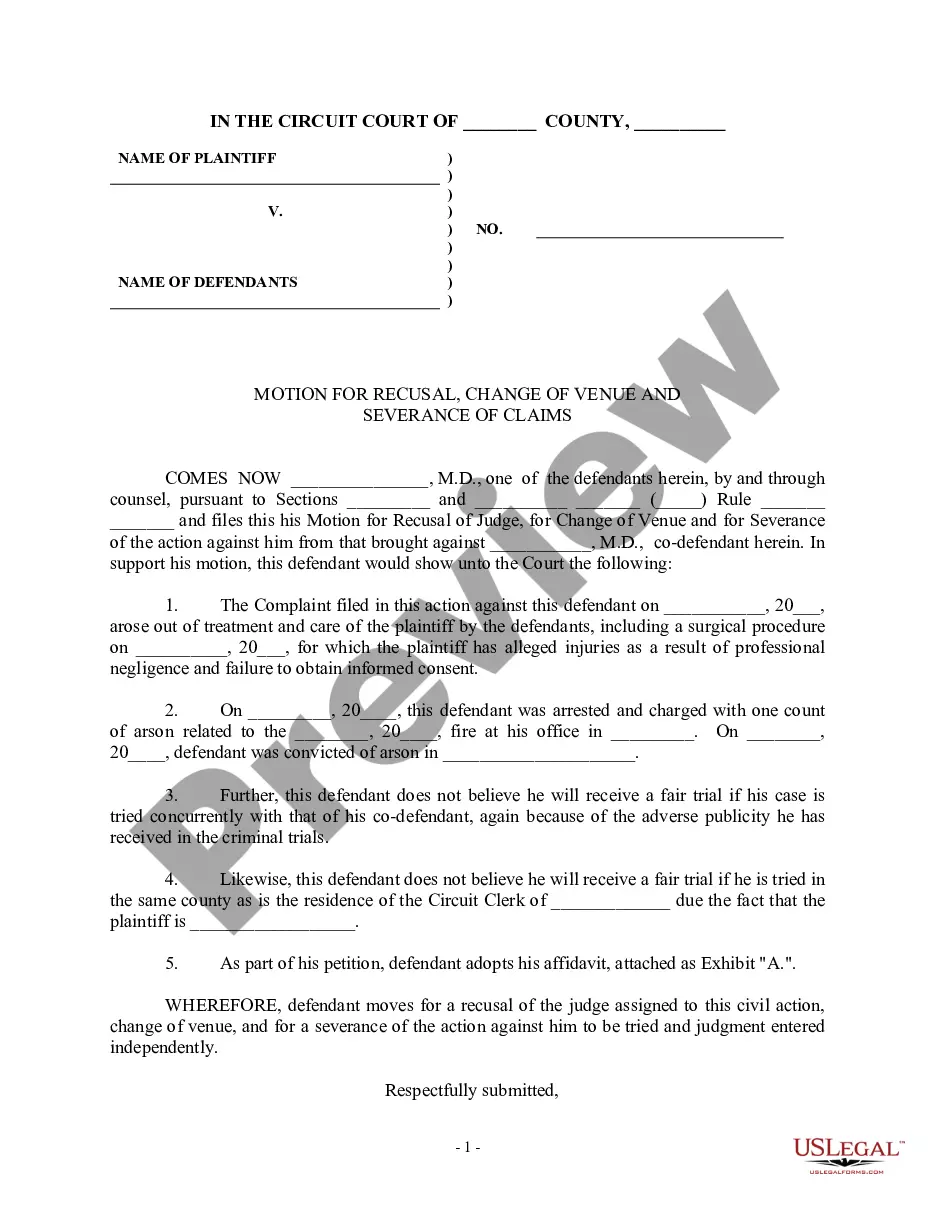
This is a multi-state form covering the subject matter of: Motion for Disclosure of any Possible
Basis of Judicial Recusal.
District of Columbia Motion for Disclosure of Any Possible Basis of Judicial Recusal
144 downloads
Description
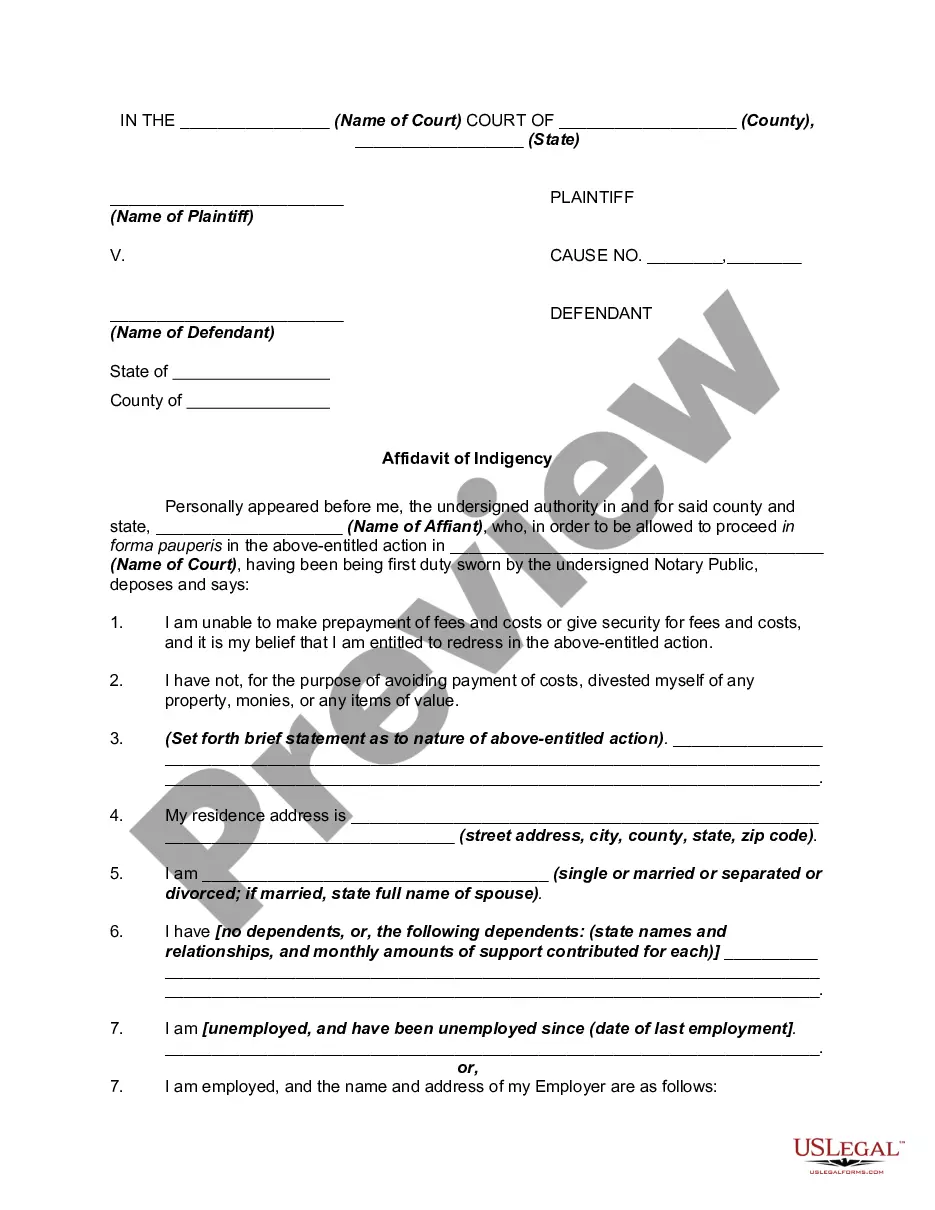
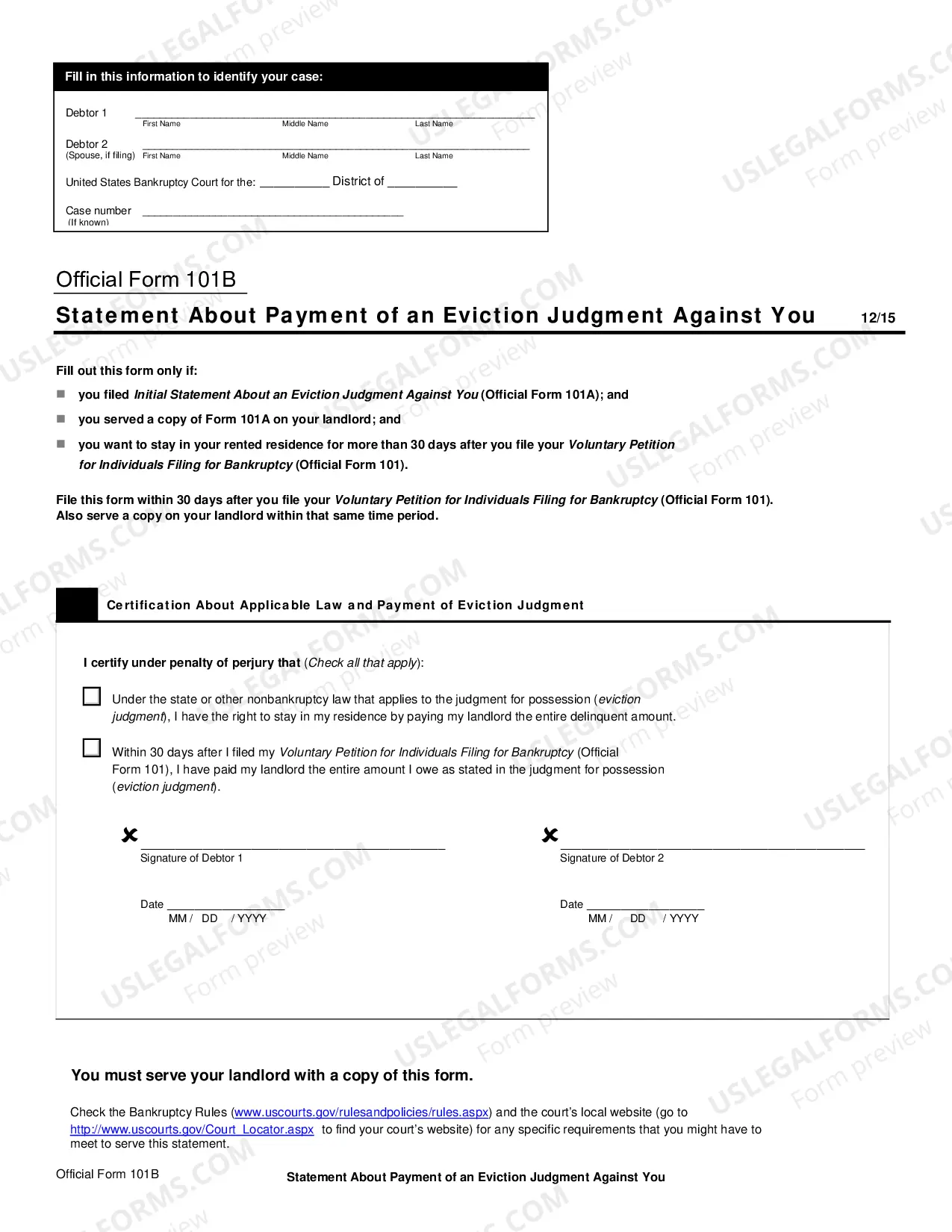
Free preview
Get your form ready online
Our built-in tools help you complete, sign, share, and store your documents in one place.
Built-in online Word editor
Make edits, fill in missing information, and update formatting in US Legal Forms—just like you would in MS Word.
Export easily
Download a copy, print it, send it by email, or mail it via USPS—whatever works best for your next step.
E-sign your document
Sign and collect signatures with our SignNow integration. Send to multiple recipients, set reminders, and more. Go Premium to unlock E-Sign.
Notarize online 24/7
If this form requires notarization, complete it online through a secure video call—no need to meet a notary in person or wait for an appointment.
Store your document securely
We protect your documents and personal data by following strict security and privacy standards.

Make edits, fill in missing information, and update formatting in US Legal Forms—just like you would in MS Word.

Download a copy, print it, send it by email, or mail it via USPS—whatever works best for your next step.

Sign and collect signatures with our SignNow integration. Send to multiple recipients, set reminders, and more. Go Premium to unlock E-Sign.

If this form requires notarization, complete it online through a secure video call—no need to meet a notary in person or wait for an appointment.

We protect your documents and personal data by following strict security and privacy standards.
Looking for another form?
How to fill out Motion For Disclosure Of Any Possible Basis Of Judicial Recusal?
Are you in the position where you need to have documents for potential business or personal tasks almost every day? There are numerous legal document templates available online, but obtaining ones you can rely on is challenging. US Legal Forms offers thousands of form templates, such as the District of Columbia Motion for Disclosure of Any Possible Basis of Judicial Recusal, which are crafted to meet federal and state regulations.
If you are already familiar with the US Legal Forms website and have your account, simply Log In. Afterwards, you can download the District of Columbia Motion for Disclosure of Any Possible Basis of Judicial Recusal template.
If you do not have an account and wish to start using US Legal Forms, follow these steps: Discover the form you require and ensure it is for the correct city/state. Utilize the Preview button to review the document. Read the description to ensure you have selected the right form. If the form does not meet your needs, use the Search section to find the form that suits your requirements. Once you find the appropriate form, click Purchase now. Choose the pricing plan you want, fill in the necessary information to create your account, and pay for the order using your PayPal or credit card. Select a convenient document format and download your copy.
Avoid modifying or removing any HTML tags. Only synonymize plain text outside of the HTML tags.
- Find all the document templates you have purchased in the My documents list.
- You can obtain an additional copy of the District of Columbia Motion for Disclosure of Any Possible Basis of Judicial Recusal at any time, if needed.
- Click on the required form to download or print the document template.
- Use US Legal Forms, the largest collection of legal forms, to save time and avoid errors.
- The service provides professionally crafted legal document templates that you can use for a variety of purposes.
- Create your account on US Legal Forms and start simplifying your life.
Form popularity
FAQ
Take Action File official complaints to your state judicial oversight bodies. Cite specific violations of rules or codes.
If a court document, such as a minute order or transcript, or an audio or video recording shows the misconduct, you may submit a copy (do not send original documents) or mention it in your complaint. An error in a judge's decision or ruling is not, by itself, misconduct.
A motion to recuse is a legal motion filed in court that says a judge should be disqualified, or removed, from a legal case for a reason listed within CCP 170.1. The motion can be brought by either a prosecutor or a defense attorney. And, a motion to recuse can be filed in either a civil suit or in a criminal trial.
File a Motion for Reconsideration A motion for reconsideration includes a written brief containing the reasons why you and your legal team believe the decision was unfair or biased. In addition to the written brief, there may be oral arguments before the judge.
File a Motion for Reconsideration A motion for reconsideration includes a written brief containing the reasons why you and your legal team believe the decision was unfair or biased. In addition to the written brief, there may be oral arguments before the judge.
Obvious examples are violations of criminal law, sexual misconduct with staff/attorneys/parties, joining discriminatory organizations and using the judicial position to enhance a private interest.
The judge is only required to order recusal (or refer the matter over to another judge to decide whether recusal is necessary) if a reasonable person, knowing all the facts, would have doubts about the judge's ability to be impartial in the case. See State v.
There is, however, an exception to the ordinary recusal requirements, known as ?the rule of necessity,? which allows judges to hear a case in which virtually all other available judges would have the same disqualifying interest, and the case could not otherwise be heard.
Private parties or political actors could tamper with juries or laypersons assisting judicial decision making. Witnesses and victims may be threatened or bribed by political officials or defence lawyers. Political authorities or higher courts might hamper the enforcement of judgments.
The rule of necessity is a judicial doctrine that permits a judge or agency decision maker to decide a case even if he or she would ordinarily be disqualified due to bias or prejudice .