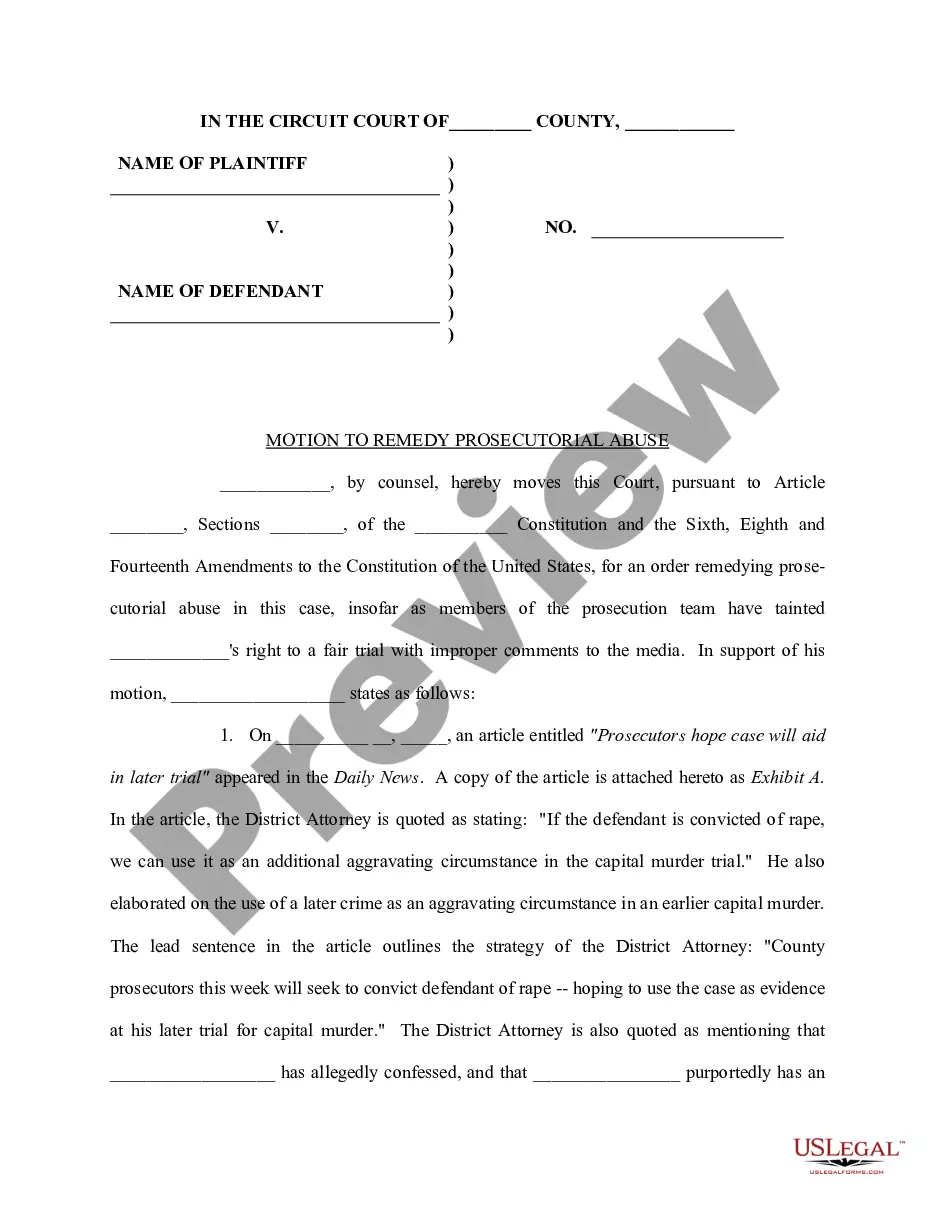
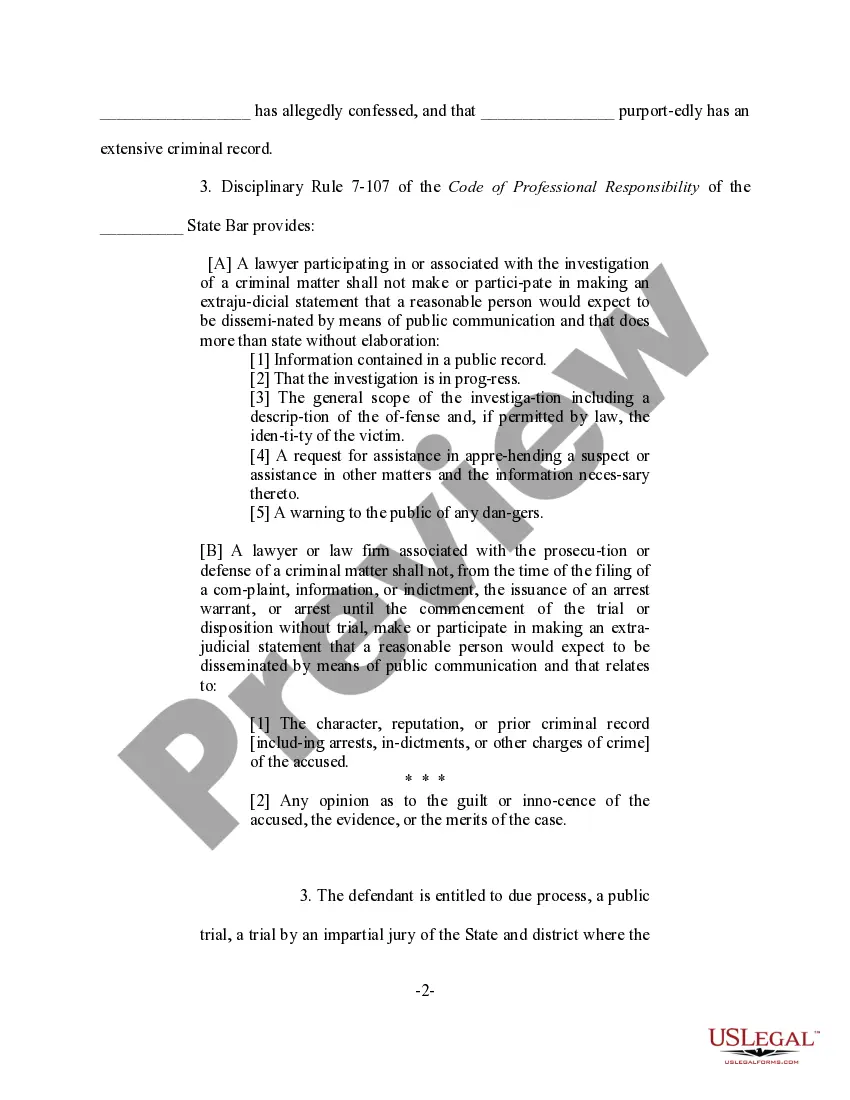
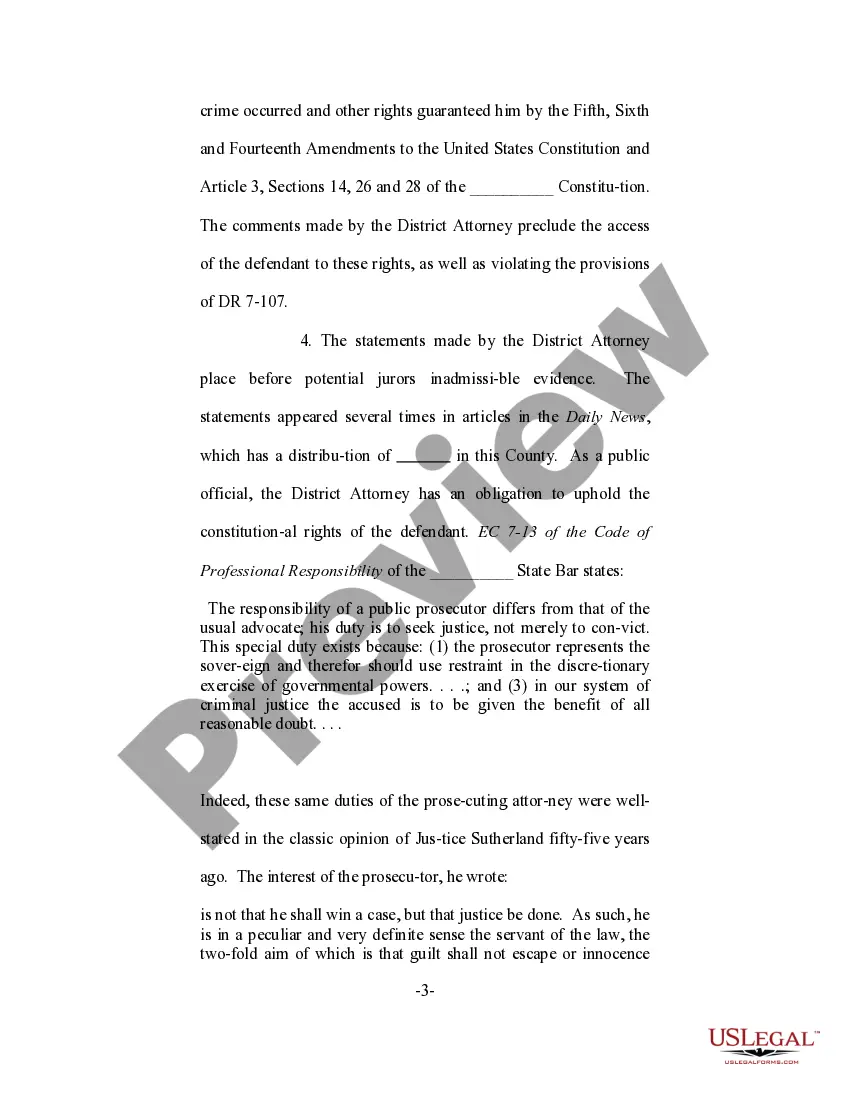
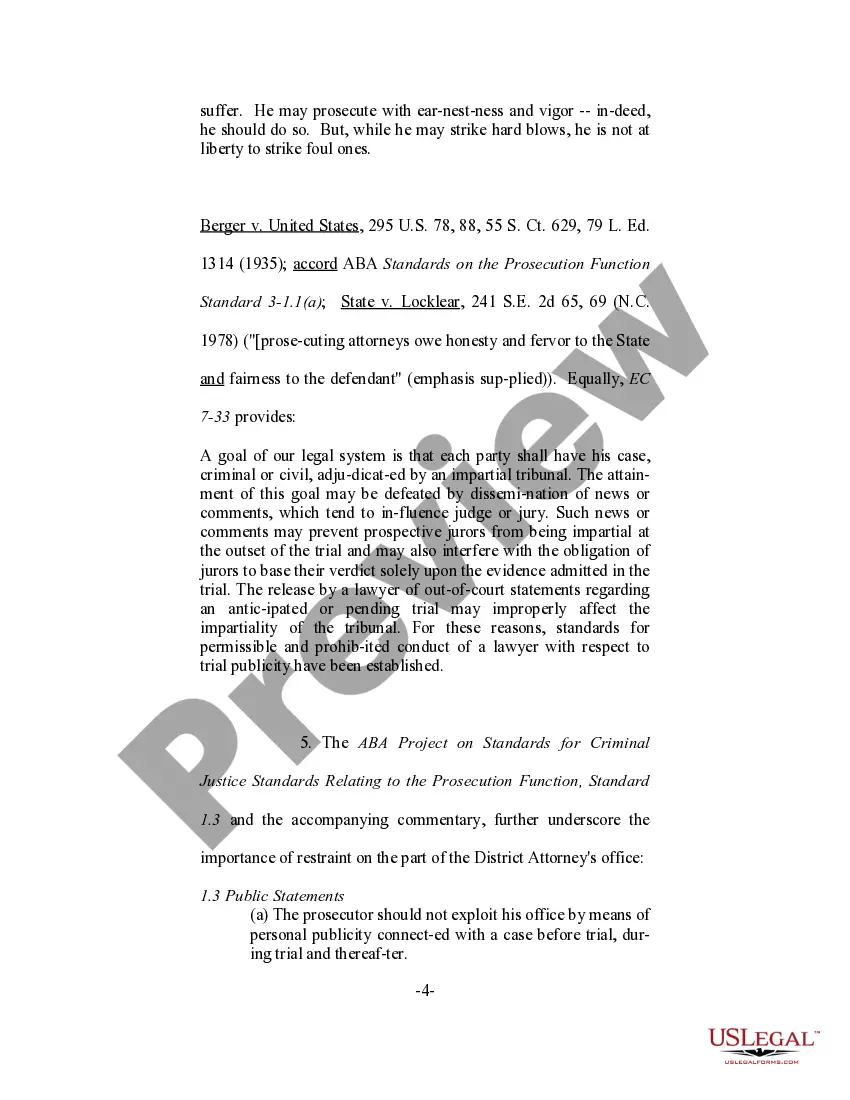
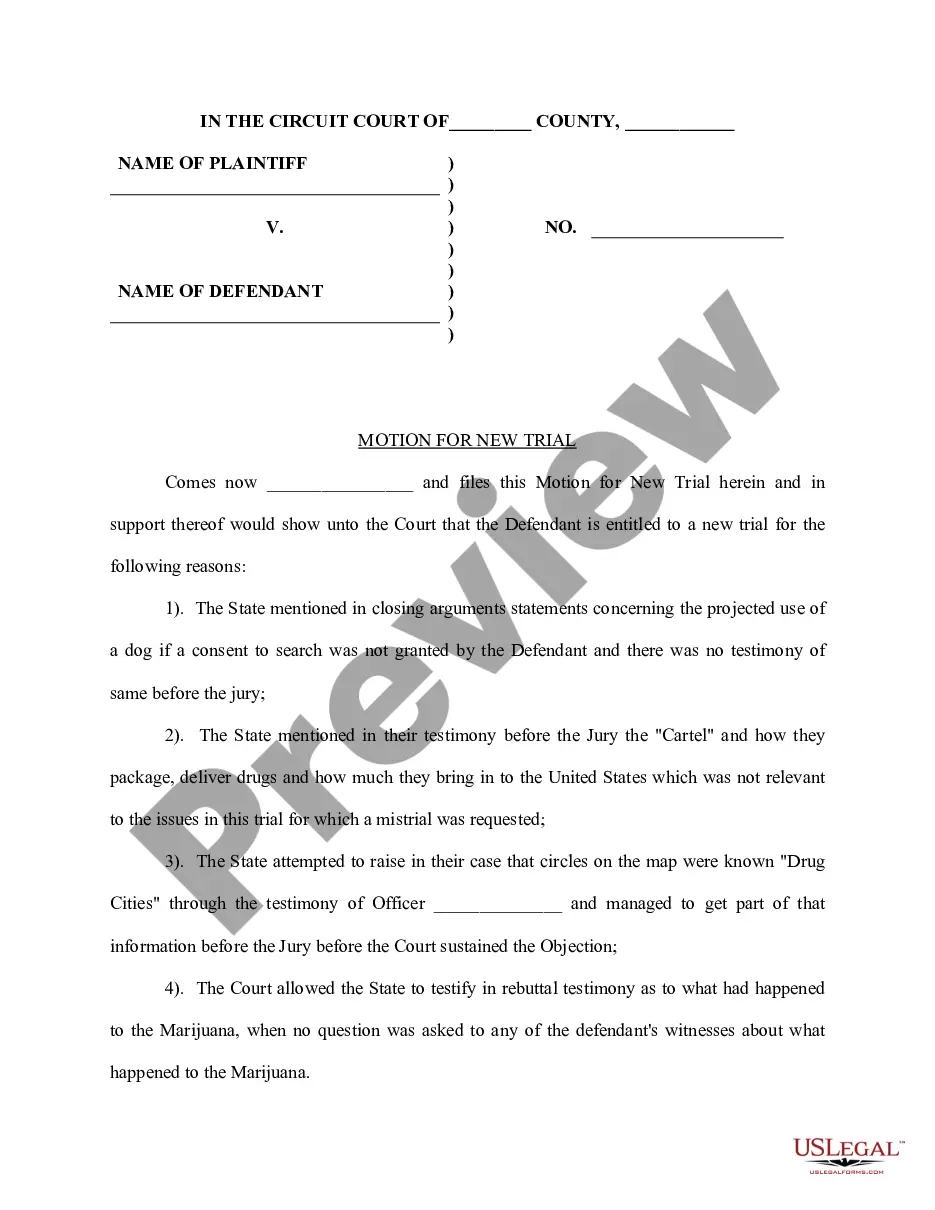
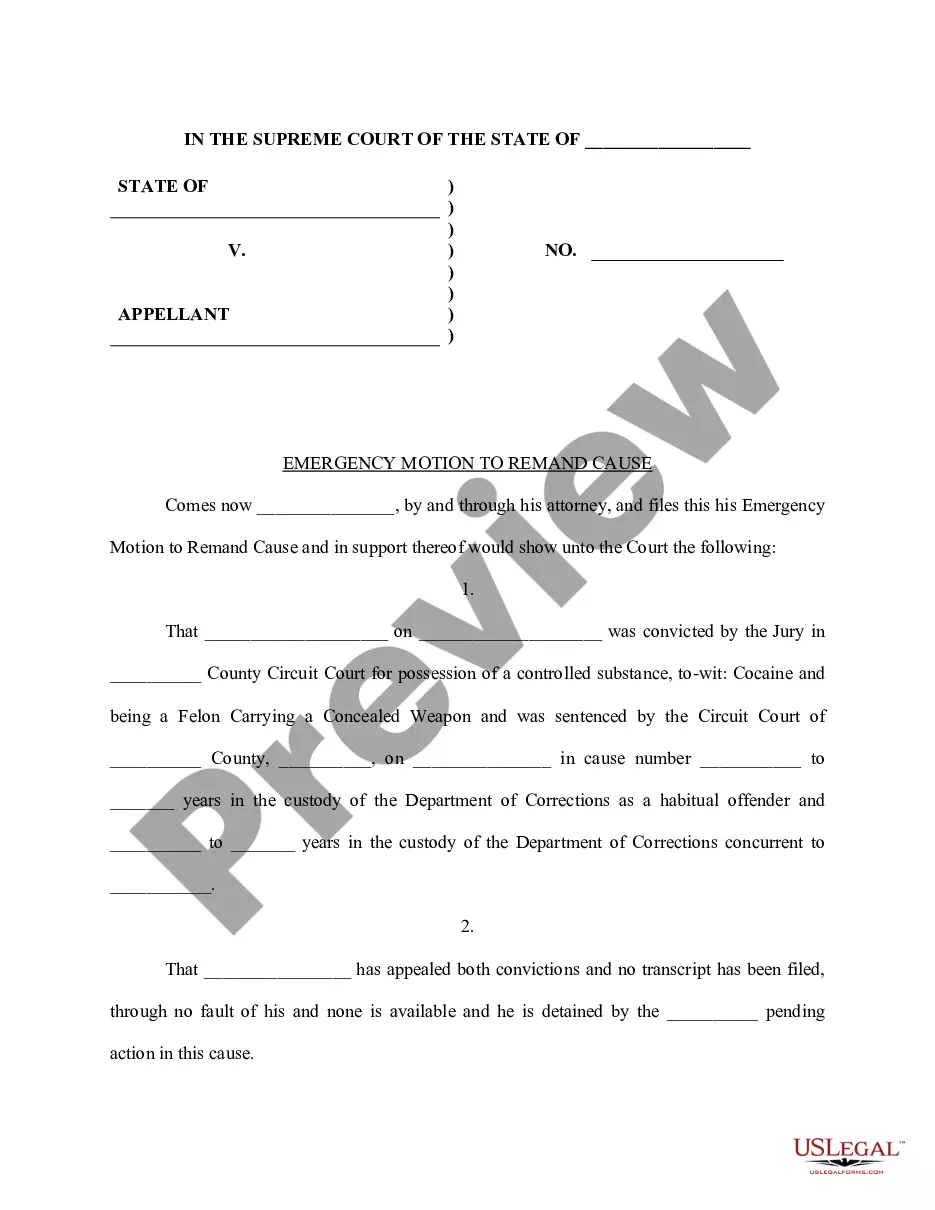
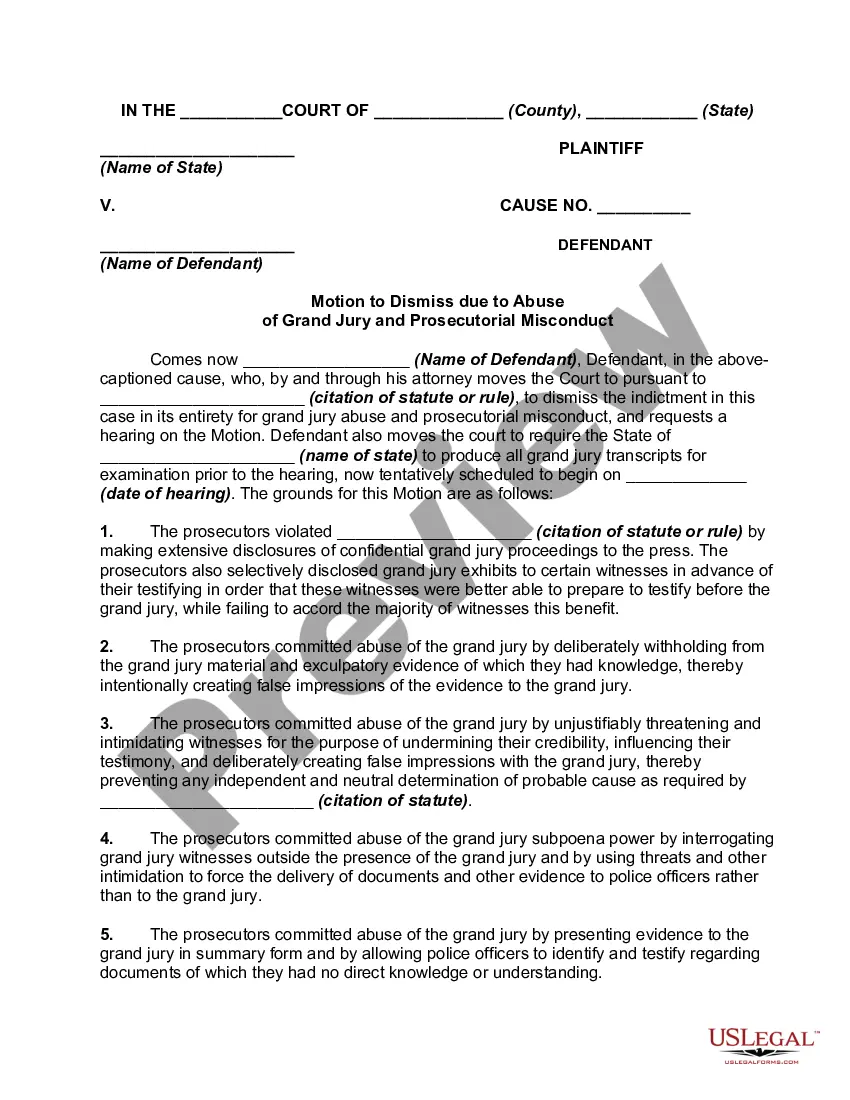
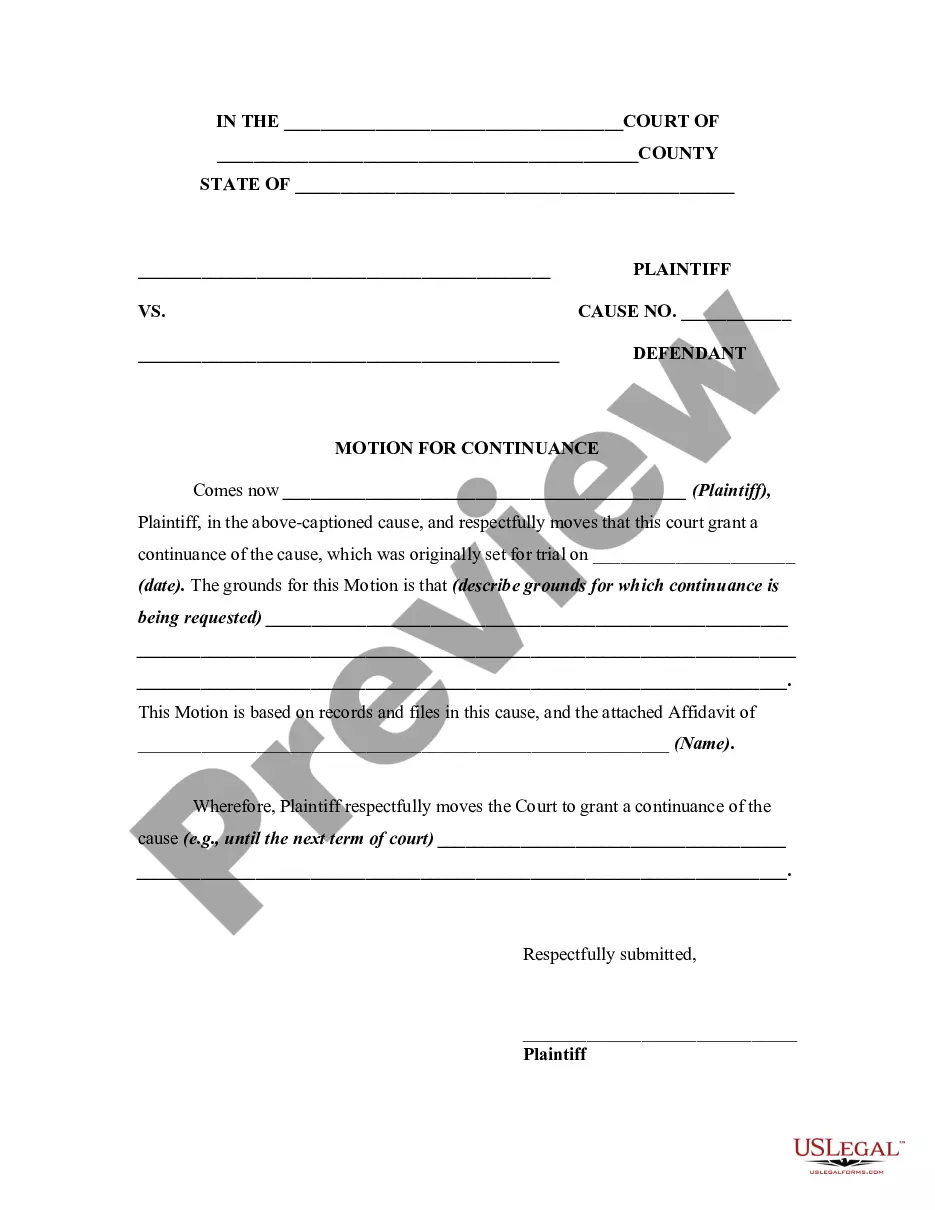
California Motion to Remedy Prosecutorial Abuse
Description
Get your form ready online
Our built-in tools help you complete, sign, share, and store your documents in one place.
Make edits, fill in missing information, and update formatting in US Legal Forms—just like you would in MS Word.
Download a copy, print it, send it by email, or mail it via USPS—whatever works best for your next step.
Sign and collect signatures with our SignNow integration. Send to multiple recipients, set reminders, and more. Go Premium to unlock E-Sign.
If this form requires notarization, complete it online through a secure video call—no need to meet a notary in person or wait for an appointment.
We protect your documents and personal data by following strict security and privacy standards.

Make edits, fill in missing information, and update formatting in US Legal Forms—just like you would in MS Word.

Download a copy, print it, send it by email, or mail it via USPS—whatever works best for your next step.

Sign and collect signatures with our SignNow integration. Send to multiple recipients, set reminders, and more. Go Premium to unlock E-Sign.

If this form requires notarization, complete it online through a secure video call—no need to meet a notary in person or wait for an appointment.

We protect your documents and personal data by following strict security and privacy standards.
Looking for another form?
How to fill out Motion To Remedy Prosecutorial Abuse?
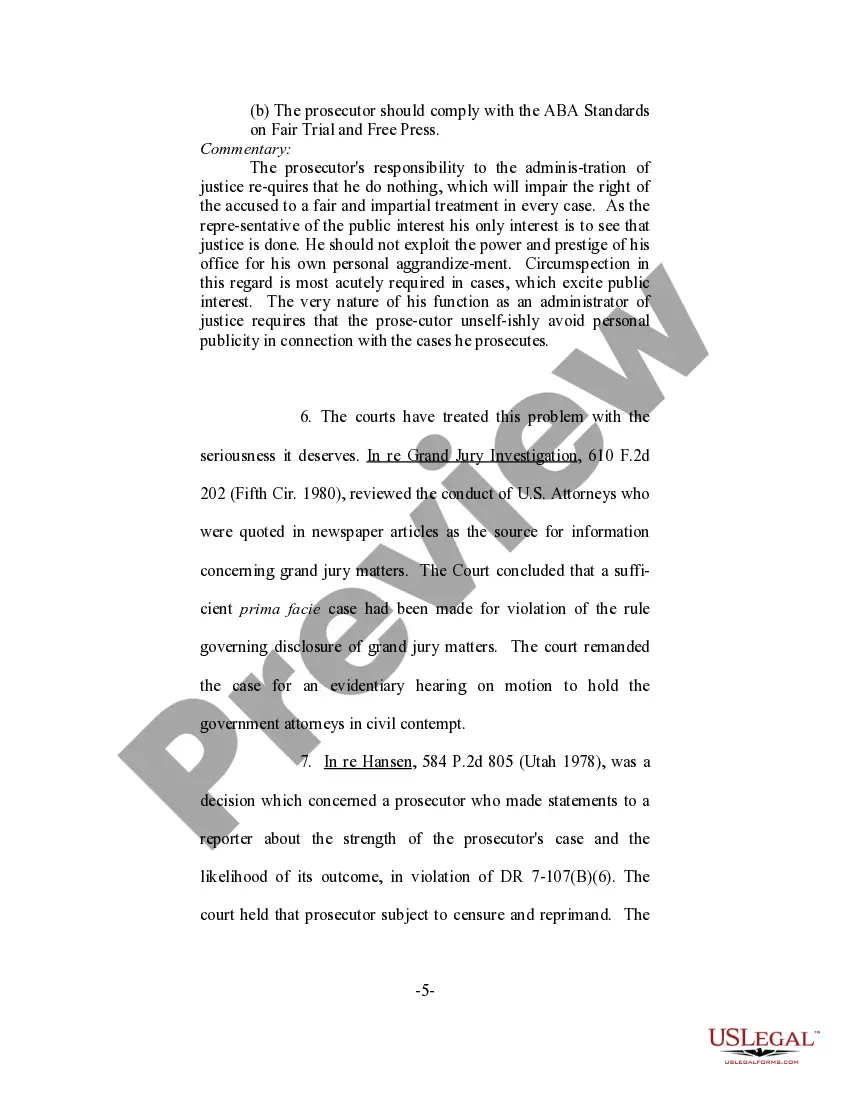
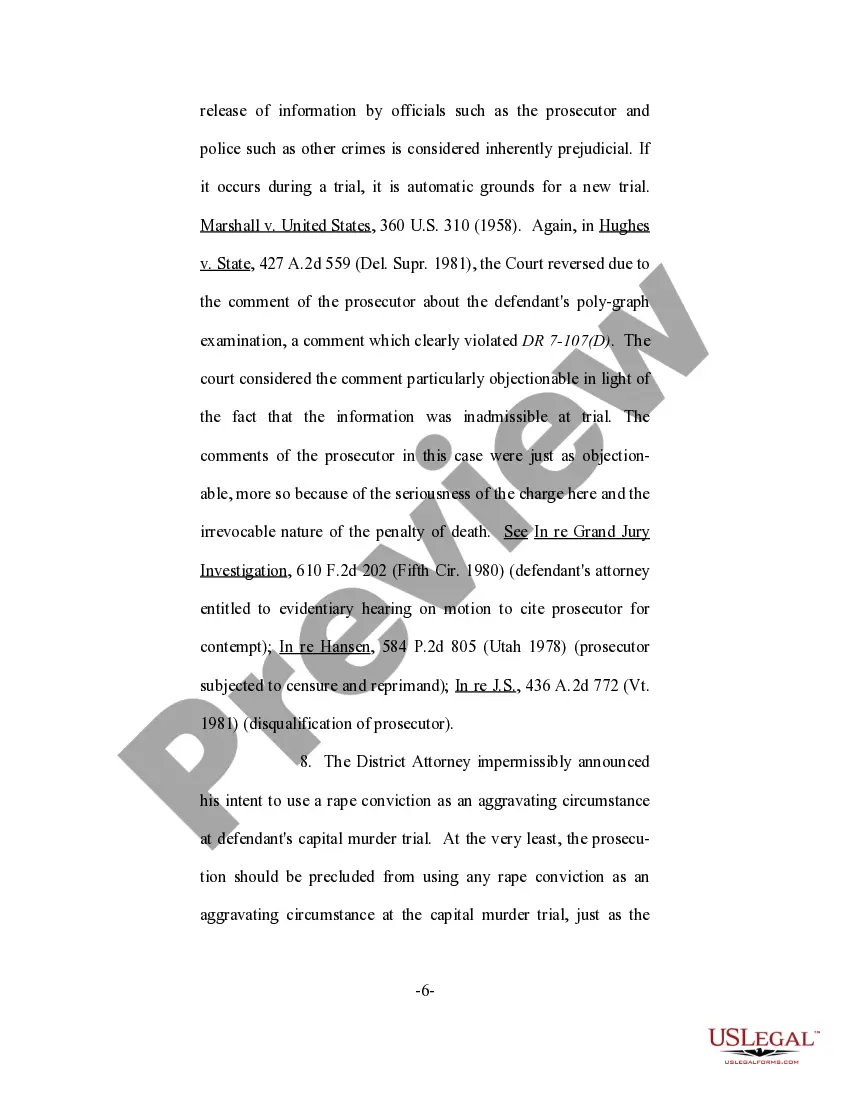
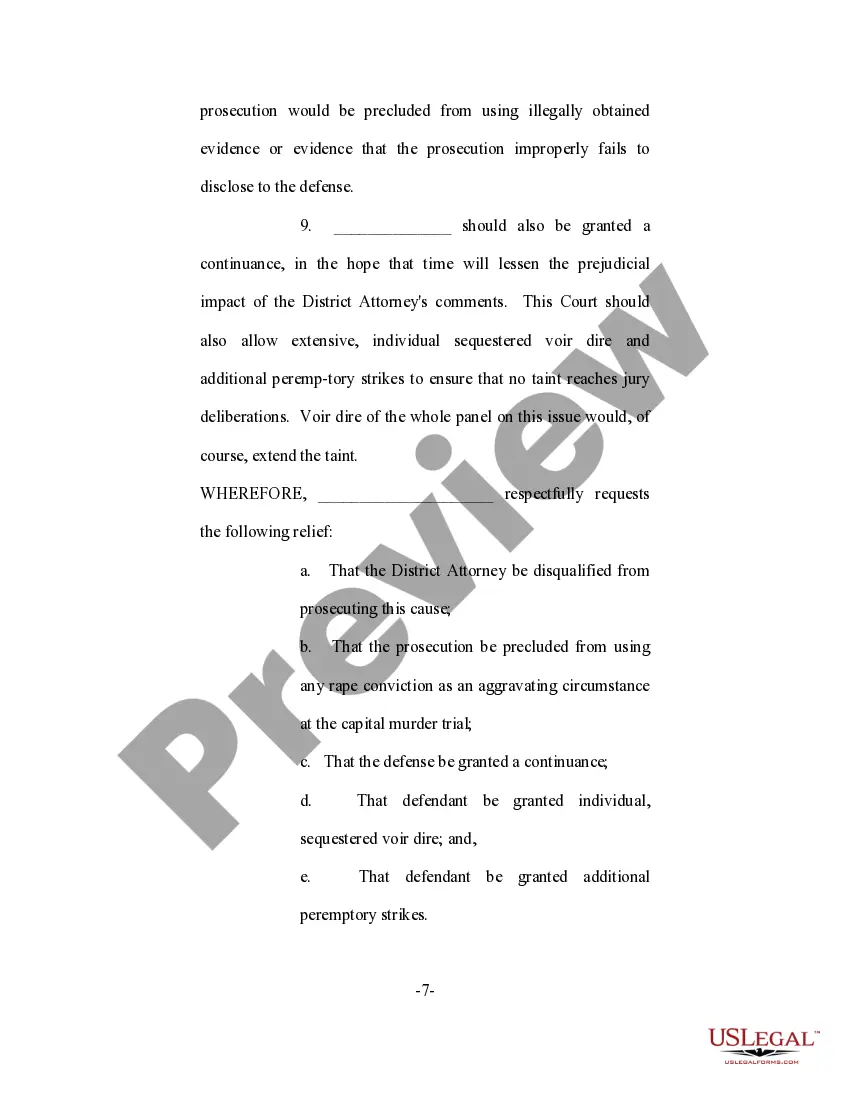
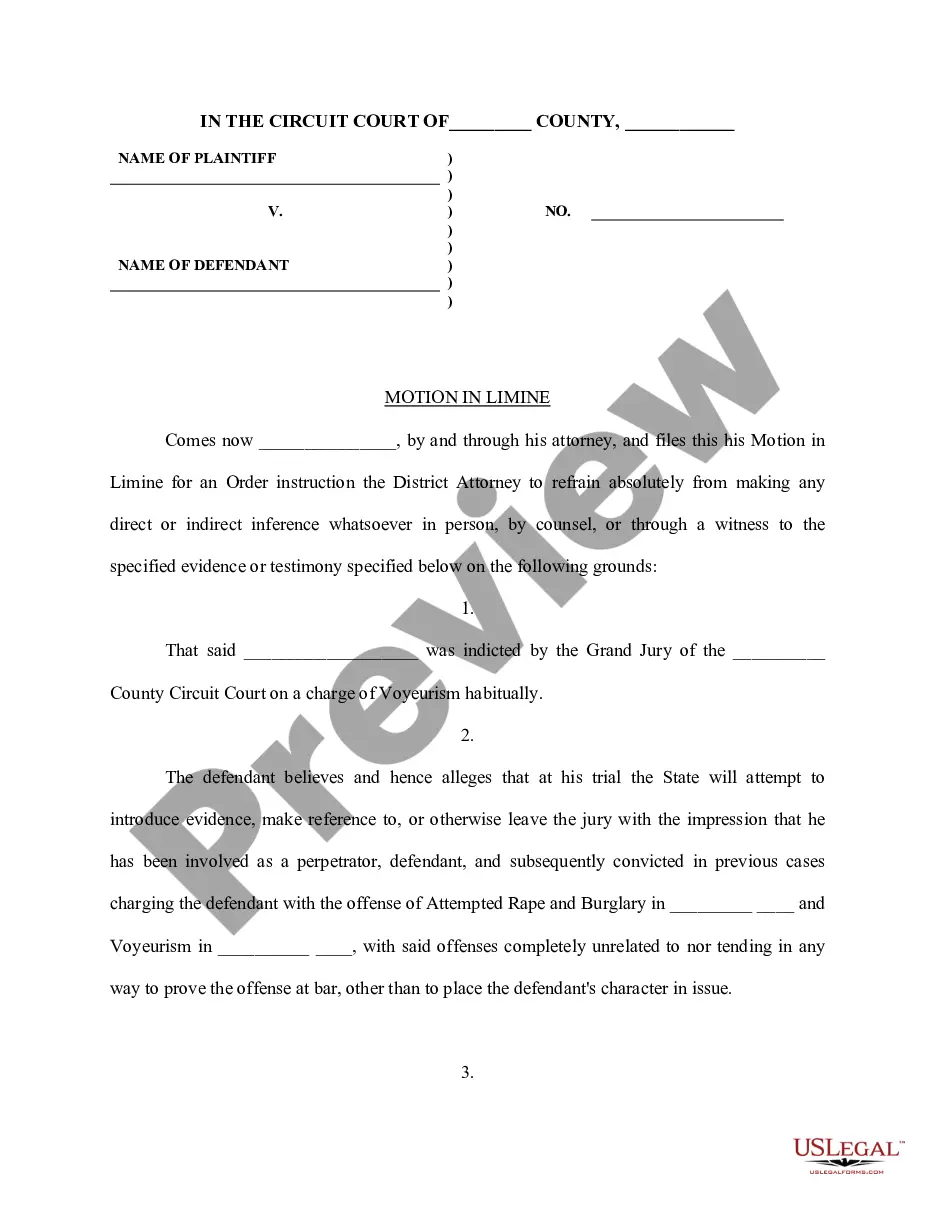
Selecting the most suitable authorized document format can be a challenge. Certainly, there are numerous templates available online, but how will you acquire the legal form you require? Utilize the US Legal Forms website. The service offers thousands of templates, including the California Motion to Remedy Prosecutorial Abuse, which you can use for professional and personal needs. All the forms are reviewed by experts and meet federal and state regulations.
If you are already registered, Log In to your account and click the Download button to obtain the California Motion to Remedy Prosecutorial Abuse. Use your account to browse through the legal forms you have purchased previously. Visit the My documents section of your account and download another copy of the document you need.
If you are a new user of US Legal Forms, here are simple instructions that you should follow: First, ensure that you have selected the correct form for your city/region. You can review the form using the Preview button and read the form description to confirm it is the right one for you. If the form does not meet your requirements, use the Search field to find the appropriate form. Once you are confident that the form is correct, click the Get now button to obtain the form. Select the payment plan you prefer and enter the required information. Create your account and pay for the order with your PayPal account or credit card. Choose the file format and download the authorized document format to your device. Complete, modify, print, and sign the received California Motion to Remedy Prosecutorial Abuse. US Legal Forms is indeed the largest collection of legal forms that you will find various document templates. Utilize the service to download professionally crafted documents that comply with state requirements.
US Legal Forms is indeed the largest collection of legal forms that you will find various document templates. Utilize the service to download professionally crafted documents that comply with state requirements.
- Selecting the most suitable authorized document format can be a challenge.
- Certainly, there are numerous templates available online.
- Utilize the US Legal Forms website.
- All the forms are reviewed by experts.
- If you are already registered, Log In to your account.
- If you are a new user of US Legal Forms, here are simple instructions that you should follow.
Form popularity
FAQ
A prosecuting attorney who intentionally and in bad faith alters, modifies, or withholds any physical matter, digital image, video recording, or relevant exculpatory material or information, knowing that it is relevant and material to the outcome of the case, with the specific intent that the physical matter, digital ...
How could judges act earlier to prevent prosecutorial misconduct? The answer, perhaps surprisingly, is that a trial court could impose minimum training standards for avoiding prosecutorial misconduct. Unless prosecutors complete that training, the judge would not allow them to handle cases in the judge's courtroom.
Sanctions for prosecutorial misconduct include appellate reversal of convictions, finding the prosecutor in contempt of court, referring the prosecutor to a bar association grievance committee, and removing the prosecutor from office.
There are several possible remedies in cases of prosecutorial misconduct. These include: the judge dismisses the charge(s) against the accused, the judge admonishes the jury to disregard certain evidence or comments, or.
Some Examples Include: Evidence tampering. Failing to admit evidence that exonerates the defendant. Practices like entrapment or pressuring a person to commit a crime. Inducing a plea bargain through threat or unfounded assurances. Intentionally presenting false evidence or witness testimony that's factually untrue.
Vindictive prosecution occurs where the prosecution is pursuing charges against a criminal defendant out of spite, retaliation, or a desire to punish them for asserting their rights.
It is misconduct if a prosecutor introduces evidence that is false or inadmissible. 2. Some of this evidence can include: hearsay statements, untrue or unfounded character evidence, and.
Prosecutorial misconduct can take many forms. The most well-publicized type of misconduct involves the withholding of potentially exculpatory evidence, in violation of the U.S. Supreme Court case, Brady v. Maryland. It can also encompass the exclusion of people of color from juries, in violation of Batson v.