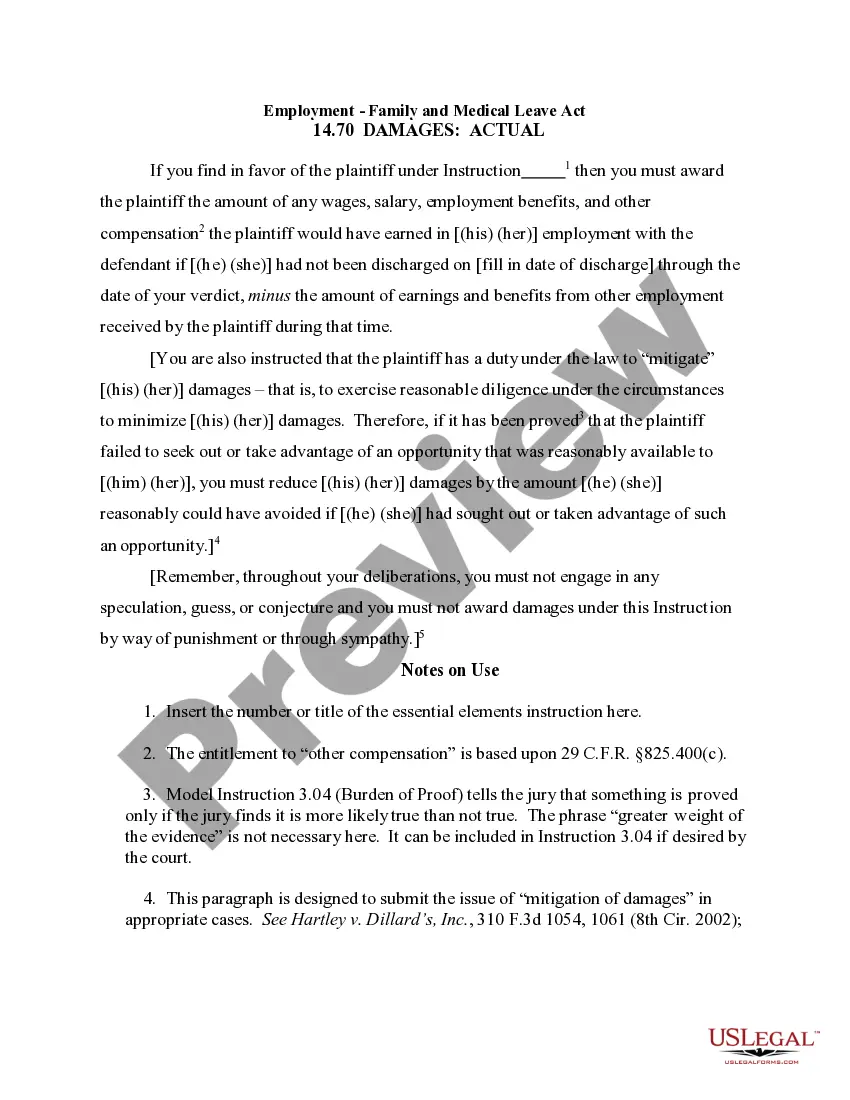
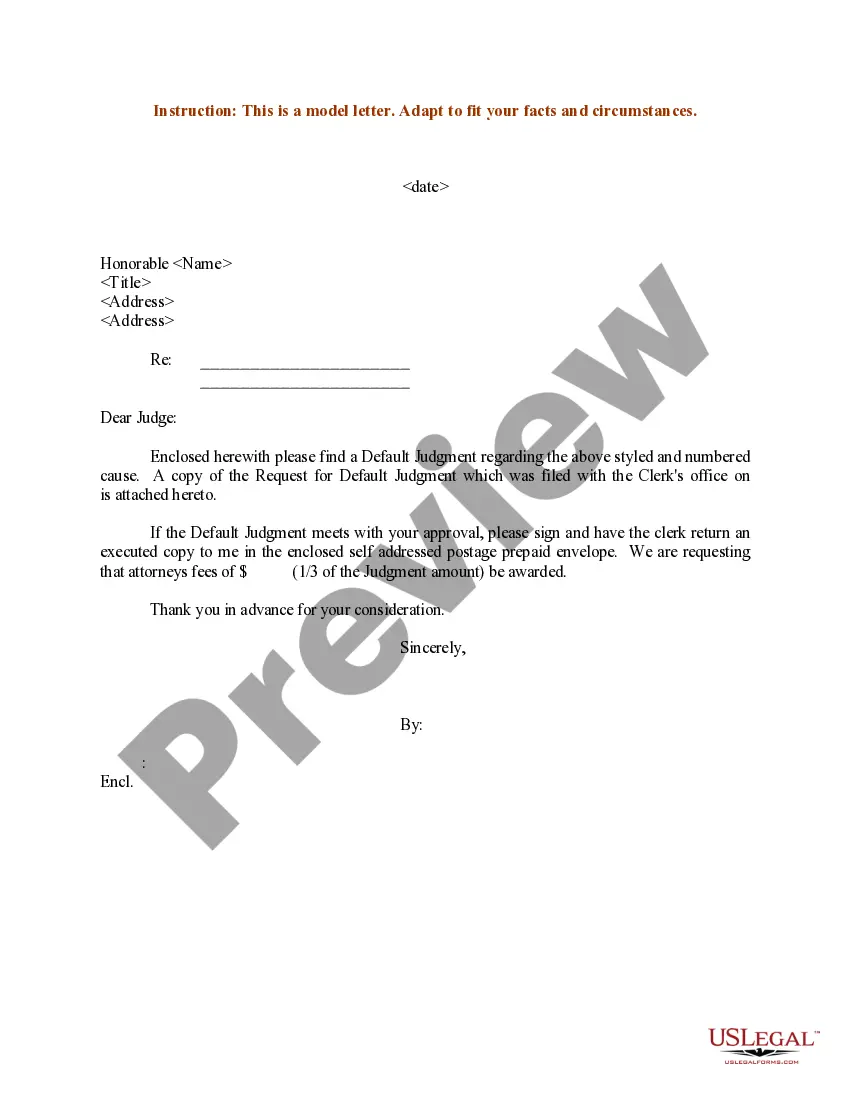
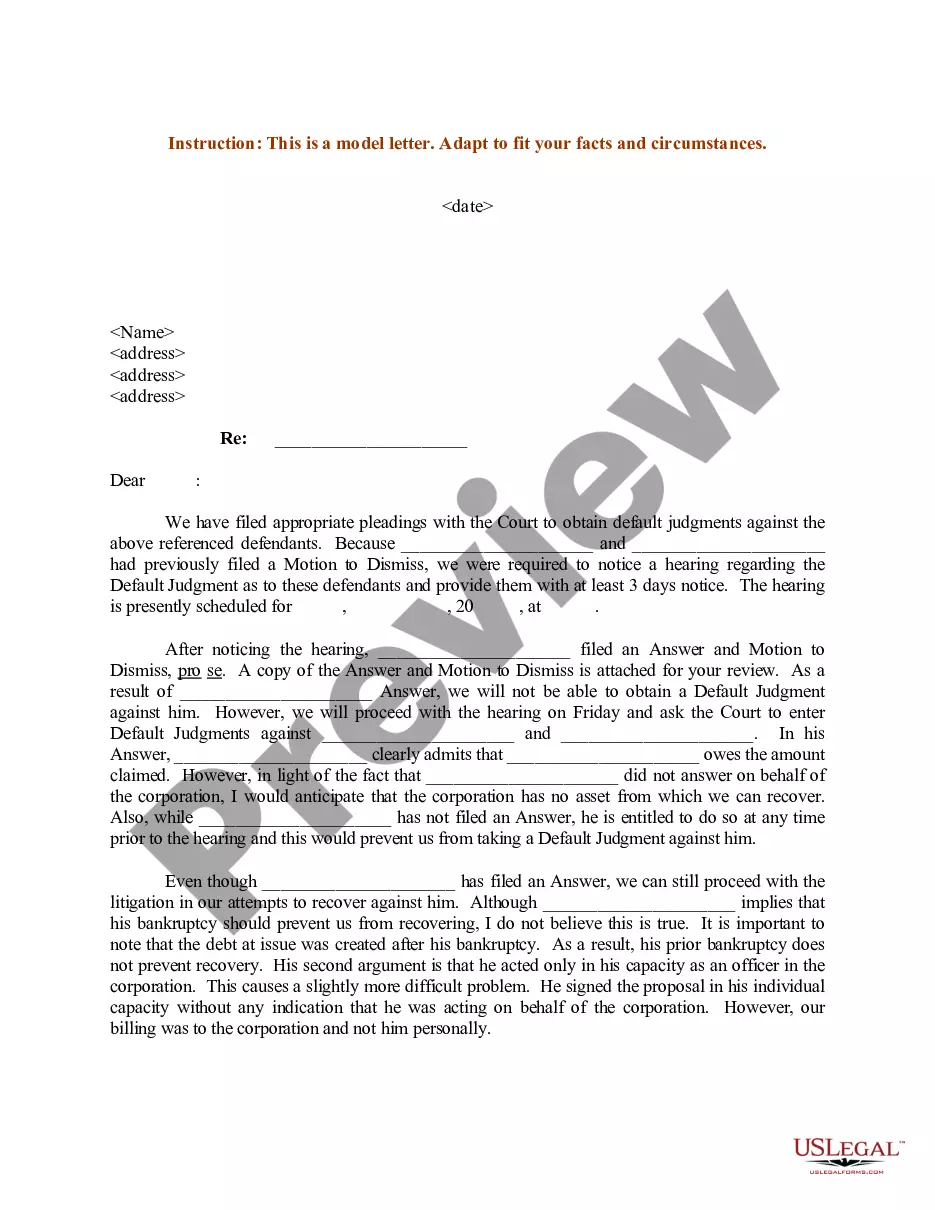
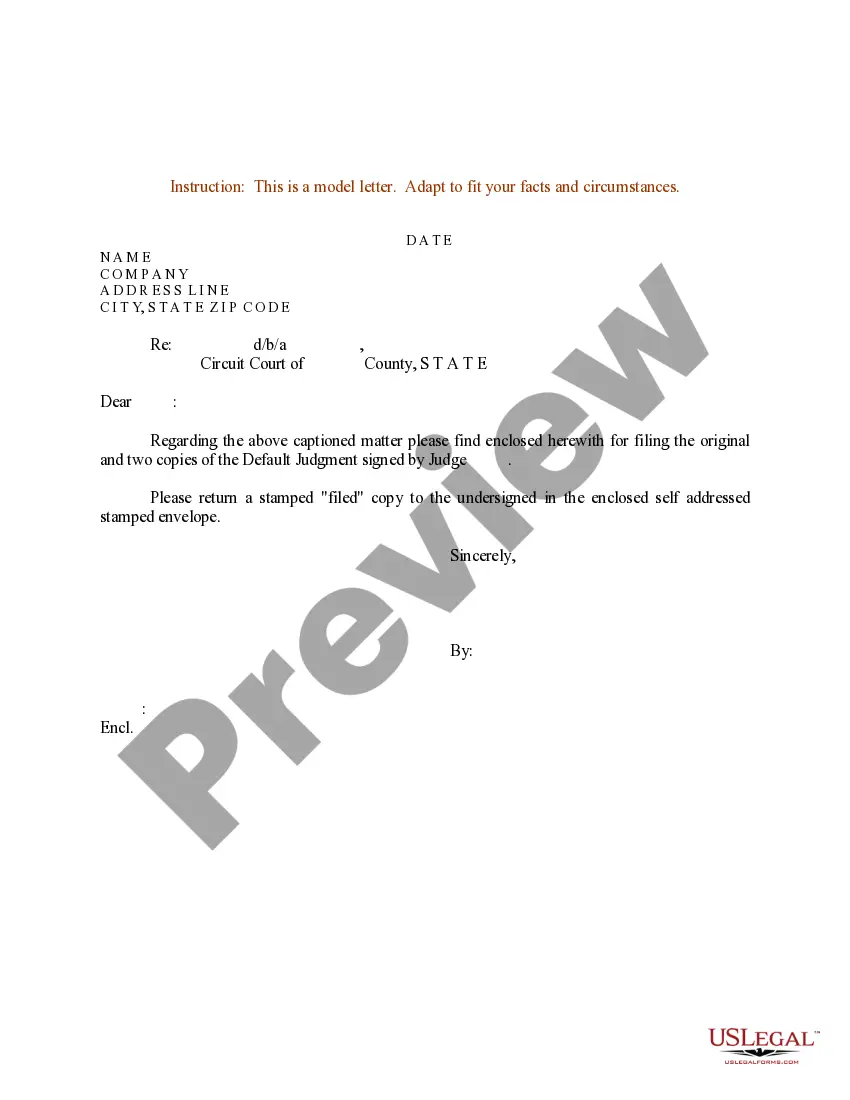
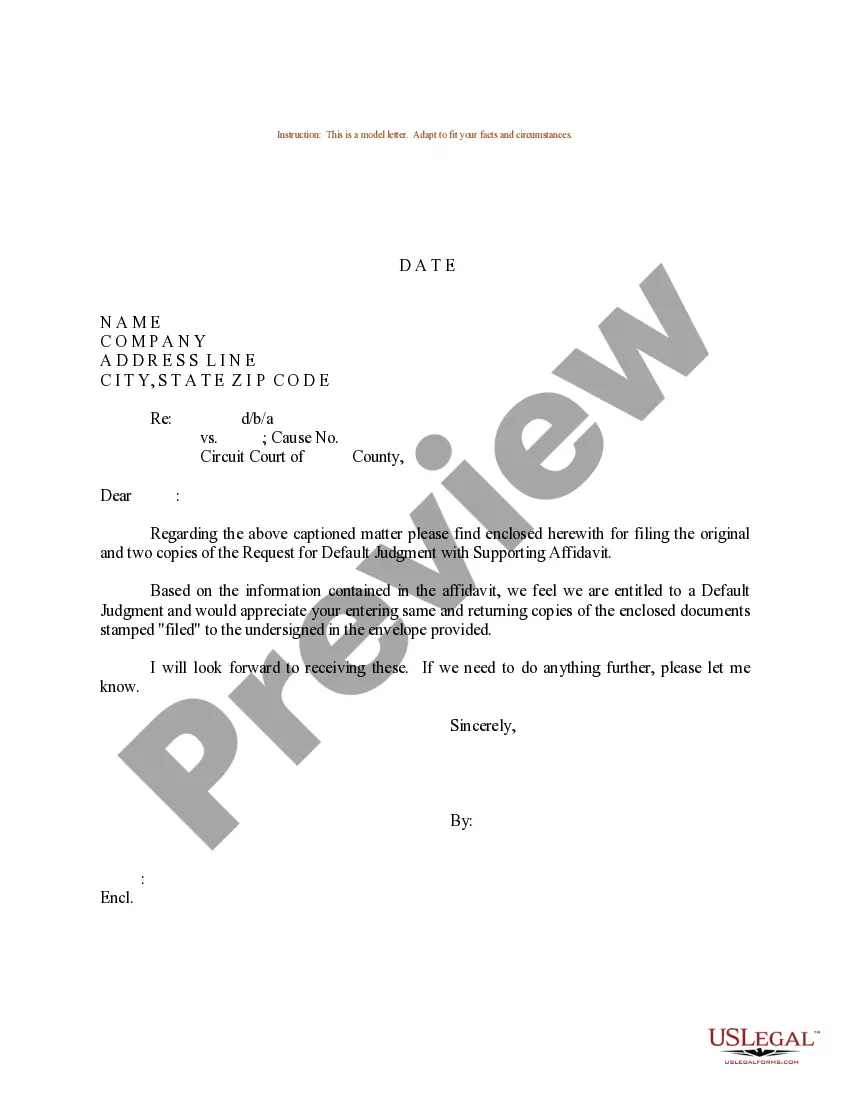
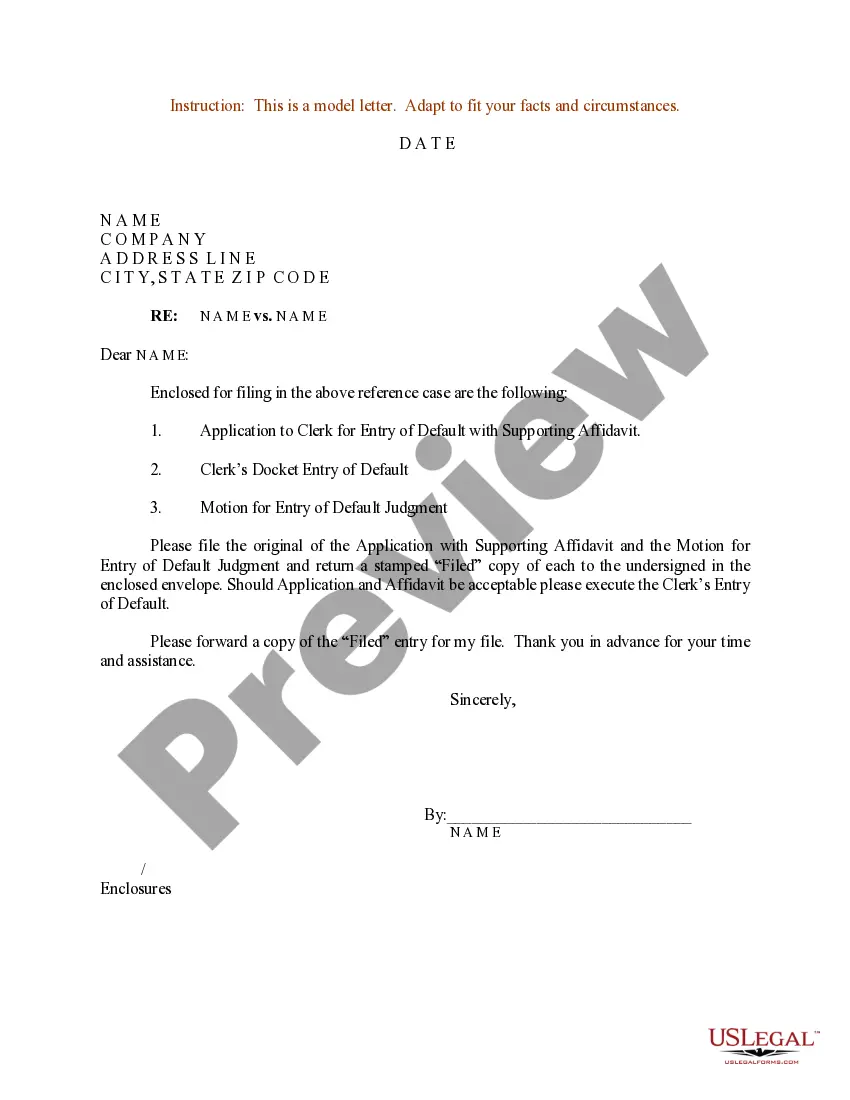
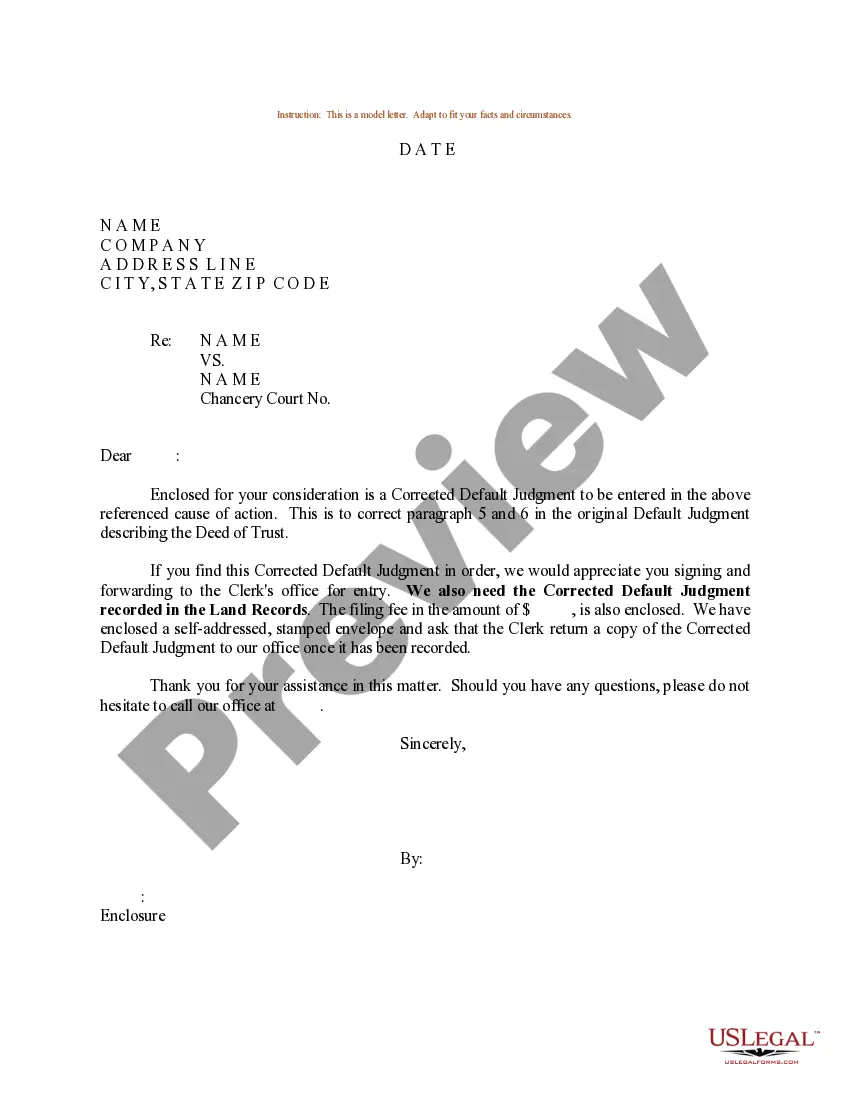
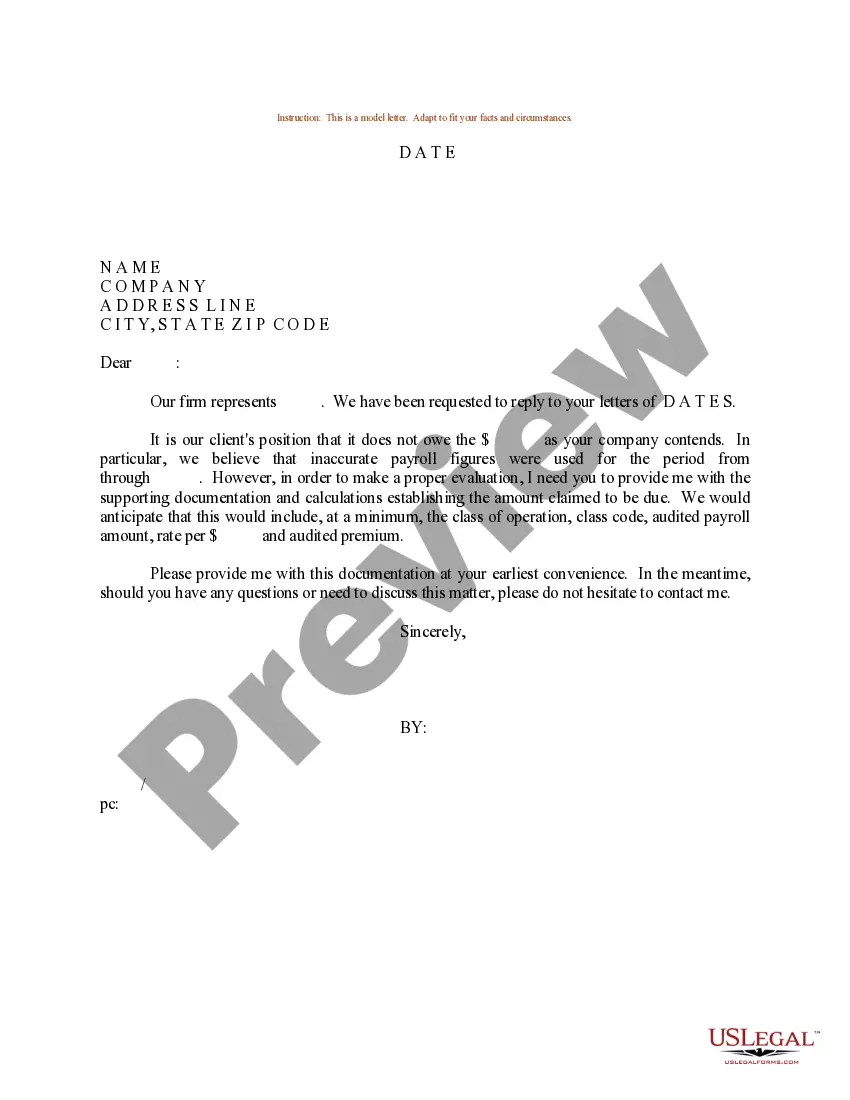
District of Columbia Sample Letter to Judge submitting Default Judgment
Description
Get your form ready online
Our built-in tools help you complete, sign, share, and store your documents in one place.
Make edits, fill in missing information, and update formatting in US Legal Forms—just like you would in MS Word.
Download a copy, print it, send it by email, or mail it via USPS—whatever works best for your next step.
Sign and collect signatures with our SignNow integration. Send to multiple recipients, set reminders, and more. Go Premium to unlock E-Sign.
If this form requires notarization, complete it online through a secure video call—no need to meet a notary in person or wait for an appointment.
We protect your documents and personal data by following strict security and privacy standards.

Make edits, fill in missing information, and update formatting in US Legal Forms—just like you would in MS Word.

Download a copy, print it, send it by email, or mail it via USPS—whatever works best for your next step.

Sign and collect signatures with our SignNow integration. Send to multiple recipients, set reminders, and more. Go Premium to unlock E-Sign.

If this form requires notarization, complete it online through a secure video call—no need to meet a notary in person or wait for an appointment.

We protect your documents and personal data by following strict security and privacy standards.
Looking for another form?






How to fill out Sample Letter To Judge Submitting Default Judgment?
If you want to be thorough, download, or print legal document templates, utilize US Legal Forms, the largest collection of legal forms available online.
Employ the site's user-friendly and efficient search to locate the documents you require. Various templates for business and personal use are organized by categories and states, or keywords.
Use US Legal Forms to find the District of Columbia Sample Letter to Judge submitting Default Judgment with just a few clicks.
Step 5. Complete the transaction. You can use your credit card or PayPal account to finalize the payment.
Step 6. Select the format of the legal form and download it to your device. Step 7. Fill out, modify, and print or sign the District of Columbia Sample Letter to Judge submitting Default Judgment. Every legal document template you obtain is yours indefinitely. You have access to every form you acquired in your account. Click the My documents section and select a form to print or download again. Stay competitive and download, and print the District of Columbia Sample Letter to Judge submitting Default Judgment with US Legal Forms. There are millions of professional and state-specific forms you can use for your business or personal needs.
- If you are already a US Legal Forms member, Log In to your account and click the Acquire button to find the District of Columbia Sample Letter to Judge submitting Default Judgment.
- You can also access forms you have previously obtained in the My documents section of your account.
- If you are using US Legal Forms for the first time, follow these instructions.
- Step 1. Ensure you have selected the form for your specific city/region.
- Step 2. Utilize the Preview option to review the form's content. Be sure to read the description.
- Step 3. If you are not satisfied with the form, use the Search box at the top of the screen to find other variations of the legal form template.
- Step 4. Once you have found the form you need, click on the Purchase now button. Choose the pricing plan you prefer and provide your details to register for an account.
Form popularity
FAQ
Decisions. If the motion or OSC can't be settled, the Judge will make a decision. Sometimes, the Judge makes a decision right away. If not, the Judge has 60 days by law to decide the motion.
The defendant must apply to the clerk for a default judgment within one year of the plaintiff's default (CPLR 3215(a)). An application for a default judgment before the clerk must be made in the county where the action is venued.
A judgment is good for 20 years, but if the plaintiff wants to enforce the judgment against land it is only good for 10 years unless the plaintiff renews it for another 10 years.
Any party can move for summary judgment after the issue has been joined in the action. The court may set a specific date after which no such motion can be made, ensuring it's no earlier than thirty days after filing the note of issue.
Typically, the default process begins when the defendant has not responded to a properly served summons and complaint. When this happens, a defendant is ?in default,? and the plaintiff can take the first step to obtain an entry of default against the defendant. (See Cal. Rules of Court, rule 3.110.)
§ 3215. Default judgment. (a) Default and entry. When a defendant has failed to appear, plead or proceed to trial of an action reached and called for trial, or when the court orders a dismissal for any other neglect to proceed, the plaintiff may seek a default judgment against him.
Under CPLR 3215, a default judgment may be obtained against. a defendant who has failed to proceed in an action.112 Once the. defendant has conceded liability by defaulting, the plaintiff must. apply to the court for a judgment, and an inquest must be con- ducted to determine damages.'
If a creditor has a money judgment, it can hire an enforcement officer to collect money and property from a judgment debtor. An enforcement officer is a sheriff, police officer, city marshal, town constable, or village constable that's authorized to take the debtor's property or money to pay the judgment.