District of Columbia Financial Account Transfer to Living Trust
What is this form?
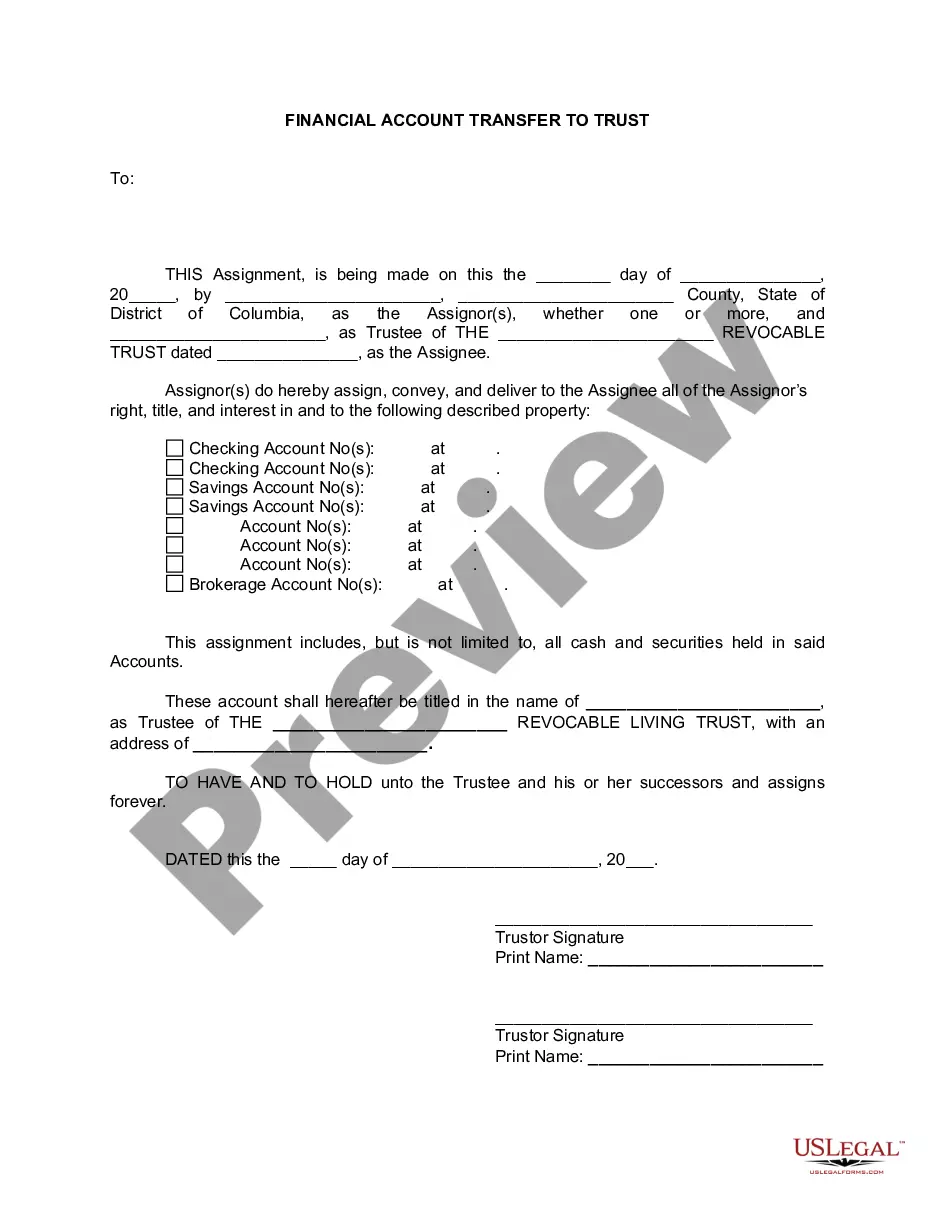
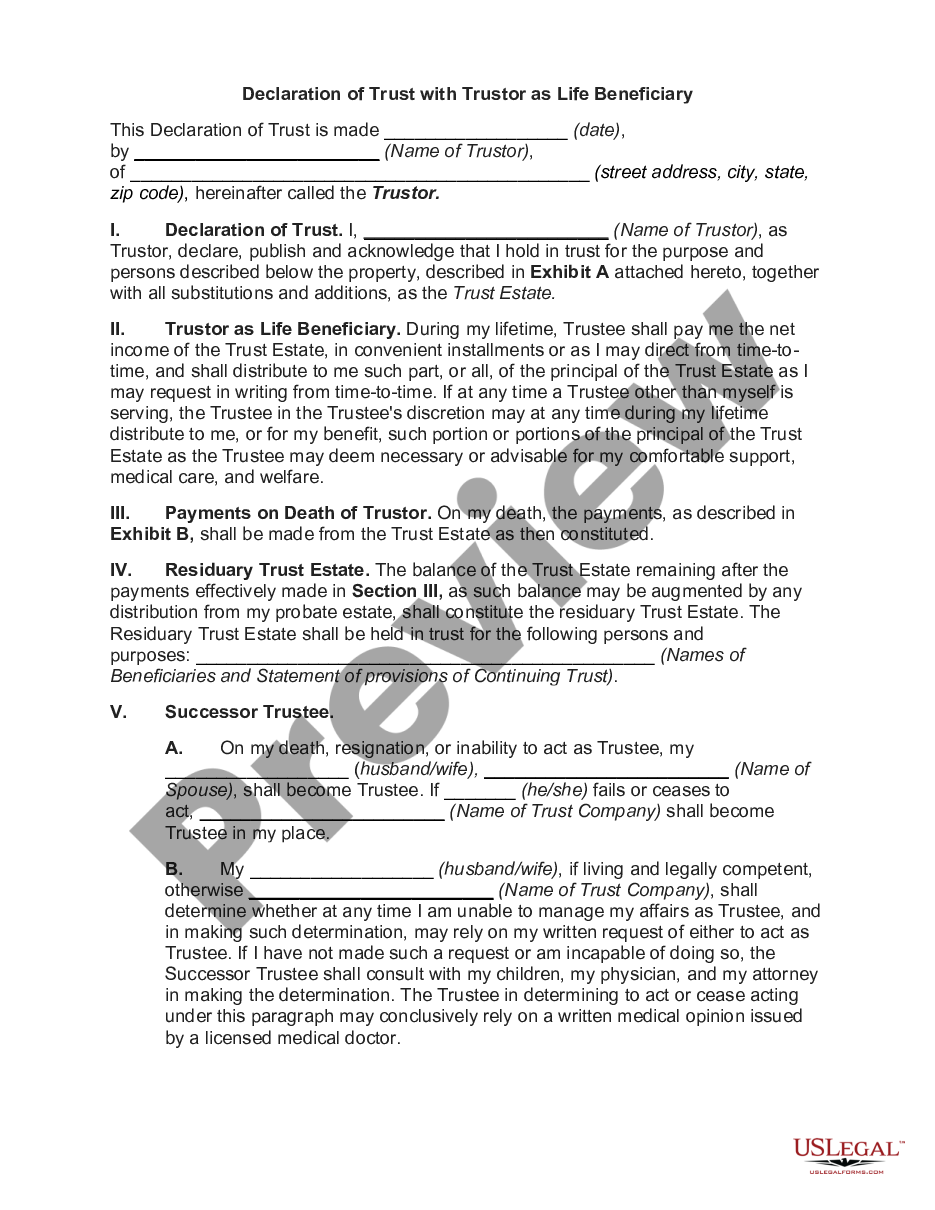
The Financial Account Transfer to Living Trust form is designed to transfer ownership of bank and financial accounts into a living trust. This legal instrument allows a person to manage their assets more efficiently during their lifetime and ensures a smooth transition of these assets upon their passing. Unlike other legal documents, this form specifically focuses on the assignment of financial accounts, making it a key component in estate planning.
Form components explained
- Details of the Assignor(s), who are transferring their rights to the trust.
- Identification of the financial accounts being transferred.
- The name of the Trustee and the trust to which accounts are being assigned.
- Signature fields for the Assignor(s), which validate the transfer.
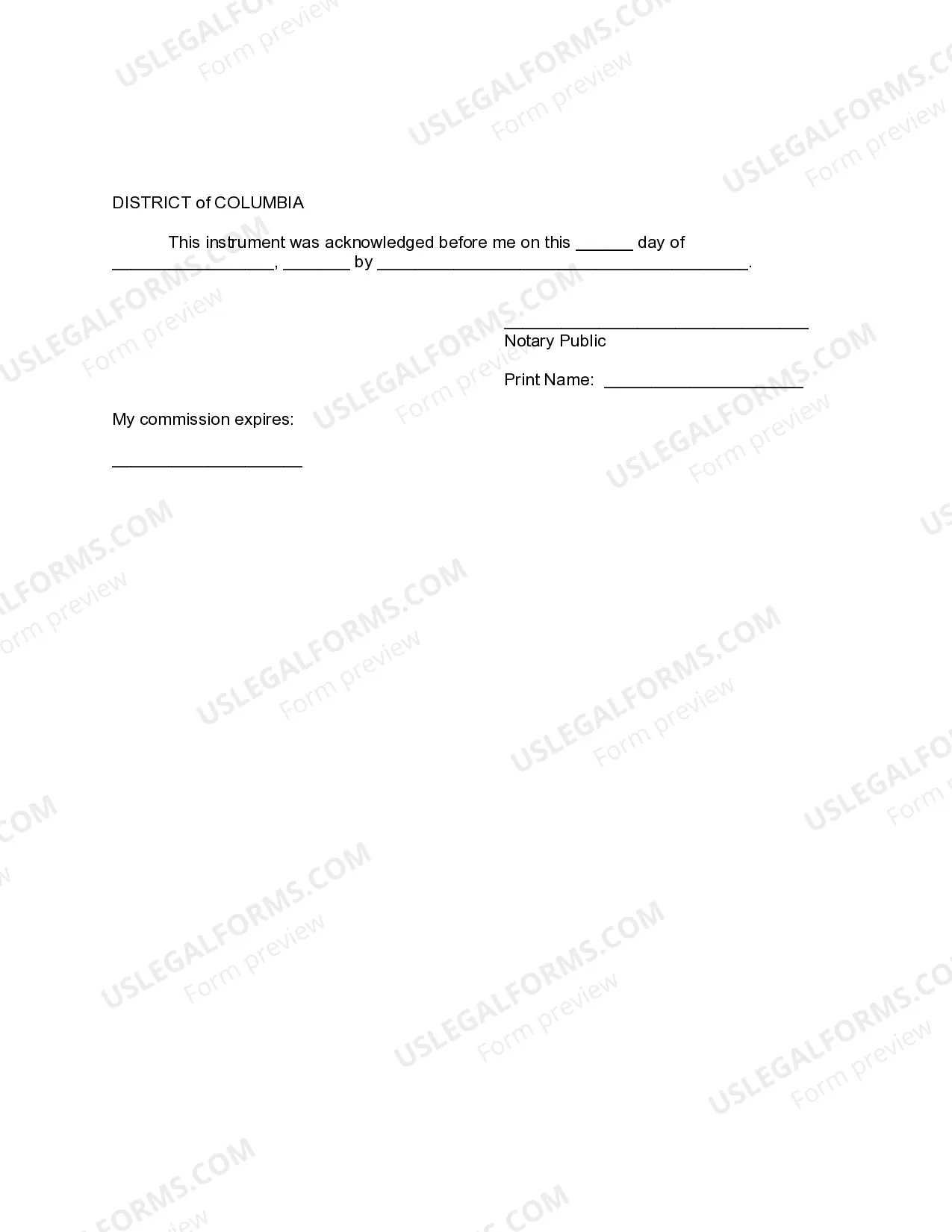
- Notary acknowledgment to confirm the authenticity of the signatures.


When this form is needed
This form should be used when an individual wishes to transfer ownership of their bank and financial accounts to a living trust. This is typically done as part of estate planning to avoid probate and ensure that the assets are managed according to the terms of the trust. It is essential when an individual wants to maintain control over their finances while preparing for future needs, such as incapacity or after death.
Who this form is for
- Individuals setting up a living trust as part of their estate planning.
- Trustors who want to transfer financial accounts to their living trust.
- Estate planners assisting clients in organizing their assets for efficient management.
How to prepare this document
- Identify the Assignor(s) who are transferring the accounts.
- List the financial accounts being transferred, including any relevant identifiers.
- Specify the name of the Trustee and the trust to which the accounts will be transferred.
- Ensure all Assignors sign the form in the presence of a notary public.
- Complete the notary acknowledgment section with the notary's details and signature.
Notarization requirements for this form
Yes, this form must be notarized to be legally valid. US Legal Forms offers integrated online notarization services that are available 24/7. This option provides a secure video call and is legally equivalent to traditional notarization, allowing you to complete your document without the need to travel.
Get your form ready online
Our built-in tools help you complete, sign, share, and store your documents in one place.
Make edits, fill in missing information, and update formatting in US Legal Forms—just like you would in MS Word.
Download a copy, print it, send it by email, or mail it via USPS—whatever works best for your next step.
Sign and collect signatures with our SignNow integration. Send to multiple recipients, set reminders, and more. Go Premium to unlock E-Sign.
If this form requires notarization, complete it online through a secure video call—no need to meet a notary in person or wait for an appointment.
We protect your documents and personal data by following strict security and privacy standards.

Make edits, fill in missing information, and update formatting in US Legal Forms—just like you would in MS Word.

Download a copy, print it, send it by email, or mail it via USPS—whatever works best for your next step.

Sign and collect signatures with our SignNow integration. Send to multiple recipients, set reminders, and more. Go Premium to unlock E-Sign.

If this form requires notarization, complete it online through a secure video call—no need to meet a notary in person or wait for an appointment.

We protect your documents and personal data by following strict security and privacy standards.
Typical mistakes to avoid
- Failing to specify all financial accounts being transferred.
- Not signing the form in front of a notary, leading to invalidation.
- Leaving out essential details about the Trustee or the trust itself.
Benefits of completing this form online
- The convenience of downloading and filling out the form from home.
- Access to templates created by licensed attorneys to ensure legal compliance.
- Editability to customize the form for your specific needs before finalization.
- Immediate availability without the need for an in-person appointment.
Key takeaways
- The Financial Account Transfer to Living Trust form is essential for asset management and estate planning.
- Notarization is required to ensure the validity of the form in the District of Columbia.
- Completing this form properly can help avoid probate and streamline asset distribution.
Looking for another form?



Form popularity
FAQ
Several accounts may be best kept outside of a trust. For example, retirement accounts like 401(k)s and IRAs should typically remain in your name to maintain their tax advantages. Additionally, health savings accounts should also be excluded from the trust. It's crucial to understand how these distinctions impact the overall estate planning strategy, ensuring proper management without complications during a District of Columbia Financial Account Transfer to Living Trust.
To transfer your checking account to your living trust, start by contacting your bank for the necessary steps. Typically, you will need to provide your bank with the trust agreement, identification, and possibly other required forms. This process allows for a seamless District of Columbia Financial Account Transfer to Living Trust, ensuring that your checking account is governed by the decisions you've made regarding your trust.
Yes, you can certainly include your checking account in a trust. This action allows your assets to be managed according to the terms of your trust, ensuring a smoother transition of your finances to your beneficiaries upon your death. It's essential to reach out to your bank to understand their process for completing a District of Columbia Financial Account Transfer to Living Trust. Properly done, this transfer secures your assets while providing peace of mind.
Transferring your bank account to a living trust is straightforward. You should begin by visiting your bank or credit union to request their specific transfer policies. They may require the trust documentation and your identification. By facilitating the District of Columbia Financial Account Transfer to Living Trust this way, you ensure that your account is managed according to your trust’s terms, even after your passing.
To transfer your brokerage account to a living trust, you must first contact your brokerage firm to determine their specific requirements. Generally, you will need to provide the trust agreement, complete their transfer forms, and possibly include a copy of the trust’s tax identification number. Once they verify your documentation, they will help facilitate the District of Columbia Financial Account Transfer to Living Trust. This process ensures that your investments are protected according to your wishes.
One significant mistake parents often make when setting up a trust fund is failing to fund the trust adequately. Without the right assets, such as real estate or financial accounts, the trust won't serve its intended purpose of protecting assets for your beneficiaries. Additionally, neglecting to clearly outline the terms and conditions of the trust can lead to confusion and potential legal issues. Proper planning can ensure a smooth District of Columbia Financial Account Transfer to Living Trust, allowing you to secure your family's future.
One downside of putting assets in a trust is the loss of control over them while alive. Once assets are transferred, your parents may have limited access to them, depending on the trust's terms. Moreover, they may face periodic legal reviews to ensure compliance. Evaluating these aspects is essential when considering a District of Columbia Financial Account Transfer to Living Trust, and using platforms like US Legal Forms can help simplify this process.
Your parents should weigh the benefits and drawbacks before deciding whether to place their assets in a trust. A trust can provide protection and streamline the transfer of assets, especially in the District of Columbia. However, it may not be necessary for everyone. Assessing their specific circumstances can help determine if a District of Columbia Financial Account Transfer to Living Trust is the right choice.
One disadvantage of a family trust is the potential for misunderstanding among family members. If beneficiaries do not fully grasp the terms of the trust, conflicts may arise later. Additionally, setting up a family trust can involve legal fees and maintenance costs. It is important to consider these factors when planning a District of Columbia Financial Account Transfer to Living Trust.