District of Columbia Trim Carpenter Contract for Contractor
What is this form?
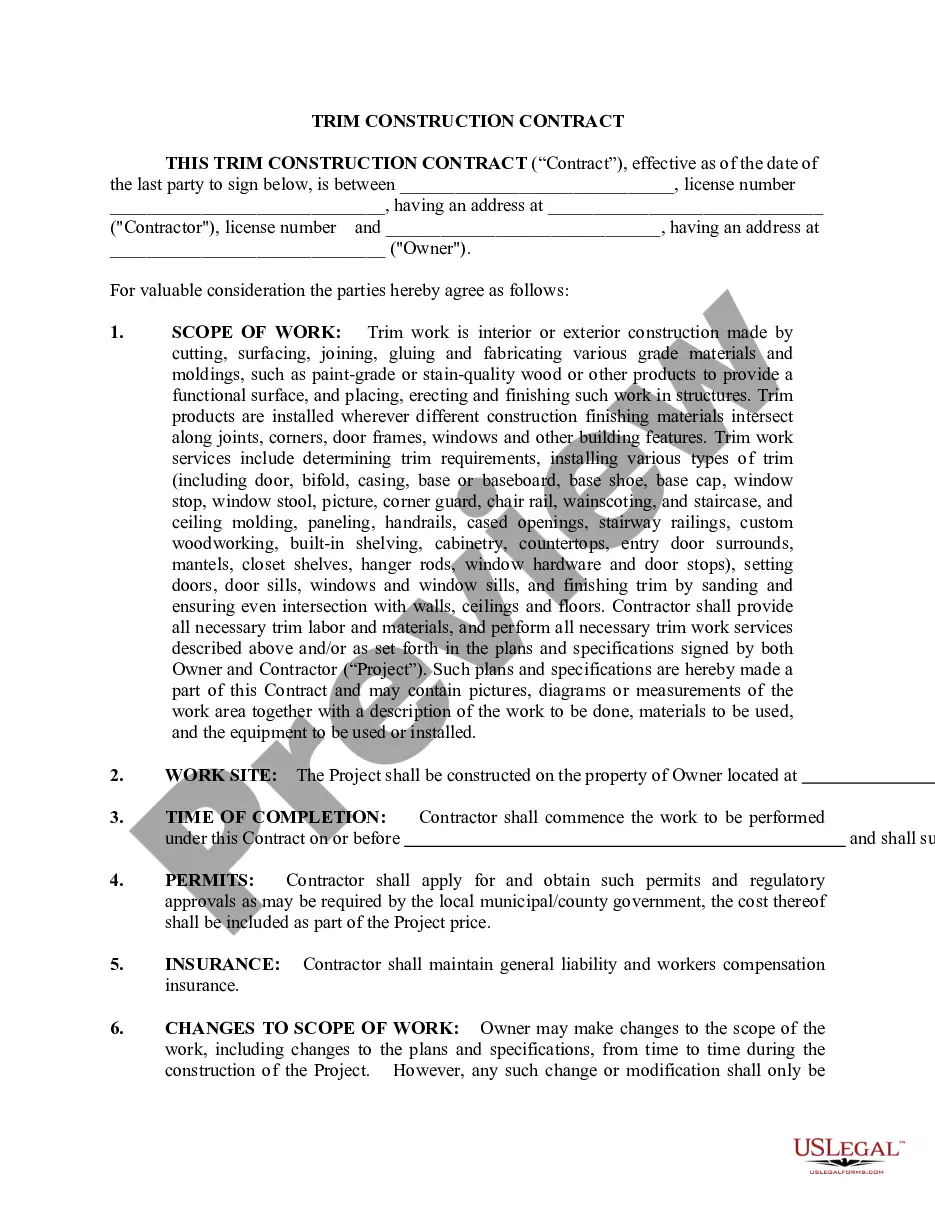
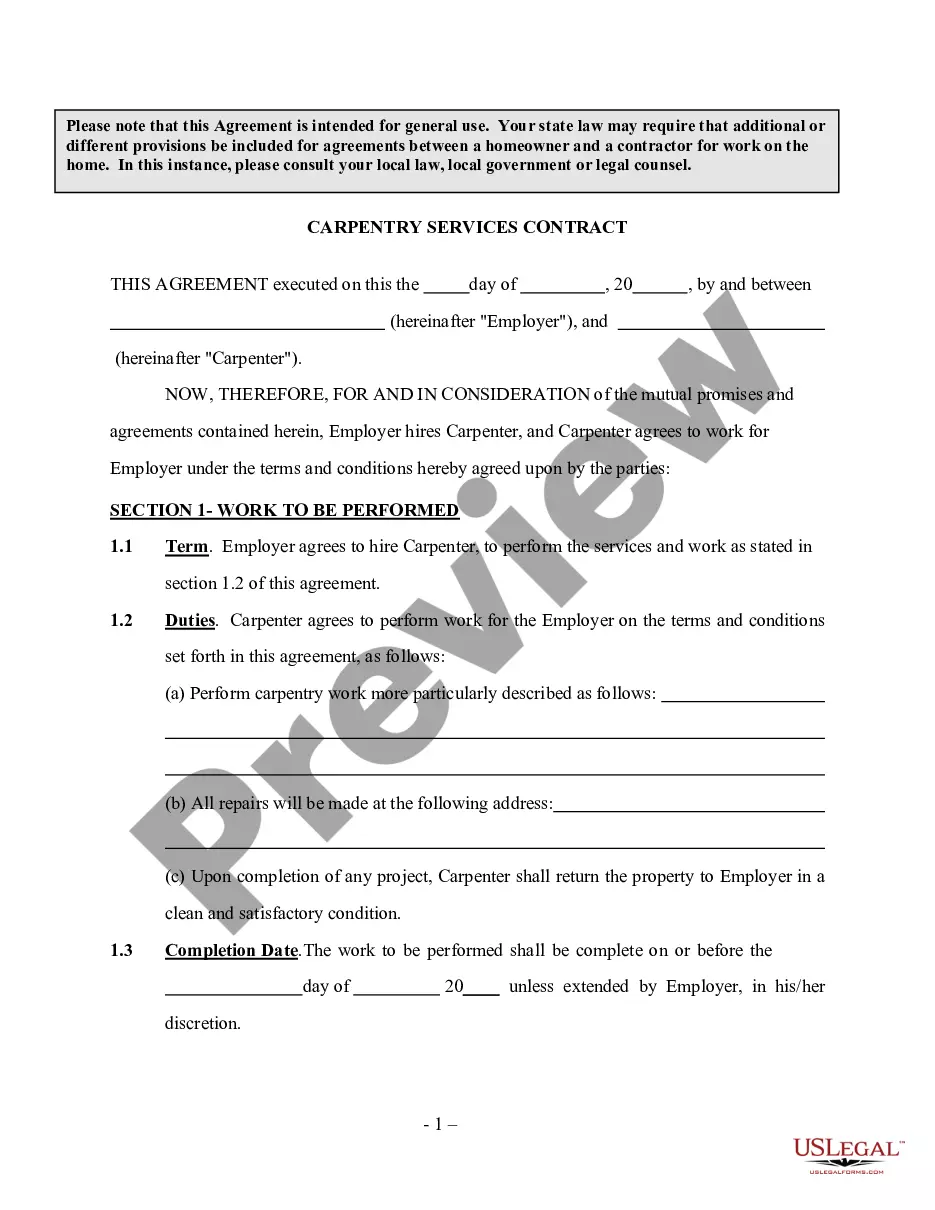
The Trim Carpenter Contract for Contractor is a legal document that outlines the agreement between a trim carpenter and a property owner for carpentry work. This contract allows for flexibility in payment structure, either as a fixed fee or cost-plus arrangement, and includes specific clauses regarding change orders, project details, warranties, and insurance requirements. It is tailored to comply with the laws of the District of Columbia, ensuring that both parties are protected during the carpentry project.
Key parts of this document
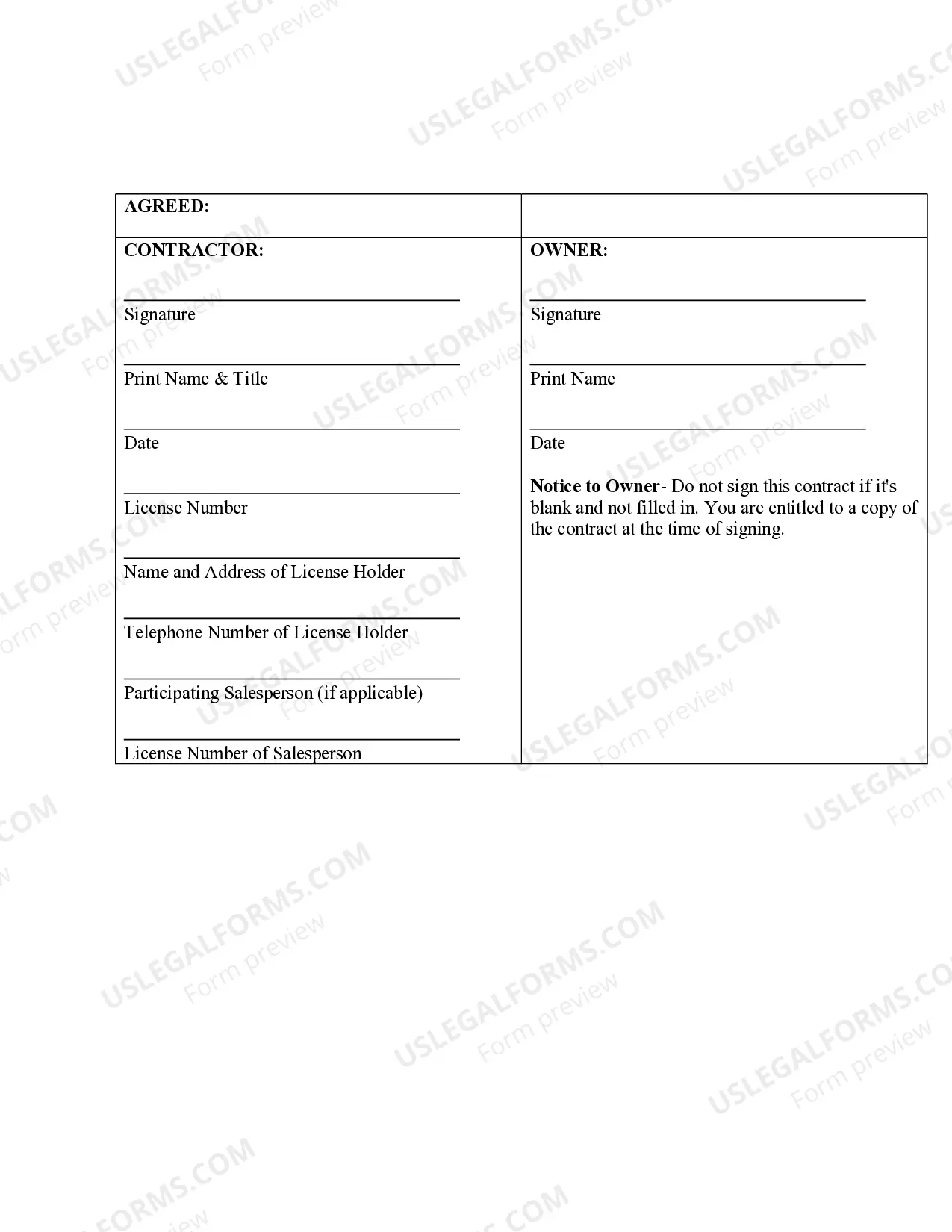
- Parties involved: Identifies the contractor and property owner, including licenses and addresses.
- Permits: Obligates the contractor to obtain necessary permits for the work.
- Insurance: Requires the contractor to maintain general liability and workers compensation insurance.
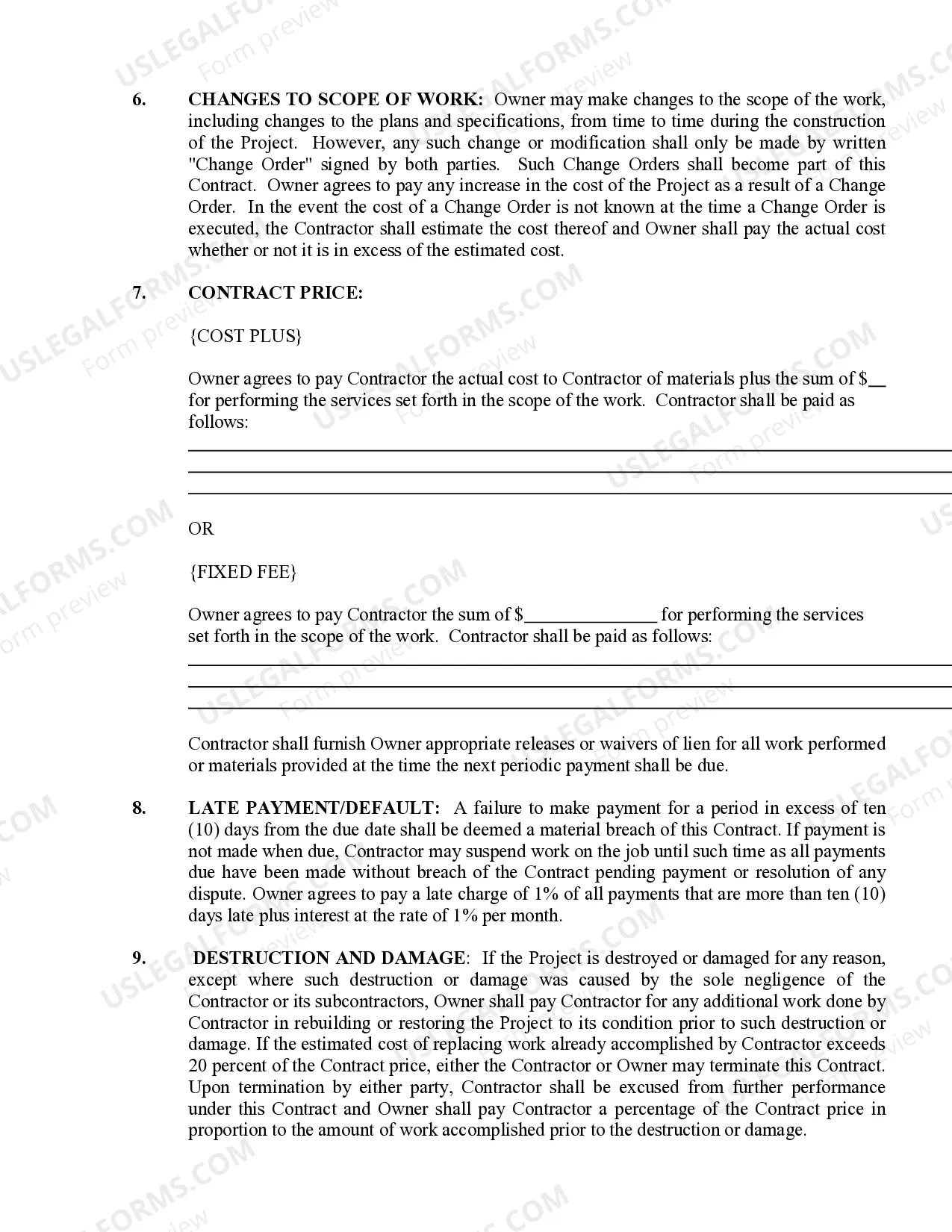
- Changes to scope of work: Outlines how alterations to the project will be handled through written change orders.
- Destruction and damage: Details responsibilities if the project is damaged and procedures for reimbursement.
- Assignment: Prohibits assignment of the contract without mutual consent.


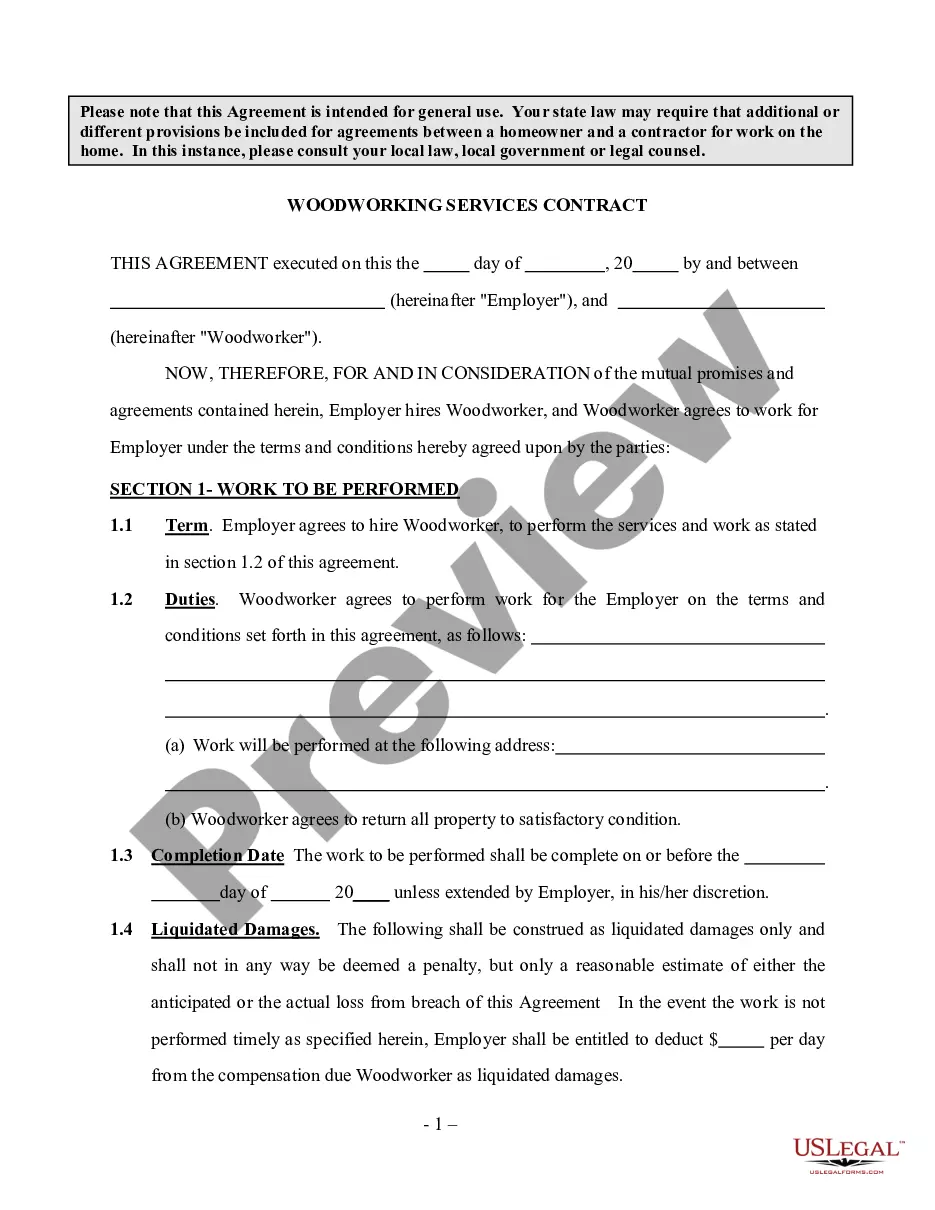
When to use this document
This form should be used when a property owner hires a trim carpenter for specific carpentry work. It is appropriate for projects that may require modifications during execution or where insurance and liability considerations must be addressed. Additionally, it is suitable when a clear framework for project costs and conditions is needed, ensuring both parties have a reference to adhere to throughout the project.
Who needs this form
- Property owners hiring a trim carpenter for residential or commercial projects.
- Trim carpenters seeking to formalize an agreement with a property owner.
- Contractors who need a comprehensive legal outline of the project terms and conditions.
- Individuals or businesses looking to clarify expectations and minimize disputes in carpentry work.
Instructions for completing this form
- Identify the parties by entering the names, addresses, and license numbers of the contractor and property owner.
- Outline the project details, including specific carpentry work to be performed.
- Specify whether the payment arrangement is fixed fee or cost-plus.
- Include provisions for permits and specify which party is responsible for obtaining them.
- Sign and date the contract to make it legally binding.
Does this form need to be notarized?
Notarization is not commonly needed for this form. However, certain documents or local rules may make it necessary. Our notarization service, powered by Notarize, allows you to finalize it securely online anytime, day or night.
Get your form ready online
Our built-in tools help you complete, sign, share, and store your documents in one place.
Make edits, fill in missing information, and update formatting in US Legal Forms—just like you would in MS Word.
Download a copy, print it, send it by email, or mail it via USPS—whatever works best for your next step.
Sign and collect signatures with our SignNow integration. Send to multiple recipients, set reminders, and more. Go Premium to unlock E-Sign.
If this form requires notarization, complete it online through a secure video call—no need to meet a notary in person or wait for an appointment.
We protect your documents and personal data by following strict security and privacy standards.

Make edits, fill in missing information, and update formatting in US Legal Forms—just like you would in MS Word.

Download a copy, print it, send it by email, or mail it via USPS—whatever works best for your next step.

Sign and collect signatures with our SignNow integration. Send to multiple recipients, set reminders, and more. Go Premium to unlock E-Sign.

If this form requires notarization, complete it online through a secure video call—no need to meet a notary in person or wait for an appointment.

We protect your documents and personal data by following strict security and privacy standards.
Avoid these common issues
- Failing to fill in all sections completely before signing.
- Not including or overlooking change order procedures which can lead to disputes.
- Missing insurance requirements that protect both parties.
Benefits of using this form online
- Convenience of downloading the contract from anywhere at any time.
- Editability to customize the form as per the project's unique requirements.
- Reliability of having a legally vetted document drafted by licensed attorneys.
Legal use & context
- This contract serves as a legally binding agreement, ensuring that both parties understand their responsibilities.
- Change orders must be documented to be enforceable under this contract.
- It provides a framework for dispute resolution should issues arise during the project.
Quick recap
- The Trim Carpenter Contract establishes clear terms between the contractor and property owner.
- It includes essential clauses to protect both parties and outlines the project's scope accurately.
- Using this contract can help mitigate potential legal disputes during the construction process.
Looking for another form?
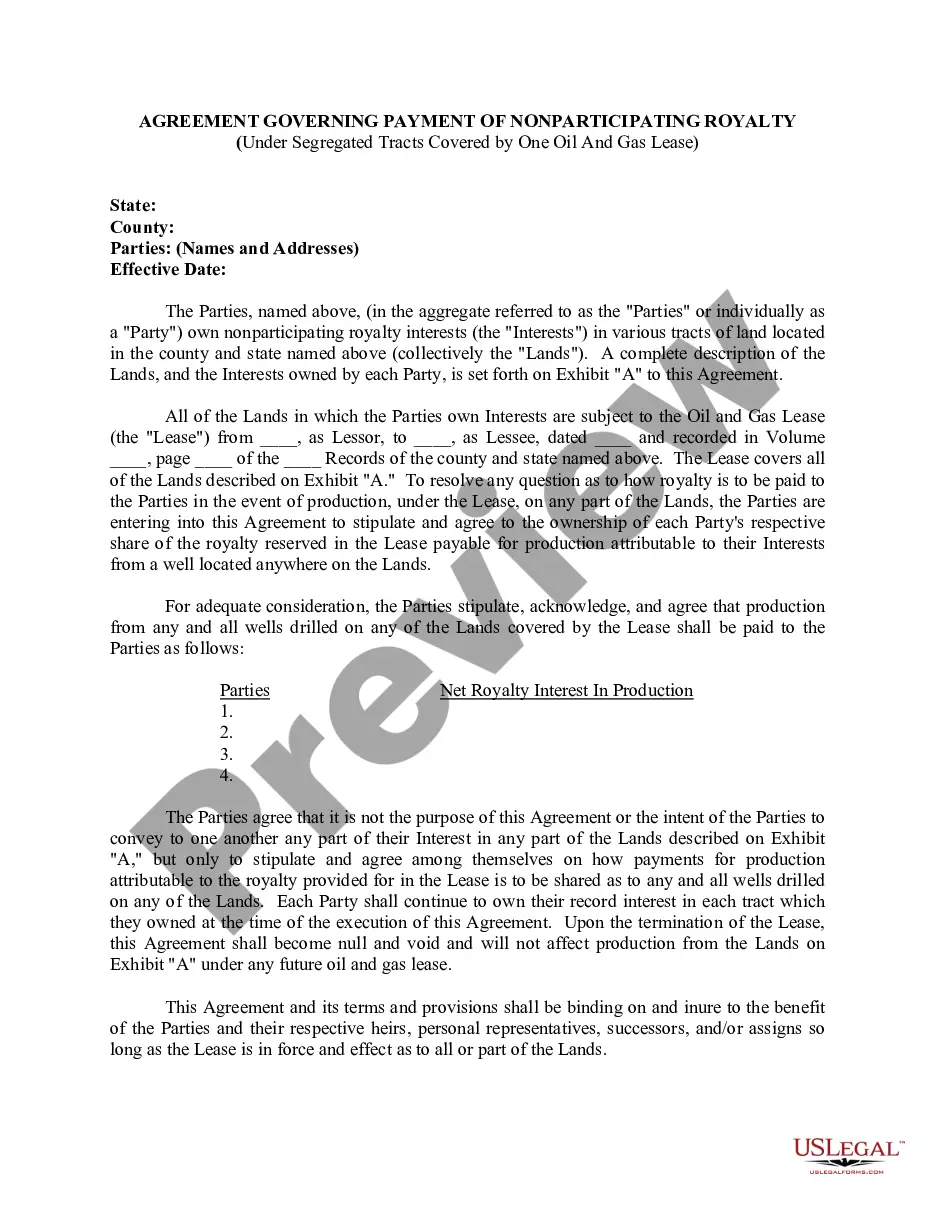
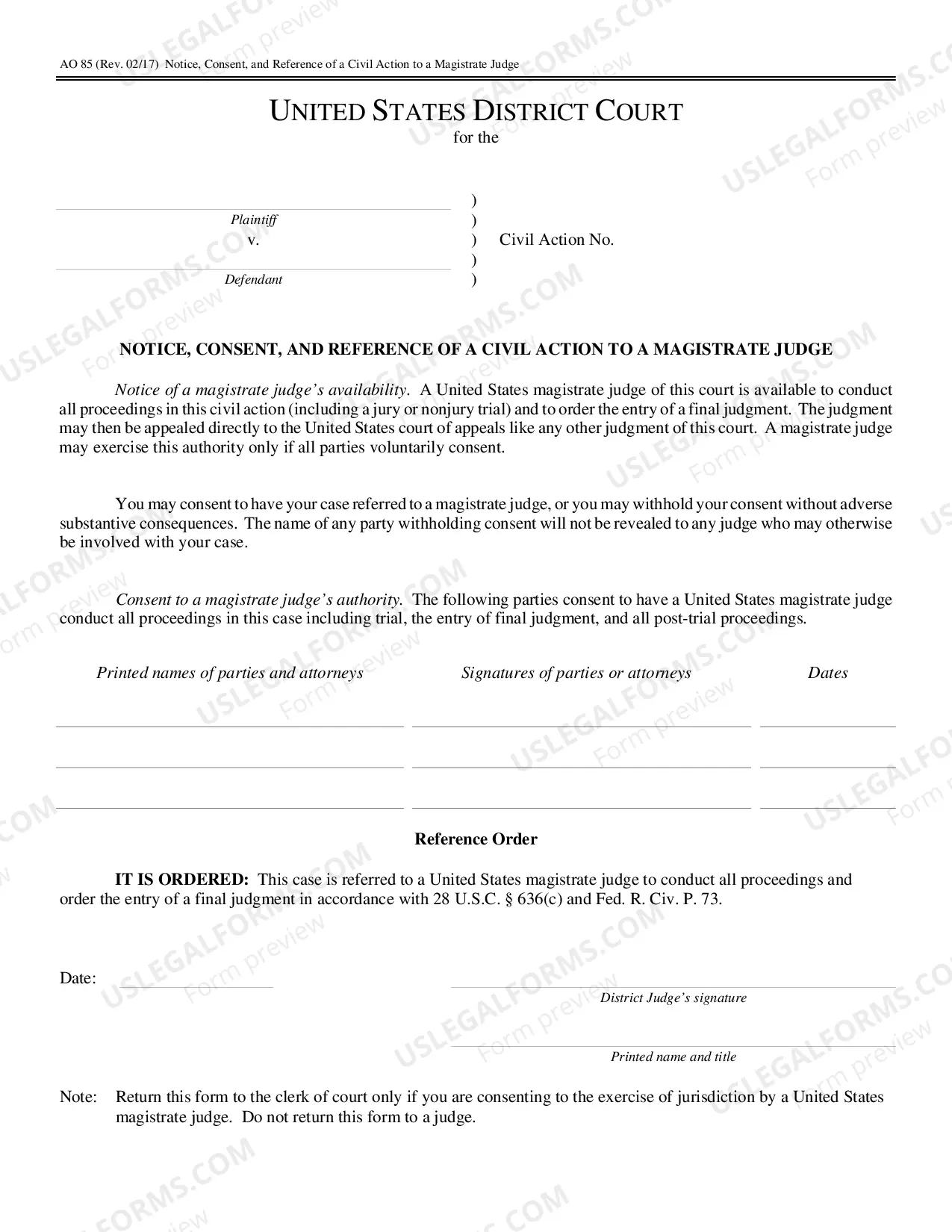
Form popularity
FAQ
To terminate a contractor for breach of contract, begin by reviewing the terms outlined in your District of Columbia Trim Carpenter Contract for Contractor. Clearly document any breaches, such as missed deadlines or defective work, and communicate your reasons for termination in writing. Following this process legally protects you and ensures you have the necessary documentation if needed.
Filling out a contractor agreement involves providing detailed information about both the contractor and the project. Include specifics about the scope of work, payment terms, timelines, and any other critical conditions to protect both parties. Using a service like USLegalForms will help you create a clear and effective District of Columbia Trim Carpenter Contract for Contractor that meets your needs.
The 2 year contractor rule typically pertains to the length of time a contractor must honor their warranties and complete work based on the terms in your agreement. In Washington, DC, this rule encourages contractors to provide quality service that meets the standards spelled out in a District of Columbia Trim Carpenter Contract for Contractor. Always review your contract for specifics regarding warranty periods.
Yes, it is fairly common for contractors to request a 50% down payment before beginning work. This shows the contractor's commitment and covers initial materials and labor. However, ensure the payment terms are clearly stated in your District of Columbia Trim Carpenter Contract for Contractor to avoid any misunderstandings.
To create a contract for a contractor, start by clearly outlining the scope of work, which includes specifics related to trim carpentry. Include terms related to payment, timelines, and project milestones to ensure clarity. Using a platform like USLegalForms can guide you through drafting a District of Columbia Trim Carpenter Contract for Contractor that meets all necessary legal requirements.
When working with a contractor, it is important to avoid sharing details that might undermine your negotiating power. For instance, do not disclose your entire budget or any personal financial constraints upfront. Instead, focus on discussing the specifics of the District of Columbia Trim Carpenter Contract for Contractor you need and let the contractor suggest solutions that meet your requirements.
Getting a DC contractor license involves several steps, including submitting the necessary application to the Department of Consumer and Regulatory Affairs. You will also need to pass a trade exam that demonstrates your knowledge in the specific type of contracting work, such as a District of Columbia Trim Carpenter Contract for Contractor. Finally, ensure that you have the required insurance and bonding to meet local regulations.
To write a simple contract agreement, start by stating the names of the parties involved and the purpose of the contract. Clearly outline the terms, including the scope of work and payment details related to the District of Columbia Trim Carpenter Contract for Contractor. Use straightforward language, and avoid complex terms to ensure clarity. Finally, have both parties sign and date the agreement to make it officially binding.
A contractor agreement should include clear details about the project scope, timelines, payments, and any specific materials to be used. For the District of Columbia Trim Carpenter Contract for Contractor, it’s essential to outline the responsibilities of both parties and establish terms for any changes. Including clauses about dispute resolution can further protect your interests. A well-crafted agreement lays the foundation for a successful working relationship.
A contractor typically needs to complete several important documents before commencing work. For the District of Columbia Trim Carpenter Contract for Contractor, this may include a formal contract, tax forms, and any necessary permits. It’s also wise to gather proof of insurance and licenses, which protect both the contractor and the homeowner. Keeping these documents organized ensures a smooth process from start to finish.