Connecticut Last Will and Testament for a Widow or Widower with Adult and Minor Children
About this form
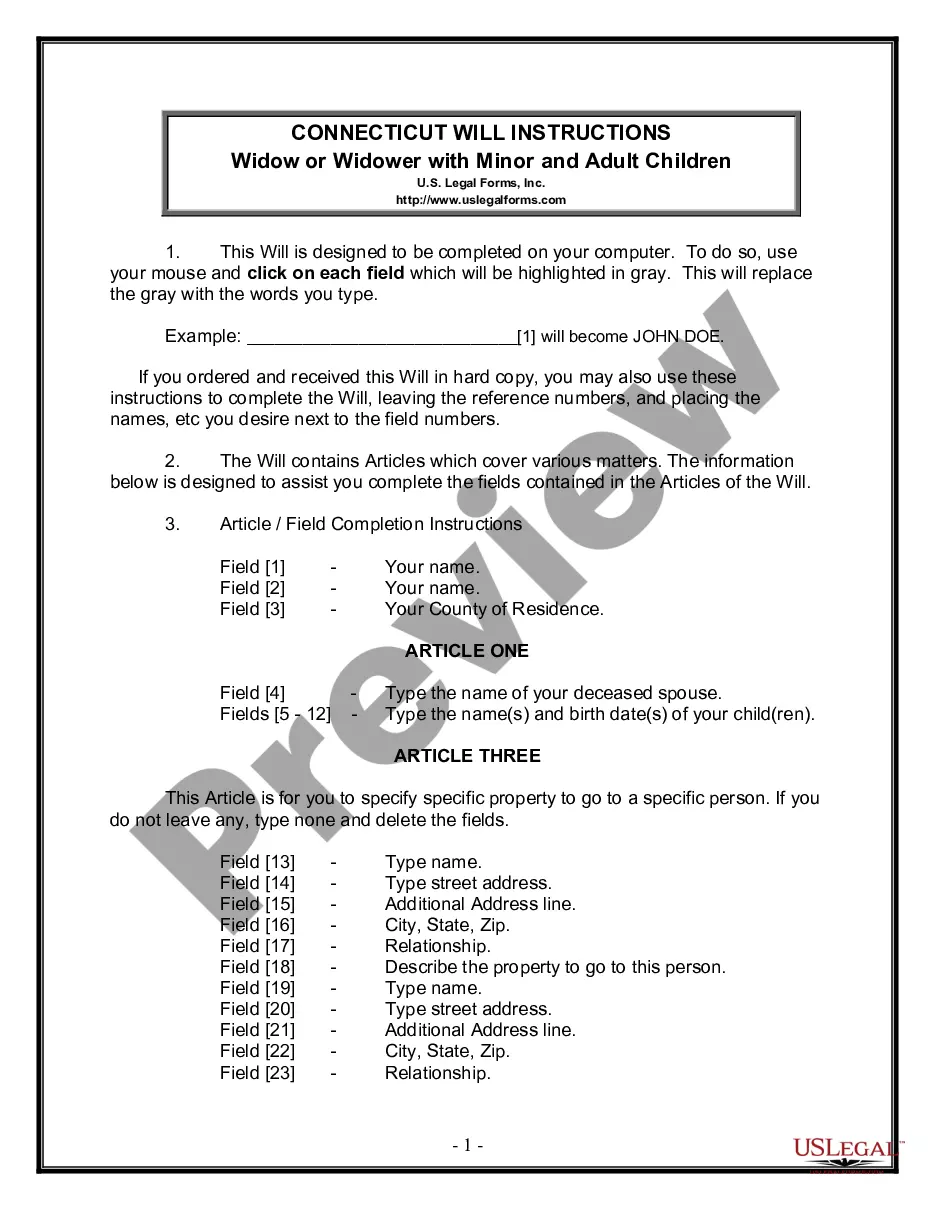
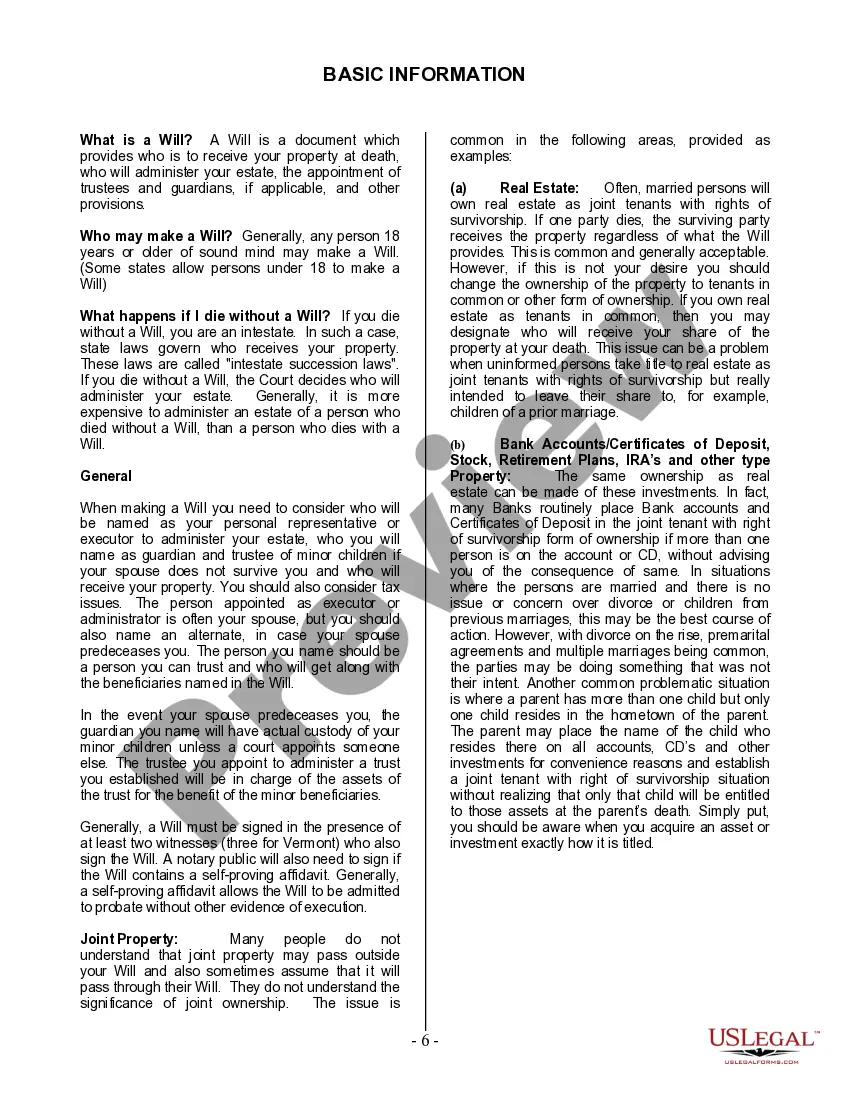
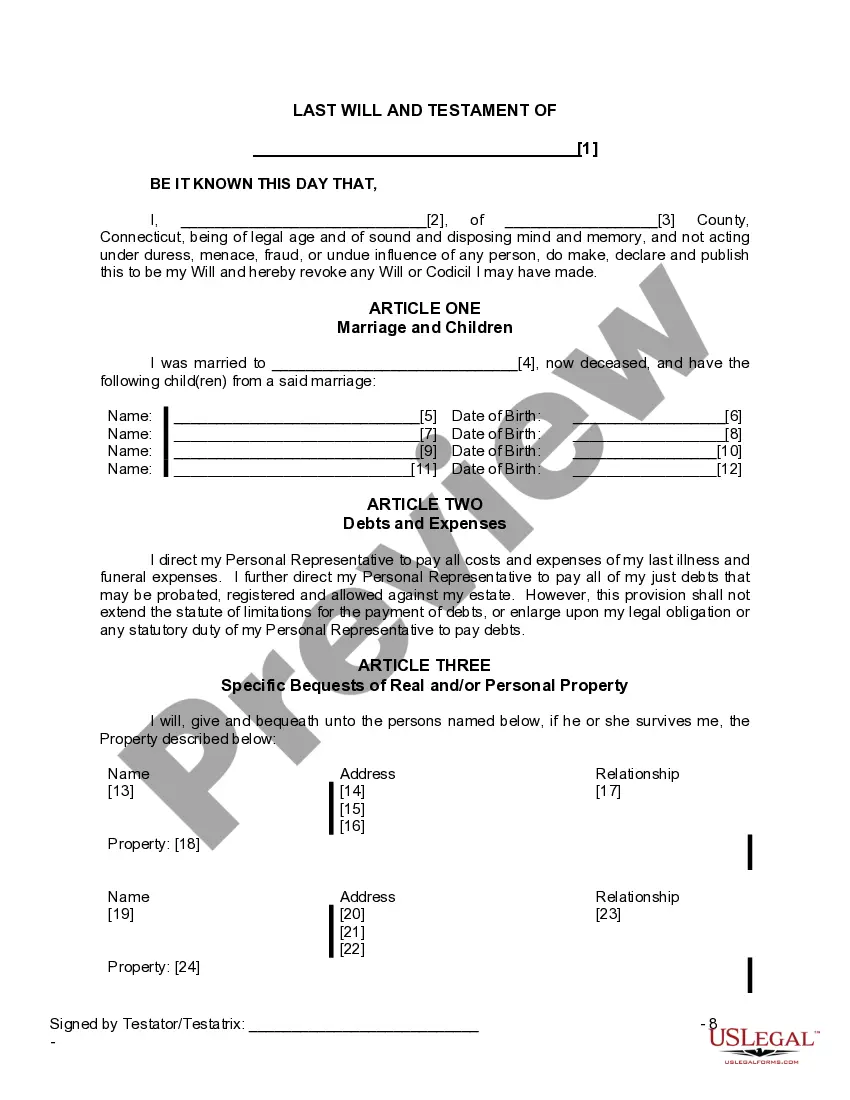
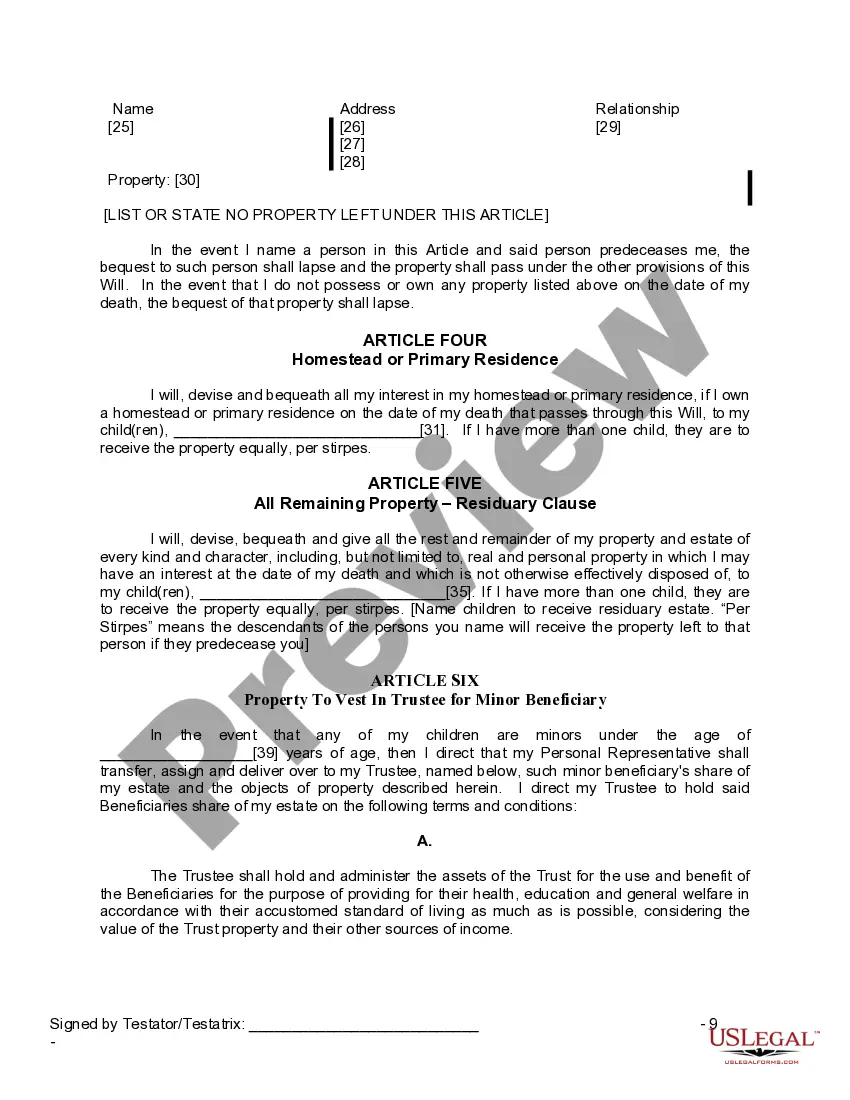
The Last Will and Testament for a Widow or Widower with Adult and Minor Children is a legal document that outlines how a deceased person's assets will be distributed after their death. This form specifically caters to individuals who are widowed and have both adult and minor children. It includes provisions for appointing an executor or personal representative, designating beneficiaries, and establishing a trust for minor children's assets. This is essential for ensuring that your wishes are honored and your children are cared for appropriately.
What’s included in this form
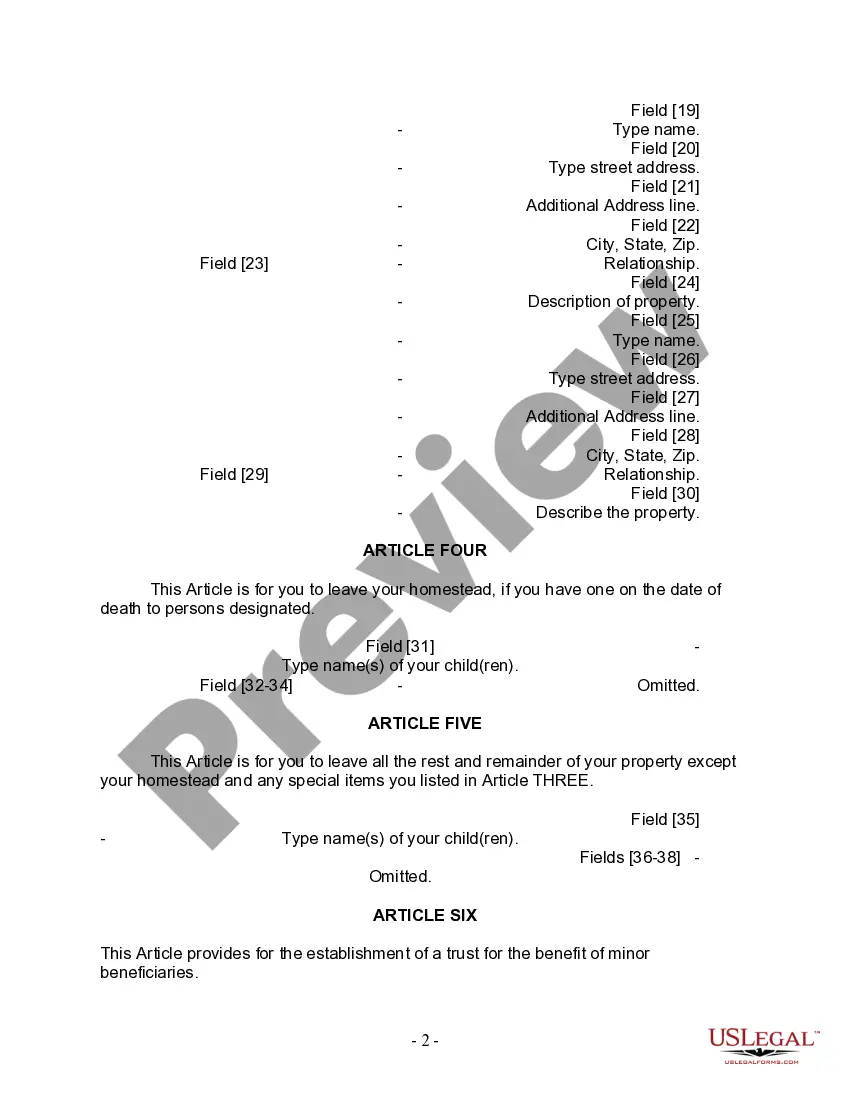
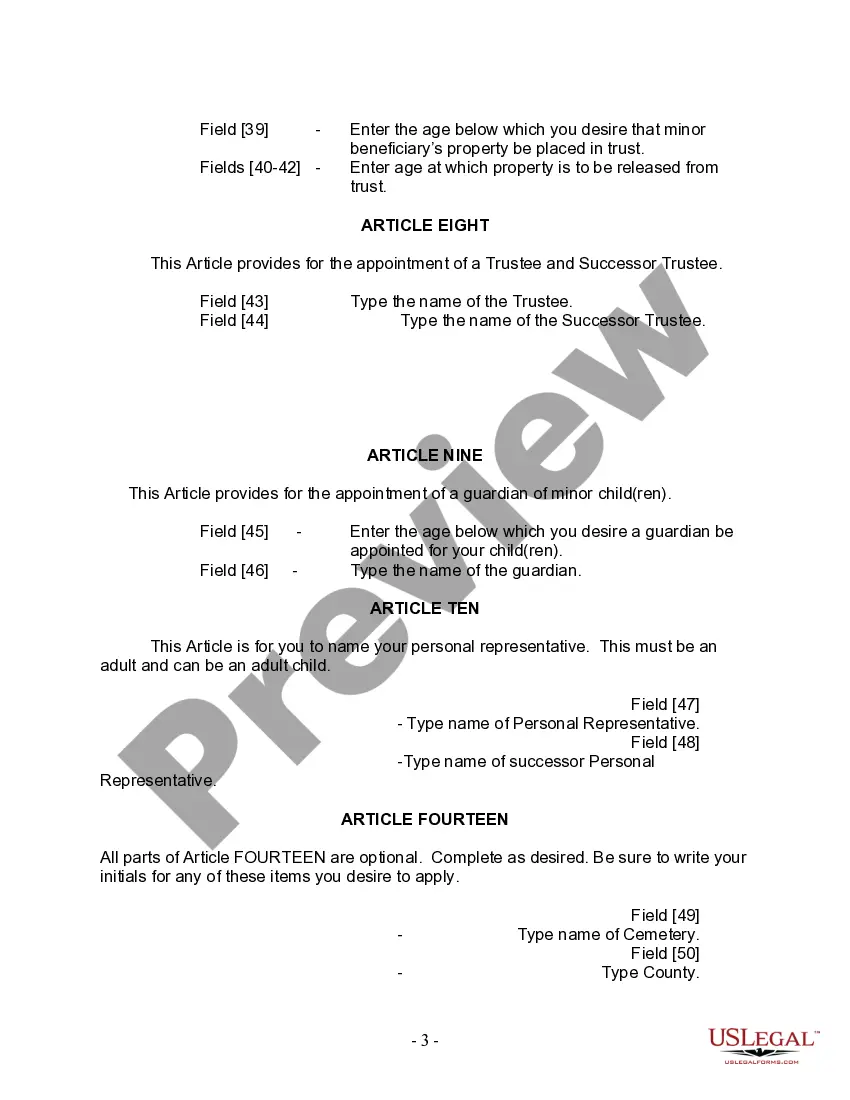
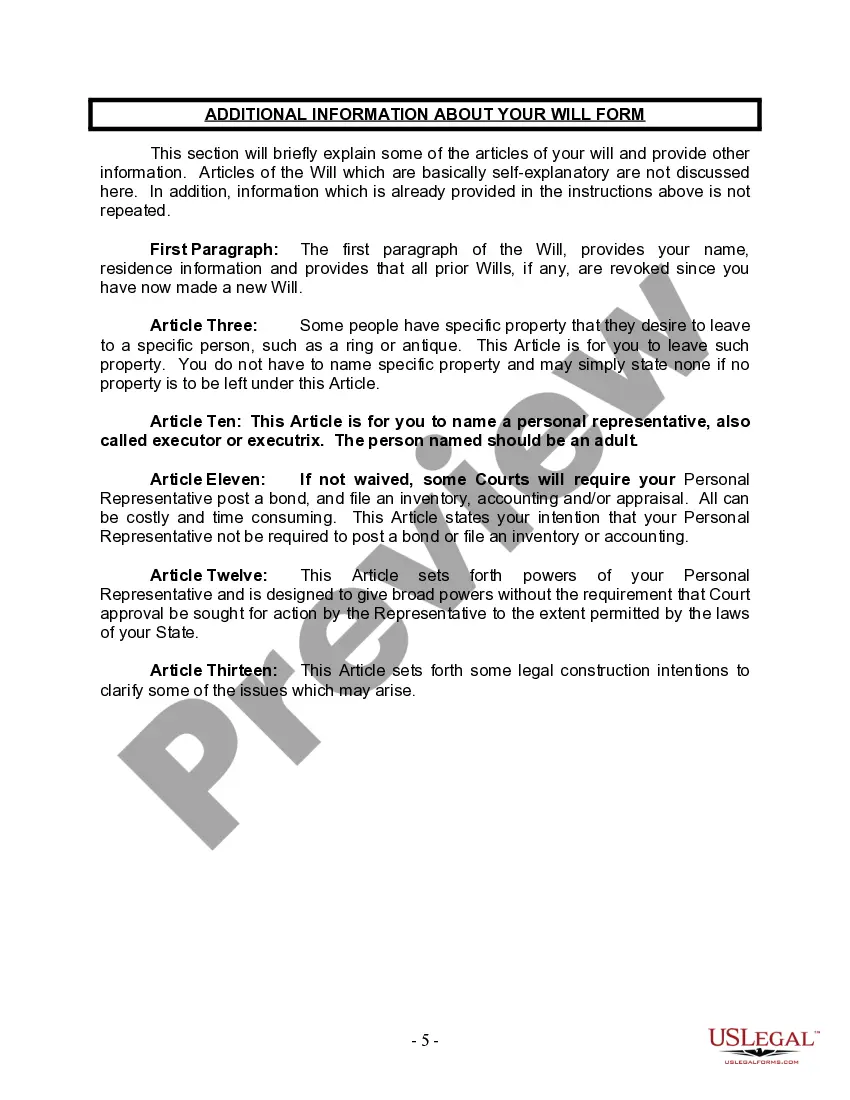
- Personal Representative: Designate an individual to manage your estate.
- Beneficiaries: Specify who will inherit your property and any particular assets.
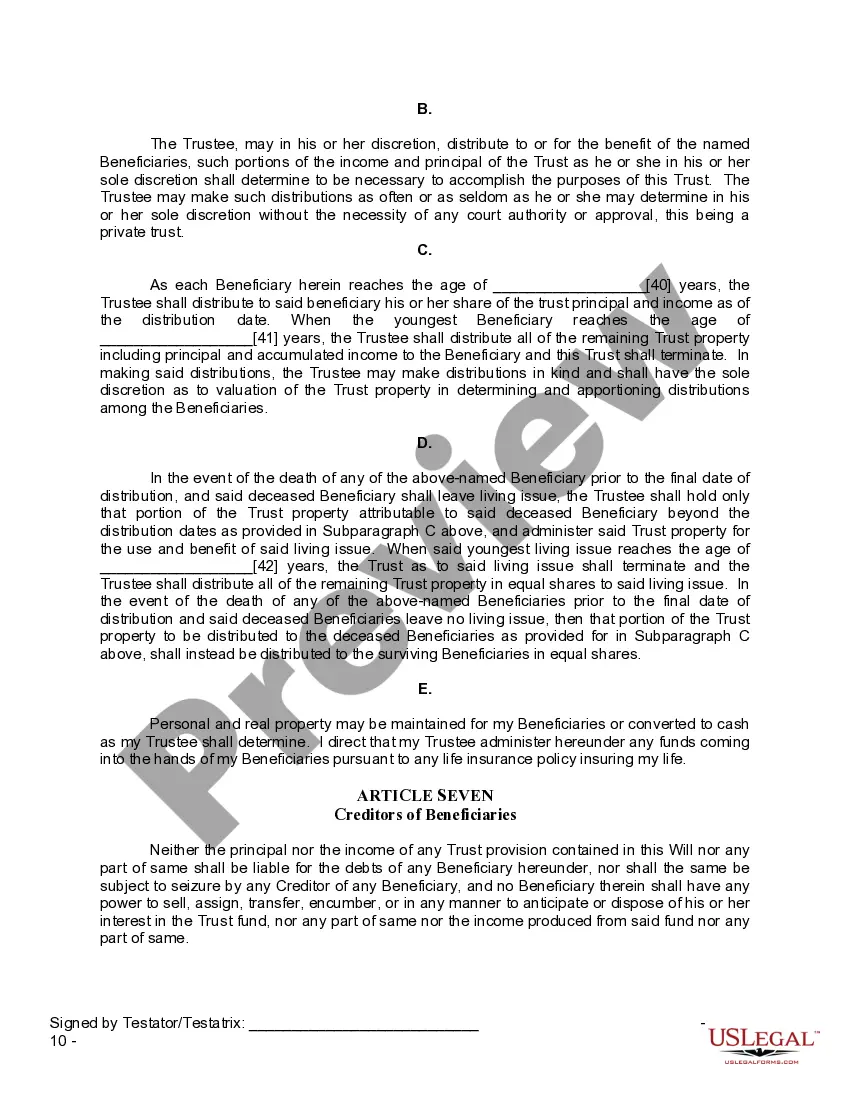
- Trust Provisions: Set conditions for how and when minor children's inheritances will be managed.
- Guardian Appointment: Name a guardian for your minor children in case of your passing.
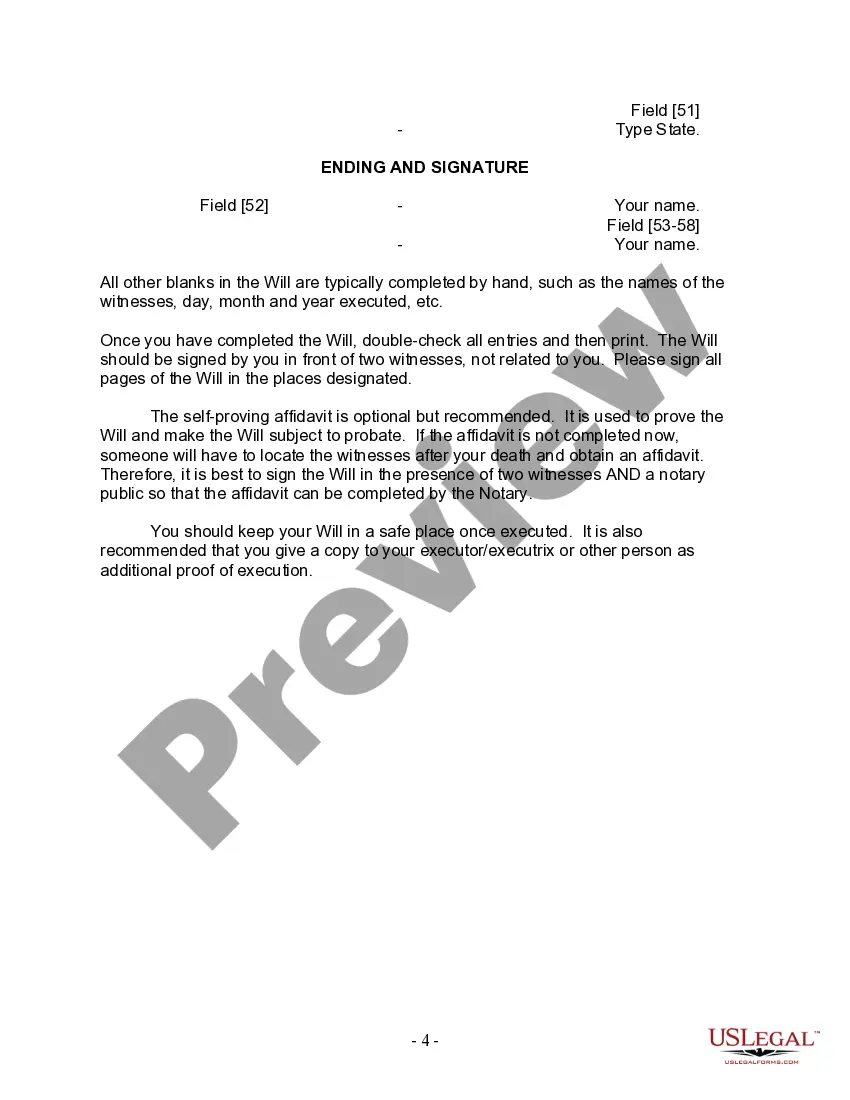
- Witness Requirements: The will must be signed in the presence of two witnesses for it to be valid.



When to use this document
You should use this form when you are a widow or widower and wish to ensure that your financial assets, property, and responsibilities are managed according to your wishes after your death. This form is particularly necessary if you have minor children, as it allows you to appoint guardians and establish trusts for their welfare.
Who can use this document
This form is intended for:
- Individuals who are widows or widowers.
- Parents of minor children who want to protect their interests.
- Those wishing to designate specific heirs for their assets.
How to complete this form
Follow these steps to complete your Last Will and Testament:
- Enter your full name and residence details.
- Name your deceased spouse and list your children with their birthdates.
- Designate who will receive specific assets, if desired.
- Appoint a guardian for your minor children and a personal representative for your estate.
- Have the will signed in the presence of two witnesses and possibly a notary public, depending on your stateâs requirements.
Notarization requirements for this form
Yes, this form must be notarized to be legally valid. Completing a self-proving affidavit during the signing process can simplify future probate processes, making it easier for your executor to handle your estate posthumously.
Get your form ready online
Our built-in tools help you complete, sign, share, and store your documents in one place.
Make edits, fill in missing information, and update formatting in US Legal Forms—just like you would in MS Word.
Download a copy, print it, send it by email, or mail it via USPS—whatever works best for your next step.
Sign and collect signatures with our SignNow integration. Send to multiple recipients, set reminders, and more. Go Premium to unlock E-Sign.
If this form requires notarization, complete it online through a secure video call—no need to meet a notary in person or wait for an appointment.
We protect your documents and personal data by following strict security and privacy standards.

Make edits, fill in missing information, and update formatting in US Legal Forms—just like you would in MS Word.

Download a copy, print it, send it by email, or mail it via USPS—whatever works best for your next step.

Sign and collect signatures with our SignNow integration. Send to multiple recipients, set reminders, and more. Go Premium to unlock E-Sign.

If this form requires notarization, complete it online through a secure video call—no need to meet a notary in person or wait for an appointment.

We protect your documents and personal data by following strict security and privacy standards.
Mistakes to watch out for
- Not signing the will in front of required witnesses.
- Failing to clearly specify guardianship for minor children.
- Leaving out the appointment of a personal representative.
- Neglecting to review or update the will after significant life changes.
Benefits of completing this form online
- Convenience of completing the form online.
- Easy to edit and customize to your specific needs.
- Access to legal expertise through professionally drafted templates.
Looking for another form?

Form popularity
FAQ
Yes, you can write your own will and have it notarized in Connecticut. Notarizing your will can reinforce its legitimacy and ease the probate process. Crafting a thorough Connecticut Last Will and Testament for a Widow or Widower with Adult and Minor Children is easier when you leverage templates and guidance that platforms like US Legal Forms provide.
While you do not need an attorney to create a will in Connecticut, consulting one can be beneficial. An attorney can help ensure that your Connecticut Last Will and Testament for a Widow or Widower with Adult and Minor Children complies with state laws and addresses all your wishes adequately. If legal fees concern you, consider using comprehensive online tools like US Legal Forms.
In Connecticut, a will does not need to be notarized to be valid; it simply requires two witnesses to sign it. However, having a notarized will may simplify the probate process and provide additional assurance. Exploring resources available through US Legal Forms can help clarify these details further.
A handwritten will, known as a holographic will, can be valid in Connecticut if it meets specific criteria. To qualify, the will must be written and signed by the testator. Including clear directives for your assets can create a valid Connecticut Last Will and Testament for a Widow or Widower with Adult and Minor Children, but be cautious as complications may arise.
Yes, you can write your own will in Connecticut. However, it is essential to ensure that the document meets all legal requirements to be considered a valid Connecticut Last Will and Testament for a Widow or Widower with Adult and Minor Children. Using a service like US Legal Forms can provide you with structured guidance and templates that help you draft a compliant will.
To establish the validity of a will in Connecticut, it's important to prove that it meets the state's legal requirements, including the correct signatures and witnesses. Additionally, a Connecticut Last Will and Testament for a Widow or Widower with Adult and Minor Children may require evidence of the testator's mental capacity at the time of writing. If any challenges arise regarding the will's legitimacy, the probate court will assess all relevant evidence.
Generally, most wills in Connecticut must go through the probate process. This ensures that the last will and testament is validated and followed according to the deceased's final wishes. However, there are exceptions, such as small estates that may qualify for a simplified process. Understanding the implications of probate is essential when drafting a Connecticut Last Will and Testament for a Widow or Widower with Adult and Minor Children.
A will becomes legal in Connecticut when it is written, signed by the testator, and witnessed by at least two individuals. This process is critical for any Connecticut Last Will and Testament for a Widow or Widower with Adult and Minor Children. Additionally, the will must reflect your wishes clearly and adhere to state laws to be enforceable in probate court.
In Connecticut, a last will and testament does not need to be notarized to be valid. However, having a notarized will can make the probate process smoother. When you prepare a Connecticut Last Will and Testament for a Widow or Widower with Adult and Minor Children, it's wise to ensure that it meets all legal requirements, which includes proper witnessing.
Yes, online wills are legal in Connecticut, but they must meet certain requirements. When creating a Connecticut Last Will and Testament for a Widow or Widower with Adult and Minor Children, it is crucial to ensure that the will complies with state laws. This includes having the document signed by you and witnessed by two individuals. Using a reliable platform like USLegalForms can help streamline this process and ensure that your will is legally valid and reflects your wishes.