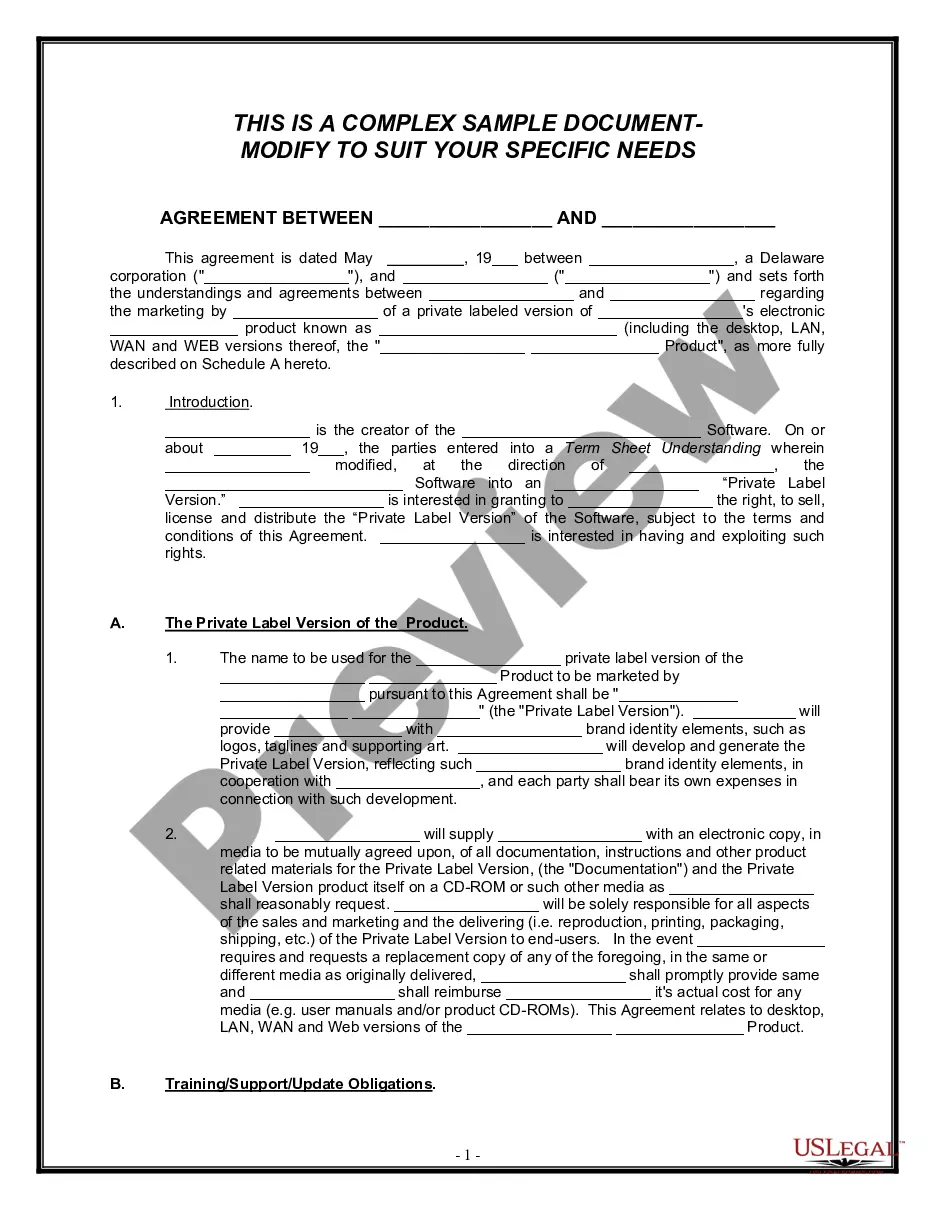
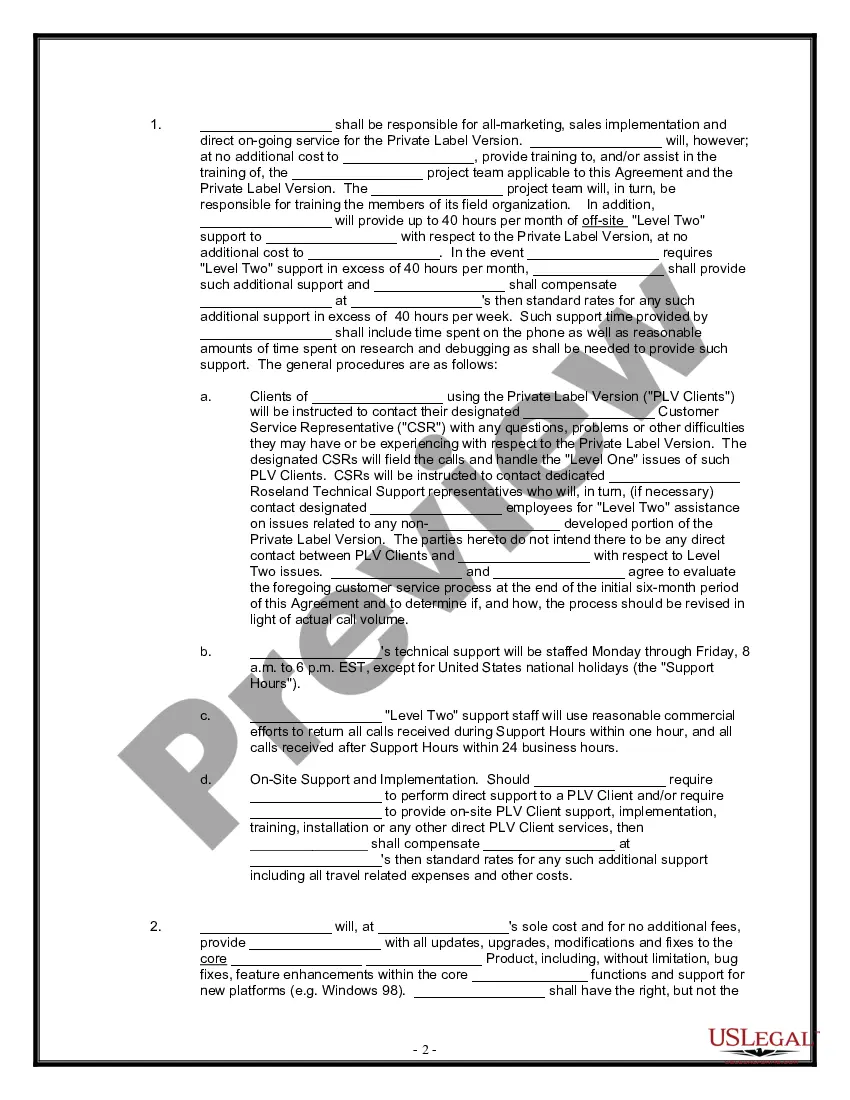
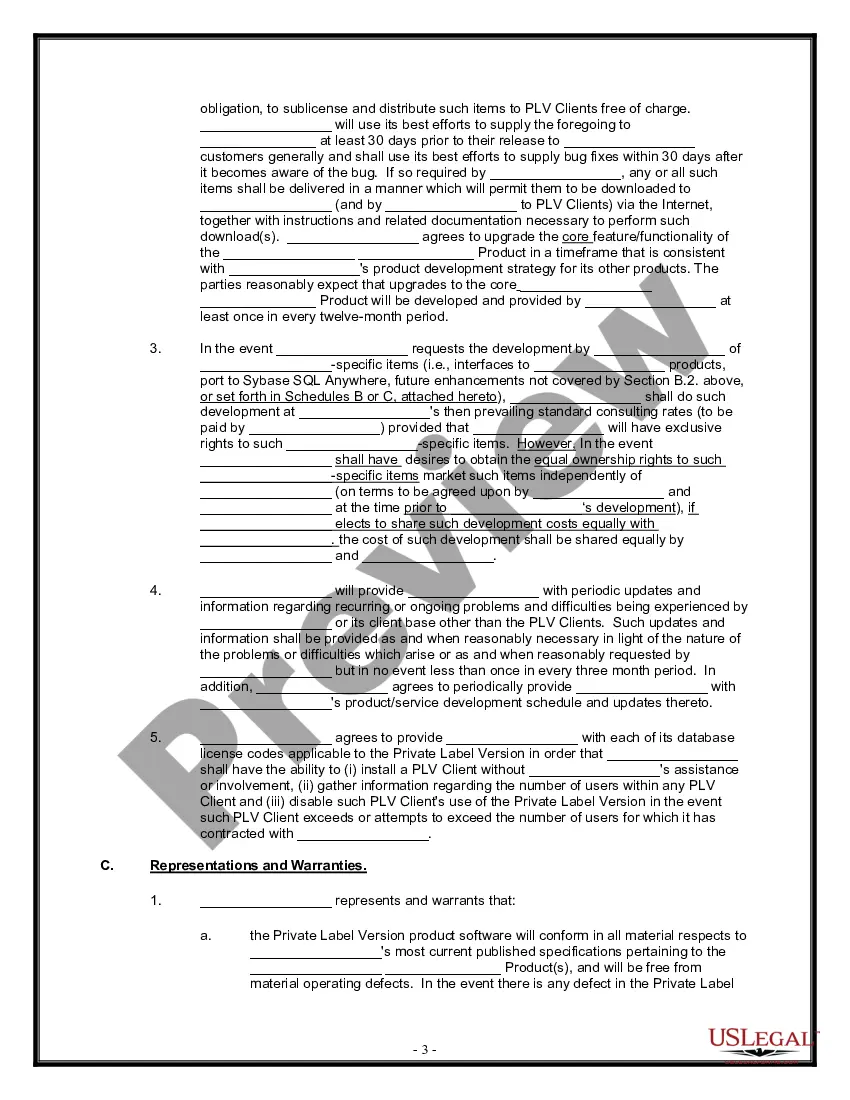
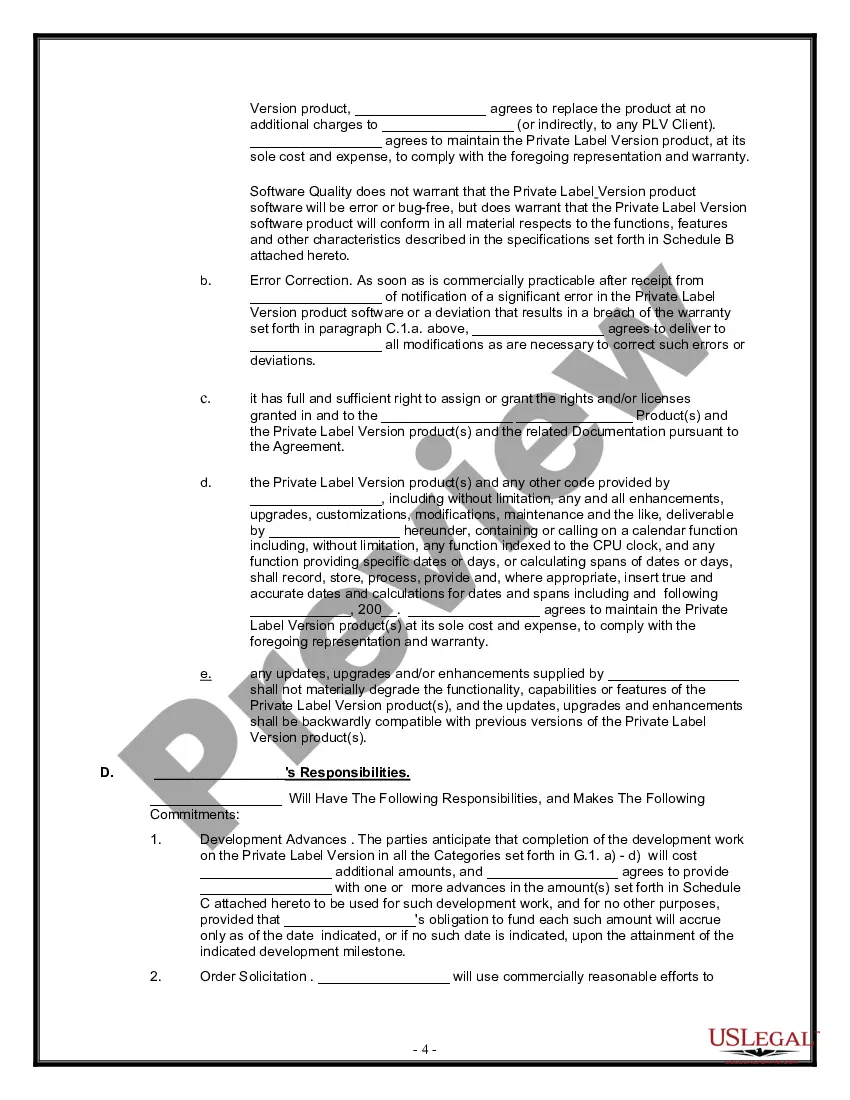
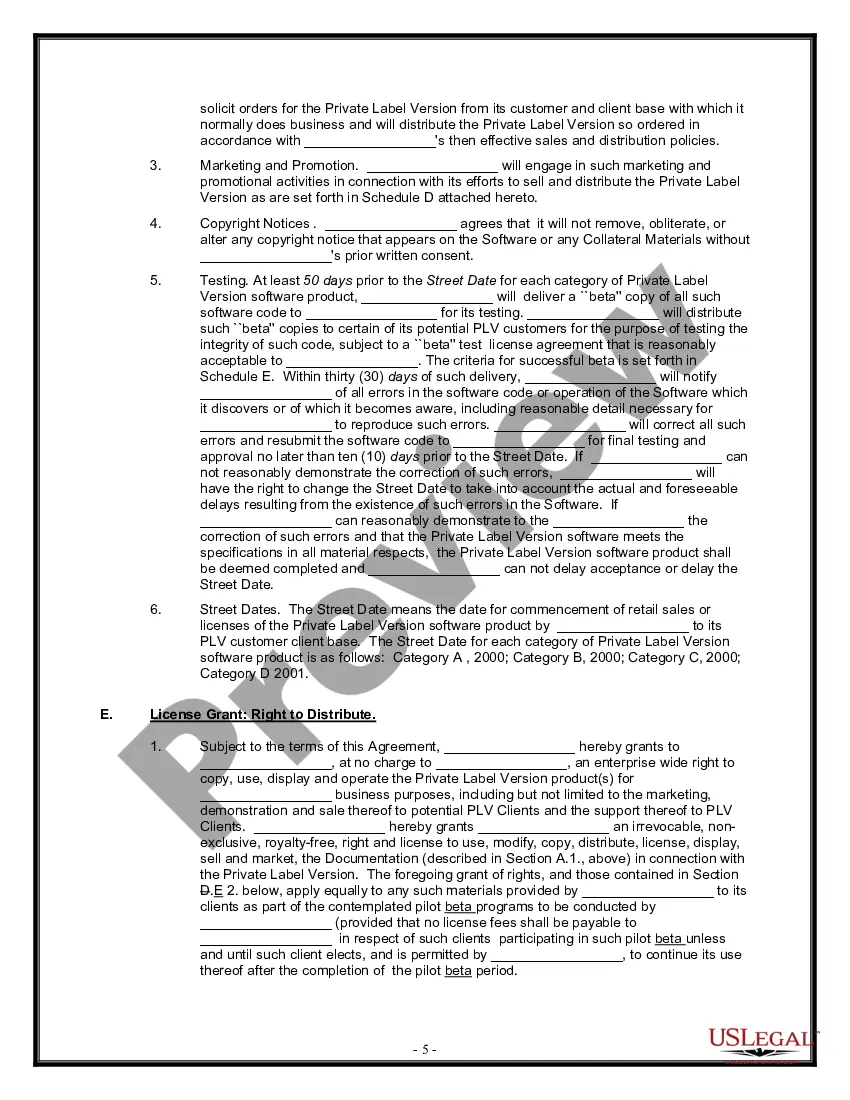
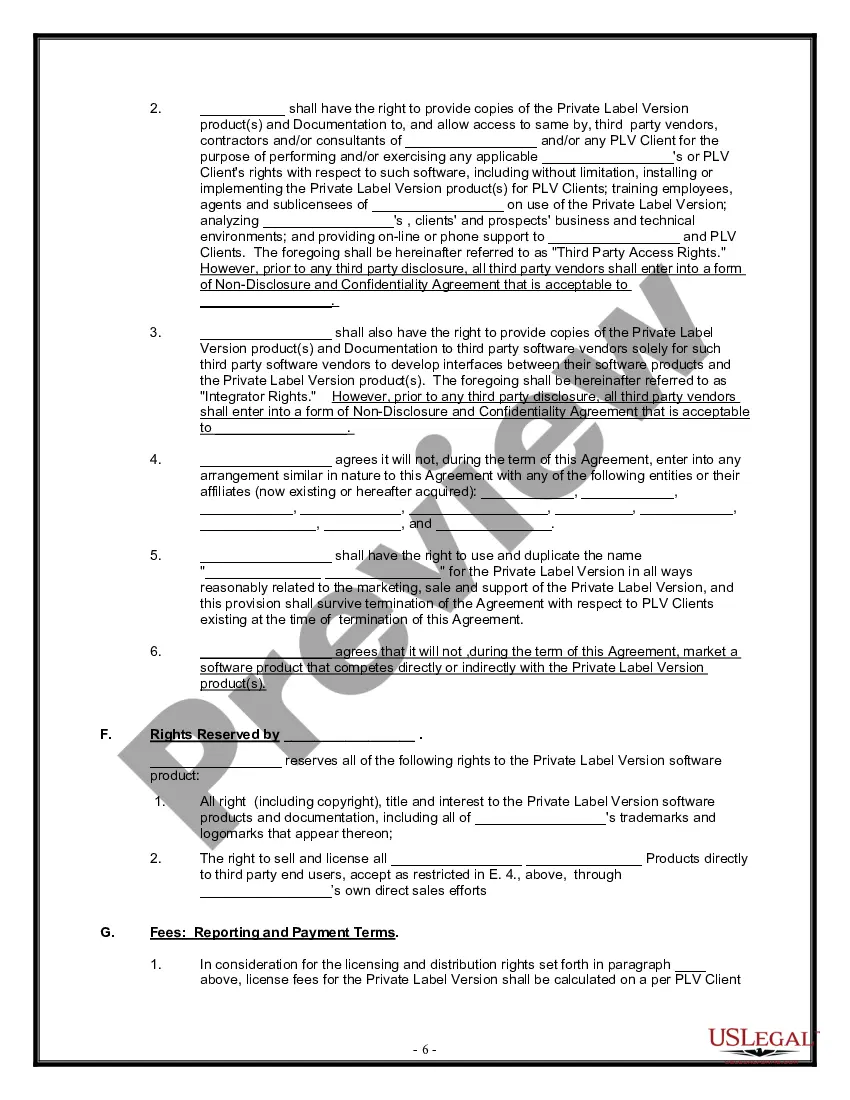
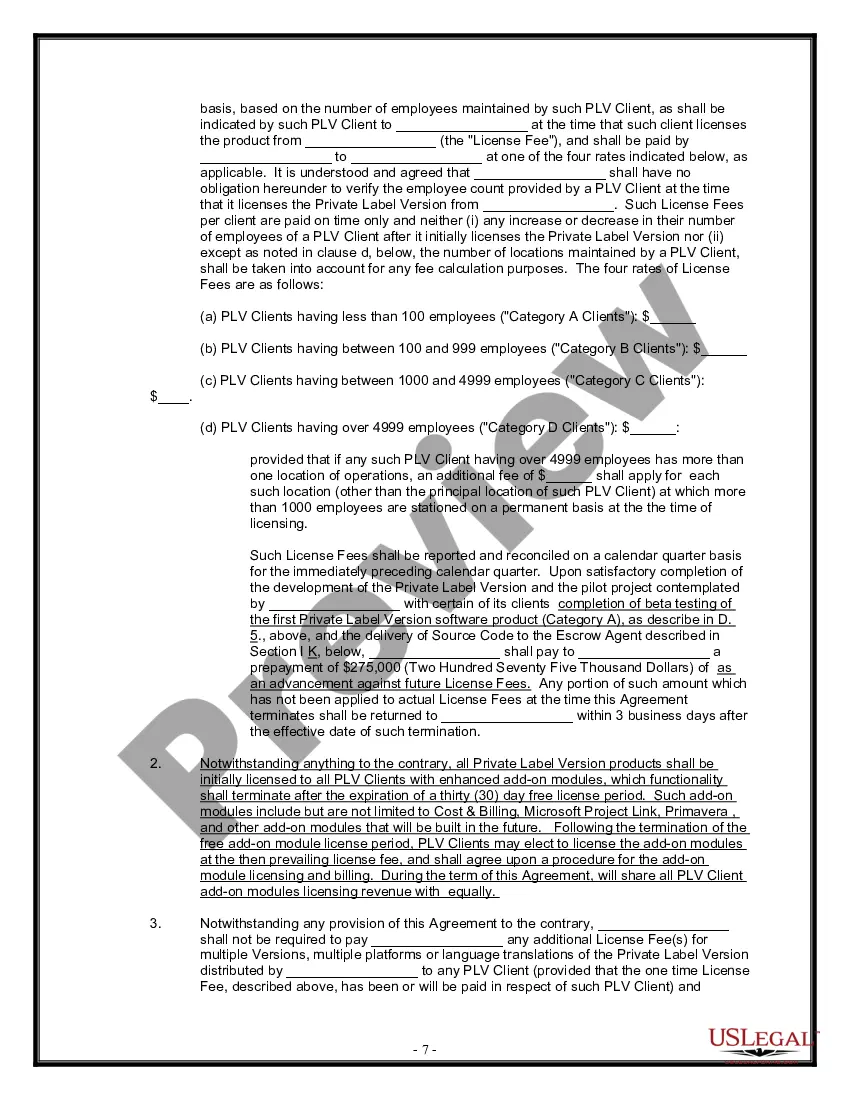
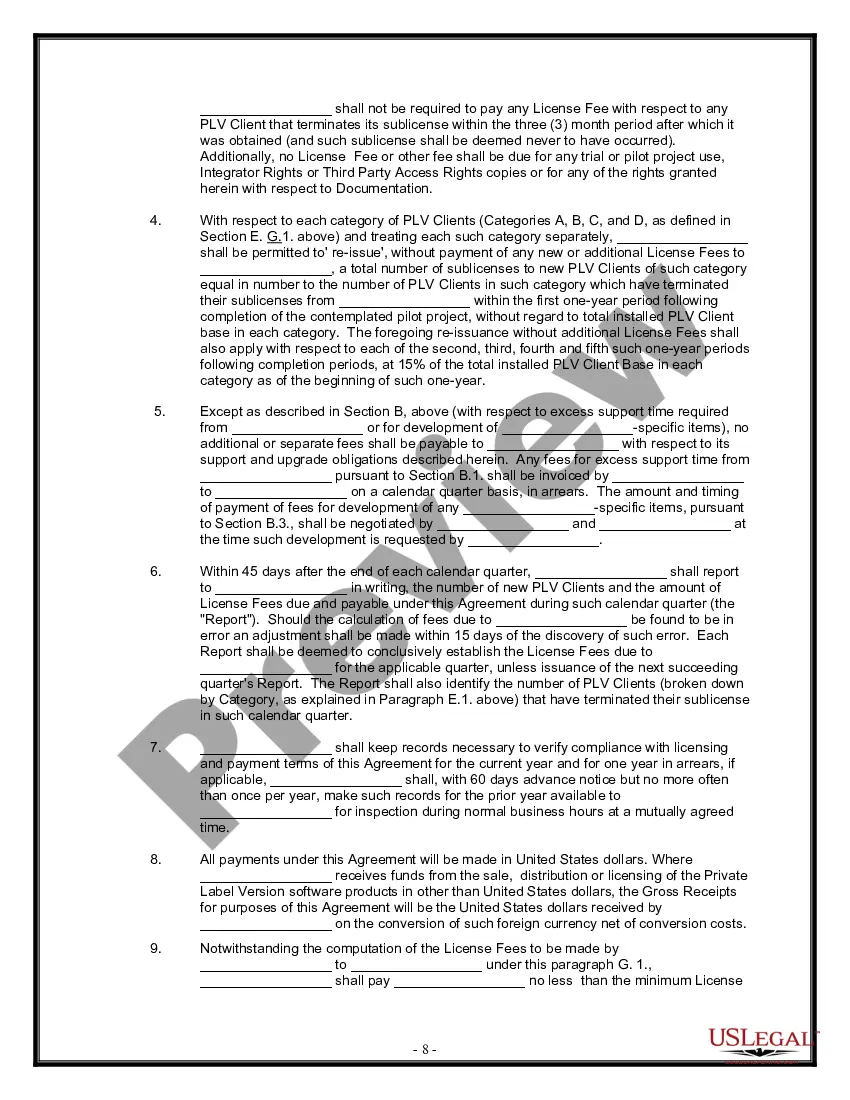
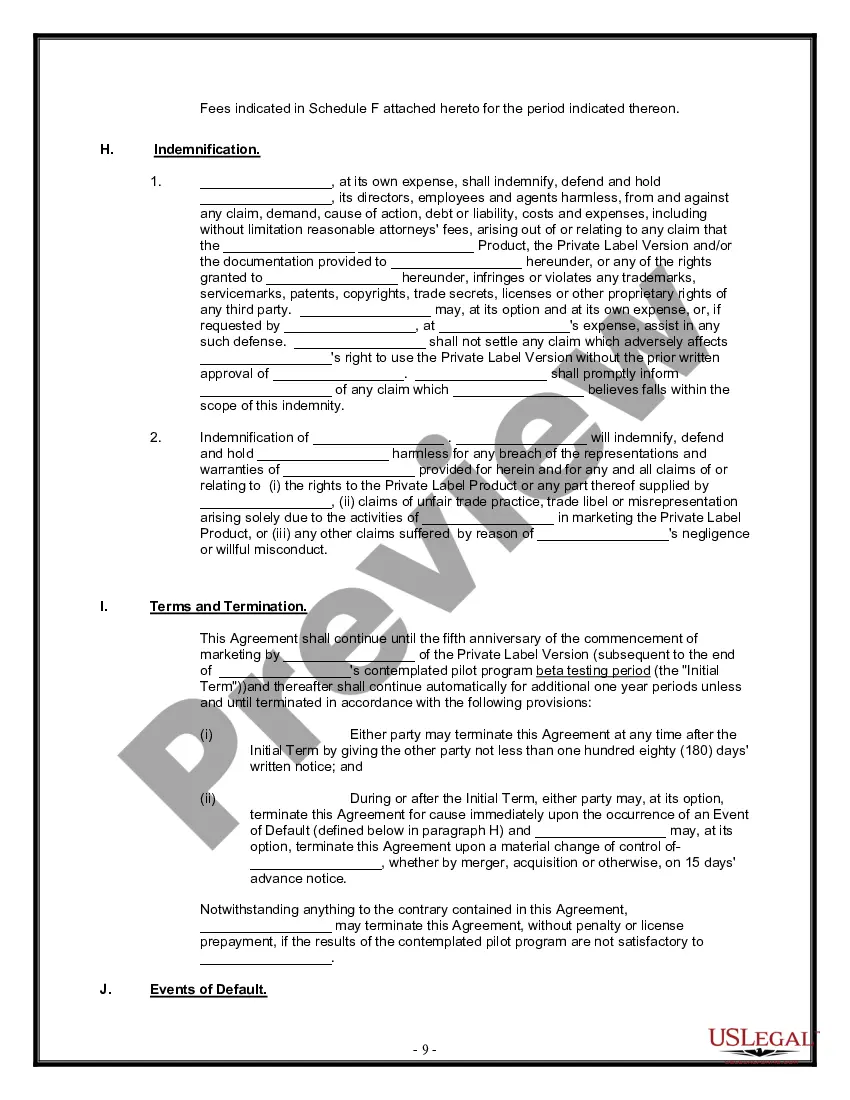
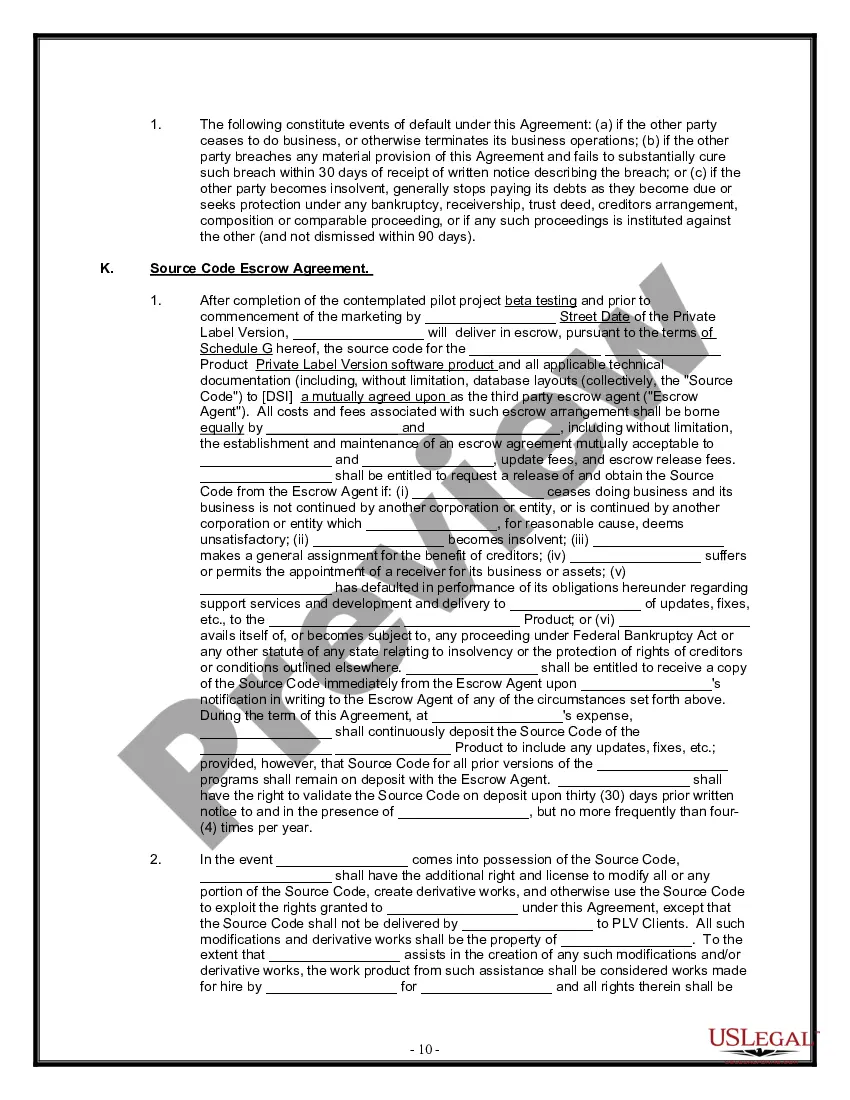
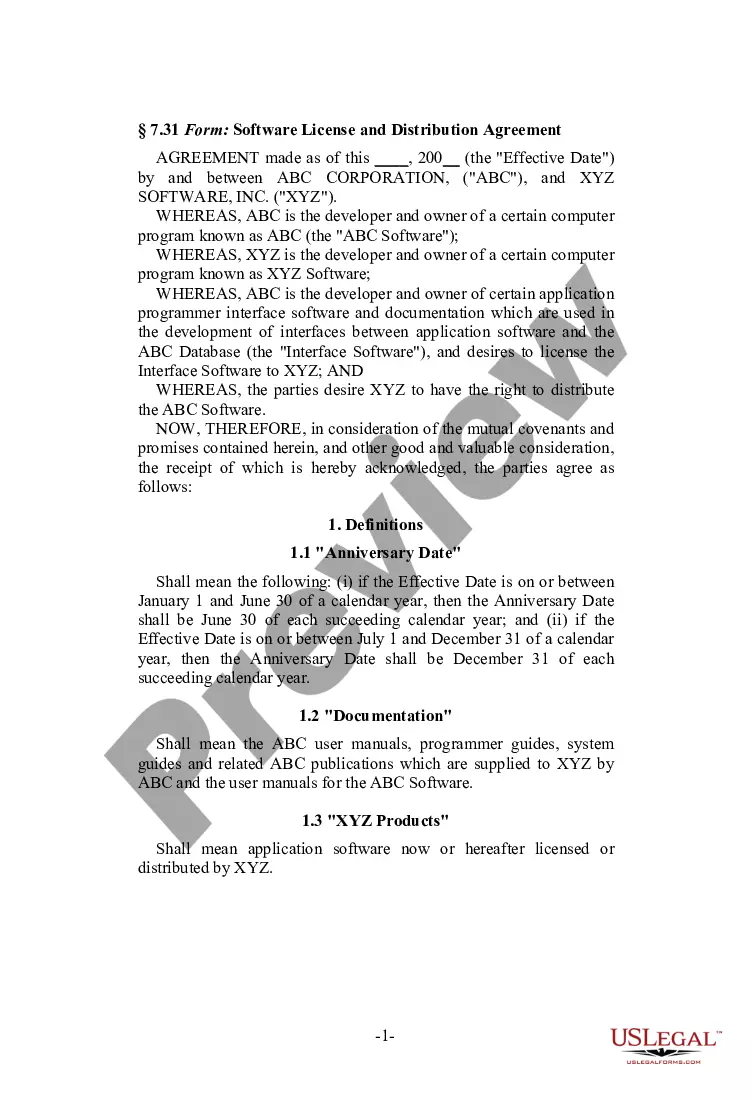
This form is a Software Marketing and Licensing Agreement under Private Label. This form includes, but is not limited to, the following sections: Private Label Version of the Product, Training/Support/Update Obligations, and Representations and Warranties. The document supercedes all proposals, oral or written, all negotiations, conversations, or discussions between the parties relating to the subject of the agreement.
Connecticut Software Marketing and Licensing Agreement under Private Label
Instant download
Description
Free preview

How to fill out Software Marketing And Licensing Agreement Under Private Label?
Are you currently in a situation where you require paperwork for either business or personal purposes almost constantly.
There are numerous legal document templates available online, but finding reliable ones is not easy.
US Legal Forms offers thousands of form templates, such as the Connecticut Software Marketing and Licensing Agreement under Private Label, designed to comply with federal and state regulations.
Avoid altering or removing any HTML tags. Only synonymize plain text outside of the HTML tags.
- If you are already familiar with the US Legal Forms website and have an account, simply Log In.
- Then, you can download the Connecticut Software Marketing and Licensing Agreement under Private Label template.
- If you do not have an account and wish to start using US Legal Forms, follow these steps.
- Find the form you need and ensure it is for the correct city/state.
- Utilize the Preview button to review the form.
- Check the details to confirm that you have chosen the correct form.
- If the form isn’t what you are looking for, use the Search field to find the form that meets your needs and requirements.
- When you find the appropriate form, simply click Buy now.
- Select the pricing plan you need, fill in the necessary information to create your account, and complete your purchase using your PayPal or credit card.
- Choose a convenient document format and download your copy.
- Access all of the document templates you have purchased in the My documents section. You can download an additional copy of the Connecticut Software Marketing and Licensing Agreement under Private Label at any time, if necessary. Click the desired form to download or print the document template.
- Use US Legal Forms, the most extensive collection of legal forms, to save time and avoid mistakes.
- The service provides professionally crafted legal document templates that can be used for a variety of purposes.
- Create an account on US Legal Forms and start making your life a little easier.
Form popularity
FAQ
A software license agreement must be accepted before you install or use proprietary software. This agreement outlines your rights and responsibilities, ensuring both parties understand the terms of use. For those developing a Connecticut Software Marketing and Licensing Agreement under Private Label, clarity in these agreements is crucial. Utilizing platforms like uslegalforms can simplify this process and ensure all legal aspects are thoroughly addressed.
The two primary types of licensing agreements are exclusive and non-exclusive agreements. An exclusive agreement grants one party the sole rights to use the software, while a non-exclusive agreement allows multiple parties to use the same software. When creating a Connecticut Software Marketing and Licensing Agreement under Private Label, understanding these distinctions helps you protect your interests and maximize your opportunities. Consult resources like uslegalforms to navigate the complexities of licensing.
Yes, you typically need a business license to operate in Connecticut. This requirement varies depending on the type of business and its location. For those creating a Connecticut Software Marketing and Licensing Agreement under Private Label, having the necessary licenses ensures compliance with local laws. It's always a good idea to check with local authorities or consult a legal professional to confirm specific requirements.
Yes, you can act as your own registered agent in Connecticut. This allows you to maintain direct communication regarding legal matters. However, consider using a service like uslegalforms to ensure you meet all requirements related to your Connecticut Software Marketing and Licensing Agreement under Private Label while freeing up your time to focus on growing your business.
The business opportunity law in Connecticut regulates the sale of business opportunities to protect consumers. This law requires sellers to provide potential buyers with a disclosure document outlining the terms of the opportunity. If you plan to engage in agreements, such as the Connecticut Software Marketing and Licensing Agreement under Private Label, understanding these regulations can help you navigate the landscape effectively.
In Connecticut, you can indeed be your own registered agent for your LLC. This can be a convenient choice if you want to maintain control over your business communications. Just keep in mind that you will need to be available during business hours to receive any legal correspondence, which might include documents related to your Connecticut Software Marketing and Licensing Agreement under Private Label.
The registered agent for an LLC does not have to be the owner. However, the registered agent must be a resident of Connecticut or a business entity authorized to conduct business in the state. This flexibility allows you to choose someone reliable, ensuring that important documents, including those related to your Connecticut Software Marketing and Licensing Agreement under Private Label, are received promptly.
Yes, the state of Connecticut does require a business license for most types of businesses. Depending on your business structure and activities, you may need to register your business and obtain various permits or licenses. It is crucial to check with local regulations to ensure compliance. For those involved in software marketing and licensing, a Connecticut Software Marketing and Licensing Agreement under Private Label can be an excellent way to navigate these requirements efficiently and effectively.
A private label agreement is a formal contract between two parties, where one party produces goods or services that the other party markets under its own brand. In the case of a Connecticut Software Marketing and Licensing Agreement under Private Label, this pertains specifically to software solutions that you can customize and sell. These agreements outline the terms of branding, distribution rights, and responsibilities of both parties. By entering into such an agreement, you can capitalize on established software technologies while building your brand identity.
An example of a private label can be seen in the grocery industry, where store brands often sell products that are manufactured by another company. Similarly, in the realm of software, a company might offer a Connecticut Software Marketing and Licensing Agreement under Private Label to allow businesses to sell a software solution under their own brand. This arrangement provides a valuable opportunity for companies to enhance their service offerings without the burden of software development. Thus, you can leverage existing technology to grow your business.
