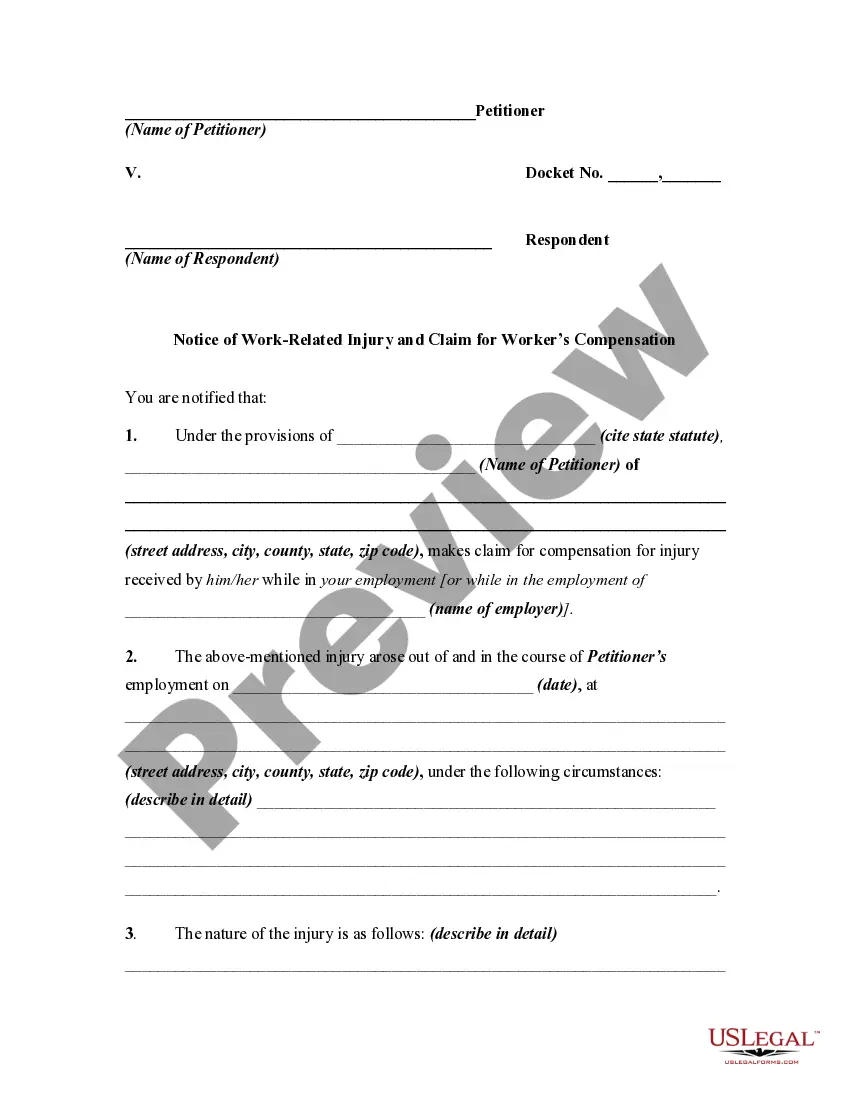
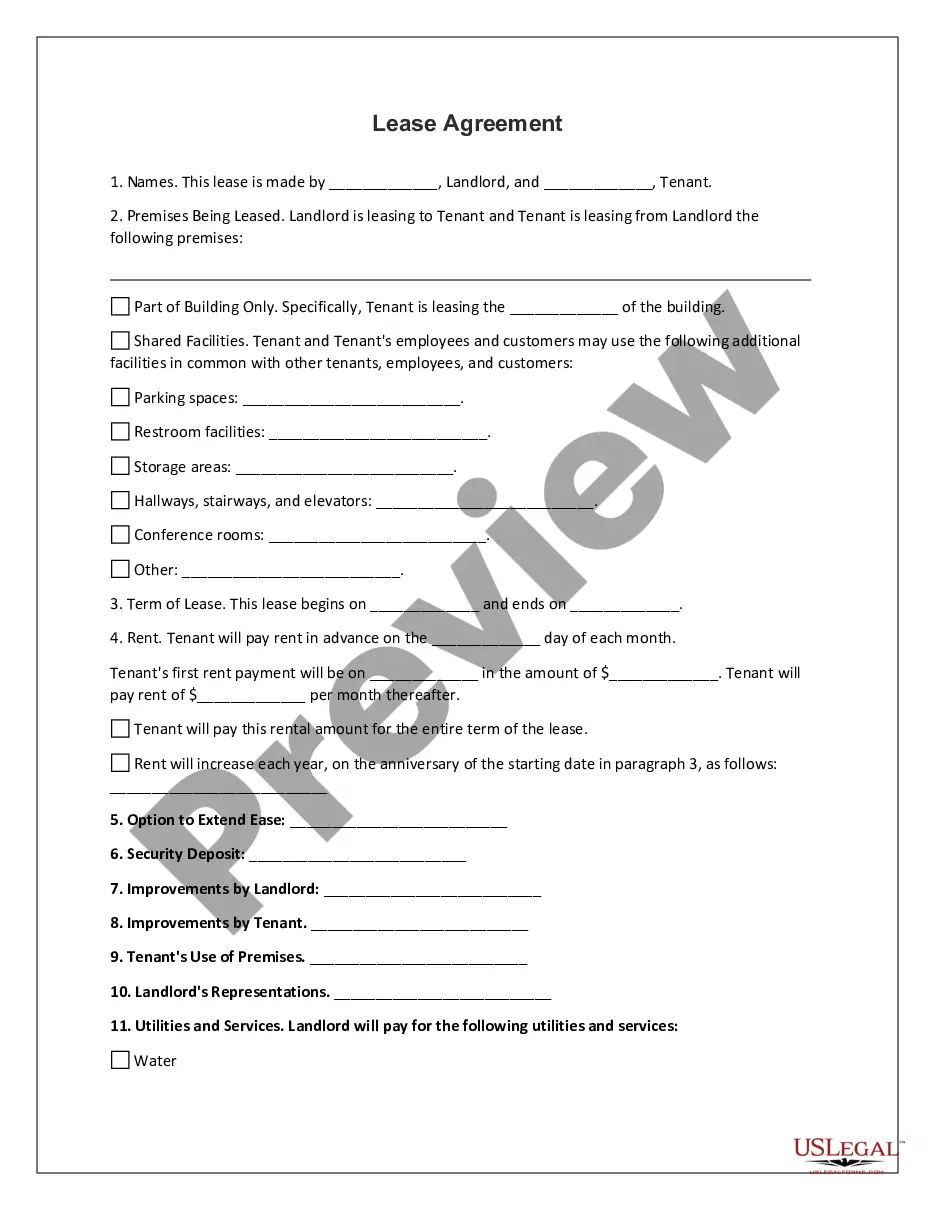
Connecticut Commercial Lease Agreement
Description
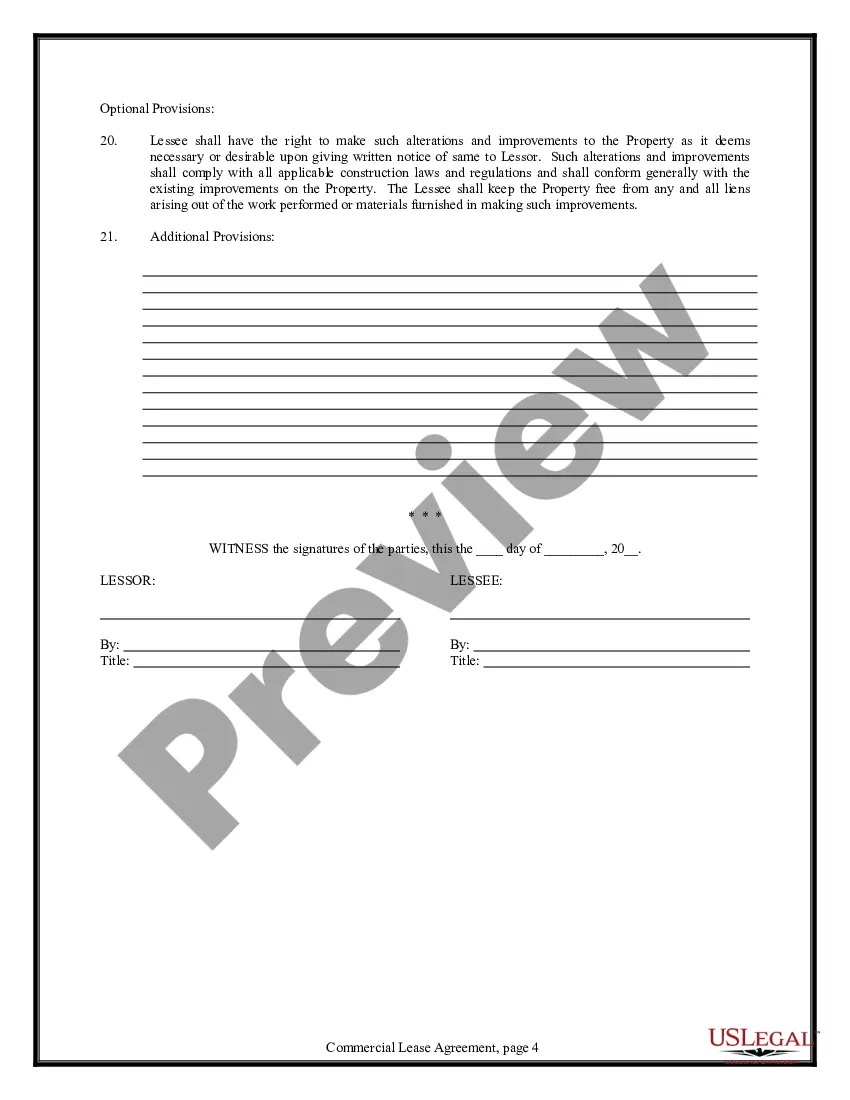
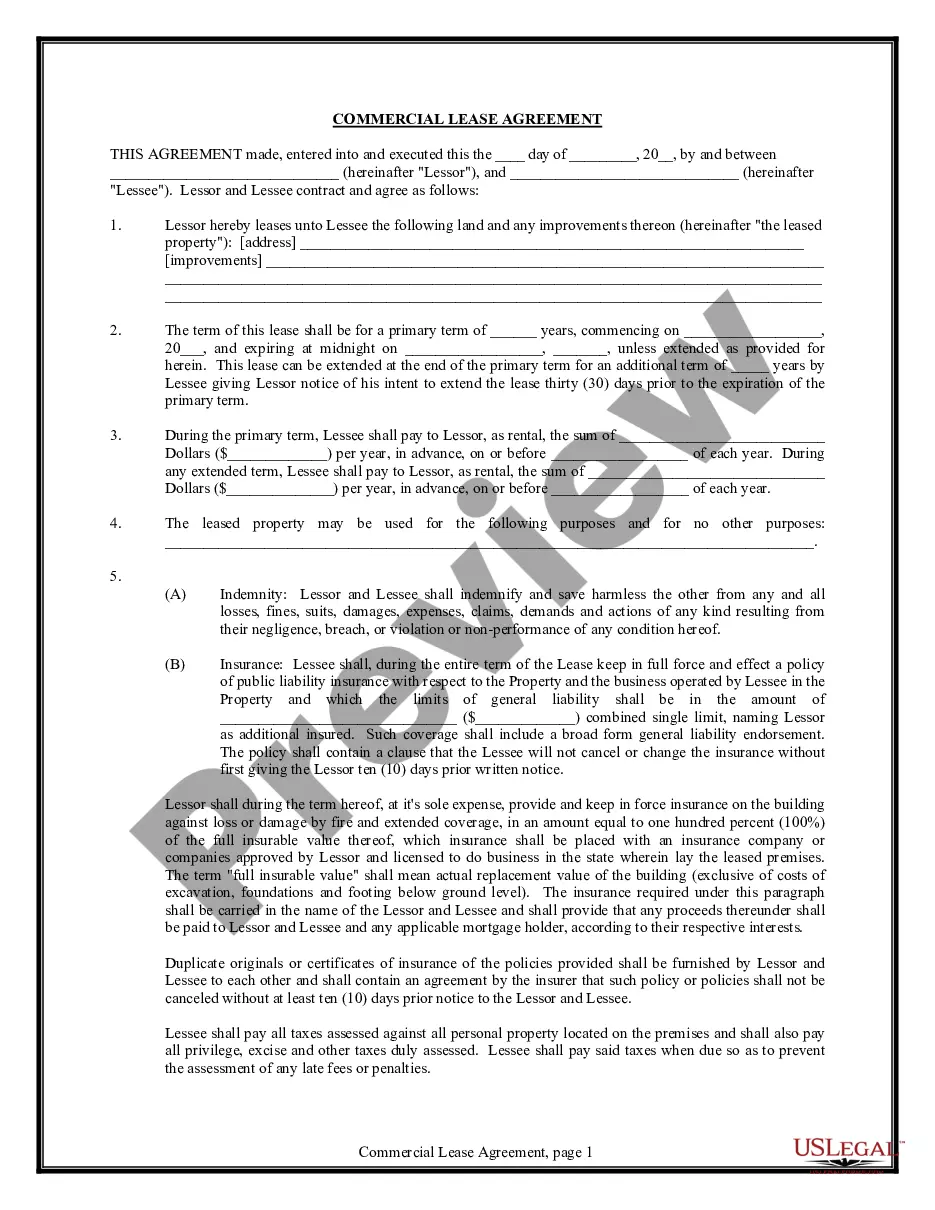
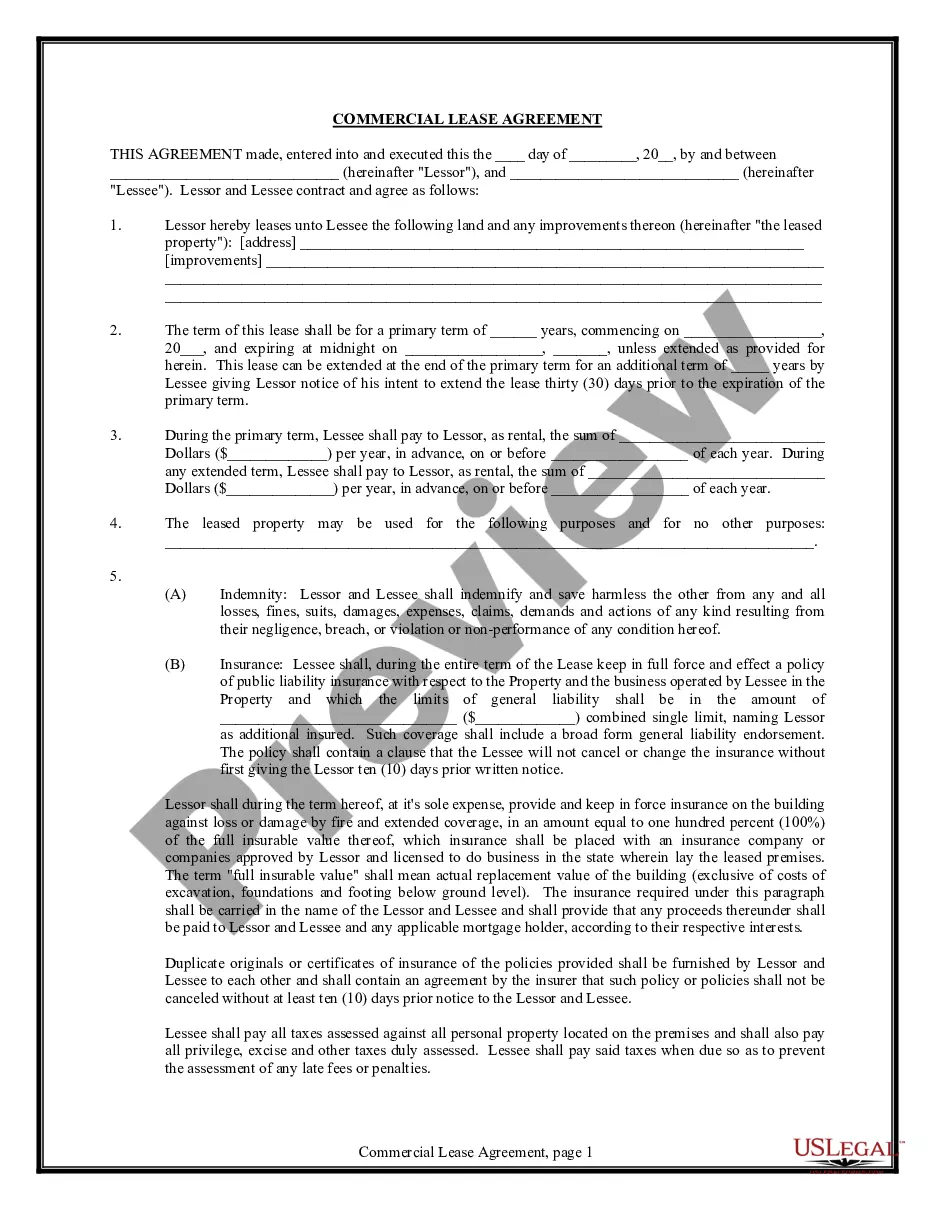
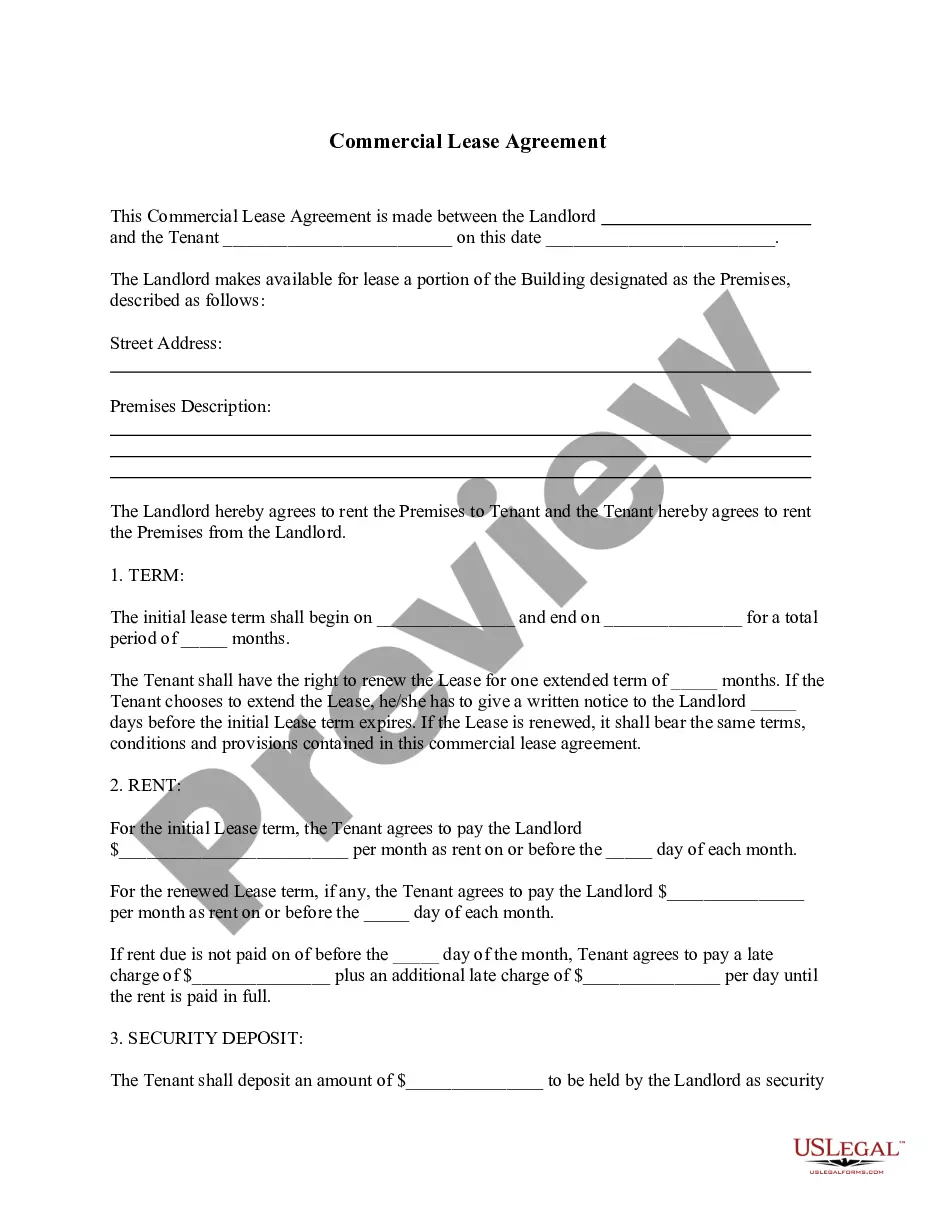
Get your form ready online
Our built-in tools help you complete, sign, share, and store your documents in one place.
Make edits, fill in missing information, and update formatting in US Legal Forms—just like you would in MS Word.
Download a copy, print it, send it by email, or mail it via USPS—whatever works best for your next step.
Sign and collect signatures with our SignNow integration. Send to multiple recipients, set reminders, and more. Go Premium to unlock E-Sign.
If this form requires notarization, complete it online through a secure video call—no need to meet a notary in person or wait for an appointment.
We protect your documents and personal data by following strict security and privacy standards.

Make edits, fill in missing information, and update formatting in US Legal Forms—just like you would in MS Word.

Download a copy, print it, send it by email, or mail it via USPS—whatever works best for your next step.

Sign and collect signatures with our SignNow integration. Send to multiple recipients, set reminders, and more. Go Premium to unlock E-Sign.

If this form requires notarization, complete it online through a secure video call—no need to meet a notary in person or wait for an appointment.

We protect your documents and personal data by following strict security and privacy standards.
Looking for another form?




How to fill out Commercial Lease Agreement?
You might devote several hours online searching for the valid document template that meets the requirements of state and federal regulations that you need.
US Legal Forms offers thousands of official templates that are reviewed by professionals.
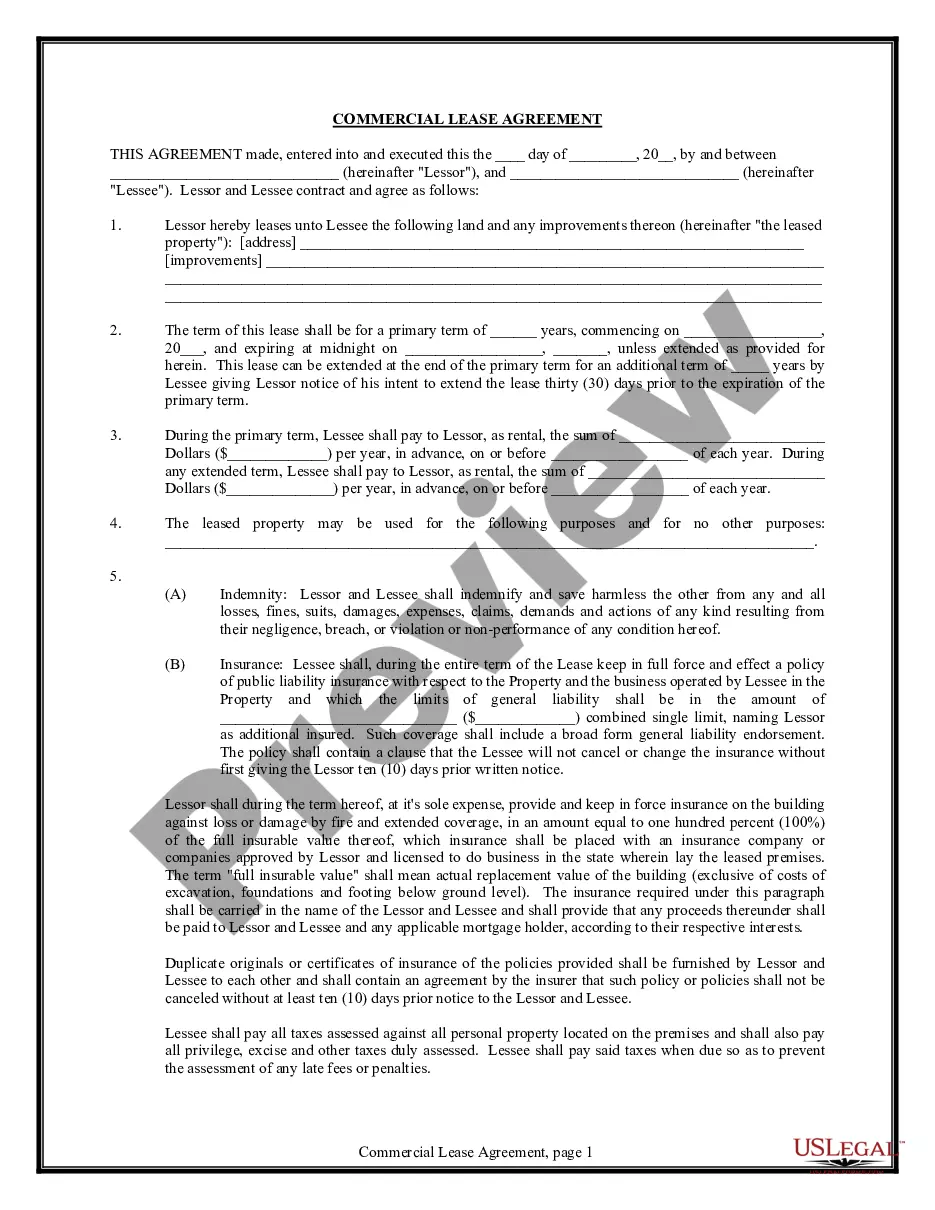
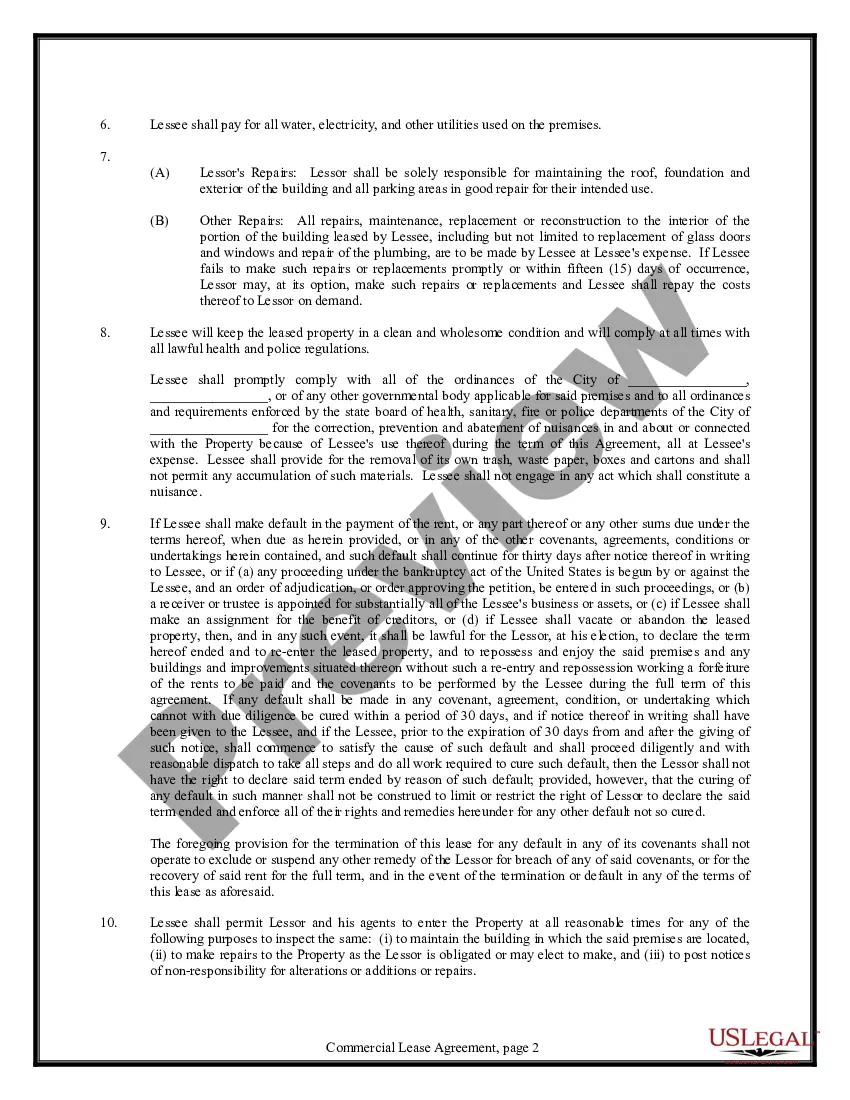
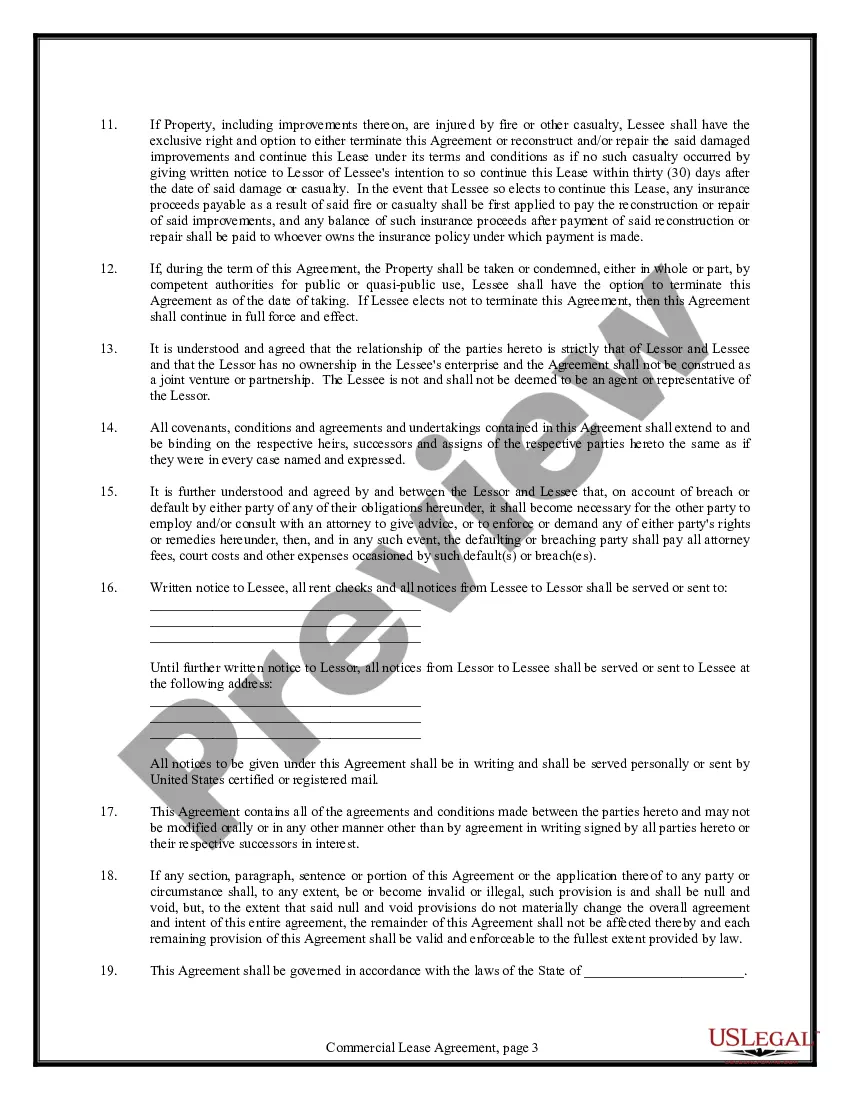
It is easy to obtain or print the Connecticut Commercial Lease Agreement from our service.
If you wish to get another version of the form, utilize the Search area to find the template that fits your needs and specifications.
- If you already have a US Legal Forms account, you can Log In and click the Download button.
- After that, you can complete, modify, print, or sign the Connecticut Commercial Lease Agreement.
- Every official document template you buy is yours forever.
- To obtain another copy of any purchased form, visit the My documents section and click the appropriate option.
- If you are using the US Legal Forms website for the first time, follow the straightforward instructions below.
- First, ensure that you have selected the correct document template for your area or city of choice.
- Review the form description to confirm you have selected the right form.
Form popularity
FAQ
No, your Connecticut lease agreement does not need to be notarized. Here, leases are binding without requiring a notary seal. The tenant and landlord can choose to have the lease agreement notarized if they wish, but it is not required by law in order for the lease to be enforceable.
Commercial leases are typically three to five years. That guarantees enough rental income for the landlords to recoup their investment. Leases are often negotiable, but for a commercial lease, landlords frequently allow customization of the space for the sake of the renting business.
Triple Net Lease Arguably the favorite among commercial landlords, the triple net lease, or NNN lease makes the tenant responsible for the majority of costs, including the base rent, property taxes, insurance, utilities and maintenance.
This question is about Connecticut Residential Lease Agreement. Yes, leases can automatically renew in Connecticut. Fixed-term leases are expected to end on the specified date without any required notice, but most leases can renew if the tenant decides to stay on the rental property.
Commercial leases are legally binding contracts between landlords and commercial tenants. They give tenants the right to use the premises in a particular way for a set period for an agreed rent. Your lease will establish your rights and responsibilities as a tenant, as well as those of your landlord.
Connecticut is generally not considered a very landlord-friendly state because tenants have a number of rights and leverage against landlords. However rental prices are high in Connecticut meaning it is often a lucrative investment.
And, how the most common retail leases are structured: Single net lease. A single net lease, or net lease, is an arrangement where the tenant pay for utilities and property taxes.
A Triple Net Lease (NNN Lease) is the most common type of lease in commercial buildings. In a NNN lease, the rent does not include operating expenses. Operating expenses include utilities, maintenance, property taxes, insurance and property management.
The responsibilities of landlord and tenant will be clearly set out in the lease. Normally commercial landlords are responsible for any structural repairs such as foundations, flooring, roof and exterior walls, and tenants are responsible for non-structural repairs such as air conditioning or plumbing.
This lease structure makes the tenant responsible for the majority of costs. Specifically, the tenant pays the base rent, property but also taxes, insurance, utilities, and maintenance. This even includes standard property repairs associated with the commercial space being occupied.