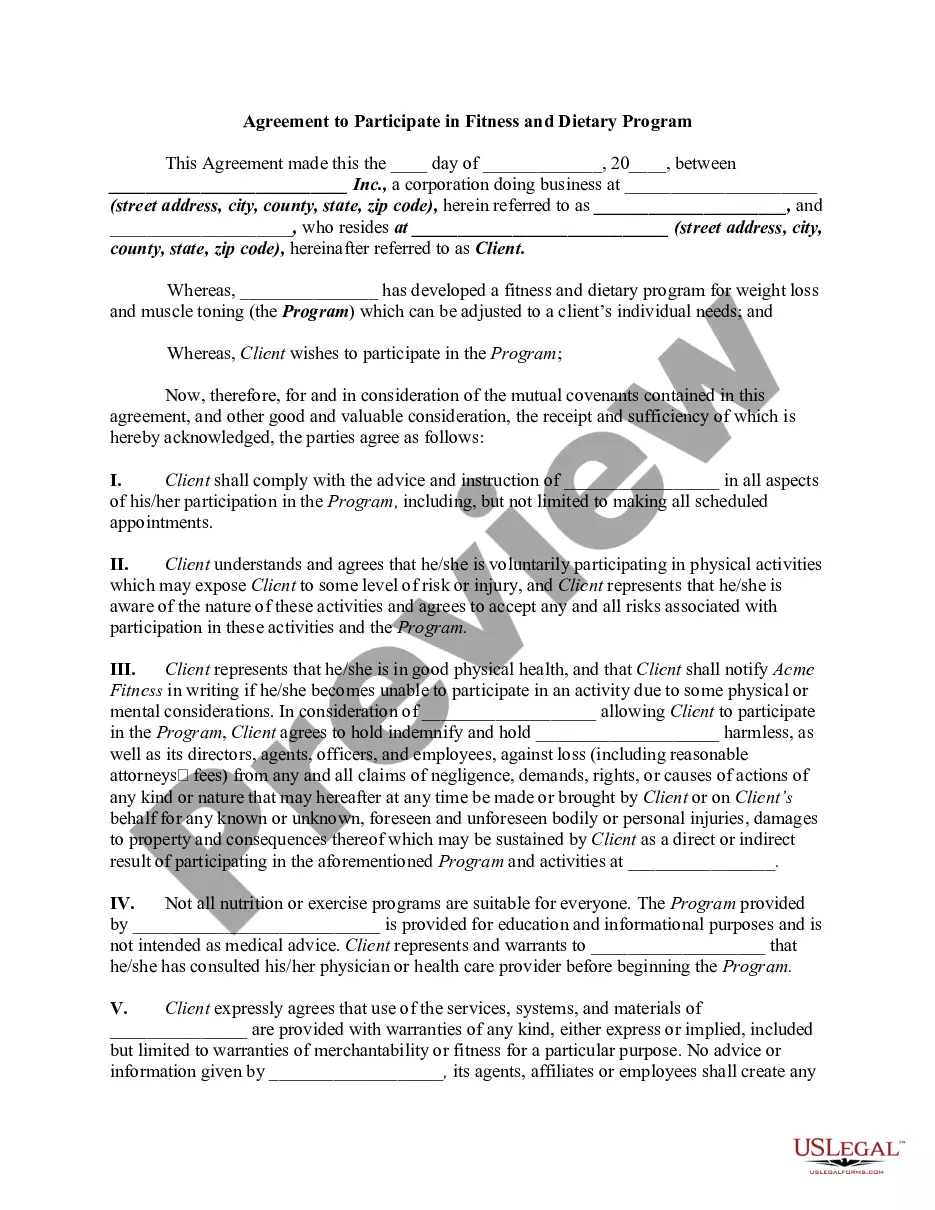
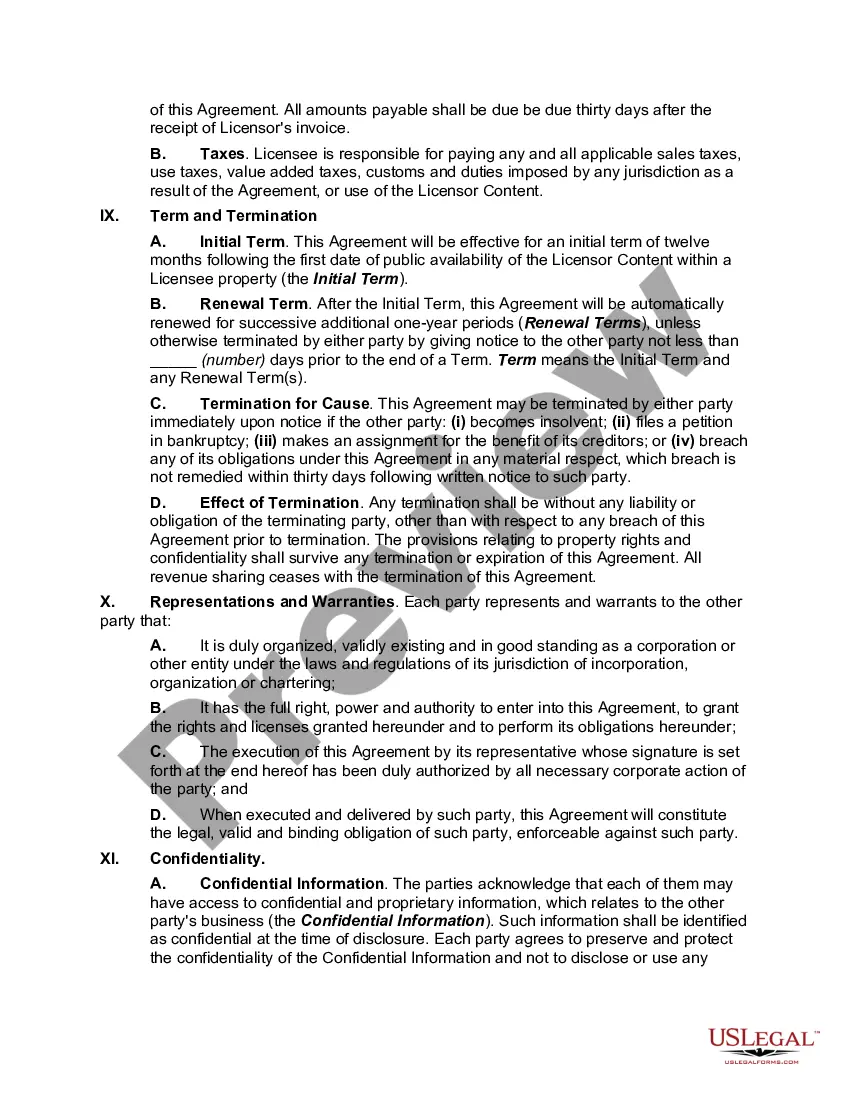
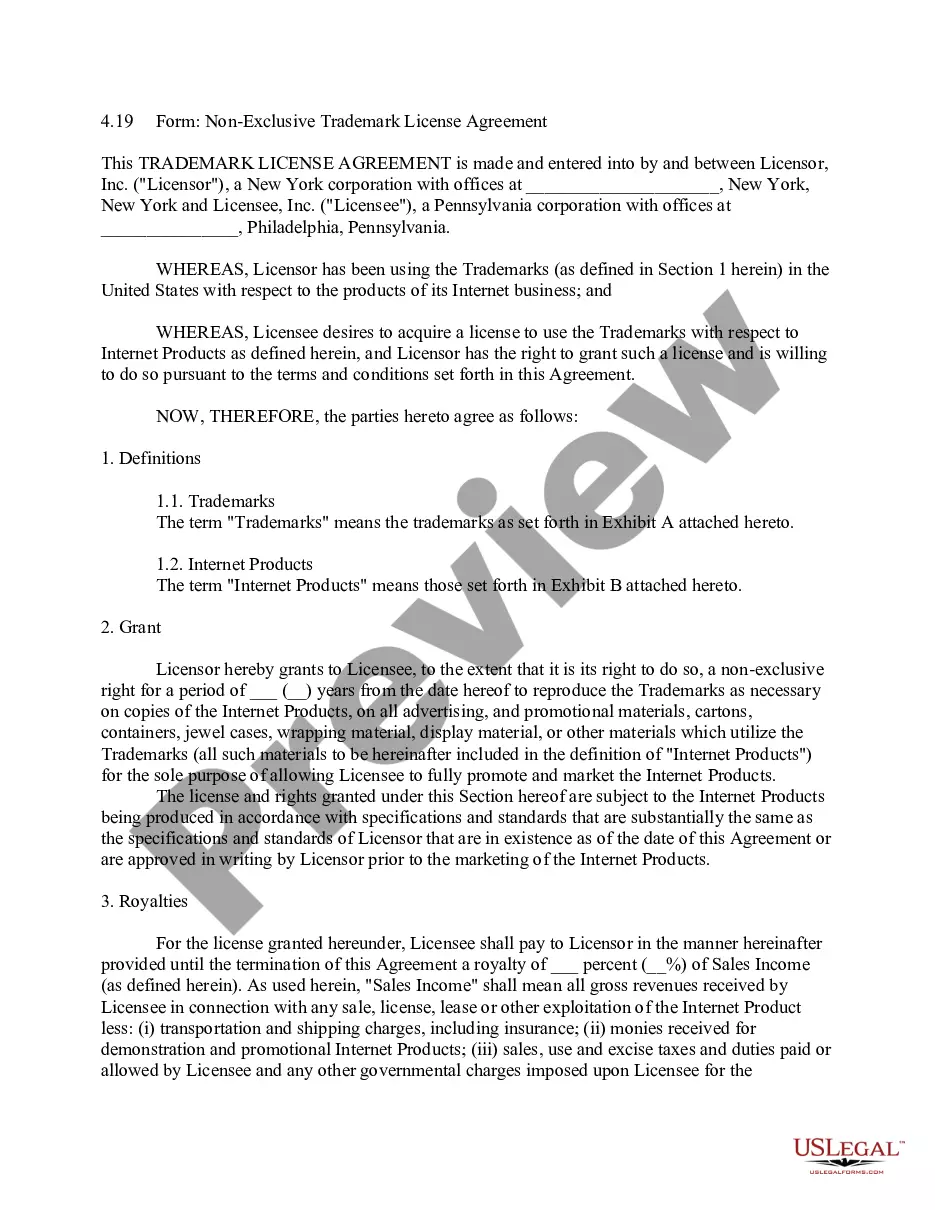
Connecticut Nonexclusive Content Licensing Agreement
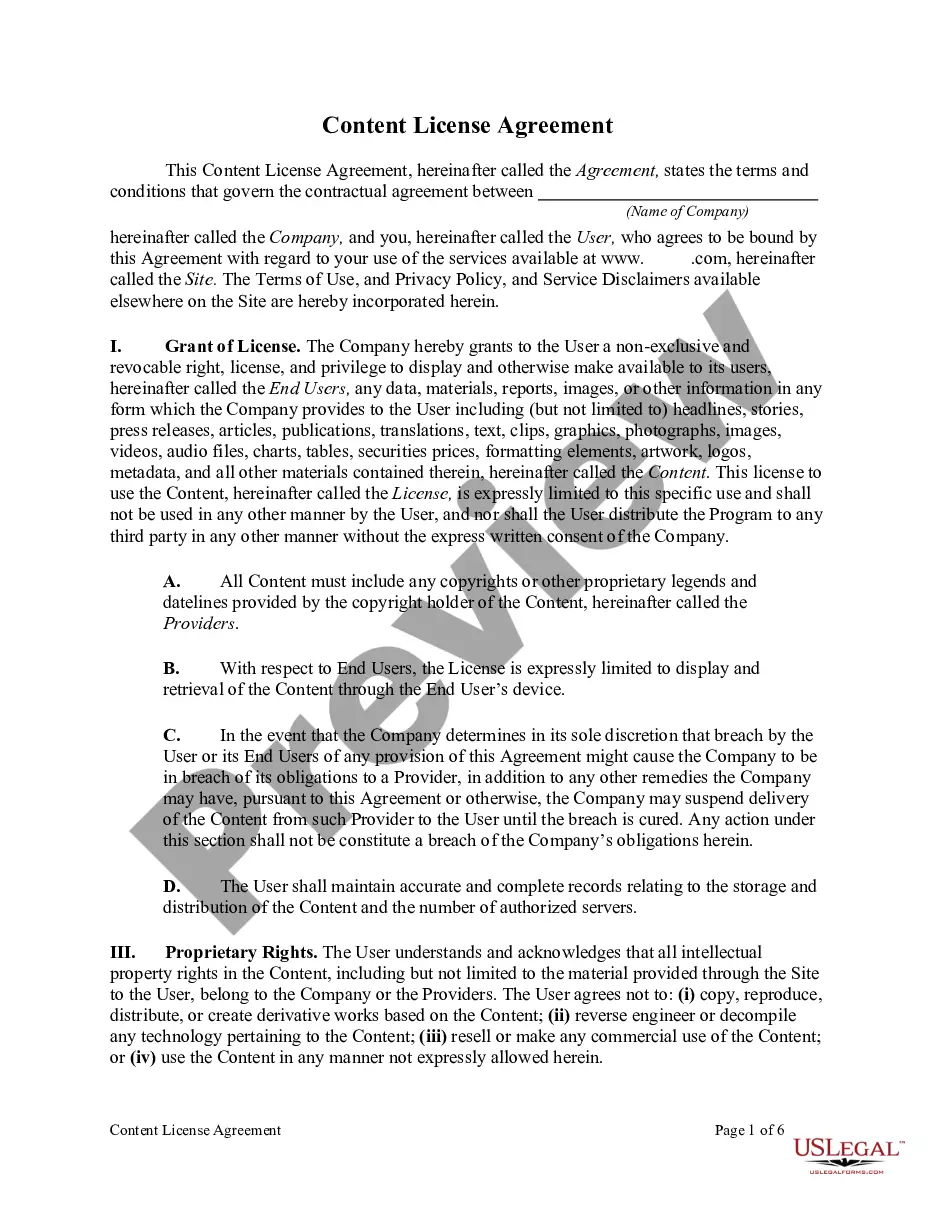
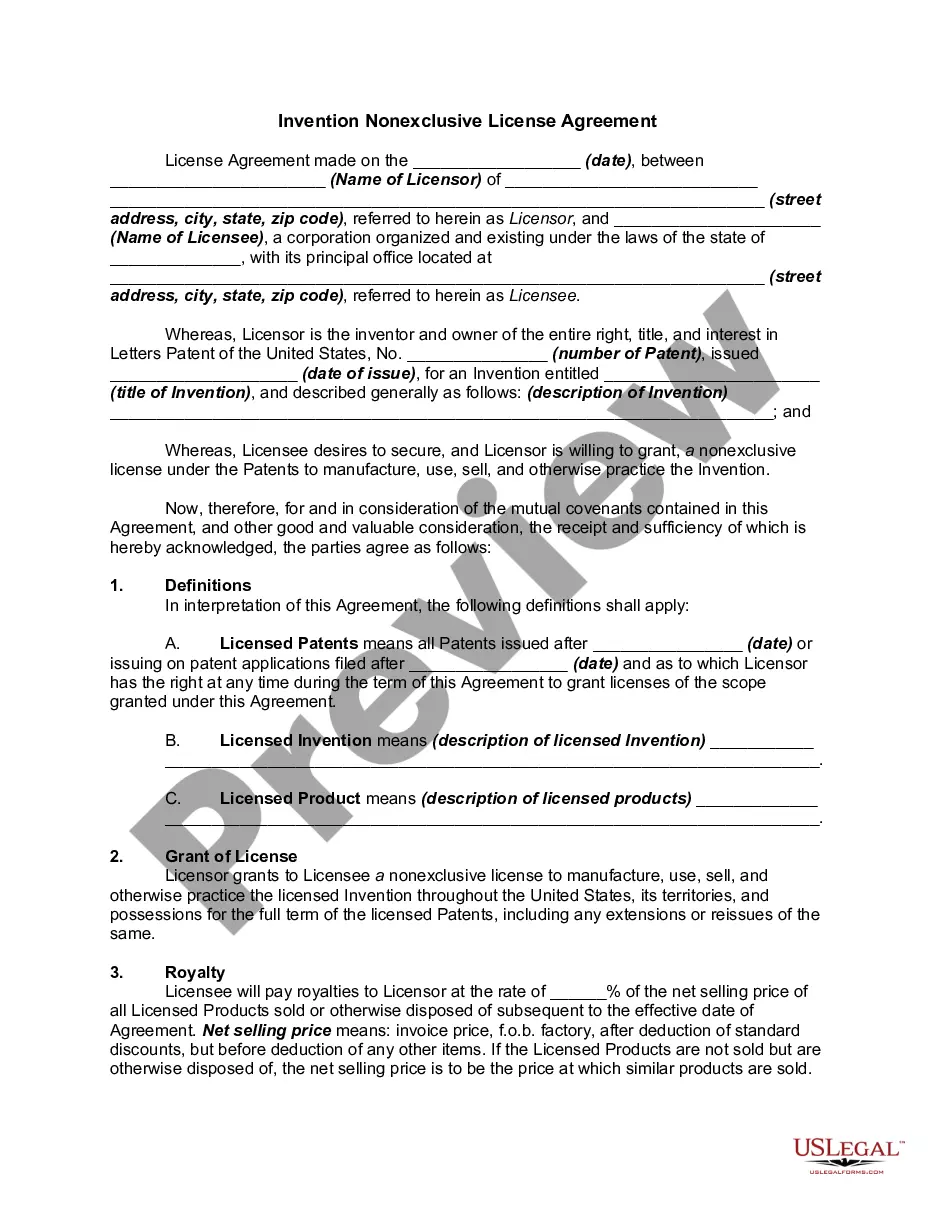
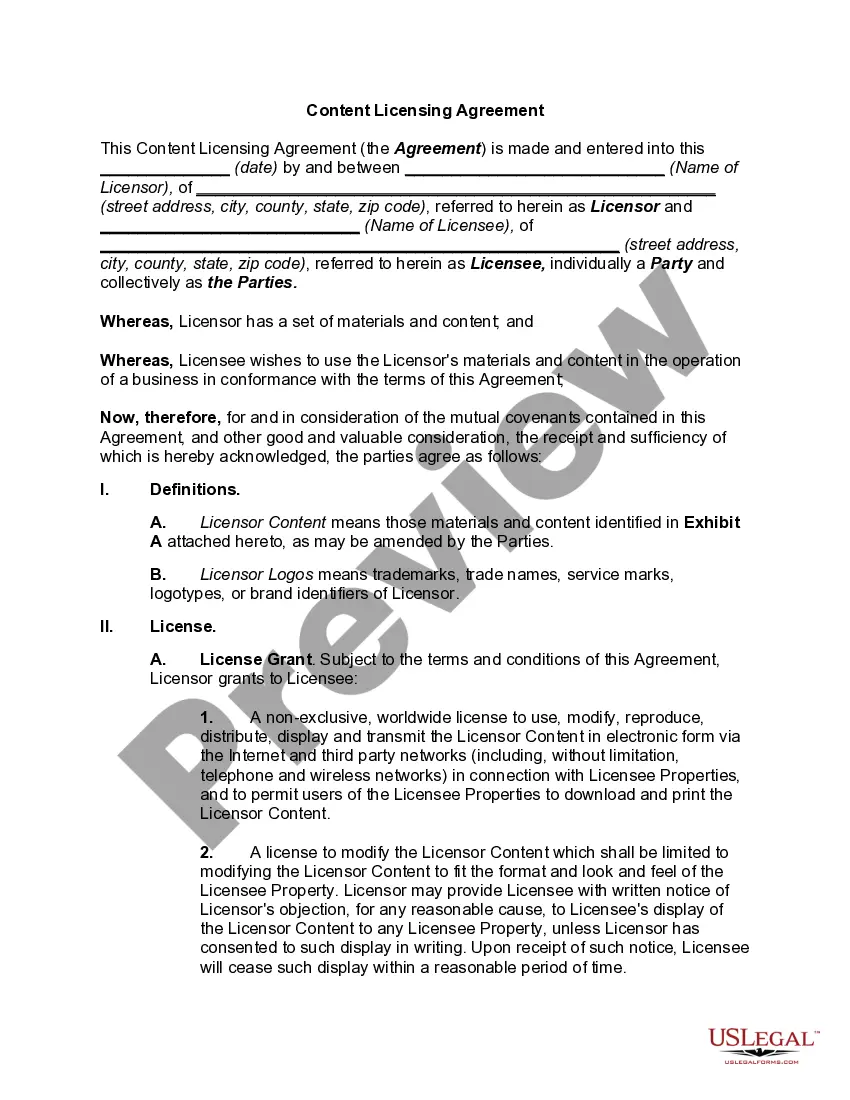
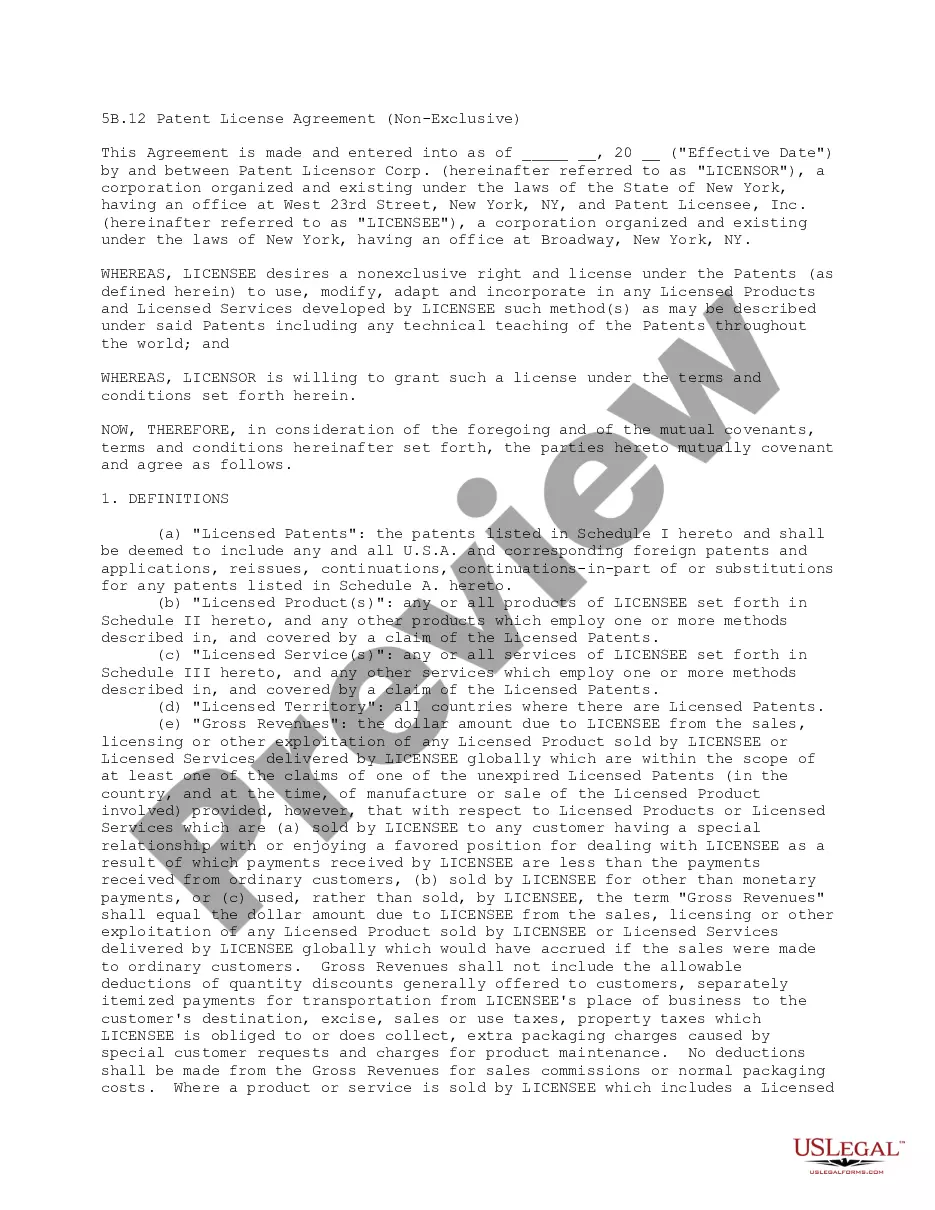
Description
Get your form ready online
Our built-in tools help you complete, sign, share, and store your documents in one place.
Make edits, fill in missing information, and update formatting in US Legal Forms—just like you would in MS Word.
Download a copy, print it, send it by email, or mail it via USPS—whatever works best for your next step.
Sign and collect signatures with our SignNow integration. Send to multiple recipients, set reminders, and more. Go Premium to unlock E-Sign.
If this form requires notarization, complete it online through a secure video call—no need to meet a notary in person or wait for an appointment.
We protect your documents and personal data by following strict security and privacy standards.

Make edits, fill in missing information, and update formatting in US Legal Forms—just like you would in MS Word.

Download a copy, print it, send it by email, or mail it via USPS—whatever works best for your next step.

Sign and collect signatures with our SignNow integration. Send to multiple recipients, set reminders, and more. Go Premium to unlock E-Sign.

If this form requires notarization, complete it online through a secure video call—no need to meet a notary in person or wait for an appointment.

We protect your documents and personal data by following strict security and privacy standards.
Looking for another form?






How to fill out Nonexclusive Content Licensing Agreement?
It is feasible to spend time online looking for the legal document format that meets the federal and state criteria you need.
US Legal Forms offers a vast selection of legal documents that have been evaluated by professionals.
You can obtain or print the Connecticut Nonexclusive Content Licensing Agreement from the support.
If available, use the Review button to look through the document format as well.
- If you have a US Legal Forms account, you can Log In and click on the Acquire button.
- Then, you can fill out, modify, print, or sign the Connecticut Nonexclusive Content Licensing Agreement.
- Every legal document format you acquire is your property for years.
- To get another copy of the acquired document, visit the My documents tab and click the appropriate button.
- If you are using the US Legal Forms site for the first time, follow the simple steps below.
- First, ensure you have selected the correct document format for your chosen county/city.
- Check the document description to confirm you have chosen the right format.
Form popularity
FAQ
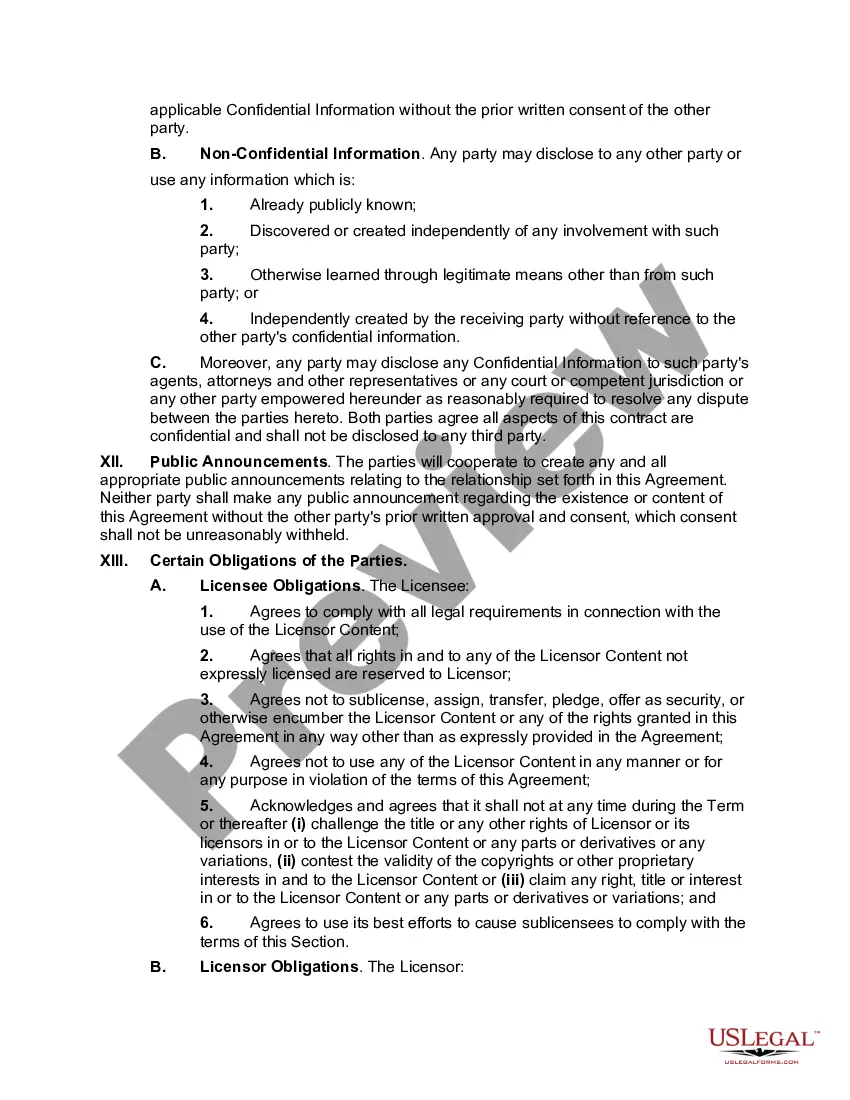
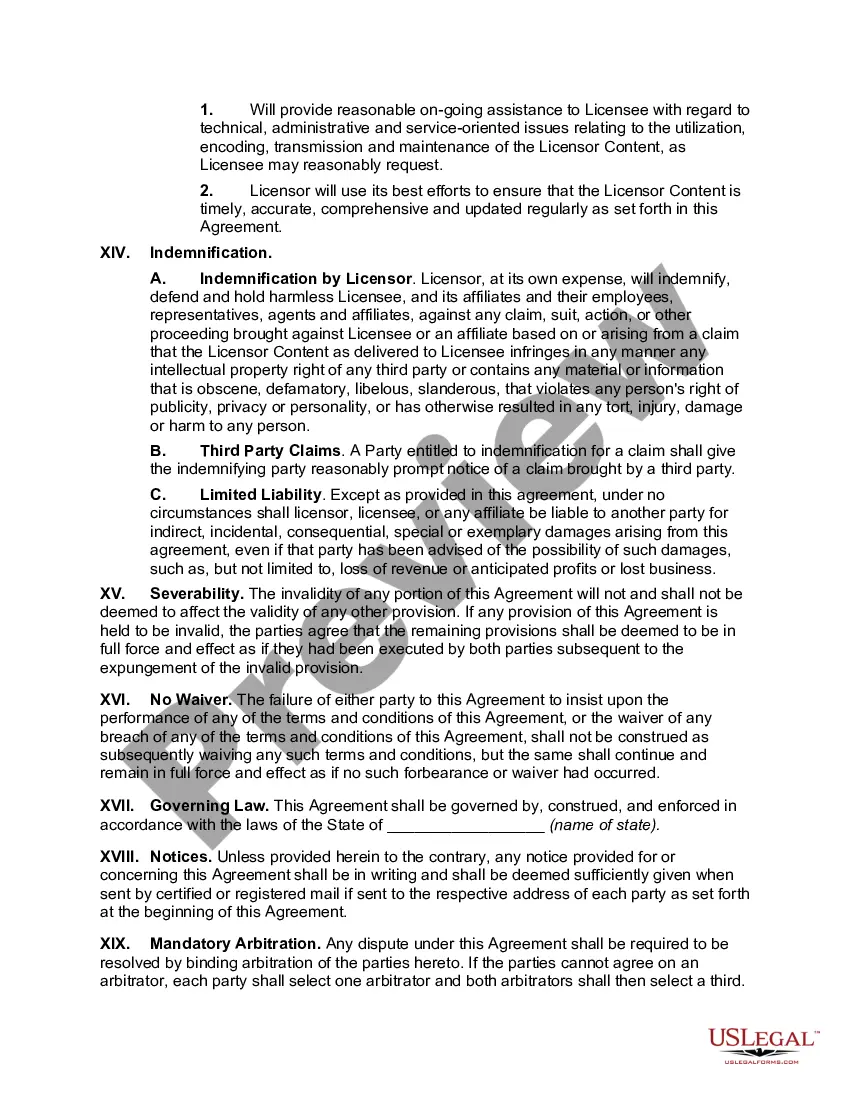
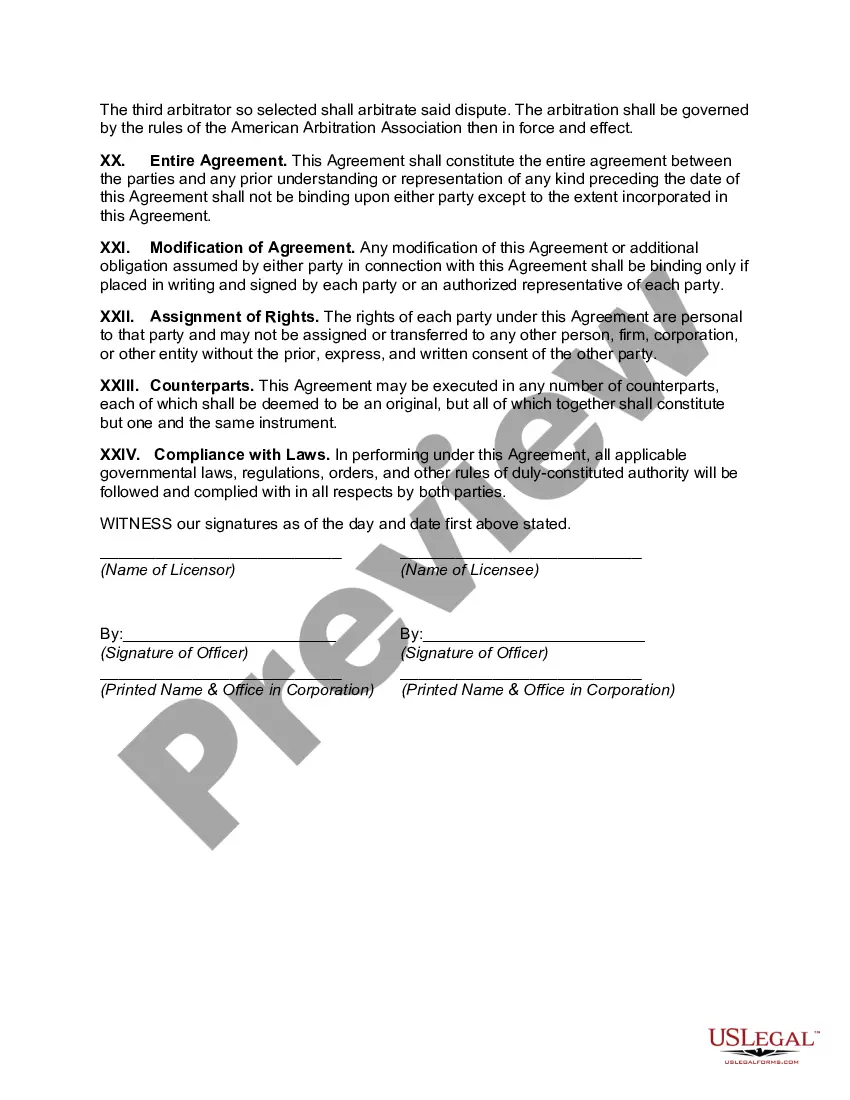
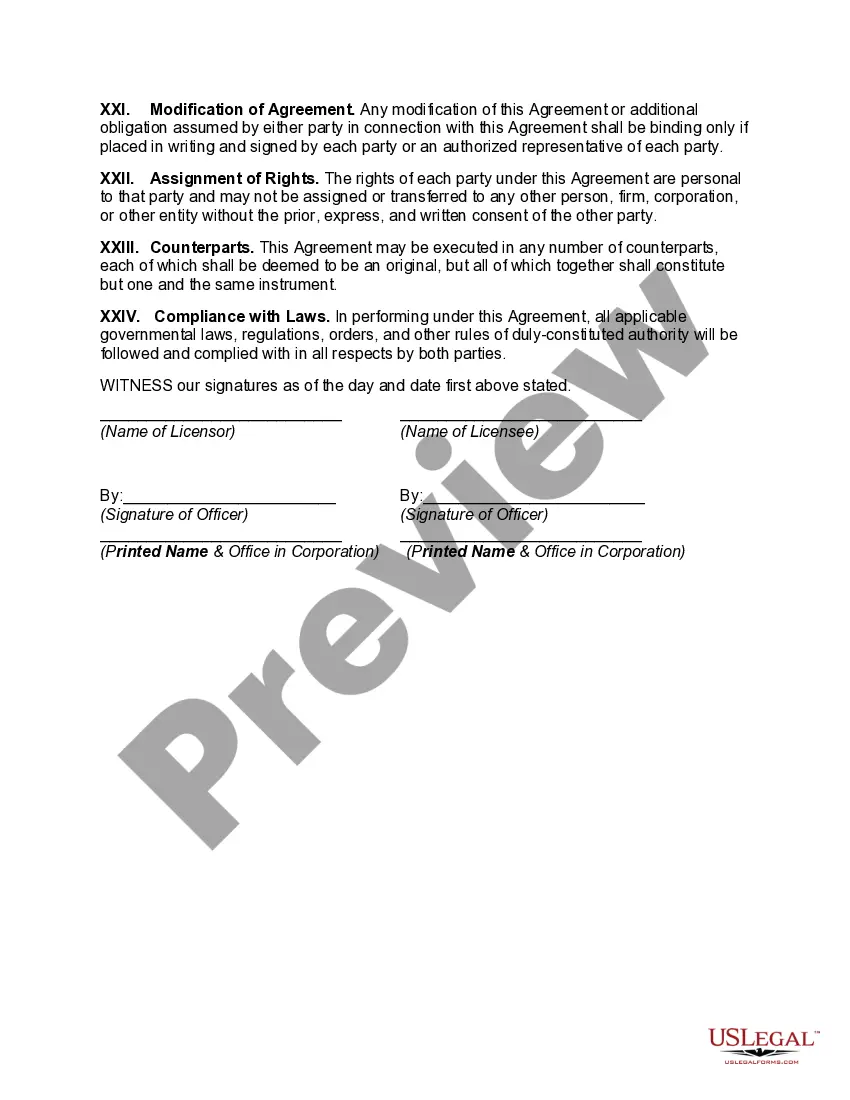
A content license agreement is a legal contract between an author (licensor) and another party (licensee) that is put in place when someone wants to license intellectual property (IP) rights.
By nature, exclusive licenses grant more rights than non-exclusive licenses and usually address a number of contractual obligations regarding the IP, including registration/prosecution, defense, and enforcement of the intellectual property rights.
Exclusive license allows a licensor to share intellectual property with a licensee for a specific period of time that usually binds the licensor to not share the property with anyone else.
Precisely identifying which intellectual property will be the subject of the license is necessary to ensure both parties are on the same page and not exceeding their rights.Scope of the Grant.Exclusivity.Territory.Term.Compensation.Termination.Conclusion.
Most licensing agreements will be valid only for a certain length of time....Scope of the AgreementExclusivity.Territory Rights.Guarantees of Sales.20-Jun-2017
A copyright exclusive license is one in which ownership in one or more rights is transferred by the copyright owner. A copyright nonexclusive license occurs when the owner retains ownership of the copyright and/or may license the same right to others.
Practitioners and licensing executives often refer to three basic types of voluntary licenses: non-exclusive, sole, and exclusive. A non-exclusive licence allows the licensor to retain the right to use the licensed property and the right to grant additional licenses to third parties.
Virtually every type of license agreement includes some form of initial payment and ongoing royalty to the licensor. Royalty formulas vary widely, however. They may be based on gross sales, net sales, net profits, fixed sum per product sold, or a minimum payment to be made to the licensor over a given period of time.
A licensing agreement is a legal contract between two parties, known as the licensor and the licensee. In a typical licensing agreement, the licensor grants the licensee the right to produce and sell goods, apply a brand name or trademark, or use patented technology owned by the licensor.