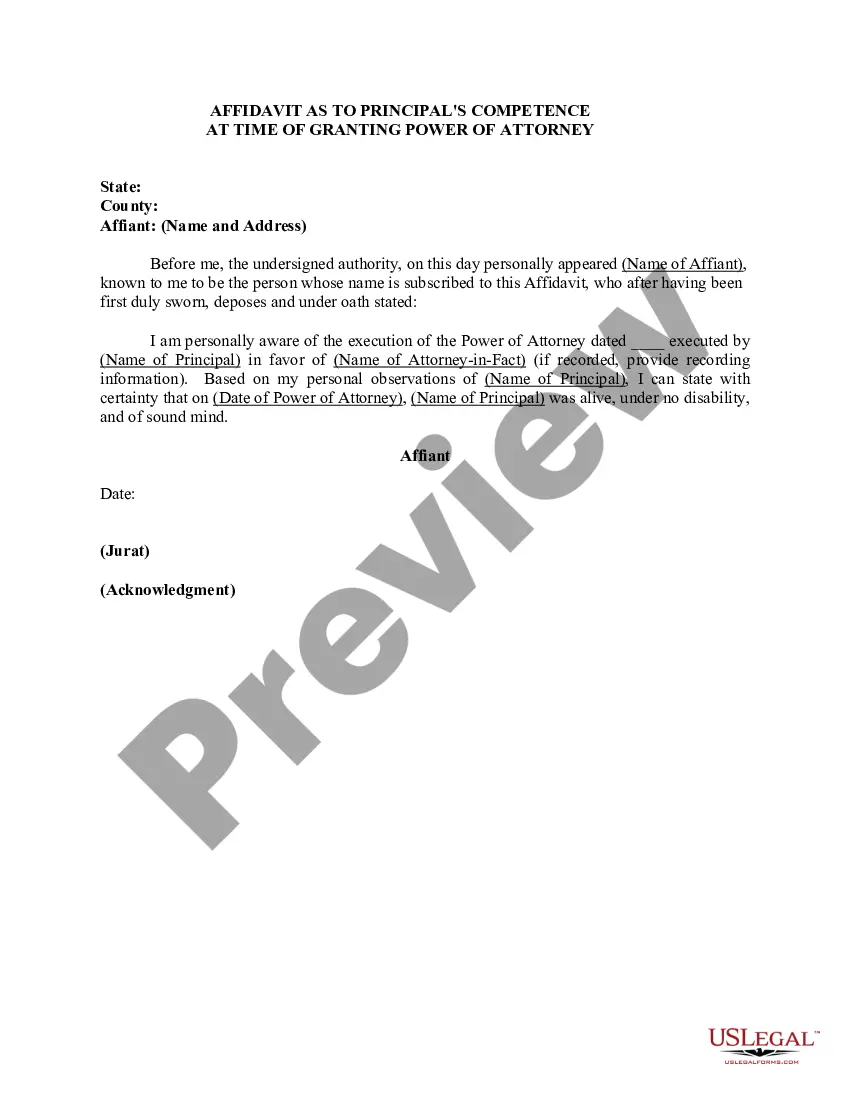
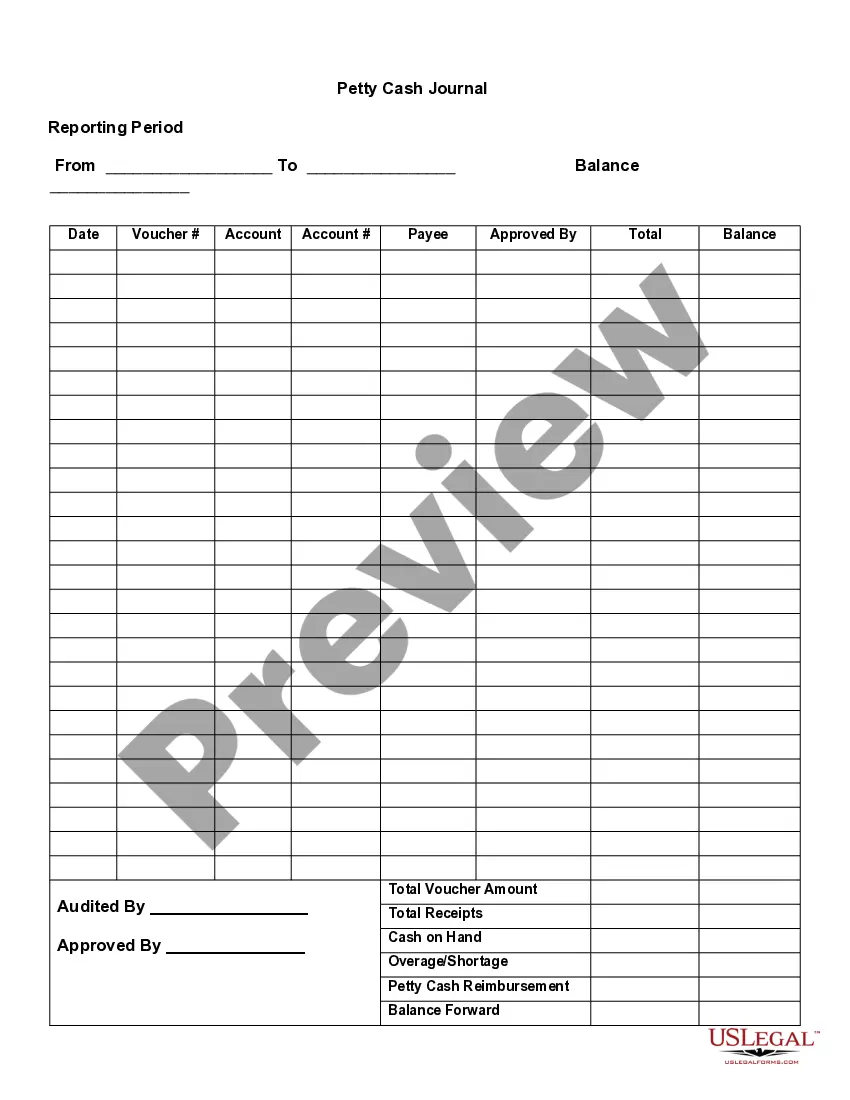
Connecticut Petty Cash Journal
Description





How to fill out Petty Cash Journal?
Are you presently in a role where you require documents for potential business or personal reasons nearly every day.
There are many authentic document templates accessible online, but locating ones you can trust is not easy.
US Legal Forms offers a vast array of template forms, such as the Connecticut Petty Cash Journal, which are designed to meet both state and federal requirements.
Once you find the appropriate form, click on Acquire now.
Choose the pricing plan you need, fill in the required information to create your account, and complete the transaction using your PayPal or credit card. Select a convenient document format and download your copy. Access all the document templates you have acquired in the My documents section. You can obtain an additional copy of the Connecticut Petty Cash Journal at any time if needed. Just click on the necessary form to download or print the template. Utilize US Legal Forms, one of the most extensive collections of legal forms, to save time and avoid errors. The service offers professionally crafted legal document templates that can be utilized for a variety of purposes. Create your account on US Legal Forms and begin simplifying your life.
- If you are already familiar with the US Legal Forms website and have your account, simply Log In.
- Then, you can download the Connecticut Petty Cash Journal template.
- If you do not have an account and wish to start using US Legal Forms, follow these steps.
- Select the form you need and verify that it pertains to the correct city/county.
- Utilize the Preview button to review the document.
- Examine the description to confirm you have chosen the right form.
- If the form is not what you are looking for, use the Lookup field to find the form that meets your criteria.
Form popularity
FAQ
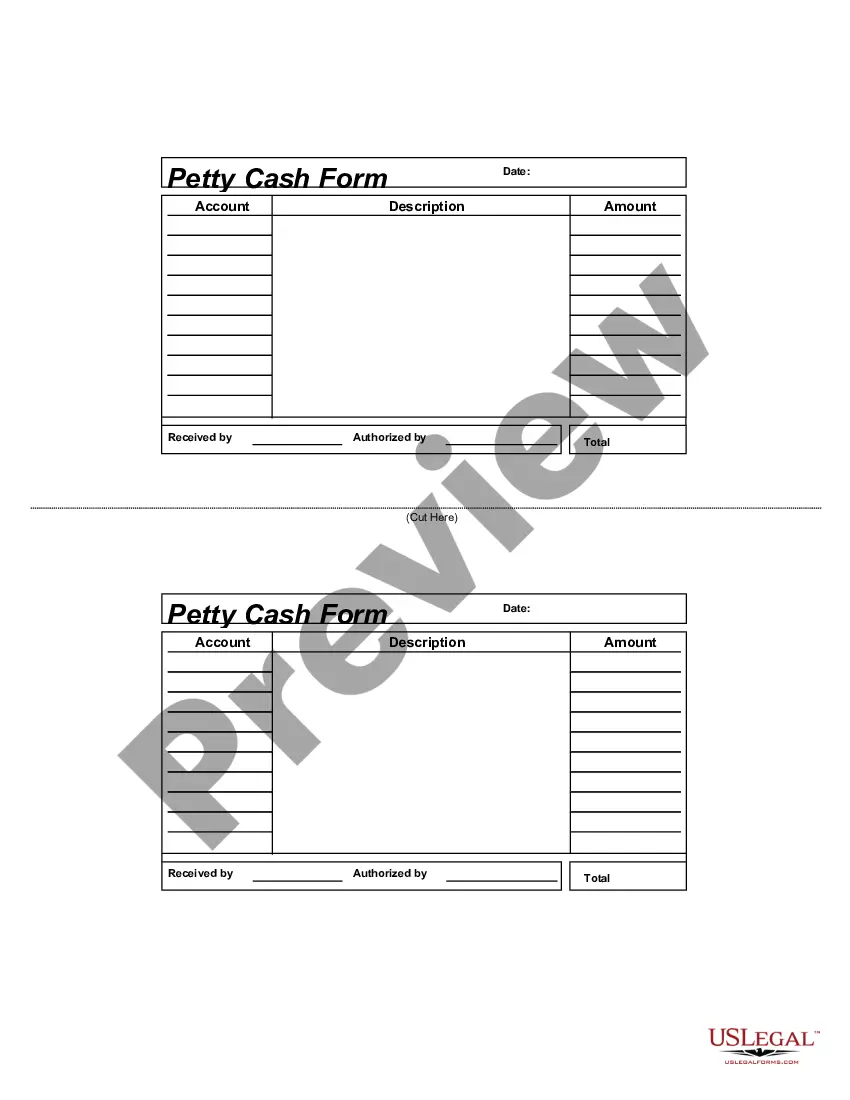
The petty cash journal entry is a debit to the petty cash account and a credit to the cash account. The petty cash custodian refills the petty cash drawer or box, which should now contain the original amount of cash that was designated for the fund. The cashier creates a journal entry to record the petty cash receipts.
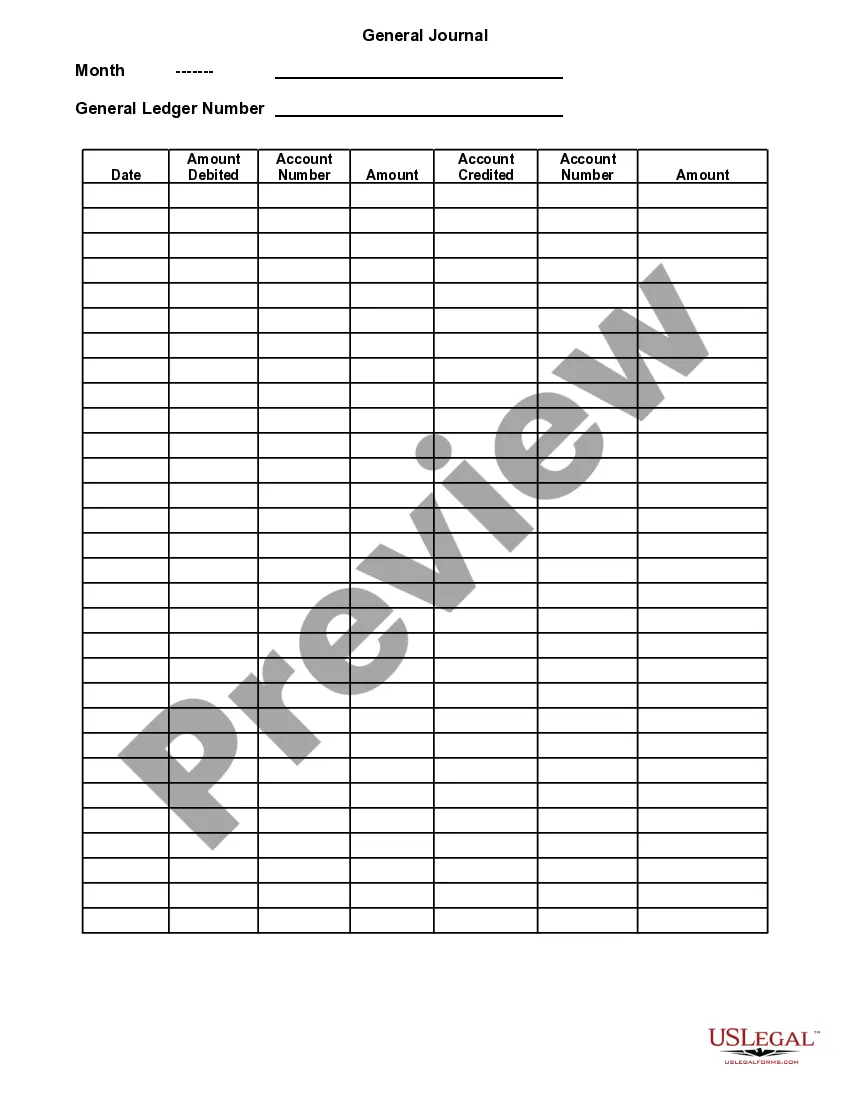
The journal entry that needs to be recorded is a debit (increase) to the petty cash fund and a credit (decrease) to the business checking account. Withdrawals made to the petty cash fund will be recorded as expenses.
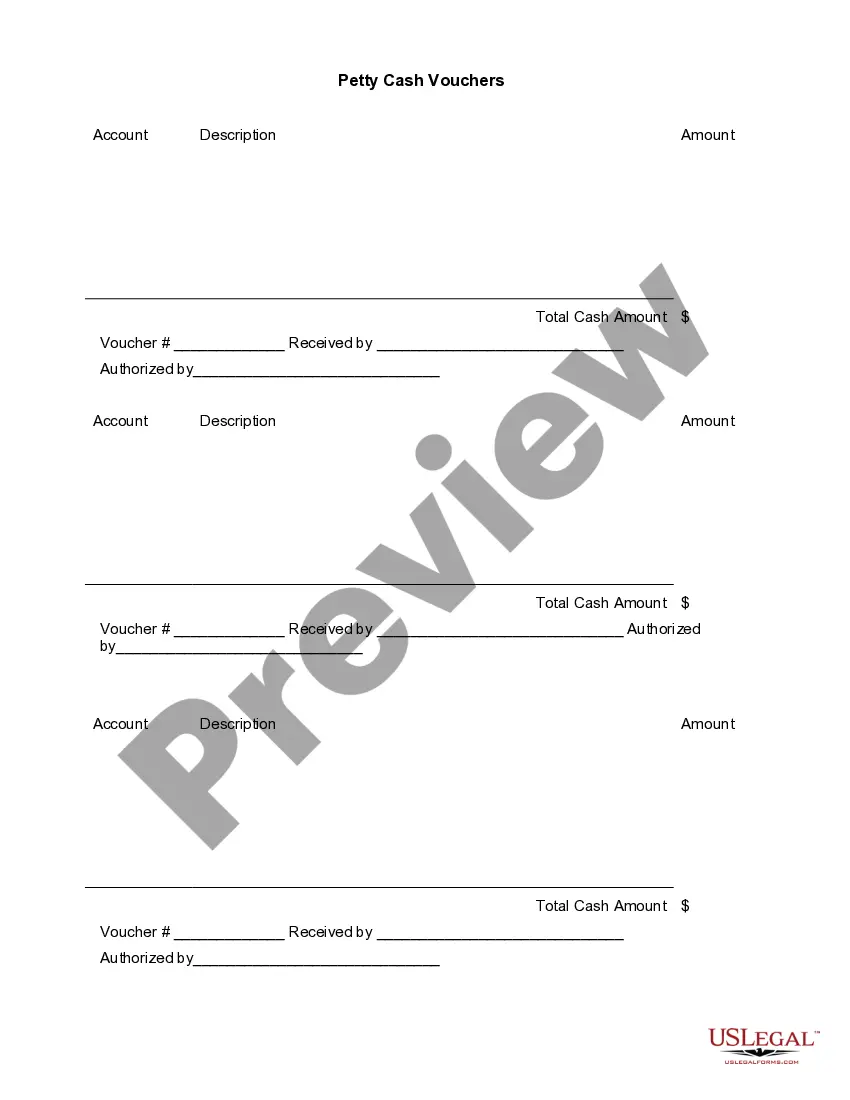
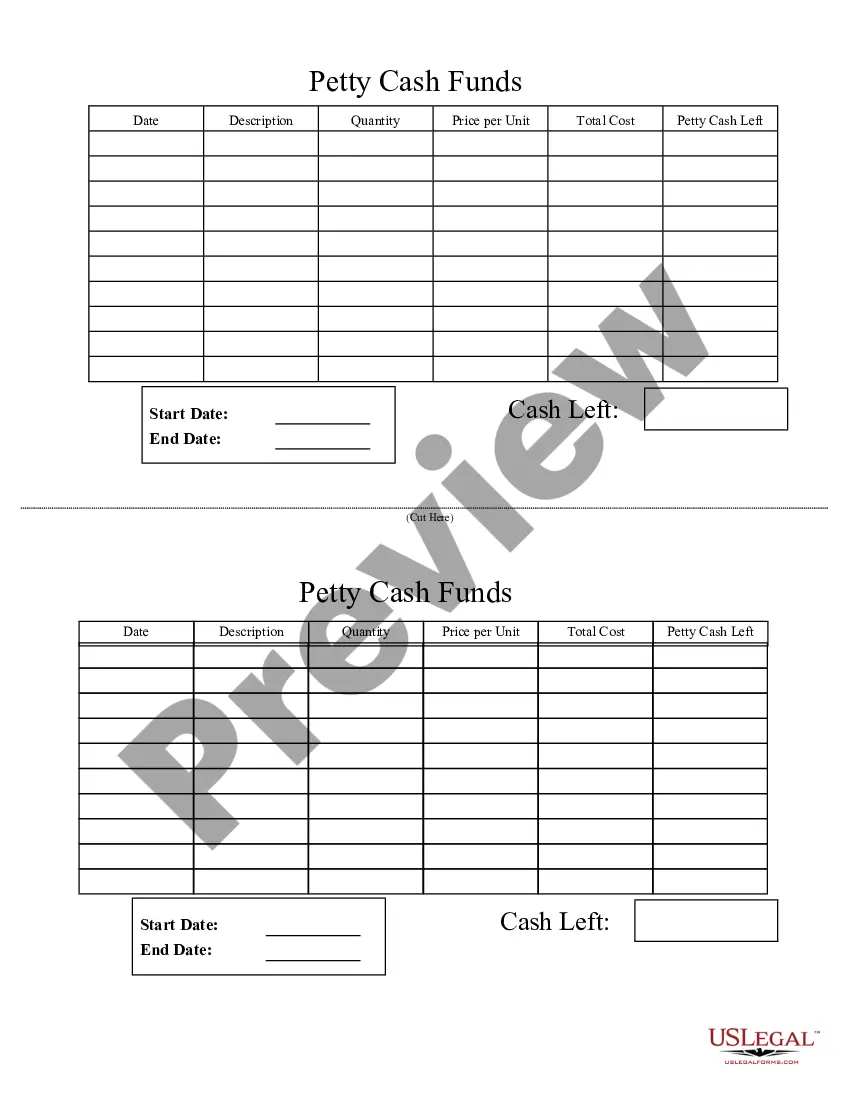
How to reconcile petty cashAscertain the float.Count the cash.Add up the recorded transactions (via vouchers and the log).Categorize disbursements.Identify and investigate the differences between vouchers and the expected balance.Record transactions in your general ledger.Replenish the float for next month.
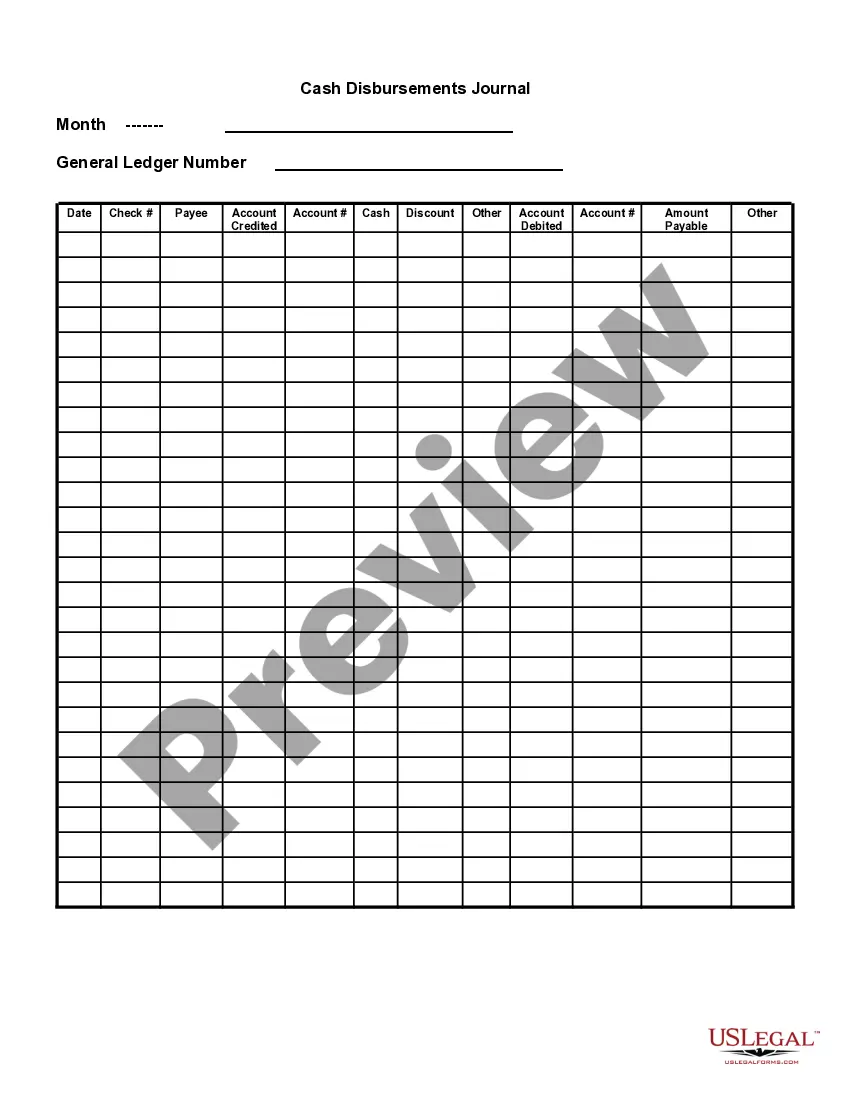
The petty cash journal contains a summarization of the payments from a petty cash fund. The totals in the journal are then used as the basis for a journal entry into a company's general ledger. This journal entry lists petty cash expenditures by expense type.
Petty cash funds may not be deposited into personal bank accounts or commingled with other funds.Departments may not establish bank accounts for petty cash funds.Purchases of goods and services for more than $100 should not be made with petty cash.Petty cash funds may not be expended for:
The petty cash reconciliation process starts by counting up the amount of cash on hand at the end of the financial period and using this as the ending balance for the petty cash account. Next, receipts are reviewed and verified as appropriate and complete.
When a petty cash fund is in use, petty cash transactions are still recorded on financial statements. No accounting journal entries are made when purchases are made using petty cash, it's only when the custodian needs more cashand in exchange for the receipts, receives new fundsthat the journal entries are recorded.
How to reconcile petty cashAscertain the float.Count the cash.Add up the recorded transactions (via vouchers and the log).Categorize disbursements.Identify and investigate the differences between vouchers and the expected balance.Record transactions in your general ledger.Replenish the float for next month.03-Jun-2021
A petty cash account is an imprest account, so it is only debited when the fund is initially established or increased in amount. Transactions to replenish the account involve a debit to the expenses and a credit to the cash account (e.g., bank account).
The journal entry that needs to be recorded is a debit (increase) to the petty cash fund and a credit (decrease) to the business checking account. Withdrawals made to the petty cash fund will be recorded as expenses.