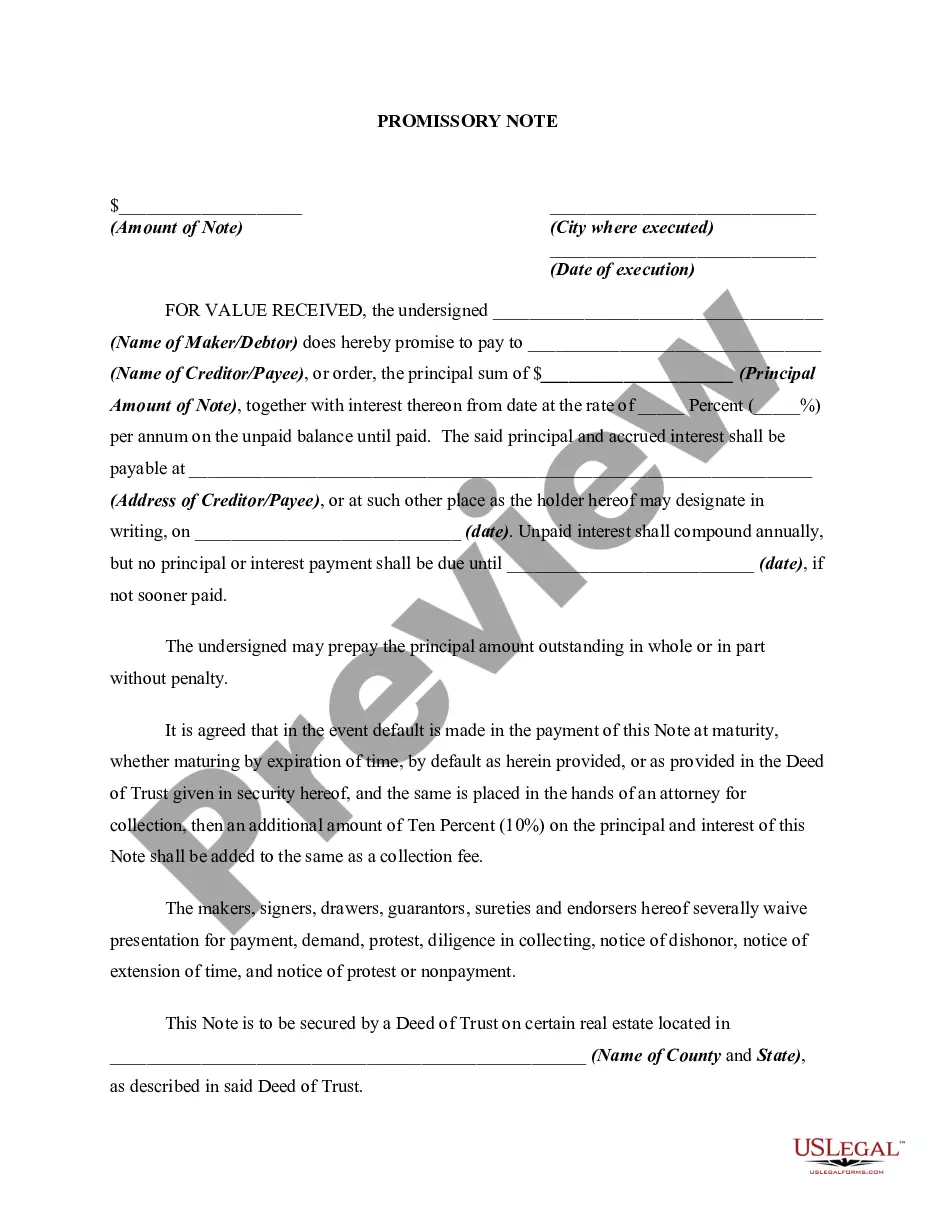
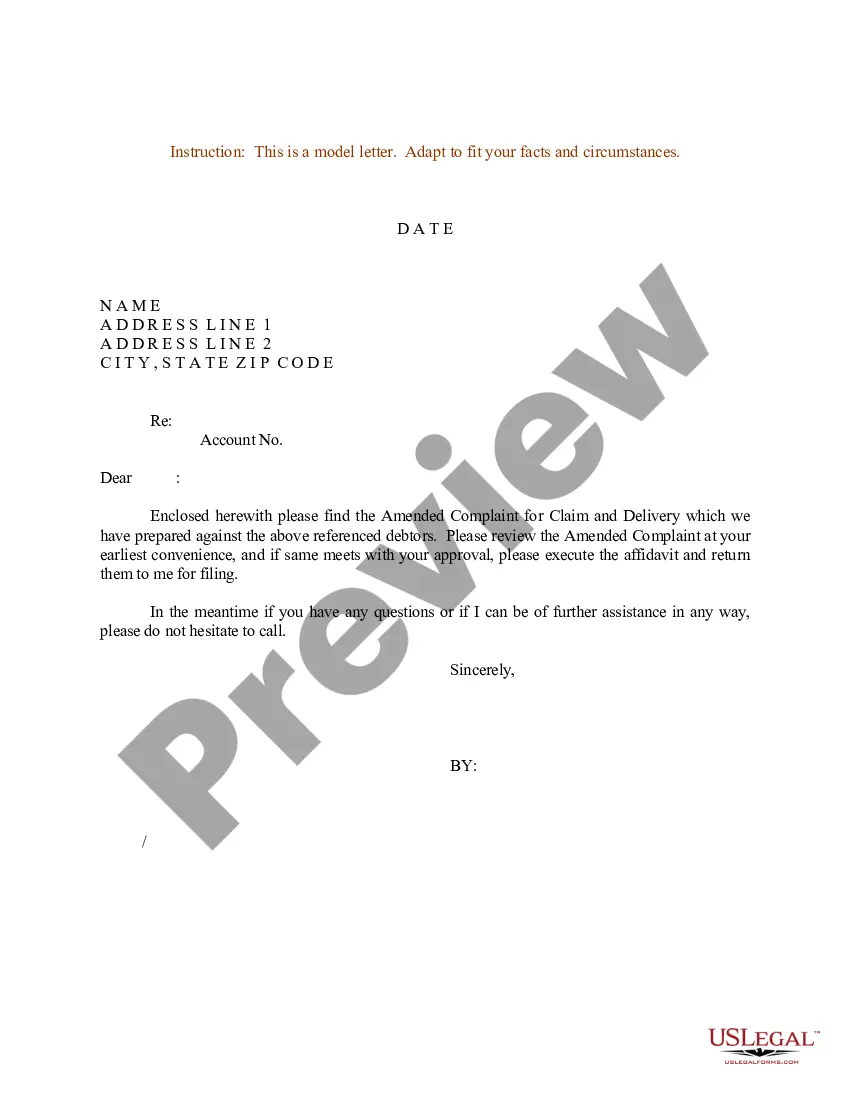
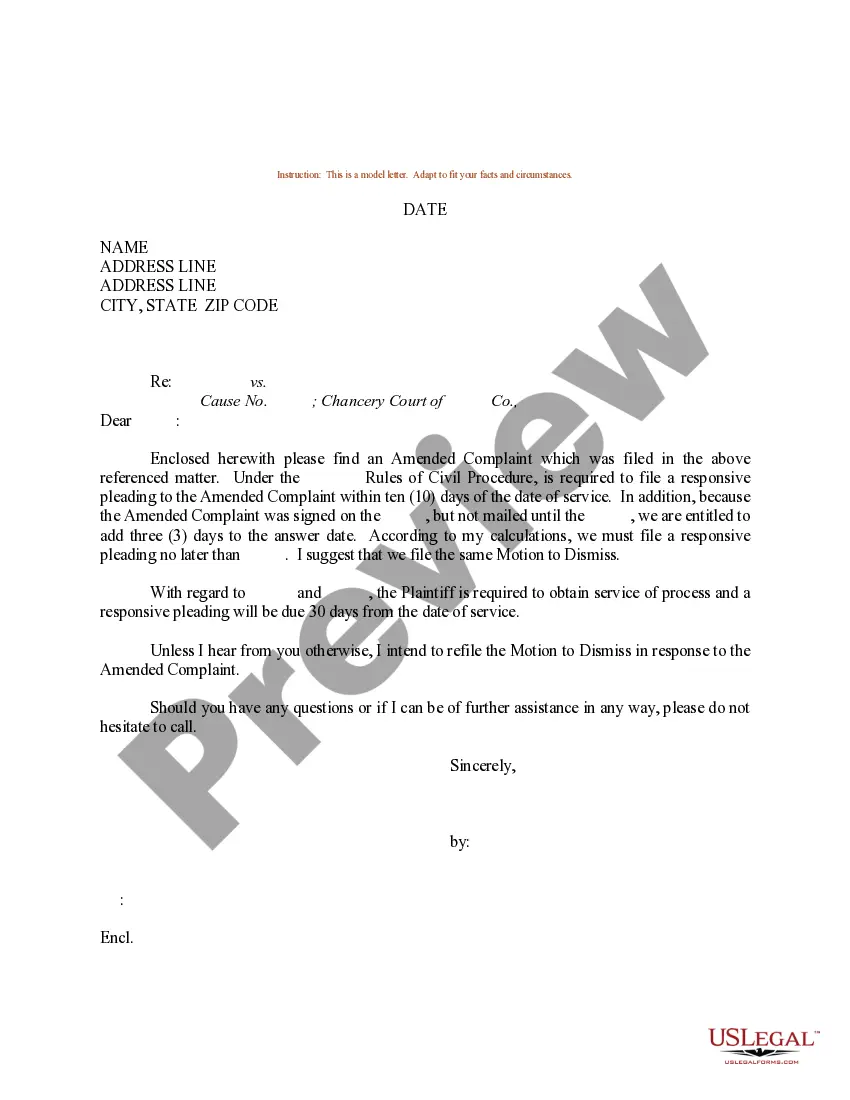
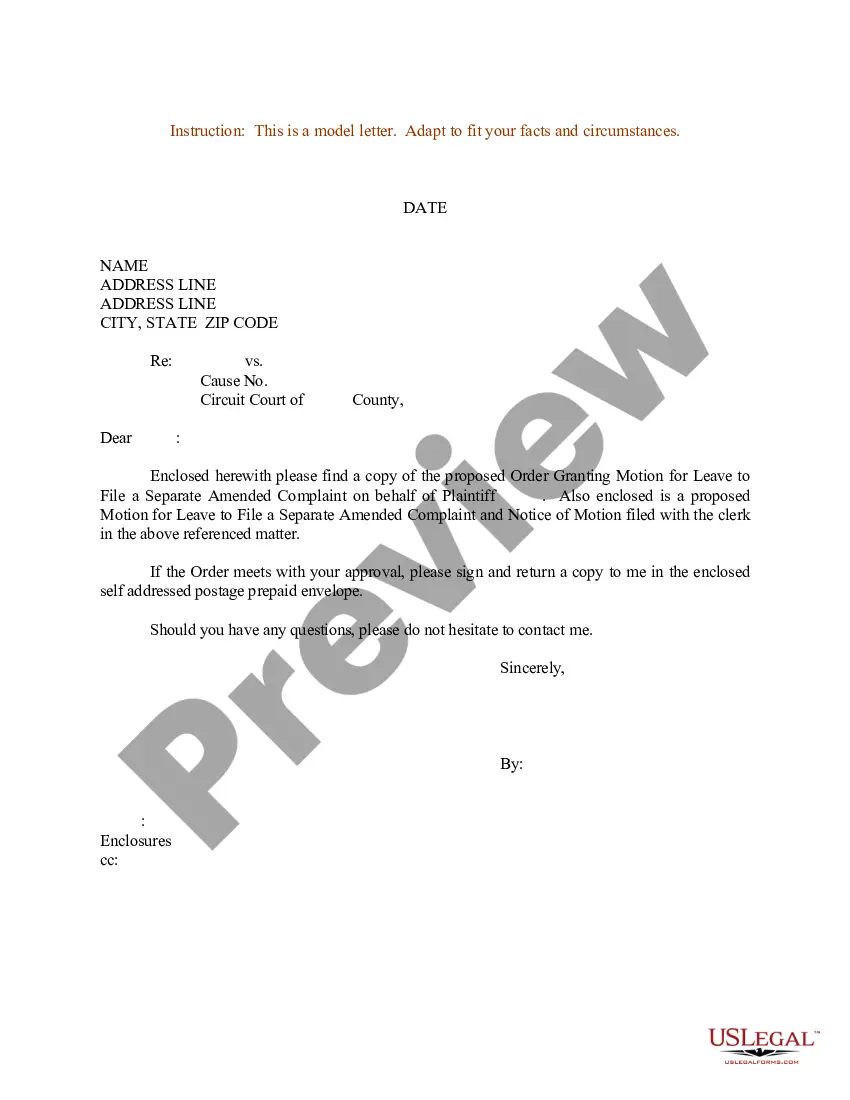
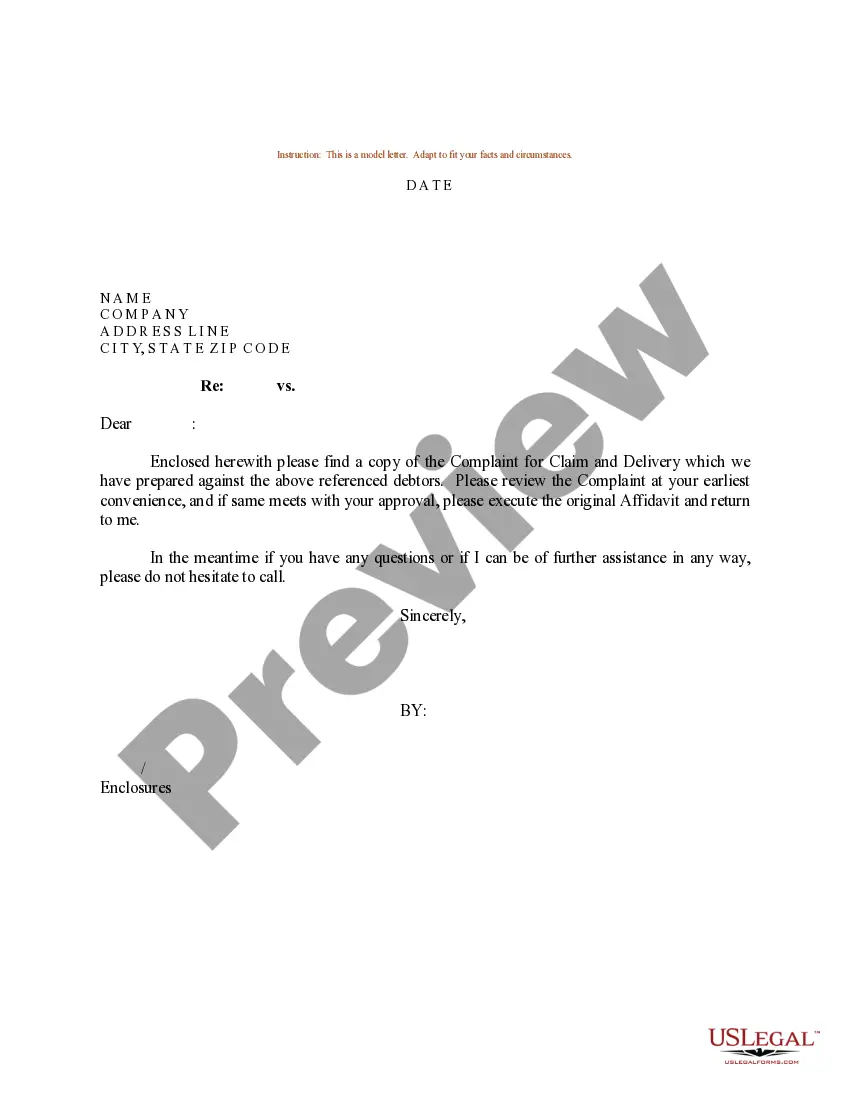
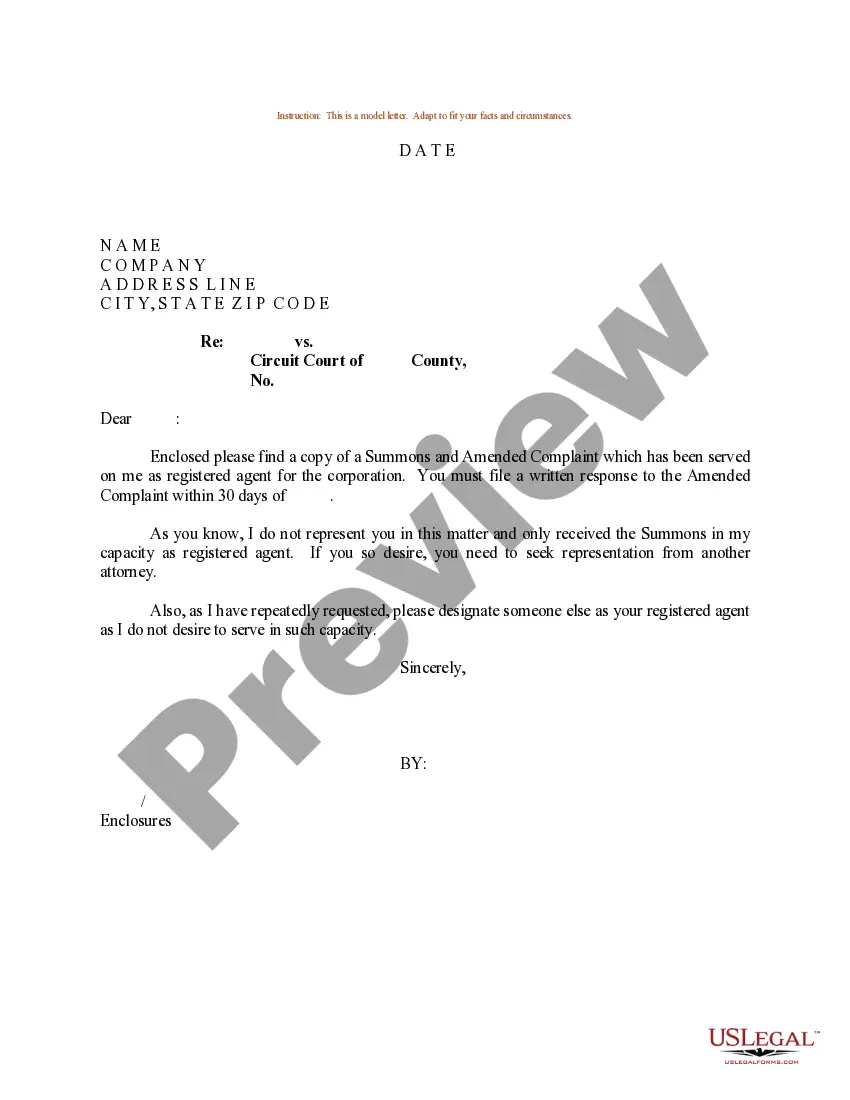
Connecticut Sample Letter regarding Amended Complaint - Request to Execute Affidavit
Description
Get your form ready online
Our built-in tools help you complete, sign, share, and store your documents in one place.
Make edits, fill in missing information, and update formatting in US Legal Forms—just like you would in MS Word.
Download a copy, print it, send it by email, or mail it via USPS—whatever works best for your next step.
Sign and collect signatures with our SignNow integration. Send to multiple recipients, set reminders, and more. Go Premium to unlock E-Sign.
If this form requires notarization, complete it online through a secure video call—no need to meet a notary in person or wait for an appointment.
We protect your documents and personal data by following strict security and privacy standards.

Make edits, fill in missing information, and update formatting in US Legal Forms—just like you would in MS Word.

Download a copy, print it, send it by email, or mail it via USPS—whatever works best for your next step.

Sign and collect signatures with our SignNow integration. Send to multiple recipients, set reminders, and more. Go Premium to unlock E-Sign.

If this form requires notarization, complete it online through a secure video call—no need to meet a notary in person or wait for an appointment.

We protect your documents and personal data by following strict security and privacy standards.
Looking for another form?




How to fill out Sample Letter Regarding Amended Complaint - Request To Execute Affidavit?
Choosing the right authorized file web template might be a have difficulties. Naturally, there are tons of web templates available online, but how will you discover the authorized kind you require? Take advantage of the US Legal Forms internet site. The service offers a large number of web templates, including the Connecticut Sample Letter regarding Amended Complaint - Request to Execute Affidavit, that you can use for organization and private demands. All of the kinds are inspected by specialists and satisfy state and federal needs.
Should you be presently registered, log in for your accounts and click the Down load button to obtain the Connecticut Sample Letter regarding Amended Complaint - Request to Execute Affidavit. Make use of your accounts to search throughout the authorized kinds you have purchased earlier. Check out the My Forms tab of your own accounts and acquire yet another version of your file you require.
Should you be a fresh end user of US Legal Forms, allow me to share basic directions for you to adhere to:
- Very first, be sure you have chosen the appropriate kind to your metropolis/area. You can look through the shape while using Review button and browse the shape information to guarantee this is the right one for you.
- In case the kind fails to satisfy your requirements, make use of the Seach industry to find the correct kind.
- When you are certain the shape is acceptable, go through the Get now button to obtain the kind.
- Choose the rates plan you would like and type in the required info. Make your accounts and purchase the transaction using your PayPal accounts or Visa or Mastercard.
- Pick the data file format and acquire the authorized file web template for your gadget.
- Complete, modify and printing and indicator the attained Connecticut Sample Letter regarding Amended Complaint - Request to Execute Affidavit.
US Legal Forms is the biggest local library of authorized kinds for which you will find various file web templates. Take advantage of the service to acquire professionally-created papers that adhere to state needs.
Form popularity
FAQ
Motions for orders of compliance (or motions to compel, as they are frequently called) are governed by Section 13-14 of the Connecticut Practice Book. As in many jurisdictions, judges in Connecticut generally prefer that parties and their counsel resolve discovery disputes without the need for judicial intervention.
Rule 7.1. A lawyer shall not make a false or misleading communication about the lawyer or the lawyer's services.
Rule 1.10 - Imputation of Conflicts of Interest: General Rule (a) While lawyers are associated in a firm, none of them shall knowingly represent a client when any one of them practicing alone would be prohibited from doing so by Rules 1.7, 1.8(c), or 1.9, unless the prohibition is based on a personal interest of the ...
Rule 1.7 - Conflict of Interest: General Rule (a) Except as provided in paragraph (b), a lawyer shall not represent a client if the representation involves a concurrent conflict of interest.
Rule 4.2 of the Rules of Professional Conduct provides that ?[i]n representing a client, a lawyer shall not communicate about the subject of the representation with a party the lawyer knows to be represented by another lawyer in the matter, unless the lawyer has the consent of the other lawyer or is authorized by law ...
Regulatory Scheme: Connecticut Rule of Professional Conduct 7.4A permits attorneys to state or imply that they are certified specialists where certification is granted "by a board or other entity which is approved by the Rules Committee of the Superior Court." [Rule 7.4A].
Ing to Connecticut Practice Book section 10-59, the Plaintiff has the right to amend any defect, mistake, informality, or error in the writ of summons and complaint that he or she feels is necessary within the first thirty days after the return day.