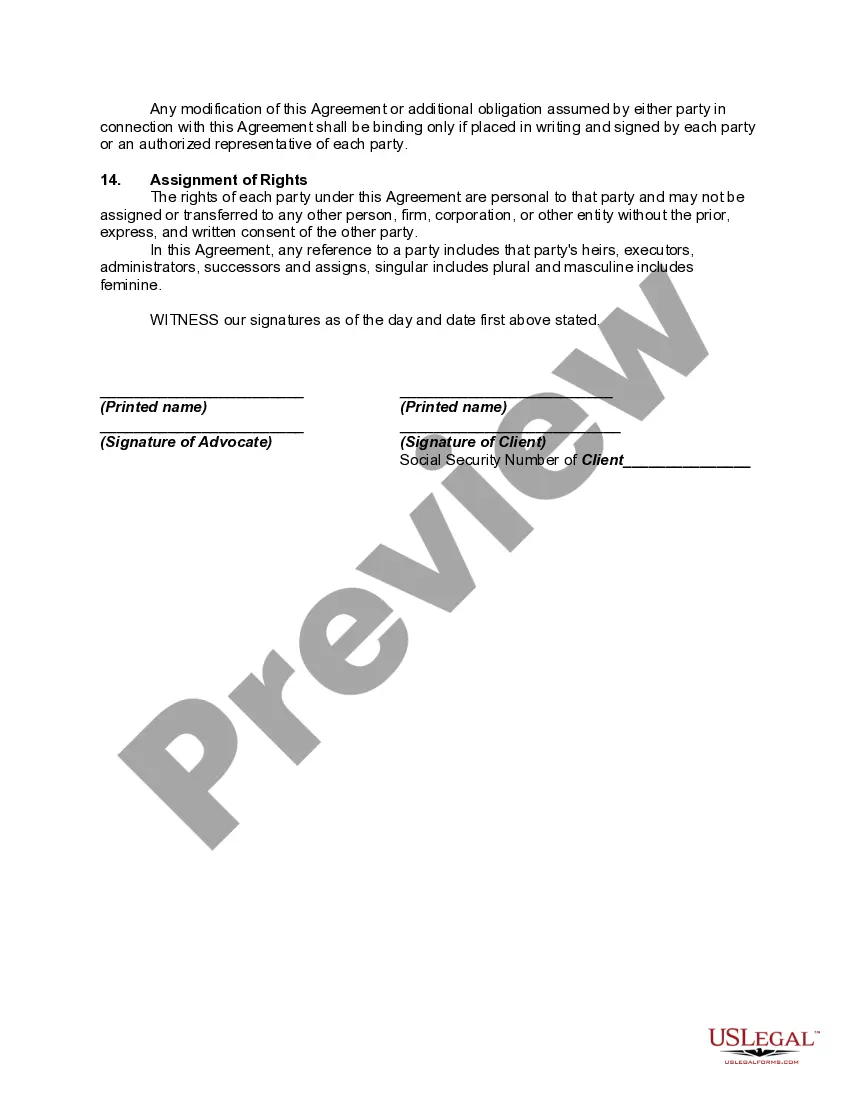
Connecticut Agreement between Certified Disability Advocate and Client

State:
Multi-State
Control #:
US-01812BG
Format:
Word
Instant download

Description

A Disability Advocate, also known as a Disability Consultant or non-attorney Representative, is a specially trained individual who assists others who are applying for Social Security disability benefits.


The duties of a Disability Advocate involve the execution of both formal and informal procedures on behalf of an applicant for Social Security disability benefits. These actions include, but are not limited to, the assessment of a case to determine the approximate percent chance of winning, and the development of a case by requesting copies of the client's medical records. By law, Social Security must consider the advocate's argument before making a final decision. If the advocate's argument is properly structured and supported by the evidence, it can greatly enhance the client's chances of winning benefits.
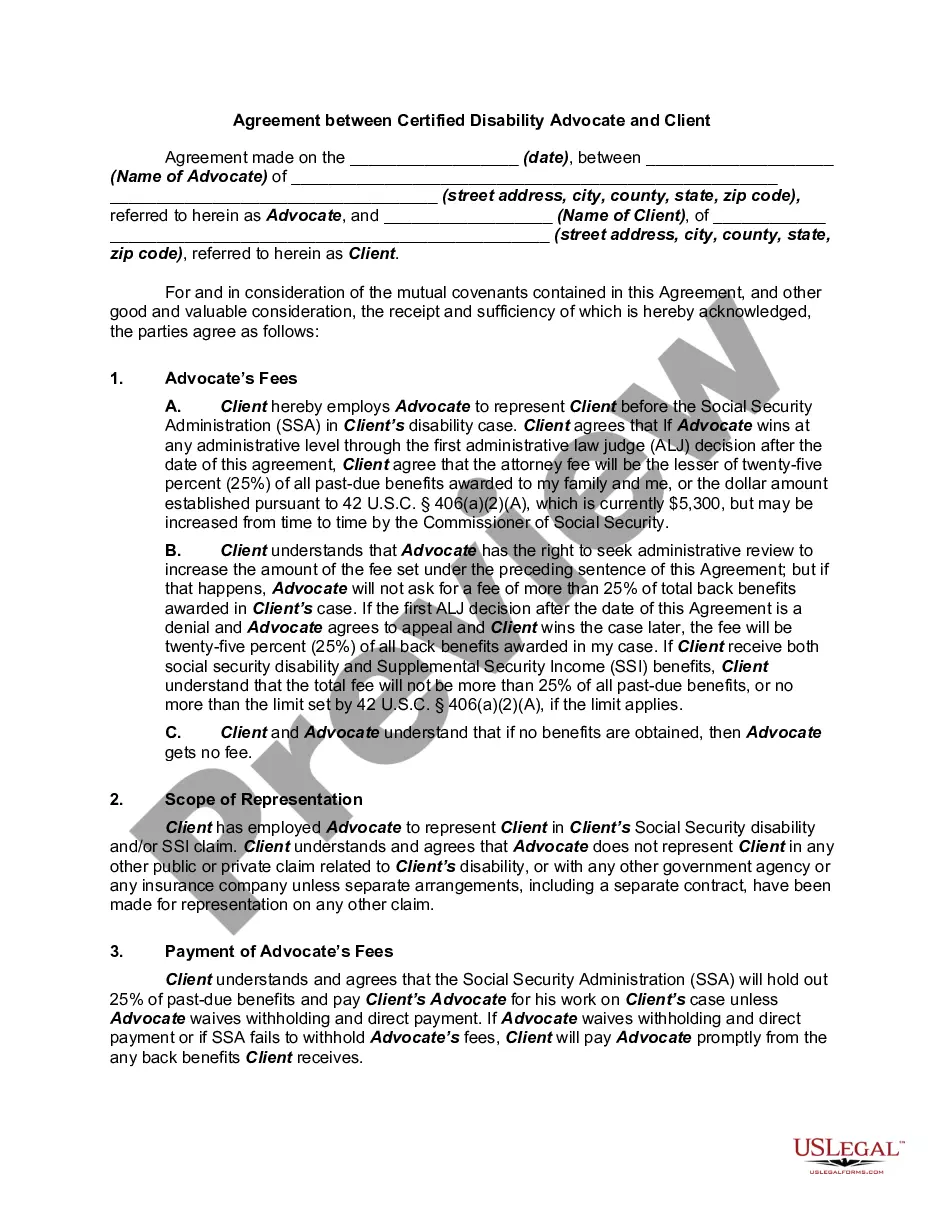
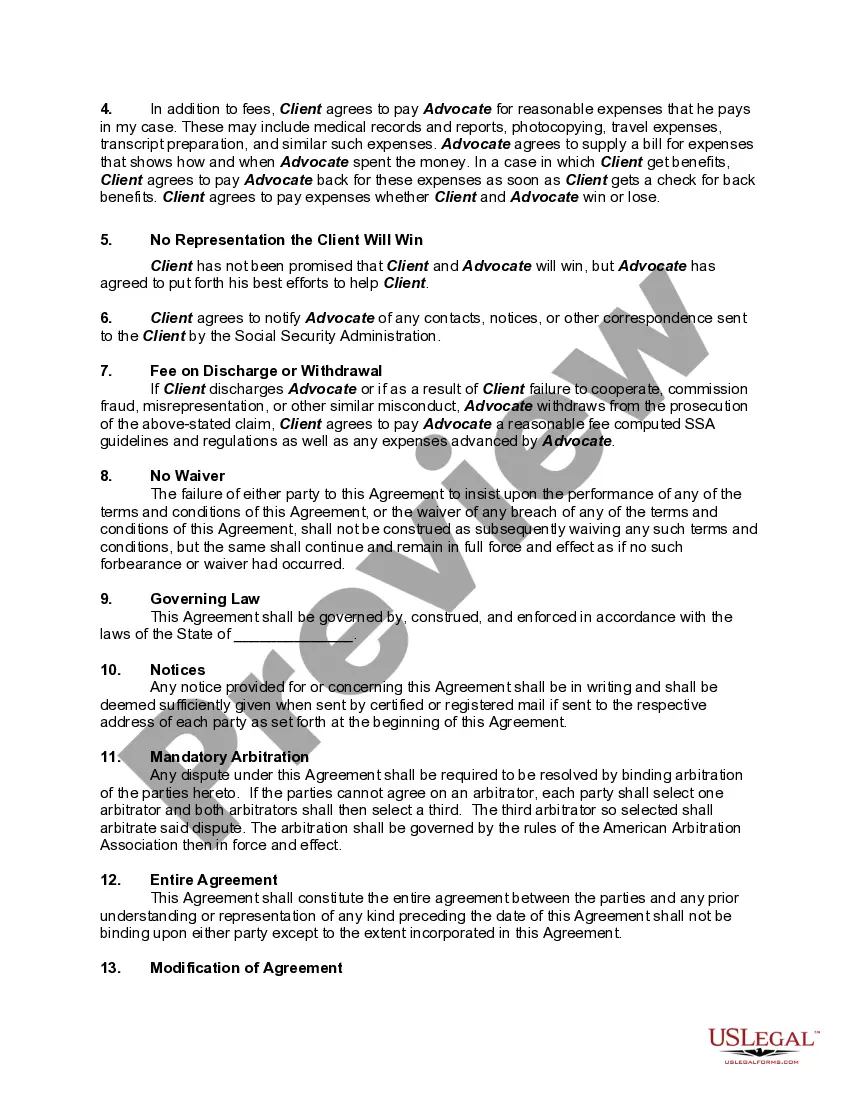
Free preview
  • Preview Agreement between Certified Disability Advocate and Client
  • Preview Agreement between Certified Disability Advocate and Client
  • Preview Agreement between Certified Disability Advocate and Client

How to fill out Agreement Between Certified Disability Advocate And Client?

Locating the appropriate authentic document template can be a challenge.

Certainly, there are numerous templates accessible online, but how can you locate the authentic design you require.

Utilize the US Legal Forms website. This service provides thousands of templates, such as the Connecticut Agreement between Certified Disability Advocate and Client, that you can employ for both business and personal purposes.

You can review the form using the Review button and read the form details to confirm it is the correct one for you.

  1. All forms are reviewed by specialists and comply with federal and state regulations.
  2. If you are currently registered, Log In to your account and press the Download button to obtain the Connecticut Agreement between Certified Disability Advocate and Client.
  3. Use your account to search through the legal forms you have acquired previously.
  4. Navigate to the My documents section of your account and retrieve another copy of the document you require.
  5. If you are a new user of US Legal Forms, here are straightforward steps to follow.
  6. First, ensure you have selected the correct form for your jurisdiction/county.

Form popularity

FAQ

Lawyers have several critical responsibilities, including providing competent representation, maintaining client confidentiality, and acting in the client's best interests. Additionally, they must communicate effectively and uphold the integrity of the legal system. When creating a Connecticut Agreement between Certified Disability Advocate and Client, understanding these responsibilities is vital for a successful partnership.

Rule 7.1 emphasizes the importance of honest communication by lawyers. It prohibits any false or misleading statements regarding a lawyer's skills, fees, or service scope. This rule plays a significant role in drafts and negotiations surrounding the Connecticut Agreement between Certified Disability Advocate and Client, ensuring that all parties start on a clear, truthful basis.

Unethical attorney behavior can include failing to communicate effectively with clients, misrepresenting facts, and engaging in conflicts of interest. Such behavior undermines the legal profession and can severely affect client trust. A robust Connecticut Agreement between Certified Disability Advocate and Client can help clarify expectations, thus minimizing potential unethical issues that may arise.

Rule 7.1 addresses the integrity of lawyer communications. It asserts that a lawyer must not make false or misleading statements about their qualifications or services. When forming a Connecticut Agreement between Certified Disability Advocate and Client, it is essential that all communication remains truthful to maintain trust and integrity within the legal process.

Rule 4.2 of the Connecticut Rules of Professional Conduct pertains to communication with a person represented by counsel. This rule prohibits lawyers from directly communicating with a represented person about the subject of the representation without the consent of that person's lawyer. This ensures ethical boundaries are upheld, which is crucial when navigating agreements like the Connecticut Agreement between Certified Disability Advocate and Client.

When filing a disability complaint in Connecticut, you can choose to file with state agencies, such as the Commission on Human Rights and Opportunities, or federal agencies. Each agency has specific processes and requirements. Partnering with a certified disability advocate can provide guidance and expertise to effectively utilize the Connecticut Agreement between Certified Disability Advocate and Client in your complaint.

Becoming a disability advocate involves understanding the needs of individuals with disabilities and gaining relevant training or certification. Numerous organizations offer programs that can equip you with the necessary skills. Once certified, you can help clients navigate the complexities of the Connecticut Agreement between Certified Disability Advocate and Client effectively.

The Disabilities Act in Connecticut is designed to protect individuals with disabilities from discrimination in various areas of public life. This law outlines specific rights and responsibilities for individuals and entities. Familiarizing yourself with the provisions can help you better understand your rights under the Connecticut Agreement between Certified Disability Advocate and Client.

In Connecticut, you can file a complaint about disability issues with several state agencies, including the Commission on Human Rights and Opportunities. They provide guidance on the complaint process and the necessary documentation. A certified disability advocate understands this process well, making it easier for you to pursue resolutions based on the Connecticut Agreement between Certified Disability Advocate and Client.

Filing a complaint with EDD disability involves a clear process. You should begin by contacting the Employment Development Department directly or visiting their website for instructions. Engaging a certified disability advocate can also streamline this process, ensuring that you understand the terms outlined in the Connecticut Agreement between Certified Disability Advocate and Client.

Trusted and secure by over 3 million people of the world’s leading companies

Connecticut Agreement between Certified Disability Advocate and Client