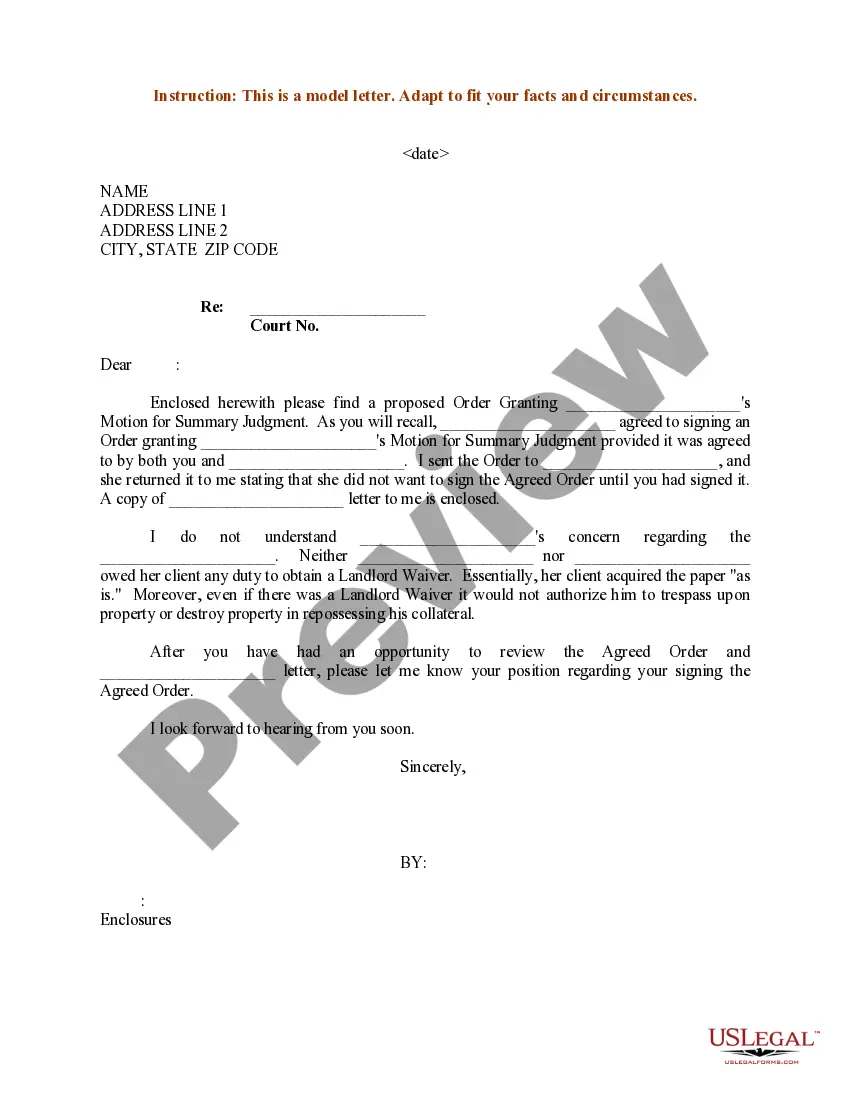
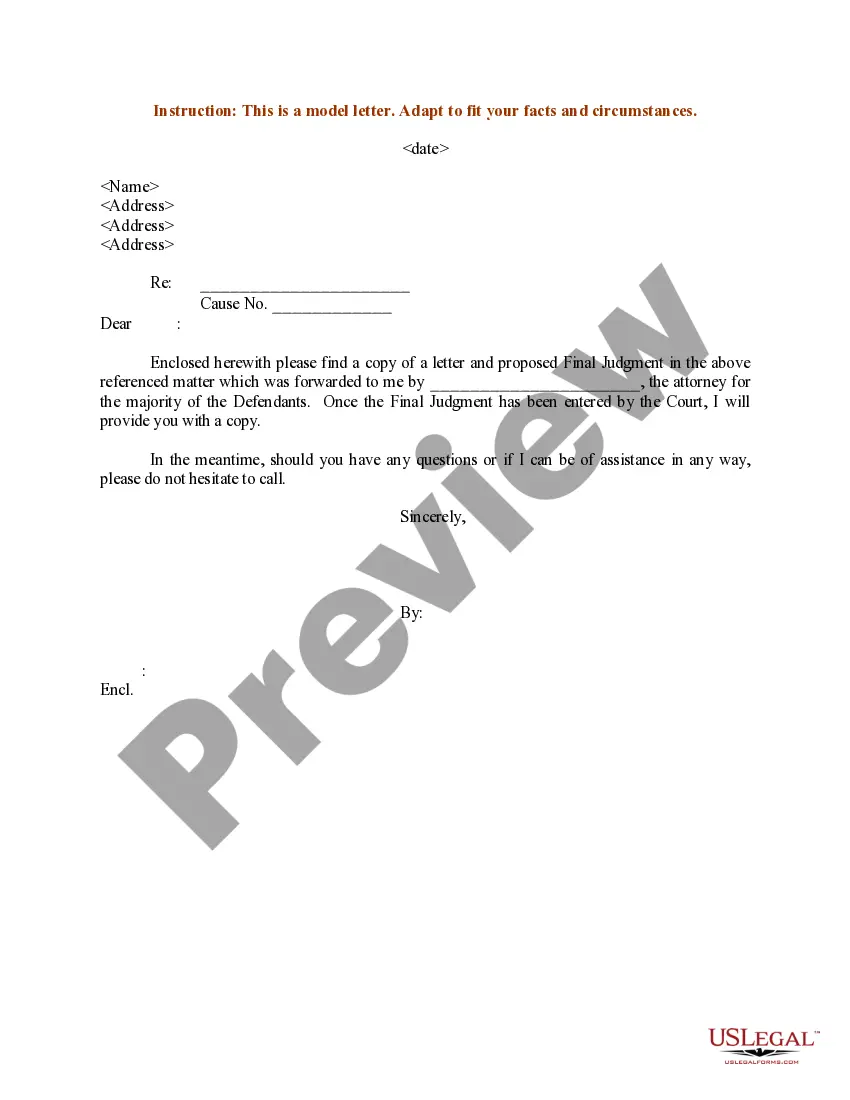
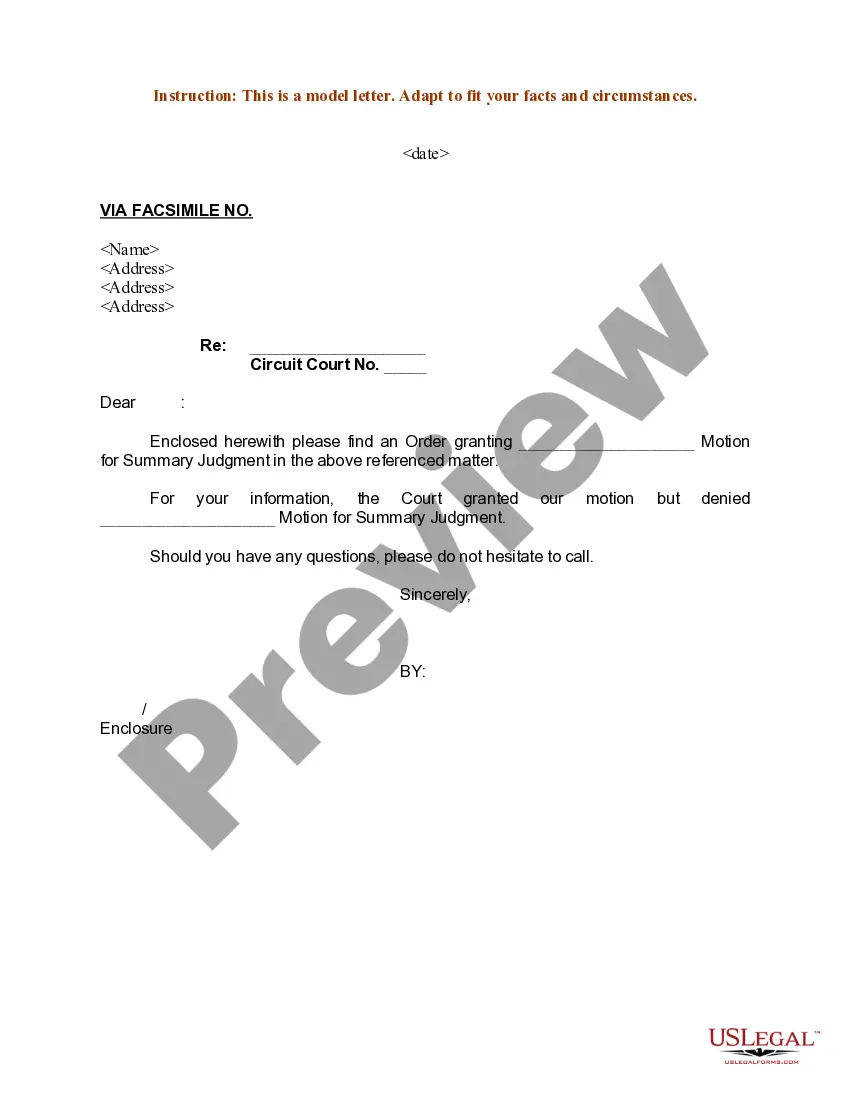
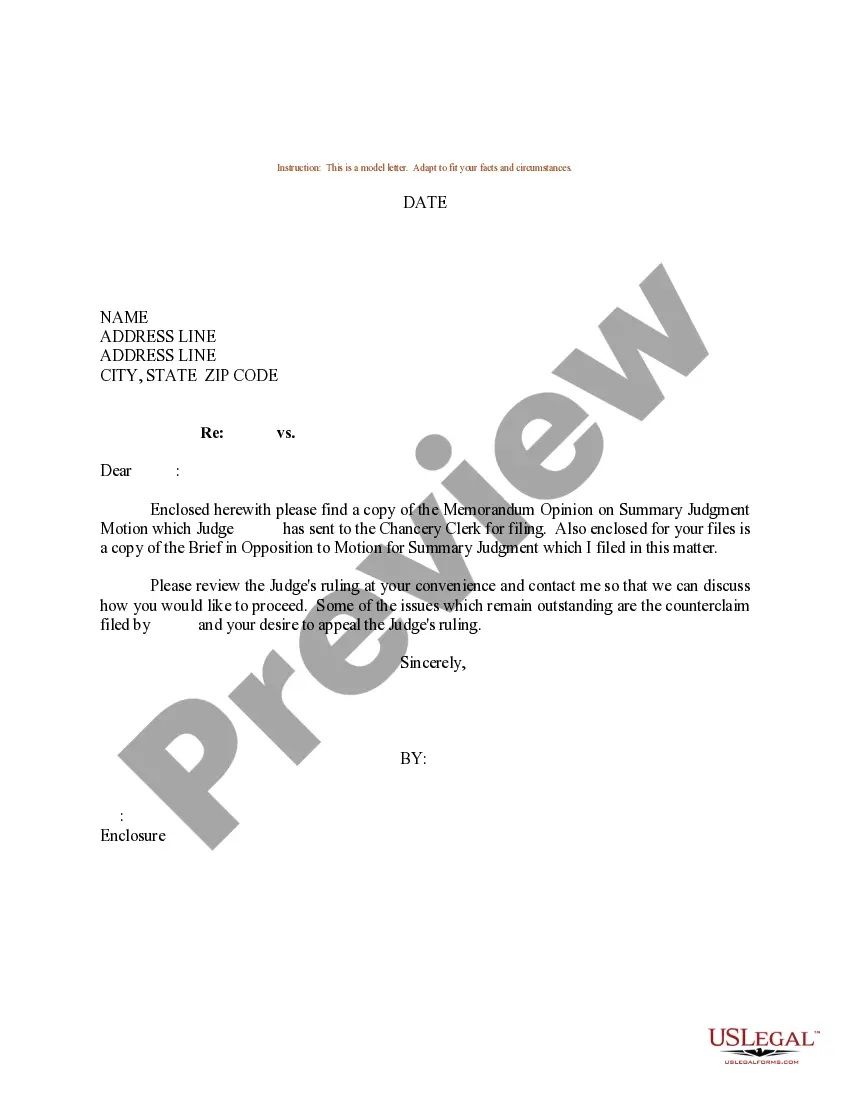
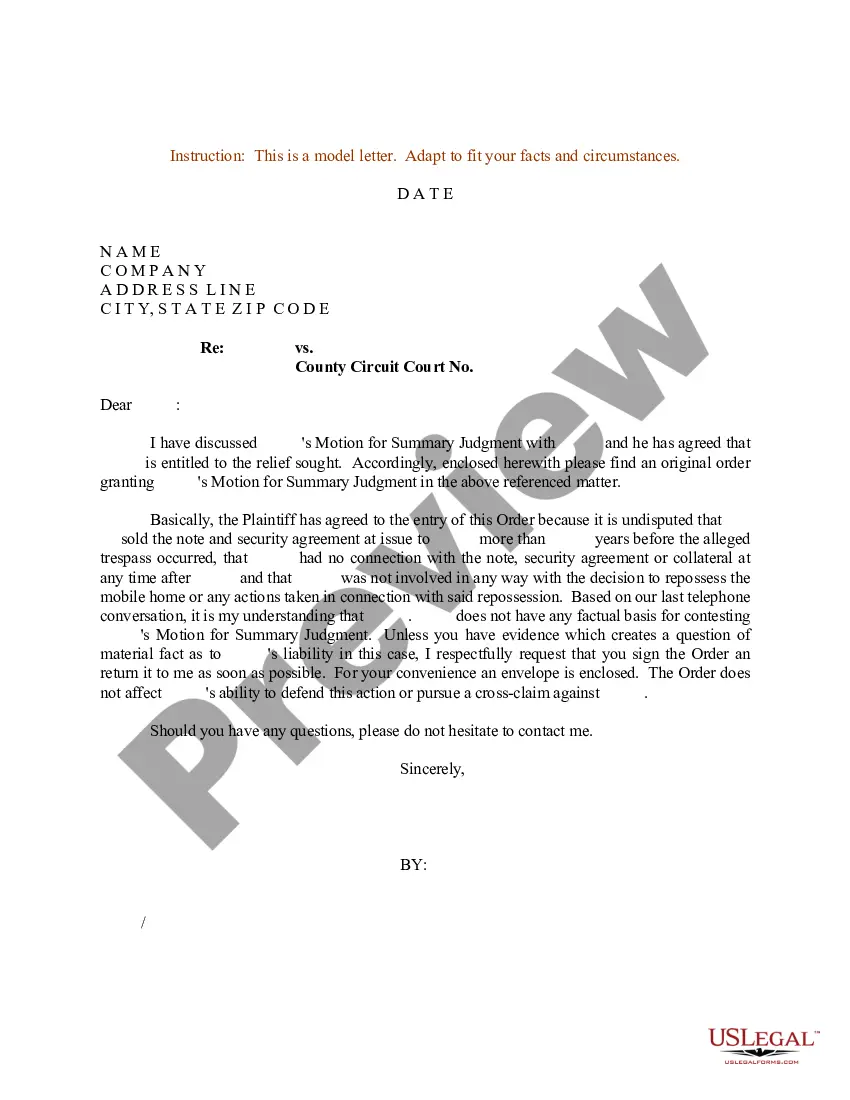
Connecticut Sample Letter for Proposed Order Granting Summary Judgment
Description
Get your form ready online
Our built-in tools help you complete, sign, share, and store your documents in one place.
Make edits, fill in missing information, and update formatting in US Legal Forms—just like you would in MS Word.
Download a copy, print it, send it by email, or mail it via USPS—whatever works best for your next step.
Sign and collect signatures with our SignNow integration. Send to multiple recipients, set reminders, and more. Go Premium to unlock E-Sign.
If this form requires notarization, complete it online through a secure video call—no need to meet a notary in person or wait for an appointment.
We protect your documents and personal data by following strict security and privacy standards.

Make edits, fill in missing information, and update formatting in US Legal Forms—just like you would in MS Word.

Download a copy, print it, send it by email, or mail it via USPS—whatever works best for your next step.

Sign and collect signatures with our SignNow integration. Send to multiple recipients, set reminders, and more. Go Premium to unlock E-Sign.

If this form requires notarization, complete it online through a secure video call—no need to meet a notary in person or wait for an appointment.

We protect your documents and personal data by following strict security and privacy standards.
Looking for another form?




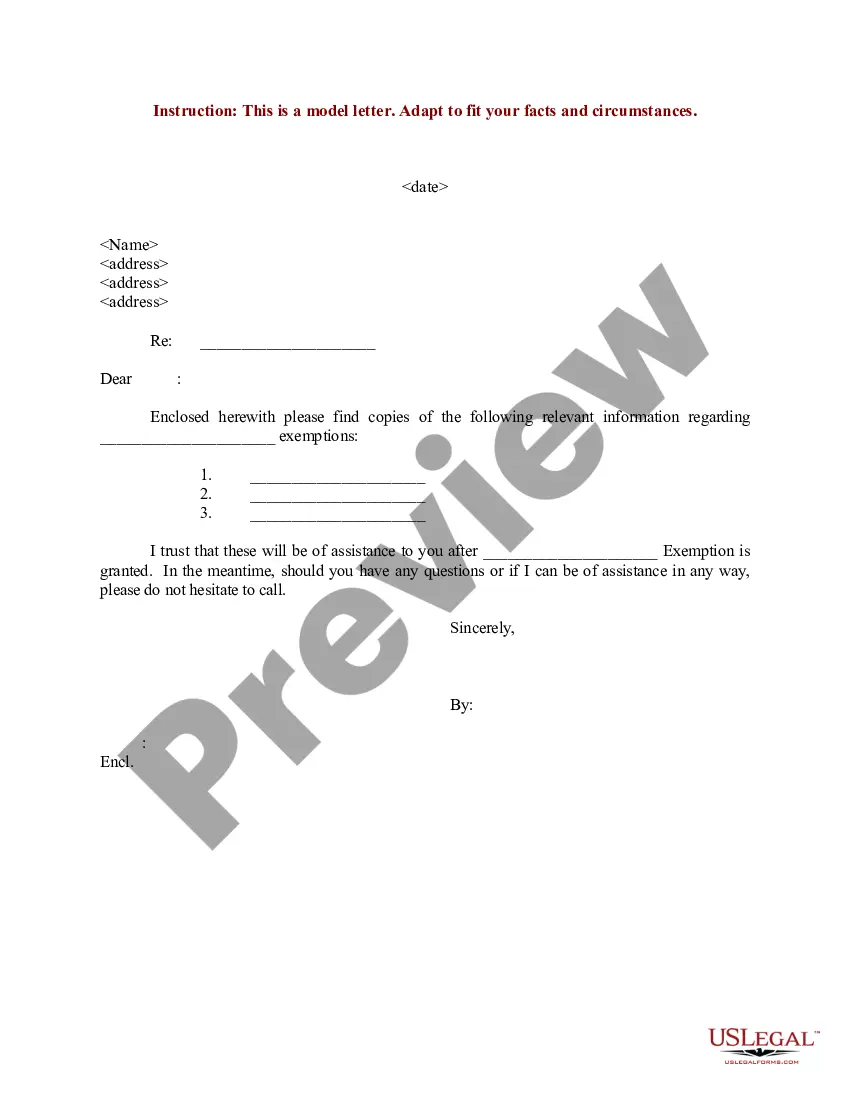

How to fill out Sample Letter For Proposed Order Granting Summary Judgment?
If you need to completely download or create legal document templates, utilize US Legal Forms, the largest selection of legal forms available online. Take advantage of the site's simple and user-friendly search to find the documents you require. Various templates for business and personal purposes are categorized by type and state, or keywords.
Use US Legal Forms to locate the Connecticut Sample Letter for Proposed Order Granting Summary Judgment in just a few clicks. If you are already a US Legal Forms customer, Log In to your account and click on the Obtain button to find the Connecticut Sample Letter for Proposed Order Granting Summary Judgment. You can also access forms you previously downloaded from the My documents tab of your account.
If you are using US Legal Forms for the first time, follow the instructions below: Step 1. Make sure you have selected the form for your specific city/state. Step 2. Use the Preview option to review the form's contents. Don't forget to read the information. Step 3. If you are not satisfied with the form, use the Search area at the top of the screen to find other versions of the legal form template. Step 4. Once you have found the form you need, click the Acquire now button. Choose the pricing plan you prefer and provide your details to register for an account. Step 5. Complete the transaction. You can use your credit card or PayPal account to finalize the payment. Step 6. Select the format of the legal form and download it to your device. Step 7. Complete, edit, and print or sign the Connecticut Sample Letter for Proposed Order Granting Summary Judgment.
- Every legal document template you acquire is yours indefinitely.
- You will have access to each form you downloaded within your account.
- Visit the My documents section and choose a form to print or download again.
- Complete and download, and print the Connecticut Sample Letter for Proposed Order Granting Summary Judgment with US Legal Forms.
- There are millions of professional and state-specific forms available for your business or personal needs.
Form popularity
FAQ
There are three critical aspects of your opposition to a summary judgment you should pay particular attention to in order to ensure that you have the best chance of getting the motion denied: (1) Your separate statement; (2) your evidence; and (3) objecting to the defense's evidence.
Rule 56(c)(4) provides that a formal affidavit or a written unsworn declaration that complies with 28 U.S.C. § 1746 can be used to support or oppose a motion for summary judgment.
Consider the following five approaches: Show that the motion fails to list the specific facts and law supporting summary judgment. ... Show that a dispute exists on a material fact. ... Show that the law does not support judgment on the undisputed facts.
A summary judgment is considered very difficult to win, and lawyers mostly use it as a scare tactic. However, it can be extremely beneficial. If the party moving the summary judgment wins, the case is thrown out. The most important thing in winning summary judgments is hiring competent lawyers.
If the defendant moves to summary judgment, the burden of proof moves from the plaintiff to the defendant. Rather than the plaintiff proving that they were injured, the defendant must prove that the plaintiff can't obtain evidence at all.
Rule 7.1. A lawyer shall not make a false or misleading communication about the lawyer or the lawyer's services.
You must include a summary of the legal basis for your opposition, explain the reason you are opposing the motion, and state what you would like the judge to order.
Practice Book § 17-44 (2023). Supporting Documents: ?A motion for summary judgment shall be supported by appropriate documents, including but not limited to affidavits, certified transcripts of testimony under oath, disclosures, written admissions and other supporting documents.? Conn. Practice Book § 17-45(a) (2023).