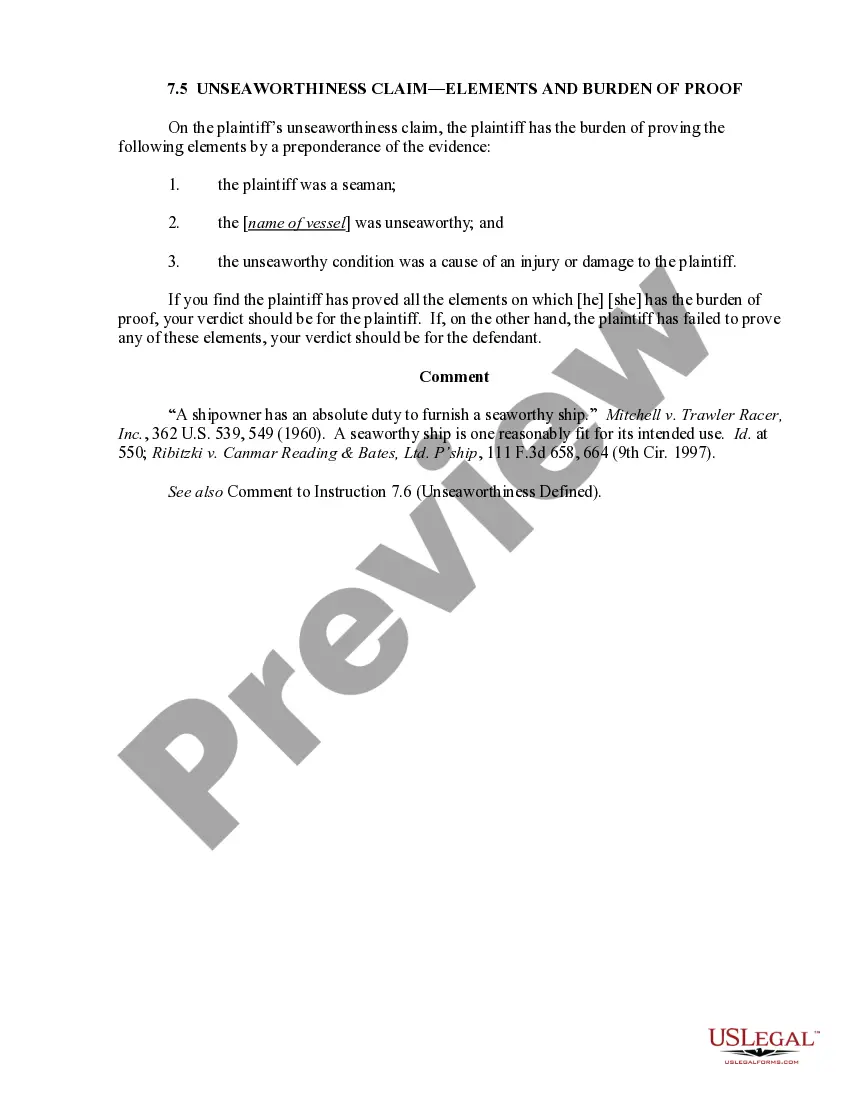
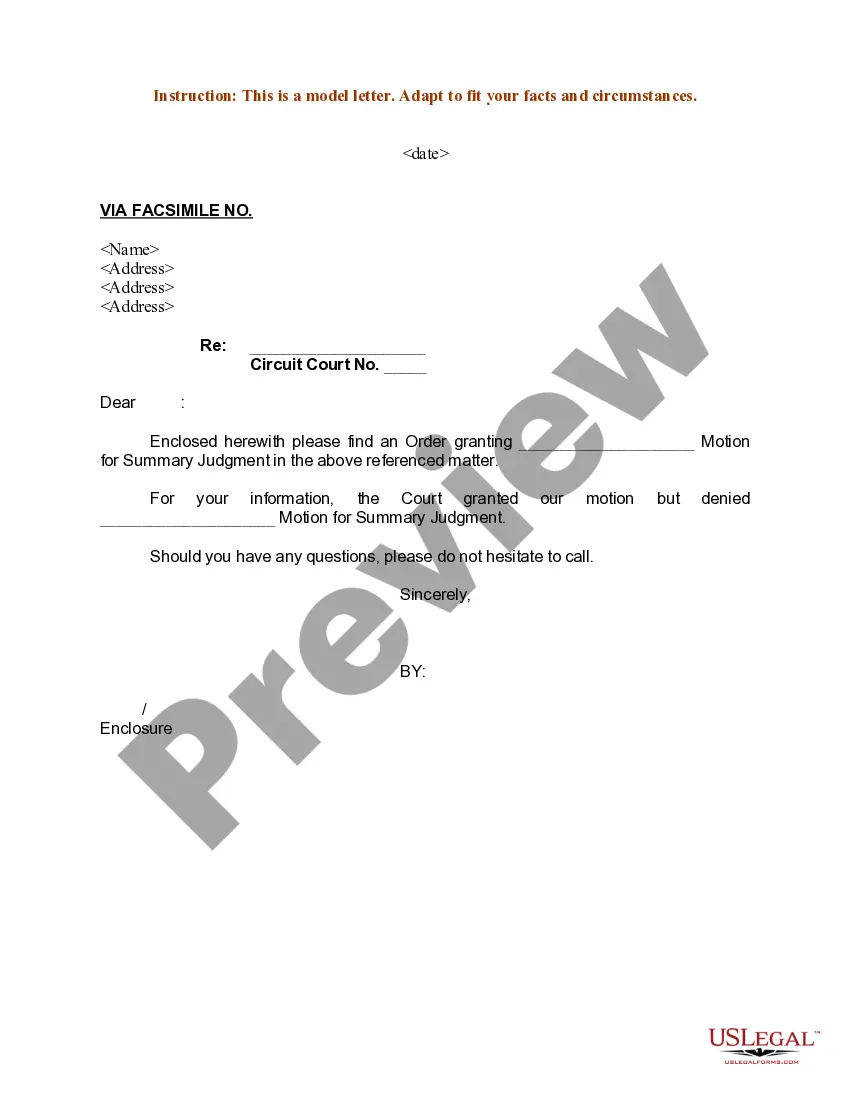
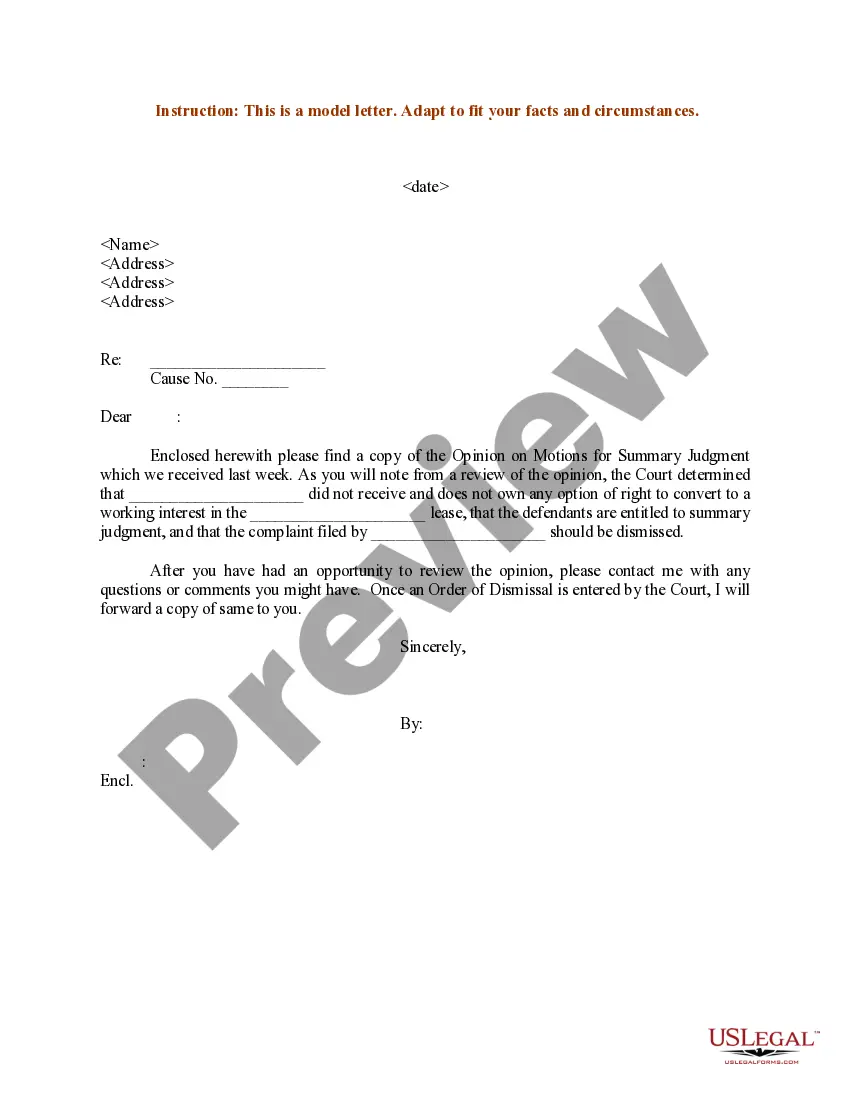
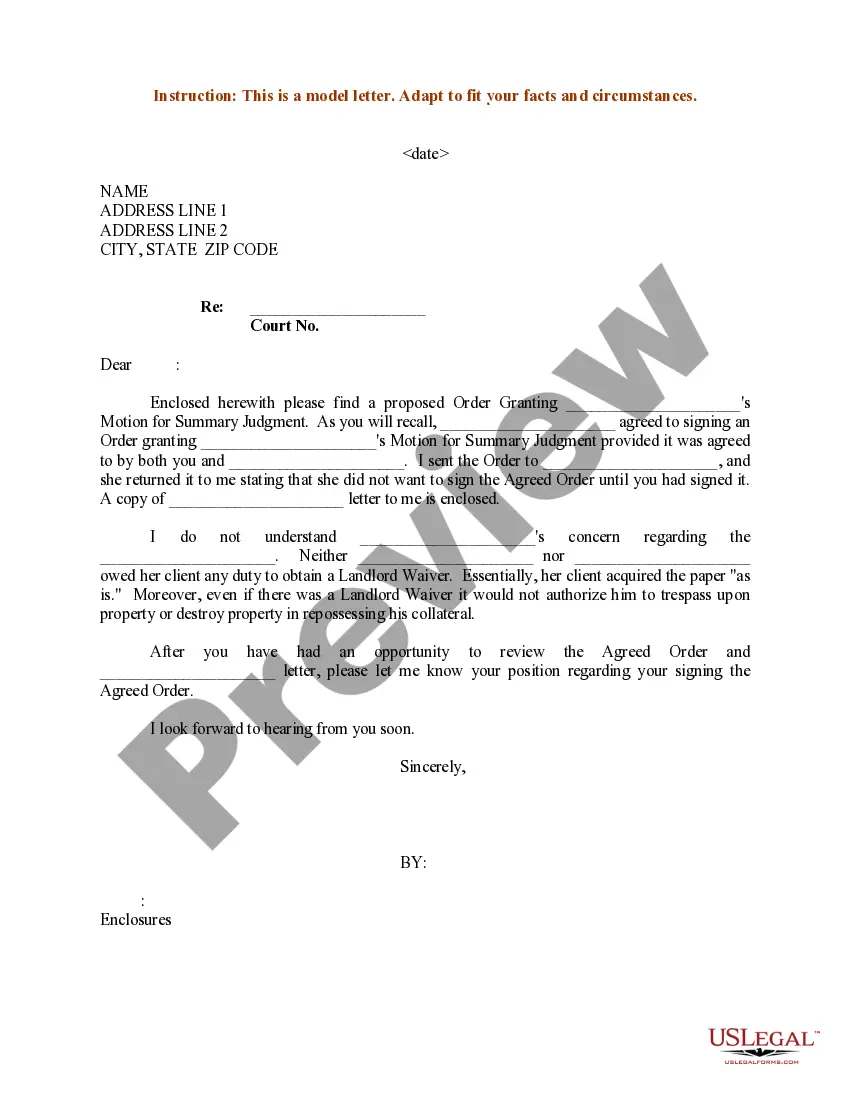
Connecticut Sample Letter for Order Granting Motion for Summary Judgment
Description
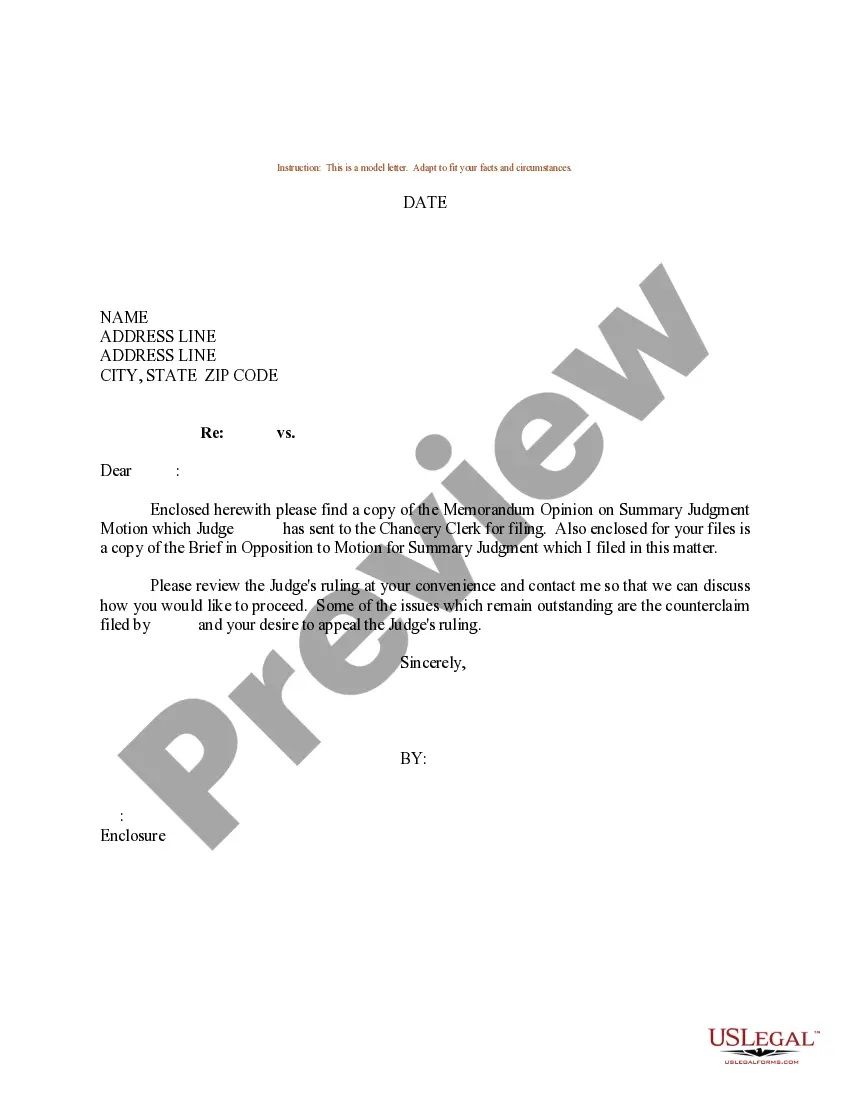
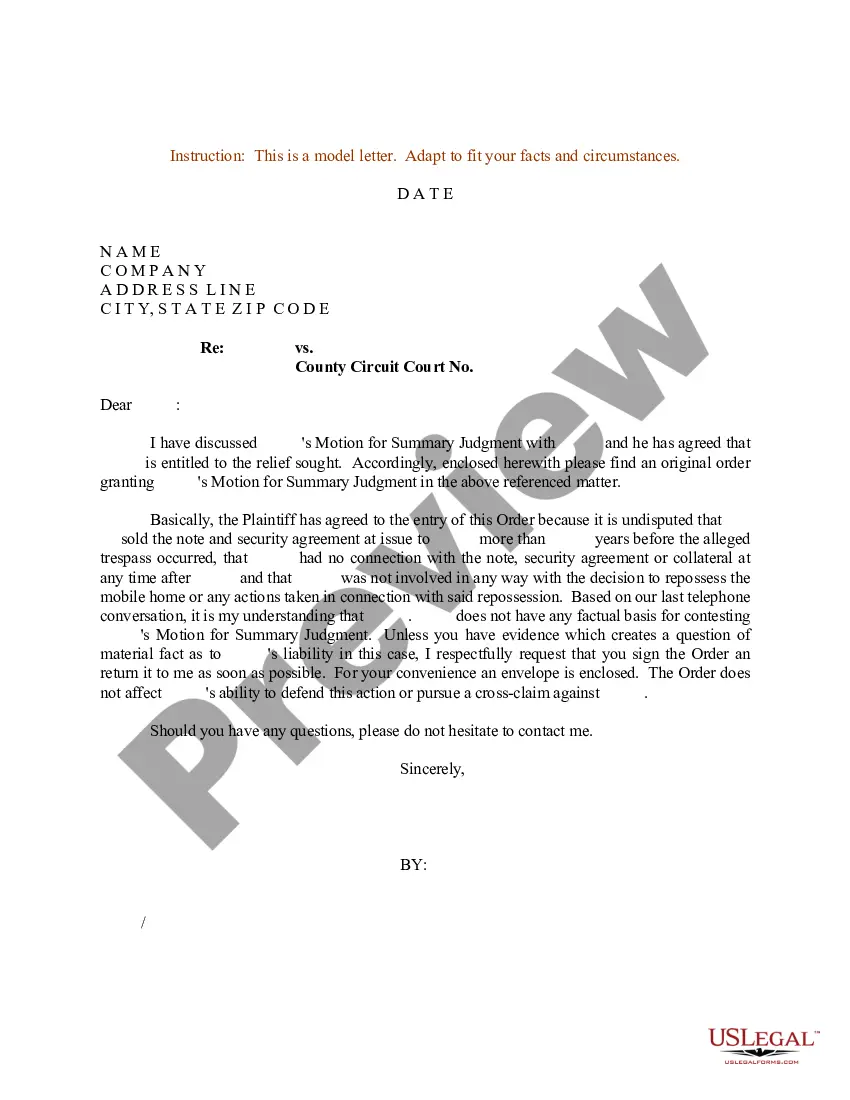
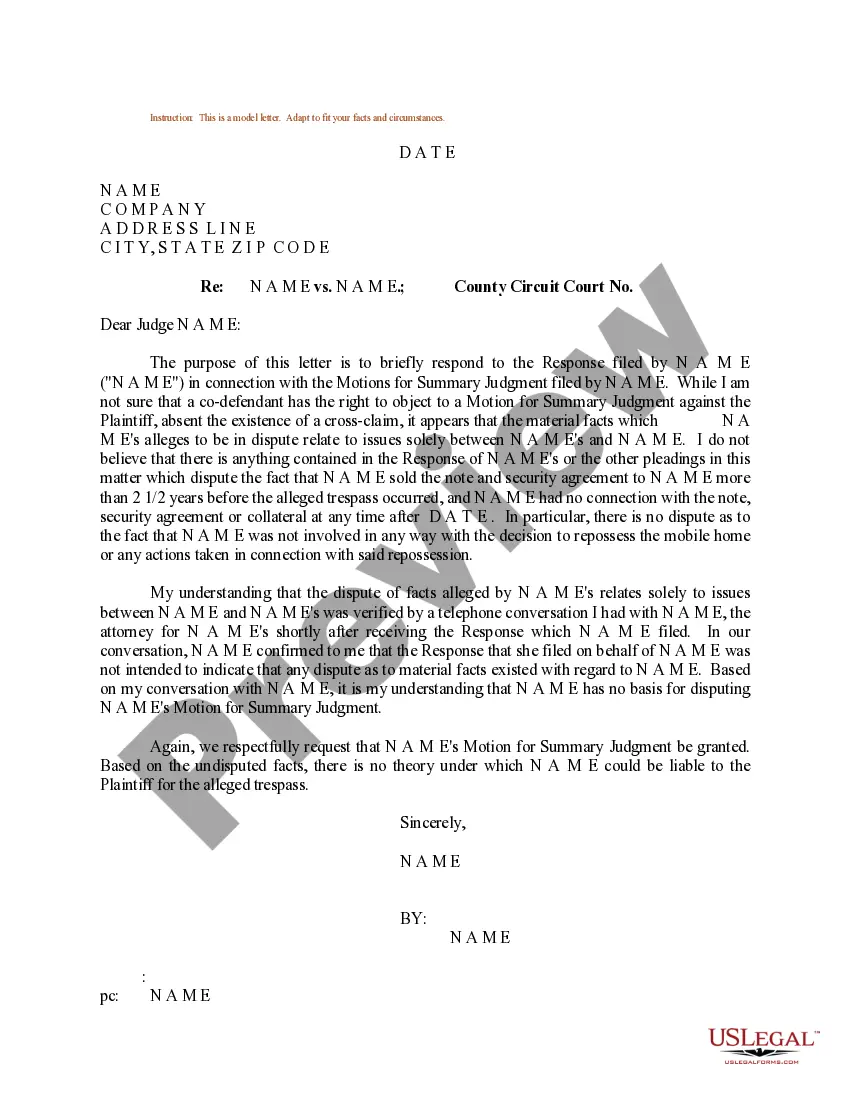
Get your form ready online
Our built-in tools help you complete, sign, share, and store your documents in one place.
Make edits, fill in missing information, and update formatting in US Legal Forms—just like you would in MS Word.
Download a copy, print it, send it by email, or mail it via USPS—whatever works best for your next step.
Sign and collect signatures with our SignNow integration. Send to multiple recipients, set reminders, and more. Go Premium to unlock E-Sign.
If this form requires notarization, complete it online through a secure video call—no need to meet a notary in person or wait for an appointment.
We protect your documents and personal data by following strict security and privacy standards.

Make edits, fill in missing information, and update formatting in US Legal Forms—just like you would in MS Word.

Download a copy, print it, send it by email, or mail it via USPS—whatever works best for your next step.

Sign and collect signatures with our SignNow integration. Send to multiple recipients, set reminders, and more. Go Premium to unlock E-Sign.

If this form requires notarization, complete it online through a secure video call—no need to meet a notary in person or wait for an appointment.

We protect your documents and personal data by following strict security and privacy standards.
Looking for another form?



How to fill out Sample Letter For Order Granting Motion For Summary Judgment?
It is feasible to spend several hours online searching for the legal document template that complies with the federal and state requirements you need.
US Legal Forms offers a vast array of legal forms that have been reviewed by specialists.
You can easily download or print the Connecticut Sample Letter for Order Granting Motion for Summary Judgment from our services.
If available, use the Preview button to look through the document template as well. If you wish to find another version of the form, use the Search field to locate the template that fits your needs and specifications. Once you have found the template you want, click Purchase now to proceed. Select the pricing plan you prefer, enter your information, and create an account on US Legal Forms. Complete the transaction. You can use your credit card or PayPal account to pay for the legal form. Choose the format of the document and download it to your device. Make adjustments to your document if necessary. You can complete, modify, and sign and print the Connecticut Sample Letter for Order Granting Motion for Summary Judgment. Acquire and print a multitude of document templates using the US Legal Forms website, which provides the largest collection of legal forms. Utilize professional and state-specific templates to address your business or personal needs.
- If you possess a US Legal Forms account, you can Log In and click the Acquire button.
- After that, you can complete, modify, print, or sign the Connecticut Sample Letter for Order Granting Motion for Summary Judgment.
- Every legal document template you purchase is yours forever.
- To obtain an additional copy of any purchased form, go to the My documents tab and click the relevant button.
- If you are using the US Legal Forms website for the first time, follow the simple instructions below.
- First, ensure that you have selected the correct document template for your county/city of choice.
- Check the form description to confirm you have chosen the appropriate form.
Form popularity
FAQ
Rule 7.1. A lawyer shall not make a false or misleading communication about the lawyer or the lawyer's services. A communication is false or misleading if it contains a material misrepresentation of fact or law, or omits a fact necessary to make the statement considered as a whole not materially misleading.
Practice Book § 17-44 (2023). Supporting Documents: ?A motion for summary judgment shall be supported by appropriate documents, including but not limited to affidavits, certified transcripts of testimony under oath, disclosures, written admissions and other supporting documents.? Conn. Practice Book § 17-45(a) (2023).
Sec. 41-8. Motion to Dismiss (1) Defects in the institution of the prosecution including any grand jury proceedings; (2) Defects in the information including failure to charge an offense; (3) Statute of limitations; (4) Absence of jurisdiction of the court over the defendant or the subject matter;
Rule 56(c)(4) provides that a formal affidavit or a written unsworn declaration that complies with 28 U.S.C. § 1746 can be used to support or oppose a motion for summary judgment.
Rule 8.4(7) defines ?professional misconduct? by a Connecticut attorney as including speech that the lawyer knows or reasonably should know ?is harassment or discrimination on the basis of? any of 15 listed characteristics?among them race, sex, religion, disability, sexual orientation, and gender identity.
The introductory paragraph should begin, "Defendant John Smith respectfully moves for summary judgment. As reasons for this motion?." Then list your arguments, as in the motion itself. Some practitioners state that you should not repeat language word for word, but I disagree.
Rule 4.2 of the Rules of Professional Conduct provides that ?[i]n representing a client, a lawyer shall not communicate about the subject of the representation with a party the lawyer knows to be represented by another lawyer in the matter, unless the lawyer has the consent of the other lawyer or is authorized by law ...