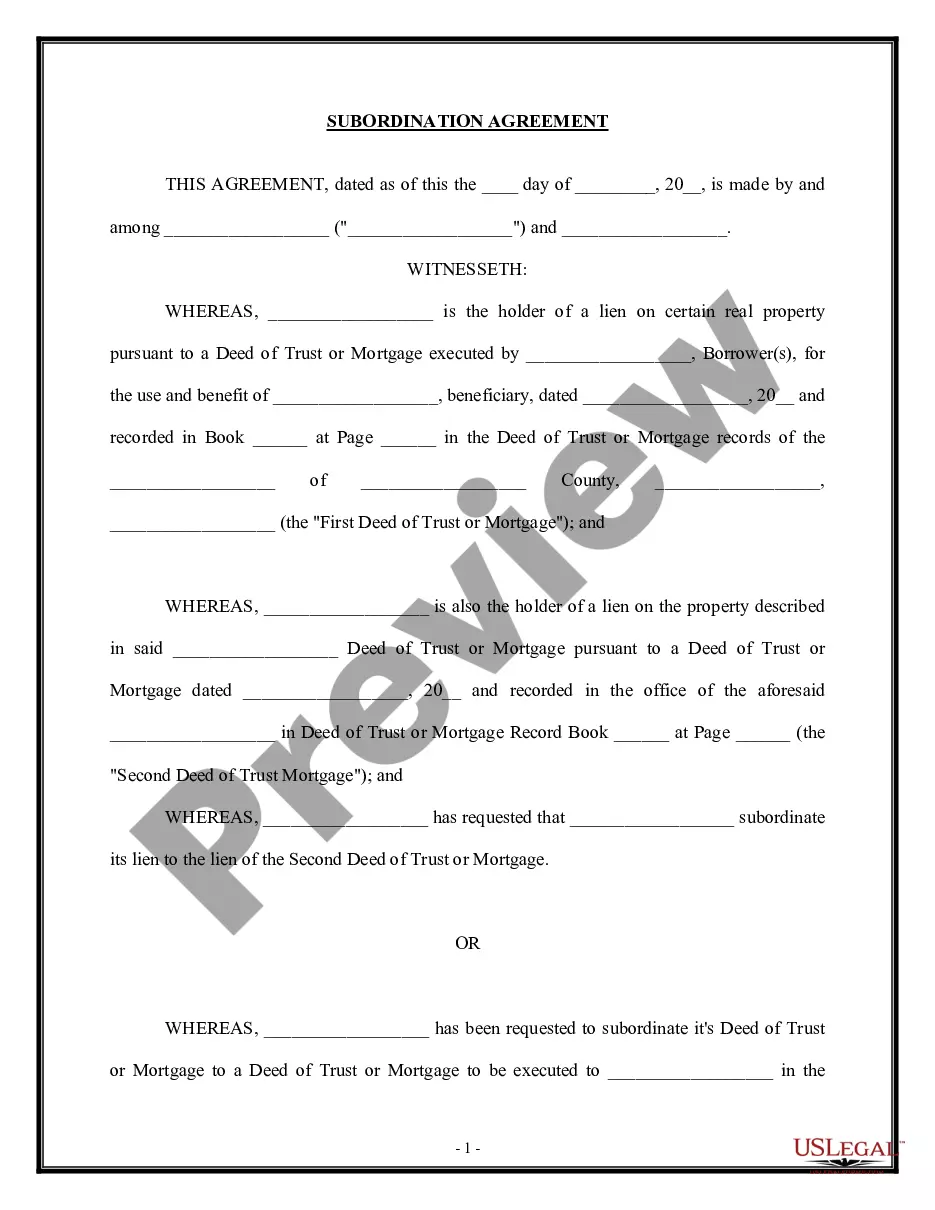
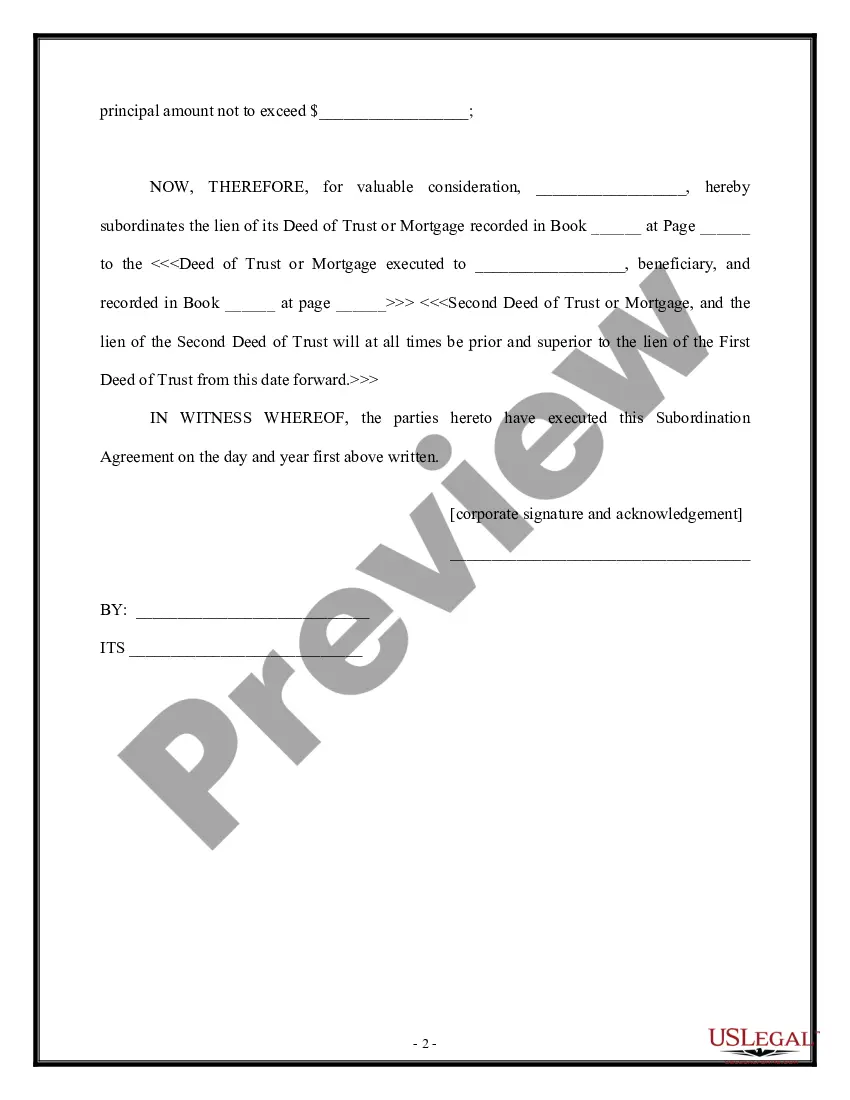
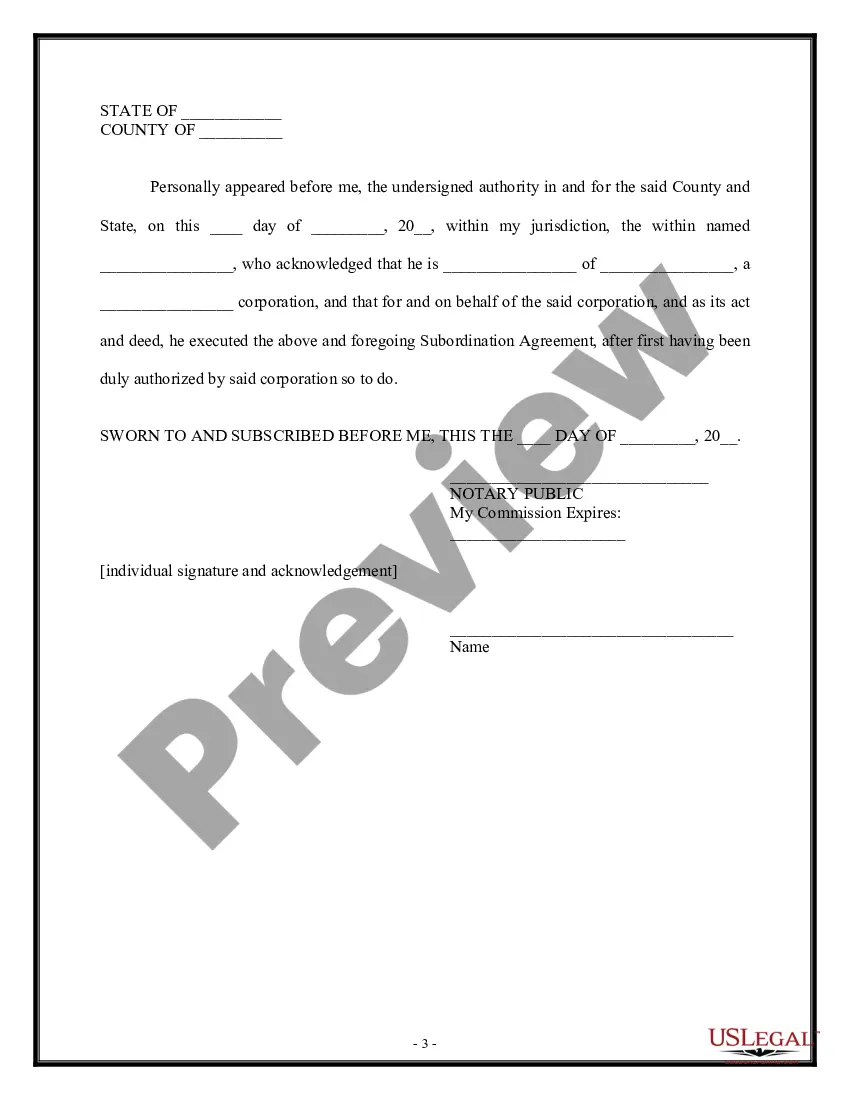
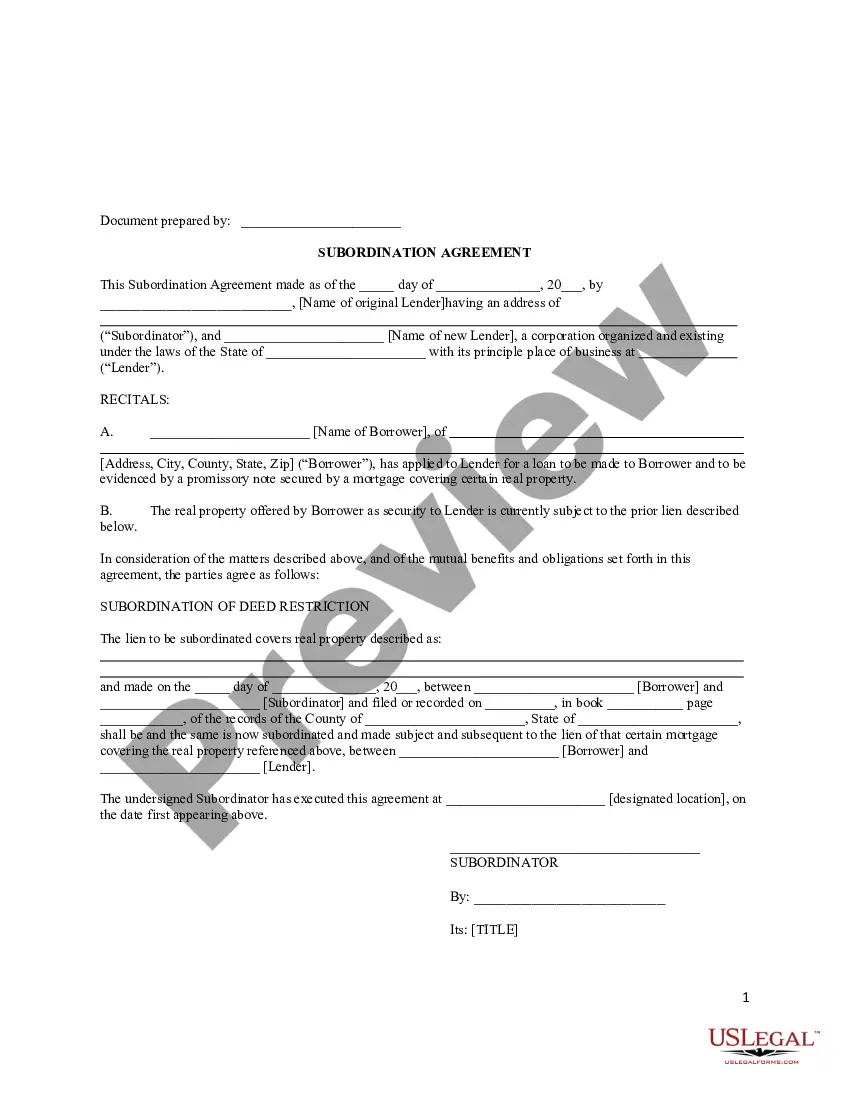
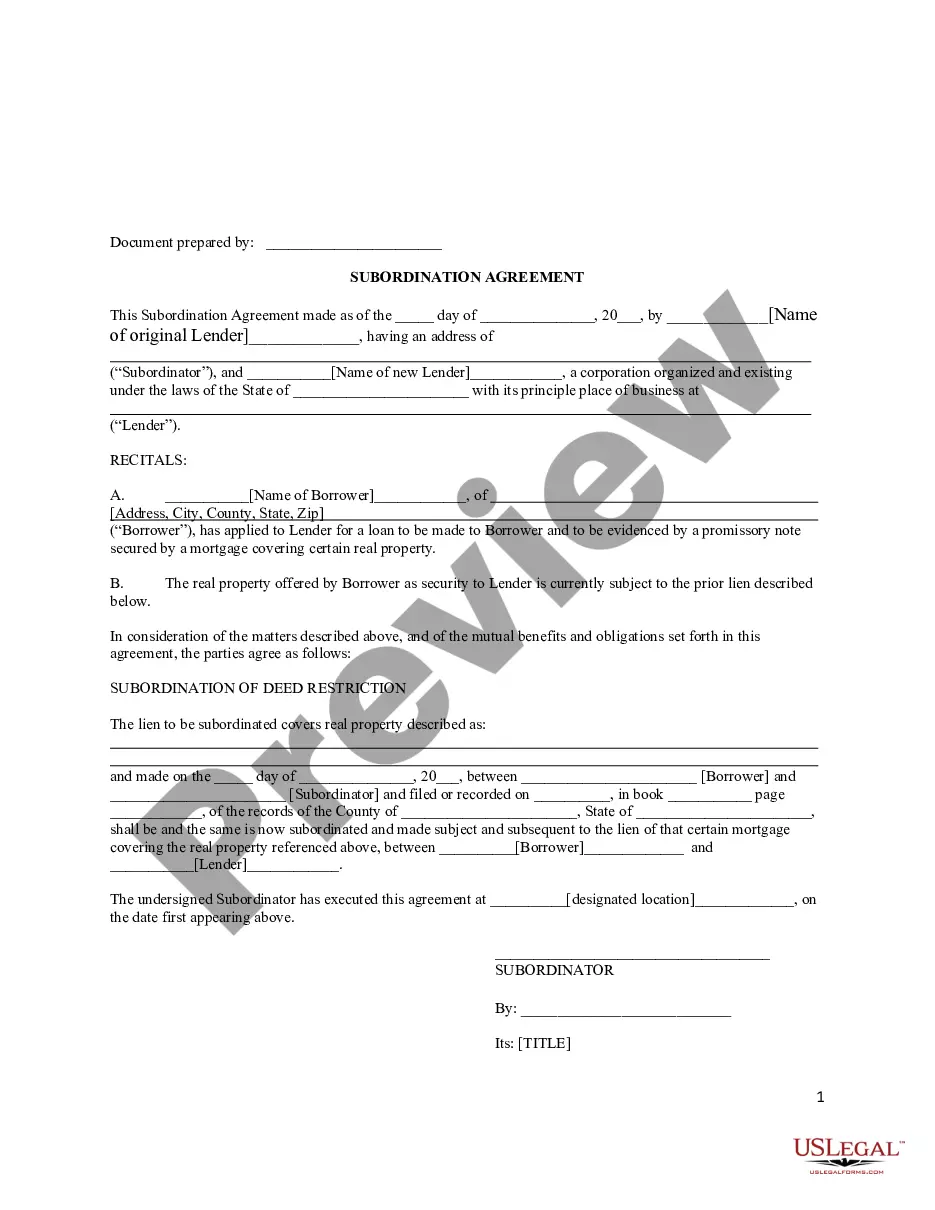
Connecticut Subordination Agreement - Lien
Description
Get your form ready online
Our built-in tools help you complete, sign, share, and store your documents in one place.
Make edits, fill in missing information, and update formatting in US Legal Forms—just like you would in MS Word.
Download a copy, print it, send it by email, or mail it via USPS—whatever works best for your next step.
Sign and collect signatures with our SignNow integration. Send to multiple recipients, set reminders, and more. Go Premium to unlock E-Sign.
If this form requires notarization, complete it online through a secure video call—no need to meet a notary in person or wait for an appointment.
We protect your documents and personal data by following strict security and privacy standards.

Make edits, fill in missing information, and update formatting in US Legal Forms—just like you would in MS Word.

Download a copy, print it, send it by email, or mail it via USPS—whatever works best for your next step.

Sign and collect signatures with our SignNow integration. Send to multiple recipients, set reminders, and more. Go Premium to unlock E-Sign.

If this form requires notarization, complete it online through a secure video call—no need to meet a notary in person or wait for an appointment.

We protect your documents and personal data by following strict security and privacy standards.
Looking for another form?






How to fill out Subordination Agreement - Lien?
Have you ever found yourself in a scenario where you require documents for both organizational or personal tasks nearly every day.
There are numerous legitimate document templates accessible online, yet finding ones you can trust is challenging.
US Legal Forms offers thousands of form templates, such as the Connecticut Subordination Agreement - Lien, designed to comply with federal and state regulations.
- If you are already familiar with the US Legal Forms website and have an account, simply Log In.
- Afterward, you can download the Connecticut Subordination Agreement - Lien template.
- If you do not have an account and wish to start using US Legal Forms, follow these steps.
- Find the form you need and ensure it is for the correct area/region.
- Use the Review button to examine the form.
- Read the description to verify that you have selected the right form.
- If the form is not what you're looking for, use the Search field to locate the form that meets your needs and requirements.
- Once you find the correct form, click on Purchase now.
- Choose the pricing plan you want, fill in the required details to create your account, and pay for the order using your PayPal or Visa or Mastercard.
- Select a convenient document format and download your copy.
- Access all the document templates you have purchased in the My documents section. You can obtain another copy of the Connecticut Subordination Agreement - Lien anytime, if needed. Just click on the required form to download or print the document template.
- Utilize US Legal Forms, one of the largest collections of legitimate forms, to save time and avoid errors. The service offers professionally crafted legal document templates that you can use for various purposes. Create an account on US Legal Forms and start making your life a bit easier.
Form popularity
FAQ
For example, assume a company has secured senior debt of $60 million and subordinate financing that totals $40 million. If a company liquidates all of its assets in a bankruptcy for $80 million, it first needs to pay off the $60 million amount of its debt held by secured lenders.
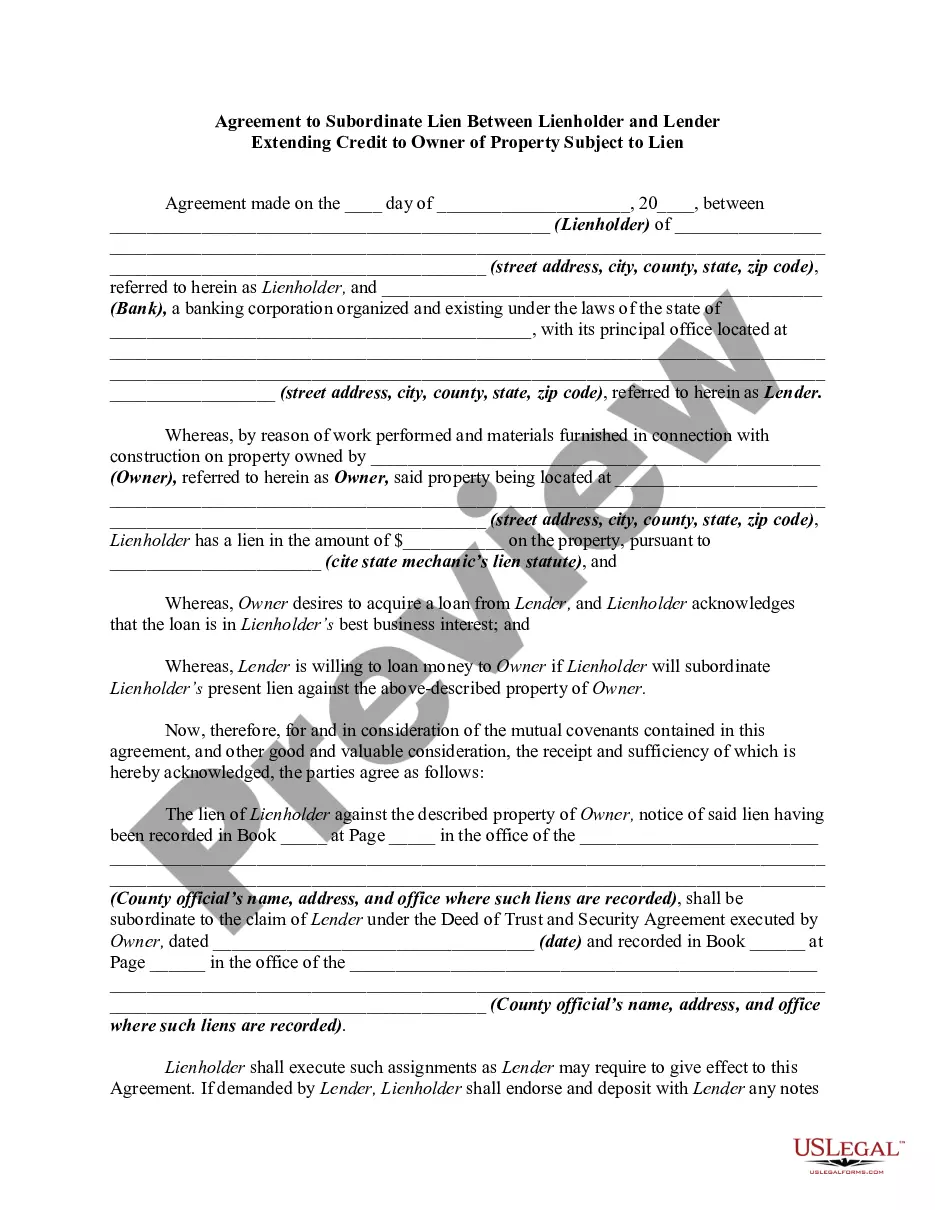
Subordination agreement is a contract which guarantees senior debt will be paid before other ?subordinated? debt if the debtor becomes bankrupt.
A subordinate mortgage loan is any loan not in the first lien position. The subordination order goes by the order the loans were recorded. For example, your first mortgage (the mortgage used to buy the house) is recorded first because it's the first loan you borrow.
When you get a mortgage loan, the lender will likely include a subordination clause essentially stating that their lien will take precedence over any other liens placed on the house. A subordination clause serves to protect the lender if a homeowner defaults.
An excellent example of an SME that took out a first lien loan is the popular stationary bike and fitness company, Peloton. It recently took out a $750 million, five-year first lien term loan to provide it with the capital to continue its growth spurt that took off during COVID-19 lockdowns.
When you get a mortgage loan, the lender will likely include a subordination clause essentially stating that their lien will take precedence over any other liens placed on the house. A subordination clause serves to protect the lender if a homeowner defaults.
Subordination agreements are used to legally establish the order in which debts are to be repaid in the event of a foreclosure or bankruptcy. In return for the agreement, the lender with the subordinated debt will be compensated in some manner for the additional risk.
A subordinated loan is debt that's only paid off after all primary loans are paid off, if there's any money left. It's also known as subordinated debt, junior debt or a junior security, while primary loans are also known as senior or unsubordinated debt.