Connecticut Living Trust for Husband and Wife with One Child
What this document covers
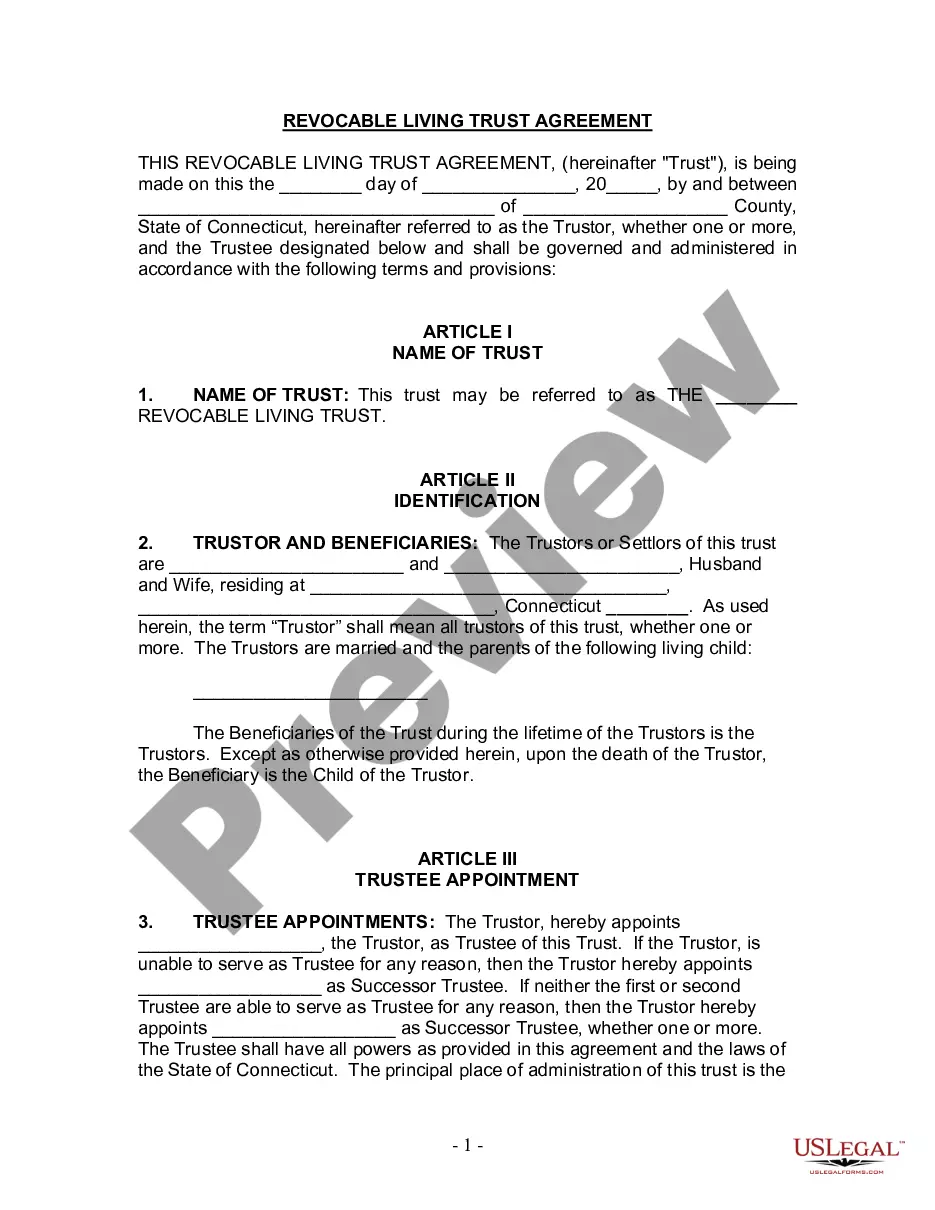
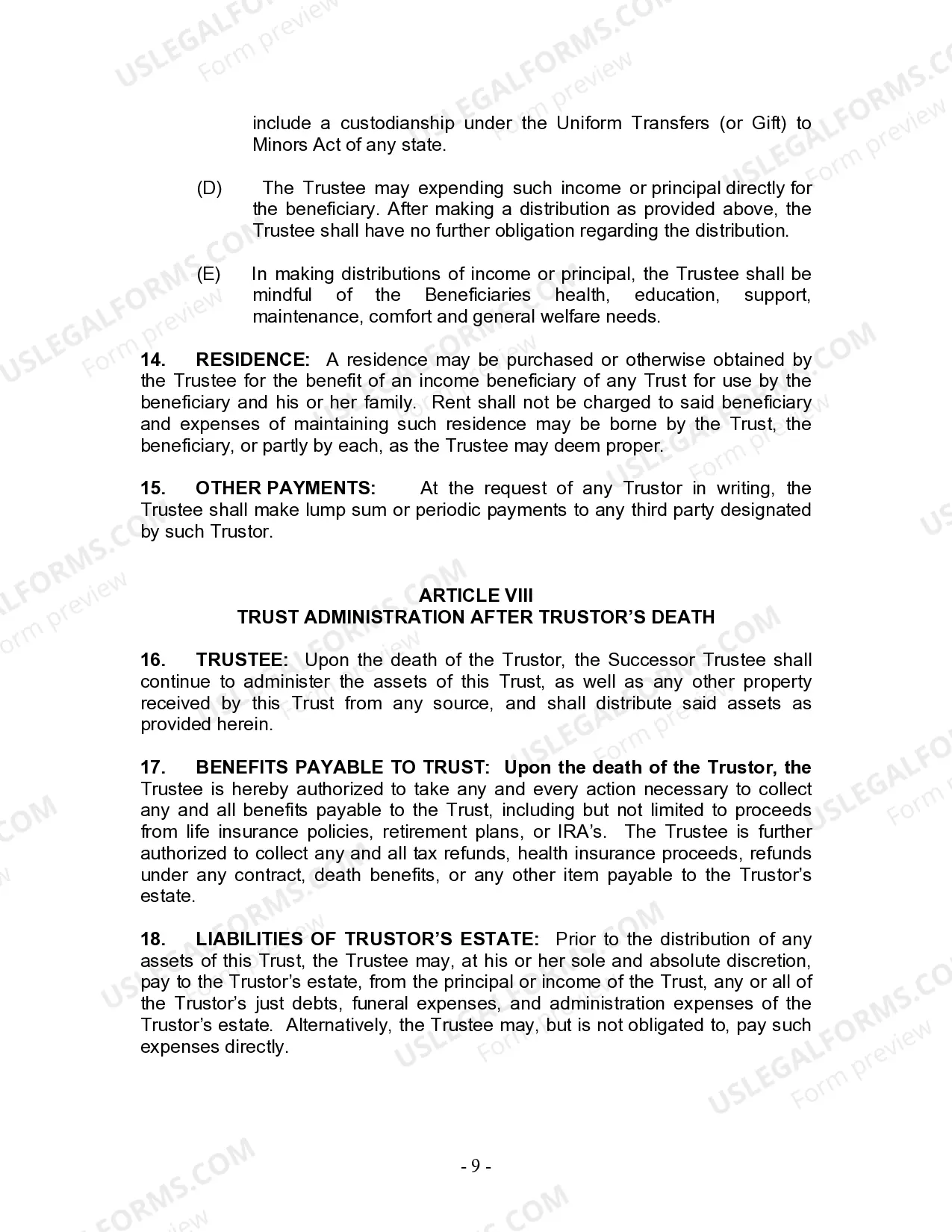
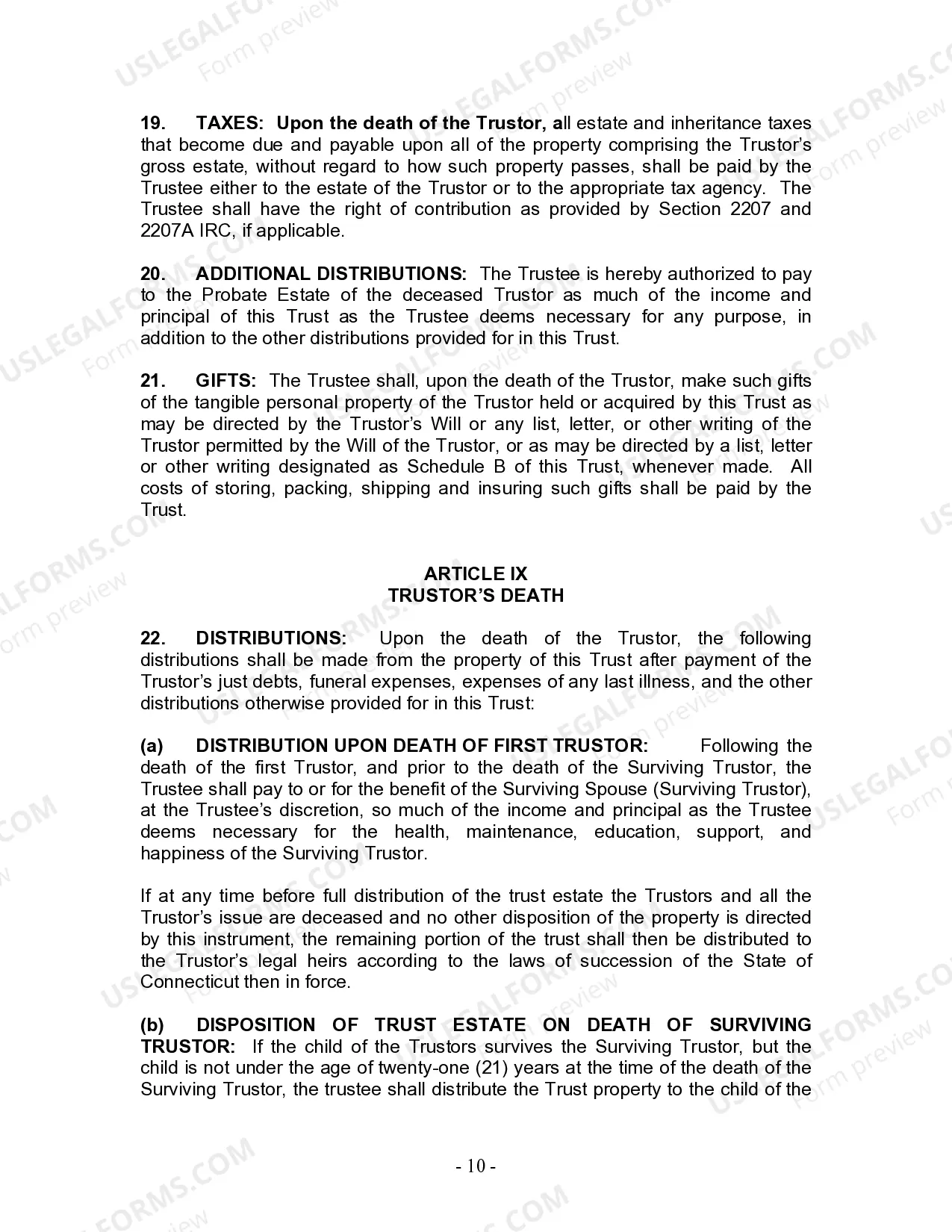
This Living Trust for Husband and Wife with One Child is a legal document that establishes a living trust specifically designed for married couples who have a child. Unlike a will, this trust allows for the management and distribution of assets without the need for probate after death. This type of trust ensures that your assets are managed according to your wishes during your lifetime and can help avoid delays and expenses associated with probate court.
What’s included in this form
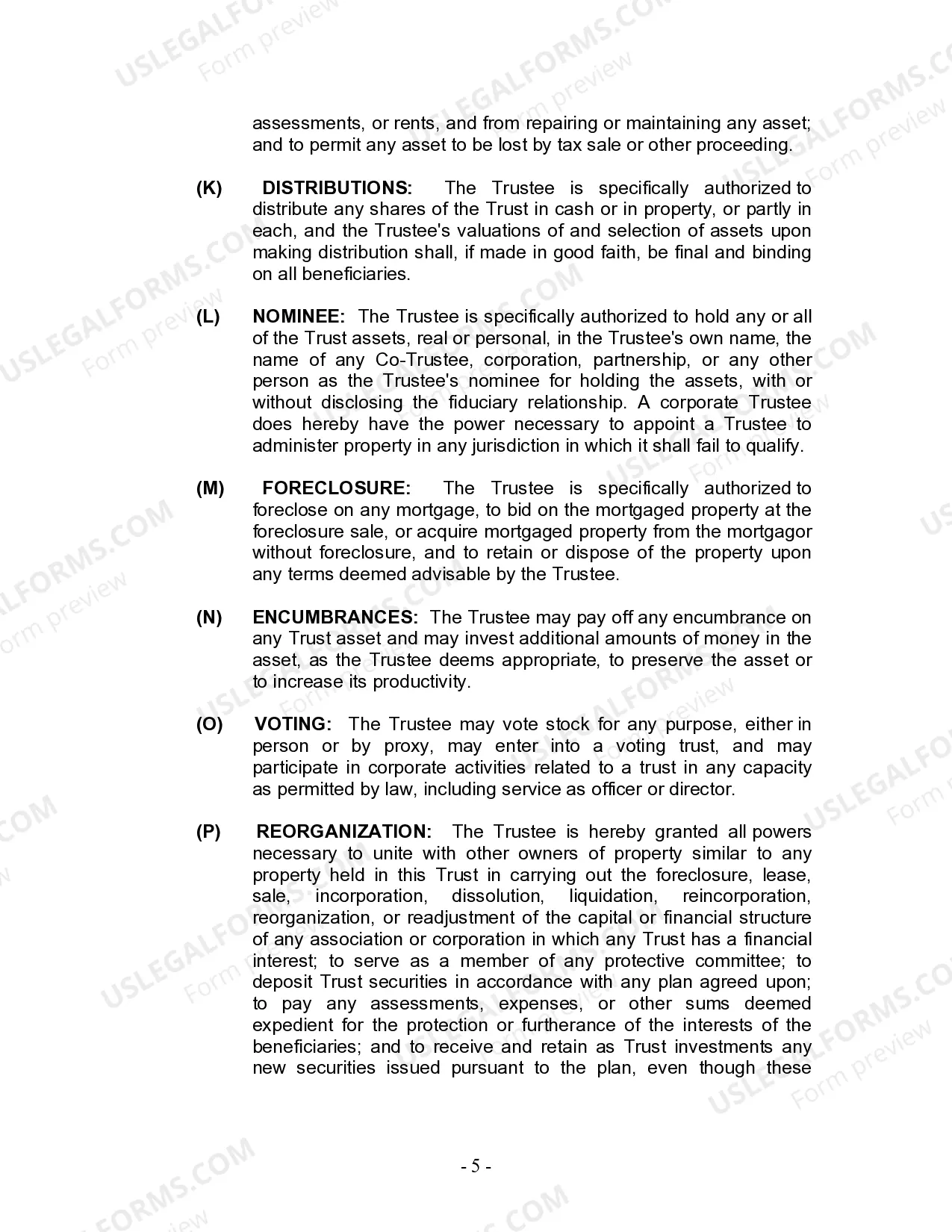
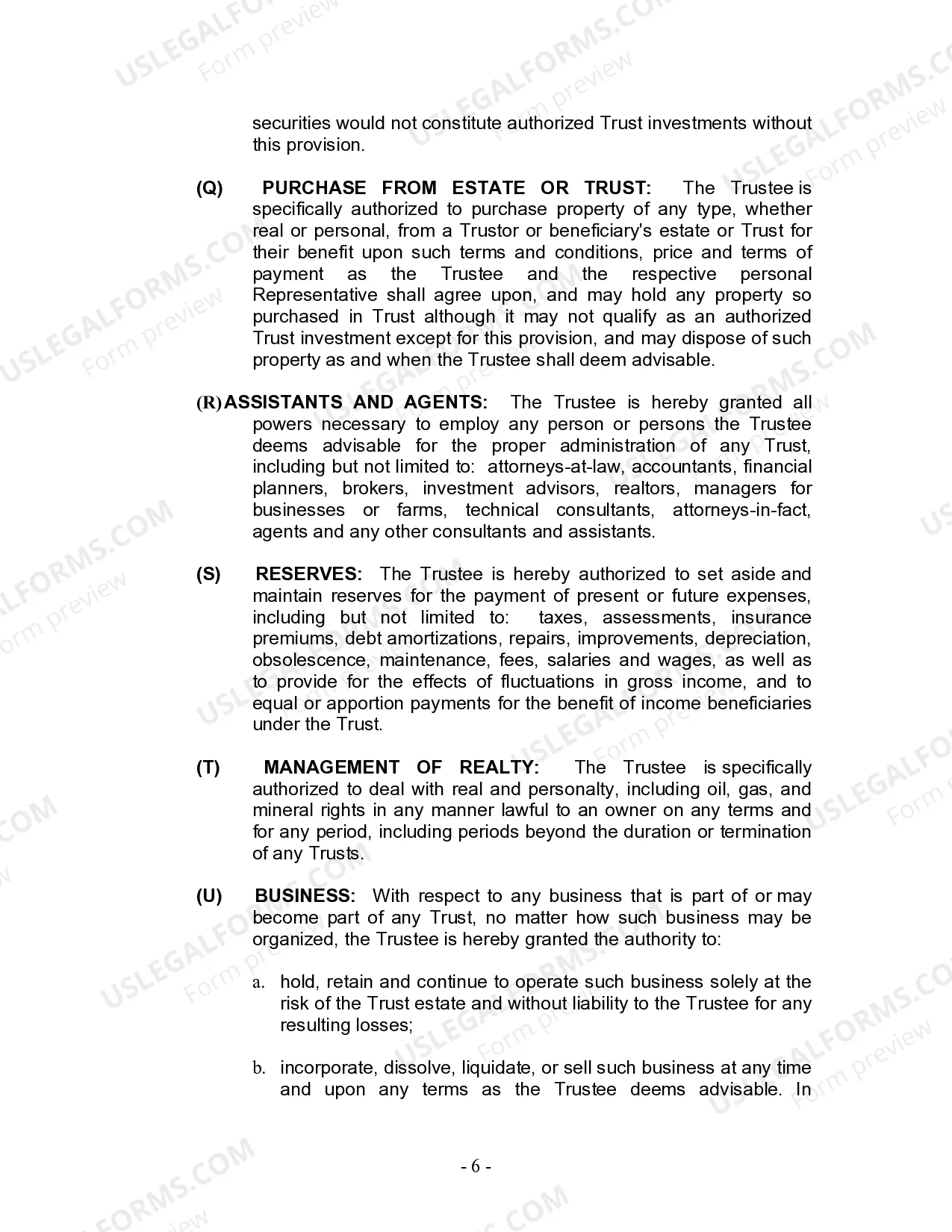
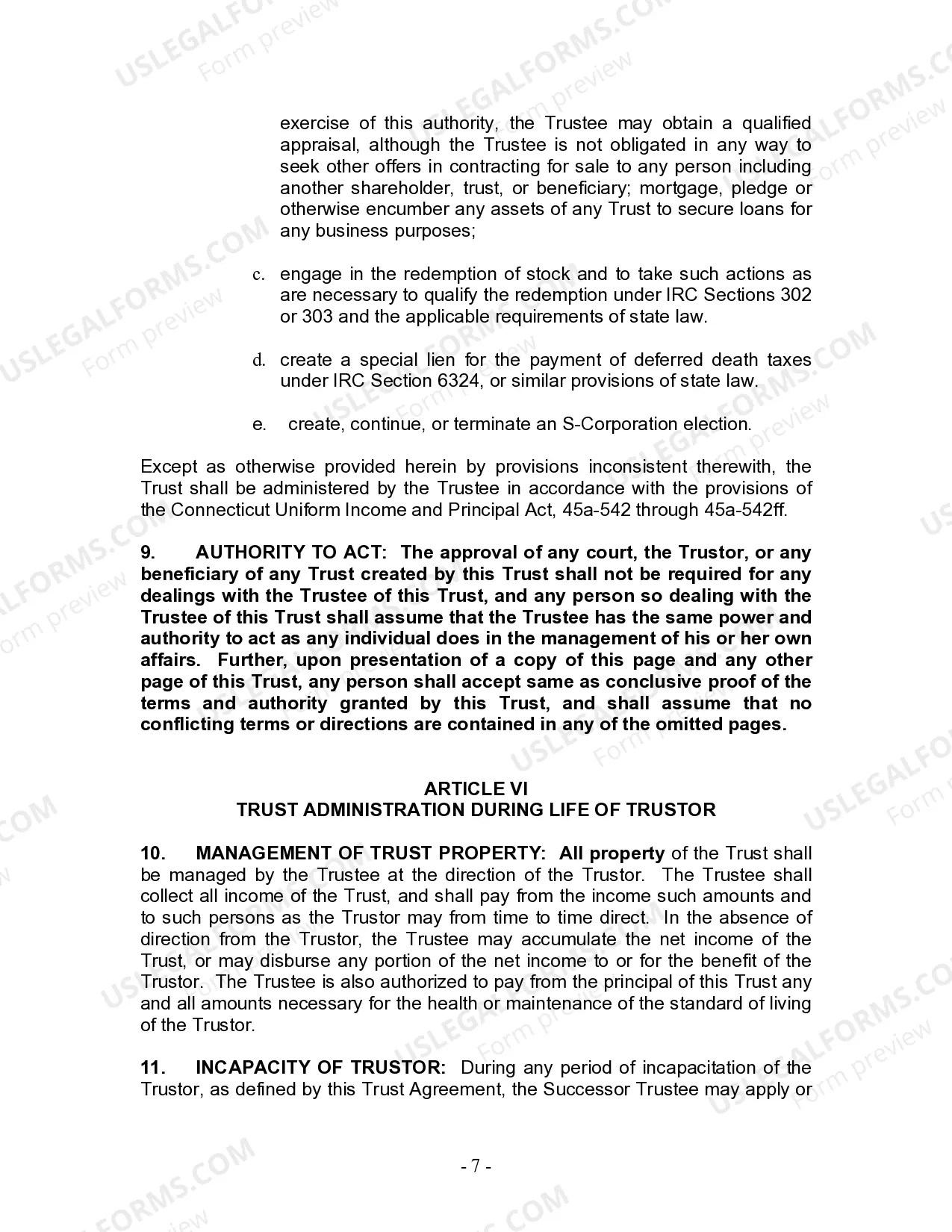
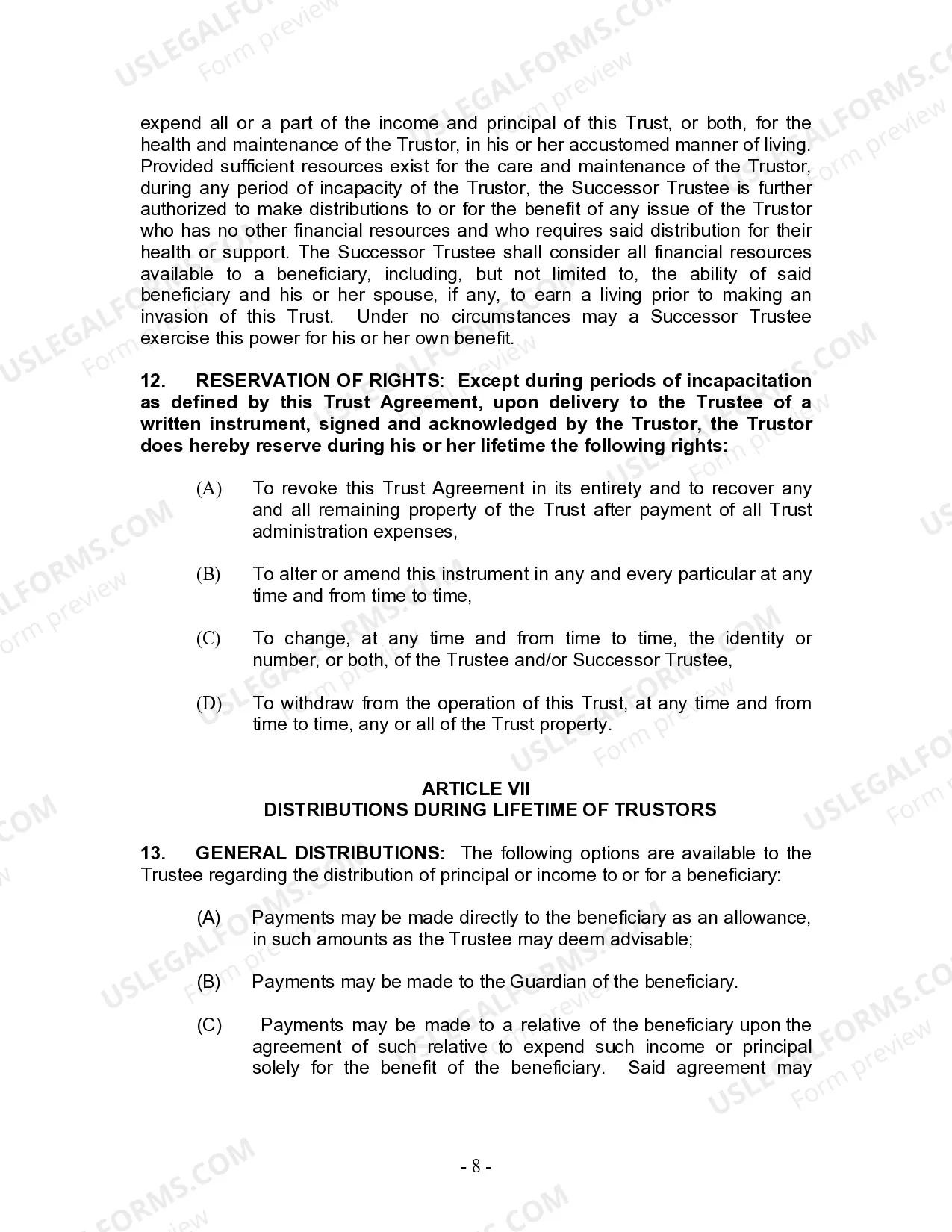
- Name of Trust: The designated title of the trust that will be used in all documentation.
- Trustor and Beneficiaries: Identification of the husband and wife as the trustors, and their child as the beneficiary.
- Trustee Appointment: Designation of the trustors as the initial trustees, along with provisions for successor trustees.
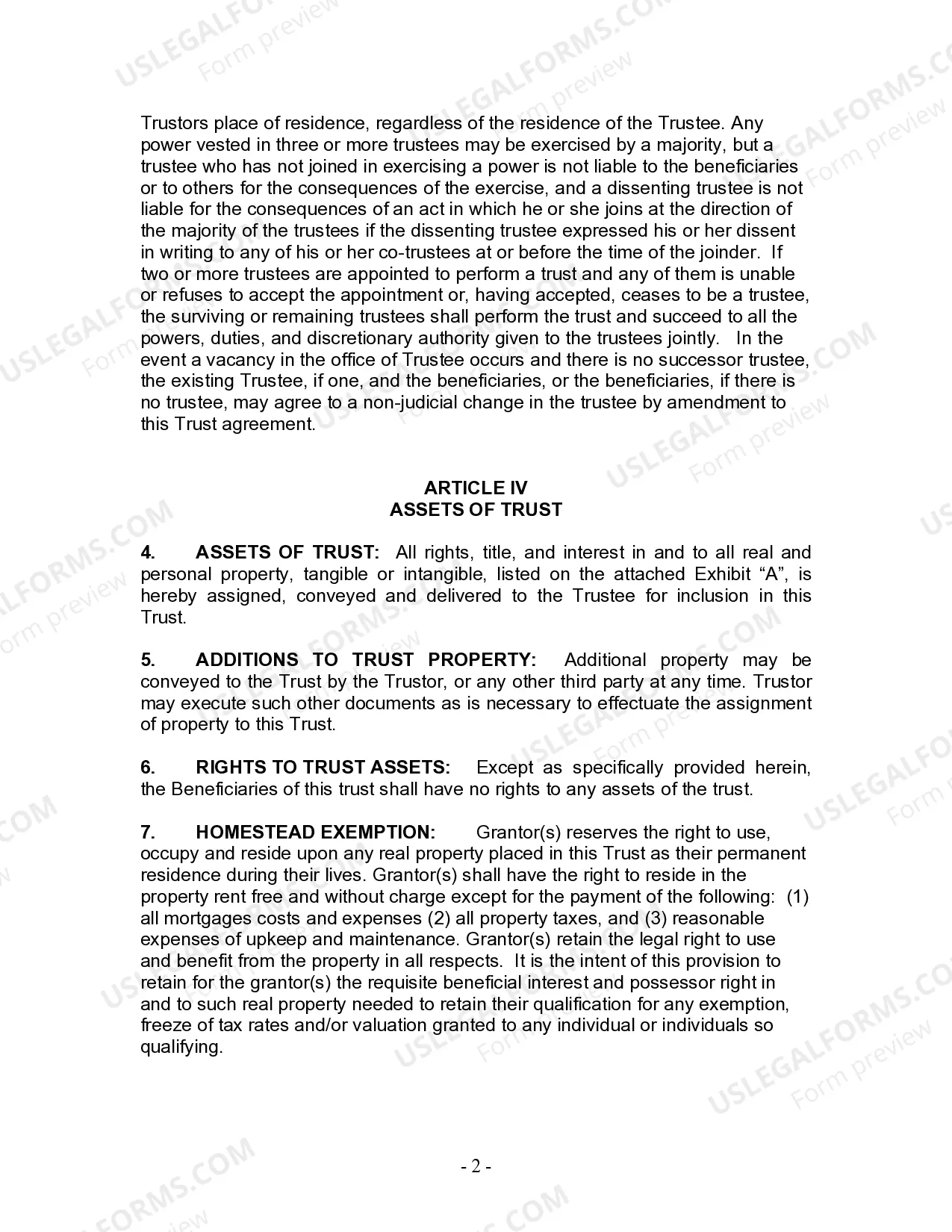
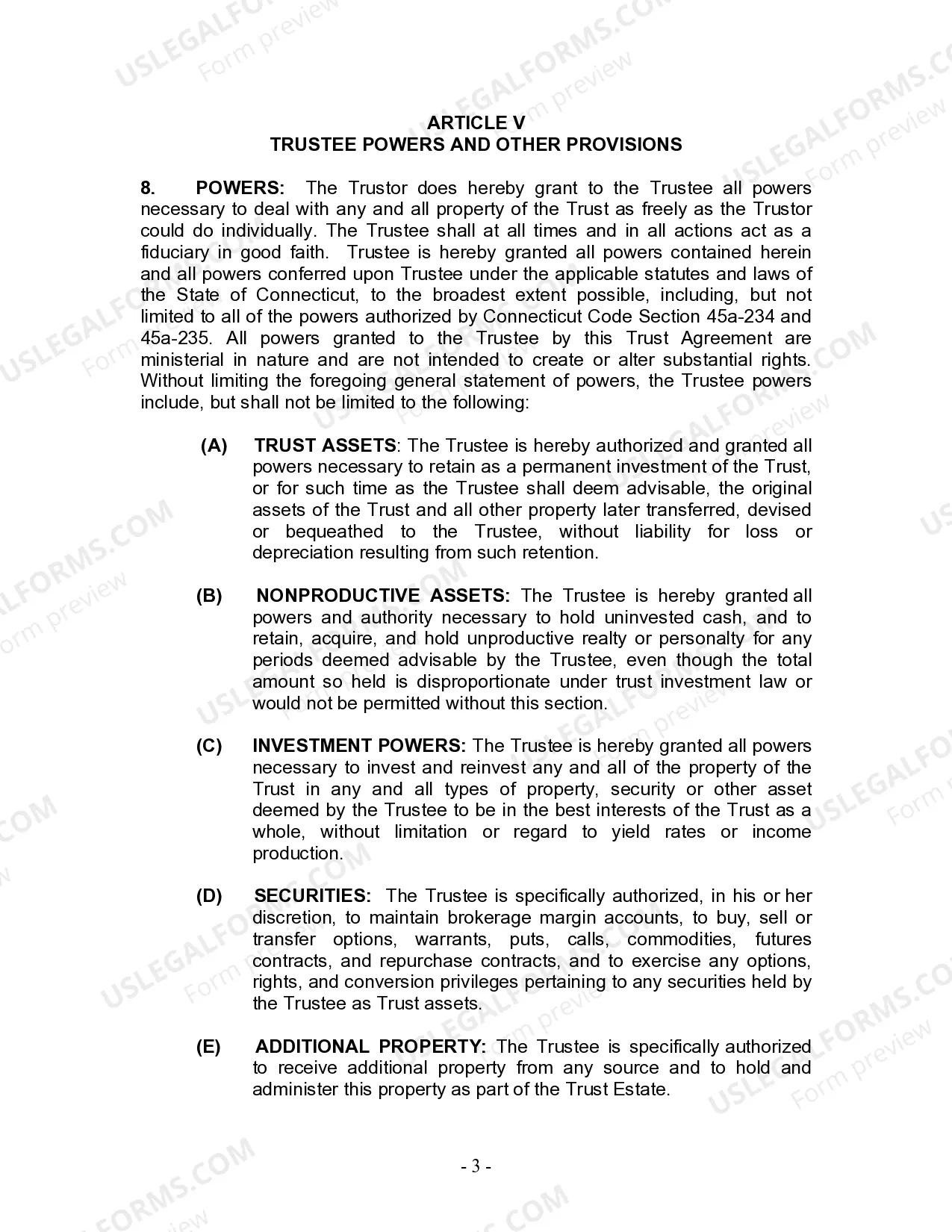
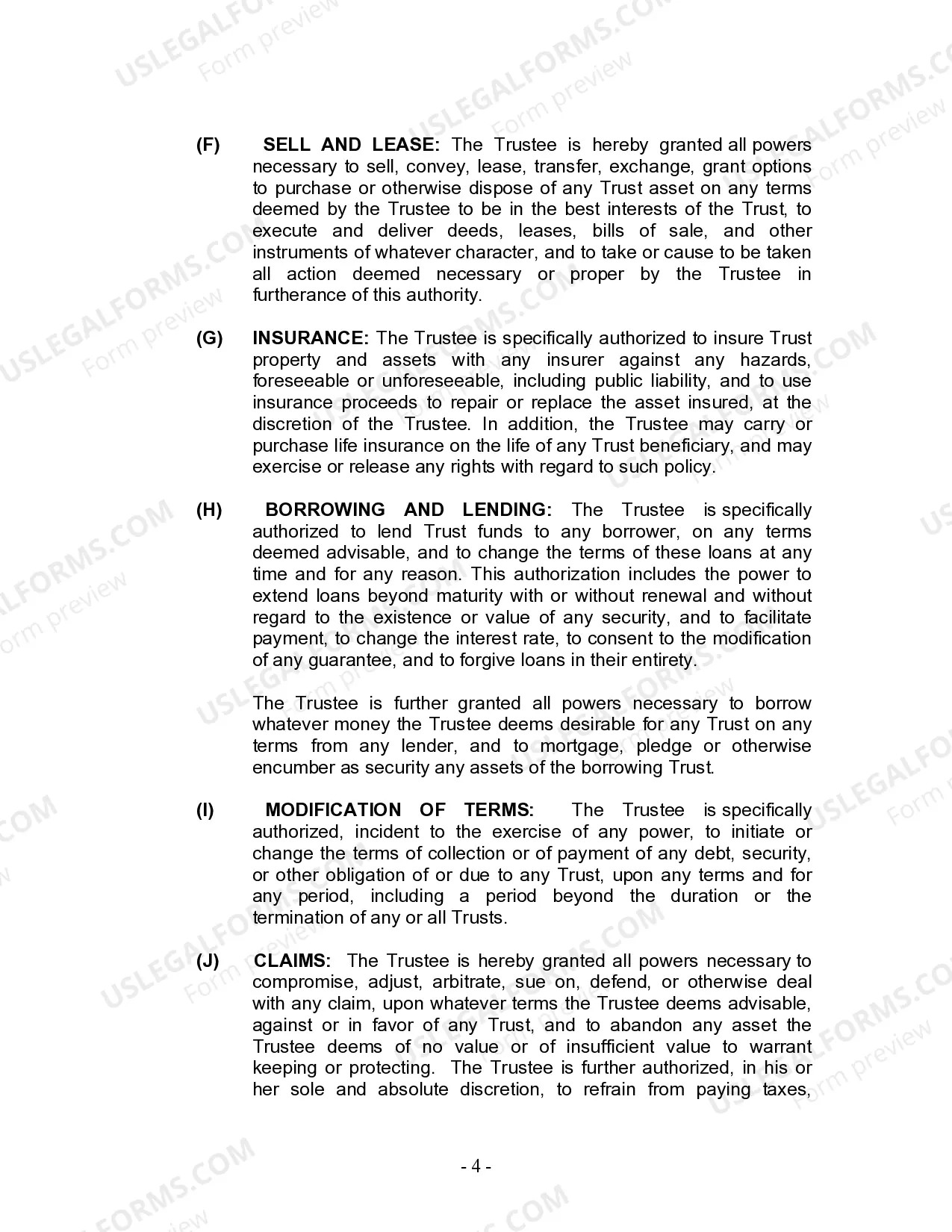
- Assets of Trust: Documentation of all property and assets included in the trust and their management.
- Rights to Trust Assets: Definition of how the trustors can use the trust property during their lifetime.

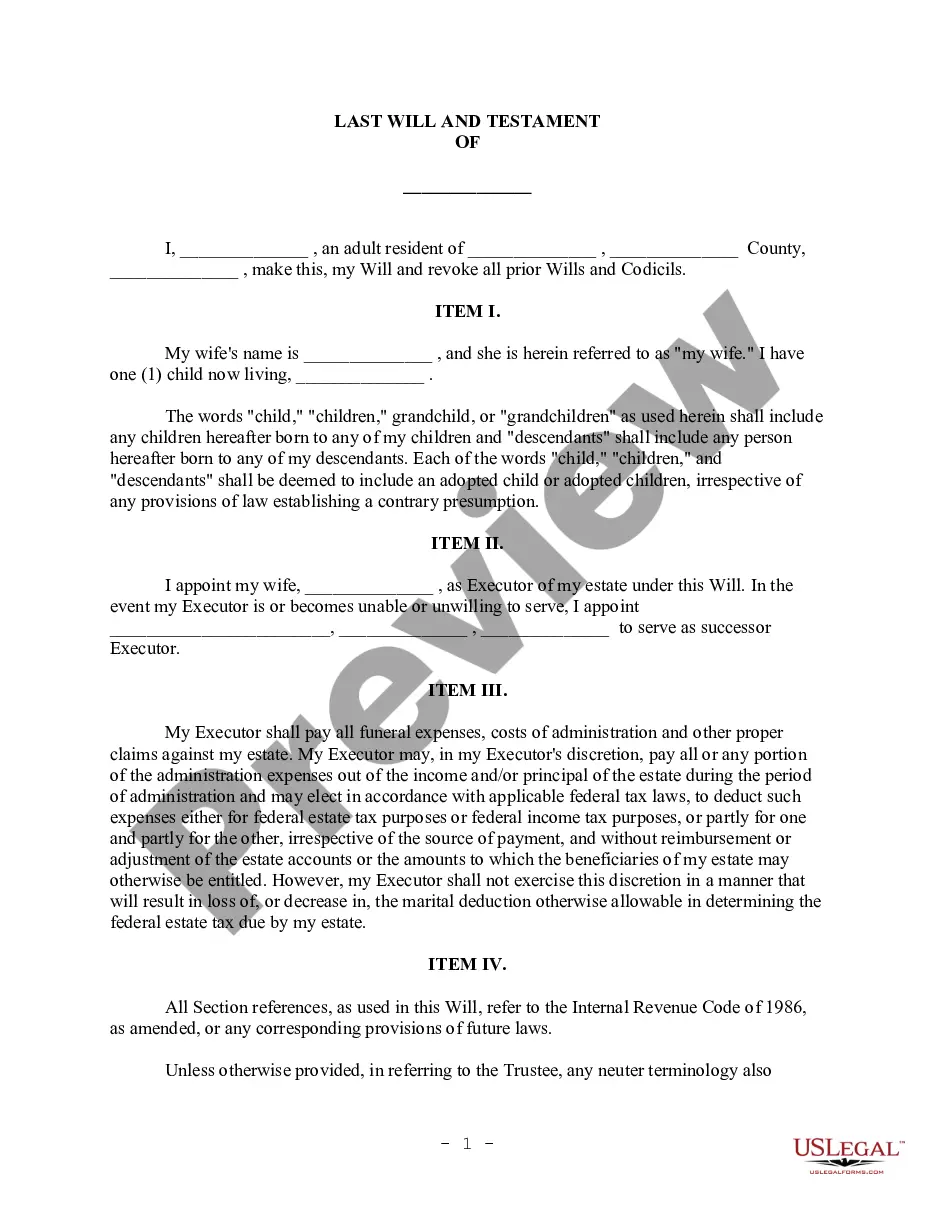
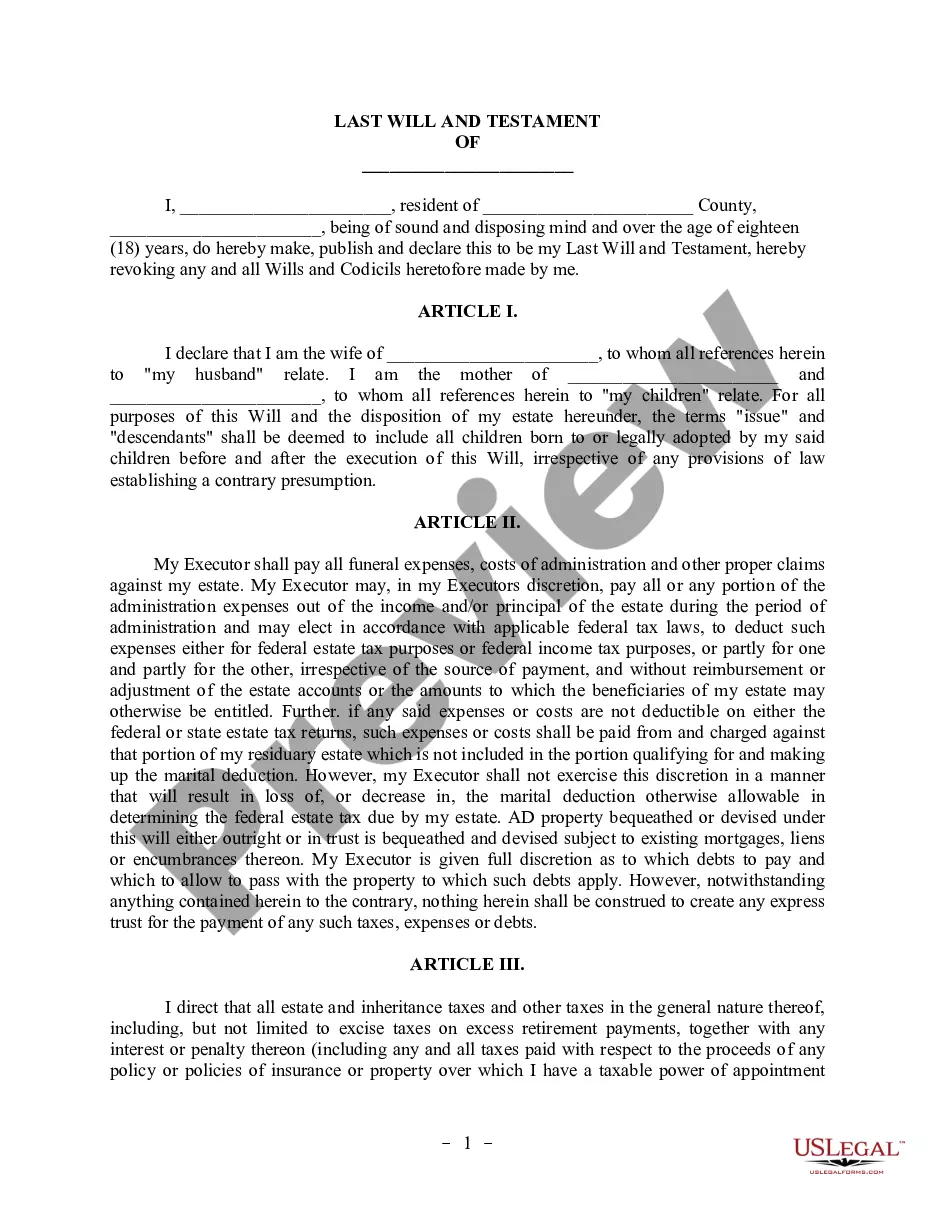
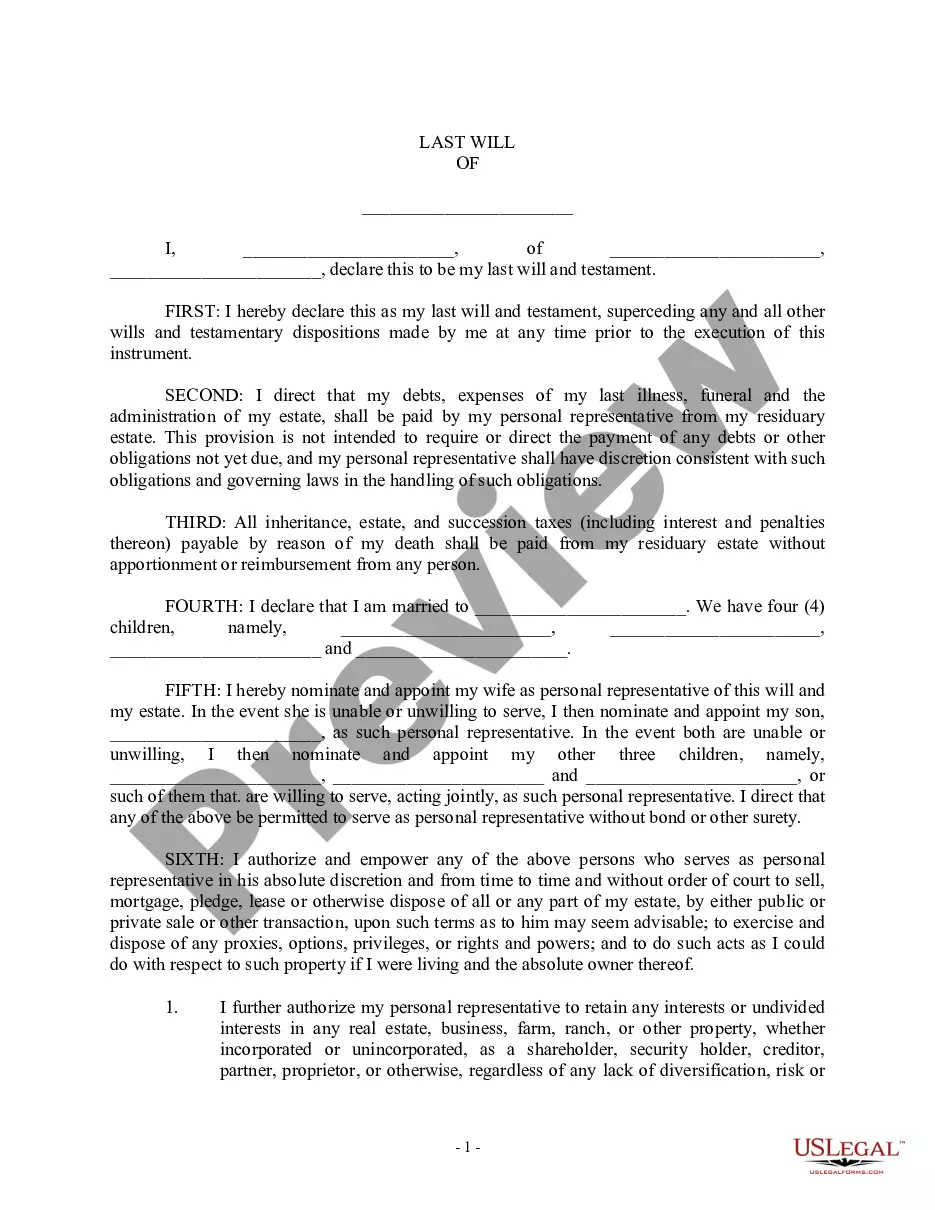
When this form is needed
This form should be used when a married couple wants to proactively manage their assets and ensure their childâs financial security after their death. It is particularly useful for couples who wish to avoid the probate process, maintain control of their assets, and outline specific directions regarding the distribution of their property. This living trust ideal for estate planning, especially when there is a minor child involved.
Who can use this document
This form is intended for:
- Married couples who want to establish a living trust for their family's future.
- Parents aiming to manage their assets efficiently for the benefit of their child.
- Individuals interested in avoiding probate and simplifying asset transfer after death.
How to prepare this document
Follow these steps to complete the form:
- Identify the parties involved: List the names and addresses of the husband and wife.
- Choose a name for the trust: Complete the section for the name of the trust.
- List all assets: Specify all properties and assets intended to be included in the trust.
- Designate successor trustees: Fill in the information for any individuals who will serve as successor trustees.
- Sign and notarize the document: Ensure the trust is signed in the presence of a notary public to validate the agreement.
Does this form need to be notarized?
Yes, this form must be notarized to be legally valid. US Legal Forms provides integrated online notarization services that are available 24/7 through secure video calls, ensuring that your living trust is completed accurately and efficiently without the need to travel.
Get your form ready online
Our built-in tools help you complete, sign, share, and store your documents in one place.
Make edits, fill in missing information, and update formatting in US Legal Forms—just like you would in MS Word.
Download a copy, print it, send it by email, or mail it via USPS—whatever works best for your next step.
Sign and collect signatures with our SignNow integration. Send to multiple recipients, set reminders, and more. Go Premium to unlock E-Sign.
If this form requires notarization, complete it online through a secure video call—no need to meet a notary in person or wait for an appointment.
We protect your documents and personal data by following strict security and privacy standards.

Make edits, fill in missing information, and update formatting in US Legal Forms—just like you would in MS Word.

Download a copy, print it, send it by email, or mail it via USPS—whatever works best for your next step.

Sign and collect signatures with our SignNow integration. Send to multiple recipients, set reminders, and more. Go Premium to unlock E-Sign.

If this form requires notarization, complete it online through a secure video call—no need to meet a notary in person or wait for an appointment.

We protect your documents and personal data by following strict security and privacy standards.
Avoid these common issues
- Failing to update the trust after major life events, such as the birth of additional children.
- Neglecting to fund the trust by transferring assets into it after creation.
- Not designating a clear successor trustee, leaving the trust management ambiguous.
Why complete this form online
- Online access allows for easy downloads and edits from anywhere.
- Templates crafted by licensed attorneys offer peace of mind regarding legal accuracy.
- Cost-effective compared to hiring a lawyer for custom documents.
- This trust is legally binding and can aid in avoiding probate, which can save time and associated costs.
- It allows for flexibility, as it can be revoked or amended while the trustors are still alive.
- Trust documents must comply with applicable state laws to ensure their effectiveness in estate planning.
Summary of main points
- The Living Trust is a practical estate planning tool for married couples with children.
- It facilitates asset management during the trustors' lifetime and allows for seamless transfer upon death.
- Preparation and notarization are essential for legal validity.
- Trustor: The person or persons who create the trust and control its contents.
- Trustee: The person or entity appointed to manage the trust assets on behalf of the beneficiaries.
- Beneficiary: The person or entity entitled to receive benefits from the trust.
- Probate: The legal process through which a deceased person's will is validated and their assets are distributed.
Looking for another form?

Form popularity
FAQ
The most appropriate type of trust for married couples is typically a revocable living trust. A Connecticut Living Trust for Husband and Wife with One Child allows couples to retain control over their assets while specifying distribution preferences. This trust type offers flexibility, adapting to changes in family dynamics or financial circumstances. Consulting a skilled attorney ensures that the trust aligns with your goals.
Married couples may choose to have separate trusts based on their unique situations. A Connecticut Living Trust for Husband and Wife with One Child may serve better when both spouses want to manage individual assets or protect personal wealth. However, combining assets into a joint trust can simplify processes and reduce administrative burden. Weighing these factors is crucial to making an informed decision.
A trust for a married couple works by designating assets and outlining the distribution process. With a Connecticut Living Trust for Husband and Wife with One Child, one or both spouses can manage the assets during their lifetimes. Upon a spouse's passing, the trust facilitates the automatic transfer of assets to the surviving spouse and, ultimately, to the child. This process minimizes probate and ensures the couple's wishes are fulfilled.
For married couples, a revocable living trust usually emerges as the best option. A Connecticut Living Trust for Husband and Wife with One Child can provide transparency and flexibility. This trust type allows couples to adjust the terms as circumstances change while ensuring a seamless transition of assets to their child. Seek advice from professionals to help design the trust that fits your family structure.
The best living trust for a married couple often is a revocable trust, like a Connecticut Living Trust for Husband and Wife with One Child. This type of trust allows both partners to maintain control while establishing clear guidelines for asset distribution. It ensures that your child inherits your assets smoothly. Consulting with a legal expert can help tailor the trust to your family's needs.
Choosing between a revocable and irrevocable trust involves understanding your goals. A Connecticut Living Trust for Husband and Wife with One Child is typically revocable, allowing for flexibility in managing assets during your lifetime. On the other hand, an irrevocable trust can provide tax benefits and asset protection. Assess your priorities to determine which option serves you best.
Whether a husband and wife should have separate living trusts depends on their individual circumstances. A Connecticut Living Trust for Husband and Wife with One Child can often simplify inheritance and estate planning. However, separate trusts might offer benefits in certain situations, such as managing personal assets or tax considerations. It’s essential to evaluate your specific needs before making a decision.
While a Connecticut Living Trust for Husband and Wife with One Child offers many advantages, there can be downfalls if not managed correctly. One significant concern is the potential loss of control over assets once they are placed in the trust, as the appointed trustee will manage them. Furthermore, some may assume a trust will always guarantee privacy, but certain situations may require disclosure. To navigate these issues, platforms like uslegalforms can provide valuable resources to simplify the trust setup and management process.
A common mistake parents make when establishing a Connecticut Living Trust for Husband and Wife with One Child is failing to fund the trust properly. If the assets are not transferred into the trust, it won't function as intended, potentially leading to complications after their passing. Additionally, neglecting to update the trust as life circumstances change can cause confusion and disputes among heirs. Therefore, ongoing communication and legal guidance are vital to ensure the trust operates as envisioned.
Creating a Connecticut Living Trust for Husband and Wife with One Child can be highly beneficial for your parents if they wish to streamline the distribution of their assets. This trust structure can help avoid probate, ensuring that assets go directly to you without lengthy court processes. Moreover, it provides flexibility for managing assets during their lifetime, which can bring peace of mind. Ultimately, it’s essential for them to consult with a legal expert to determine the best course of action.